REVIEW · KATHMANDU
Upper Mustang Trekking
Upper Mustang feels like a different Nepal: dry, wind-carved valleys, adobe villages, cliffside trails, and Tibetan Buddhist monasteries appear far from the country’s busier trekking routes. The prize is Lo Manthang, the old walled city, but the route there is just as memorable.
I like the small private format, with only your group on the trek, and the fact that the price includes the costly $500 special permit. I also like the mix of mountain walking and local life: apple gardens, old monasteries, farm villages, and the warmth of people in places that still feel wonderfully remote.
The main drawback is the demanding logistics. You spend long hours on buses, domestic flights can depend on weather, and strong afternoon winds in the Kali Gandaki Valley can make the return walk dusty and tiring. This is not a casual sightseeing trip with a few short hikes.
Key things to know before booking
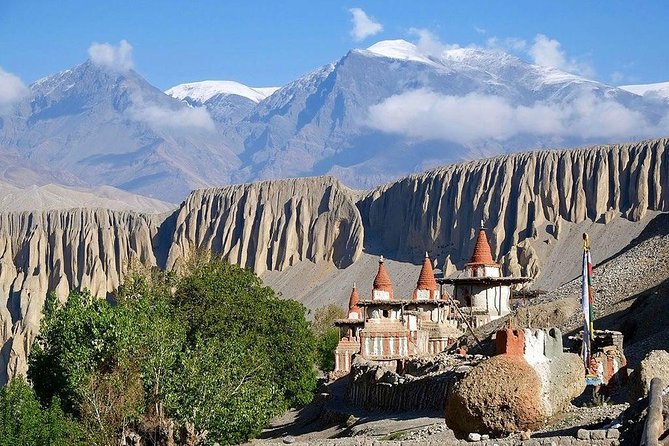
- Lo Manthang is the centerpiece: You get a full day to see monasteries, the old palace, and the enclosed Himalayan city.
- The $500 restricted-area permit is included: This removes one of the biggest extra costs of Upper Mustang.
- The route reaches nearly 4,000 meters: The altitude is serious, even though this is not a climb of a high peak.
- You travel by several methods: Tourist bus, domestic flight, private transfers, lodge trekking, and another long bus ride all form part of the plan.
- The trek is private: Your group travels with a government-licensed guide and one porter for every two people.
- Wind and dust are part of the deal: Start early on the Kagbeni and Chhusang sections, when conditions are usually more comfortable.
Why Upper Mustang feels unlike ordinary Nepal trekking
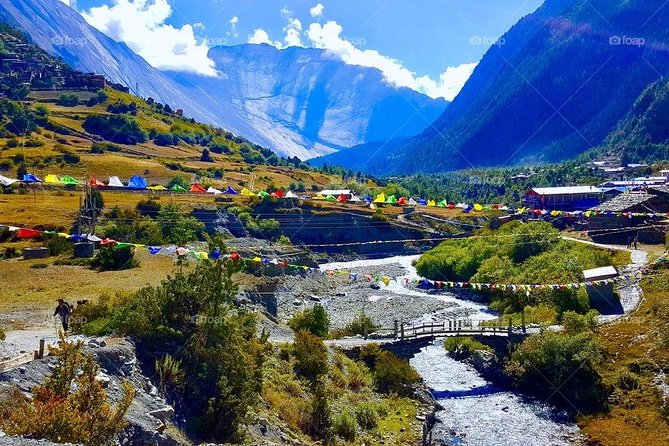
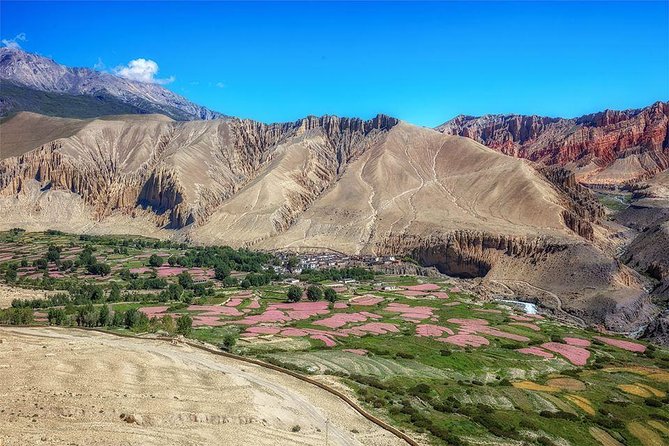
Upper Mustang sits in Nepal’s rain-shadow country, where the scenery is dry, open, and strongly shaped by wind. Instead of dense forest and green foothills, you see bare ridges, pale cliffs, river valleys, farm plots, and villages built in earthy tones.
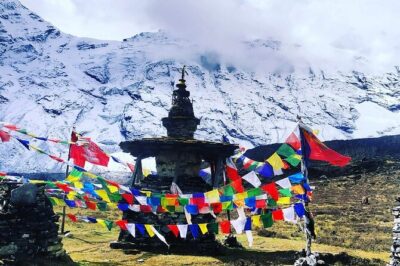
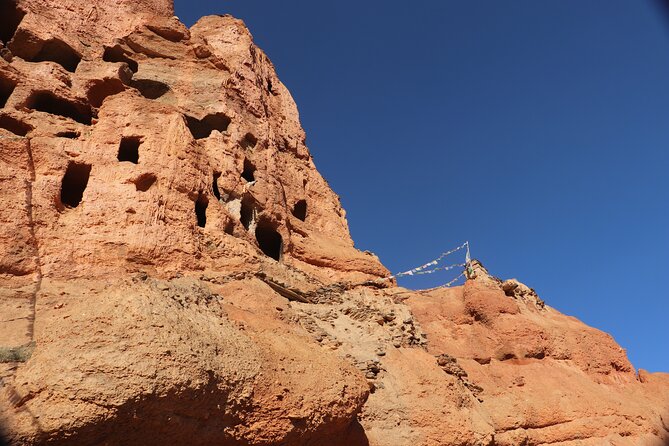
The region’s Tibetan Buddhist culture gives the trek its character. Monasteries, prayer flags, old villages, and traditional buildings appear along the route. You are not simply walking between mountain lodges. You are passing through a region with its own architecture, religious customs, and long-standing links to Tibet.
That sense of distance is a major reason to choose this trip. The route is not described as crowded, and the quieter setting gives you more room to notice details. You might find the dry scenery repetitive if you prefer forests or lush valleys, but the changing colors of the cliffs and the shape of the villages keep the walk interesting.
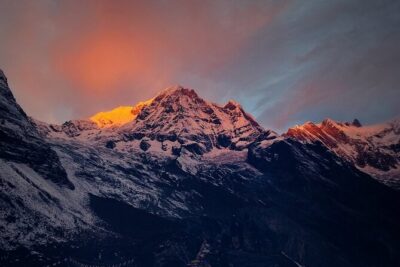
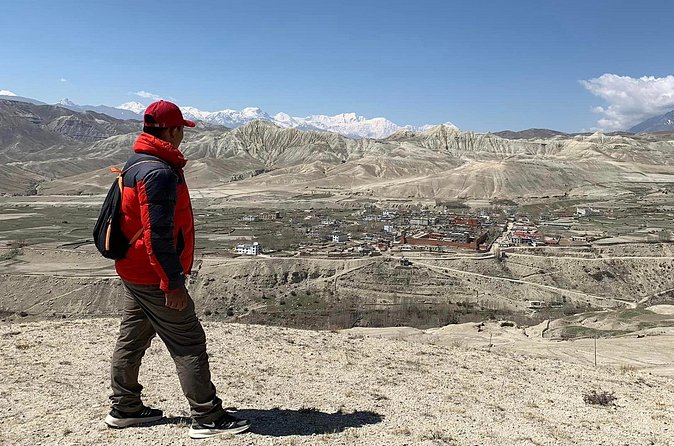
The trek also offers fine views of major Himalayan peaks, including Dhaulagiri at 8,167 meters and Annapurna I at 8,097 meters. The mountains often sit in the distance rather than directly above the trail. That contrast, stark foregrounds and enormous white peaks beyond, is one of Upper Mustang’s visual strengths.
More Trekking Tours in Kathmandu
- Everest Base Camp Trek – 14 Days
★ 5.0 · 1,499 reviews - Everest Base Camp Trek
★ 5.0 · 842 reviews - Everest Base Camp Trekking
★ 5.0 · 485 reviews
Days 1 and 2: Kathmandu permits and preparation
You arrive in Kathmandu, where a representative meets you at Tribhuvan International Airport and transfers you to a hotel. The package includes three nights in a three-star Kathmandu hotel with breakfast, giving you time to settle in before the trail begins.
The second day is partly practical and partly flexible. If you wish, you can visit sightseeing points in Kathmandu Valley after breakfast. More importantly, the staff arranges the Upper Mustang special permit, which requires your original passport and a valid Nepal visa.
This paperwork is not a minor detail. Upper Mustang is a restricted area, and the special permit costs $500 per person for 10 days. The permit is included in the tour price, but you still need to bring the correct documents. Check your passport and visa before arrival so this day does not become a last-minute scramble.
Day 3: The long road toward Pokhara
The morning begins with a short walk of about 10 minutes from the hotel to the tourist bus station. The bus leaves around 7:00 AM for the drive toward Pokhara along the Prithvi Rajmarg highway.
A breakfast stop comes after roughly two hours, with about 20 minutes to eat and stretch. Expect a full road day rather than a quick transfer. The bus connection keeps costs down, but it also means you should carry water, snacks, and anything you need during a long ride.
Pokhara is the staging point for the flight to Jomsom. The package includes two nights in Pokhara with breakfast, although the itinerary uses that time in a way that depends on the flight schedule and road connections.
Day 4: Flying to Jomsom and walking to Kagbeni
After breakfast, you transfer to the domestic airport for the flight to Jomsom, at about 2,715 meters. From there, you walk for four to five hours to Kagbeni.
This is an important change in scenery. Jomsom and Kagbeni lie on the popular Jomsom and Muktinath route, so the first trekking section connects Upper Mustang with a better-known part of Nepal. The mountain views begin immediately, but the air, river valley, and dry terrain also remind you that the route is heading into a more remote zone.
Kagbeni serves as the main entry point for Upper Mustang. Here, your special permit is checked before you continue. Allow time for this process and keep your passport and permit papers easy to reach.
The first walking day is long enough to test your pace. You are also gaining altitude, so slow, steady walking makes more sense than trying to arrive early.
Another trail to compare in Kathmandu:
- Annapurna Circuit Trek with Tilicho Lake
★ 5.0 · 368 reviews - Everest Base Camp Trekking – 13 Day
★ 5.0 · 365 reviews - Everest Base Camp Trek
★ 5.0 · 350 reviews - Everest Base Camp Trek -14 Days
★ 5.0 · 321 reviews
Days 5 and 6: Entering the restricted area at Chhusang
From Kagbeni, the route continues toward Chhusang. This is where the Upper Mustang experience begins in earnest, with the trail moving through dry valleys and small settlements.
The walk includes a descent from Kagbeni and then a series of changing surfaces. The route from Chhusang toward Samar is described as fairly flat in places, but the climb after Chele becomes more serious. The day can take five to six hours and includes the climb toward Syangboche.
One pleasant detail is the apple-growing country along the way. Upper Mustang is not all bare rock. Farms and apple gardens appear around villages, giving the dry setting a useful contrast. You also pass small settlements where the scale of daily life is easy to see.
The most practical warning is wind. The Kali Gandaki Valley can become very windy later in the day, so a hat, sunglasses, lip balm, and a light face covering are sensible items. Dust is part of the experience, not a sign that something has gone wrong.
Day 7: Syangboche and high mountain views
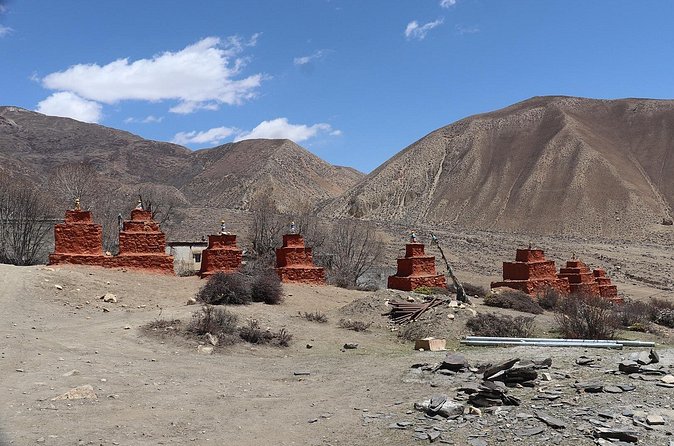
The route climbs toward Syangboche, with much of the day spent going uphill. The plan allows time for lunch and a rest before continuing, which is welcome at this altitude.
This section gives you some of the finest distant mountain views on the trip. Dhaulagiri and Annapurna I are among the major peaks visible when the weather is clear. The views may be far away, but they provide a grand backdrop to the dry ridges and village paths.
The elevation rarely exceeds about 4,000 meters according to the experience description, but that does not make the walking effortless. You still need good physical fitness, and the steady climbs can feel demanding. The schedule does not present this as a technical mountaineering trip. It is a high-altitude trek on established routes, with long walking days and repeated climbs.
Day 8: Ghiling, monasteries, and Tsarang
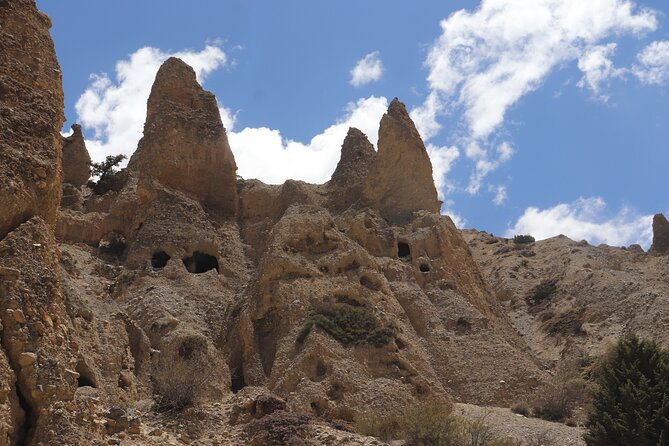
With clear weather, the route offers views of farms, Ghiling village, and older monasteries. You then continue toward Tsarang, one of the larger settlements in Upper Mustang.
Tsarang is a useful place to appreciate how settlement patterns work in this dry region. The village has cultivated land, religious buildings, and a larger community feel than the tiny stops along the trail. It is also part of the route toward Lo Manthang, so the anticipation builds here.
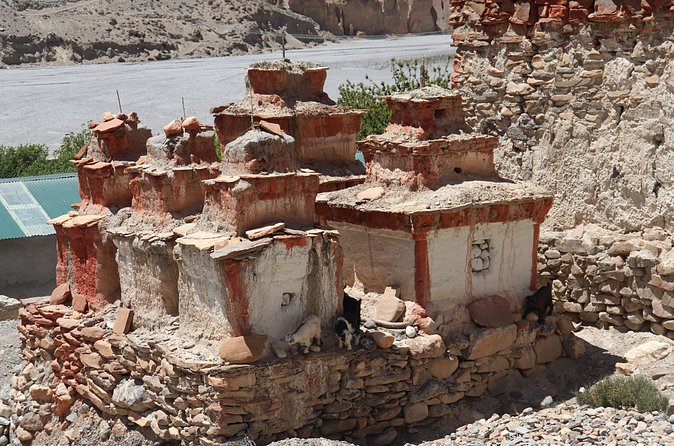
The old monasteries are not simply photo stops. They help explain why this trek feels different from a standard mountain walk. The architecture, colors, and religious objects give the villages a strong Tibetan Buddhist identity.
Days 9 and 10: Reaching Lo Manthang
The walk to Lo Manthang takes about five to six hours. You cross rivers and bridges, pass through stark open country, and gradually approach the old city.
Lo Manthang is the heart of the trip. Its enclosed form, old buildings, monasteries, and former royal palace give the town a strong sense of place. Calling it a Himalayan kingdom is not just promotional language. The city’s older identity is central to the experience, and the day here is designed for looking rather than rushing onward.
Your full exploration day includes visits to monasteries and the King’s Palace. The town’s colorful buildings and compact streets offer a break from the broad, empty valleys outside. Take your time with the details. The value of the stop comes from seeing how religion, local government, homes, and village life fit together in one small high-altitude settlement.
The city is also a good reason to choose the 18-day plan instead of a rushed itinerary. You get both the approach and a dedicated day to explore. If Lo Manthang is your main goal, do not treat the rest day as optional unless weather or health forces a change.
Days 11 and 12: Returning through Dhakmar and Ghami
After Lo Manthang, the route turns back through Dhakmar and Ghami. The trail begins uphill toward a gompa, then continues through striking Upper Mustang scenery.
Dhakmar provides another chance to see the area’s religious and village life away from Lo Manthang. The route is not only about reaching the famous city. Smaller places often give you a better feel for the region’s scale and for how people live between cultivated plots and bare slopes.
The following day takes you toward Ghami, described as one of the larger villages in the area. Ghami also has an important monastery and farmland. Apple gardens and local farm products appear along this section, adding color and human detail to an otherwise dry setting.
The return route is not a weak repeat of the outbound walk. You see some familiar territory from a different direction, and the changing light can make the cliffs and ridges look new. Still, anyone who dislikes retracing a route should know that the trek returns by broadly the same corridor.
Days 13 and 14: A steep descent to Kagbeni
From Syangboche, the route drops sharply toward Chhusang, passing Samar, Bhena, and Chele. The descent is about 1,000 meters toward the Kali Gandaki River, making this one of the more demanding days for knees and ankles.
Downhill does not always mean easy. Loose ground, long descents, and wind can be tiring, especially after many days on foot. Trekking poles would be useful, though they are not specifically listed as part of the package.
The following morning, you leave Chhusang early for Kagbeni. This timing matters because the valley can become very windy after noon. An early breakfast and an early start give you a better chance of walking before the strongest gusts arrive.
Kagbeni marks the end of the restricted Upper Mustang section. It is worth noticing the change in mood as you leave the special-permit area and reconnect with the lower Mustang route.
Days 15 and 16: Jomsom, flights, and Pokhara
The walk from Kagbeni to Jomsom is shorter and easier than many earlier stages. Once in Jomsom, you check the flight schedule for the next day and have time to look around the town.
Jomsom is known for apples and apple brandy, and the itinerary allows time to buy local products. This is a small but enjoyable way to finish the walking portion of the trek. Keep purchases modest if you are carrying your own daypack, even though a porter handles the main luggage during the trek.
The flight from Jomsom to Pokhara takes about 25 minutes, but the actual timing depends on the schedule and conditions. You may eat breakfast in Jomsom if the departure time allows. Otherwise, you leave early for the airport and wait for the flight.
This is one of the trip’s logistical weak points. Domestic mountain flights can require patience, and the plan itself allows for an early airport report and waiting. The price includes the Jomsom to Pokhara and Pokhara to Jomsom domestic air ticket, so you are not left to arrange this complicated connection alone.
Days 17 and 18: Returning to Kathmandu
After your time in Pokhara, you take a short transfer to the tourist bus park and begin the roughly seven-hour drive back to Kathmandu.
The long bus ride is less glamorous than the mountains, but it keeps the package practical. The final night in Kathmandu is included, and on day 18 the team transfers you to Tribhuvan International Airport for your departure.
The schedule leaves little room for an unexpected delay at the end. If your international flight is fixed, tell the operator your departure details clearly and keep the final transfer plan confirmed.
What the $2,400 price really covers
At $2,400 per person, this is not a budget trek, but Upper Mustang has unusual permit costs and difficult logistics. The $500 restricted-area permit is included, as are the Annapurna Conservation Area permit, domestic flights, tourist buses between Kathmandu and Pokhara, hotels, trekking lodges, meals, a guide, a porter arrangement, taxes, and service charges.
The package includes:
- Three nights in a three-star Kathmandu hotel with breakfast
- Two nights in Pokhara with breakfast
- Lodge or tea-house accommodation during the trek
- Breakfast each day, listed as 17 breakfasts
- 16 lunches and dinners
- Airport, hotel, and road transfers
- A government-licensed trekking guide
- One porter for every two people
- Special Upper Mustang permit and Annapurna Conservation Area permit
You still pay for personal expenses and tips for the guide, porters, and driver. Extra hotel nights in Kathmandu or Pokhara are also outside the package.
The value is strongest if you want one company to handle the permit, transport, flights, accommodation, and staff. It is less attractive if you already have local arrangements or want to plan each part yourself.
Who will enjoy this trek most
I would choose this trip if you want quiet trails, old villages, Buddhist monasteries, and unusual scenery more than lush forests or high technical passes. It suits people who can handle several hours of walking, repeated climbs, high altitude, dusty conditions, and a few long transport days.
You should have a strong level of physical fitness. The trip is private, so your group can travel together without being joined by strangers, but that does not remove the demands of the route.
You should also be comfortable with basic lodge accommodation. The package says tea houses and lodges are included, but it does not promise luxury rooms. The focus is on reaching remote communities, not on resort-style comfort.
The four available ratings are all five-star, and the strongest praise centers on the same things: excellent scenery, an authentic local way of life, low crowd levels, careful organization, and kind, patient support from the agency, guide, and porter. Those are the areas where this trek appears strongest. The consistent caution is not about service. It is the dusty terrain, wind, altitude, and complicated transport.
Practical booking advice
Bring your original passport and make sure your Nepal visa is valid. The special permit process depends on those documents.
Plan for changing conditions. The itinerary specifically recommends early starts around Kagbeni and Chhusang because the valley becomes very windy after noon. Pack sun protection, warm layers, sturdy walking shoes, and something to cover your face from dust.
The activity offers pickup and a mobile ticket, and booking confirmation is provided at the time of booking. It operates as a private activity, with only your group taking part.
The cancellation terms are fairly strict close to departure. You can receive a full refund by canceling at least six full days before the start time. Canceling two to six days ahead allows a 50 percent refund, while canceling less than two full days ahead brings no refund. These cutoffs use local time.
Should you book the Upper Mustang trek?
Book it if you want a long, carefully arranged journey into one of Nepal’s driest and most culturally distinctive regions. Lo Manthang, the monasteries, the old villages, and the wide mountain views justify the time and cost, especially with the $500 permit already included.
Think twice if you dislike long bus rides, domestic flight uncertainty, basic lodges, dust, or repeated walking days at altitude. This is not Nepal’s easiest trek, but it offers something different from the crowded classic routes. For a fit walker who values place, culture, and quiet mountain scenery, the $2,400 package is a sensible way to reach Upper Mustang without handling every permit and connection alone.
FAQ
How long is the Upper Mustang trek?
The full experience lasts approximately 18 days, including time in Kathmandu and Pokhara, transport, domestic flights, and the trekking sections.
What is the price per person?
The listed price is $2,400 per person.
Is the Upper Mustang special permit included?
Yes. The package includes the special Upper Mustang permit priced at $500 per person for 10 days, along with the Annapurna Conservation Area permit.
What documents are needed for the special permit?
You need your original passport and a Nepal visa.
Are flights between Jomsom and Pokhara included?
Yes. The package includes domestic air tickets between Pokhara and Jomsom in both directions.
Is accommodation included?
Yes. The package includes three nights in a three-star hotel in Kathmandu, two nights in Pokhara with breakfast, and lodge or tea-house accommodation during the trek.
Is this a private activity?
Yes. Only your group participates, and the trip includes a government-licensed guide and one porter for every two people.
Latest treks added in Kathmandu
- Private Manaslu Circuit Trek at Himalayas★ 5.0 · 3 reviews
- Ghorepani Poonhill Trek★ 5.0 · 5 reviews
- Ghorepani Poon Hill Trek★ 5.0 · 16 reviews
- Amazing 1 Day Trekking Experience in Kathmandu Nepal★ 5.0 · 24 reviews
- Upper Mustang Trekking★ 5.0 · 2 reviews
- Upper Mustang Trekking★ 3.0 · 2 reviews
- Upper Mustang Trek★ 5.0 · 5 reviews
- Upper Mustang Trekking★ 5.0 · 4 reviews
Kathmandu Trekking Tours, compared.