REVIEW · KATHMANDU
Upper Mustang Trek
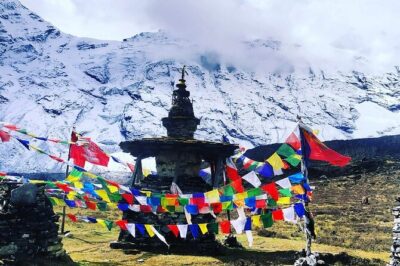
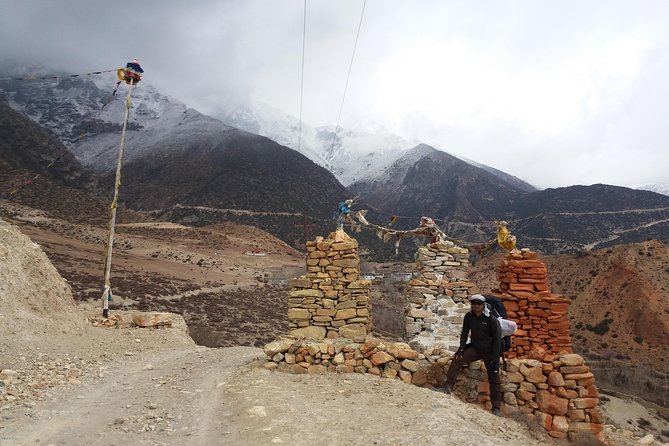
Upper Mustang feels like a different country within Nepal. You cross dry plateaus, river valleys, high passes, and old Tibetan-style villages while following a route through a former forbidden kingdom. The best parts are the walled town of Lo Manthang and the old gompas, caves, chortens, and prayer flags scattered across the route.
I like that the price includes the costly Upper Mustang permit, domestic flights, a guide, staff support, and transport between Kathmandu and Pokhara. I also like the small maximum group of 12, which should make the long walking days easier to manage.
The main caution is the amount left outside the package. Food, drinks, porter service, insurance, personal gear, tips, and emergency evacuation are extra. The published schedule also needs clarification, since several days appear out of order around Lo Manthang and Ghami.
Key points to know before you book
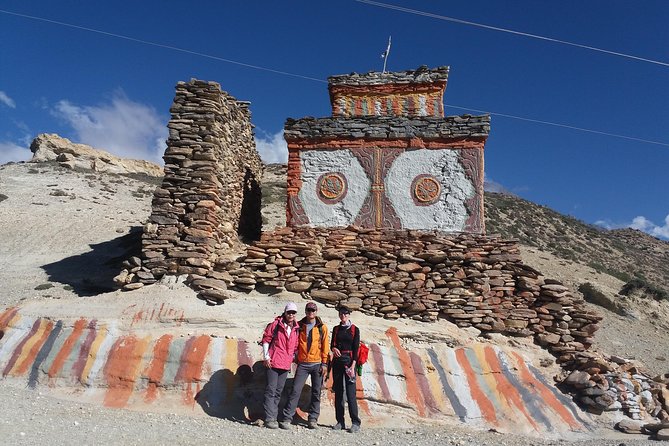
- A rare restricted area: Upper Mustang was closed to foreign visitors until 1992, and special permits are still required.
- High passes every few days: The route crosses Taklam La, Dajori La, Yamada La, Nyi La, and Tsarang La, with elevations up to about 3,950 meters.
- Lo Manthang is the cultural heart: You visit the walled town’s Jhampa, Thubchen, and Chhode gompas, plus nearby Tingkhar.
- The package covers major costs: Flights, permits, guide services, staff support, hotels in Pokhara, and local lodge rooms are included.
- Expect simple accommodation: The 11 nights in the trekking region are in available local lodges on a room-only basis.
- Wind and altitude shape the day: Strong afternoon winds, rough trails, and long walks make early starts and steady pacing important.
Why Upper Mustang feels unlike other Nepal treks
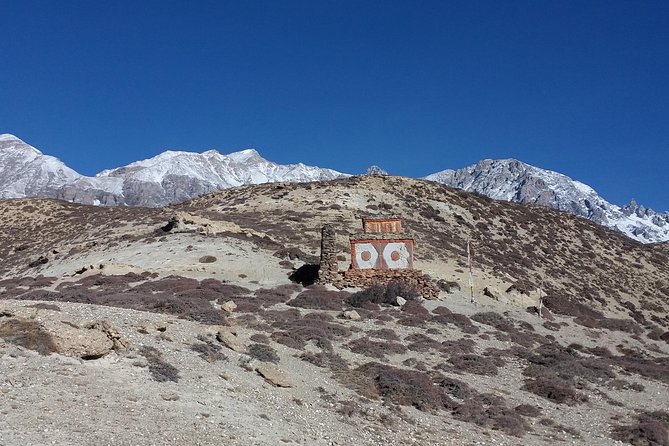
Upper Mustang sits north of the main Himalayan range, near the Tibetan Plateau. Its scenery is dry and wide open, with cliffs, caves, bare ridges, fields, and villages built in a Tibetan style. You will not get a green forest trek for most of this route. You get stark terrain, strong light, and a sense of distance from modern Nepal.
The area was a restricted demilitarized zone until 1992. That long isolation helped preserve traditional customs, Tibetan languages, monasteries, and village forms. The special permit system still limits access, so the trek has a more controlled and remote character than many better-known routes.
You also get impressive mountain views. The route can show parts of Annapurna, Dhaulagiri, Nilgiri, Tilicho, Yakawa Kang, Damodar Danda, Manaslu, and Machhapuchhre. The mountains are not always the main view in Upper Mustang, however. The dry valleys and old settlements often provide the stronger visual memory.
More Trekking Tours in Kathmandu
- Everest Base Camp Trek – 14 Days
★ 5.0 · 1,499 reviews - Everest Base Camp Trek
★ 5.0 · 842 reviews - Everest Base Camp Trekking
★ 5.0 · 485 reviews
Days 1 and 2: Kathmandu, Pokhara, and the flight to Jomsom
The trip begins with a morning pickup from your hotel in Kathmandu. You walk with the guide to the tourist bus park and take a shared tourist bus to Pokhara. The drive takes about four hours according to the final return schedule, though road conditions can affect actual timing.
Pokhara gives you a useful change of pace before the trek. The city sits beside Fewa Lake, with mountain views and easy streets for a short walk. You can also go boating on the lake. The package includes two hotel nights in Pokhara at Hotel Shaara or a similar property.
The next morning, you take an early flight to Jomsom. The flight passes through a gorge between Annapurna and Dhaulagiri, making the journey part of the experience rather than just a transfer. Weather can affect mountain flights, so keep your wider Nepal plans flexible if you have a flight or international connection soon after the trek.
Jomsom is known for apples, strong winds, and its position near two rivers. The first walk follows an open trail through the valley and passes Eaklibatti village. Flat-roofed houses and the remains of an old fortress give you an early look at the region’s building style.
Days 3 and 4: Kagbeni, Tangbe, and two high passes
The next stage begins near Kagbeni, where your restricted-area permits are checked. The trail follows the Kali Gandaki River, with sandy ground and strong winds before you climb toward the villages ahead.
Tangbe is one of the most appealing stops on this part of the route. Its narrow lanes, whitewashed houses, barley and buckwheat fields, and apple orchards offer a close look at village life. You continue past another settlement, cross a river, and walk along a ridge before reaching Chele.
The day is listed at about six hours. The footing can be sandy and exposed, and the wind may make the walk feel harder than the distance suggests. I would treat this as a real trekking day, not a sightseeing stroll.
From Chele, the route becomes more demanding. You cross Taklam La at 3,624 meters and Dajori La at 3,735 meters. Views include Tilicho, Yakawa Kang, and Damodar Danda, and the trail passes Ramchung Cave before descending toward Samar.
After Samar, the path climbs above the village to a ridge, then drops steeply toward a stream before continuing to Syangboche. This seven-hour day combines altitude, repeated climbing, and a steep descent. Good footwear matters here, especially if the trail is loose or slippery.
Days 5 and 6: Nyi La, Ghami, and the route toward Tsarang
The walk from Syangboche goes over Yamada La at 3,850 meters. Along the way, you pass teahouses, chortens, villages, polar forests, and barley fields. The mix of dry ground, small cultivated plots, and religious markers is part of what makes Upper Mustang so distinctive.
You then reach Nyi La at 3,950 meters, one of the highest points listed on the route. From there, the trail descends to Ghami, one of the larger villages in the Lo region. Fields surround the settlement, creating a sharp contrast with the bare hills around it.
The next day begins with a rough and sometimes slippery descent. You cross a suspension bridge over the Ghami Khola, climb again, and follow a path lined with Mani walls. You then cross Tsarang La at 3,870 meters before reaching Tsarang, which sits above the Charang Chu canyon.
Tsarang is known for its large fortress and red gompa to the east. The listed walking time is six hours. This section is a good example of the trek’s rhythm: descend, cross water, climb a pass, then arrive at a historic settlement.
The schedule provided places Tsarang on day six, then lists a return to Ghami on day seven before a Lo Manthang touring day on day eight. That order is not fully clear. Ask the operator to confirm the exact overnight stops before you pay, especially if you want a precise plan for Lo Manthang.
Another trail to compare in Kathmandu:
- Annapurna Circuit Trek with Tilicho Lake
★ 5.0 · 368 reviews - Everest Base Camp Trekking – 13 Day
★ 5.0 · 365 reviews - Everest Base Camp Trek
★ 5.0 · 350 reviews - Everest Base Camp Trek -14 Days
★ 5.0 · 321 reviews
Lo Manthang: the cultural center of the trek
Lo Manthang is a walled town in Upper Mustang and the main cultural highlight of the journey. Its compact form, old religious buildings, and remote setting give the town a strong sense of place.
The planned visit includes three important gompas: Jhampa, Thubchen, and Chhode. Each has undergone expert restoration over the past two decades. These are not quick photo stops. Allow time to look closely at the religious art and architectural details, and follow your guide’s instructions about donations and photography.
You can also walk to Tingkhar, a village northwest of Lo Manthang. The route is listed at about seven hours, so this is a full day rather than a short town extension. It gives you a chance to see more of the area beyond the walls.
The itinerary also includes a return route through Gyakar village, home to the century-old Ghar Gompa. The gompa contains rock paintings and is linked to a local wish-making tradition. From there, you continue to Drakmar for the night.
This part of the trip gives the trek its strongest cultural focus. The mountains matter, but the old religious sites and village settlements explain why access to Upper Mustang is controlled. You are not simply walking through dramatic scenery. You are moving through a living Tibetan Buddhist region.
Days 7 through 12: the long return to Jomsom
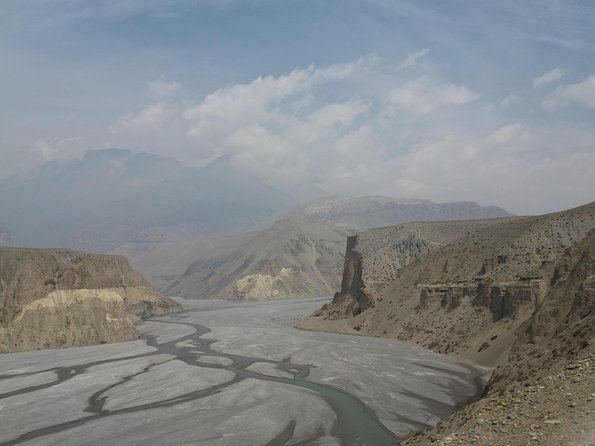
After the time around Lo Manthang, the route heads back toward modern transport and Jomsom. One return day is listed at four hours to Ghami, while the route through Gyakar and Drakmar is listed at seven hours. The exact order should be confirmed, but the overall plan is clear: you return by a different trail in places rather than simply repeating every step.
From Drakmar, you descend toward Ghiling. The group starts early to avoid the strongest winds. The route crosses a dry plateau and fields before reaching the village, and the walk is listed at six hours.
Ghiling is a dry settlement, but you may get views toward Dhaulagiri and Nilgiri. An evening village walk is planned. The warning about wind is worth taking seriously. Upper Mustang’s open terrain offers little shelter, and a headwind can make an otherwise moderate day tiring.
The next day continues to Chhusang, following the same general trail used on the way toward Lo Manthang. The six-hour walk brings views of the Himalayas and the small villages along the route. Retracing part of the route can be useful because the scenery looks different in the opposite direction, but you should expect less novelty than on the first pass.
The final trekking day is long, at about seven hours. You leave the Mustang trails and rejoin the Annapurna Circuit route, stopping for lunch at Kagbeni before continuing to Jomsom. This is a satisfying geographic transition, but it is also a tiring finish. Plan to keep the evening simple.
What the $2,431.92 price really covers
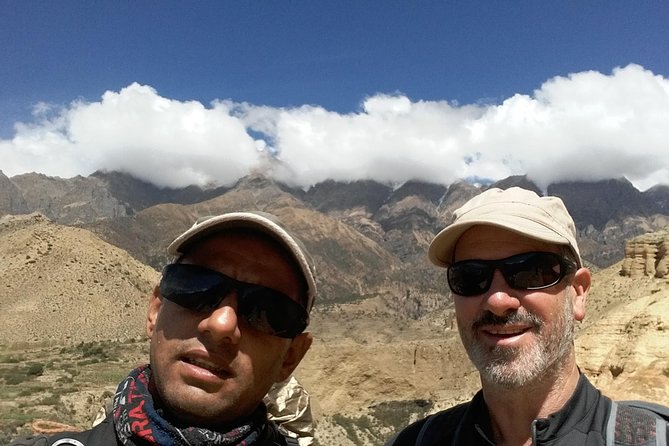
At $2,431.92 per person, this is not a budget lodge-to-lodge trek. The price makes more sense once you account for the restricted-area permit, domestic flights, guide, staff support, and the Kathmandu to Pokhara transport.
Included services are:
- Shared tourist bus transport between Kathmandu and Pokhara
- An English-speaking trekking guide
- Staff wages, insurance, equipment, food, and accommodation
- Two hotel nights in Pokhara
- Eleven nights in available local lodges
- Pokhara to Jomsom and Jomsom to Pokhara flights
- Upper Mustang and other required permits
- Park fees
- Two breakfasts
The main limitation is the room-only arrangement at local lodges. Food and drinks are not included for the trip, so you need a separate meal budget. Porter service costs an additional $30 per day per porter, with one porter carrying up to 20 kilos of luggage.
Travel insurance, international flights, evacuation coverage, personal hiking equipment, temple and school donations, upgraded rooms, and tips are also extra. I would not book this without proper travel insurance that covers trekking at the elevations on the route. Emergency rescue evacuation is specifically excluded from the package.
The operator offers group discounts, and the group size is capped at 12. That is a useful balance: small enough for a personal feel, but not necessarily a private trek.
Practical strengths and limits
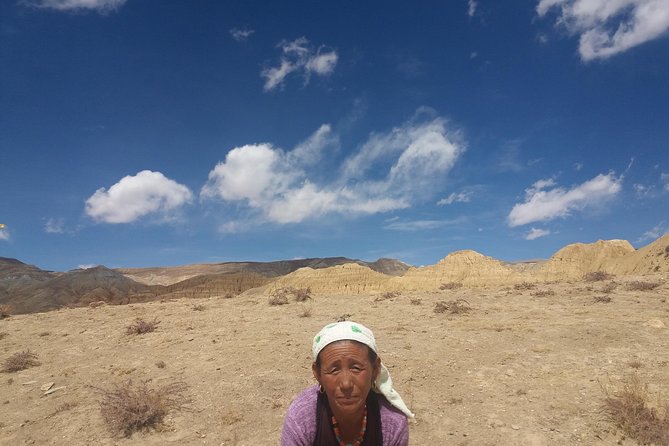
I like the way this package handles the hardest-to-arrange parts. The Upper Mustang permit, flights, guide, and staff support are all included. Those details can be a nuisance to organize separately, and the permit alone makes Upper Mustang different from a standard Nepal trek.
The English-speaking guide should help with route finding, permits, village visits, and monastery etiquette. The company has also been praised for answering booking questions quickly and clearly. That is especially useful here because the itinerary needs clarification.
The basic lodging may be the right trade-off for a remote region. Do not expect a polished hotel experience on the trail. You are staying in available local lodges, with the room included but meals billed separately.
The trek is listed as suitable for most participants, but that does not mean it is easy. You face multiple passes, walking days of four to seven hours, steep trails, wind, dry conditions, and elevations close to 4,000 meters. A steady walking pace and comfort with simple accommodation will matter more than speed.
The cancellation terms are favorable if your plans change early. You can receive a full refund by canceling at least 24 hours before the local start time. Cancellations or changes inside that window are not accepted.
Is the Upper Mustang Trek a good fit for you?
Book this trek if you want old Buddhist sites, remote villages, high desert scenery, and a structured route through a restricted part of Nepal. It suits you best if you value cultural detail and unusual terrain more than luxury or a relaxed schedule.
Think twice if you dislike strong wind, long walking days, local lodges, shared transport, or paying separately for meals and porter support. I would also ask for a corrected day-by-day schedule before booking, with every overnight stop clearly named.
For the right person, the price is defensible because it covers the permits and transport that make Upper Mustang possible. The real payoff is not a single viewpoint. It is the steady sequence of walled towns, old gompas, caves, fields, river crossings, and high passes that makes this corner of Nepal feel so far removed from ordinary touring.
FAQ
How long is the Upper Mustang Trek?
The trek lasts approximately 14 days, including transport from Kathmandu to Pokhara, flights between Pokhara and Jomsom, the walking route, and the return to Kathmandu.
What is included in the tour price?
The price includes shared tourist bus transport between Kathmandu and Pokhara, an English-speaking guide, staff costs, two hotel nights in Pokhara, eleven nights in local lodges, domestic flights between Pokhara and Jomsom, required permits, and park fees.
Are meals included?
Only two breakfasts are listed as included. Food, drinks, and beverage bills at all places are not included.
Is a porter included?
No. Porter service costs an extra $30 per day per porter. One porter can carry up to 20 kilos of luggage.
What is the maximum group size?
The maximum group size is 12 travelers.
Is the Upper Mustang permit included?
Yes. The Upper Mustang Restricted Area Permit, other required permits, and park fees are included.
Are flights between Pokhara and Jomsom included?
Yes. The package includes the Pokhara to Jomsom and Jomsom to Pokhara flights, including domestic surcharges.
What happens if I cancel?
You can receive a full refund if you cancel at least 24 hours before the experience start time. Cancellations or changes made less than 24 hours before the start are not accepted.
Latest treks added in Kathmandu
- Private Manaslu Circuit Trek at Himalayas★ 5.0 · 3 reviews
- Ghorepani Poonhill Trek★ 5.0 · 5 reviews
- Ghorepani Poon Hill Trek★ 5.0 · 16 reviews
- Upper Mustang Trekking★ 3.0 · 2 reviews
- Amazing 1 Day Trekking Experience in Kathmandu Nepal★ 5.0 · 24 reviews
- Upper Mustang Trekking★ 5.0 · 2 reviews
- Upper Mustang Trek★ 5.0 · 5 reviews
- Upper Mustang Trekking★ 5.0 · 4 reviews
Kathmandu Trekking Tours, compared.