
REVIEW · LAOS
Nam Ha NPA 3 Day Wildlife Jungle Camp and Village Homestay Trek
Nam Ha NPA is at its best when the forest is treated as more than a backdrop. On this three-day trek, you learn how local people use plants, prepare food, move through the jungle, and live in villages near the reserve. Nights are spent first in a simple banana-leaf hunter’s camp, then in a traditional homestay.
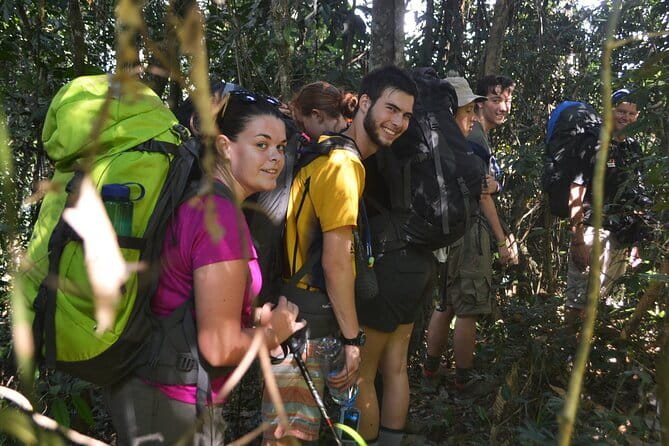
I like the close contact with local guides such as Nom, Xiong, and Sing, whose practical forest skills and personal ties to Khmu communities add much more than a standard walk in the woods. I also like the balance between hiking and hands-on tasks: fishing, frog hunting, rice pounding, crossbow practice, and cooking with forest ingredients.
The main caution is simple: this is not a soft adventure. You need moderate fitness for uphill paths, thick jungle, river crossings, and changing ground. Comfort is basic, food is local, and the pace can include challenging climbs even though there are regular breaks.
Key points to know before you book
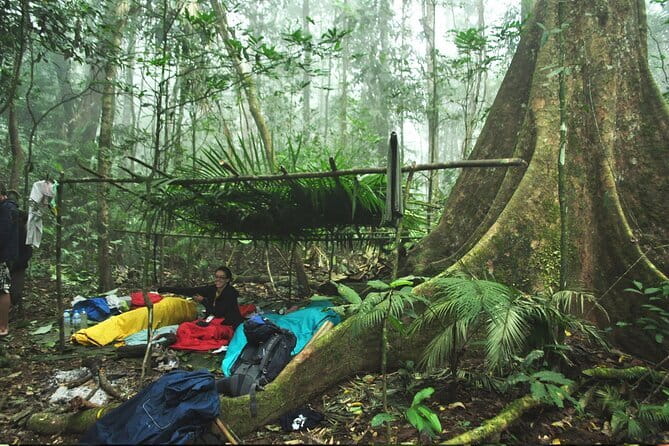
- Banana-leaf jungle camp: Spend a night in a traditional hunter’s camp rather than a hotel.
- Khmu village homestay: Meet local residents, learn about village customs, and sleep in a family-style setting.
- Forest skills: Look at medicinal plants, gather useful jungle ingredients, fish, hunt frogs, and cook meals.
- Small groups: The maximum group size is eight, which gives you more time with the guide.
- Good value at $149: The price covers transport, guides, lodging, meals, water, park entry, activities, and taxes.
- Moderate physical effort: Expect forest paths, uphill walking, a river crossing, and conditions that can be muddy or rough.
What this Nam Ha trek is really about
This is a practical forest experience, not a sightseeing circuit with a few photo stops. The main reward is learning how the jungle connects to daily life in northern Laos.
Your guide may point out plants used for medicine or cooking, explain how food is prepared with limited equipment, and show you techniques linked to hunting and village life. The exact activities can vary with conditions and the group, but the stated program includes fishing, frog hunting, cooking, rice pounding, and crossbow shooting.
The cultural side matters just as much as the walking. At the village, you have a chance to see how Khmu communities organize daily life and to take part in ordinary activities rather than simply pass through for a quick visit.
The guides are a major part of the experience. Nom is noted for clear English, kindness, and strong connections with local people. Xiong has led more than 400 treks, while Nom and Sing are described as deeply familiar with the reserve and local customs. The guide you receive may vary, but this is the kind of trip where a good local guide makes a large difference.
More Homestay Treks in Laos
- The Wild Explorer – 3 days forest trek with homestay and camping
★ 4.5 · 22 reviews - Nalan Trail Kmu Ethnic Experience – 2days forest trek with homestay.
★ 5.0 · 21 reviews - Hunter Trails, 3 days difficult trekking with Camping & Homestay
★ 5.0 · 15 reviews
Day 1: From Luang Namtha to the first forest camp
You meet at the Phou Iu Travel & Ecotourism office in Phonexay Village at 9:00 a.m. The group then travels by tuk-tuk and stops at a local market to buy supplies.
That market stop gives the trip a useful beginning. Instead of carrying a fixed menu prepared far away, you see the food and supplies being gathered before the walk. It also helps set expectations: this is a working trip with cooking and camp tasks, not simply a guided nature stroll.
The trek begins near Nam Ha village with a local guide. The first section takes you into the forest, with a picnic lunch along the way. The guide introduces the plants, animals, and practical uses of the forest as you go.
The route includes thick jungle and uphill sections. One detailed account describes a difficult climb followed by a descent toward the river and a rural town. You should expect the terrain to demand attention, especially if the ground is wet or uneven.
The first night is spent in a jungle camp made with banana leaves. This is the signature feature of the trip, but it is also the part that requires the most flexibility. You are sleeping in a traditional hunter’s camp, so do not expect a private room, hotel bedding, or modern facilities.
Dinner is prepared with the group and guide, using food and jungle resources. Fishing, frog hunting, and food preparation are part of the stated program, although the exact catch and activities depend on local conditions. The point is to learn the process, not to treat the forest as a guaranteed outdoor restaurant.
Day 2: River crossing, Nalan village, and Khmu traditions
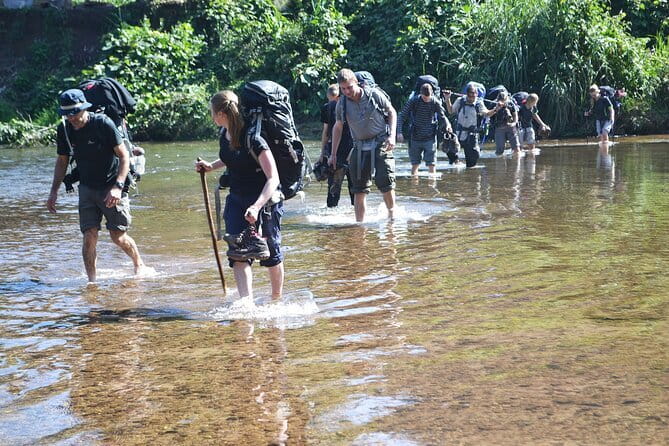
The second morning begins with the sounds of the forest and breakfast at camp. You then choose between route options, including a hike of about three hours across the Nam Ha River toward Nalan village.
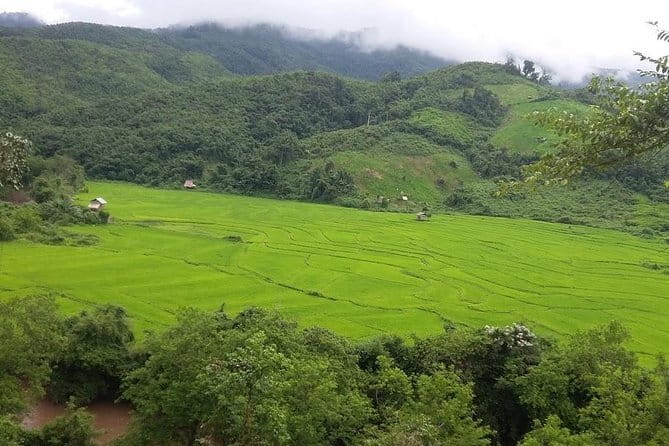
The walk to Nalan combines forest time with a clear cultural destination. At the village, you have a traditional lunch and learn about Khmu life and customs. This makes the day feel different from the first: instead of focusing mainly on forest skills, you begin to understand the community connected to the reserve.
A village visit can be rewarding precisely because it is not overproduced. You may take part in activities, observe daily routines, and ask questions through the guide. Keep your approach respectful. This is a home and community, not a staged attraction.
The program includes a homestay, and the second night is generally the village portion of the trip. Accommodation remains simple. The value comes from the contact with local people and the chance to experience village life at close range, not from physical comfort.
One useful feature is the relaxed rhythm. A guide may break up walking with food preparation, explanations, and rests. That can make the trek easier for a fit person who does not want nonstop hiking, but it also means this is not the best choice if you want a fast, athletic route with long hours on the trail.
Day 3: Coffee, rice pounding, and the final forest walk
The final morning includes a village visit, Lao coffee or local tea, rice pounding, and crossbow shooting. These activities give you a hands-on look at skills that are easy to miss on a standard cultural tour.
Rice pounding is especially useful because it connects directly to food preparation. Crossbow practice offers a glimpse of traditional hunting methods, though the experience is presented as an activity and lesson rather than a modern shooting excursion.
After breakfast, you again choose between route options. One option is a three to four-hour hike uphill through the forest. The supplied outline does not give every detail of the alternate route, so you should ask the operator which path is planned for your departure and how strenuous it will be.
The return brings you back to the meeting point in Luang Namtha. The trip includes breakfast on two mornings, three lunches, and two dinners, so you do not need to arrange your main meals during the trek. Snacks, fruit, and a personal water bottle are not included, so bring those yourself.
More Jungle Treks in Laos
- Chiang Mai: 2-Day Jungle Trek with Elephant Farm & Raft Ride
★ 4.7 · 881 reviews - 3-Day Ethical Orangutan Jungle Trek | Bukit Lawang, Sumatra
★ 5.0 · 401 reviews - Monkey Business 3 days – 2 nights Jungle trekking (including rafting)
★ 5.0 · 294 reviews - 2 Days and 1 Night Ethical Jungle Trek
★ 5.0 · 229 reviews
Food, water, and sleeping arrangements
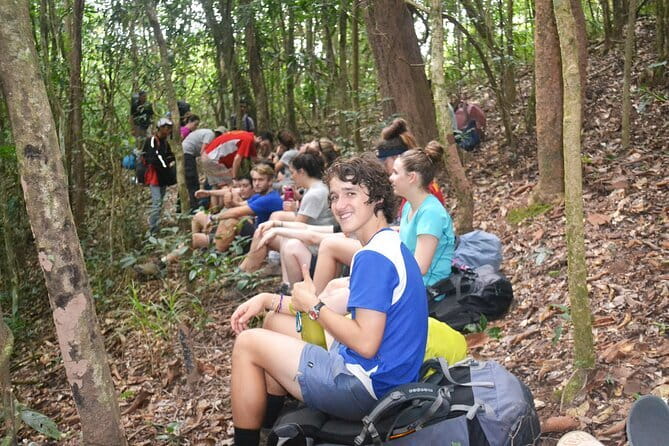
Food is one of the stronger parts of the program because it is tied to the setting. You help prepare meals and may use ingredients found or gathered in the forest. The guides are also described as preparing typical local dishes, with explanations of plants used for cooking and medicine.
Do not expect restaurant variety. The appeal is freshness, local technique, and the shared work of making a meal at camp or in the village. If you have dietary restrictions, ask before departure. The supplied information does not specify special meal options.
Water is included, but a personal water bottle is not. Bring a reusable bottle, along with snacks and fruit if you need food between meals. Personal medicine is also your responsibility.
The accommodation is intentionally basic. One night in a banana-leaf camp gives you a direct connection to forest life. The homestay provides a different kind of local contact. Pack for simplicity, and bring sandals or flip-flops for use around camp and the village, since those are specifically listed as items you should supply yourself.
Guide quality can make or break the trip
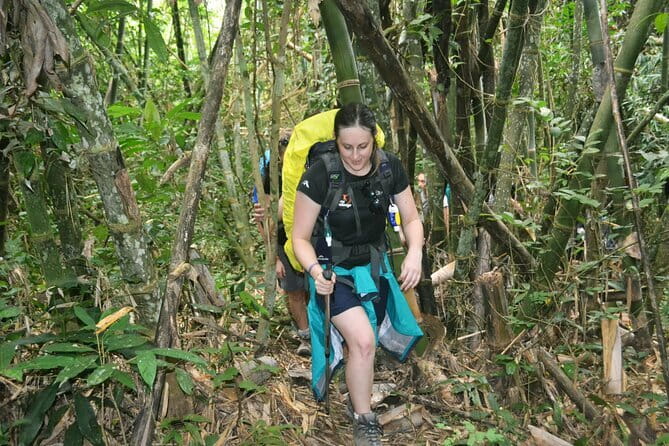
A forest trek depends heavily on the person leading it. Here, the guide is not just there to point out a trail. The program relies on local knowledge for plants, wildlife, village customs, food preparation, and navigation.
Nom is praised for speaking good English and communicating easily with groups. He is also described as kind, thoughtful, and attentive to comfort. Xiong is identified as an experienced guide with more than 400 treks behind him. Nom and Sing are also known for their familiarity with the Nam Ha reserve and their connection to local communities.
You may not receive the same guide named in earlier accounts, but it is worth asking who will lead your group. English ability can vary among local guides, and one English-speaking guide may work with additional local staff. A small group of up to eight allows more direct conversation and makes it easier to ask questions while walking.
The best questions are specific. Ask about the expected route, the river crossing, the overnight camp, the homestay, and what to pack. A pre-trek meeting can help you understand the plan and decide whether the physical level suits you.
How hard is the walking?
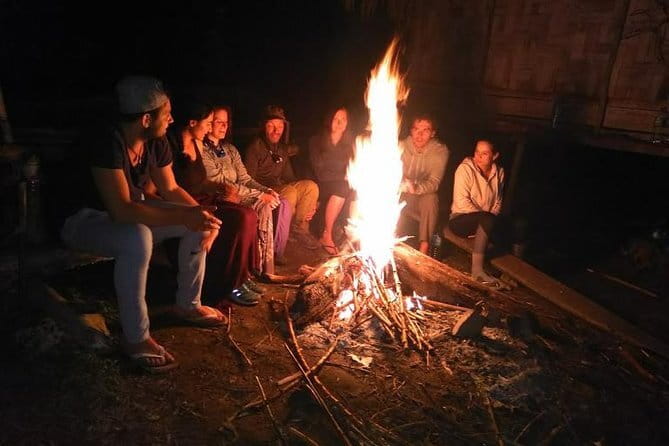
The activity is rated for moderate physical fitness. That description should be taken seriously, even though each listed day includes roughly four hours of activity in the basic schedule.
You may walk uphill, descend through thick forest, cross the Nam Ha River, and deal with uneven ground. Some sections can be a challenging uphill effort. Regular breaks and food preparation make the overall pace less relentless, but they do not remove the physical demands.
I would choose this trip if you are comfortable walking for several hours and handling simple outdoor conditions. I would think twice if you have trouble with steep paths, cannot manage river crossings, or need predictable hotel facilities.
Good footwear is important. The supplied information specifically reminds you to bring sandals or flip-flops, but you should also plan your main walking footwear around forest conditions. Personal medicine should be packed before departure, since it is not included.
What the $149 price covers
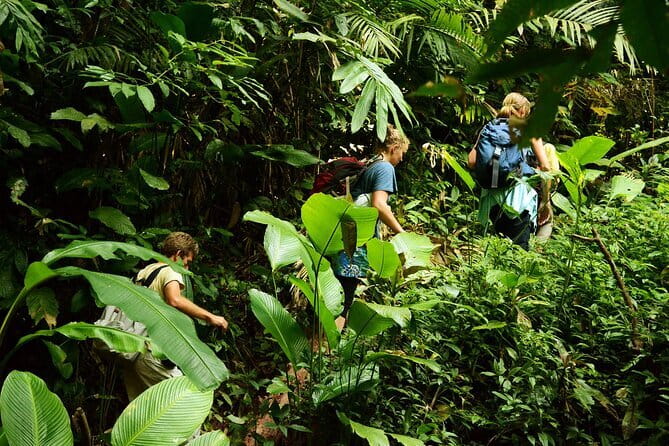
At $149 per person, the price is strong if you want a complete three-day package. It includes an English-speaking or local guide, tuk-tuk transportation, jungle camp and homestay accommodation, food, water, village activities, the Nam Ha NPA entry fee, community distribution, government charges, and taxes.
The meal coverage is substantial: two breakfasts, three lunches, and two dinners. You also avoid separate payments for park entry and planned village activities.
The value is less about luxury and more about access. You are paying for local staff, route planning, food, transport, cultural contact, and a small-group experience in an area that is difficult to understand through independent wandering alone.
The costs left to you are modest but worth noting. Snacks, fruit, a personal bottle, medicine, and sandals or flip-flops are not included. Group discounts are offered, so the price may work especially well for friends or families traveling together.
Timing, group size, and cancellation details
The meeting time is 9:00 a.m. at Phou Iu Travel & Ecotourism in Phonexay Village, Luang Namtha. The activity ends back at that meeting point. Pickup is offered, but confirm the exact pickup arrangement rather than assuming it replaces the stated meeting location.
The maximum group size is eight. That is small enough for useful contact with the guide and less crowding at the camp or village. Group discounts may make it a sensible choice for a few companions traveling together.
The experience is often booked about 24 days ahead, so I would not leave it until the last moment if your dates are fixed. Confirmation is provided when you book.
You can cancel for a full refund up to 24 hours before the start time. Changes or cancellations made inside that period are not accepted or refunded.
Who should book this Nam Ha experience?
I would recommend it to you if you want local contact, practical forest skills, and a trip that combines nature with village life. It suits people who enjoy learning by doing and who can accept basic sleeping arrangements.
It is a particularly good fit for small groups, independent-minded visitors, and anyone who wants more than a short jungle walk from Luang Namtha. The guides’ local connections are a real asset, especially if you want to ask about plants, food, wildlife, or Khmu customs.
I would not choose it for a luxury holiday, a wildlife sighting guarantee, or a tightly timed hiking challenge. The forest is the setting, not a zoo, and activities can depend on conditions. The route includes effort, simple facilities, and a level of uncertainty that comes with outdoor travel.
Should you book the three-day Nam Ha trek?
Yes, if you want an active and culturally grounded trip and you are happy to sleep simply. The strongest reasons are the hands-on forest skills, the Khmu village stay, and the local guides who connect the walk to real community life.
Before booking, confirm the guide, route option, sleeping arrangements, and any food needs. Bring a bottle, snacks, medicine, suitable walking footwear, and sandals or flip-flops.
For $149, this is a well-rounded package with transport, meals, lodging, entry fees, and activities included. You should book it for the people and the learning, not for polished comfort. If that sounds right to you, Nam Ha can provide three memorable days with a genuine sense of place.
FAQ
Where does the Nam Ha trek start?
It starts at Phou Iu Travel & Ecotourism in Phonexay Village, Luang Namtha, Laos, at 9:00 a.m.
Where does the activity finish?
The trek ends back at the original meeting point.
How long does the trek last?
The experience lasts approximately three days.
What is the maximum group size?
The group can include a maximum of eight people.
Is transportation included?
Yes. Transportation is included, and the first day uses a tuk-tuk after meeting at the office. Pickup is also offered, but confirm the details when booking.
What accommodation is included?
The package includes accommodation in a jungle camp and a village homestay. The jungle camp uses traditional banana-leaf shelter.
What meals are included?
The price includes two breakfasts, three lunches, and two dinners, along with food and water during the experience.
What is not included?
Snacks, fruit, a personal water bottle, personal medicine, and sandals or flip-flops are not included.
More three-day treks in Laos
- Luang Prabang: Nong Khiaw 3-Day Trekking & camping, Homstay
★ 5.0 · 9 reviews - Luang Prabang: 3-Day Cultural Remote Trek With Homestay
★ 4.9 · 9 reviews - Sapa 3 Days 2 Nights Trekking Tour (1 Night In Ta Van Village, 1 Night In Hotel)
★ 5.0 · 699 reviews - 3-Day Trekking Adventure of Sapa from Hanoi – Stay Ta Van Village
★ 5.0 · 611 reviews
More wildlife trips in Laos
- Khao Sok: Private Waterfalls and Wildlife Half-Day Trek
★ 4.5 · 337 reviews - 4-Day Uganda Gorilla Trekking and Wildlife Safari
★ 5.0 · 37 reviews - 5 Day Gorillas, Wildlife and Kalinzu Forest Chimp Trek
★ 5.0 · 27 reviews - Gorilla trekking &wildlife adventure in Rwanda
★ 5.0 · 18 reviews
Latest treks added in Laos
- Trek to Tad Sae Waterfalls, Local Village★ 4.5 · 2 reviews
- Day Trek to Kuangsi Waterfall and Bear Sanctuary – Luang Prabang full day tour★ 5.0 · 9 reviews
- 2 Days Multi Adventure in Nam Ha NPA: Trek and Kayak★ 5.0 · 2 reviews
- Nalan Trail and Khmu Tribe: 2 Days Trek in Nam Ha NPA★ 5.0 · 5 reviews
- The Ultimate Hiker’s Choice – 5 days forest trek with homestay and camping★ 5.0 · 8 reviews
- 2 Days Treking,Lao+hmong+khmu,Waterfall and Kayaking At NongKhiaw★ 5.0 · 2 reviews
- Nong Khiaw: 2-Day Trekking,Hmong village,Home Stay&Kayaking★ 4.9 · 17 reviews
- Luang Prabang: Nong Khiaw 3-Day Trekking & camping, Homstay★ 5.0 · 9 reviews
Homestay & Village Treks, compared.
Number one top rated ethical cultural trekking and homestay by ETHOS
Read our review →
2-Day Sa Pa Ethnic Homestay Tour & Trek with Limousine Bus
Read our review →
Sapa 3 Day 2 Night Trekking With Hotel & Homestay
Read our review →
Sapa 2 Days 1 Night Overnight At Local Homestay
Read our review →
2-Day Trekking Trip with Ethnic Minority Homestay
Read our review →
2-Day Trek & Heartwarming Homestay with an Ethnic Family
Read our review →Browse the lists this tour appears in