
REVIEW · CHIANG MAI
Chiang Mai: 2-Day Jungle Trek with Elephant Farm & Raft Ride
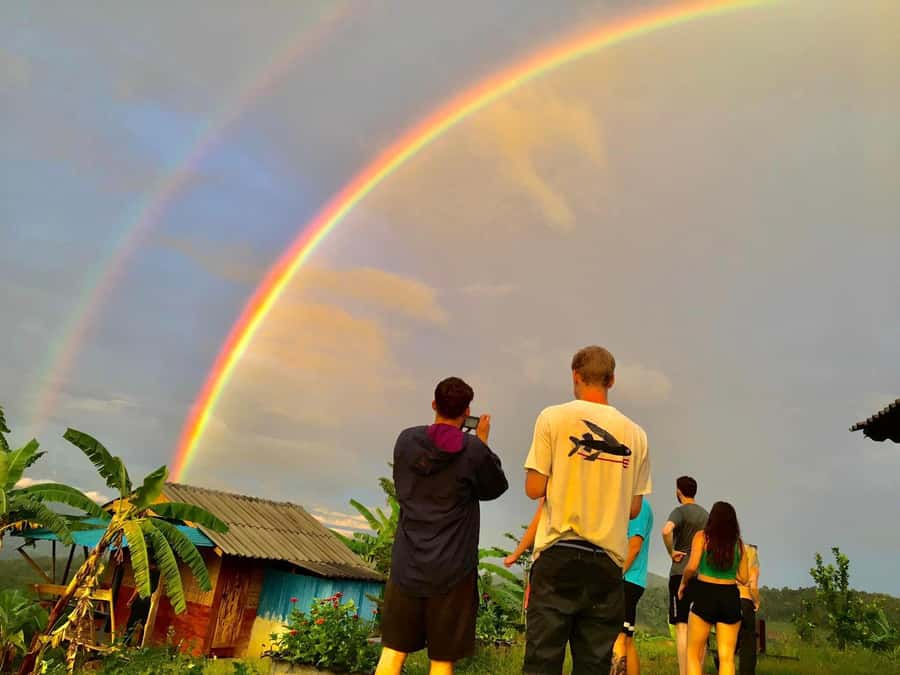
The best part of this Chiang Mai adventure is the overnight stay in a Karen hill village, where your day ends with a home-cooked meal, a campfire, and mountain views instead of a hotel room. You also get a good mix of walking, swimming, elephants, and river time in only two days.
I like the small groups of up to 12 and the range of guides, including Witoon, Moon, Sammy, Po, and Patti, who are often praised for their humor, patience, and care. I also like that the elephants are rescued animals and that riding them is not allowed.
The catch is simple: this is a real mountain trek, not a gentle nature walk. Expect steep uphill sections, heat, mud, insects, and a basic overnight stay. The route can change in bad weather, and bamboo rafting may be shortened or canceled if river conditions are unsafe.
Key points to know before you book
- 8 to 8.5 kilometers on the first day: The uphill walk can take about four hours, with an elevation gain of roughly 550 meters on some departures.
- A proper village overnight: You sleep in simple accommodation with mosquito nets, mountain views, and the chance of a chilly night.
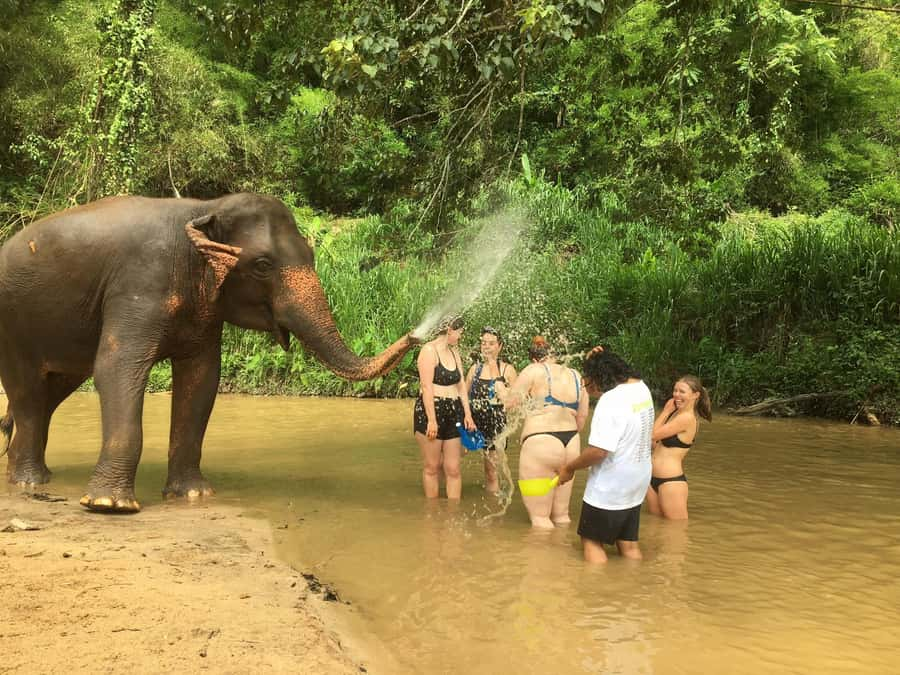
- Three very different water experiences: You can swim at a jungle waterfall, bathe with elephants in a river setting, and float down the Mae Wang River.
- Local food is part of the experience: Two lunches, dinner, and breakfast are included, with meals cooked in or near the Karen village.
- Good value at $97: Transport, guiding, meals, accommodation, trekking, elephants, and rafting are bundled into one price.
- Bring your own drinking water: It is the main practical extra cost and should be planned before setting out.
From Chiang Mai’s market to the Mae Wang River
The day begins with hotel pickup between about 9:00 and 9:30 a.m., if you choose that option. You may ride in a van or a traditional songthaew, and the group is limited to 12 people. The stated meeting point is Baan Meesuk in Chiang Mai’s old town.
Your first stop is a local market. This is not just a quick roadside pause. You walk among stalls selling fruit, vegetables, and regional foods, with your guide helping you make sense of what you see. It gives you a useful look at everyday food culture before the route moves into the hills.
The market visit can be informal, so do not expect a long guided lesson at every stall. A guide may stay close and explain ingredients, or you may have time to look around on your own. If you enjoy local markets, treat this as a short introduction rather than a main attraction.
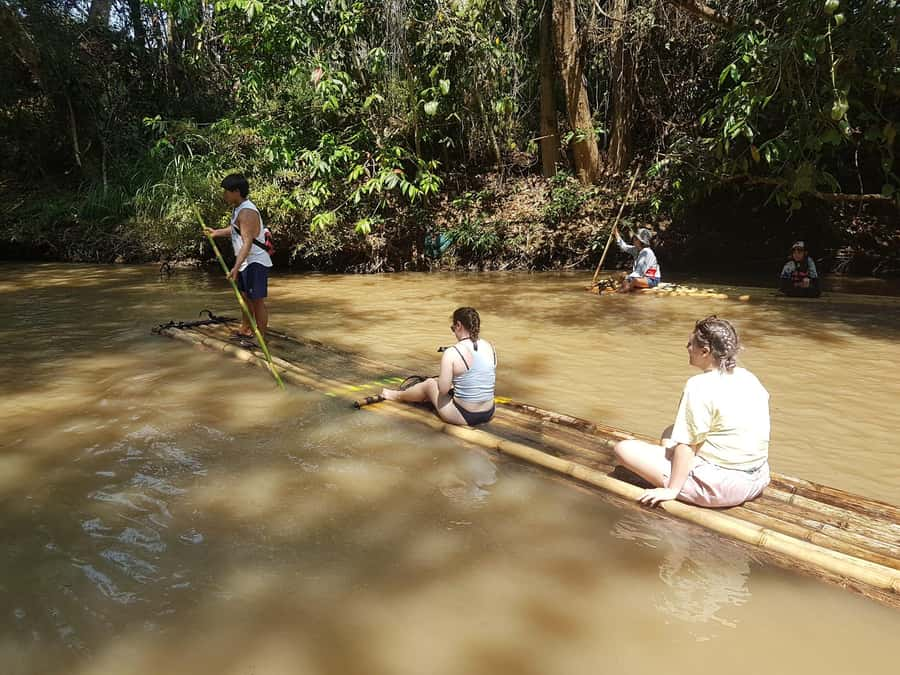
Next comes about 40 minutes on a bamboo raft along the Mae Wang River. The river section is calm, and the appeal is quiet scenery rather than speed or excitement. You sit low over the water and watch the forest and riverbanks pass by.
Wear long sleeves and long trousers for this part. They help with sun, mosquitoes, and scratches during the rest of the day. Bring flip-flops for wet moments, but use proper hiking shoes for the trail.
The exact order can shift. Several departures have placed the elephant sanctuary before the main hike, while others have put rafting later, especially when rain affects the river. The operator can change the plan because of weather or other conditions, so keep a little flexibility in mind.
More Jungle Treks in Chiang Mai
- Off the Map Chiang Mai Jungle Coffee Trek Roast and Brew
★ 5.0 · 107 reviews - Chiang Mai: 2-Days Jungle Trek, Waterfalls and Karen Village
★ 4.8 · 103 reviews - Chiang Mai: Elephant Sanctuary & Jungle Trek w/ Waterfall
★ 4.5 · 18 reviews
A waterfall picnic after two hours on foot
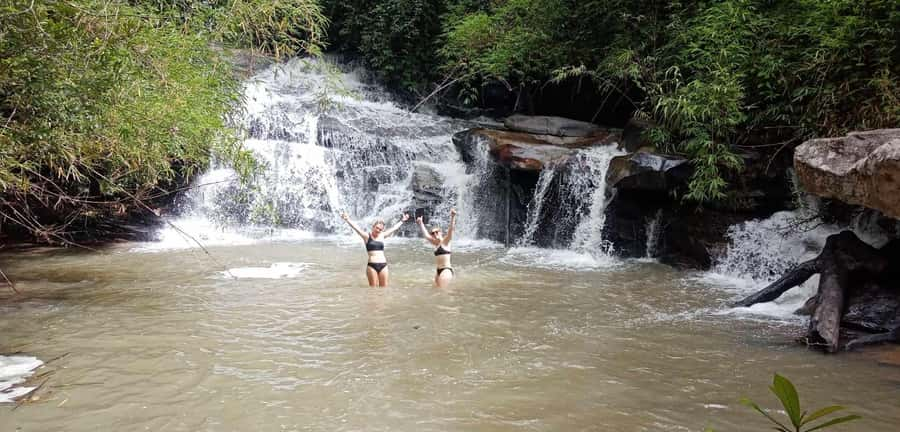
After the early stops, you reach the trail. The route passes through paddy fields, mixed forest, and bamboo groves before reaching a waterfall tucked into the jungle. The walk to the waterfall takes about two hours, though the pace depends on the group and the weather.
This part gives you the clearest change from city to countryside. Rice fields open up the views, then the trail narrows under bamboo and evergreen trees. Guides may point out plants, insects, and small animals along the way. One guide even showed a tarantula in its nest, so keep your eyes open if you are comfortable with jungle wildlife.
Lunch is served near the waterfall. Two lunches are included in the tour, and the food is generally described as generous and satisfying. Some meals may include local ingredients such as fresh fruit and sticky rice.
You can cool off in the water, but pay attention to what your guide tells you. At least one departure had lunch at a waterfall where the swimming opportunity was not clearly explained. If you want a swim, ask before changing clothes so you know which stop is intended for swimming.
Rain changes the feel of the trail. In wet months, rocks and soil can become slippery, and the rafting section may not run. Good shoes with firm grip matter more than expensive gear. A towel, swimwear, sunscreen, insect repellent, rain gear, and a change of clothes all belong in your daypack.
The uphill walk to the Karen village
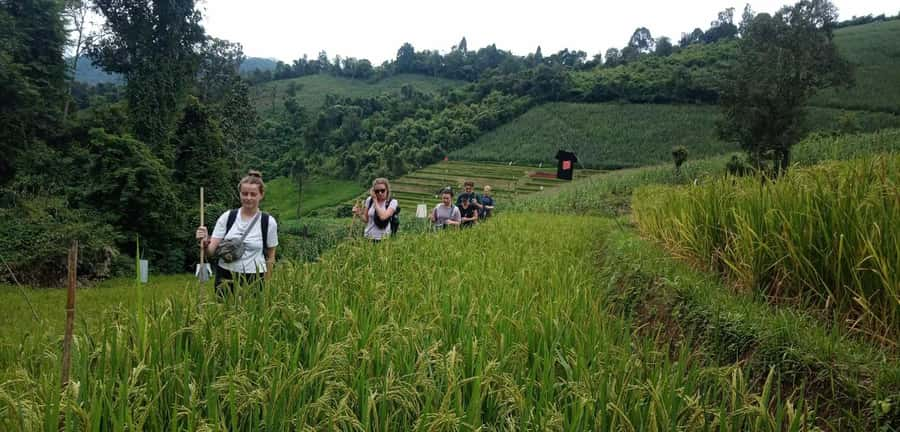
After lunch, the trail turns uphill through tall bamboo and evergreen forest. This section takes about two hours, but the total first-day walk can reach around 8 to 8.5 kilometers. Some groups gain about 550 meters in height.
You do not need to be an athlete, but you should be comfortable walking for several hours in heat and on uneven ground. The hard parts are the steady climbs, not technical climbing. A slow pace helps, and guides such as Witoon, Sammy, Moon, and Lee have been praised for keeping an eye on the group and helping people who need extra time.
The reward is the village setting. You arrive in the late afternoon, often around 5 p.m., with time to settle in before dinner. The Karen community welcomes the group, and the overnight visit gives you more contact than a quick photo stop ever could.
That contact should be handled with respect. You are visiting a living community, not a themed attraction. Ask before taking close-up photographs, accept local customs, and remember that the people cooking your dinner are sharing their home and daily setting with you.
Dinner is made by villagers and may include several dishes, bamboo sticky rice, tea, or other local food. The meals are one of the strongest parts of the trip. If you are a very fussy eater, bring a few extra snacks, since the menu is local and choices are limited.
The sleeping arrangements are basic but often more comfortable than you might expect. Beds with mosquito nets are used, though the quality can vary. Nights can be cold in the mountains, so pack a light jacket and do not assume that Thailand means warm after dark.
The village evening may include a campfire, simple games, songs, or conversation with local families. You might also wake before breakfast to see the sun come over the mountains. That early view is one of the quiet rewards of accepting a basic room for the night.
Morning breakfast and the walk to the elephants
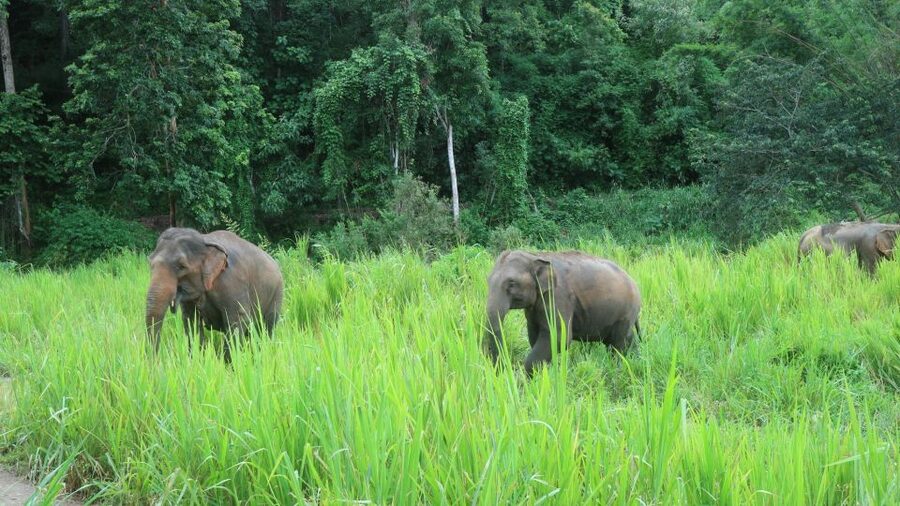
Breakfast comes in the village before the second day’s walk. You then continue through the forest for about two hours toward the elephant sanctuary, with some departures following a longer route downhill afterward.
The trail on day two is often easier on your lungs because much of it descends, but downhill walking can be tiring on knees and ankles. Take care on wet steps and muddy sections. You should still wear hiking shoes, even if the day’s main attractions are elephants and rafting.
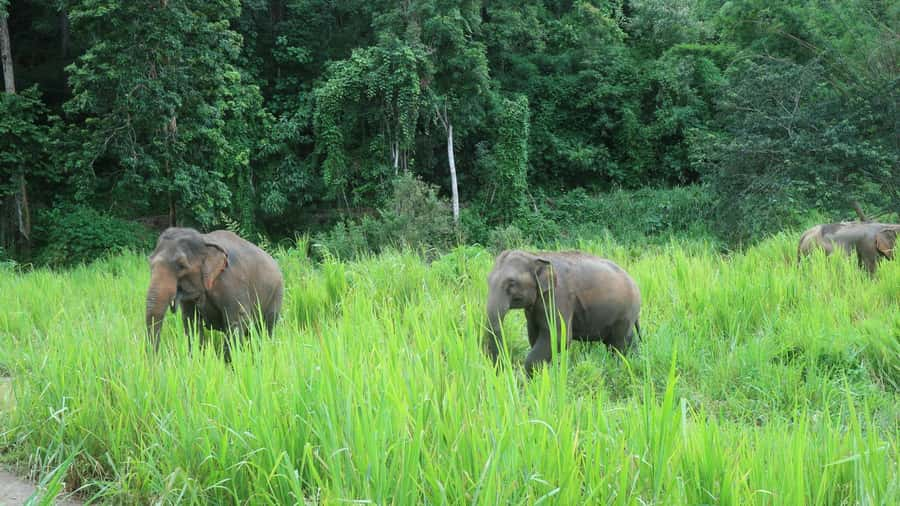
The ethical focus matters here. The elephants are rescued, riding is not allowed, and the activities center on feeding, observing, and bathing them. You get close to the animals, but the setting is meant to avoid the spectacle of riding or forced performance.
Feeding and bathing can be memorable, but you should follow staff instructions closely. Elephants are powerful animals, even when calm and used to people. The sanctuary is a major highlight for many people, especially because it follows a more respectful model than an elephant ride camp.
The number of elephants can be small. One departure described three elephants, which may suit you if you prefer a quieter visit instead of a large show. It also means you should not expect a huge park with a long list of animal activities.
More Jungle Treks in Thailand
- Trek to a Jungle Waterfall
★ 5.0 · 14 reviews - 8KM White Water Rafting and 3HRS Jungle Trekking Adventure
★ 5.0 · 9 reviews - Chiang Mai: Guided Jungle and Waterfall Trek with Transfer
★ 4.9 · 8 reviews - Chiang Mai: Jungle Trek, Elephants care & Bamboo Rafting
★ 4.5 · 8 reviews
Bamboo rafting on the Mae Wang River
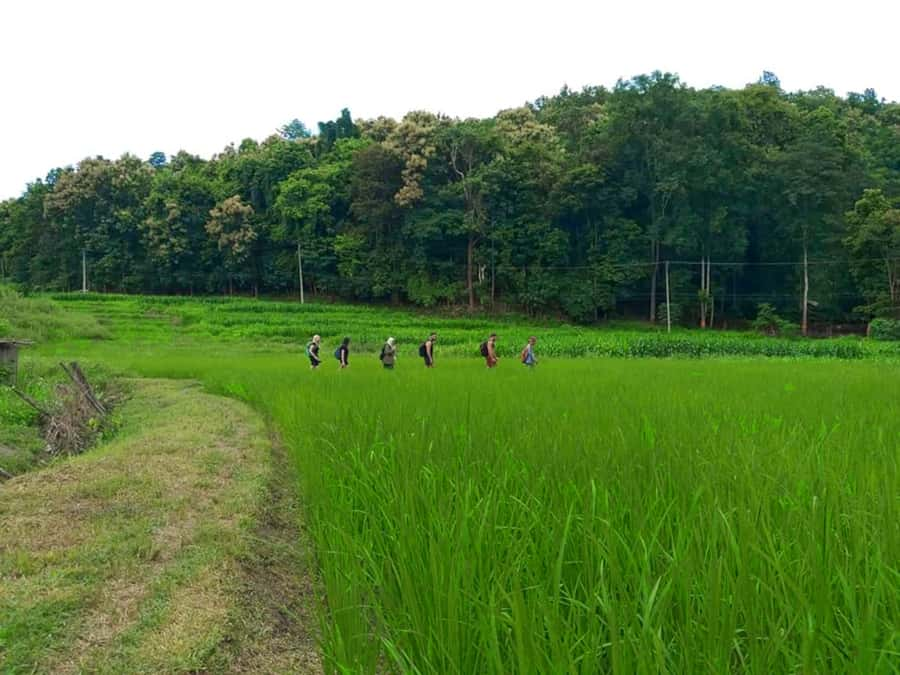
The rafting segment is relaxed and short, about 40 minutes when conditions allow. It is not a white-water trip. You are there for the shaded riverbanks, the steady current, and a welcome break after walking.
The activity may happen before the trek, after the elephant visit, or later on the second day depending on the operator’s route. Heavy rain can make it unsafe, and one departure had the rafting canceled because of wet conditions. This is not a flaw in the tour, but you should treat rafting as weather dependent.
Long sleeves and long trousers help here, though you will also want swimwear and dry clothes. Keep anything valuable protected from splashes. Since drinking water is not included, carry enough for the walk and ask the guide where you can refill or buy more before leaving town.
After rafting, you return to Chiang Mai by road. The drive takes about an hour, and arrival is expected around 4:30 p.m. That timing makes it possible to plan an evening in the old town, though I would avoid booking a tight onward connection.
What the $97 price really covers
At $97 per person, this is strong value if you want several outdoor activities in one trip. You are paying for hotel pickup and drop-off, transport, a guide, two lunches, dinner, breakfast, one night of basic accommodation, trekking, rafting, and the elephant sanctuary.
Booking each element separately would take time and could cost more once you add transport into the mountains. The larger value is the village stay and the local guiding, not just the number of activities. You get access to places that are difficult to connect on your own in two days.
The price does not include drinking water. It also does not turn the overnight stay into a hotel experience. Expect simple beds, village facilities, and possible cold at night. Pack toiletries and keep your expectations practical.
The group size helps keep the price reasonable while still allowing personal attention. Twelve people is small enough for a guide to manage on a trail, though your experience will depend partly on the fitness and pace of the whole group.
Who should book this Chiang Mai trek?
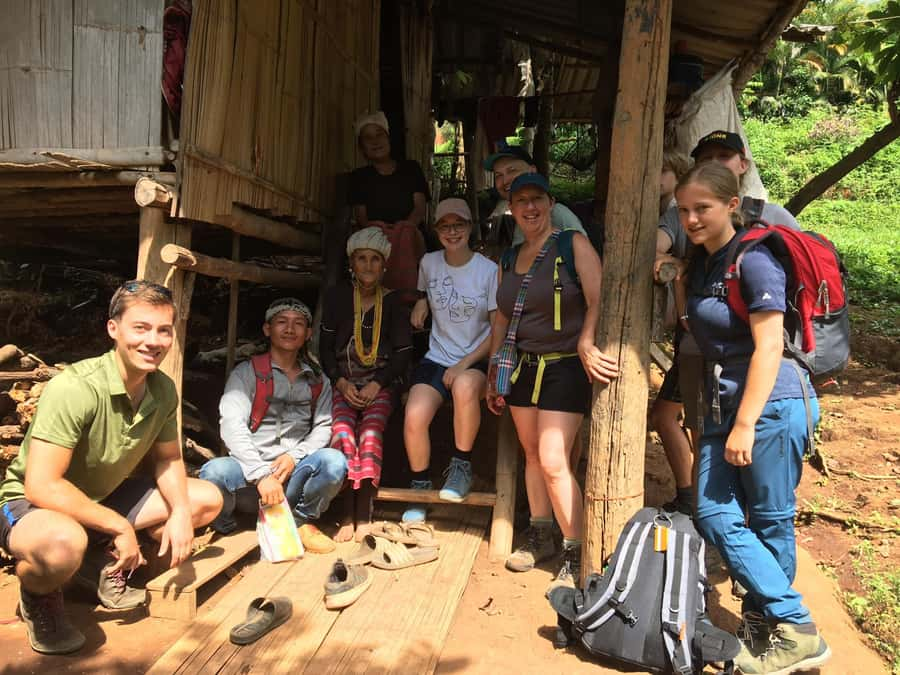
You should consider it if you like active days, local food, forest walks, basic accommodation, and a mix of nature and culture. It suits couples, solo visitors, and small groups who want more than an elephant stop or a short waterfall walk.
You should skip it if you want a polished resort-style trip, a relaxed schedule, or guaranteed rafting. It is also not suitable for pregnant women, wheelchair users, people with mobility limits, vertigo, heart or respiratory problems, epilepsy, or a low level of fitness. Babies under one year and children under two are not accepted.
Good equipment makes a clear difference. Pack:
- Hiking shoes with grip
- Long trousers and a long-sleeved shirt
- Swimwear, towel, and a full change of clothes
- Sun hat, sunglasses, sunscreen, and insect repellent
- Rain gear and a jacket
- Flip-flops for wet areas
- Toiletries and a small daypack
- Drinking water and, if needed, extra snacks
The guide is central to the experience. Names change by departure, but Witoon, Moon, Sammy, Po, Patti, Lee, Louis, Toon, and others have been praised for humor, patience, nature knowledge, and practical care. A good guide can turn a hard uphill section into a manageable one by setting the right pace and explaining what you are seeing.
Should you book it?
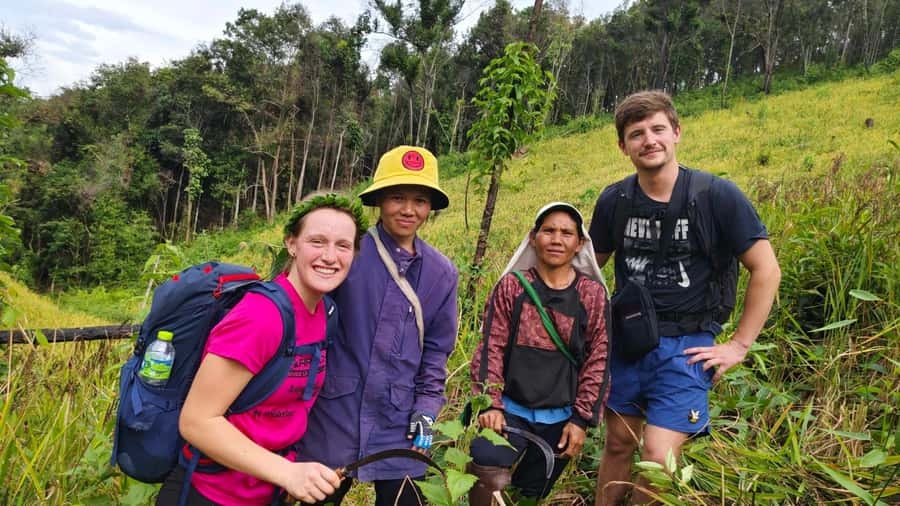
Book this tour if you want a packed, physical two-day escape from Chiang Mai with a genuine village overnight, ethical elephant contact, and varied scenery. The strongest moments are likely to be the Karen welcome, the home cooking, the morning mountain views, and the quiet river ride.
Think twice if your priority is comfort or certainty. The route may change, the trek is demanding in places, water is not included, and the accommodation is basic. For an active person who values local contact over polished facilities, $97 buys a lot of Northern Thailand in a short time.
FAQ
How long does the tour last?
The experience lasts two days and includes one overnight stay in a Karen hill tribe village.
What time does hotel pickup take place?
Optional hotel pickup is scheduled between 9:00 and 9:30 a.m. You can also meet at Baan Meesuk in Chiang Mai’s old town.
How large is the group?
The tour is limited to 12 participants.
Which languages are available?
Guiding is available in English and Thai.
What meals are included?
The price includes two lunches, one dinner, and one breakfast.
Is drinking water included?
No. You need to bring or arrange your own drinking water.
Can I ride the elephants?
No. Riding animals is not allowed. The elephant visit focuses on feeding, bathing, and learning about rescued elephants.
Is bamboo rafting guaranteed?
No. The rafting section depends on river and weather conditions, and the route may change in bad weather or other unusual circumstances.
Where do I sleep?
You spend one night in basic accommodation in a Karen hill tribe village. Mosquito nets are provided, but conditions are simple and nights can be cold.
Who should avoid this tour?
It is not suitable for pregnant women, wheelchair users, people with mobility impairments, heart, respiratory, or balance problems, people with epilepsy, people with low fitness, babies under one year, or children under two.
More two-day treks in Chiang Mai
- Chiang Mai 2-Day: Trekking, Tubing & Elephant Observation
★ 4.9 · 95 reviews - Chiang Mai: 2 Days, 1 Night Non-Tourist Trek
★ 4.8 · 57 reviews - Chiang Mai: 2-Days Chiang Mai Amazing Trek
★ 5.0 · 3 reviews - 2days 1night : Trekking with Karen people and Doi Inthanon
★ 4.8 · 3 reviews
More farm visits in Chiang Mai
- From Ho Chi Minh: Can Gio Trek – Monkey Island & Crocodile Farm
★ 5.0 · 353 reviews - Trekking Tour to Hidden Waterfall & Sturgeon Farm for dog-lovers
★ 5.0 · 67 reviews - Trekking to Hidden Waterfall & Sturgeon Farm for dog-lovers
★ 4.8 · 43 reviews - Women-led Coffee Farm Trek
★ 5.0 · 19 reviews
Latest treks added in Chiang Mai
- Small Group : Trekking Trip in Chiang Mai (Doi Suthep Area) with Market Tour★ 5.0 · 4 reviews
- Trekking at the Monk Trail and Doi Suthep Temple Private Tour★ 5.0 · 3 reviews
- Trek to a Jungle Waterfall★ 5.0 · 14 reviews
- Fantastic! Famous Doi Inthanon National park tour with 2hr trekking★ 4.5 · 17 reviews
- Private Tour 2 Difference Trails Trekking at Doi Inthanon National Park★ 5.0 · 19 reviews
- 8KM White Water Rafting and 3HRS Jungle Trekking Adventure★ 5.0 · 9 reviews
- One day Doi Inthanon & Trekking at Pha Dok Siew★ 3.5 · 3 reviews
- One day Doi Inthanon National Park & Trekking on Kew Mae Pan★ 5.0 · 12 reviews
Jungle Treks, compared.

3-Day Ethical Orangutan Jungle Trek | Bukit Lawang, Sumatra
Read our review →
Monkey Business 3 days – 2 nights Jungle trekking (including rafting)
Read our review →
Khao Sok: Private Day Trekking, Jungle Dinner & Night Safari
Read our review →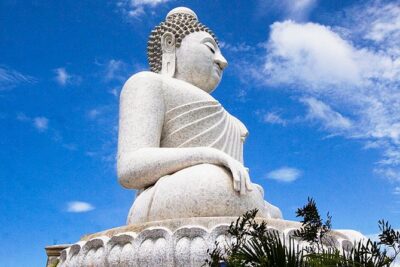
Big Buddha Jungle Trekking and Temple tour with Lunch
Read our review →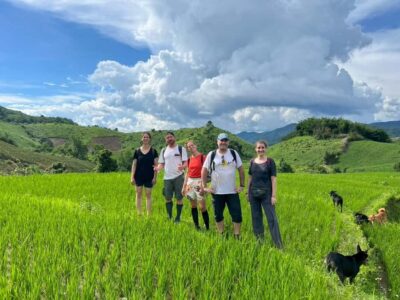
Jungle Adventure-Group Trekking & Bamboo Cooking
Read our review →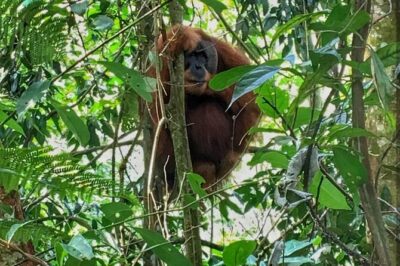
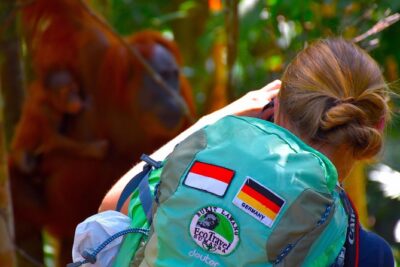
ORANGUTAN TREK (2D/1N) by EcoTravel Bukit Lawang
Read our review →Browse the lists this tour appears in