REVIEW · KATHMANDU
Mohare Danda Trek
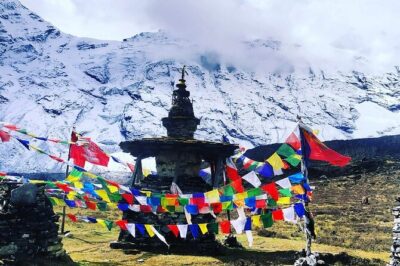
Mohare Danda gives you a quieter route through the Annapurna foothills, with mountain views from a 3,300-meter ridge and overnight stays in community lodges rather than a long chain of busy trekking hubs. I like the mix of forest paths, Magar villages, organic farming, and big Himalayan viewpoints.
I also like that the trip includes Kathmandu’s major religious sites, Bhaktapur’s pottery traditions, and Patan’s temples, so you get far more than a trek. The main consideration is effort: six to seven hours of walking on several days, steep sections, and high altitude require a moderate fitness level.
Key points
- Mohare Danda reaches 3,300 meters, with views toward Annapurna, Dhaulagiri, Fishtail, Tukche, and Nilgiri.
- Five trekking nights use eco-community lodges with full-board meals, supporting local projects and village economies.
- The route includes Bans Kharka, Naangi, Mohare Danda, Ghorepani, and Ghandruk, with forests, farms, suspension bridges, and mountain villages.
- Poon Hill adds a classic sunrise stop before the descent to Ghandruk and Nayapul.
- Kathmandu sightseeing is substantial, including Swayambhunath, Boudhanath, Pashupatinath, Bhaktapur, Pottery Square, and Patan.
- The group is limited to 12 people, and porter support is provided at a ratio of one porter for every two trekkers.
Why Mohare Danda feels different from a standard Annapurna trek
The Mohare Danda route is designed around community lodges and local development. That matters because your overnight stops are part of village life, not just convenient beds along a popular trekking highway.
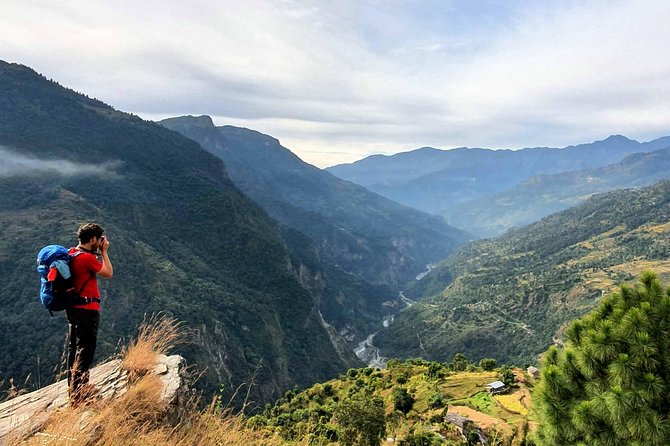
The trail passes through oak, bamboo, pine, and rhododendron forests. It also links several villages where farming, local crafts, schools, and community projects remain part of daily life. You still get the grand Himalayan views, but the route gives equal weight to the people and places below the peaks.
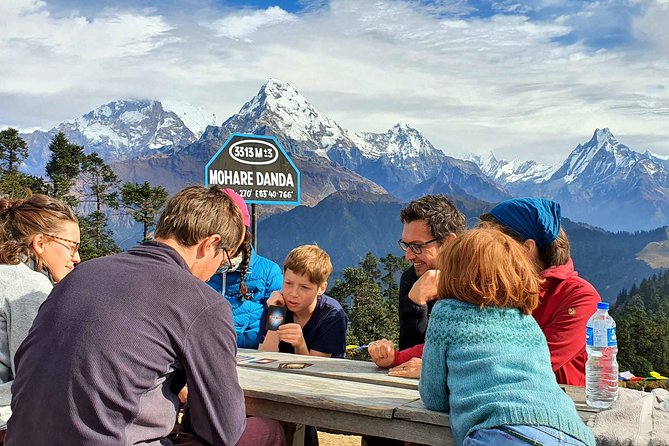
From Mohare Danda, you can look toward the Annapurna and Dhaulagiri ranges, with Mount Fishtail, Tukche, and Nilgiri also appearing from parts of the route. The ridge reaches 3,300 meters, so the views come with real uphill work.
This is not a luxury lodge holiday. The Kathmandu and Pokhara hotels provide more comfort, while the mountain lodges are simpler and community-run. For many people, that trade-off is the point.
More Trekking Tours in Kathmandu
- Everest Base Camp Trek – 14 Days
★ 5.0 · 1,499 reviews - Everest Base Camp Trek
★ 5.0 · 842 reviews - Everest Base Camp Trekking
★ 5.0 · 485 reviews
Days 1 and 2: Kathmandu temples, shrines, and Thamel
Your arrival begins with airport pickup in Kathmandu. An Asian Heritage Treks and Travels representative meets you at Tribhuvan International Airport with a nameplate and transfers you to a hotel in Thamel.
The drive introduces you to several Kathmandu landmarks, including Pashupatinath Temple, the former royal palace area at Narayanhity, and the Garden of Dreams. You stay at Yatri Suites & Spa or a similar four-star hotel for four nights during the wider trip.
The second day covers Kathmandu’s best-known religious sites. At Swayambhunath, commonly called the Monkey Temple, Buddhist and Hindu traditions share the same sacred hilltop. The location also gives you broad views over Kathmandu and toward the Himalayan ranges when conditions allow.
Boudhanath Stupa offers a very different setting. This ancient Buddhist site dates to around 600 AD, and its large white dome and surrounding devotional spaces make it one of the city’s essential stops. You have about two hours here, which gives you time to see the stupa rather than simply photograph it from the road.
Pashupatinath is one of the most important Hindu pilgrimage sites in Southeast Asia. The visit may include views of ritual cremations beside the Bagmati River, as well as time at nearby Guhyeshwori Temple. This is a serious religious setting, so dress respectfully and follow your guide’s instructions.
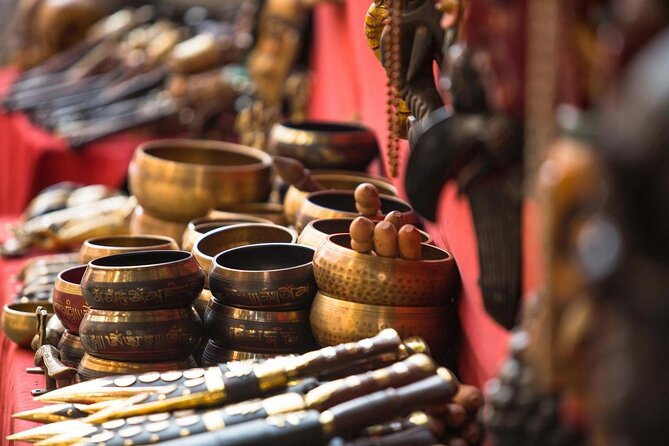
The day ends in Thamel, where you can shop for crafts, souvenirs, and local products. Meals in Kathmandu are not included, so this is also a useful place to choose your own restaurants before leaving the city.
Day 3: The move to Pokhara
The route then shifts west toward Pokhara. The scheduled journey takes you through green hills and changing countryside before reaching the Pokhara Valley.
Pokhara is the gateway to the trek and a worthwhile stop in its own right. The city is known for views toward the Himalayas, Fewa Lake, and outdoor activities. You stay for two nights at Batika Classic Hotel or a similar property.
The supplied schedule lists this transfer as about three hours. Road conditions and traffic can affect mountain travel, so keep your plans for the day flexible. The important point is that Pokhara gives you a change of pace before the walking begins.
Day 4: Galeshwor to Bans Kharka
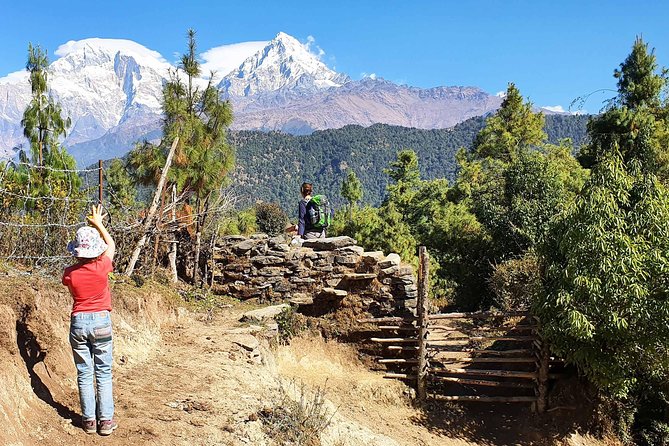
A morning vehicle transfer takes you from Pokhara to Galeshwor, following the Kali Gandaki River for roughly three hours. From there, the trek begins with about three hours of walking to Bans Kharka.
The first day gives you a clear sense of the route’s character. You cross a suspension bridge over the Kali Gandaki, described here as the deepest gorge, then climb through green forest toward the lodge.
This is an uphill start, not a gentle warm-up. You should arrive with comfortable hiking shoes and enough energy for a sustained climb. The reward is a forested trail and a first night in the community-lodge system that defines the trek.
Another trail to compare in Kathmandu:
- Annapurna Circuit Trek with Tilicho Lake
★ 5.0 · 368 reviews - Everest Base Camp Trekking – 13 Day
★ 5.0 · 365 reviews - Everest Base Camp Trek
★ 5.0 · 350 reviews - Everest Base Camp Trek -14 Days
★ 5.0 · 321 reviews
Day 5: Village paths and the organic farm school
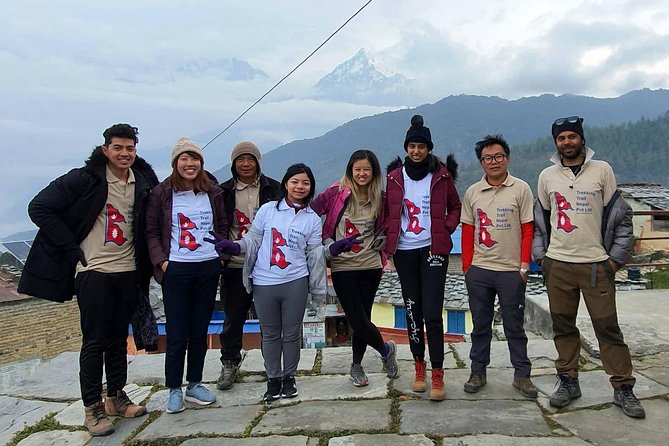
The walk from Bans Kharka to Naangi takes about six to seven hours. The route passes villages, mountain viewpoints, and broad rural scenery, with the chance to visit an organic farm school and a Magar settlement.
This is one of the most useful days for understanding why the route is called an eco-community lodge trek. You are not simply moving between mountain viewpoints. You are seeing how local education, farming, and village life connect with tourism.
The length of the day does require preparation. Six or seven hours on foot can feel demanding, especially after the previous day’s climb. The itinerary does not present this as a technical trek, but it does call for moderate fitness and a willingness to walk for much of the day.
Day 6: The main reward at Mohare Danda
The trail continues through oak and rhododendron forests toward Mohare Danda. The day takes about seven hours, making it one of the longer walking stages.
The mountain views become the focus here. Depending on visibility, you can see Mount Fishtail, south Annapurna, Dhaulagiri, Tukche, and other Himalayan peaks. The evening sunset from Mohare Danda is one of the strongest reasons to choose this route.
At 3,300 meters, Mohare Danda is also the point where altitude becomes a practical concern. The itinerary does not list a separate acclimatization day, so you should walk at a steady pace, drink enough water, and tell your guide if you feel unwell. The professional guide is there to manage the group and support you, but you still need to pay attention to your own condition.
You return to an eco-community management lodge for the night. The simpler accommodation is balanced by the setting and by the direct connection to local projects.
Day 7: Sunrise and the trail to Ghorepani
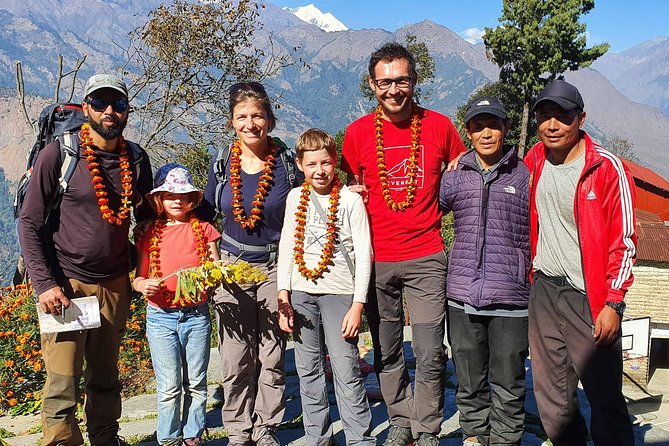
Wake early at Mohare Danda for sunrise and clearer morning mountain views. The peaks listed from this area include Fishtail, Dhaulagiri I and II, Tukche, south Annapurna, and Nilgiri.
After breakfast, the trail continues toward Deurali and then Ghorepani. The route has gradual ups and downs and takes about five hours of walking, with the full day listed at around six hours.
Ghorepani is a familiar name in the Annapurna region, and this itinerary uses it as a comfortable bridge between the quieter Mohare route and the popular Poon Hill section. You stay in a lodge and have time to rest before the early start the next morning.
Day 8: Poon Hill sunrise and Ghandruk
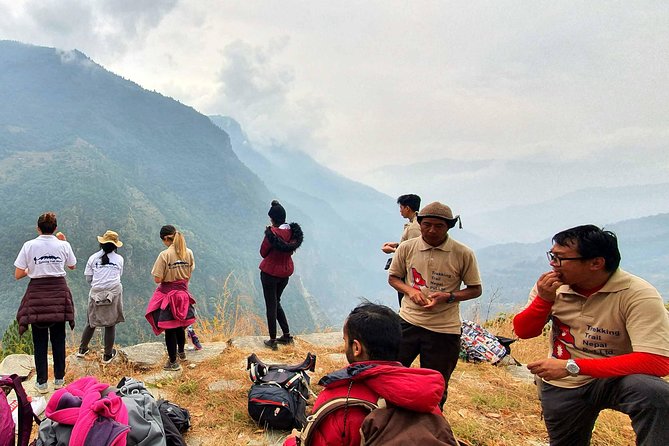
The day begins before breakfast with a climb to Poon Hill at 3,210 meters. The purpose is simple: reach the viewpoint for the first sunlight over Annapurna and Dhaulagiri.
Poon Hill is one of the best-known mountain viewpoints in Nepal, and its appeal is easy to understand. You get a wide panorama without committing to a much longer high-altitude expedition. Still, the early start and uphill walk add effort to an already active itinerary.
After returning to Ghorepani for breakfast, you continue toward Ghandruk. The trail passes flat sections, forests, cultivated land, and a suspension bridge over the Khumbu Khola before reaching the village.
Ghandruk is a scenic settlement with strong cultural importance in the route. It gives you another chance to see how mountain communities fit farming, homes, and tourism into the same setting. The day lasts about seven hours, so save some energy for the descent and final approach.
Day 9: Ghandruk to Nayapul and back to Pokhara
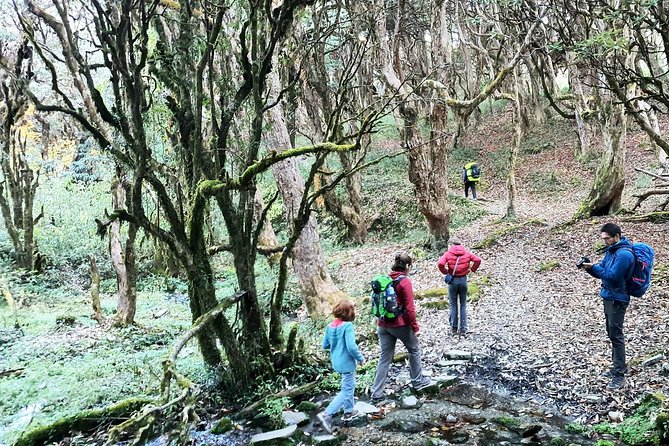
The final trekking day descends to Nayapul, taking about five hours. The trail follows stone-paved sections through villages and terraced farmland.
After crossing the Modi Khola, you reach Birethanti. From there, it is about another half hour to Nayapul, where a private vehicle takes you back to Pokhara.
This is a satisfying finish because it lets you walk out through cultivated valleys rather than ending at a road beside the lodge. It is also a downhill day, which can be hard on knees and ankles. Trekking poles may be useful, though personal hiking gear is not included.
Back in Pokhara, you return to a hotel. Two nights are included there during the program, and food and drinks in the city are your own responsibility.
Days 10 and 11: Return to Kathmandu and the valley’s old cities
The drive from Pokhara to Kathmandu takes about six hours in the schedule. Once back in the capital, you have more time in Thamel for shopping and souvenirs.
The next day focuses on Bhaktapur and Patan. Bhaktapur Durbar Square brings you among historic temples and royal architecture, with a guide explaining the setting. The entrance fee is not included, and about $50 per person is suggested for heritage-site admissions across the program.
Pottery Square adds a hands-on element. Local craftspeople make traditional clay pots here, and a workshop is included so you can try shaping one yourself. This is a welcome change from simply looking at monuments.
The afternoon continues in Patan Durbar Square, where you visit Krishna Temple and the square itself. The Patan Museum adds context about the city and its former rulers. The Golden Temple and Banglamukhi Temple bring the day back to the living religious traditions found throughout the Kathmandu Valley.
What the $1,375 price includes
At $1,375.33 per person, the price is easiest to judge as a package rather than as a simple trekking fee. It includes private ground transport, an English-speaking local guide, permits, porter service, hotel stays, five nights of full-board trekking accommodation, taxes, and selected meals.
The porter arrangement is one porter for every two trekkers. Staff costs, salaries, insurance, equipment, and accommodation are also included, which means the listed price covers more of the working operation than a bare-bones trek.
The included lodging is:
- Four nights at a four-star Kathmandu hotel or similar
- Two nights at a Pokhara hotel or similar
- Five nights in eco-community lodges during the trek
Breakfast is included ten times, lunch six times, and dinner five times. Kathmandu and Pokhara meals are not included, and you also pay for drinks and beverage bills.
You need to budget separately for international flights, a Nepal visa, travel insurance, emergency evacuation insurance, personal hiking equipment, tips, donations, and heritage-site entrance fees. Room upgrades and extra services also cost more.
That list makes the package a reasonable fit if you want support arranged in advance. It is less attractive if you already have trekking gear, transport contacts, and hotel plans and prefer to build the trip yourself.
Guides, group size, and practical comfort
The group maximum is 12 people, small enough for the guide to keep track of the walking pace and group condition. The experience includes a professional English-speaking local guide, porter support, and private vehicles for the road sections.
Specific staff members named in the trip feedback include Norris as a guide and Melan as a porter. If they are assigned to your departure, you can expect local explanations and day-to-day trekking support from people familiar with the route. Staff assignments can vary, so treat those names as useful examples rather than a promise.
The itinerary calls for moderate physical fitness. You should be comfortable walking six to seven hours, climbing for several hours on the first trekking day, and handling repeated uphill and downhill sections.
Pickup is offered at Tribhuvan Airport, with the stated meeting time at 9:00 a.m. The booking confirmation is provided at the time of booking, and the activity is near public transportation, although the main road transfers are arranged by private vehicle.
Free cancellation is available if you cancel at least 24 hours before the local start time. A cancellation or change made within 24 hours is not refunded or accepted.
Who should choose the Mohare Danda Trek
I would choose this trek if you want a compact Nepal itinerary that combines mountain walking with serious cultural sightseeing. The route gives you Annapurna and Dhaulagiri views, but it also makes room for Magar communities, an organic farm school, Pottery Square, Hindu temples, Buddhist sites, and the old cities of the Kathmandu Valley.
It suits people who prefer community lodges and quieter trails to a more polished resort-style trip. It also works well if you have about 12 days and want a guided package that handles permits, transport, porters, and hotels.
I would think twice if you dislike early starts, long walking days, simple mountain accommodation, or shared trekking logistics. The $1,375.33 cost also does not cover every major expense, so add money for visas, insurance, food in the cities, entrance fees, tips, and personal equipment.
Should you book this trek?
Book it if you want a full Nepal introduction with a genuine trekking core, not just a short mountain viewpoint visit. The strongest parts are the community-lodge route, the sunrise stops at Mohare Danda and Poon Hill, and the careful mix of village life with Kathmandu Valley culture.
Choose another trip if your priority is luxury, a private itinerary, or a slower walking schedule. For a fit person who values local contact, strong mountain scenery, and organized support, this is a well-priced way to see several sides of Nepal in one trip.
FAQ
How long is the Mohare Danda Trek?
The program lasts approximately 12 days, including Kathmandu sightseeing, transfers to and from Pokhara, the trek, and the return airport transfer.
What is the price per person?
The listed price is $1,375.33 per person.
What is the highest point on the trek?
Mohare Danda reaches 3,300 meters above sea level. Poon Hill reaches 3,210 meters.
Is airport pickup included?
Yes. Pickup from Tribhuvan International Airport in Kathmandu is included, and a representative meets you with a nameplate.
How many people can join the group?
The group maximum is 12 people.
What level of fitness is required?
A moderate physical fitness level is required. Several trekking days involve about six to seven hours of walking, with uphill and downhill sections.
Are accommodation and meals included?
Yes. Four nights in Kathmandu, two nights in Pokhara, and five trekking nights in eco-community lodges are included. Trekking lodge stays are full board. Food and drinks in Kathmandu and Pokhara are not included.
Are trekking permits and porter service included?
Yes. ACAP, TIMS, and other necessary permits are included. Porter service is provided at a ratio of one porter for every two trekkers.
What costs are not included?
International flights, the Nepal visa fee, travel insurance, emergency rescue evacuation insurance, heritage-site entrance fees, tips, personal hiking gear, donations, drinks, food in Kathmandu and Pokhara, and room or service upgrades are not included.
Latest treks added in Kathmandu
- Private Manaslu Circuit Trek at Himalayas★ 5.0 · 3 reviews
- Ghorepani Poonhill Trek★ 5.0 · 5 reviews
- Ghorepani Poon Hill Trek★ 5.0 · 16 reviews
- Upper Mustang Trekking★ 3.0 · 2 reviews
- Amazing 1 Day Trekking Experience in Kathmandu Nepal★ 5.0 · 24 reviews
- Upper Mustang Trekking★ 5.0 · 2 reviews
- Upper Mustang Trek★ 5.0 · 5 reviews
- Upper Mustang Trekking★ 5.0 · 4 reviews
Kathmandu Trekking Tours, compared.