
REVIEW · KATHMANDU
Manaslu Trekking
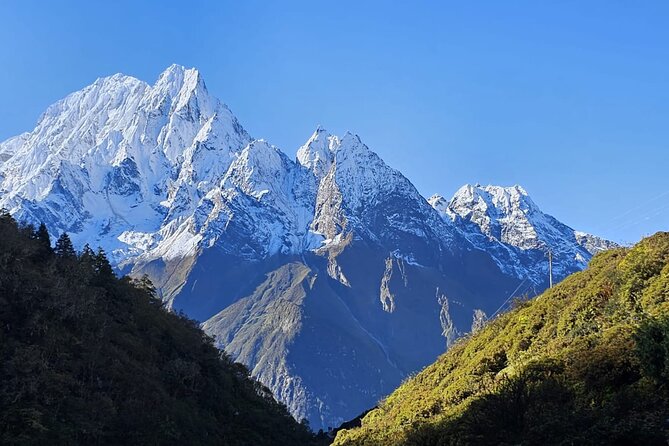
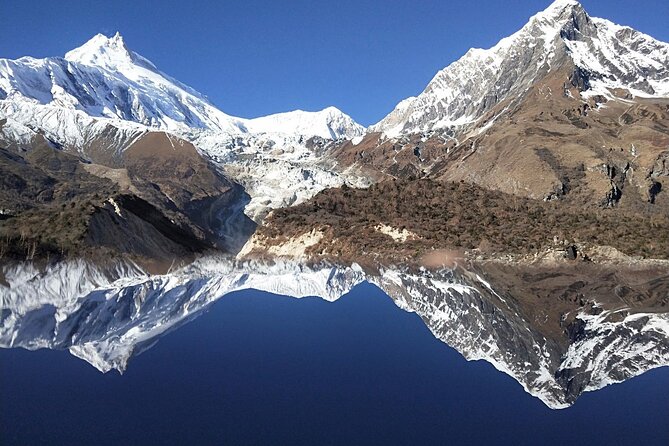
The Manaslu Circuit gives you something Nepal’s more famous routes often cannot: a long walk through quiet mountain country where villages, rivers, forests, and high passes change day by day. You circle 8,163-meter Mount Manaslu, with the best mountain views arriving only after several demanding days on foot.
I like the strong cultural mix, from Kathmandu’s Hindu and Buddhist monuments to Gurung villages and the Buddhist communities around Namrung and Samagaon. I also like the practical package: permits, full-board trekking meals, a guide, porters, airport transfers, and Kathmandu hotels are all included.
The main caution is the effort required. This is not a gentle sightseeing trip. You walk about five to six hours on many trekking days, cross rough trails and suspension bridges, and climb to Larkya Bhanjyang before descending to Bimthang. The schedule also contains a few unclear place names, so confirm the final route with the operator before paying.
Key points to know before you book
- Manaslu views without the crowds of Nepal’s busiest routes: The circuit is less commercialized than the Annapurna and Everest areas.
- A serious high-mountain trek: The route includes steep stairways, rocky paths, river crossings, and the high Larkya Pass.
- Kathmandu culture comes first: Pashupatinath, Boudhanath, and Swayambhunath are built into the opening days.
- Most major costs are covered: Lodging, three daily meals during the trek, permits, guide, porters, and airport transfers are included.
- A private trip for your own group: This can offer a more personal pace, though the exact group size is not stated.
- The $1,900 price is fairly broad in coverage: You still need to budget for drinks, personal expenses, tips, and travel insurance.
Why the Manaslu Circuit feels different
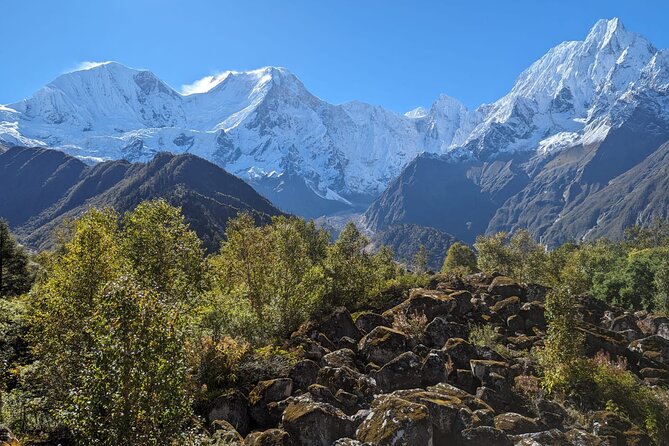
The Manaslu region is a good choice if you want Nepal to feel less polished and more remote. The route follows the Budhi Gandaki River for much of the early trek, then rises through forests, narrow gorges, cultivated terraces, and high mountain settlements.
You do not begin with instant snow peaks. Days three through six are a gradual build-up. The trail winds through Sal forest, rice and millet fields, rocky river corridors, and villages such as Machha Khola, Jagat, and Deng. That slow change in scenery is one of the route’s strengths. You see how the mountain communities and their surroundings shift with altitude.
The trip also has a clear cultural rhythm. Kathmandu begins with major Hindu and Buddhist sites. Later, the route moves into villages with strong Buddhist influence, prayer traditions, monasteries, and views of Manaslu and Peak 29. You get a better sense of the region by walking between communities instead of simply driving to a mountain viewpoint.
The route requires special trekking permits, national park entry fees, and a TIMS card. Those permits are included here, which matters because the paperwork for restricted trekking areas is not something you want to sort out halfway through your holiday.
More Manaslu Treks in Kathmandu
- Manaslu Circuit Trek
★ 5.0 · 292 reviews - Manaslu Circuit Trek:
★ 5.0 · 106 reviews - Manaslu Circuit Trek (15 Days)
★ 5.0 · 50 reviews
Days 1 and 2: Kathmandu temples and trek preparation
Your first day begins at Tribhuvan International Airport, where a representative meets you and transfers you to your Kathmandu hotel. After time to rest, you attend a welcome dinner at a Nepalese restaurant in the city center and receive a trip briefing.
That first evening is useful rather than decorative. Kathmandu can be noisy and tiring after a long flight, so airport pickup and a hotel room give you a clear landing point. The welcome dinner also gives you an early chance to meet the trekking staff and ask about equipment, packing, and the road ahead.
Day two focuses on Kathmandu Valley. You visit Pashupatinath Temple, Boudhanath Stupa, and Swayambhunath, also called the Monkey Temple. Boudhanath is a major Buddhist pilgrimage site, with its large white stupa and prayer-focused atmosphere. Swayambhunath sits on a hill and combines religious monuments with broad views across the valley.
The city sightseeing is guided, and admission is included. A local market visit is also part of the wider Kathmandu program. Use this day to check your boots, organize your duffel bag, and make sure you understand what the porters will carry. The operator supplies a duffel bag and T-shirt, as well as trekking boots and a jacket for porters when needed.
Days 3 to 5: Rivers, bridges, and the first hard walking
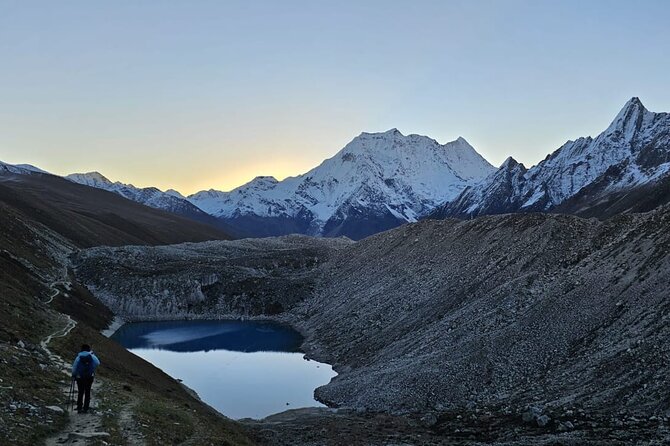
The trek begins along the Budhi Gandaki corridor. From the first crossing, you move through Sal forest and climb above large river rapids. The trail then becomes rougher, with rocky sections, waterfalls, steep climbs, and narrow paths along the side of the valley.
You pass rice terraces and reach the Gurung village of Labubesi before continuing toward Machha Khola. The route repeatedly drops to the river and climbs again, with another suspension bridge before the village. This is a six-hour walking day, and the combination of uneven ground and constant up-and-down movement can feel harder than the distance suggests.
Day four continues to Jagat through Khorlabesi and Tatopani. A small hot spring offers a welcome pause, though you should not expect a full spa stop. After Tatopani, the trail crosses suspension bridges and uses long stone stairways before reaching Dobhan and Tharo Bharyang.
Jagat is an important change in the route. From here, the trail enters a more controlled trekking corridor, and the village setting begins to feel more distinctly Himalayan. You still face six hours of walking, with repeated climbs and descents.
On day five, you climb over a rocky ridge to Salleri, descend to Sirdibas, and continue through Philim. The path crosses millet fields before entering a steep gorge. You cross the Budhi Gandaki several times and pass bamboo forest before arriving at Deng.
This section rewards patience. You are not yet seeing the biggest mountain views, but the river, bridges, terraces, and gorge create a strong sense of progress. If you dislike exposed paths or uneven stone steps, pay close attention to this part when deciding if the trek suits you.
Days 6 to 8: Buddhist villages and the first Manaslu views
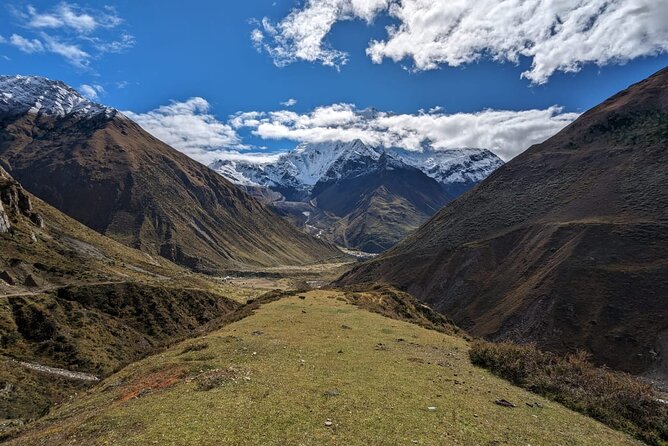
The route becomes more Buddhist in character as you approach Ghap and Namrung. The stated schedule describes day six as the approach to Namrung, with arrival in the Buddhist-influenced area and an overnight near Ghap. The place names in this section are not perfectly consistent, so you should ask World Himalaya Treks to confirm the exact overnight stop.
Day seven continues through bamboo and rhododendron forest toward Namrung and the Nupri region. The schedule identifies Manaslu Base Camp as the stop, but the description focuses on the route to Namrung rather than a clear base camp visit. Treat this as another point to clarify before departure. You should know if Manaslu Base Camp means an actual side trip or simply a tour label for the day.
The walking remains around six hours. Forest gives way to more open mountain views, and the village architecture and religious character change as you move higher. The Nupri region is one of the most memorable parts of the circuit because the route begins to feel distinctly Tibetan-influenced.
Day eight follows the river with views of Peak 29 before reaching Samagaon. Here, Mount Manaslu comes properly into view. After several days of river walking and forest, the large mountain backdrop feels earned rather than presented all at once.
Samagaon is one of the trip’s major pauses. You stay overnight in the village, with the schedule describing camp-style accommodation. The broader package says trekking nights are in teahouses or mountain lodges, so confirm the exact lodging language with the operator. Either way, this is a useful place to slow down before the highest part of the route.
More Trekking Tours in Kathmandu
- Everest Base Camp Trek – 14 Days
★ 5.0 · 1,499 reviews - Everest Base Camp Trek
★ 5.0 · 842 reviews - Everest Base Camp Trekking
★ 5.0 · 485 reviews - Annapurna Circuit Trek with Tilicho Lake
★ 5.0 · 368 reviews
Day 9 in Samagaon: A needed rest day
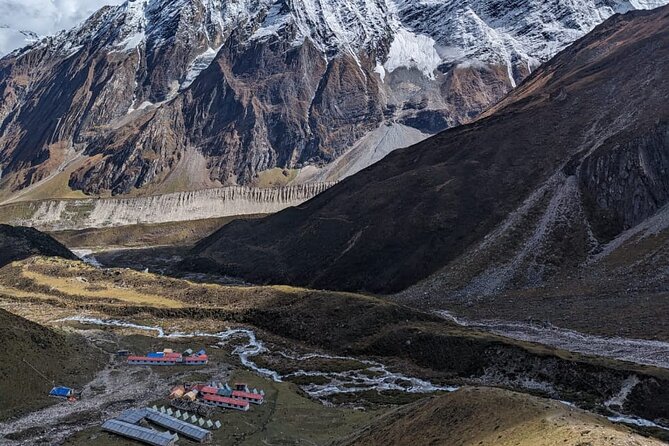
Day nine is set aside for exploring Samagaon, including its monastery and village. This four-hour outing is important because the route is gaining altitude, and a shorter day gives your body time to adjust.
The monastery visit adds cultural depth to the mountain scenery. You are not simply walking from one lodge to the next. You have time to look at the settlement, take in the views, and understand how daily life continues at high altitude.
The schedule says you stay at camp, while the included accommodation describes teahouses or mountain lodges. Ask what is planned for your particular departure. Also ask your guide about the next two days, when the trail moves toward Samdo and the pass.
Days 10 to 12: Samdo and the Larkya Pass
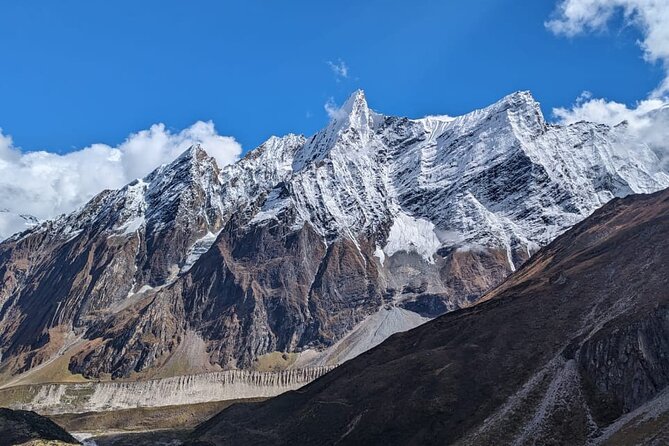
Day ten follows the Budhi Gandaki to Samdo, with roughly six hours of walking. The route is now higher and more open, with fewer trees and a stronger sense of the high mountains.
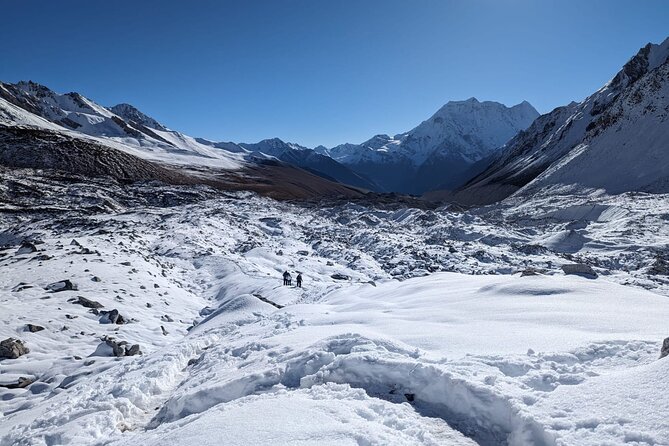
Day eleven begins the climb toward Larkya Bhanjyang through tundra and juniper. This is the approach to the hardest section of the trek. You should expect a slower pace, colder conditions, and a greater need to follow your guide’s instructions.
Day twelve is the major test. You reach the summit of the pass, then descend toward Bimthang. The views from the high point are described as panoramic, but the achievement comes with real effort. The route includes a long ascent followed by a demanding descent, so strong legs and careful pacing matter more than speed.
This is where the included guide and porter support earn their keep. One porter is assigned for every two people, and porter expenses and insurance are covered. You still need to pack sensibly and respect the stated baggage arrangements. The operator also includes a first-aid medical kit, but you should carry any personal medication yourself.
Days 13 and 14: Forest descent and the road home
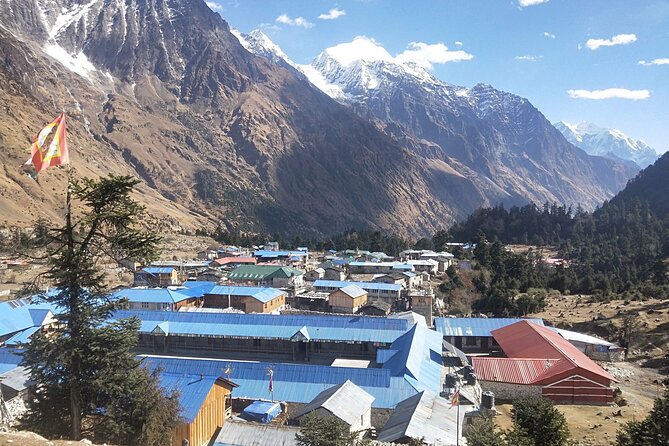
After the pass, day thirteen descends through forest toward Tilje, with a stop at the Bhimtang Lake viewpoint. The route description contains a duplicated sentence, but the main idea is clear: you leave the high pass country and move into lower, greener terrain.
The change after Larkya Pass is satisfying. You have gone from tundra and juniper into forest, then toward villages with a warmer climate. The walk is listed at about five hours, though downhill terrain can still be tough on knees.
Day fourteen continues through scrub forest to Chamje. This is another six-hour day. By now, the biggest physical challenge is behind you, but fatigue can make ordinary descents feel long. Keep your walking poles, water, and rain protection handy until the end of the trek.
The exact route from Bimthang to Chamje should be confirmed because the schedule compresses several well-known trekking settlements into broad day descriptions. The operator can tell you the final overnight points and road conditions for the departure date.
Days 15 to 17: Returning to Kathmandu
Day fifteen brings a five-hour drive back to Kathmandu through the countryside. After nearly two weeks on foot, the vehicle ride may feel luxurious, though Nepal’s roads can be tiring. The plan allows you to rest at the hotel after arrival.
Day sixteen is free for Thamel or simple rest. I would use it for laundry, a relaxed meal, and any shopping you skipped before the trek. It is also a sensible buffer in case the mountain schedule runs late.
The final day allows time for last-minute purchases or other activities before airport transfer. Airport pickup and drop-off are included, so confirm the departure transfer time with the local office.
What the $1,900 price covers
At $1,900 per person, this is not a bare trekking permit with a bed added on. The package includes airport transfers, three-star deluxe twin-share accommodation in Kathmandu with breakfast, guided city sightseeing, trekking permits, national park fees, and a TIMS card.
During the trek, breakfast, lunch, and dinner are included. Teahouse or mountain lodge accommodation is included, along with an experienced guide and porters. Government and local taxes are also covered.
That broad coverage makes the price easier to justify, especially for a first visit to Nepal. You are paying for the organization behind the route as much as for the walking itself. Private transport at the start and end, permit handling, and porter support remove several tasks that can be awkward to arrange alone.
You still need money for drinks, personal spending, tips, and travel insurance. Tips are accepted in Nepal, and insurance is not included. The package also mentions group discounts, so ask about the saving if you are booking with friends.
Who should book this trek?
I would choose this trip if you want a demanding Himalayan route with a private group, structured support, and more cultural contact than a simple mountain-view tour. It suits people who can handle repeated five- to six-hour walking days and who are comfortable with basic mountain accommodation.
It is less suitable if you want a soft adventure, flexible hotel standards, or a short route with guaranteed road access. The rough trail, stairways, river crossings, and high pass require preparation.
The operator asks for a moderate level of physical fitness. I would take that seriously. Train with hills, stairs, and long walks before arriving, and break in your footwear well ahead of time.
Booking details and practical questions
Confirmation is provided at booking, and mobile tickets are available. The activity begins and ends at the World Himalaya Treks & Expeditions meeting point in Kathmandu. The stated office hours show Monday from 9:15 AM to 7:15 PM for the listed operating period, so contact the company if your arrival or meeting time falls outside that window.
The experience is private, but the exact number of people in your group is not stated. Ask about group size, guide assignment, the precise overnight stops, and whether the Manaslu Base Camp reference means a true visit. These questions are especially useful because several day descriptions use broad or inconsistent place names.
Should you book the Manaslu Circuit Trek?
Book it if you want a serious, scenic circuit with fewer people than Nepal’s best-known trekking regions, and if you value having permits, meals, porters, guides, and city logistics arranged together. The cultural opening in Kathmandu and the transition from river valleys to Buddhist mountain villages give the trip more substance than a simple peak-viewing holiday.
Think twice if you are not ready for long walking days, basic lodging, a high pass, and changing trail conditions. Before booking, get the exact route and accommodation plan in writing, especially for days six through eight and the section after Bimthang.
For a prepared walker, the $1,900 package offers a solid balance of support and independence. You still do the hard work, but you do not have to organize every permit, meal, porter, and transfer yourself.
FAQ
How long is the Manaslu Trekking experience?
The full experience lasts approximately 17 days, including Kathmandu sightseeing, the trek, the return drive, leisure time, and airport transfer.
What is the price per person?
The listed price is $1,900 per person. Group discounts are available, but the discount amount is not specified.
Is airport pickup included?
Yes. Airport pickup and drop-off are included.
Are meals included during the trek?
Yes. Breakfast, lunch, and dinner are included during the trekking portion.
Is accommodation included?
Yes. The package includes three-star deluxe twin-share accommodation in Kathmandu with breakfast and teahouse or mountain lodge accommodation during the trek.
Are trekking permits included?
Yes. Necessary trekking permits, national park entry fees, and the TIMS card are included.
Is a guide included?
Yes. An experienced guide is included, along with porters. One porter is provided for every two people.
Is travel insurance included?
No. You must arrange your own travel insurance.
How physically difficult is the trek?
The experience requires a moderate level of physical fitness. It includes repeated five- to six-hour walking days, steep and rocky trails, suspension bridges, and the climb to Larkya Bhanjyang.
Is this a private tour?
Yes. Only your group participates, although the exact group size is not stated.
Latest treks added in Kathmandu
- Private Manaslu Circuit Trek at Himalayas★ 5.0 · 3 reviews
- Ghorepani Poonhill Trek★ 5.0 · 5 reviews
- Ghorepani Poon Hill Trek★ 5.0 · 16 reviews
- Upper Mustang Trekking★ 3.0 · 2 reviews
- Amazing 1 Day Trekking Experience in Kathmandu Nepal★ 5.0 · 24 reviews
- Upper Mustang Trekking★ 5.0 · 2 reviews
- Upper Mustang Trek★ 5.0 · 5 reviews
- Upper Mustang Trekking★ 5.0 · 4 reviews
Manaslu Circuit Treks, compared.
16 Day Private Manaslu Circuit Trek from Kathmandu
Read our review →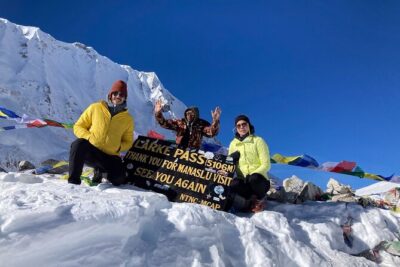
10 Days Manaslu Circuit Trek in Larke La Pass
Read our review →Browse the lists this tour appears in