
REVIEW · KATHMANDU
Manaslu Circuit Trek 13 Days
The Manaslu Circuit Trek gives you a fine slice of Nepal in 13 days: river gorges, Buddhist villages, high glaciers, and the demanding crossing of Larkya La Pass. I especially like the steady change from subtropical forest to Tibetan-style settlements, and the chance to see places such as Pungyen Gompa and Birendra Taal without the feel of a crowded main route.
I also like that Trek Mania Nepal handles the major permits and provides an English-speaking guide, trekking map, duffel bag, and first-aid kit. The catch is important: at $1,400, meals and accommodation are not included, and public transportation plus long 10 to 12-hour days make this a fairly rugged package rather than a pampered trek.
Key points at a glance
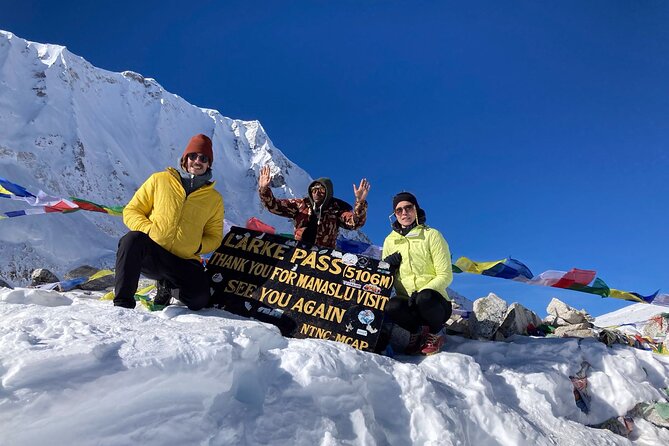
- Larkya La Pass: The trek’s high point, with views of glaciers, Manaslu, Syacha Glacier, and snow-covered peaks.
- A strong cultural route: Gurung, Tamang, and Tibetan traditions appear in villages, monasteries, chortens, prayer wheels, and mani walls.
- High-altitude pacing: Samagaon, Pungyen Gompa, Birendra Taal, Samdo, and Dharamsala help break up the approach to the pass.
- Private departure: Only your group participates, with a licensed English-speaking guide.
- What the $1,400 covers: Permits, public transportation, guide, first-aid box, a duffel bag, map, taxes, and a farewell dinner.
- What you pay separately: Every meal, lodging, porter service, insurance, rescue costs, drinks, charging, laundry, tips, airfare, and visa fees.
Why the Manaslu Circuit feels different
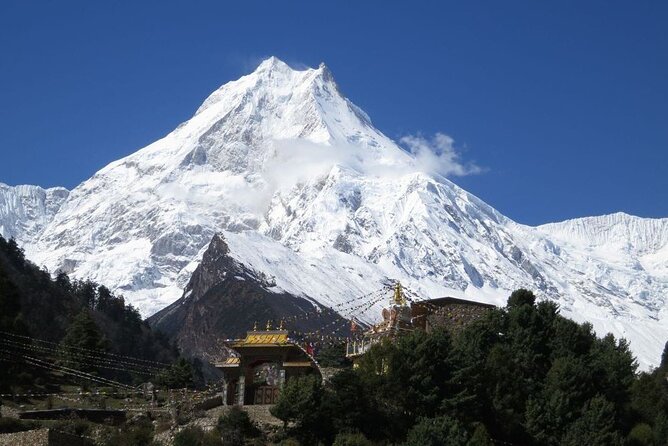
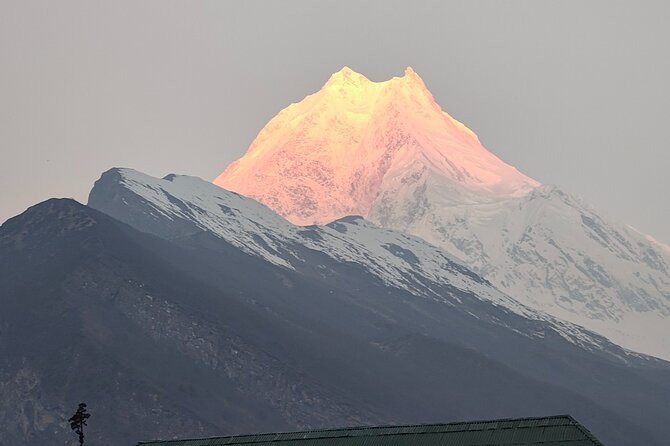
This route earns its appeal from variety. You begin beside the Trishuli and Budhi Gandaki rivers, walking through warm forest and steep river country. By the time you reach Namrung, Lho, and Samagaon, the scenery has changed to high mountain country with Tibetan-style villages and large peaks overhead.
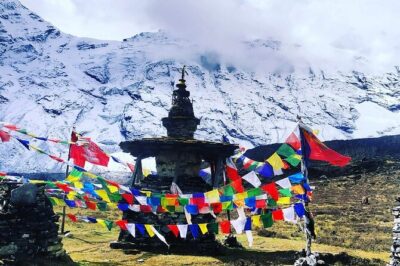
The route also has a strong human side. Painted kani gates, monasteries, chortens, prayer wheels, and mani walls are not decorative extras. They show how daily life and Buddhist practice are tied to the trail. You pass through communities associated with Gurung, Tamang, and Tibetan traditions, each with its own look and feel.
This is not a resort-style Himalayan holiday. You spend long hours on foot, use public transport at the road ends, and pay separately for basic accommodation and food. In return, you get a private trip and a route that feels more remote than Nepal’s most heavily used trekking corridors.
More Manaslu Treks in Kathmandu
- Manaslu Circuit Trek
★ 5.0 · 292 reviews - Manaslu Circuit Trek:
★ 5.0 · 106 reviews - Manaslu Circuit Trek (15 Days)
★ 5.0 · 50 reviews
Day 1: The long road to Machha Khola
The trip begins with an early morning drive from Kathmandu to Machha Khola on a deluxe public bus. The route follows the Trishuli and Budhi Gandaki rivers, with views of hills and changing countryside along the way.
The drive takes about 12 hours, so this day is mostly about getting into position. Calling the bus comfortable helps, but you should still expect a full day on winding mountain roads. If you are prone to motion sickness, prepare accordingly, though the provided information does not specify what medication or support is available.
Machha Khola marks the true start of the walking route. You do not need to budget for a separate admission fee here, but transport, lodging, meals, and personal costs remain part of your own spending unless your booking arrangements say otherwise.
Day 2: River gorges and the approach to Jagat
From Machha Khola, the path passes Khorlabesi and a trail lined in places by wild marijuana plants. The walk then drops into the Budhi Gandaki gorge, where the river and steep rock walls shape the day.
The route includes old paths and river crossings, making this a more physical start than a gentle warm-up. The day is listed at around 12 hours, so good footwear and a willingness to walk for most of the day matter more than speed.
Jagat is an important point on the route. It is a village setting rather than a grand attraction, but it gives you a first taste of the settlements that support the circuit. Keep your eyes open for changes in building style and local life as the trail moves farther from the road.
Day 3: From Sirdibas through Philim to Deng
Day three offers a string of distinct stops. You cross a rocky ridge toward Salleri, then follow the west bank of the Budhi Gandaki with views of Shringi Himal and Langju Himal.
Sirdibas is a quiet village and a useful place to pause. From there, you cross the Ghatte Khola and pass chortens and monasteries on the way to Philim. Philim is surrounded by terraced fields and gives you a good look at how farming fits into steep mountain country.
Next comes Ekle Bhatti, whose name means one house. It is a small rest point, and that tells you something about the route: some stops are full villages, while others are little pauses in a remote stretch.
The day ends at Deng after a suspension bridge and a walk through subtropical forest. A painted kani gate welcomes you into the village. The entire day is listed at about 12 hours, so the individual stops are brief, but together they provide one of the route’s best combinations of village life, forest, river, and Buddhist detail.
More Trekking Tours in Kathmandu
- Everest Base Camp Trek – 14 Days
★ 5.0 · 1,499 reviews - Everest Base Camp Trek
★ 5.0 · 842 reviews - Everest Base Camp Trekking
★ 5.0 · 485 reviews - Annapurna Circuit Trek with Tilicho Lake
★ 5.0 · 368 reviews
Day 4: Monasteries and Tibetan influence near Namrung
The trail passes Rana and climbs toward Bihi Phedi, a small settlement divided into three clusters of houses. This kind of scattered mountain village gives you a feel for how people adapt to slopes and limited flat ground.
From Bihi Phedi, the route descends toward Ghap. Along the way, you pass Serang Monastery, decorated with Buddhist paintings and carved figures. It is the sort of stop that rewards a slower pace. You are not simply walking from one overnight point to the next; you are seeing how religion shapes the trail.
The final destination is Namrung, reached through forests of lichens and pine. Namrung is often described as a Nepali version of Tibet because of its language, architecture, and cultural character. The day again runs about 12 hours, and the combination of steep sections and a long distance makes it one of the days where a steady pace will help.
Day 5: Banjam, Lihi, Sho, and Lho
This is one of the most rewarding cultural days. Banjam is a farming village with terraced fields and views toward Ganesh Himal and nearby glaciers. The route then reaches Lihi, where a small monastery and a three-tiered chorten display colorful Buddhist images.
You continue through Sho after passing Hinang Monastery. Sho is known for a large prayer wheel, and crossing the river valley adds some physical interest. These places are not quick photo stops only. Their value comes from the pattern of farms, religious buildings, village lanes, and mountain views.
Lho is the day’s main prize. The village has large monasteries and wide views of the Manaslu range. If you want a place to slow down and take in the setting, Lho is it. The total walking day is about 12 hours, though the shorter stops are listed separately, so do not mistake the stop durations for the full amount of walking.
Day 6: Alpine forest and Samagaon
Leaving Lho, you walk through alpine vegetation along a route once used by yak caravans trading timber with Tibet. The historic trade connection helps explain why the villages and monasteries here carry such a strong Tibetan influence.
You may catch views of Ngadi Chuli along the way. The trail then continues toward Samagaon, a peaceful high village surrounded by major mountain scenery. Samagaon is one of the most important stops in the circuit because it gives you time at altitude before the final approach to Larkya La.
The day is listed at roughly 12 hours, though the route description includes a shorter stop at Shyala. Samagaon is a good place to value the slower cultural side of the trek: local buildings, spiritual sites, and the setting matter as much as the walking.
Day 7: Pungyen Gompa as a high-country side trip
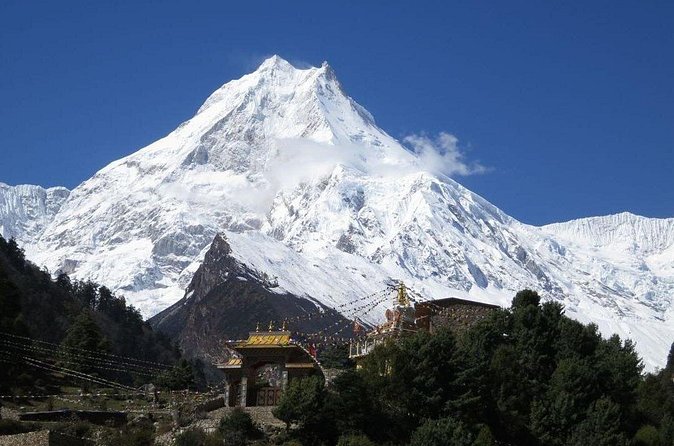
The walk to Pungyen Gompa begins by retracing part of the route to a junction, then turning northwest. Two small chortens mark part of the ascent toward the gompa.
This side trip adds a spiritual and scenic layer to your time near Samagaon. It also makes the seventh day more than a simple rest day. You gain another look at the surrounding high country while visiting a religious site that feels connected to the wider valley.
The listed stop duration is brief, but the full schedule does not give a total walking time for this day. Ask your guide for the expected distance and timing before setting out. That is especially useful if you are using this day to manage altitude and energy.
Day 8: Birendra Taal, the Manaslu view, and Samdo
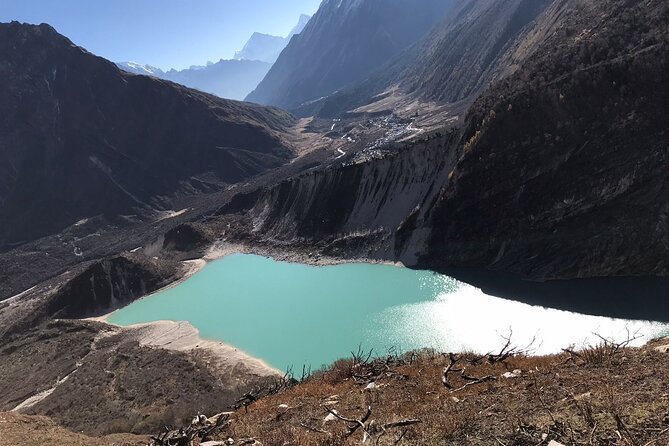
Birendra Taal is a turquoise glacial lake named for the late King Birendra Bir Bikram Shah Dev. Its color comes from glacial material at the bottom, giving you a striking natural stop before the route continues.
The day also includes views toward Manaslu Base Camp, though the main base camp trail is bypassed on this version of the trip. You still see mani walls, Samdo Peak, and the high valley around Samagaon.
The overnight stop is Samdo, a peaceful village used as a rest point before the final climb toward the pass. The route description gives the day an overall length of about 12 hours. That makes this another demanding day, especially as the altitude increases and the air feels thinner.
Day 9: Larkya Bazaar and Dharamsala
The trail passes Larkya Bazaar, an old trading market on the way to Larkya Phedi, also called Dharamsala. The market recalls the older trade links between mountain communities and Tibet.
The climb to Dharamsala is steep. Chortens, mani walls, glaciers, and juniper bushes line the route, but the scenery does not make the altitude easy. You may notice your breathing more here, and this is a day to follow your guide’s pace rather than push ahead.
Dharamsala is the staging point for Larkya La. There is no need to pretend this is an easy overnight. The high altitude and basic nature of trekking accommodation can make this a demanding night before the pass.
Day 10: Crossing Larkya La to Bimthang
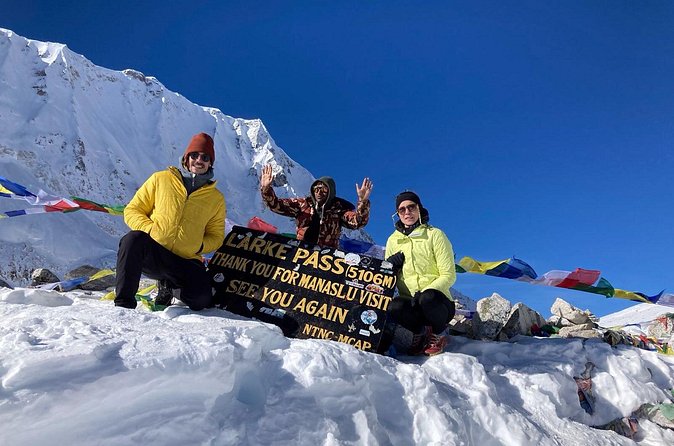
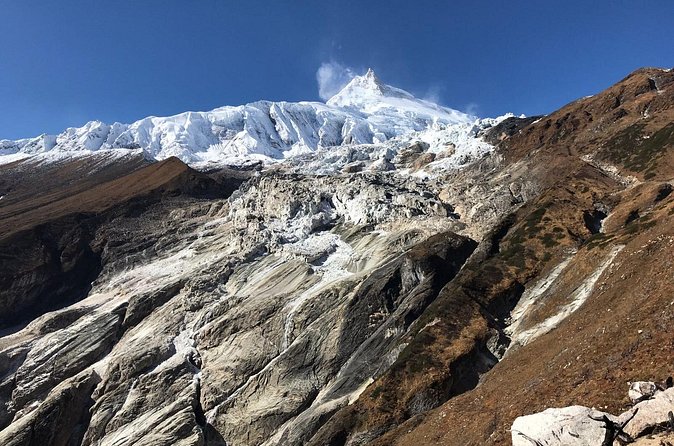
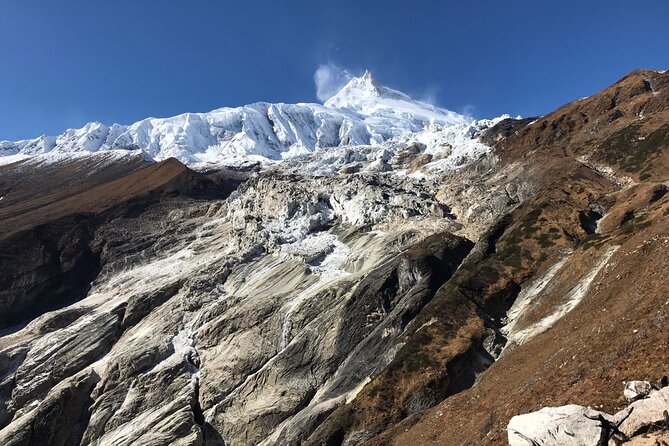
The crossing of Larkya La is the defining challenge of the trek. The route climbs past glaciers, chortens, and snow-covered peaks, with views of the Manaslu range and Syacha Glacier.
This is the day that makes the circuit feel like a genuine Himalayan expedition rather than a village walking holiday. The pass itself is a major physical achievement, but the payoff is also visual. You see the mountains from a high crossing, then begin the long descent toward Bimthang.
Bimthang provides a welcome place to rest after the pass. It is surrounded by mountain scenery and marks the end of one of the hardest sections. The full day is about 12 hours, so you should have realistic expectations about fatigue. A guide such as Hem, Kumar, Pradip, or another member of the Trek Mania team may be assigned, but a particular guide is not guaranteed by the tour details.
Days 11 and 12: Forests, Tilche, and the return to lower country
After Larkya La, the trail descends toward Tilche through forests of rhododendrons, pines, and oaks. The mountains can appear closer during the descent, even as the route gradually loses altitude.
Day 12 continues toward Tal. The scenery shifts from alpine country to subtropical vegetation, and villages become more frequent. The route no longer focuses on huge mountain views, but the change itself is interesting. You can see how climate, crops, and settlement patterns alter as you go lower.
Both days are listed at about 12 hours. That is a serious amount of walking late in the trip, when your legs may already be tired from the pass. The reward is a clear sense of transition, from a high glacial world back toward warmer, more settled country.
Day 13: Besisahar and the long ride to Kathmandu
The final day takes you from Tal toward Besisahar on foot, followed by a long drive back to Kathmandu. The route uses the same general road corridor you encountered earlier.
Besisahar is the practical end of the walking circuit, while Kathmandu offers a chance to rest at your hotel. The return drive is listed at about 12 hours, with a short stop duration shown for Besisahar. This is not a relaxed sightseeing day. It is a long transfer after nearly two weeks of walking.
What $1,400 really buys you
The price has real value if you want a private, organized route with permits and a guide already arranged. It includes public transportation, a government-licensed English-speaking guide, Manaslu Conservation Area fees, a Manaslu Special Permit for seven days, an Annapurna Conservation Permit, and a TIMS card.
You also receive a first-aid medical box, T-shirt, duffel bag, trekking map, taxes, and a farewell dinner. Those permits are not minor details. Manaslu is a controlled trekking area, and sorting the paperwork yourself would add work and risk.
The price does not include the core day-to-day costs of being on the trail. You pay for all meals and accommodation, as well as porters, drinks, electronic charging, laundry, personal expenses, tips, travel insurance, rescue operations, visa fees, and international airfare.
That makes the final cost higher than $1,400. Ask for a clear estimate of food, lodging, porter service, insurance, and transport before you commit. The package can still be good value, but only if you compare the full cost rather than the headline figure.
Who this trek suits best
This trip suits you if you have moderate physical fitness, enjoy long walking days, and want culture as well as mountain views. It is especially good for people who prefer a private group and want a guide handling permits, route decisions, and basic safety support.
It is less suitable if you want short walking days, included meals, guaranteed hotel comfort, or a fully supported luxury trek. You also need to be comfortable with public transport, changing conditions, steep sections, and the possibility that altitude will affect your pace.
The company’s guide team has received strong praise for care, humor, organization, and practical help. Names that have been associated with past trips include Hem, Kumar, Pradip, Rajesh, and Deepak. You should treat those names as examples, not a promise that one particular person will lead your group.
Booking confirmation is provided at the time of purchase, and the activity runs as a private tour for your group. Cancellation terms are strict close to departure: six full days or more allows a full refund, two to six days allows 50 percent, and less than two days means no refund. Poor weather or failure to meet the minimum group size can lead to a new date or a full refund.
Should you book the Manaslu Circuit Trek?
Book it if you want a serious Himalayan route with changing scenery, Buddhist villages, a private group, and the satisfaction of crossing Larkya La. The strongest parts are the cultural stops around Namrung and Lho, the high valley near Samagaon, Birendra Taal, and the dramatic pass crossing.
Before paying, get the final cost of food and lodging in writing, confirm the assigned guide, and ask how the seven-day Manaslu Special Permit fits your exact dates. If you accept the long days and extra expenses, this is a well-rounded way to see one of Nepal’s most varied trekking routes.
FAQ
How long does the Manaslu Circuit Trek take?
The experience lasts approximately 13 days, beginning with transport from Kathmandu to Machha Khola and ending with the return from Besisahar to Kathmandu.
What is included in the $1,400 price?
The price includes public transportation, a government-licensed English-speaking trekking guide, required trekking permits, a first-aid medical box, a T-shirt, duffel bag, trekking map, taxes, and a farewell dinner.
Are meals and accommodation included?
No. All meals and accommodation during the trek are listed as additional costs. Drinks, electronic charging, laundry, and other personal expenses are also excluded.
Is a porter included?
No. Porter service is not included in the stated price. You must arrange and pay for porters separately if you want that support.
What level of fitness do I need?
You should have a moderate level of physical fitness. The schedule includes several walking days of about 10 to 12 hours, steep sections, increasing altitude, and the crossing of Larkya La Pass.
Is this a private tour?
Yes. Only your group participates in the activity. Confirmation is provided at booking, and the tour includes an English-speaking trekking guide.
Latest treks added in Kathmandu
- Private Manaslu Circuit Trek at Himalayas★ 5.0 · 3 reviews
- Ghorepani Poonhill Trek★ 5.0 · 5 reviews
- Ghorepani Poon Hill Trek★ 5.0 · 16 reviews
- Upper Mustang Trekking★ 3.0 · 2 reviews
- Amazing 1 Day Trekking Experience in Kathmandu Nepal★ 5.0 · 24 reviews
- Upper Mustang Trekking★ 5.0 · 2 reviews
- Upper Mustang Trek★ 5.0 · 5 reviews
- Upper Mustang Trekking★ 5.0 · 4 reviews
Manaslu Circuit Treks, compared.
16 Day Private Manaslu Circuit Trek from Kathmandu
Read our review →
10 Days Manaslu Circuit Trek in Larke La Pass
Read our review →Browse the lists this tour appears in