
REVIEW · KATHMANDU
Manaslu Larke Pass Trekking
Manaslu Larke Pass Trekking takes you from warm river valleys to high Himalayan passes, with Manaslu views and a close look at villages shaped by Tibetan and Nepalese culture. The route crosses the Manaslu Conservation Area from Soti Khola to Dharapani, then returns to Kathmandu by road.
I like the steady change in scenery and the chance to spend time in places such as Namrung, Lho Gham, Samagaon, and Samdo. I also like that the price includes permits, meals on the trail, accommodation, an English-speaking guide, and one porter for every two clients. The main drawback is the physical demand, especially the 10 to 12-hour crossing of Larke Pass at 5,160 metres.
Key points to know before booking
- Sixteen days on a demanding Himalayan route: The schedule includes long walking days, a high pass, and several hours of road travel.
- Manaslu from foothills to high pastures: You move from subtropical valleys to dry, high-altitude country near the Tibetan border.
- A private trip for your own group: Only your party participates, with a guide and porters assigned to support the trek.
- Strong support package: Permits, TIMS fees, trail meals, lodging, an English-speaking guide, and porters are included.
- Guide Durga receives special praise: The guide is also named Durgan in the supplied information, so confirm the assigned guide before departure.
- A high-value package at $1,150: The price covers many major trekking costs, but water, showers, Wi-Fi, snacks, insurance, and personal spending remain yours.
Why this route feels different from a standard Nepal trek
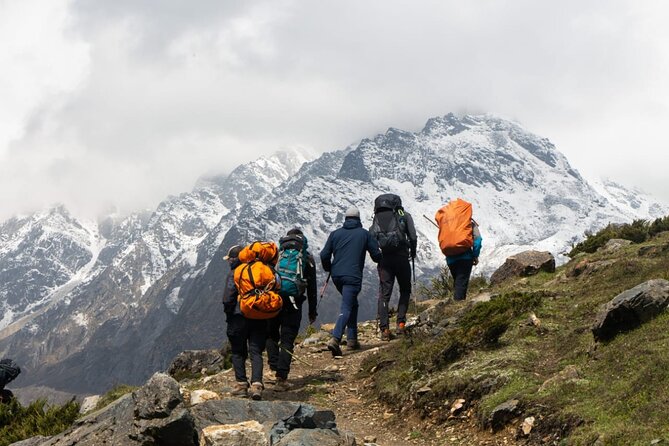
Manaslu, also called Kutang, rises to 8,163 metres, making it the world’s eighth-highest mountain. You do not climb Manaslu on this trip. Instead, you walk through the region around it, moving from low foothills toward the high country and crossing Larke Pass.
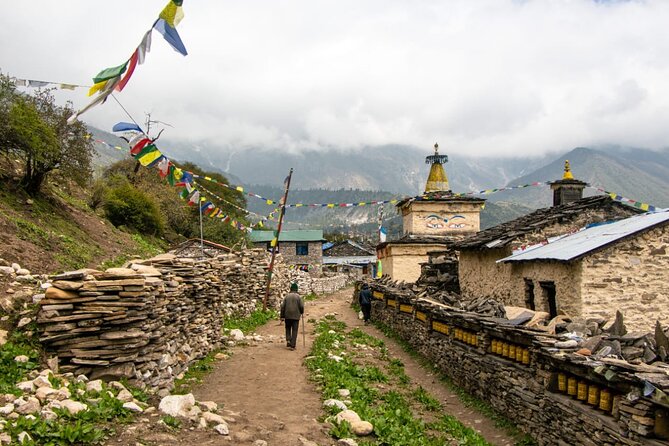
That change in altitude gives the route its appeal. The opening days run through lower valleys, while the later section reaches pine country, Tibetan-influenced villages, dry high pastures, and broad views of snow-covered peaks. The Manaslu Conservation Area also brings contact with several ethnic communities living in hill villages along the trail.
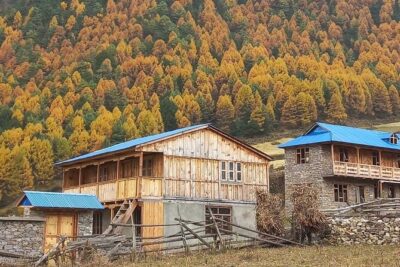
I like the cultural side of this trip because the route is not only about a summit view. Villages such as Jagat, Deng, Namrung, Lho Gham, Samagaon, and Samdo give the trek a human scale. You sleep along the route instead of treating the mountains as scenery viewed from a vehicle.
Still, this is not a casual walking holiday. You need strong physical fitness, and the itinerary includes long days at altitude. The highest point is 5,160 metres, and the crossing from Larke Phedi to Bimthang can take 10 to 12 hours.
More Manaslu Treks in Kathmandu
- Manaslu Circuit Trek
★ 5.0 · 292 reviews - Manaslu Circuit Trek:
★ 5.0 · 106 reviews - Manaslu Circuit Trek (15 Days)
★ 5.0 · 50 reviews
Kathmandu preparation before the trail
Your first day begins in Kathmandu at 1,300 metres. The airport pickup is offered, and the meeting point is on Thamel Marg. The first day is kept simple, which makes sense after an international flight.
Day two is set aside for Kathmandu sightseeing and trek preparation. It lasts about eight hours, though the supplied schedule does not specify the sightseeing stops. Use this day to check your equipment, organize documents, and ask the guide about the walking schedule.
The operator requires your passport name, passport number, expiry date, country, two passport pictures, and original passport. You must be at least 18 years old. Travel insurance and an international flight are not included, so arrange those separately.
The long road to Soti Khola
Day three involves an eight to nine-hour private drive to Soti Khola at about 800 metres. This is one of the less glamorous parts of the trip, but it is necessary to reach the trailhead.
I appreciate that private transport is included between the destinations listed in the program. It gives your group a fixed travel arrangement rather than leaving you to organize each transfer. At the same time, a full day on the road can be tiring, especially after arriving in Nepal.
Soti Khola marks the real beginning of the trek. The low elevation provides a gentler physical start than beginning immediately in the high mountains.
Soti Khola to Machha Khola and Jagat
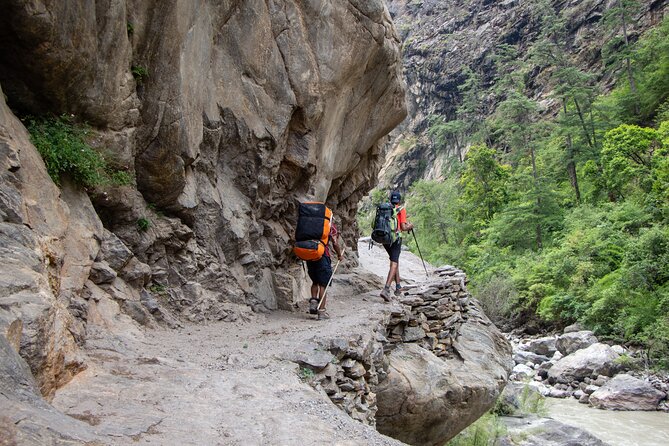
Day four takes you from Soti Khola to Machha Khola at 870 metres in roughly six to seven hours. This is a full walking day, but the elevation gain is modest. You begin adjusting to the rhythm of walking, eating, resting, and repeating the process.
The next day leads from Machha Khola to Jagat at 1,340 metres. The walk takes about six to seven hours. Jagat is an important early stop because you are now gaining height while moving farther into the Manaslu region.
The route changes gradually rather than all at once. I like this kind of start because it gives you time to settle into the trek before the high-altitude section arrives. You should still take the early days seriously. A comfortable first stage does not mean the later stages will be easy.
More Trekking Tours in Kathmandu
- Everest Base Camp Trek – 14 Days
★ 5.0 · 1,499 reviews - Everest Base Camp Trek
★ 5.0 · 842 reviews - Everest Base Camp Trekking
★ 5.0 · 485 reviews - Annapurna Circuit Trek with Tilicho Lake
★ 5.0 · 368 reviews
Jagat to Deng and Namrung
Day six is listed as Jagat to Deng at 1,860 metres, taking seven to eight hours. One stop label names Philim, but the day description identifies Deng as the destination. Confirm the exact overnight village with the operator before you set out, since clear daily information matters on a long trek.
Day seven continues from Deng to Namrung at 2,660 metres. Allow six to seven hours. By Namrung, the route has moved well above the lower valleys, and the mountain setting becomes more pronounced.
This section is where the trip starts to feel like a proper high Himalayan trek. The walking days remain manageable on paper, but the altitude is increasing. A good guide should help you keep a steady pace rather than push you to treat every day like a race.
The supplied information gives special credit to guide Durga, with the name Durgan also appearing. The praise centers on attentive assistance and professional care. If the same guide is assigned to your departure, that personal support could make a real difference during the harder days. Since guide assignments can vary, confirm the name when booking.
Namrung, Lho Gham, and Samagaon
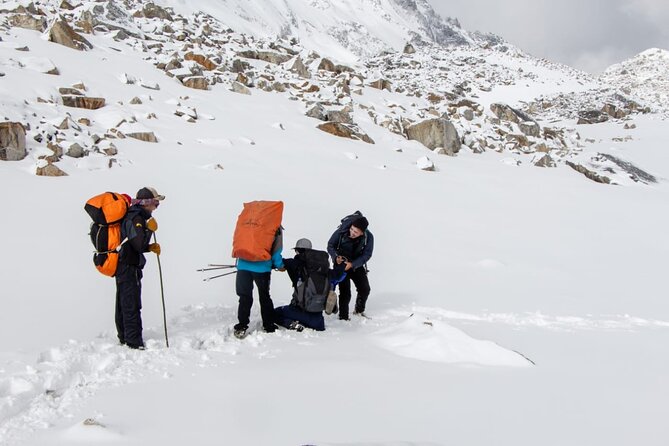
Day eight is shorter, taking you from Namrung to Lho Gham at 3,180 metres in about three to four hours. This is a useful change after several longer days. The shorter schedule gives you time to settle into a higher sleeping altitude.
Day nine continues from Lho Gham to Samagaon at 3,530 metres, again taking around three to four hours. Samagaon is one of the main high villages on the route and the base for the following acclimatization day.
You will notice that the itinerary repeatedly lists Samagaun as the stop label for this part of the route, while the day descriptions use Samagaon. These are variant spellings of the same destination in the supplied program, but you should expect the route to pass through Lho Gham and then Samagaon.
The value of these two shorter days is not just comfort. They break up the ascent and give your body more time to adjust before the route pushes higher. I would not treat the short walking times as spare time for extra exertion. Rest here is part of the plan.
Samagaon acclimatization and the optional high walk
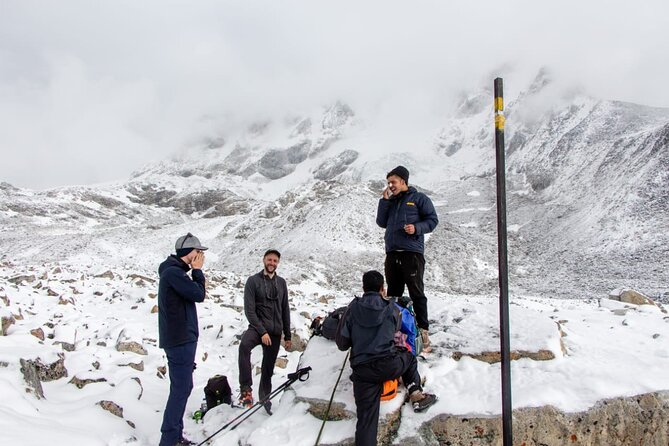
Day ten is an acclimatization day in Samagaon. You can take an optional four to five-hour walk to Manaslu Base Camp at 4,800 metres and Birendra Lake at 4,450 metres, then return.
This is one of the most useful parts of the program. You spend the night at 3,530 metres, but you can walk higher during the day. The optional route also gives you a closer look at the mountain setting without packing up and changing accommodation.
The excursion is not a requirement listed for every participant, so discuss it with your guide. You need to judge your energy and altitude response honestly. The point of an acclimatization day is to prepare for the pass, not to prove how much extra distance you can cover.
Samdo and Larke Phedi
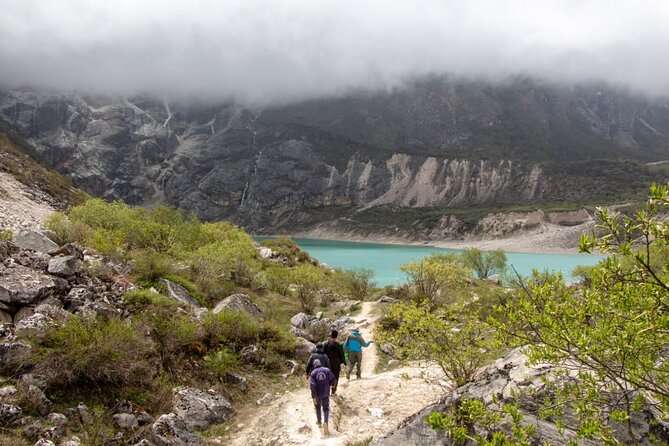
Day eleven is a short two to three-hour walk from Samagaon to Samdo at 3,860 metres. The stop label still says Samagaun, but the day description clearly gives Samdo as the destination.
This is another relatively short stage before the most demanding section. Samdo takes you farther into the high country, and the route is now focused on preparing for Larke Pass.
Day twelve leads from Samdo to Larke Phedi, also called Dharamsala, at 4,480 metres. The walk takes four to five hours. The short distance can be misleading because altitude makes each hour harder than it would be in the low valleys.
Accommodation at this stage is part of the trekking package, but the details of room type and facilities are not provided. Do not expect city comforts. Hot showers, Wi-Fi, drinking water, and snacks are specifically excluded, so budget for those items when available and carry enough practical supplies for the high section.
The hard crossing of Larke Pass
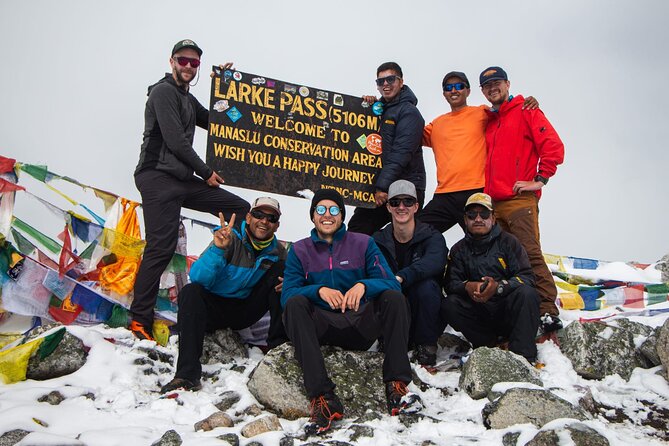
Day thirteen is the physical centerpiece of the trek. You leave Larke Phedi, cross Larke Pass at 5,160 metres, and descend to Bimthang at 3,720 metres. The day takes 10 to 12 hours.
This is a serious mountain day. The route gains height before descending a long way, and the high point is well above 5,000 metres. You should expect slow progress, cold conditions, and fatigue, although the supplied information does not give a detailed trail or weather report.
The reward is the sense of moving through a complete Himalayan zone in a single day. You begin at a high camp, reach the pass, then descend toward Bimthang. The route gives you snow-covered mountain views and a powerful change in scenery, but it asks for stamina in return.
The guide and porter arrangement matters most here. One porter is provided for every two clients, with assistants during the trek. Pack carefully and keep your personal day bag light. The porter support is valuable, but you still need to carry your essentials during each day’s walk.
Bimthang to Dharapani and the return drive
Day fourteen takes you from Bimthang to Dharapani in about eight hours. After the pass crossing, this remains a long day, but you are descending toward lower elevations.
The stated route begins at Soti Khola and ends at Dharapani. That makes Dharapani the finish of the walking section, not the end of the entire trip.
Day fifteen is a 12-hour drive back to Kathmandu via Besishar. This is another demanding road day. After so much walking, sitting for a full day may sound easy, but long vehicle journeys can be tiring. Plan to keep this day simple.
Day sixteen is for departure or extending your stay. The listed duration is about 30 minutes, which likely reflects the departure transfer rather than a full activity. The trip ends back at the Kathmandu meeting point.
What the $1,150 price really covers
At $1,150 per person, the main value comes from the number of major services bundled together. You receive private vehicle transfers for the included route, double-occupancy accommodation, trekking permits, TIMS fees, trekking meals, breakfasts in Kathmandu, a welcome dinner, and a farewell dinner.
You also receive an English-speaking guide, porters, and trekking assistants. For a 16-day route with a high pass, those inclusions reduce the number of separate arrangements you need to make.
The price does not cover everything. International flights, travel insurance, visa fees, personal expenses, drinking water, snacks, hot showers, Wi-Fi, and unforeseen costs are separate. You should also clarify the exact accommodation standard and meal arrangements before paying, since those details are not specified.
I see the price as reasonable for someone who wants a supported private trek rather than an independent trip. It is less suitable if you want a low-cost hiking plan and already have the permits, transport, guide, and porter arrangements handled.
Who should book this trek
I would recommend this trip to an adult with strong physical fitness who wants a demanding route with village contact and high mountain scenery. The private format suits you if you prefer traveling with your own group rather than joining a large mixed party.
It also works well if you value practical support. The permit work, transport, meals, guide, and porters are organized for you, while the route still retains a sense of progression through different villages and altitude zones.
I would hesitate to recommend it if you dislike long drives, simple trekking conditions, or very long walking days. The 10 to 12-hour pass day and the 12-hour return drive are not minor details. You should also have suitable travel insurance and be ready for expenses not included in the package.
Should you book the Manaslu Larke Pass Trek?
Book it if your priority is a challenging 16-day Himalayan route with Manaslu views, village culture, a private group, and strong logistical support. The highlights are clear: the progression from Soti Khola to high country, the Samagaon acclimatization day, the optional Manaslu Base Camp walk, and the crossing of Larke Pass.
Before committing, confirm the guide’s name, the accommodation details, the daily destinations where the labels differ, and what transport is used on each road section. If you are fit, well insured, and comfortable with basic trekking conditions, the $1,150 package offers a practical way to tackle one of Nepal’s demanding high-pass routes.
FAQ
How long is the Manaslu Larke Pass Trek?
The trek takes approximately 16 days, including arrival in Kathmandu, preparation, trekking, the return drive, and departure.
Where does the walking route start and finish?
The walking route starts at Soti Khola and finishes at Dharapani. The trip then continues by road back to Kathmandu.
What is the highest point on the trek?
The highest point is Larke Pass at 5,160 metres.
Is an acclimatization day included?
Yes. Day ten is an acclimatization day in Samagaon, with an optional walk to Manaslu Base Camp at 4,800 metres and Birendra Lake at 4,450 metres.
Are permits and TIMS fees included?
Yes. Trekking permits and TIMS fees are included in the price.
Are meals included?
All meals during the trek are included. The package also includes all breakfasts in Kathmandu, one welcome dinner, and one farewell dinner.
Is accommodation included?
Yes. Accommodation on a double-occupancy basis is included.
Are a guide and porters provided?
Yes. An experienced English-speaking guide, a team of porters with one porter for every two clients, and trekking assistants are included.
What happens if I need to cancel?
You can receive a full refund if you cancel at least 24 hours before the experience start time. Cancellations or changes made less than 24 hours in advance are not accepted for a refund.
Latest treks added in Kathmandu
- Private Manaslu Circuit Trek at Himalayas★ 5.0 · 3 reviews
- Ghorepani Poonhill Trek★ 5.0 · 5 reviews
- Ghorepani Poon Hill Trek★ 5.0 · 16 reviews
- Upper Mustang Trekking★ 5.0 · 2 reviews
- Upper Mustang Trekking★ 3.0 · 2 reviews
- Amazing 1 Day Trekking Experience in Kathmandu Nepal★ 5.0 · 24 reviews
- Upper Mustang Trek★ 5.0 · 5 reviews
- Upper Mustang Trekking★ 5.0 · 4 reviews
Manaslu Circuit Treks, compared.
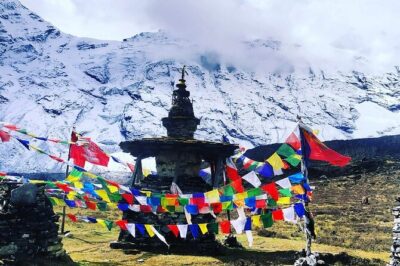
16 Day Private Manaslu Circuit Trek from Kathmandu
Read our review →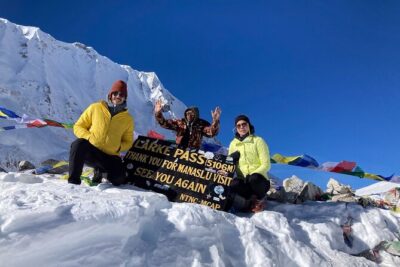
10 Days Manaslu Circuit Trek in Larke La Pass
Read our review →Browse the lists this tour appears in