
REVIEW · KATHMANDU
Manaslu circuit trek and side trips
The Manaslu Circuit gives you a rare mix of big Himalayan views and everyday village life. You walk beside the Budhi Gandaki River, pass prayer flags and Mani walls, sleep in Tibetan-influenced villages, and cross Larkya La Pass at roughly 5,100 meters before dropping toward Bimtang.
I like two things here: the route feels less developed than Nepal’s most famous circuits, and the acclimatization day in Samagaun gives you time for a side trip to Pung-gyen Gompa. The chance to visit Prok Gompa from Ghap adds another worthwhile detour.
The main caution is the itinerary itself. Several days are shown as 15-hour activities, which is not a realistic walking time for most people, and the inclusion details conflict over food, teahouse rooms, and insurance. Get those costs confirmed in writing before paying.
Key points to know before you book
- The 12-day route crosses Larkya La: You reach the high point after Samdo and Dharmashala, then descend toward Bimtang.
- Two side trips add cultural value: Prok Gompa can be visited from Ghap, while Pung-gyen Gompa is the main acclimatization option from Samagaun.
- The first and last days are long road transfers: Public bus and shared jeep travel are part of the experience, not just a foot trek.
- This is a private trip: Only your group participates, with an English-speaking trekking guide.
- The $600 price needs clarification: The details list both included and excluded food, insurance, and teahouse charges.
- You need moderate fitness: Rocky paths, steep stairways, altitude, and a high pass make this a serious trek.
Why Manaslu feels different from Nepal’s famous treks
Manaslu rises to 8,163 meters, making it the world’s eighth-highest mountain. The circuit passes through a restricted area that opened to trekkers only in 1991, and that later opening helps explain the route’s quieter feel and strong Tibetan cultural character.
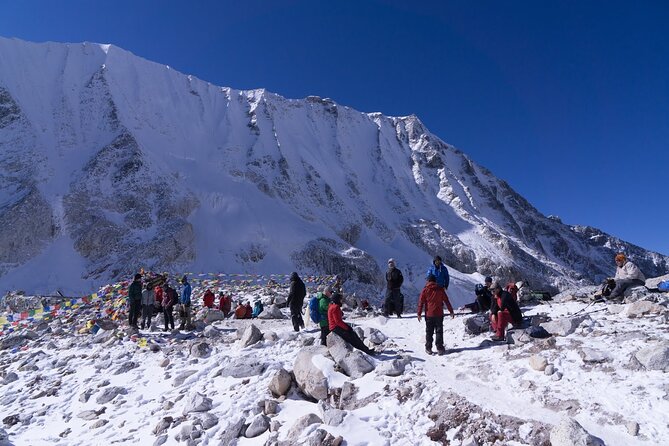
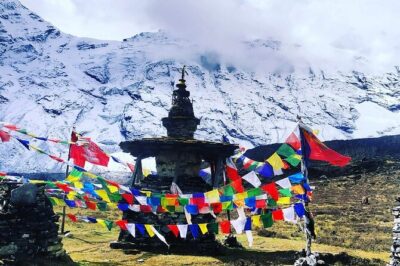
You walk through pine, bamboo, birch, fir, and rhododendron forests before reaching high, dry valleys. Prayer flags flutter above villages, stone Mani walls line the trail, and monasteries appear in places where the scenery suddenly opens to Manaslu, Himalchuli, Peak 29, Ganesh Himal, and Annapurna II.
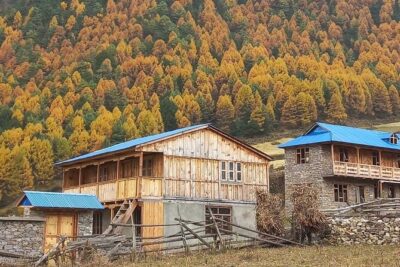
I especially like the way the route changes day by day. The lower section is green, wet, and riverbound. Above Namrung, the houses become more Tibetan, the air gets thinner, and the mountains fill more of your view. By Samdo and Larkya Phedi, you are walking in a stark world of glaciers, stone, and high pasture.
This is not a polished resort-style trek. Roads reach parts of the region, the trail can be rocky, and accommodation is in teahouses. That roughness is part of the appeal, but it also means you should pack with patience and prepare for simple conditions.
More Manaslu Treks in Kathmandu
- Manaslu Circuit Trek
★ 5.0 · 292 reviews - Manaslu Circuit Trek:
★ 5.0 · 106 reviews - Manaslu Circuit Trek (15 Days)
★ 5.0 · 50 reviews
Day 1: Kathmandu to Machhakhola by bus and jeep
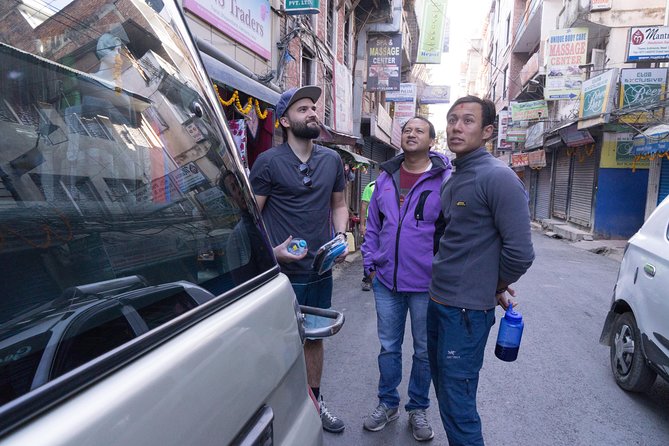
The first day begins at 7:15 am from Hotel Moonlight on Paknajol Marg in Kathmandu. You travel toward Dhading Bensi on a paved road, then continue along roughly 30 kilometers of partly rough dirt road to Machhakhola.
The full trip is described as about eight hours, but the schedule also shows a 15-hour activity period. Treat this as a long transfer day. Road conditions, stops, and traffic can affect the timing.
The reward is an early look at rural Nepal: farms, villages, green hills, and distant mountain scenery. The practical drawback is that you lose a full day to transport before walking begins. If you dislike long road journeys, this is important to understand before booking.
Day 2: Machhakhola to Jagat through river country
The route begins properly with an undulating walk through streams, rocky gullies, and rough river country. You pass Khorla Besi and reach Tatopani, where a small hot spring offers a natural break.
After crossing a suspension bridge, you climb broad stone steps toward Dobhan. The trail then becomes steeper and rougher, with landslip areas and another suspension bridge over the Yaru Khola. More stairs lead to Thado Bharyang, followed by a crossing to the western side of the Budhi Gandaki.
Jagat is a notable overnight stop because it marks a change in the feel of the trek. The village is more established than the scattered settlements below, yet the route still feels remote. This day is physically demanding early in the trip, so keep your pace steady rather than trying to win the morning.
Day 3: Jagat to Deng through Philim and bamboo forest
You climb a rocky ridge to Salleri, descend to Setibas, and follow the Ghatta Khola toward Philim, a Gurung village surrounded by millet fields. The trail then narrows as it enters a steep gorge.
Bamboo forest brings shade and a welcome change from the exposed river sections. After crossing the Deng Khola, you reach Deng, a small settlement where you spend the night.
This is a good day for noticing the details around your feet and not only the mountains above. The route includes hanging bridges, stone paths, farm plots, and changing forest. It also includes repeated climbs and descents, so the distance may feel harder than the map suggests.
More Trekking Tours in Kathmandu
- Everest Base Camp Trek – 14 Days
★ 5.0 · 1,499 reviews - Everest Base Camp Trek
★ 5.0 · 842 reviews - Everest Base Camp Trekking
★ 5.0 · 485 reviews - Annapurna Circuit Trek with Tilicho Lake
★ 5.0 · 368 reviews
Day 4: Deng to Ghap, with a possible Prok Gompa side trip
From Deng, you cross the Budhi Gandaki and climb toward Rana. The trail continues west through the Sringi Valley, with stream crossings, forest, Mani walls, and several changes in height before reaching Ghap.
The optional side trip to Prok Gompa is one of the route’s best cultural additions. It gives you a chance to visit Tibetan Buddhist monasteries rather than simply passing through villages. Since the available schedule does not state the side trip’s exact distance or time, ask the guide how it fits into the day.
Ghap is also where the air and scenery begin to feel more distinctly high Himalayan. You should have a better sense by now of how your body is handling the steady elevation gain.
Day 5: Ghap to Namrung and onward toward Lho
The trail climbs through pine and birch forest, crosses a river rushing through a narrow gorge, and reaches Namrung, where there is a check post. From there, the route continues through small Tibetan villages toward Lihi and Sho.
A painted chorten marks the approach to Sho. Stone houses, prayer features, and Mani walls become more common, while the forest begins to thin. The mountain views also grow more dramatic, with Manaslu, Manaslu North, Himalchuli, Saula Himal, and Dwijen Himal appearing around the route.
The schedule places Namrung as the day’s stop but describes walking onward to Lho for the night. That is another detail to confirm with the operator, since Namrung and Lho are not the same overnight point. Clear daily walking distances will help you judge the pace.
Day 6: Lho to Shyala and Samagaun
You begin with a steep descent across the rock-strewn Thusang Khola, then climb through fir forest to Shyala, a village on a broad plateau. Here, the view opens in several directions toward Himal Chuli, Peak 29, Manaslu, and Ganesh Himal.
From Shyala, the route continues toward Samagaun, passing a large chorten and a dip containing two rows of houses. Samagaun is one of the trek’s key villages. It has a well-known monastery called Sama and serves as the base for the acclimatization day that follows.
This is a day to slow down and watch for signs of altitude stress. The route is not only about distance. Your body is adapting to thinner air, and a measured pace matters more than arriving early.
Day 7: Acclimatization in Samagaun
The rest day is not a day of doing nothing. You can explore Samagaun and make the side trip to Pung-gyen Gompa, a respected monastery with views toward the glacier.
I like this pause because it gives the itinerary breathing room. You can see more of village life, look at the local buildings and religious sites, and prepare for the next section without immediately pushing higher.
The schedule describes a full activity day, but it does not give the side trip’s exact walking time. Ask the guide how far the group will go and how much elevation it involves. Keep the day comfortable. The goal is to help your body adjust before Samdo, Dharmashala, and the pass.
Day 8: Samagaun to Samdo beside the Manaslu Glacier
Leaving Sama, you walk near the foot of the Manaslu Glacier. A branch leads toward Manaslu Base Camp, while your route continues toward Larkya La.
The valley begins to widen as you pass Mani walls and enter forest of birch, juniper, and rhododendron. A wooden bridge and a steep climb onto a promontory bring you to Samdo, a high settlement near the Tibetan border region.
Samdo is an important overnight stop because it places you close to the pass while still allowing another night before the main crossing. The scenery here becomes more open and severe. You should expect colder conditions and simpler accommodation than at the lower villages.
Day 9: Samdo to Dharmashala at Larkya Phedi
You cross a wooden bridge over the Budhi Gandaki, pass several streams, and get your first clear look at the Larkya Glacier across the valley. The route climbs steadily beside the Sarka Khola toward Dharmashala at Larkya Phedi.
This is a shorter-looking day on paper, but altitude changes the effort. At this height, a gradual pace and regular water breaks are useful. Dharmashala is the staging point for the pass, so the night is less about sightseeing and more about resting for an early, demanding crossing.
The schedule calls this stop Larkya Bhanjyang, while the description places the overnight at Dharmashala and Larkya Phedi. Confirm the exact sleeping point and room arrangement before setting out.
Day 10: Crossing Larkya La to Bimtang
This is the trek’s big day. After a short ascent, you enter a valley north of the Larkya Glaciers, with views toward Cho Danda and Larkya Peak. The route crosses glacial moraines and climbs gradually to Larkya La.
From the pass, you can see Himlung Himal, Cheo Himal, Kangguru, and Annapurna II. The views are the payoff, but the crossing demands respect. You are walking high above the lower valleys on uneven ground, and cold, wind, or fatigue can make the day feel long.
After the pass, you descend toward yak pastures and continue to Bimtang, with evening mist often adding a moody finish to the day. Reaching Bimtang gives you a strong sense of progress because the route changes direction and begins its descent.
Day 11: Bimtang to Dharapani
The trail drops from Bimtang toward Dharapani, passing through Tilije and following the Dudh Khola. Stone-paved village paths, a chorten-shaped arch, Mani walls, and the village of Thonje add cultural detail to the descent.
You cross the river, then continue toward Dharapani for the night. The drop in altitude should feel welcome after the pass, although the walking remains long and your legs may be tired from the previous day.
The itinerary labels this day Chumchet but describes the route from Bimtang to Dharapani. That mismatch is worth clarifying. Dharapani is the stated overnight location, and the next day begins the road journey back.
Day 12: Dharapani to Kathmandu or Pokhara
The return begins with a shared local jeep to Beshisahar, taking about four to five hours. From there, you continue by bus along the Prithivi Highway.
You can travel toward Kathmandu, which takes about seven to eight hours from Beshisahar, or toward Pokhara, which takes about five to six hours. The road follows the Marsyangdi and Trishuli rivers, with views of green hills, terraced farms, villages, and mountain scenery.
This is not a quick airport-style transfer. It is another full day on the road, and the schedule’s listed 15 minutes clearly does not reflect the actual journey. Plan onward travel with plenty of spare time.
What the $600 price really means
At $600 per person, the trip looks appealing for a private 12-day Himalayan trek. The stated package includes an English-speaking trekking guide, public transportation, entrance fees, and permits for the Manaslu restricted area, Manaslu Conservation Area, and Annapurna Conservation Area.
But the cost details need careful checking. One section says food, accommodation, and insurance are included. Another says all food and beverages, travel insurance, and teahouse accommodation are not included. Porter service and tips are also excluded.
That is a major difference in final cost. Before booking, ask for a written breakdown covering:
- Teahouse room fees for every night
- Breakfast, lunch, dinner, and drinks
- Travel insurance and guide insurance
- Manaslu and Annapurna permits
- Kathmandu to Machhakhola transport
- Dharapani to Beshisahar jeep and onward bus
- Any side trip costs
- Guide tips and optional porter service
The permit fees alone can matter on a restricted route. The price may still offer good value, but only after you know what you will pay locally.
Who should book this trek
You should consider this trip if you want a serious mountain route with village contact, Tibetan Buddhist culture, forests, glaciers, and a high pass. It suits someone comfortable with basic teahouse conditions, long road transfers, steep steps, and changing weather.
A moderate fitness level is required, according to the activity details, but I would treat that as a minimum rather than a full description. You need to manage consecutive walking days and altitude. The itinerary includes one acclimatization day, which is helpful, but you should still discuss your pace and health concerns with the guide.
The private format is useful for setting a sensible pace within your group. Named contacts associated with the arrangements include Hari, Bimal, and Bikash. Communication before departure was handled promptly in several cases, so use that contact stage to ask direct questions about costs, daily distances, and the exact role of the guide.
The activity accepts mobile tickets, confirmation is provided at booking, and cancellation is allowed for a full refund up to three full days before the start time. Last-minute changes or cancellations are not accepted for a refund.
Should you book the Manaslu Circuit?
I would book this route if your priority is a less familiar Himalayan circuit with strong mountain scenery, Tibetan-style villages, monasteries, and the satisfaction of crossing Larkya La. The Prok and Pung-gyen side trips make the experience more than a simple point-to-point walk.
I would not book until the inclusions are corrected in writing. The conflicting information about meals, teahouse accommodation, and insurance is too important to ignore. Also ask for a cleaned-up itinerary with realistic walking hours, exact overnight villages, and clear transport times.
If those details are settled, the $600 base price could be a practical way to arrange a private Manaslu trek. If they are not, your final bill may be much higher than expected.
FAQ
Where does the trek start?
The meeting point is Hotel Moonlight on Paknajol Marg in Kathmandu, Nepal. The stated start time is 7:15 am.
How long does the trek last?
The experience is planned for approximately 12 days, including the road journey from Kathmandu to Machhakhola and the return from Dharapani toward Kathmandu or Pokhara.
Is transportation included?
Public transportation is included in the stated package. The trip uses a public deluxe bus and jeep, including a shared local jeep from Dharapani to Beshisahar and a bus onward to Kathmandu or Pokhara.
What side trips are available?
You can make a side trip to the Tibetan gompas at Prok from Ghap. During the acclimatization day in Samagaun, you can walk to Pung-gyen Gompa and view the glacier.
Is this a private tour?
Yes. Only your group participates, and an English-speaking trekking guide is provided.
What is not included?
The stated exclusions include tips, food and beverages, travel insurance, teahouse accommodation fees, and porter service. However, another part of the information says food, accommodation, and insurance are included, so you should confirm the final package in writing before booking.
Latest treks added in Kathmandu
- Private Manaslu Circuit Trek at Himalayas★ 5.0 · 3 reviews
- Ghorepani Poonhill Trek★ 5.0 · 5 reviews
- Ghorepani Poon Hill Trek★ 5.0 · 16 reviews
- Upper Mustang Trekking★ 3.0 · 2 reviews
- Amazing 1 Day Trekking Experience in Kathmandu Nepal★ 5.0 · 24 reviews
- Upper Mustang Trekking★ 5.0 · 2 reviews
- Upper Mustang Trek★ 5.0 · 5 reviews
- Upper Mustang Trekking★ 5.0 · 4 reviews
Manaslu Circuit Treks, compared.
16 Day Private Manaslu Circuit Trek from Kathmandu
Read our review →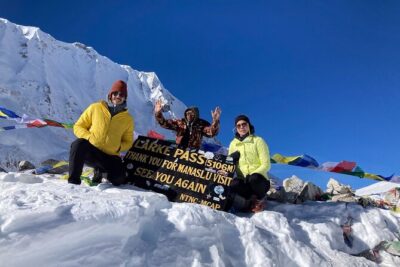
10 Days Manaslu Circuit Trek in Larke La Pass
Read our review →Browse the lists this tour appears in