
REVIEW · KATHMANDU
Manaslu Circuit Trek
The Manaslu Circuit Trek takes you from low river valleys to high Himalayan passes, with the 8,163-meter Manaslu massif as the main event. I like the steady change in scenery and the chance to walk through communities where daily life still feels tied to the mountains. I also like that the price includes a guide, porter, permits, meals, teahouses, transport, and a warm sleeping bag.
This is not a soft adventure. The route reaches 5,160 meters at Larkya La, with long days, rough mountain roads, and basic lodging. You should have strong fitness, and you need travel and rescue insurance even though it is not included.
Key points to know before you book
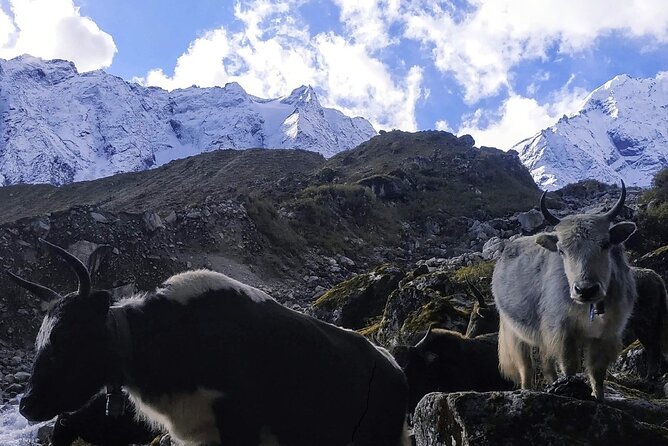
- Larkya La is the big test: The pass reaches 5,160 meters and comes after a night at 4,460 meters.
- The route changes dramatically: You begin in warm, low valleys and finish among high, snowy peaks.
- The package is fairly broad: Transport, permits, meals, guide, porter, teahouses, Kathmandu hotel nights, and sightseeing are included.
- You get one acclimatization day: It is scheduled at Samagaon before the trek climbs higher.
- The group is small: The maximum is 10 people, with one porter assigned for every two trekkers.
- The experience is culturally focused: Buddhist villages, monasteries, welcoming communities, and mountain hospitality are central parts of the walk.
Why the Manaslu Circuit feels different
Many Himalayan treks are judged by their highest viewpoint. Manaslu gives you a full journey instead. You start near 700 meters at Sotikhola, pass through steep river country, enter Tibetan-influenced villages, and finish with a demanding crossing into the Marsyangdi valley.
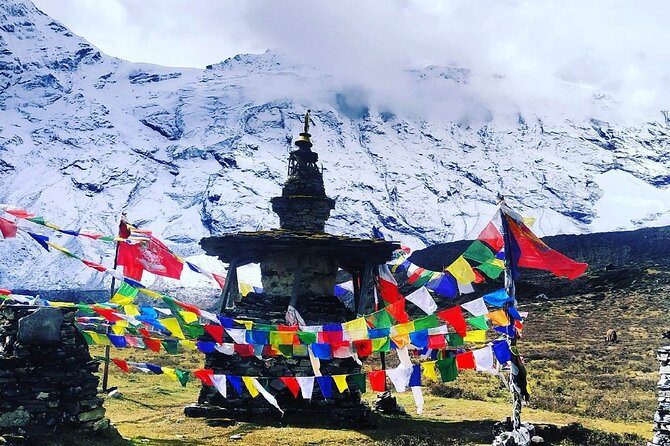
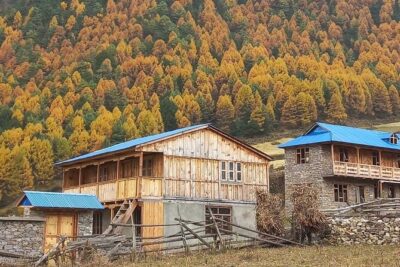
I like this gradual build. You do not simply fly or drive close to the mountains and walk for a few days. You watch the terrain change under your feet. Tropical-looking lower valleys give way to cooler forests, open mountain slopes, stone villages, and high settlements where Buddhist culture is clearly present.
The route also feels more remote than a simple mountain lodge holiday. That comes with a price. Roads can be rough, the walking days can be long, and teahouse accommodation is practical rather than polished. If you need reliable WiFi, private rooms, frequent hot showers, or easy access to shops, this is not the right trip.
If you want serious mountain walking with a strong cultural side, the route makes good sense.
More Manaslu Treks in Kathmandu
- Manaslu Circuit Trek
★ 5.0 · 292 reviews - Manaslu Circuit Trek:
★ 5.0 · 106 reviews - Manaslu Circuit Trek (15 Days)
★ 5.0 · 50 reviews
What the $2,300 price covers
At $2,300 per person, this is not a bare-bones hiking package. The cost covers Kathmandu hotel accommodation with breakfast, airport transfers, Kathmandu sightseeing, transport between Kathmandu and Sotikhola, and the return journey from Dharapani through Besisahar to Kathmandu.
During the trek, you receive three meals a day, teahouse accommodation, an English-speaking government-licensed guide, a porter for every two trekkers, permits, a medical kit, a down jacket, and a sleeping bag. The jacket and sleeping bag are borrowed equipment, so you return them at the end.
That collection of inclusions gives the trip solid value, especially for first-time visitors to Nepal. You do not need to arrange the Manaslu permits, sort out every transfer, or carry all your own equipment. The guide and porter costs are also covered, which matters on a route with high passes and repeated climbs.
You still need to budget for Nepal’s visa fee, international flights, lunch and dinner in Kathmandu, insurance, tips, laundry, phone calls, WiFi, battery charging, bar bills, and personal purchases. Extra nights in Kathmandu are also outside the price.
The biggest financial point is insurance. Travel and rescue insurance is not included, and the trek reaches 5,160 meters. Arrange cover that specifically includes trekking at the required altitude and possible rescue. Do not treat this as an optional extra.
Kathmandu gives you one useful preparation day
You arrive in Kathmandu at about 1,334 meters and are transferred to the hotel. The next day combines Kathmandu Valley sightseeing with trek preparation.
This is a sensible opening. You get time to recover from your flight, sort your bags, meet the guide, and check borrowed gear before heading into the hills. The package includes monument entrance fees for the sightseeing listed in the plan, though lunch and dinner in the capital remain your responsibility.
The starting point is Hotel Thamel Park on Chaksibari Marg, and the trek begins at 6:15 am. That early start matters because the first road journey is long. Be ready the night before.
Sotikhola to Jagat: rough roads and river valleys
The trip to Sotikhola takes about six to seven hours by road and covers roughly 150 kilometers. The road transfer is part of the practical reality of Manaslu. You are not stepping onto a polished trail from Kathmandu. The journey helps explain why the region feels remote, but it can also be tiring before the walking begins.
From Sotikhola, the route reaches Machha Khola at 869 meters after about six to seven hours and 12 kilometers. The day includes the first proper walking rhythm of the trek. You will be moving through lower valleys, with the river and steep slopes shaping the route.
The next day takes you to Jagat at 1,340 meters. It is around 15 kilometers and seven to eight hours of walking. Jagat is an important early stop because the elevation begins to rise and the route starts to feel less like a short rural walk and more like a true Himalayan trek.
These first stages are not just warm-up days. They are long enough to test your boots, pack, pacing, and patience. Keep your load light, drink regularly, and do not race ahead simply because the altitude is still moderate.
More Trekking Tours in Kathmandu
- Everest Base Camp Trek – 14 Days
★ 5.0 · 1,499 reviews - Everest Base Camp Trek
★ 5.0 · 842 reviews - Everest Base Camp Trekking
★ 5.0 · 485 reviews - Annapurna Circuit Trek with Tilicho Lake
★ 5.0 · 368 reviews
Jagat to Namrung: the route grows more remote
From Jagat, you walk to Deng at 1,860 meters. The planned distance is about 12 kilometers, taking six to seven hours. The trail continues through river valleys and mountain settlements, with the walking becoming more demanding as you gain height.
Deng to Namrung reaches 2,630 meters over about 12 kilometers and six to seven hours. This is where the character of the trek begins to change more clearly. Lower valley scenery gives way to mountain villages and cooler air, and the high peaks begin to feel closer.
Your guide becomes especially useful here. A good pace matters more than speed, and the group needs to stay together as the elevation increases. The package uses an English-speaking, government-licensed guide, and the guiding team has included Ram, Mingma, Jeet, and Madhav on different trips.
You also have porter support, with one porter for every two trekkers. Pack only what you need for the walking days, since your porter will be carrying shared or personal bags and the route is already physically demanding.
Namrung to Samagaon: the best mountain scenery arrives
Namrung to Lho is a shorter day, about nine kilometers and four to five hours. Lho sits at 3,180 meters and gives you a strong taste of the high mountain world. Buddhist culture becomes more visible, and the large peaks begin to dominate the view.
The next stage reaches Samagaon at 3,520 meters. It is about eight kilometers and four to five hours, so the shorter schedule gives you time to adjust rather than simply grind through another long day.
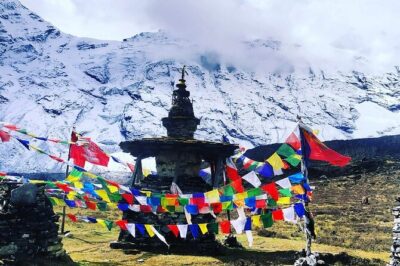
This section is one of the main reasons to choose Manaslu. The mountain views become broad and dramatic, while the villages retain a clear connection to local Himalayan traditions. You may also have time to visit a gompa, depending on the day’s pace and local arrangements. The combination of mountain scenery, quiet settlements, and Buddhist culture gives this route its strongest sense of place.
Samagaon is not just another overnight stop. It is the base for the planned acclimatization day, and that pause is important.
Samagaon acclimatization: a rest day with a purpose
The itinerary schedules one acclimatization day at Samagaon. Do not think of this as wasted time. You are about to climb above 4,000 meters, so giving your body time to adjust is part of the safety plan.
The exact activity for the day is not specified, so your guide will determine how to use it. You might take a short walk, visit a local cultural site, or simply rest and prepare for the next stages. The key point is to avoid turning the day into a full hard hike.
You should use this stop to check your water, layers, gloves, headwear, and sleeping gear. The down jacket and sleeping bag supplied by the operator become more useful as the route climbs.
Samagaon to Larkya Phedi: high valleys and thin air
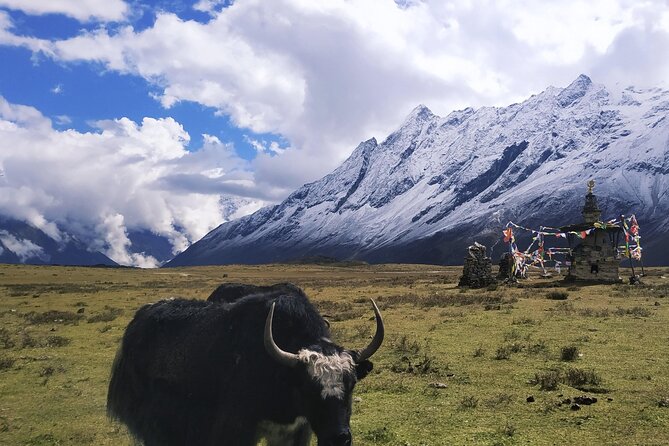
Samagaon to Samdo is about eight kilometers and four to five hours, ending at 3,875 meters. It is a relatively short day on paper, but the altitude changes how your body feels. Walk slowly, eat even if your appetite drops, and tell your guide if you feel unwell.
Samdo to Dharamsala, also called Larkya Phedi, covers about eight kilometers in four to five hours and reaches 4,460 meters. This is the staging point for the pass crossing.
The accommodation here is teahouse based, as it is throughout the trek. That means you should expect useful shelter and meals, not hotel comfort. Personal expenses such as WiFi, battery charging, and extra services are not included, and these may be limited in high settlements.
Larkya Phedi is where the pass becomes real. The next day is the hardest stage of the route, so keep your evening quiet and prepare your clothes, water, and day bag before sleeping.
Crossing Larkya La at 5,160 meters
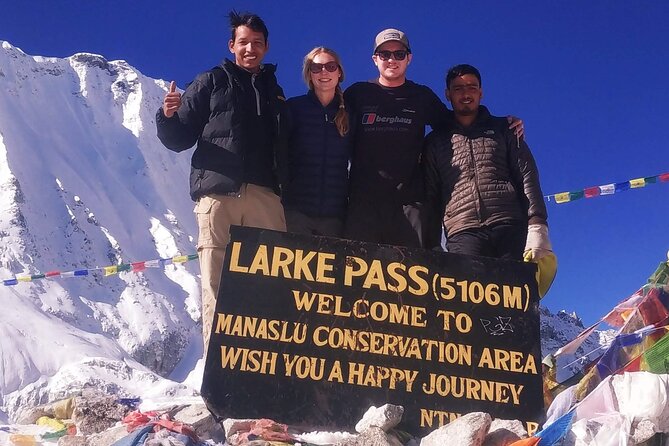
The pass day starts at Larkya Phedi, reaches Larkya La at 5,160 meters, and continues to Bimthang at 3,590 meters. The planned distance is about 12 kilometers and six to seven hours, though the high altitude can make the day feel much longer.
This is the central challenge of the trek. You gain a high pass, then lose a large amount of elevation on the way to Bimthang. The reward is the sense of crossing from one mountain area into another, with major Himalayan views along the route.
You should not judge this day by the distance alone. The altitude, cold, uneven trail, and early start all matter. Stay near your guide, keep your pace steady, and speak up if you develop symptoms of altitude sickness. The guide and medical kit are useful parts of the package, but no itinerary can remove the physical demands of the pass.
Bimthang should feel like a major release after the crossing. You have completed the highest point, and the route begins its descent.
Bimthang to Dharapani: a long descent
The walk from Bimthang to Dharapani covers about 15 kilometers and takes seven to eight hours. This is still a full day, even though you are moving lower.
The descent changes the feel of the trip again. After the cold, open terrain around the pass, lower valleys feel more welcoming. Your legs may be tired, and downhill walking can be harder than expected after the pass day, so trekking poles and careful foot placement can help if you already use them.
Dharapani marks the end of the high circuit section. From here, transport takes over.
The return to Kathmandu is part of the adventure
Dharapani to Besisahar is a five to six-hour drive covering about 80 kilometers. The plan then allows another six to seven hours to drive back to Kathmandu.
That is a lot of road time in two days. It is efficient, but not luxurious, and road conditions can affect how comfortable the transfer feels. The itinerary includes the transport, which removes a major planning burden after the trek.
You return to Kathmandu for the final night before flying home on day 17. The final transfer to the airport is included, and the trip ends back at the original meeting point before departure arrangements take over.
Who will get the most from this trek
This route suits you if you want a demanding Himalayan walk, dramatic mountain views, local village life, and a guide-led experience with logistics handled. It is especially useful for people who would rather pay one operator to arrange permits, food, porters, hotels, transport, and trekking support.
You should have strong physical fitness. The days regularly run from four to eight hours, and the route reaches 5,160 meters. The hardest section is not only the pass itself. It is the accumulated effort of many walking days, high altitude, basic lodging, and long transfers.
This may not suit you if you want a relaxed holiday, private luxury, or a flexible schedule. The package is designed around a fixed 17-day plan, and the cancellation terms are strict: the experience is non-refundable and cannot be changed for any reason. If poor weather cancels the trip, you are offered another date or a full refund.
My verdict on the Manaslu Circuit Trek
I would book this if you want a serious but organized Himalayan trek and value authentic mountain communities as much as the views. The inclusion list is strong for $2,300, particularly with a licensed guide, porter support, meals, permits, Kathmandu accommodation, equipment, and transport all covered.
I would pause before booking if you are not prepared for long walking days, high altitude, rough roads, teahouse accommodation, and extra costs in Kathmandu. Get suitable insurance first, ask what guide is assigned, and confirm the equipment sizes before arrival.
For fit hikers who want Manaslu’s high pass, Buddhist villages, and huge mountain scenery without arranging every detail alone, this is a well-balanced package. The route is tough, but the reward is a complete Himalayan journey rather than a quick sightseeing stop.
FAQ
How long is the Manaslu Circuit Trek?
The planned duration is 17 days, including arrival in Kathmandu, sightseeing and preparation, the trek, transport back to Kathmandu, and departure.
What is the highest point on the trek?
The highest point is Larkya La pass at 5,160 meters.
What fitness level do I need?
You should have a strong physical fitness level because the route includes multiple six to eight-hour walking days and a high-altitude pass crossing.
Is accommodation included?
Yes. The package includes three-star hotel accommodation in Kathmandu with breakfast on a twin-sharing basis, plus teahouse accommodation during the trek.
Are meals included?
Breakfast, lunch, and dinner are included during the trek. Lunch and dinner in Kathmandu are not included.
Is a guide provided?
Yes. The package includes an experienced, English-speaking, government-licensed trekking guide and covers the guide’s expenses.
Is porter support included?
Yes. One porter is provided for every two trekkers, and the porter’s expenses are included.
Is travel insurance included?
No. Travel and rescue insurance are not included, so you need to arrange your own policy.
Where does the trek start and end?
The meeting point is Hotel Thamel Park Pvt. Ltd. on Chaksibari Marg in Kathmandu. The activity ends back at the meeting point after the return arrangements.
Latest treks added in Kathmandu
- Private Manaslu Circuit Trek at Himalayas★ 5.0 · 3 reviews
- Ghorepani Poonhill Trek★ 5.0 · 5 reviews
- Ghorepani Poon Hill Trek★ 5.0 · 16 reviews
- Upper Mustang Trekking★ 3.0 · 2 reviews
- Amazing 1 Day Trekking Experience in Kathmandu Nepal★ 5.0 · 24 reviews
- Upper Mustang Trekking★ 5.0 · 2 reviews
- Upper Mustang Trekking★ 5.0 · 4 reviews
- Upper Mustang Trek★ 5.0 · 5 reviews
Manaslu Circuit Treks, compared.
16 Day Private Manaslu Circuit Trek from Kathmandu
Read our review →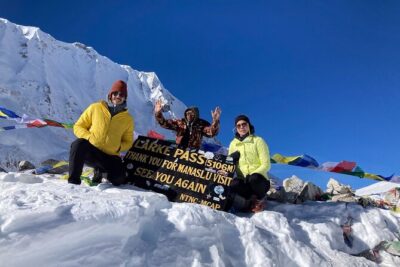
10 Days Manaslu Circuit Trek in Larke La Pass
Read our review →Browse the lists this tour appears in