REVIEW · KATHMANDU
Madri Himal Trek
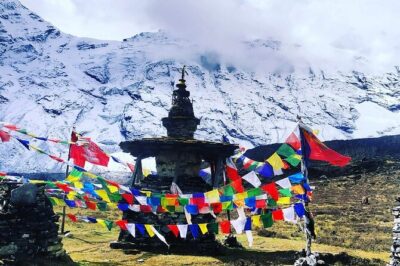
The best part of the Mardi Himal trek is its steady change of scenery. You start with a bus ride and a night in Pokhara, then walk from Kande through forest, open hills, and high mountain country beneath snow-capped Annapurna peaks. Tea houses break up the walking day with simple meals, hot drinks, and a place to rest.
I like the very small group size, limited to two people, and the fact that breakfast, lodging, transport, taxes, and permit arrangements are handled for you. I also like the free time in Pokhara at the end, which gives you a softer landing after the high-altitude days.
The main caution is altitude. The route reaches 4,500 meters at Mardi Himal Base Camp, and one day involves seven to eight hours of walking before the high point. This is called a moderate trek, but it still demands good fitness and a willingness to walk uphill for several days.
Key points before you book
- A high point of 4,500 meters: The day hike to Mardi Himal Base Camp is the physical and scenic centerpiece.
- Only two people per group: This allows a more personal pace and direct contact with your guide.
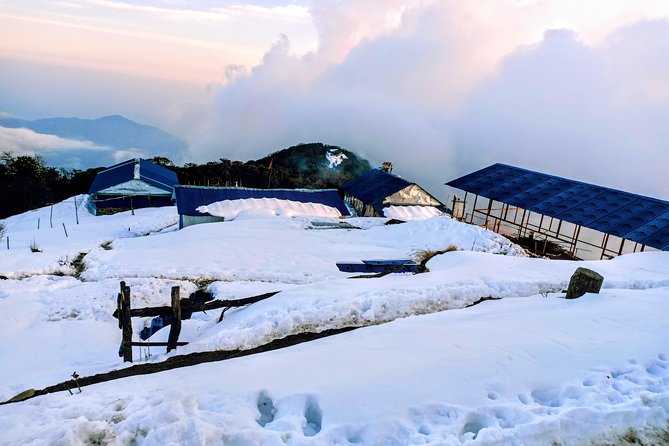
- Tea-house accommodation: You sleep in local lodges rather than camping during the walking portion.
- Transport from Kathmandu included: An air-conditioned tourist bus takes you to Pokhara and back.
- Food costs need planning: Breakfast is included, but lunch and dinner are not.
- Guide names connected with the operation: Raju, Ram, and KB have handled successful trips, but your assigned guide may differ.
What the eight-day route is really like
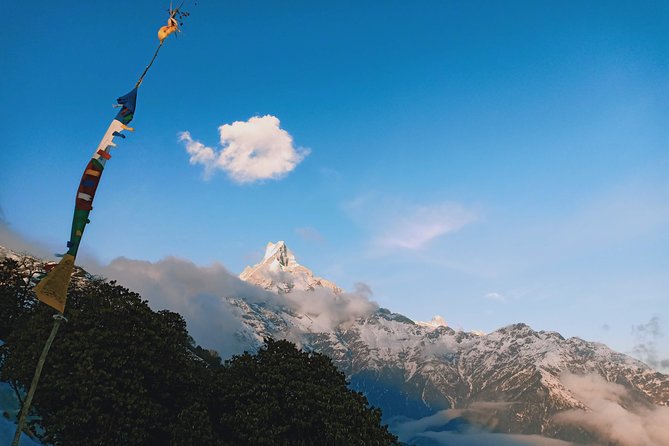
This is a point-to-point mountain trip with a fairly practical structure. You begin in Kathmandu, spend a night in Pokhara, walk uphill for four main days, descend to the road, and return to Pokhara before taking the bus back to Kathmandu.
The route is not built around luxury or long rest periods. You stay in tea houses, walk several hours each day, and pay separately for lunch and dinner. In return, you get a direct way to reach Mardi Himal without arranging transport, permits, lodging, and guides on your own.
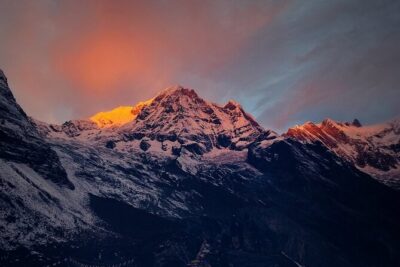
The itinerary also includes both sunrise and sunset opportunities. Exact viewing conditions depend on weather, but the higher camps give you the best chance of seeing the mountains in changing light. Bring patience as well as a camera. Mountain views are never guaranteed.
More Trekking Tours in Kathmandu
- Everest Base Camp Trek – 14 Days
★ 5.0 · 1,499 reviews - Everest Base Camp Trek
★ 5.0 · 842 reviews - Everest Base Camp Trekking
★ 5.0 · 485 reviews
Day 1: Kathmandu to Pokhara by tourist bus
The trip begins with a 6:15 am start and an air-conditioned tourist bus to Pokhara. This is a full transport day rather than a hiking day, so it helps to treat it as part of the journey, not lost time.
You spend the night in a Pokhara hotel. That matters because you do not have to begin the trail immediately after arriving from Kathmandu. You can sleep, organize your pack, and meet or continue with the trekking guide before the walk starts.
Pokhara is also a useful contrast to the trail. It gives you one night in a city with more comfort before the tea-house section begins. Lunch and dinner are not included, so plan to buy those meals yourself in Pokhara.
Day 2: Kande to Pitam Deurali
The second morning starts with a private drive of about one hour to Kande. From there, you begin walking toward Pitam Deurali at roughly 2,100 meters.
The hike takes around three hours, making this a manageable introduction to the route. You gain height, but the shorter walking time gives you room to settle into your boots and see how your body responds.
You sleep in a tea house at Pitam Deurali. These lodges are a central part of the experience. They keep the trip simpler than camping, though you should expect basic accommodation rather than hotel-style service.
This is also the point where your guide becomes especially useful. The group is limited to two people, so you can discuss pace and breaks directly rather than trying to keep up with a large party.
Day 3: Forest Camp at 2,550 meters
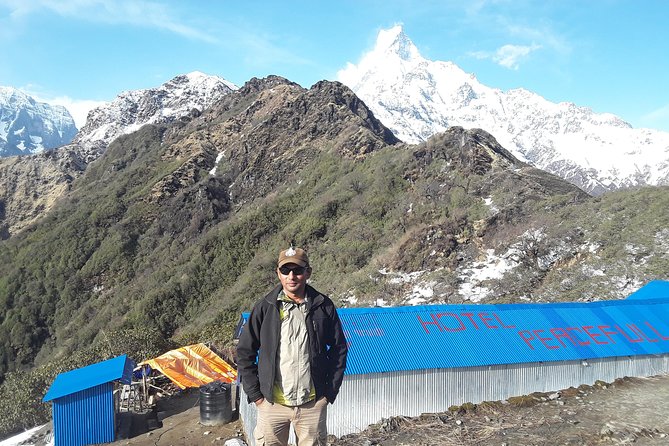
The walk to Forest Camp takes five to six hours. The route moves higher through forest, with the day providing a longer test of your legs after the shorter opening hike.
Forest Camp sits at about 2,550 meters. The gain in height is gradual compared with the later climb, but you will notice that the walking days are becoming more serious.
Tea houses provide places to stop for tea and photographs. That may sound like a small feature, but it changes the rhythm of the trek. You are not forced to walk continuously for hours. A warm drink or short pause can make the difference on a sustained uphill day.
The downside is that the route has fewer comforts than Pokhara. Your meals and lodging are simple, and dinner is not included in the price. Keep cash available for food during the trek, since the package covers breakfast only.
Another trail to compare in Kathmandu:
- Annapurna Circuit Trek with Tilicho Lake
★ 5.0 · 368 reviews - Everest Base Camp Trekking – 13 Day
★ 5.0 · 365 reviews - Everest Base Camp Trek
★ 5.0 · 350 reviews - Everest Base Camp Trek -14 Days
★ 5.0 · 321 reviews
Day 4: Forest Camp to Low Camp and High Camp
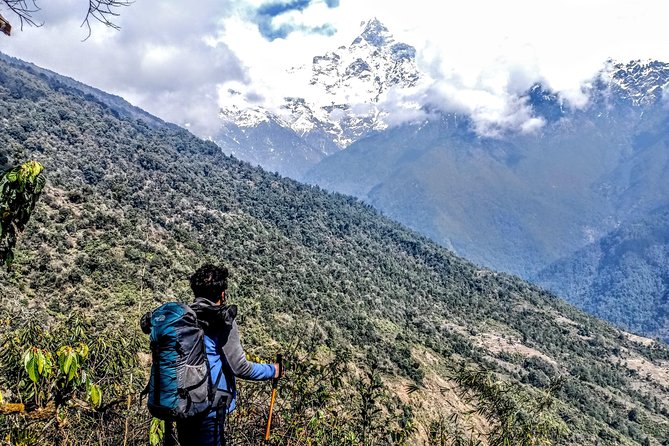
Day four is the hardest scheduled walking day. You leave Forest Camp at 2,550 meters, pass through Low Camp at about 2,990 meters, and continue to High Camp at approximately 3,850 meters.
The stated walking time is seven to eight hours. That is a long day, with a major increase in altitude. You should not judge it only by distance. Uphill walking at higher elevation takes more effort, and the final section may feel slow.
The reward is your position for the next morning. High Camp puts you close to the route toward Mardi Himal Base Camp, so you do not need to carry out the full ascent from a lower village in one day.
This is where the private format earns its keep. With only one other person, you can stop when needed, adjust your pace, and talk with the guide about the next section. You are still responsible for managing your own limits, but the group structure is less rigid than a large organized trek.
Day 5: Mardi Himal Base Camp at 4,500 meters
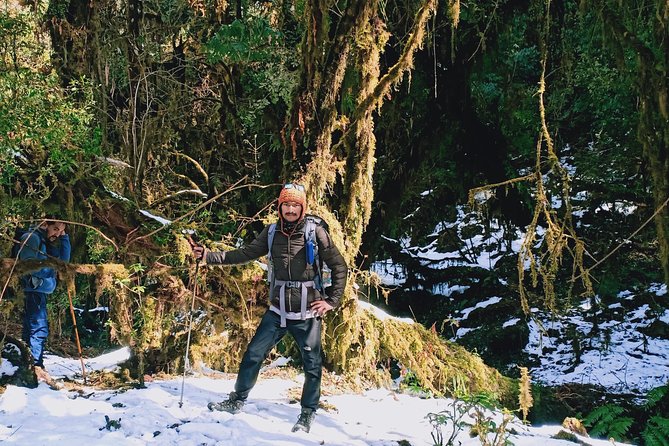
The fifth day is the main reason to choose this route. You hike from High Camp to Mardi Himal Base Camp at approximately 4,500 meters, then return to High Camp.
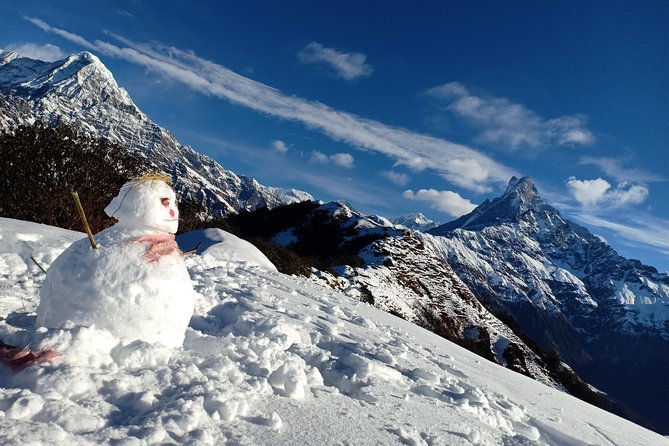
The walk takes six to seven hours in total. It is a day hike, so you can leave your larger belongings at the tea house and carry only what you need for the outing. The high point brings the best chance for broad mountain views, with snow-capped peaks in the distance when weather allows.
This is also the day that requires the most honesty about fitness. The trek is rated moderate, but 4,500 meters is high, and the route includes a long climb followed by a descent. You should be comfortable with sustained walking and prepared for the possibility that altitude will slow you down.
Returning to High Camp after reaching the base camp makes the day more practical. You do not have to sleep at the highest point. You return to the same tea-house base before the next descent.
Sunrise and sunset are additional attractions around the high camps. The schedule gives you access to mountain light at useful times, though cloud cover can change the view quickly.
Day 6: High Camp to Sidhing
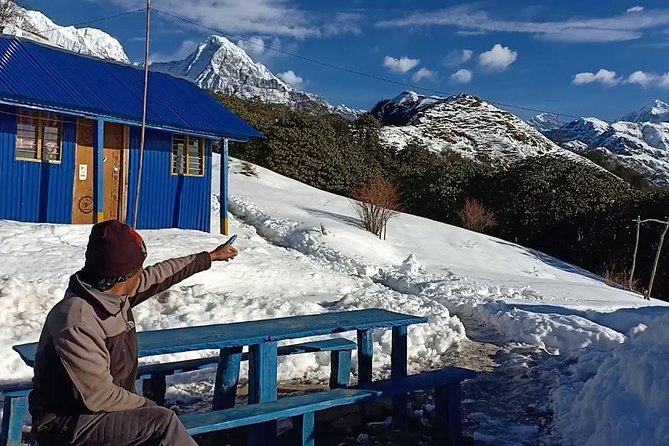
After the high point, you descend from High Camp at around 3,580 meters to Sidhing at 1,850 meters. The stated walking time is about six hours.
The drop in altitude is welcome after the base-camp day. Your legs may still feel tired, but breathing should become easier as you lose height. Descending can be hard on knees, so walking poles may be worth bringing, though they are not listed as an included item.
Sidhing provides a different feel from the high camps. You are back at a lower elevation and closer to road access, while still staying in a local tea house. This is a useful transition between the mountain portion and the return to Pokhara.
The itinerary lists High Camp as 3,580 meters on this day, while the previous day lists it at 3,850 meters. The numbers may reflect different measurements or camp references. The important point is that you spend the previous night high and then make a substantial descent to Sidhing.
Day 7: Sidhing to Lumre and back to Pokhara
The final walking section takes about three hours from Sidhing to Lumre. Compared with the previous two days, this is short and gives you a chance to finish the trail without another major push.
From Lumre, you drive to Pokhara. The afternoon is free, which I consider a strong part of the plan. You can rest at the hotel, eat a proper meal, or spend a little time enjoying Pokhara before the bus ride back to Kathmandu.
Dinner is not included, so this is a good chance to budget for a meal that suits you after several days of tea-house food. Your Pokhara accommodation is included, giving you another night in a hotel before the final road journey.
Day 8: Pokhara to Kathmandu
The final day is another air-conditioned tourist bus ride to Kathmandu. Like the first day, it is a transport day rather than a hiking day.
The arrangement is convenient for anyone who wants a packaged route from Kathmandu. You do not need to arrange separate bus tickets between the capital and Pokhara, though a road journey can still take much of the day.
The trip ends in Kathmandu. Airport transfers, extra nights, and meals beyond the stated breakfasts are not listed as included, so you should arrange those separately if needed.
What the $600 price covers
At $600 per person, the cost is easiest to judge by looking at what has already been organized. The package includes the air-conditioned vehicle, accommodation in Pokhara, tea-house lodging during the trek, breakfast throughout, taxes and fees, and permit organization by the guide.
It also gives you a private or near-private experience, with a maximum of two people. That is a meaningful benefit if you prefer a flexible pace or do not want to join a large trekking group.
The price does not include lunch or dinner in Pokhara or during the trek. Those costs are separate, and you should budget for them across the walking days. The package also does not list personal equipment, drinks, snacks, tips, or extra services, so ask about those before departure if they matter to you.
For a first trek in Nepal, the value comes from reducing the amount of planning you must do yourself. You still need to handle your own food choices and personal gear, but transport, lodging, breakfast, and permits are arranged together.
The guide and small-group advantage
The operation has been associated with guides named Raju, Ram, and KB. Raju has been specifically connected with a successful Mardi Himal trip, while Ram and KB were thanked for making another trek possible.
That gives you useful names to ask about when booking, but do not assume one of them will lead every departure. Confirm who your guide will be and what support is provided before you pay.
A maximum of two people is one of the strongest practical features here. You can ask for photo stops, discuss the pace, and tell the guide if the altitude is affecting you. The tradeoff is that the experience may feel less social than a larger group, and the price is not spread across a big party.
The stated age range is 15 to 70, but age alone does not determine suitability. The key question is fitness. You need to manage several walking days, including a seven to eight hour climb and a high-altitude day to 4,500 meters.
Who should book this trek
I would recommend this trip to you if you want a guided introduction to the Annapurna area without camping, cooking, or arranging every transfer yourself.
It fits someone who values a small group, local tea-house stays, mountain views, and a clear eight-day plan. It also works well for a pair of friends or relatives who want a private guide rather than a large group.
I would be more cautious if you dislike long road journeys, basic lodging, or paying separately for most lunches and dinners. The route is also not ideal if you want a slow acclimatization schedule with many rest days. The plan keeps moving, and the highest section comes soon after the lower trail days.
The trek requires good physical fitness, and the altitude should be taken seriously. If you have concerns about reaching 4,500 meters, ask the operator about the guide’s approach to pacing and what happens if you cannot complete the base-camp hike.
Booking details worth knowing
Pickup is offered, and the listed start time is 6:15 am. You receive confirmation when booking, and the experience is near public transportation, although the main transport is arranged through the tour.
Cancellation is free if you cancel at least 24 hours before the start time. Later cancellations and changes are not refunded. The trek also depends on suitable weather and a minimum number of people. If poor weather or low enrollment cancels the trip, you are offered another date, another experience, or a full refund.
Should you book the Mardi Himal trek?
Book it if you want a compact, guided mountain trek with a small group, tea-house lodging, included breakfasts, and transport from Kathmandu through Pokhara.
The strongest reasons to choose it are the maximum group size of two, the organized permits, and the chance to reach Mardi Himal Base Camp at 4,500 meters without arranging the route yourself. The main reasons to hesitate are the long walking days, basic accommodation, separate meal costs, and demanding altitude.
If you are fit, comfortable with simple lodging, and happy to trade some independence for easier planning, this is a sensible value at $600. Ask about your assigned guide, confirm the food and equipment arrangements, and make sure you are ready for the High Camp to Base Camp day before booking.
FAQ
How long is the Mardi Himal trek?
The trip lasts approximately eight days, including bus travel between Kathmandu and Pokhara and the trekking days between Kande, High Camp, Sidhing, and Lumre.
Where does the trek start and finish?
The walking section starts at Kande after a private drive from Pokhara. You finish the trail at Lumre, drive back to Pokhara, and return to Kathmandu by tourist bus on the final day.
What is the highest point of the trek?
The highest stated point is Mardi Himal Base Camp at approximately 4,500 meters.
Is accommodation included?
Yes. Accommodation in Pokhara and tea-house accommodation during the trek are included.
Are meals included?
Breakfast in Pokhara and during the trek is included. Lunch and dinner in Pokhara and during the trek are not included.
How many people can join the group?
The maximum group size is two people.
What happens if bad weather cancels the trek?
If poor weather causes the experience to be canceled, you are offered a different date or a full refund.
Latest treks added in Kathmandu
- Private Manaslu Circuit Trek at Himalayas★ 5.0 · 3 reviews
- Ghorepani Poonhill Trek★ 5.0 · 5 reviews
- Ghorepani Poon Hill Trek★ 5.0 · 16 reviews
- Upper Mustang Trekking★ 3.0 · 2 reviews
- Amazing 1 Day Trekking Experience in Kathmandu Nepal★ 5.0 · 24 reviews
- Upper Mustang Trekking★ 5.0 · 2 reviews
- Upper Mustang Trek★ 5.0 · 5 reviews
- Upper Mustang Trekking★ 5.0 · 4 reviews
Kathmandu Trekking Tours, compared.