REVIEW · KATHMANDU
Kanchenjunga South Base Camp Trek – 13 Days
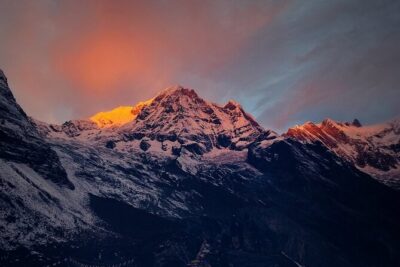
Kanchenjunga South Base Camp is for you if the idea of reaching Nepal’s third-highest mountain sounds better without the crowds of the Everest route. At 8,586 meters, Kanchenjunga rises above a remote corner of eastern Nepal, where the trail passes through forests, old trade routes, glacier valleys, and small villages.
I like two things right away: the small maximum group of seven, which should make trail days more personal, and the unusually strong mix of scenery and culture. You meet Rai, Limbu, Gurung, and Tibetan-influenced communities, rather than simply marching from one famous viewpoint to another.
The trade-off is time on the road. The journey begins and ends with long drives and an overnight bus, and several trekking days are demanding. You need moderate fitness, patience with basic teahouse facilities, and a personal insurance policy that covers the trek.
Key points before you book
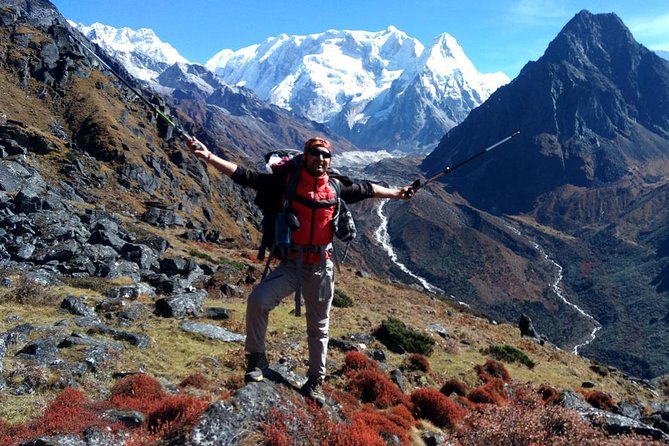
- Kanchenjunga reaches 8,586 meters, with the southern wall and Yalung Glacier providing the trip’s grandest mountain views.
- The group is limited to seven people, with a government-authorized guide and porters.
- Day 9 gives you a full excursion near South Base Camp, including the route toward Oktang and the glacier.
- The trek uses teahouses, though Ramche may require tent camping if the group is large.
- The route includes long road transfers, including about 10 hours by overnight bus on the first night and a long return drive to Kathmandu.
- The $2,095.34 price covers a great deal, including permits, meals, guides, porters, road transport, teahouse lodging, and two Kathmandu hotel nights.
Why Kanchenjunga feels different from Nepal’s busier treks
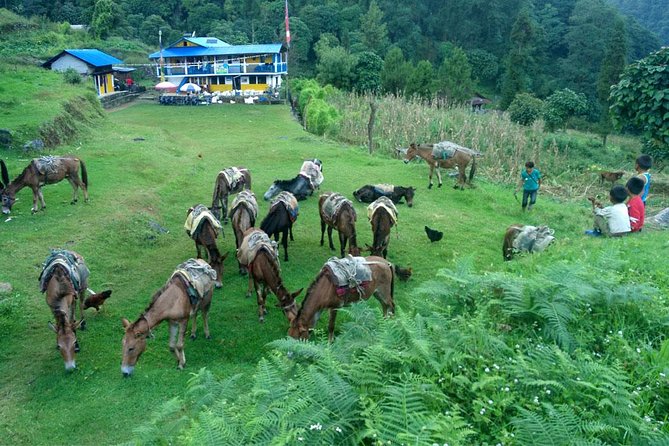
Kanchenjunga is not a quick mountain photo stop. The route takes you into Nepal’s far northeastern Taplejung district, an area with fewer facilities and fewer people on the trail than the country’s best-known trekking corridors.
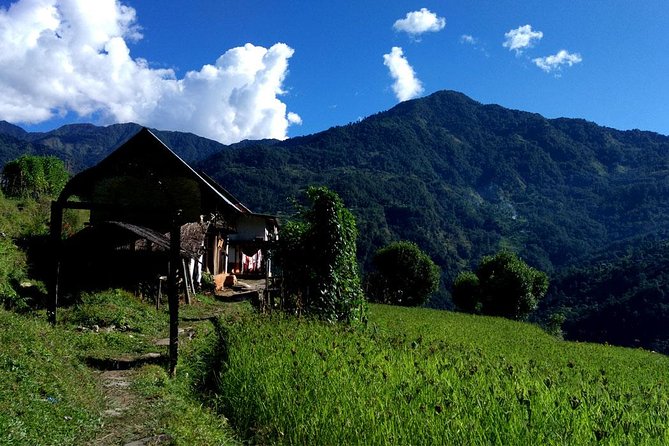
That remoteness is the main reward. You walk through cultivated millet and rice fields, enter forests draped in moss, cross suspension bridges, and follow rivers such as the Kabeli Khola and Simbuwa Khola. Above the villages, the view keeps changing as Kanchenjunga, Kyabru, Mount Jannu, Tuplung Peak, and the Yalung Glacier come into sight.
The area also supports Himalayan wildlife, including Himalayan tahr, Himalayan black bear, musk deer, snow leopard, and red panda. You should treat these as possible sightings, not promised encounters. Birdlife may include snowcock and pheasant.
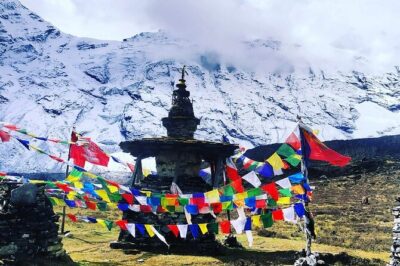
The cultural side matters just as much. Rai, Limbu, and Tibetan-influenced communities have their own dialects, customs, and rituals. The route gives you a closer look at life in mountain villages than a standard sightseeing trip in Kathmandu can provide.
More Trekking Tours in Kathmandu
- Everest Base Camp Trek – 14 Days
★ 5.0 · 1,499 reviews - Everest Base Camp Trek
★ 5.0 · 842 reviews - Everest Base Camp Trekking
★ 5.0 · 485 reviews
Days 1 and 2: Kathmandu, Ilam, and the road to Taplejung
The trip begins from Breeze Adventure’s meeting point on Thamel Marg in Kathmandu. The first day combines sightseeing in Kathmandu with a private-vehicle visit to several UNESCO World Heritage Sites, followed by an overnight bus toward Ilam.
This is an ambitious opening. You get culture and historic sights before the trek, but you also face a roughly 10-hour bus journey. Overnight buses can be tiring, so use the day to organize your pack and keep essential items easy to reach. You will want water, warm layers, medication, and anything needed for sleep close at hand.
Day 2 brings another long drive, about nine hours, toward Taplejung. The road passes villages and agricultural fields, giving you a useful first look at eastern Nepal. You sleep in a guest house, but do not expect the first two days to feel like a gentle holiday warm-up. They are transport-heavy and require stamina.
The upside is practical: road access shortens the approach to the trail. The downside is that you may arrive tired before walking begins.
Days 3 and 4: First mountain views and the Kabeli Khola
After breakfast on Day 3, you descend through millet and rice fields toward the Phewa Khola and cross a suspension bridge at about 1,430 meters. The route then climbs toward Sinchebu Bhanjyang, a Gurung settlement at roughly 2,240 meters.
This is where the trek begins to feel real. Near the pass, you may get your first views of Kanchenjunga and Kyabru. It is a fine moment to slow down, breathe, and look carefully. The walk continues downhill to Khesewa, where you spend the night in a teahouse.
Day 4 follows mixed forest toward the Kabeli Khola. The path is fairly level in places, and small waterfalls add variety to the walking. Lunch at Yangpang comes with views of Mount Jannu, one of the route’s memorable mountain companions.
The final climb to Pumpe Dada is short but steep, taking about 20 minutes. The published schedule lists roughly five minutes for this day, which is clearly not enough to describe the full walking time, so confirm the day’s exact timing with the operator before departure. The important point is that this is a moderate trail day with a sharp finish.
Days 5 and 6: Yamphudin and the mossy forest
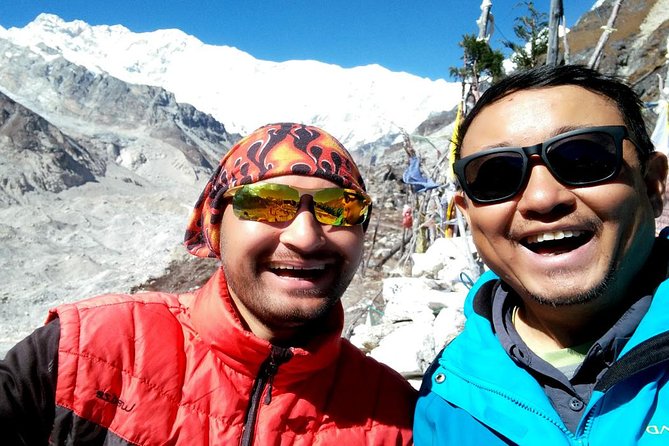
Day 5 follows the Kabeli Khola, mostly uphill but on a relatively easy trail. You pass ridges, switchbacks, rocky cliffs, and rubble from old landslides before crossing another small suspension bridge.
Yamphudin is a useful overnight stop because facilities become scarce above the village. The day lasts about five hours, leaving you time to rest before a harder stretch. This is also where the local scale of the route becomes clear. Settlements are small, and the support team’s food planning matters.
Day 6 is a longer seven-hour walk from the Amje Khola area toward Tortong. The climb is steady and, by the description, relentless in places. At Chitre, you may see grazing yaks, then enter a forest thick with hanging moss.
That forest is one of the route’s most distinctive sections. It feels cool, enclosed, and far removed from the road. Facilities are limited, so the included provisions are not a minor detail. You rely on the guide and porters to keep meals and supplies moving.
After crossing a suspension bridge, the trail climbs gently to Tortong. This is a day when good pacing matters more than speed. Keep your breathing steady, take the breaks offered, and do not waste energy trying to race ahead.
Another trail to compare in Kathmandu:
- Annapurna Circuit Trek with Tilicho Lake
★ 5.0 · 368 reviews - Everest Base Camp Trekking – 13 Day
★ 5.0 · 365 reviews - Everest Base Camp Trek
★ 5.0 · 350 reviews - Everest Base Camp Trek -14 Days
★ 5.0 · 321 reviews
Days 7 and 8: Tseram, the Yalung Glacier, and Ramche
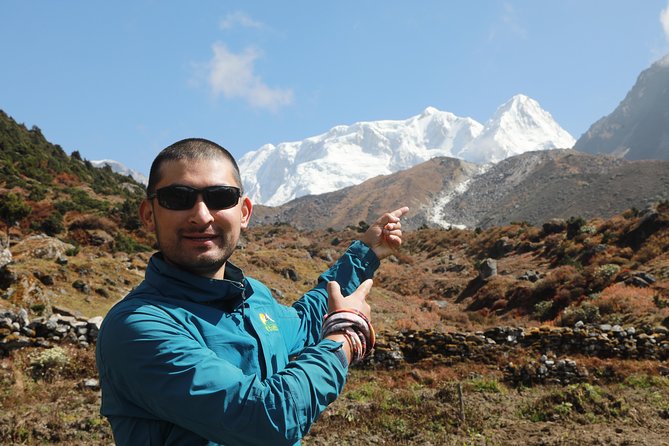
From Tortong, Day 7 follows the Simbuwa Khola through the Lalung Valley. The climb toward Tseram takes about three to four hours, with Tuplung Peak nearby for much of the route.
Rhododendron forest frames the trail, and the Yalung Glacier begins to make the setting feel properly high and remote. After reaching Cheram, also referred to as Tseram in the schedule, you eat lunch before walking one to two hours toward a small lake.
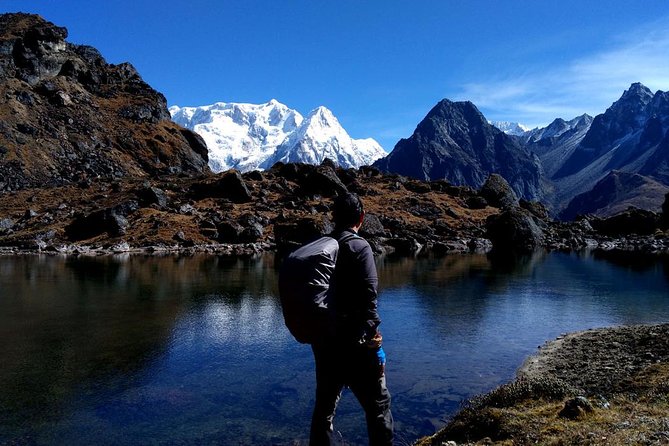
This extra outing is worth understanding. It is not simply a transfer to the next sleeping place. The lake gives you another angle on the glacier and surrounding mountains, and clear weather may bring a sunset over the Himalaya. At this altitude, conditions can change quickly, so the view depends heavily on cloud and light.
Day 8 continues from Tseram toward Lapsang and Ramche. The trail ascends beside the beginning of the Yalung Glacier and passes several Himalayan peaks. Ramche is the last teahouse on the South Base Camp route.
That last point affects comfort. Ramche may have teahouse accommodation, but if the group is large, you may sleep in a tent. The experience can be memorable, especially beneath a clear night sky, but you should be ready for basic conditions. This is remote trekking, not a mountain lodge trip.
Day 9: The main reward at South Base Camp
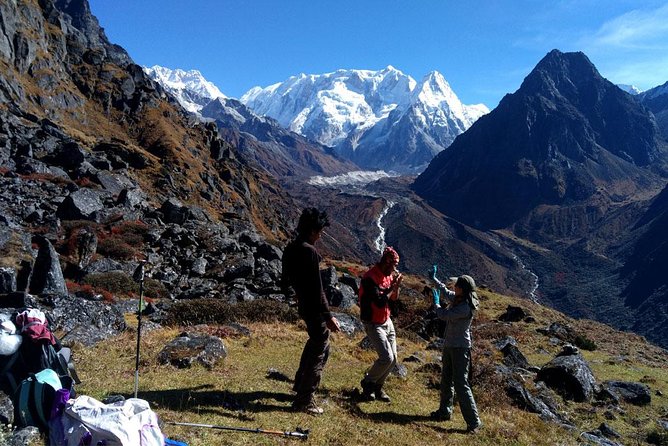
Day 9 is the trip’s central excursion day. You leave early with a packed lunch and head farther into the valley for closer views of Kanchenjunga.
The route follows the valley’s broad curve toward the mountain’s southern wall. Three major summits rise in this area, listed at 8,420 meters, 8,586 meters, and 8,474 meters. The scale is difficult to grasp until you are close enough to see the glacier, ridges, and high snowfields filling the view.
The walk continues toward Oktang, with a descent onto the glacier and a crossing toward a point below the mountain. Because the route description is cut short, ask for the exact turnaround point and expected walking hours before you go. You should also understand that glacier terrain can be affected by conditions, and the guide’s judgment matters.
This is not a day to hurry. Carry your packed lunch, keep warm layers accessible, and take time to look behind you as well as ahead. The return view down the valley can be as impressive as the mountain wall itself.
Days 10 and 11: Retracing the trail and using the old trade route
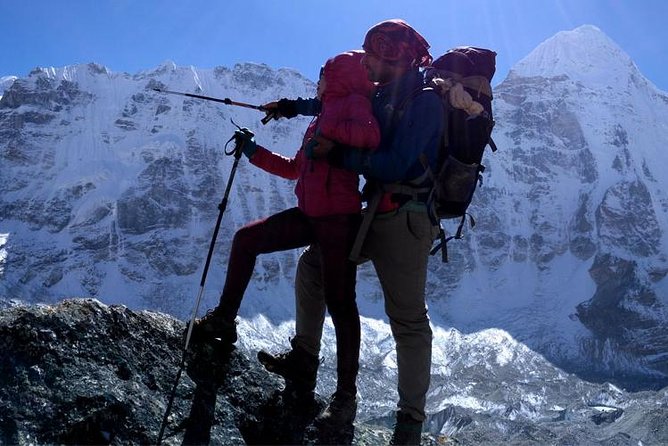
Day 10 returns along the same trail to Tseram. The walk takes about four hours and is easier than the climb in the opposite direction, but downhill walking still works your knees and feet.
The repeated section is not necessarily a flaw. It gives you a second chance to see the forest, river, and glacier valley from a different angle, often with less pressure than on the way up. Good boots and trekking poles can help on steep or uneven ground, though poles are not specifically included.
Day 11 uses a route connected to the old trade passage between India and Tibet. Road building reduced the route’s use for many years, but local and government support has improved the trail toward Ranipul.
This route is useful because it avoids several days of descending all the way to Yamphudin. The trail climbs a little at first, then runs mostly downhill to Ranipul. The day lasts about seven hours, so the shorter overall route does not mean an effortless walk.
The historical detail adds depth, but the practical value is even clearer: you save time and avoid repeating more of the long downhill route. The schedule is abbreviated after lunch, so confirm how the Ranipul transfer works and where you sleep that night.
Days 12 and 13: Ilam tea country and the return to Kathmandu
Once the hiking ends, Day 12 begins with a celebratory breakfast before the road journey back toward Taplejung. You pass rolling terraced hills and villages, stop for lunch in Taplejung, and continue to Ilam.
Ilam is known here for its hill tea garden, giving you a softer final mountain stop after the tougher trail days. You sleep in a hotel, a welcome change from teahouses and tents.
Day 13 is another long drive, about 10 hours, back to Kathmandu. A farewell dinner and hotel night close the trip. This final transfer is necessary but can feel long, especially after many days of walking. If you have an onward international flight, give yourself enough breathing room rather than scheduling it immediately after arrival.
What the $2,095.34 price really covers
At $2,095.34 per person, this is not a bargain-basement trek, but the package includes many expenses that can quickly add up independently.
The price covers local guest house and teahouse accommodation, required road transport during the trek, a government-authorized guide, porters, guide and porter wages, their insurance, food, a first-aid kit, the Kanchenjunga Conservation Area Permit, and government taxes.
You also receive hygienic breakfast, lunch, and dinner during the trek, plus two nights in a two- or three-star Kathmandu hotel with breakfast. That makes the price easier to assess because the major trail costs are bundled together.
You still pay for international airfare, Kathmandu meals other than breakfast, alcoholic drinks, tea, coffee, chocolates, tips, and personal trekking insurance. The last item is essential, not optional in spirit. Arrange coverage that specifically applies to your trek before setting out.
How the guiding and group size affect the experience
A maximum of seven people is a real advantage on a remote route. A smaller group can move at a more manageable pace and make it easier to discuss food, weather, fatigue, and route conditions with the guide.
The company uses government-authorized guides and porters. Galje guided one 13-day trip and was praised for adapting suggestions to a slower pace, including a possible climb of Sunpati Peak. Sushant and Prem are also named as members of the team, while Kishwor is the company contact who has helped match people with routes.
You should still discuss your preferred pace before leaving Kathmandu. The route has several long days, and slower walking is reasonable, but the schedule cannot remove the steep climbs, rough ground, or long road transfers.
Who should book this trek
I would recommend it to you if you want a remote Himalayan route, strong mountain views, and a smaller group than you are likely to find on Nepal’s most famous trails. It suits people who care about village life, changing ecosystems, and the effort required to reach a major mountain viewpoint.
It is less suitable if you want comfortable hotels every night, short transfer days, or a polished lodge circuit. The overnight bus, long road journeys, limited facilities above Yamphudin, and possible tent night at Ramche require flexibility.
The experience has earned a perfect overall rating from six published reviews, with especially strong praise for the company’s guidance, communication, and personal service. That does not remove the physical demands, but it does point to the importance of the support team on a route this remote.
Should you book the Kanchenjunga South Base Camp Trek?
Book it if you want Kanchenjunga without the heavy foot traffic of the Everest Base Camp route and you are comfortable trading convenience for solitude. The glacier views, southern mountain wall, old trade route, village cultures, and small group make this a serious and rewarding Himalayan journey.
Think twice if your fitness is below moderate, if you dislike long bus rides, or if you need predictable accommodation every night. For the right person, the $2,095.34 cost offers strong value because permits, meals, porters, guides, transport, and much of the lodging are already handled.
FAQ
How long is the Kanchenjunga South Base Camp Trek?
The experience lasts approximately 13 days, including the Kathmandu sightseeing, road transfers, trekking days, return to Kathmandu, and farewell dinner.
What is the highest mountain seen on the trek?
Kanchenjunga reaches 8,586 meters, or 28,169 feet, making it the world’s third-highest mountain.
How large is the trekking group?
The maximum group size is seven people.
What accommodation is provided?
You stay in local guest houses and teahouses during the trek. Ramche has the final teahouse on the route, but a tented camp may be used if the group is large. Two nights in a two- or three-star hotel in Kathmandu are also included, along with a hotel in Ilam.
Are meals included?
Breakfast, lunch, and dinner are included during the trek. Kathmandu meals other than breakfast are not included. Alcohol, chocolates, tea, and coffee are also excluded.
Is personal travel insurance included?
No. The package includes insurance for the guides and porters, but you must arrange your own personal insurance that covers the trek.
What is the cancellation policy?
You can receive a full refund if you cancel at least 24 hours before the experience start time. Cancellations and changes made less than 24 hours before the start time are not accepted for a refund.
Latest treks added in Kathmandu
- Ghorepani Poonhill Trek★ 5.0 · 5 reviews
- Ghorepani Poon Hill Trek★ 5.0 · 16 reviews
- Private Manaslu Circuit Trek at Himalayas★ 5.0 · 3 reviews
- Upper Mustang Trekking★ 3.0 · 2 reviews
- Amazing 1 Day Trekking Experience in Kathmandu Nepal★ 5.0 · 24 reviews
- Upper Mustang Trekking★ 5.0 · 2 reviews
- Upper Mustang Trek★ 5.0 · 5 reviews
- Upper Mustang Trekking★ 5.0 · 4 reviews
Kathmandu Trekking Tours, compared.