REVIEW · KATHMANDU
Gosainkunda Trek 12 Days
Gosainkunda Trek gives you two very different sides of Nepal in one 12-day trip: the Buddhist villages and high pastures of Langtang Valley, followed by the sacred alpine lake of Gosainkunda. Kyanjin Gompa and Tserko Ri provide the big mountain views, while the lake brings a strong Hindu and Buddhist pilgrimage tradition.
I like the way this route combines a proper valley trek with a meaningful cultural stop. I also like the practical package: tea house lodging, meals, permits, private transfers, a guide, and trekking gear are covered. The main drawback is the effort required. Several days run five to seven hours, and the route includes steep, rocky sections at high altitude.
Key points to know before booking
- Two major highlights: Langtang Valley and the sacred lake of Gosainkunda.
- Best mountain viewpoint: Tserko Ri, reached from Kyanjin Gompa.
- A real trekking schedule: Expect five to seven hours of walking on several days.
- Simple but useful inclusions: Tea house lodging, 11 lunches, 11 dinners, 12 breakfasts, permits, and a guide are provided.
- Private group format: Only your own group takes part in the activity.
- Main cost to plan for: The $793.34 price excludes international flights, Nepal visa fees, insurance, personal spending, and tips.
Why this 12-day route works
The smart feature of this trek is its shape. You first move up through Langtang Valley, spend time around Kyanjin Gompa, and return partway before turning toward Thulo Syabru, Sing Gompa, and Gosainkunda. That gives you time to see the valley properly instead of rushing straight to the lake.
The route also has a useful change of mood. Lower down, you walk beside the Langtang Khola through oak and rhododendron woods. Higher up, the valley opens into yak pasture and rocky ridges. At Gosainkunda, the focus shifts from village life and mountain scenery to religion and pilgrimage.
At $793.34 per person, the price is reasonable if you value having the main logistics handled. You receive accommodation, meals, a certified professional guide, private hotel transfers, transportation at the start and end, permits, first aid supplies, and the use of a sleeping bag and duffel bag if needed.
It is not an all-inclusive holiday. You still pay for snacks, drinks, shopping, tips, international airfare, your Nepal entry visa, and travel or medical insurance. The value is strongest for someone who wants a planned private trek without arranging each permit, vehicle, and lodge independently.
More Trekking Tours in Kathmandu
- Everest Base Camp Trek – 14 Days
★ 5.0 · 1,499 reviews - Everest Base Camp Trek
★ 5.0 · 842 reviews - Everest Base Camp Trekking
★ 5.0 · 485 reviews
The road from Kathmandu to Syabrubesi
Your first day is mostly a road journey, lasting about seven hours. Pickup is provided from Kathmandu, and the drive follows the Prithvi Highway before continuing toward Galchi, Trishuli Bazaar, Dhunche, and finally Syabrubesi.
This is not just dead travel time. You pass terraced farms, hill villages, green slopes, and occasional mountain views, including possible sights of Ganesh Himal and the Annapurna Range. The road is also part of the practical reality of trekking in Langtang. You are heading into a remote region, and the journey takes patience.
Dhunche is the administrative center of Rasuwa District. Syabrubesi is the trekking gateway, with hotels, guesthouses, restaurants, shops, and ATMs. You can use the evening to walk around town and make sure your pack is ready for the trail.
The drive can feel long, especially after an international flight or a busy few days in Kathmandu. Still, having a private vehicle included makes this opening day simpler than arranging the route yourself.
Forest trails from Syabrubesi to Lama Hotel
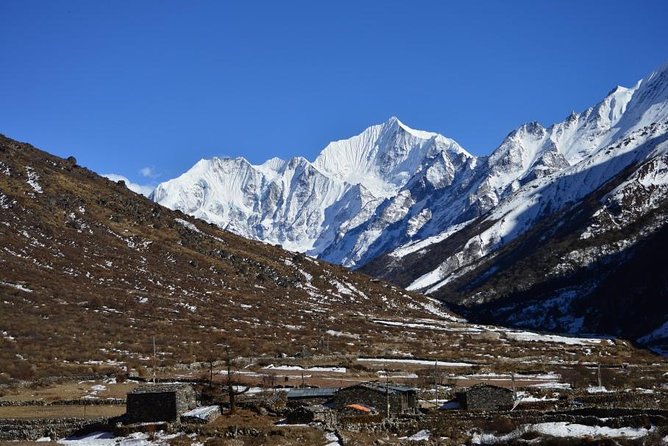
On Day 2, you leave the road and cross a small suspension bridge over Ying Yang Khola. The path follows the Langtang Khola through oak and rhododendron forest, with gradual switchbacks at first.
You pass small settlements including Tiwari Gaon, Domen, Bamboo, and Rimche. These places break up the walk and give you a sense of how the route is supplied and lived along. Keep your eyes open for birds and langurs, which may appear along the forest trail.
The final section after Rimche becomes steeper before you reach Lama Hotel. The day lasts about six hours, so this is a serious first walking day rather than a gentle warm-up. Good boots and a comfortable pack matter here.
The appeal is the forest and river setting. The limitation is that the trees can block wider views for much of the day. You are building toward the open mountain scenery ahead.
Langtang Valley and the village of Langtang
Day 3 follows the river uphill toward Langtang village. Waterfalls appear beside the trail, and you may get glimpses of Langtang Lirung and Langtang Ri as the valley rises.
A key stop is Ghoda Tabela, also known as Kyurpunesa. Here, the valley widens into yak pasture, giving you a better look at the Langtang mountain range. From there, the route continues through villages and past monasteries before reaching the Tamang village of Langtang.
This is one of the most rewarding days for combining scenery and local culture. The Tamang communities of the area, Buddhist features along the trail, and mountain views make the walk feel more than a simple climb from lodge to lodge.
You walk for about six hours. The route still gains height, so you should keep a steady pace and drink regularly. Do not treat the attractive scenery as a reason to rush. The following day takes you higher toward Kyanjin Gompa.
Another trail to compare in Kathmandu:
- Annapurna Circuit Trek with Tilicho Lake
★ 5.0 · 368 reviews - Everest Base Camp Trekking – 13 Day
★ 5.0 · 365 reviews - Everest Base Camp Trek
★ 5.0 · 350 reviews - Everest Base Camp Trek -14 Days
★ 5.0 · 321 reviews
Kyanjin Gompa and the open high valley
The walk to Kyanjin Gompa on Day 4 is shorter, around four hours, but the altitude and steady uphill path still demand care. Once Langtang village is behind you, the valley opens through yak pastures, with broad views ahead.
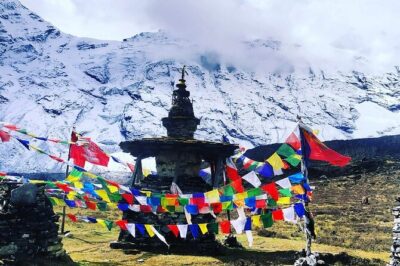
Along the way, you pass water mills, chortens, prayer wheels, prayer flags, and small dwellings. Kyanjin Gompa is an important monastery for local people, and the Buddhist character of the area is clear in the details along the trail.
This is a good afternoon for slowing down. You can rest near the lodge, walk around the settlement, and take in the wider views. The shorter walking day gives your body time to adjust before the climb to Tserko Ri.
Accommodation is in a tea house or lodge. Expect useful, basic shelter rather than hotel comfort. Meals are provided as part of the package, but snacks and alcoholic drinks are extra.
Tserko Ri, the trek’s high point
Day 5 is built around Tserko Ri, the highest point of the trek. You walk through yak pastures and climb for sunrise views across the Langtang range.
This is likely to be the physical high point of the trip as well as the scenic one. The reward is a broad mountain view from above Kyanjin Gompa, followed by a return to the village to rest and explore.
The schedule lists about four hours, but that figure should not make you underestimate the climb. The route is uphill, and altitude affects people differently. You need a moderate level of fitness, and you should follow your guide’s advice if you feel unwell.
Langshisha Kharka is suggested as an optional extra for people who want more exploration after Tserko Ri. Treat it as an add-on only if you still feel strong. The main climb is already enough for many people.
Returning through Lama Hotel
Day 6 retraces the route from Kyanjin Gompa through Mundu and Ghoda Tabela, then descends to Lama Hotel. The walk takes about six hours, but going downhill is generally quicker than the climb up.
You continue beside the Langtang Khola and pass back through the forest. The return gives you a different view of familiar ground, though some people find repeated trails less exciting than a loop route.
The practical benefit is that the route lets you see Kyanjin Gompa and Tserko Ri without adding a difficult new crossing. The cost is another long walking day after the high-point hike.
Thulo Syabru and the turn toward Gosainkunda
On Day 7, you descend toward Syabrubesi, crossing a suspension bridge before reaching the road and town area. The route then continues toward Thulo Syabru, also referred to as Khedi in the schedule.
The first part includes a steep descent to Rimche, followed by a gentler section. Oak and rhododendron woods remain part of the walk, and the trail offers views toward the Langtang Khola.
This day marks a clear change in the trip. You are no longer simply returning from Langtang Valley. You are positioning yourself for the climb toward Sing Gompa and Gosainkunda. The walk takes about five hours, but the combination of descent and continued movement can still leave you tired.
Sing Gompa and the cheese factory
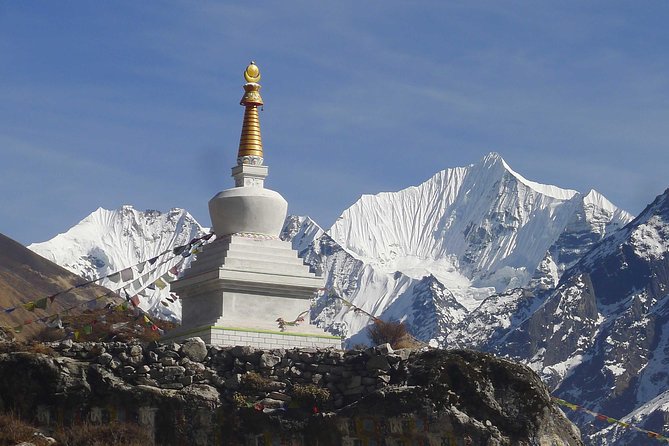
Day 8 climbs steeply from Thulo Syabru toward Sing Gompa, also called Chandanbari. The trail passes through oak and hemlock forest, rhododendron areas, and pasture meadows before reaching steeper ridges.
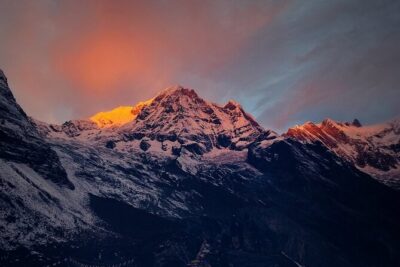
The route offers views of Langtang Lirung, Gaurishankar, and Ganesh Himal. The setting changes as you gain height, with more open ground and a stronger sense of being above the lower valley.
A visit to the local cheese factory is the day’s distinctive cultural stop. It gives you something different from monasteries, chortens, and mountain viewpoints. The walk lasts around four hours, leaving some time to see Sing Gompa in the afternoon.
The climb is steep, so the shorter distance does not mean an easy day. Trekking poles may be useful, though they are not listed among the included equipment.
The rocky route to Gosainkunda Lake
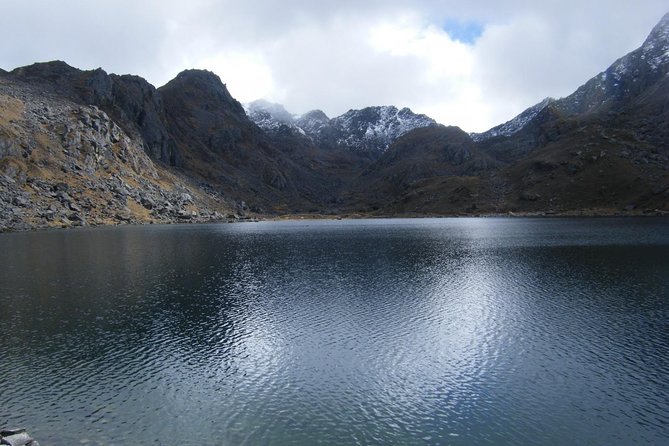
Day 9 brings the main destination. The path takes roughly five to six hours to reach Gosainkunda, gradually ascending at first before becoming rugged and narrow.
You pass several lakes before reaching Cholang Pati and Lauribinayak. From Lauribinayak Hill, the views open across the surrounding mountains. The trail then follows rocky paths and steep ridges toward Gosainkunda.
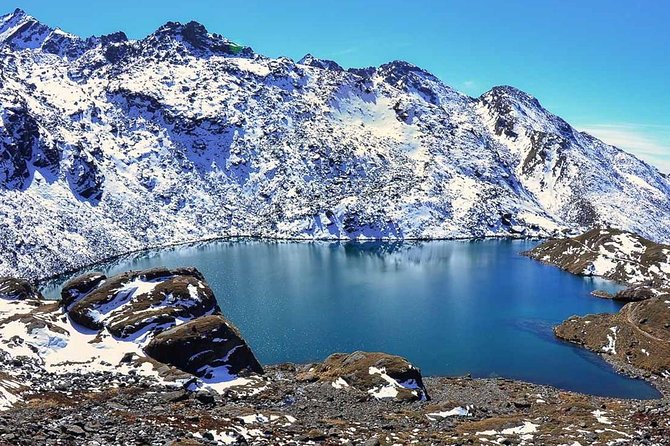
Gosainkunda is sacred to both Hindus and Buddhists. Hindu belief connects the lake with Lord Shiva, who is said to have created it. The lake is also associated with healing powers, and pilgrims come especially around the full moon in August.
The spiritual importance changes how the place feels. This is not simply a high lake added to a scenic route. It is a destination with religious meaning, so approach it respectfully and allow time to observe the shrines, prayer activity, and surrounding cultural signs.
A quieter day beside the sacred lake
Day 10 is a rest day near Gosainkunda. You are not scheduled for a major trek, giving your legs a chance to recover after the climb.
You can visit nearby monasteries, chortens, and other cultural landmarks. The lake is framed by views toward Langtang Lirung, Hiunchuli, Ganesh Himal, and other peaks.
This pause is valuable because the route has several long walking days. It also keeps the visit from becoming a quick arrival, meal, sleep, and departure. You have time to appreciate why Gosainkunda matters.
Conditions at this height can be basic, and the weather may change quickly. Follow your guide’s instructions and use the rest day as recovery time rather than assuming you must keep exploring.
The long descent to Dhunche
Your final hiking day takes about six to seven hours. You retrace the route from Gosainkunda to Sing Gompa, then continue through Dimsa and Deurali before descending to Dhunche, the Rasuwa District headquarters.
The trail passes through pine, oak, rhododendron, and juniper forest. After the exposed upper route, the return to wooded paths feels like a gradual shift back toward settled areas.
Dhunche lies alongside the Trishuli River. Reaching it marks the end of the walking section, but it is not yet the end of the journey. You still have the drive back to Kathmandu the next day.
The return to Kathmandu and what is included
On Day 12, you drive for about six to seven hours from Dhunche to Kathmandu. The road offers rural villages, mountain views, and scenes along the Trishuli River.
The package includes breakfast that day, along with all 12 breakfasts, 11 lunches, and 11 dinners across the trek. Tea house or lodge accommodation is included, as are the required permits, group first aid supplies, a certified professional guide, and hotel pickup and drop-off by private vehicle.
A sleeping bag and duffel bag can be provided if needed. Confirm the gear arrangement before departure so you know what you need to bring yourself.
The main exclusions are easy to overlook. International flights, Nepal entry visa fees, travel and medical insurance, guide and porter gratuities, snacks, alcoholic drinks, shopping, and services not named in the package are your responsibility.
Who should book this trek
I would recommend this trip to you if you want a serious mountain walk with a clear plan, local tea house stays, Buddhist and Hindu cultural sites, and two major scenic sections. It suits people with moderate physical fitness who are comfortable walking five to seven hours and handling steep, rocky trails.
It is also a good fit for a private family or friend group. The experience has already worked for a parent and a 17-year-old daughter, but age alone is not the deciding factor. Fitness, preparation, and comfort with simple accommodation matter more.
I would hesitate to recommend it if you want short daily walks, hotel comforts, guaranteed clear weather, or a fully insured package. The road transfers are long, the upper trail is demanding, and the altitude cannot be treated casually.
Booking confirmation is provided at the time of purchase. You need to supply each participant’s passport name, number, expiry date, and country, and carry a valid passport on the day of travel. Free cancellation is available up to 24 hours before the start time, based on local time.
Should you book the Gosainkunda Trek?
Book it if the idea of pairing Langtang’s mountain valley with a sacred Himalayan lake appeals to you more than a quick sightseeing trip. The included guide, permits, meals, private transport, and basic gear make the $793.34 price useful for a first organized trek in this region.
Think twice if you are not ready for long walking days, simple lodges, and steep high-altitude trails. For the right person, this is a well-rounded route with strong scenery, local culture, and enough time at both Kyanjin Gompa and Gosainkunda to make the effort worthwhile.
FAQ
How long is the Gosainkunda Trek?
The experience lasts approximately 12 days, including the drives between Kathmandu, Syabrubesi, Dhunche, and Kathmandu.
Where does the trek begin?
The trek begins with a drive from Kathmandu to Syabrubesi. Syabrubesi is the main gateway for trekking routes in the Langtang region.
What accommodation is included?
Accommodation is provided in tea houses or lodges during the trekking portion.
Are meals included?
Yes. The package includes 12 breakfasts, 11 lunches, and 11 dinners. Snacks, alcoholic drinks, and other personal purchases are not included.
Is transportation included?
Yes. Hotel pickup and drop-off by private vehicle are included, along with transportation from the starting and ending points of the trek.
Are trekking permits included?
Yes. All necessary permits are included in the package.
Do I need travel insurance?
Yes, you should arrange your own travel and medical insurance because it is not included. International flights and Nepal entry visa fees are also excluded.
Can I cancel for a full refund?
You can cancel up to 24 hours before the experience start time for a full refund. Cancellations or changes made less than 24 hours in advance are not accepted for a refund.
Latest treks added in Kathmandu
- Ghorepani Poonhill Trek★ 5.0 · 5 reviews
- Ghorepani Poon Hill Trek★ 5.0 · 16 reviews
- Private Manaslu Circuit Trek at Himalayas★ 5.0 · 3 reviews
- Upper Mustang Trekking★ 3.0 · 2 reviews
- Amazing 1 Day Trekking Experience in Kathmandu Nepal★ 5.0 · 24 reviews
- Upper Mustang Trekking★ 5.0 · 2 reviews
- Upper Mustang Trek★ 5.0 · 5 reviews
- Upper Mustang Trekking★ 5.0 · 4 reviews
Kathmandu Trekking Tours, compared.