
REVIEW · KATHMANDU
Annapurna Sanctuary Trek – 14 Days
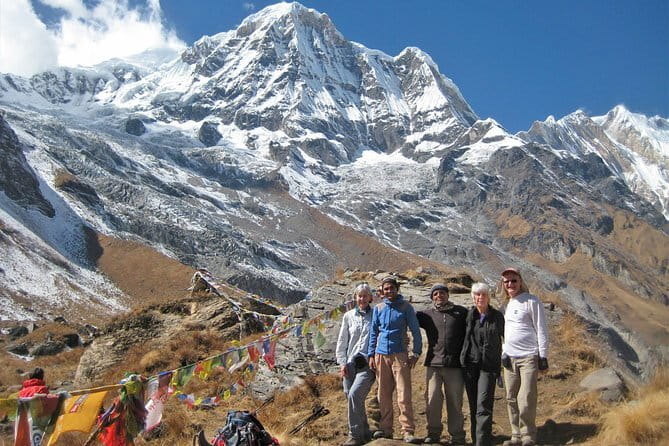
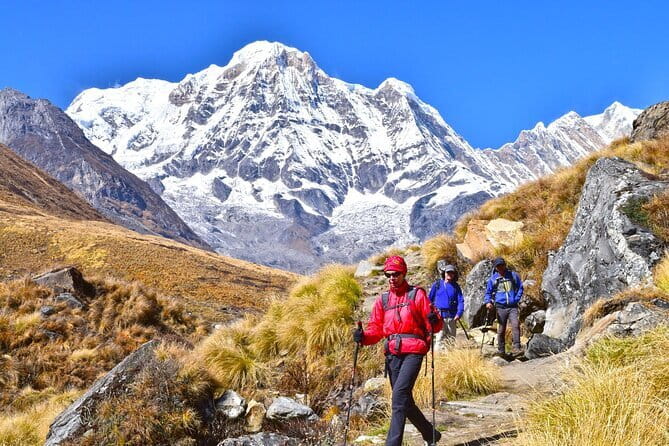
The big prize here is Annapurna Base Camp, a mountain bowl ringed by enormous peaks, reached on foot through forests, farms, stone stairways, and high valleys. Along the way, you get the famous Poon Hill sunrise, four UNESCO sites in Kathmandu, and a close look at village life in the Annapurna region.
I like the sensible support system: one leader, an assistant guide for every four trekkers, and one porter for every two. I also like that the $860 price includes domestic flights, permits, meals during the trek, teahouse stays, a sleeping bag, and a down jacket. The main drawback is the physical demand. Expect six to seven hours of walking on steep, rough trails, with a high point of about 4,130 meters.
Key points to know before booking
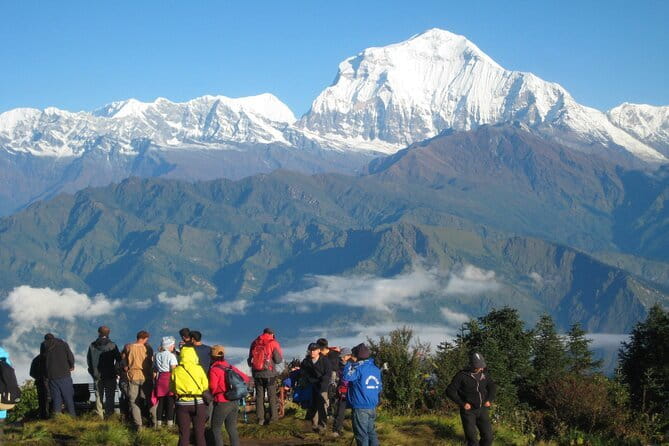
- Poon Hill adds a superb sunrise stop: Start early from Ghorepani for views of Dhaulagiri, Annapurna, and more than 20 high peaks.
- Annapurna Base Camp is the main reward: You reach 8,091-meter Annapurna I’s base at about 4,130 meters.
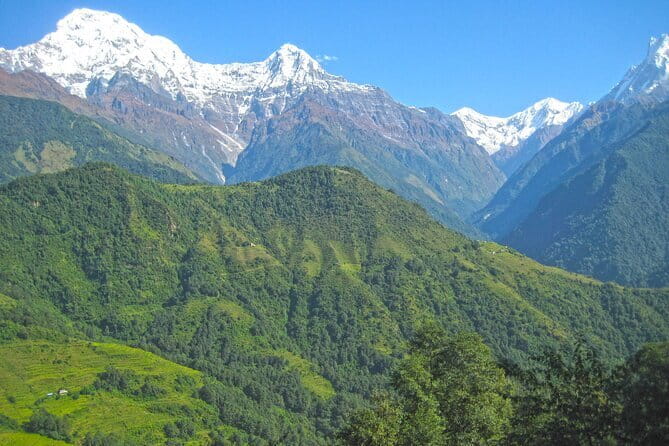
- The route changes scenery often: Expect Kathmandu shrines, subtropical forest, terraced fields, rhododendrons, waterfalls, and dry high valleys.
- Support is built into the price: Guides, porters, permits, meals on trek, domestic flights, and mountain gear are included.
- The group is kept small: The usual maximum is 12 people, with extra assistance arranged for larger groups.
- Timing matters: March to May and September to November offer the best mix of warmer weather and clear mountain views.
What the $860 Annapurna package really buys you
At $860, this is a strong-value guided trek, provided you use the included services. Your price covers airport transfers, three-star hotels in Kathmandu and Pokhara with breakfast, twin-share teahouse lodging, all trekking meals, both domestic flights, a private Kathmandu sightseeing tour, permits, staff costs, a guide, assistant guide arrangements, porters, and government taxes.
The package also supplies a down jacket, sleeping bag, duffel bag, T-shirt, trekking map, and medical kit. Those details matter. Renting or buying warm gear and arranging porters separately can quickly add cost and hassle, especially if you are flying into Nepal with limited luggage.
The price does not cover international flights, a Nepalese visa, travel and rescue insurance, bottled or boiled water, showers, laundry, battery charging, drinks, tips, or meals in Kathmandu and Pokhara beyond breakfast and the welcome and farewell dinners. You should also budget for extra nights if weather, illness, or flight changes disrupt the schedule.
Single rooms cost an additional $425. Twin sharing is the normal arrangement, and private rooms become harder to secure at higher elevations. Most teahouses have attached bathrooms, but not all do.
More Annapurna Treks in Kathmandu
- Annapurna Circuit Trek with Tilicho Lake
★ 5.0 · 368 reviews - Annapurna base camp trek 5 Days
★ 5.0 · 252 reviews - 14-Day Private Annapurna Base Camp Trek
★ 5.0 · 180 reviews
Kathmandu begins with temples, courtyards, and jet lag
Your first day is deliberately easy. An airport representative meets you at Tribhuvan International Airport and takes you to the hotel. You can rest, visit the company office, or walk around Thamel, where shops, restaurants, and trekking businesses make it easy to pick up last-minute items.
The welcome dinner introduces you to Nepali food before the walking begins. That is a useful touch, since meals during the trek commonly include Nepali, Tibetan, Indian, and familiar continental dishes.
The second day packs four major sites into a private vehicle tour. Kathmandu Durbar Square brings you close to carved wooden buildings, palace courtyards, shrines, and the Kumari Ghar, home of the living goddess. One hour is enough for an introduction, but not enough for a slow study of every temple.
At Pashupatinath, you see Nepal’s most important Hindu temple complex beside the Bagmati River. Non-Hindus cannot enter the main temple, but the surrounding shrines, ghats, and riverside rituals still make this a powerful stop. Be ready for a religious site rather than a polished museum.
Swayambhunath sits on a hill above the city. Its stupa, prayer flags, Buddhist symbols, and monkeys provide a lively first taste of Kathmandu’s blend of Buddhist and Hindu traditions. Boudhanath then changes the mood. Walk around the great stupa with pilgrims, prayer wheels, monasteries, and Tibetan Buddhist influences all around you.
This sightseeing day gives the trek useful context. You are not only walking through mountain villages. You are moving through a country where religion, trade, architecture, and daily life overlap.
Flying to Pokhara and climbing to Ulleri
The early flight from Kathmandu to Pokhara is short, but the mountain views can be excellent. Sit on the right side on the flight to Pokhara, as suggested by the schedule. On clear days, you might see Dhaulagiri, Manaslu, Machhapuchhre, and the Annapurna peaks.
After arriving in Pokhara, you drive to Hile, the trailhead. The route passes through subtropical forest and along sections cut into steep hillsides. After lunch, you cross the Bhurungdi Khola and reach Tikhedhunga before the serious stair climbing begins.
The climb to Ulleri is an early test. Thousands of stone steps and boulders rise continuously, so do not mistake the first trekking day for a gentle warm-up. You sleep in Ulleri, having already learned that distance in Nepal is less important than the amount of climbing.
Ghorepani and the famous Poon Hill sunrise
From Ulleri, the trail climbs toward Ghorepani through forest and mountain villages. Ghorepani means horse-water, a reminder that this settlement served traders before becoming a major trekking stop.
The village is split between a higher section on the saddle and a lower section. Your accommodation is in the higher area, with views toward Annapurna South and Nilgiri. Evenings can feel cold here, so use the supplied down jacket and sleeping bag rather than treating them as optional extras.
The next morning begins early with the climb to Poon Hill at 3,210 meters. This is one of the busiest and most popular stops on the route, but the reason is simple: the viewpoint gives a broad sunrise panorama across Dhaulagiri, Annapurna, and more than 20 high peaks.
You can stop for coffee, tea, or hot chocolate at the viewpoint, then return to Ghorepani for breakfast. After that, the trail heads east over a ridge and drops through rhododendron forest toward Tadapani. Waterfalls and changing views keep this day interesting, though the combination of an early start and several climbs can leave you tired.
Another trail to compare in Kathmandu:
- Everest Base Camp Trek – 14 Days
★ 5.0 · 1,499 reviews - Everest Base Camp Trek
★ 5.0 · 842 reviews - Everest Base Camp Trekking
★ 5.0 · 485 reviews - Everest Base Camp Trekking – 13 Day
★ 5.0 · 365 reviews
Forests, farms, and the village of Chhomrong
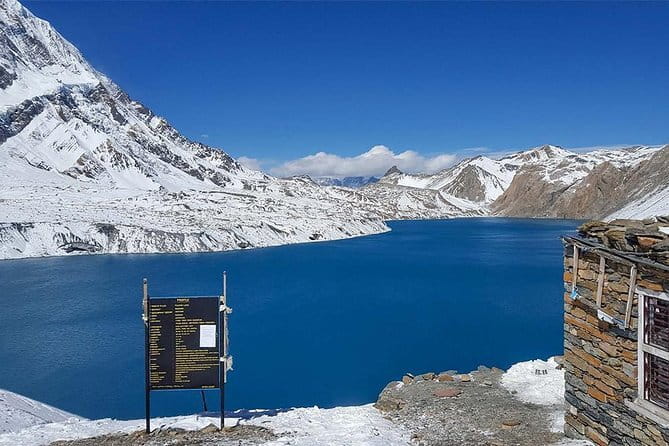
The route from Tadapani descends through a large rhododendron forest. Once the trees thin, terraced fields take over. You climb and descend through rural villages, pass waterfalls, cross a suspension bridge, and continue toward Chhomrong.
Chhomrong sits below the Annapurna massif and is one of the most memorable villages on the approach to base camp. It also marks a shift in the trek. You are now walking deeper into the Modi Khola valley, and the peaks feel closer.
Do not underestimate this section. Nepal’s stone stairs are often uneven, and a day that appears moderate on paper can feel demanding after several earlier walking days. Good shoes and trekking poles can make the repeated descents and climbs easier, though poles are not listed as supplied equipment.
Bamboo, Deurali, and a higher mountain world
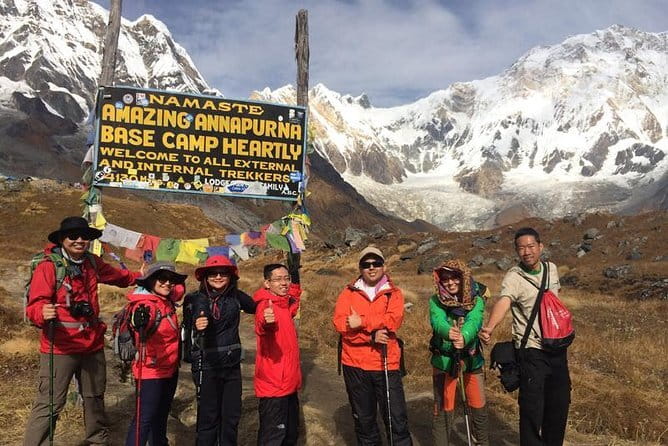
Leaving Chhomrong means more stone steps before you cross the Chhomrong Khola and climb to Sinuwa. The trail passes through forest to Kuldihar, then descends to Bamboo. This is a day of constant movement rather than one dramatic viewpoint.
The next section feels more remote. The bamboo forest is damp and cold, and the trail climbs steeply at times. After Himalaya Hotel, the forest opens and you can see the glacial river below. The route becomes drier and more open as you climb toward Hinku Cave and Deurali.
At Deurali, the vegetation has thinned enough to reveal cliffs, waterfalls, the valley, and views toward Dhaulagiri. This is where altitude becomes more noticeable. The itinerary allows a steady rise of roughly 400 to 700 meters on many days, but your guide can change the plan if weather or health creates a safety concern.
Reaching Annapurna Base Camp at 4,130 meters
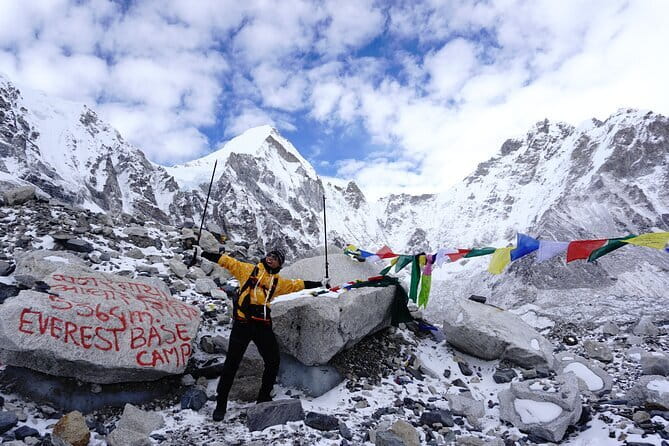
From Deurali, the trail follows the valley on a steady climb beside rocky cliffs. It can be steep, and sections are rough. You first reach Machhapuchhre Base Camp, where the views include Hiunchuli, Annapurna South, Annapurna I, Annapurna III, Gandharvachuli, and Gangapurna.
From there, the route turns toward Annapurna Base Camp. The approach feels dramatic because the sanctuary is enclosed by steep peaks, and the only route in is the gorge you have just followed. At base camp, Annapurna I rises to 8,091 meters, making it the highest point of the trek and the moment the whole route has been building toward.
You spend the night at Annapurna Base Camp. Conditions are basic, and attached bathrooms are not guaranteed at this elevation. The reward is not comfort. It is the rare feeling of being surrounded by a wall of Himalayan peaks after reaching the place under your own power.
The return route is quicker but still tough
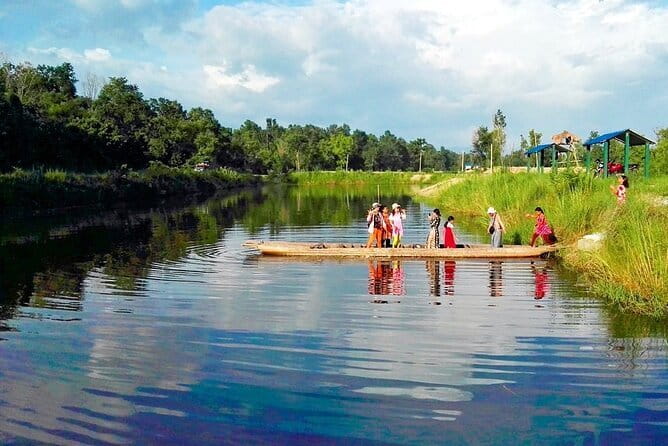
The descent from base camp to Bamboo is rapid. You pass Machhapuchhre Base Camp, Deurali, Himalayan Hotel, and Doban. Downhill sounds easy, but steep stone trails can punish knees and toes, especially after the high-altitude section.
The next day retraces the route to Chhomrong, then drops steeply toward the Modi Khola valley and Jhinu Danda. The return through rain forest and farms gives you a different view of the trail, but the stone steps remain tricky.
Jhinu Danda is a useful rest point before the final walking section. The schedule leaves the afternoon for relaxing, though any optional activity should be confirmed with your guide because the supplied details do not promise a specific stop or service there.
From Jhinu Danda, you hike to Matque and take a private vehicle to Pokhara, a drive of about two hours. The main trek ends here. In Pokhara, you check into the hotel, eat lunch on the way, and take a half-day sightseeing tour in the afternoon.
Pokhara, Kathmandu, and the final flight
Pokhara gives you a softer ending after the mountain trail. The city is known as the city of lakes, and the itinerary includes a half-day sightseeing tour before your return flight.
The next afternoon, you fly back to Kathmandu. Sit on the left side of the aircraft for the best chance of seeing Himalayan views on this leg. After checking in, you have free time for shopping or any Kathmandu sights missed earlier, followed by a farewell dinner.
The airport transfer on the last morning is arranged for about three hours before your flight. If you extend your stay, the company can arrange additional activities, but those arrangements and extra nights are not part of the $860 package.
Guides, porters, and the practical side of support
The staffing plan is one of the better parts of this trip. You receive an English-speaking, government-licensed trek leader, with an assistant leader for every four trekkers. Porters are assigned at one for every two trekkers, and the normal group maximum is 12 people.
That ratio matters on a mountain route. If someone becomes ill, the group has more flexibility than a trip relying on one guide for everyone. The leader also has authority to change or cancel sections for safety reasons. Weather, health, natural disasters, and domestic flight conditions can all force changes.
Guide Jaya has been specifically praised for adjusting the schedule during difficult weather and for careful client care. You cannot assume Jaya will lead your departure, but the example points to the kind of personal attention you should expect from a well-run small group.
You still need travel and rescue insurance. The medical kit is carried by the trek leader, but that is not a substitute for coverage that includes high-altitude trekking and evacuation.
Who should book this trek?
This route suits you if you want a guided Himalayan trek with a clear goal, moderate group size, and a good amount of support. Previous hiking or camping experience is preferred, and you should be comfortable walking six to seven hours a day over steep, rough trails.
It is a good choice for someone who wants more than a quick base camp outing. The Kathmandu heritage tour, Poon Hill sunrise, village sections, forests, and Annapurna Sanctuary make the trip varied.
It is less suitable if you want soft beds, private bathrooms every night, short walking days, or complete control over the schedule. The high point is not extreme by Himalayan standards, but low oxygen, cold nights, weather, and steep stairs still demand preparation.
Spring, from March to May, and autumn, from September to November, are the safest bets for warm days and clear views. Winter can mean fewer people, but colder conditions. The operator also notes that the trip depends on good weather, and a cancellation caused by poor weather brings a choice of another date or a full refund.
Should you book it?
I would choose this trek if you want Annapurna Base Camp with the major practical pieces handled for you. The price is especially fair because it includes flights, permits, porters, trekking meals, warm gear, hotels, and airport transfers.
Book it only after accepting the basic realities: shared rooms, long walking days, steep steps, limited facilities at higher elevations, and possible itinerary changes. If those tradeoffs suit you, this is a well-rounded route that gives you Nepalese culture at the start, a classic mountain sunrise in the middle, and Annapurna’s great peaks at the finish.
FAQ
How long is the Annapurna Sanctuary Trek?
The trip lasts approximately 14 days, including Kathmandu sightseeing, domestic flights, the trek to Annapurna Base Camp, time in Pokhara, and airport transfers.
What is the highest point of the trek?
Annapurna Base Camp is at about 4,130 meters. Poon Hill is at 3,210 meters.
Is Annapurna Base Camp included?
Yes. The route reaches Annapurna Base Camp after passing through Machhapuchhre Base Camp, Deurali, and the Modi Khola valley.
Are domestic flights included?
Yes. The package includes flights from Kathmandu to Pokhara and from Pokhara back to Kathmandu.
What accommodation is provided?
You stay in three-star hotels in Kathmandu and Pokhara with breakfast, and in twin-share teahouses during the trek. Single rooms cost an additional $425 and may not be available at higher elevations.
Are meals included?
Breakfast is included in Kathmandu and Pokhara. Breakfast, lunch, and dinner are provided during the trek, along with welcome and farewell dinners.
Are guides and porters included?
Yes. The package includes an English-speaking, government-licensed trek leader, assistant guide arrangements, porters, staff costs, and the necessary permits.
What happens if bad weather cancels the trip?
If the experience is canceled because of poor weather, you are offered a different date or a full refund. You can also cancel for a full refund if you do so at least 24 hours before the scheduled start time.
Latest treks added in Kathmandu
- Private Manaslu Circuit Trek at Himalayas★ 5.0 · 3 reviews
- Ghorepani Poonhill Trek★ 5.0 · 5 reviews
- Ghorepani Poon Hill Trek★ 5.0 · 16 reviews
- Upper Mustang Trekking★ 5.0 · 2 reviews
- Upper Mustang Trekking★ 3.0 · 2 reviews
- Amazing 1 Day Trekking Experience in Kathmandu Nepal★ 5.0 · 24 reviews
- Upper Mustang Trek★ 5.0 · 5 reviews
- Upper Mustang Trekking★ 5.0 · 4 reviews
Annapurna Base Camp Treks, compared.




Trekking in Annapurna/Langtang/Everest/Upper Mustang regions
Read our review →


Kathmandu to Annapurna Base Camp (ABC) 5-Day Trek
Read our review →Browse the lists this tour appears in