
REVIEW · KATHMANDU
Annapurna Luxury Circuit Trek
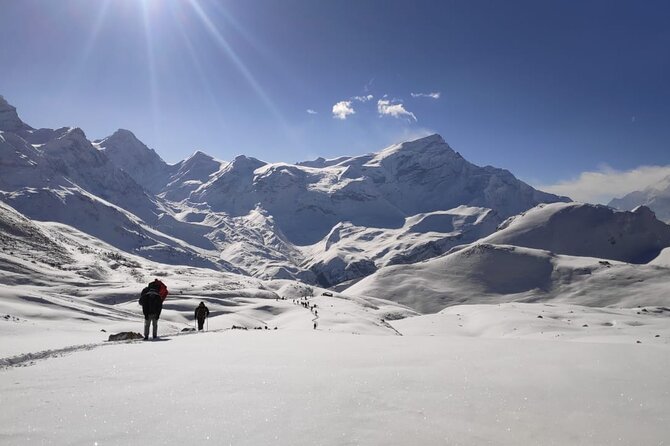
The big draw here is the Annapurna Circuit in 13 days, including the 5,416-meter Thorong La Pass. You move from green hills and river valleys into dry, high mountain country, then descend toward the Hindu and Buddhist pilgrimage site of Muktinath. It is a serious trek, but the planning takes some of the rough edges off.
I like the built-in acclimatization day in Manang and the porter arrangement, with one porter shared by two people. I also like the strong attention to organization reported by guests who traveled with Binod and guides led by Shiva. The main catch is the word luxury: much of the trek uses lodges and teahouses, not high-end mountain hotels, and the published details contain a few route and flight inconsistencies that you should confirm before paying.
Key points to know before booking
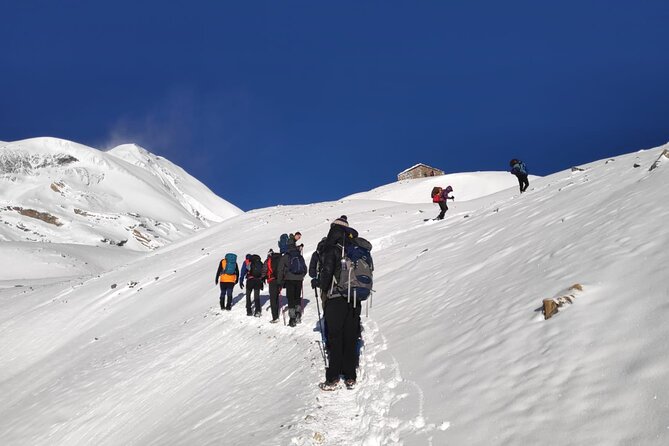
- Thorong La is the physical high point: At 5,416 meters, the pass is the hardest day and requires steady pacing, proper clothing, and patience.
- Manang gives you a needed rest day: The schedule includes local walks, Gangapurna and its ice lakes, Vraja village, and a visit connected with the Himalayan Rescue Association.
- The comfort level changes by location: You receive four-star hotels in Kathmandu and Pokhara, while the mountain nights are in lodges and teahouses.
- Porter support keeps your pack lighter: One porter is assigned to two people, so you still carry a daypack with essentials.
- The scenery changes fast: Expect terraced hills, forests, Tibetan-influenced villages, dry Mustang country, apple orchards, and the Kali Gandaki valley.
- Check the transport details carefully: The route describes flights from Jomsom to Pokhara and Pokhara to Kathmandu, while the inclusions mention a Kathmandu to Lukla flight. Ask the operator to correct this in writing.
Why this circuit works for a comfort-minded trekker
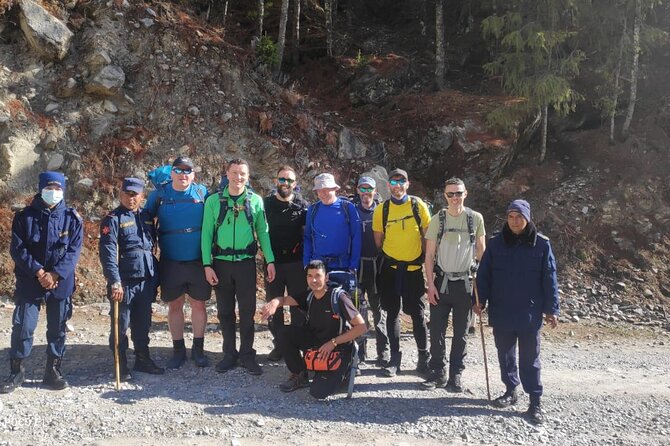
The Annapurna Circuit is a good choice if you want more than a short mountain walk but do not want to arrange every vehicle, permit, lodge, and guide yourself. This version combines a demanding high-altitude route with airport pickup, road transfers, hotels in the cities, meals, a porter, permits, and a guide team.
That arrangement matters in Nepal. Roads, weather, flights, and mountain lodging do not always run on a neat clock. A local operator can adjust the plan, explain what is happening, and help you keep moving when conditions change. The strongest praise attached to this experience centers on careful organization, clear communication, flexibility, and concern for safety.
The company team includes Binod and Shiva, with Shiva leading guide teams on several trips. T B is also named as a guide in the company’s Annapurna work. The supplied information does not promise that one particular guide will lead every departure, so ask who is assigned to your group. The maximum group size is 10, which should allow for a more personal pace than a large commercial trek.
The price is $2,000 per person. That is not a budget trek, but it can be fair value if the quoted price truly includes permits, meals, porter service, two nights in a four-star Kathmandu hotel, two nights in a four-star Pokhara hotel, and the listed flights. It is less of a luxury bargain if you expect upscale rooms every night. In the high country, the comfort comes mainly from good planning, warm meals, luggage help, and a sensible schedule.
More Annapurna Treks in Kathmandu
- Annapurna Circuit Trek with Tilicho Lake
★ 5.0 · 368 reviews - Annapurna base camp trek 5 Days
★ 5.0 · 252 reviews - 14-Day Private Annapurna Base Camp Trek
★ 5.0 · 180 reviews
From Kathmandu to Besisahar by road
Your first day is simple. An airport representative meets you outside the terminal with a Nepal Trek Adventure and Expedition sign and takes you to your hotel. This is useful after a long international flight, especially if Kathmandu is new to you and you are not ready to negotiate transport on arrival.
Day two begins with a six to seven-hour drive to Besisahar. The road passes through green hills, traditional towns, terraced fields, and changing views of rural Nepal. This is not a scenic train ride. Roads can be tiring, and the long drive is part of the cost of reaching the circuit’s higher starting points.
Besisahar gives you a useful pause before the mountain section. You can rest, eat local food, and prepare for the next vehicle transfer. The schedule is practical, though anyone hoping to begin hiking immediately should know that the first days involve substantial road travel.
Chame and Upper Pisang bring the mountains closer
On day three, you continue by vehicle from Besisahar to Chame, a six to seven-hour journey through forest, fields, rivers, suspension bridges, and small settlements. Chame sits at about 2,670 meters and is known for traditional houses, friendly local communities, and views of snow-covered peaks.
This is the point where the trip begins to feel like a high mountain journey. You sleep in a lodge and prepare for the walking days ahead. The road transfer saves time, but it also means you spend another long stretch seated. If you are prone to motion sickness, bring the medication you normally use.
Day four takes you toward Upper Pisang. The description includes dense forest, streams, large rock formations, and views over the valley. Upper Pisang has a traditional feel, local monasteries, and strong mountain views. A teahouse night here is more about location and atmosphere than hotel-style comfort.
Upper Pisang is an important transition point. The lower route has more trees and water, while the higher valley begins to look drier and more Tibetan in character. Take time to notice the village buildings and monasteries rather than treating the stop as just a place to sleep.
Manang is the trip’s key acclimatization stop
Day five leads to Manang through the Marsyangdi Valley. The route passes woods and small villages before the vegetation thins and the air becomes noticeably colder and thinner. Manang sits at 3,540 meters and is surrounded by peaks including Annapurna III, Gangapurna, and Tilicho Peak.
Manang is more than an overnight stop. Its traditional Tibetan-style buildings and position as a local trading center give you a chance to see how people live at altitude. You can walk around town, look at the mountain views, and let your body catch up with the schedule.
The following day is reserved for acclimatization. This is one of the best decisions in the plan. The schedule includes Gangapurna and its ice lakes, a visit to Vraja village, and a stop connected with the Himalayan Rescue Association, where you learn about acute mountain sickness and related altitude concerns.
You should take this day seriously. A short walk to higher ground can help your body adjust, but the point is not to prove fitness. Eat, drink, move slowly, and tell your guide if you develop a headache, unusual fatigue, nausea, or breathing trouble. Proper acclimatization lowers risk, but it cannot remove it.
Another trail to compare in Kathmandu:
- Everest Base Camp Trek – 14 Days
★ 5.0 · 1,499 reviews - Everest Base Camp Trek
★ 5.0 · 842 reviews - Everest Base Camp Trekking
★ 5.0 · 485 reviews - Everest Base Camp Trekking – 13 Day
★ 5.0 · 365 reviews
From Ladar to Thorong High Camp
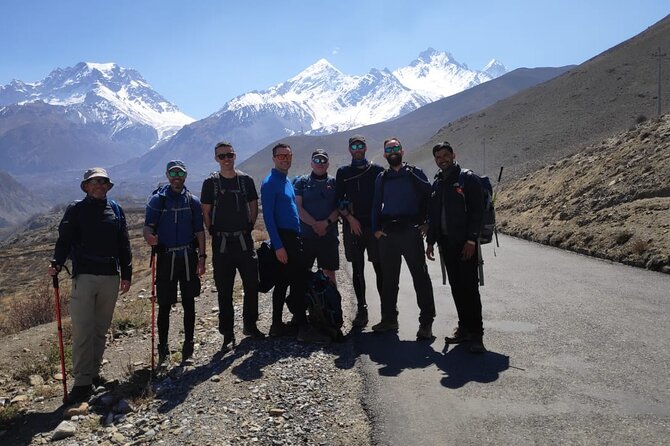
Day seven heads from Manang toward Ladar, also written as Ledar in many route descriptions. The walk takes roughly five to six hours and passes through juniper and pine, small settlements, and increasingly dry high-country terrain. The views of the Annapurna range become wider as the trees thin out.
Ladar is around 4,230 meters. At this height, a moderate walking day can feel demanding. The route is not just about distance. Cold, wind, thin air, and steep sections all affect your energy. The porter carries your main luggage, but you still need a daypack with water, warm layers, sunscreen, medication, and anything you may need during the day.
The next section reaches Thorong High Camp. This is one of the hardest parts of the circuit, with steeper ground and increasing altitude. The planned walking time is about five to six hours, though actual timing depends on weather, trail conditions, and how the group is coping.
This is where the trip’s safety claims matter most. A good guide should set a steady pace and watch for altitude problems rather than pushing everyone to maintain a fixed arrival time. The earlier acclimatization day and gradual rise from Manang are valuable here.
Thorong La and the descent to Muktinath
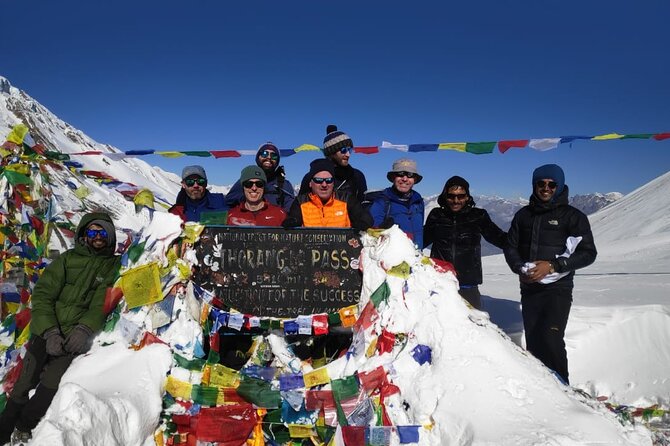
Day nine is the great test: crossing Thorong La at 5,416 meters. The climb can be strenuous, but the setting is dramatic, with broad views of mountain slopes, valleys, and snow-covered peaks. You then descend toward Muktinath, making this a long and demanding day of roughly six to seven hours.
The pass is not a casual viewpoint. You need appropriate layers, sturdy walking shoes or boots, sun protection, water, and a willingness to go slowly. Weather can change quickly at high altitude. Your guide’s judgment and the condition of the group should determine the pace.
Muktinath changes the mood of the trek. It is a major Hindu and Buddhist pilgrimage site, known for temples and natural spring water sources. After the stark high pass, the religious setting gives the day a strong cultural finish. Be respectful around shrines and local worshippers, and let your guide explain the customs.
The descent is welcome for many people, but downhill walking can be hard on knees and thighs. Trekking poles may be useful, though personal trekking equipment is not included, so bring or rent what you need before leaving Kathmandu.
Marpha, Jomsom, and the dry Mustang side
The route continues through the Mustang area, including Marpha and Jomsom. Marpha is known for stone houses and apple orchards. The walk follows the Kali Gandaki River, and crossing the river and staying near its banks gives the day a very different feel from the forested approach to Manang.
Jomsom is the administrative center of Mustang. It has more shops, hotels, and eating places than the smaller mountain villages. You may have time to look around town, visit the Jomsom Museum, or use nearby hot springs, depending on the exact schedule and conditions.
Jomsom is also known for strong winds. Morning transport is often favored in mountain valleys because weather can worsen later in the day, and the following flight to Pokhara makes timing important. Flight schedules can change, so keep some flexibility in your plans after the trek.
The supplied day descriptions contain a few mixed references, including text about Lobuche and Everest Base Camp. Those places do not fit this Annapurna Circuit route. Before departure, ask the operator for a clean day-by-day plan showing the exact walking stops, vehicle sections, and flight arrangements.
Pokhara gives you a soft landing
Day 11 calls for a morning flight from Jomsom to Pokhara, with views of Annapurna and Dhaulagiri if weather allows. The flight is short compared with the long road journeys earlier in the trip, but mountain aviation is weather dependent.
Pokhara is a welcome change after the high trail. The city is known for Fewa Lake, mountain views, and a livelier evening scene. You have time to rest, look around, or sit by the lake and let the trek settle in. Two nights in a four-star hotel are included in the package, giving you a proper bed and a chance to wash, recharge, and organize your luggage.
Day 12 includes a roughly 30-minute flight from Pokhara to Kathmandu. A farewell dinner is planned in Kathmandu that evening. Day 13 ends with a transfer to Tribhuvan International Airport.
There is an important paperwork issue here. The inclusions refer to a Kathmandu to Lukla and Lukla to Kathmandu flight, which belongs to an Everest route, not the Annapurna Circuit described here. The actual schedule names Jomsom to Pokhara and Pokhara to Kathmandu flights. Confirm exactly which flights are included before booking.
What the price includes, and what it does not
The package includes permits, airport pickup, the listed hotels, lodge and teahouse accommodation during the mountain section, meals, a porter, guide support, and the scheduled transport. It includes 11 dinners, 12 breakfasts, and 11 lunches according to the supplied details.
Alcoholic drinks and other hot and cold drinks are extra. Personal trekking equipment is also extra, as are expenses not clearly listed. Travel insurance must include medical care and emergency evacuation. Tips for the guide and porter are expected and should be budgeted separately.
The porter arrangement is one porter for two people. That is helpful, but it does not mean you can bring unlimited luggage. Pack lightly and keep valuables, documents, medication, and a warm layer in your own daypack.
The trek requires moderate physical fitness. That phrase should not be taken lightly. You will spend long days walking at altitude, with the most demanding section around Thorong La. Previous high-altitude trekking experience is not stated as a requirement, but you should be comfortable with sustained uphill and downhill walking.
Free cancellation is available up to 24 hours before the local start time. Within 24 hours, there is no refund. Poor weather or failure to meet the minimum group size may lead to a different date or a full refund, according to the stated policy.
Who should book this Annapurna trip?
I would recommend it to someone who wants the classic circuit but prefers a managed trip, hotel stays in Kathmandu and Pokhara, porter assistance, and a guide team. It also suits a small group that values clear planning and cultural stops as much as mountain views.
I would hesitate if you want luxury accommodation every night, a private vehicle throughout, or a very relaxed walking schedule. Teahouses are part of the experience, and Thorong La remains a serious high-altitude crossing no matter how good the organization is.
Before booking, get three points confirmed in writing: the exact flights included, the final route without the stray Everest references, and the names and roles of your guide and porter team. If those details are clear, the $2,000 price can offer solid value for a demanding but well-supported circuit.
FAQ
How long is the Annapurna Luxury Circuit Trek?
The experience lasts approximately 13 days, including arrival in Kathmandu, the trek, time in Pokhara, the return to Kathmandu, and airport departure.
Where does the experience begin?
It begins in Kathmandu, with airport pickup available. The stated meeting point is Nepal Trek Adventure and Expedition P. Ltd. on Thamel Marg.
What time does the tour start?
The stated start time is 6:15 am.
How high is Thorong La Pass?
Thorong La Pass reaches 5,416 meters above sea level.
Is there an acclimatization day?
Yes. Day six is spent in Manang at about 3,540 meters. The plan includes local walks, Gangapurna and the ice lakes, Vraja village, and information about altitude sickness.
Are a guide and porter included?
Yes. Porter support is included, with one porter assigned to two people for luggage. Guide support is also part of the organized trek.
What accommodation is included?
The package includes two nights at a four-star hotel in Kathmandu and two nights at a four-star hotel in Pokhara. Mountain nights are in lodges and teahouses.
Are meals included?
Yes. The stated package includes 11 dinners, 12 breakfasts, and 11 lunches. Drinks are not included.
Is travel insurance included?
No. You must arrange your own travel insurance with medical and emergency evacuation coverage.
How many people can join the group?
The maximum group size is 10 people.
Latest treks added in Kathmandu
- Private Manaslu Circuit Trek at Himalayas★ 5.0 · 3 reviews
- Ghorepani Poonhill Trek★ 5.0 · 5 reviews
- Ghorepani Poon Hill Trek★ 5.0 · 16 reviews
- Upper Mustang Trekking★ 3.0 · 2 reviews
- Amazing 1 Day Trekking Experience in Kathmandu Nepal★ 5.0 · 24 reviews
- Upper Mustang Trekking★ 5.0 · 2 reviews
- Upper Mustang Trekking★ 5.0 · 4 reviews
- Upper Mustang Trek★ 5.0 · 5 reviews
Annapurna Base Camp Treks, compared.




Trekking in Annapurna/Langtang/Everest/Upper Mustang regions
Read our review →


Kathmandu to Annapurna Base Camp (ABC) 5-Day Trek
Read our review →Browse the lists this tour appears in