
REVIEW · KATHMANDU
Annapurna Circuit Trek with Tilicho Lake (16 Days)
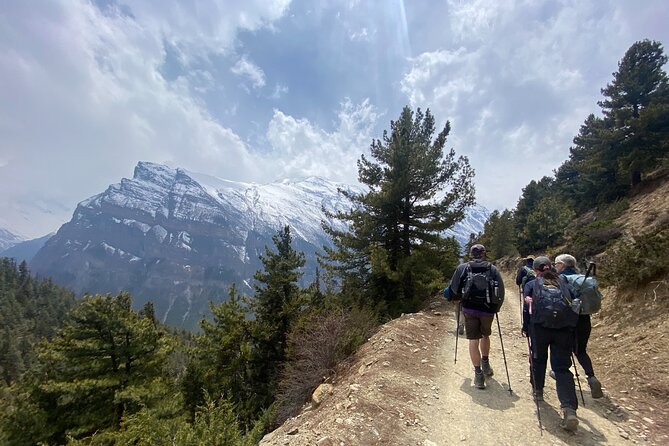
Tilicho Lake and Thorong La give this trek its real punch. In 16 days, you move from river valleys and pine forests to the dry, Tibetan-style country around Manang and Mustang. The high point is not just the pass. It is the sudden change in scenery, language, buildings, and daily life as you cross the mountains.
I like the careful acclimatization plan, with a full day in Manang before Tilicho Lake and the Thorong La crossing. I also like the practical support: a licensed guide, one assistant guide for every five people, and one porter for every two trekkers. The main drawback is cost control. At $1,800, you still pay separately for most trek meals, drinking water, gear, hot showers, charging, Wi-Fi, gratuities, and a stated $50 government fee.
Key points to know before booking
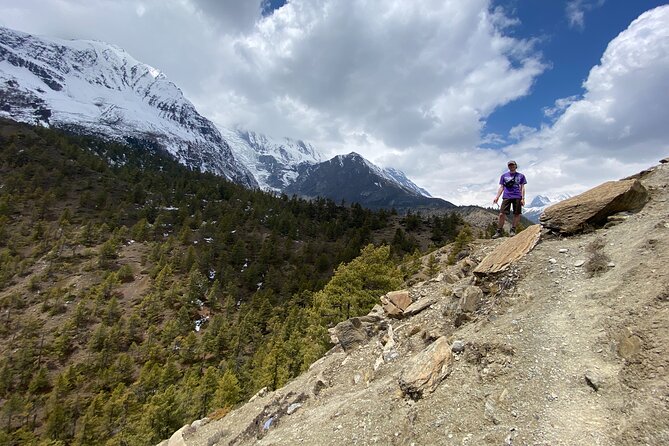
- Tilicho Lake at 4,919 meters: A demanding side trip to one of the world’s highest lakes, with a stark setting below glacier-cut slopes.
- Thorong La at 5,416 meters: The trek’s toughest day starts before dawn and includes a climb of more than 900 meters from Thorong Phedi.
- Maximum group of 14: Small enough for personal support, while still offering the cost benefits of a group departure.
- Mixed transport plan: Private transfers cover key city and road sections, but you use a shared jeep, public bus, and tourist bus at other points.
- Basic teahouse nights: You get a bed and simple mountain lodging, but extras such as showers, Wi-Fi, electricity, and water cost more.
- Strong organization: The company has used guides and support staff including Raj Rai, Suman, Prashant, Prem, and Pemba Sherpa. Confirm your assigned guide before departure.
Why this route is more than a standard Annapurna trek
The Annapurna Circuit is famous because it keeps changing. You begin near green hills and rushing rivers, walk through pine country, reach high Buddhist villages, and then cross into the dry Kali Gandaki valley. Adding Tilicho Lake makes the route harder, but also gives you a memorable high-altitude detour before Thorong La.
This is not a gentle walking holiday. The schedule uses long days, often listed as about 12 hours including transport or trekking stops. The altitude is the bigger issue than the distance. You sleep at 3,540 meters in Manang, reach Siri Kharka at 4,060 meters, visit Tilicho Lake at 4,919 meters, and cross Thorong La at 5,416 meters.
You need good physical fitness and a sensible attitude toward discomfort. The company provides first-aid-trained guides, assistant guides, and porters, but no support team can remove the effects of thin air. Your guide may adjust the pace or plan if conditions require it.
More Annapurna Treks in Kathmandu
- Annapurna Circuit Trek with Tilicho Lake
★ 5.0 · 368 reviews - Annapurna base camp trek 5 Days
★ 5.0 · 252 reviews - 14-Day Private Annapurna Base Camp Trek
★ 5.0 · 180 reviews
Days 1 and 2: Kathmandu to Dharapani by road
Your first day is simple. You are met at Tribhuvan International Airport, transferred to a three-star hotel in Thamel, and given time to settle in. Breakfast is included at the Kathmandu hotel. Thamel is a useful base for final gear checks, cash, snacks, and last-minute shopping.
Day two is a long road day. A private vehicle takes you toward Besisahar, with short stops near the Trishuli River and Mugling. Trishuli gives you dramatic river and gorge views, while Mugling is a practical highway junction with food stalls, buses, and trucks.
Besisahar, at about 760 meters, is the traditional starting point of the Annapurna Circuit. From there, a shared jeep takes you to Dharapani at 1,960 meters. This mixed transport arrangement keeps the trip moving, but it is not luxurious. Road conditions can be rough, and the long day may feel tiring before you have taken your first real trail walk.
Dharapani is where the trek begins in earnest. Pine forest, snowy ridges, and the Marsyangdi Valley replace the highway. Your first night at a standard teahouse also sets expectations: simple rooms, basic facilities, and extra charges for comforts such as hot showers and charging.
Days 3 and 4: Pine forests, Chame, and Upper Pisang
The walk from Dharapani passes Tachi Bagarchhap, a small village with whitewashed houses, Buddhist chortens, and a clear shift toward Tibetan-style culture. You continue through forest and mountain villages to Chame, the administrative center of Manang at 2,670 meters.
Chame offers a useful mix of traditional buildings and basic modern services. The route is scenic, but you should not expect a relaxed stroll. The steady rise begins to matter, especially after the road journey and the first night at altitude.
The next day takes you to Bhratang, known for apple orchards and small juice farms, before continuing toward Pisang. Upper Pisang, at about 3,300 meters, sits above the Marsyangdi River and provides wide views toward Annapurna II and Pisang Peak.
Upper Pisang is a better choice for scenery than simply treating the village as a sleeping stop. The high village setting, stone buildings, and mountain views give you your first strong sense of the high Himalaya. The tradeoff is that altitude makes every uphill section slower. Walk steadily, drink often, and avoid racing ahead early in the trip.
Days 5 and 6: Manang and the first real acclimatization
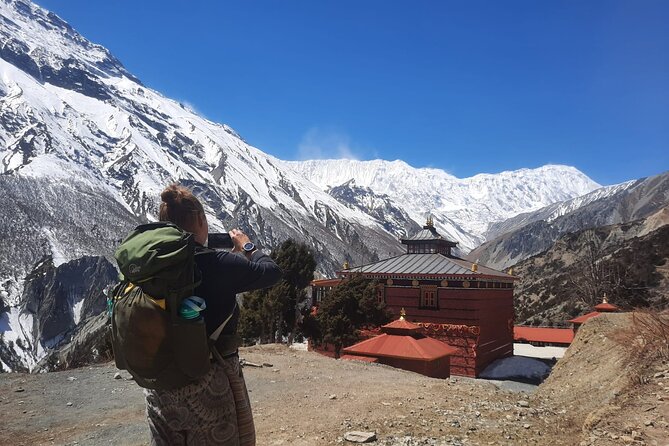
The route to Manang can follow the high trail through Ghyaru and Ngawal. These old stone villages bring bigger views of Annapurna III and Gangapurna, along with Buddhist prayer flags and hillside paths. Manang sits at 3,540 meters and acts as the main cultural and trekking center of the valley.
I especially like the scheduled acclimatization day here. It is not wasted time. Your body needs a chance to adjust before the route climbs above 4,000 meters.
You can choose from three day-hike options with your guide: the details provided describe these as different acclimatization walks, including a short, steep climb. The key point is to gain some height during the day and return to Manang to sleep lower. Your guide should help match the hike to your condition.
Manang also gives you a chance to rest, organize your bag, and check your warm clothing. The company carries your overnight bag with a two trekkers to one porter ratio, so you should pack a smaller daypack with water, layers, sun protection, medication, and personal essentials.
Another trail to compare in Kathmandu:
- Everest Base Camp Trek – 14 Days
★ 5.0 · 1,499 reviews - Everest Base Camp Trek
★ 5.0 · 842 reviews - Everest Base Camp Trekking
★ 5.0 · 485 reviews - Everest Base Camp Trekking – 13 Day
★ 5.0 · 365 reviews
Days 7 to 9: The demanding Tilicho Lake detour
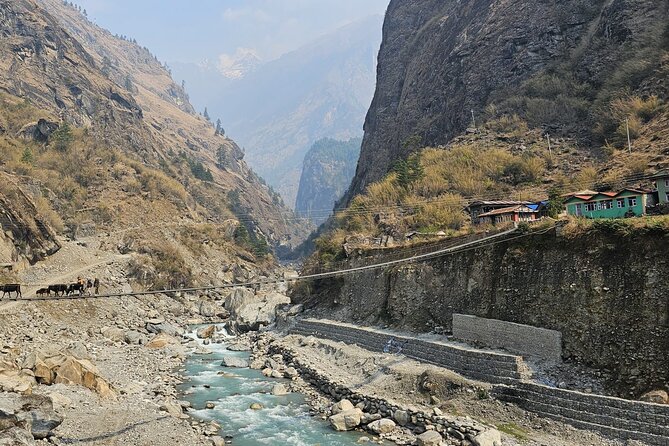
Leaving Manang, you climb toward Siri Kharka at 4,060 meters. The trail passes through juniper country and reaches a remote ridge with views of Gangapurna and the Chulu range. Siri Kharka is not a resort stop. It is a high, basic settlement used as part of the route to Tilicho.
The next stage reaches Tilicho Base Camp at 4,150 meters. The walking distance may be shorter than some earlier days, but the path can feel intense. You cross narrow sections near landslide-prone slopes and move through a stark basin surrounded by high cliffs.
Day nine is the payoff. The climb to Tilicho Lake reaches 4,919 meters, making this one of the highest lakes accessible on foot. The lake is important in both Hindu and Buddhist traditions, and the setting is severe and beautiful, with snow-covered peaks and glacier-shaped slopes around it.
You only have a listed 45-minute stop at the lake, so do not expect a long picnic or leisurely sightseeing session. At this altitude, the visit is about reaching the viewpoint, taking in the setting, and returning safely. Wind, cold, fatigue, and thin air can affect how long you comfortably stay.
The Tilicho section is the best reason to choose this version of the Annapurna Circuit, but it is also the section that demands the most from you before the pass. If you prefer a shorter or less strenuous trip, the standard circuit without this detour may suit you better.
Days 10 and 11: Yak Kharka to Thorong Phedi
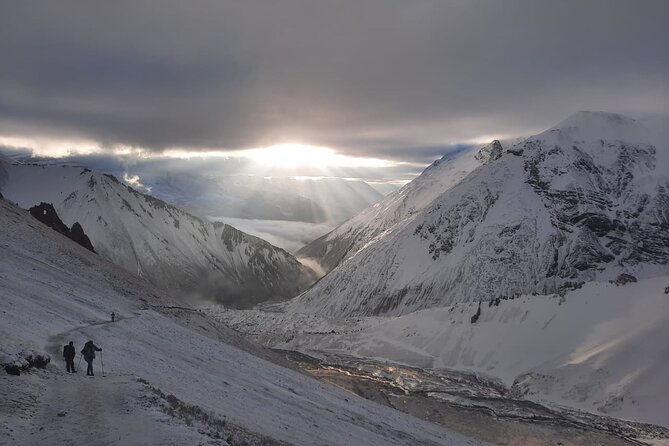
After Tilicho Lake, the route descends toward Khangsar before continuing to Yak Kharka at about 4,050 meters. This section gives your legs some relief through the initial descent, but you remain high for the night.
Yak Kharka is a staging point before Thorong La. The surroundings are much barer than the forests below Manang. Expect open, dry slopes rather than trees and lush farmland.
From Yak Kharka, you climb to Thorong Phedi at 4,540 meters. The path follows dusty ridges and high mountain terrain. Thorong Phedi is a practical overnight stop, not a place for comfort or entertainment. The point is to position you for an early crossing.
This is where your packing and clothing choices matter. Keep warm layers, gloves, a hat, water, snacks, and a headlamp ready. The highest day comes next, and you do not want to search through a porter’s bag before sunrise.
Day 12: Crossing Thorong La and descending to Muktinath
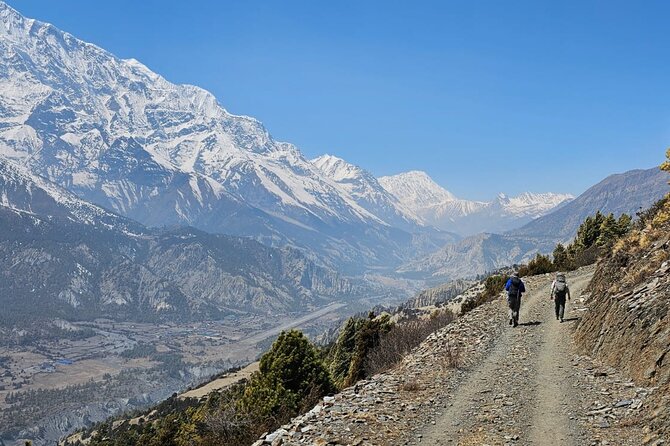
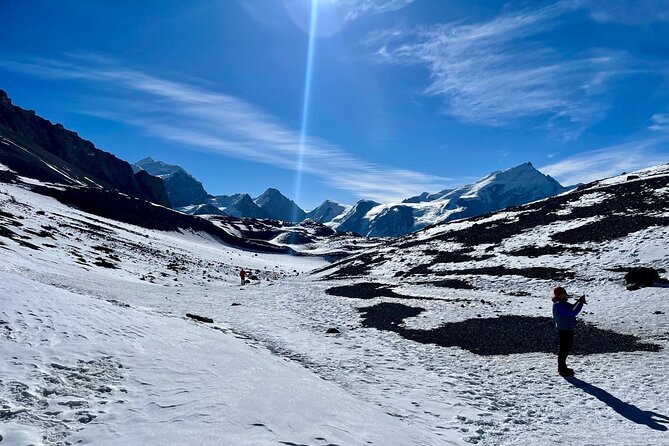
The Thorong La crossing is the hardest and most famous day of the trip. You climb more than 900 meters from Thorong Phedi to the pass at 5,416 meters, usually beginning before dawn.
The climb is slow and exposed, with thin air making each step feel deliberate. Reaching the pass is a major achievement, but the day is not finished. You then descend roughly 1,600 meters toward Muktinath at 3,760 meters.
That descent changes the feel of the trek. The dry, desert-like valleys of Mustang replace the high pass, and the valley opens toward a sacred pilgrimage center. Muktinath is important to both Hindu and Buddhist communities, so treat religious sites with care and follow your guide’s advice about local customs.
The physical contrast is striking. In one day you go from icy high-pass conditions to a lower, drier valley. It is also a long day, and tired knees may find the descent harder than the climb.
Days 13 and 14: Kagbeni, Jomsom, and the road to Pokhara
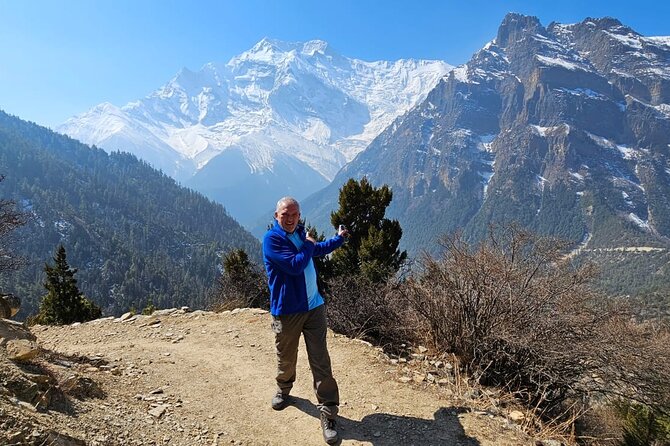
From Muktinath, you continue toward Kagbeni at 2,810 meters. This old village sits where the Kali Gandaki and Jhong rivers meet and marks the gateway to Upper Mustang.
Kagbeni is one of the most atmospheric stops on the route. Its narrow stone lanes, red-walled monastery, and dry mountain setting feel very different from the forest villages near Dharapani. You should allow yourself time to notice the details rather than treating it only as a lunch stop.
The route then follows the Kali Gandaki toward Jomsom at 2,720 meters. Jomsom is the administrative center of Mustang and a major stopping point. The valley is known for strong winds, so keep your hat and loose items secure.
Day 14 uses road transport through Kalopani and Beni to Pokhara. Kalopani, at 2,530 meters, brings greener scenery and a welcome contrast after the dry upper valley. Beni, at 850 meters, is a busy river market town and marks the end of the rougher mountain road section.
A public bus takes you from Jomsom to Pokhara, so allow for a long and less polished ride. The benefit is cost and access. The drawback is that road travel can be tiring after two weeks of walking.
Days 15 and 16: Pokhara rest and the return to Kathmandu
Pokhara is your reward after the trail. The three-star hotel in Lakeside includes breakfast, and the city gives you time beside Phewa Lake to rest, eat, and recover. You may prefer a quiet day, but Pokhara also offers plenty of ways to spend your final afternoon.
On day 15, a tourist bus takes you back to Kathmandu along the Prithvi Highway. The journey covers about 200 kilometers and is listed as a full day. A hotel transfer from the Kathmandu bus park is included.
Your last morning is flexible around your flight. You can spend a few hours in Thamel for souvenirs, cafés, or a final walk before airport transfer. Airport pickup and drop-off are included at the beginning and end of the program.
What the $1,800 price really covers
At $1,800 per person, this is a substantial package rather than a bare walking permit. You receive airport transfers, private road transfers between Kathmandu and Besisahar, city hotels with breakfast, teahouse lodging, permits, a licensed guide, porters, assistant guide support, and transport arrangements after the trek.
The staffing is a real value point. One porter for two trekkers keeps your load manageable, while one assistant guide for every five people gives the group extra support. The maximum group size is 14, so the actual group may be smaller, but you should confirm the expected number before booking.
The price does not cover most food during the trek. Hotel breakfasts and two dinners are included, but lunches and other trek meals are not. Drinking water is also extra, and the company recommends a filter bottle or purification tablets.
Budget separately for:
- The stated $50 government fee
- International flights
- Travel insurance with high-altitude evacuation coverage
- Trekking clothing and equipment
- Trek meals and drinking water
- Hot showers, Wi-Fi, and battery charging
- Tips for guides, porters, and support staff
- Extra nights, rescue, delays, or weather-related costs
This matters because the advertised price is not your final trip budget. It is a fair price for the organization and staff provided, but you should add a clear daily allowance for food and small mountain expenses.
Who should book this trek?
You should consider it if you want the classic Annapurna Circuit experience but also want Tilicho Lake before crossing Thorong La. It suits people who enjoy cultural changes as much as mountain views, from Gurung and Manangi villages to the Thakali country around Mustang.
You should also be comfortable with long days, basic teahouses, shared transport, and altitude above 4,000 meters. A strong fitness level is required. This is not the right choice if you want private vehicles throughout, included meals, hotel-style lodging on the trail, or a flexible schedule with short walking days.
The company’s strongest practical features are its staffing, acclimatization day, permit handling, airport transfers, and clear division of road transport. Before paying, ask who your guide will be, confirm the full group size, and request a current packing list.
Final verdict: a strong choice for the right trekker
I would book this trek if Tilicho Lake is a priority and you want the main logistics arranged without paying for a fully private expedition. The combination of Tilicho Lake, Thorong La, Muktinath, Kagbeni, Jomsom, and Pokhara gives you a remarkably varied 16 days.
I would hesitate if you dislike long road transfers or want nearly all costs included. The extra charges add up, and the highest days are serious. For a fit hiker who accepts basic conditions and plans the budget carefully, this is a well-supported way to experience one of Nepal’s most rewarding high mountain routes.
Free cancellation is available up to 24 hours before the start time. Poor weather or failure to meet the minimum group size can lead to a new date, an alternative experience, or a full refund.
FAQ
How long is the Annapurna Circuit with Tilicho Lake trek?
The experience lasts approximately 16 days, including arrival and departure days, road transfers, the trek, a rest day in Pokhara, and the return to Kathmandu.
What is the highest point on the trek?
Thorong La Pass is the highest point at 5,416 meters. Tilicho Lake reaches 4,919 meters.
Is Tilicho Lake included?
Yes. The route includes Siri Kharka, Tilicho Base Camp, and a visit to Tilicho Lake before continuing toward Yak Kharka and Thorong Phedi.
What transportation is included?
Private transportation covers the airport transfers, Kathmandu to Besisahar, Pokhara bus park to hotel, and Kathmandu bus park to hotel. A shared jeep runs from Besisahar to Dharapani, a public bus runs from Jomsom to Pokhara, and a tourist bus runs from Pokhara to Kathmandu.
Are meals included?
Hotel breakfasts in Kathmandu and Pokhara are included, along with two dinners. Meals during the trek are not included, and drinking water must be purchased or treated separately.
What type of accommodation is provided?
You stay in three-star hotels in Kathmandu and Pokhara, with breakfast. During the trek, accommodation is in standard teahouses.
Is travel insurance required?
Travel insurance is not included, and it must cover emergency evacuation and the highest altitude reached during the trek.
Latest treks added in Kathmandu
- Private Manaslu Circuit Trek at Himalayas★ 5.0 · 3 reviews
- Ghorepani Poonhill Trek★ 5.0 · 5 reviews
- Ghorepani Poon Hill Trek★ 5.0 · 16 reviews
- Upper Mustang Trekking★ 3.0 · 2 reviews
- Amazing 1 Day Trekking Experience in Kathmandu Nepal★ 5.0 · 24 reviews
- Upper Mustang Trekking★ 5.0 · 2 reviews
- Upper Mustang Trek★ 5.0 · 5 reviews
- Upper Mustang Trekking★ 5.0 · 4 reviews
Annapurna Base Camp Treks, compared.




Trekking in Annapurna/Langtang/Everest/Upper Mustang regions
Read our review →


Kathmandu to Annapurna Base Camp (ABC) 5-Day Trek
Read our review →Browse the lists this tour appears in