
REVIEW · KATHMANDU
Annapurna Circuit Trek
The Annapurna Circuit gives you a rare change of scenery in a single trip: rice fields and subtropical forest give way to dry cliffs, icy streams, Tibetan-style villages, and the 5,416-meter Thorong La Pass. The route then drops into Mustang and the Kali Gandaki Valley, with Muktinath, Marpha, Tatopani, and Poon Hill along the way.
I like two things right away. First, the trek packs several of Nepal’s biggest sights into 14 days, including Thorong La and Poon Hill. Second, the price includes permits, meals on the trail, a guide, a porter, mountain accommodation, and transport between major points. The main catch is the pace: the pass day is long and demanding, and the published route details do not clearly show where the Tilicho Lake detour fits.
Key points to know before booking
- Thorong La at 5,416 meters: This is the physical high point of the trip, with an eight-hour trek from Thorong Phedi to Muktinath.
- A dramatic change in scenery: You move from green river valleys and farmland to dry Mustang cliffs and high mountain terrain.
- Tilicho Lake needs confirmation: It is listed as a major stop, but the daily schedule does not include a separate Tilicho Lake day.
- Guide and porter included: The package covers their wages, food, lodging, equipment, and insurance.
- Two long road transfers: The journey includes about nine hours to Jagat, six to seven hours to Pokhara, and eight hours from Pokhara to Kathmandu.
- Private group format: Only your group takes part, rather than joining a large shared tour.
From Kathmandu to the Marsyangdi Valley
Your first two days are based in Kathmandu. The opening day allows for arrival and hotel transfer, while the second combines sightseeing with preparation for the trek.
That preparation time matters. You can use it to check your equipment, organize clothing for changing temperatures, and make sure you understand the route before leaving the city. The company provides the TIMS card and Annapurna Conservation Area permit, so you do not need to arrange those permits yourself.
The road journey to Jagat begins early and takes about nine hours by local transport. This is not a quick transfer, and the road itself becomes part of the experience. You pass from the Kathmandu area toward the Marsyangdi Valley, where the walk begins at about 1,300 meters.
The first day on foot leads toward Danakyu or Dharapani. It takes around five hours and climbs to about 2,300 meters. You should expect forests, river scenery, and settlements rather than big summit views at every turn. That gradual start is useful because the trek is building height without sending you straight into the thin air.
More Annapurna Treks in Kathmandu
- Annapurna Circuit Trek with Tilicho Lake
★ 5.0 · 368 reviews - Annapurna base camp trek 5 Days
★ 5.0 · 252 reviews - 14-Day Private Annapurna Base Camp Trek
★ 5.0 · 180 reviews
Chame and the first mountain views
The walk to Chame takes about five hours and reaches 2,670 meters. Chame is the administrative center of Manang District and a practical stopping point before the route enters higher mountain country.
The scenery begins to feel more alpine as you move farther up the valley. Forests remain part of the route, but the huge mountain walls become more important. The day is not as difficult as the pass crossing, yet the gain in altitude means you should keep your pace steady and drink regularly.
From Chame, the trail continues to upper Pisang, around 3,300 meters. The route takes about five hours. Pisang is one of the places where the Annapurna Circuit begins to show its famous contrast: the river valley is narrow and dramatic, while the villages and slopes have a distinctly high Himalayan character.
You may have the choice of accommodation in a private or shared room, with single or double rooms noted as available in the mountain area. Confirm the room arrangement before departure if privacy matters to you, since lodge standards and availability can vary along a mountain route.
Ghyaru, Manang, and a useful rest day
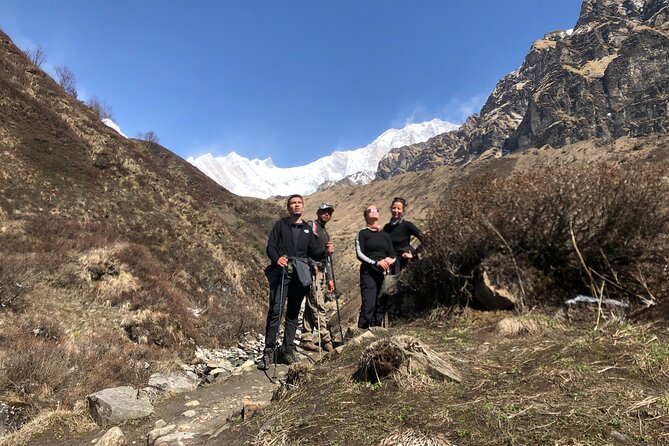
The route to Manang passes through Ghyaru village and takes about six hours. Ghyaru is known for its position above the valley and for broad views toward the Annapurna range. The higher village route adds effort, but it also gives you a stronger sense of how the settlements adapt to the steep terrain.
Manang sits at about 3,540 meters. The scheduled rest day here is one of the most important parts of the trip. It is not wasted time. Your body needs a pause before the route climbs beyond 4,000 meters, and a day in Manang gives you time to explore the village rather than simply sleep and leave.
This is also a good point to check how you feel. Mild fatigue is normal. More serious altitude symptoms should not be ignored. The provided first aid box is useful, but it is not a substitute for sensible decisions by you and the guide.
The supplied details mention Tilicho Lake as one of the main stops, yet the daily plan goes from Manang to Ledar without listing the detour. Tilicho Lake is a major attraction, but you should ask the operator exactly how it is included, how many extra walking hours it requires, and whether the 14-day schedule changes when it is added.
The climb toward Thorong Phedi
After Manang, you hike to Ledar in about four hours, reaching 4,200 meters. The distance is shorter than earlier days, but the altitude changes the effort. A small climb can feel much harder here than it did in the lower valley.
The next day takes you to Thorong Phedi at 4,450 meters in roughly three hours. The short walking time may sound easy, but this is a high sleeping point and a key staging area for the pass. You will want a warm layer, a headlamp, water, and anything you need close at hand rather than buried in a porter’s bag.
The package includes a porter to carry luggage, which makes a real difference on this section. You still need to carry a daypack with essentials, but you do not have to haul your full load up to the pass.
The high section is where the route demands a moderate to strong level of fitness, despite the official description using moderate fitness. You should be comfortable walking for several hours on uneven trails and handling repeated uphill sections. The route is not suitable as a casual sightseeing walk.
Another trail to compare in Kathmandu:
- Everest Base Camp Trek – 14 Days
★ 5.0 · 1,499 reviews - Everest Base Camp Trek
★ 5.0 · 842 reviews - Everest Base Camp Trekking
★ 5.0 · 485 reviews - Everest Base Camp Trekking – 13 Day
★ 5.0 · 365 reviews
Thorong La and the descent to Muktinath
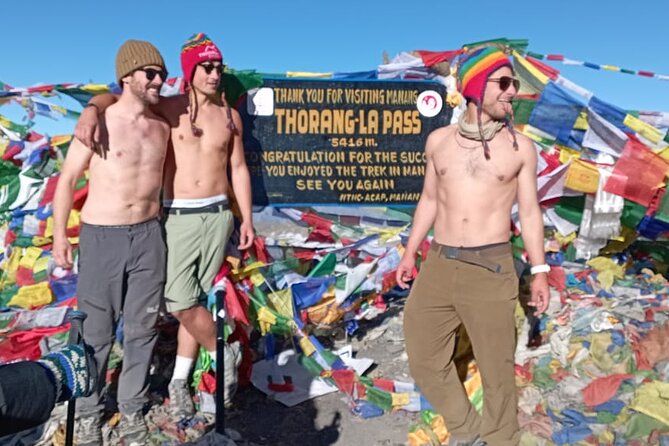
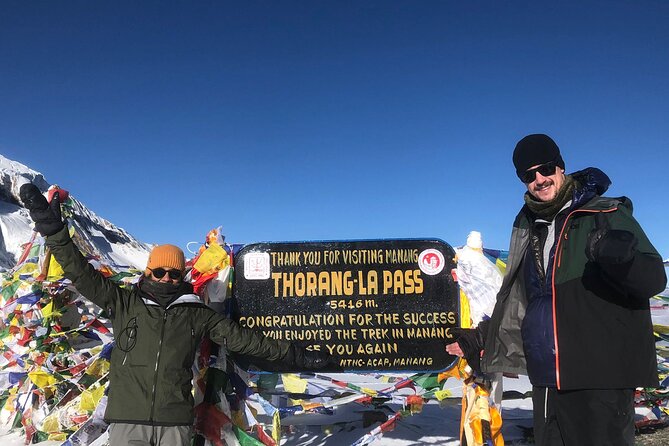
The pass day is the toughest and most memorable part of the trip. You leave Thorong Phedi, climb to Thorong La at 5,416 meters, and then descend to Muktinath. The full day is listed at about eight hours.
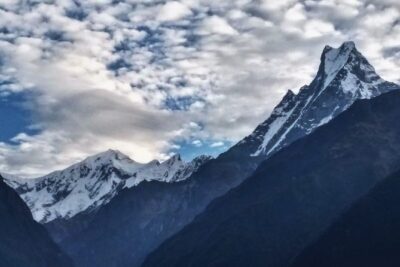
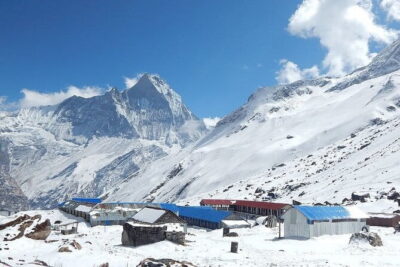
At the top, the views include the Annapurna Massif, Dhaulagiri, and Tilicho Peak. The pass also marks a major change in the trip. You leave the Marsyangdi side and enter Mustang, where the scenery becomes drier, more open, and strongly shaped by the rain shadow of the high mountains.
The descent can be hard on your knees, even if climbing is your bigger concern. Trekking poles may help, though they are not specifically included, so ask what equipment the company supplies. Weather can also affect the pass crossing. The cancellation policy says poor weather may lead to a new date or a full refund, but conditions may also affect the timing of the day itself.
Muktinath is a Hindu pilgrimage village and an important religious site for both Hindu and Buddhist visitors. You can expect a very different atmosphere from the forested lower valley. The temple area gives the route a cultural focus, not just a scenic one.
Marpha, Tatopani, and the road to Pokhara
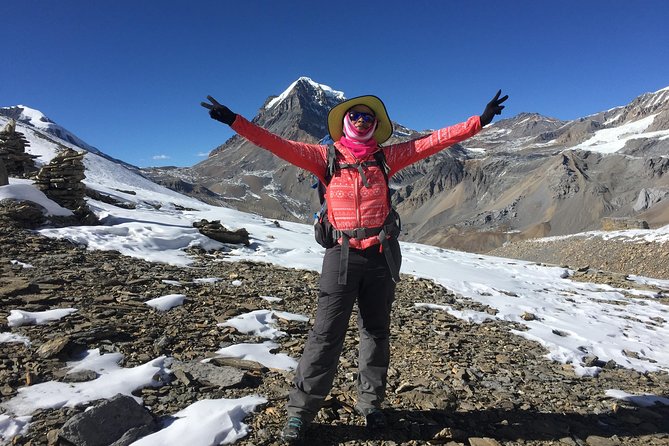
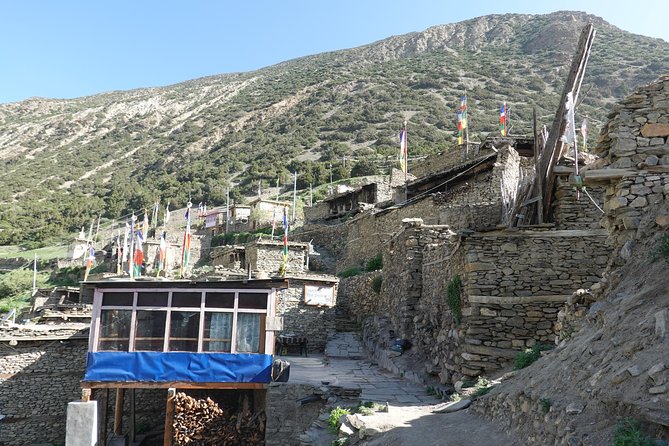
The broader route description includes the Kali Gandaki Valley, Marpha, Tatopani, and Poon Hill, although the 14-day schedule moves from Muktinath to a drive toward Pokhara. This is another point to confirm carefully. Ask if Marpha, Tatopani, Poon Hill, and Ghorepani are walked in full, reached by road, or included only on certain departures.
Marpha is described as a village of narrow cobbled streets, a small monastery, and apple orchards. It is one of the most distinctive cultural stops on the route. The village feels different from the high pass area, with a more settled agricultural character.
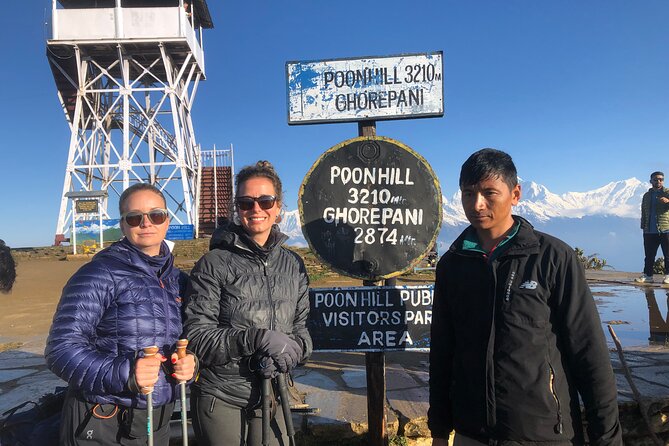
Tatopani is known for its hot springs. After several days at altitude, warm water can be a welcome change, though you should not expect this to replace rest after a demanding trek. The route then includes Poon Hill, a celebrated viewpoint from which you may see more than 20 peaks across the Annapurna and Dhaulagiri ranges.
Ghorepani and Gurunghe Hill are also listed among the points of interest. These locations add a lower-altitude, village-and-forest side to the trip. In practical terms, they also show why the Annapurna route is so popular: the scenery keeps changing instead of repeating the same high mountain view.
Poon Hill and the final mountain panorama
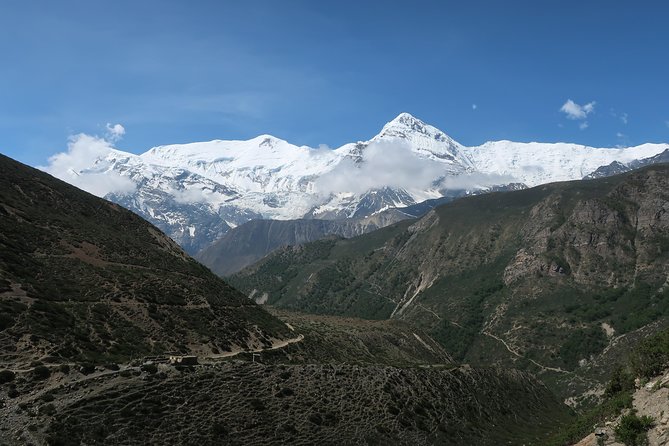
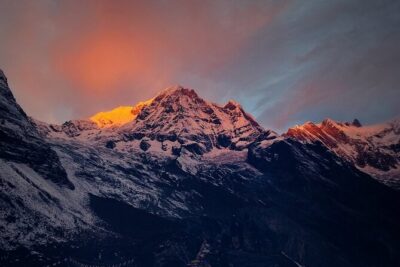
Poon Hill is the classic viewpoint section of this trip. Its appeal is not only the number of peaks visible, but also the way it rounds out the route. After Thorong La and the dry Mustang side, you return to a greener hill setting with wide views across the Annapurna and Dhaulagiri ranges.
If photography matters to you, Poon Hill is worth treating as a serious stop rather than a quick tick on a schedule. Weather can change the view, and early starts are common on viewpoint walks, so ask your guide about the exact timing.
The route then continues toward Pokhara, with the drive listed at about six to seven hours. Pokhara is a pleasant contrast to the trekking route, but the transfer is still a long one. The package includes hotel accommodation in Pokhara on a bed-and-breakfast basis, but meals in Pokhara are not included.
Transport, hotels, and what the price covers
The listed price is $1,175 per person. For a 14-day private trip, that offers solid value if the full route is delivered as described. The cost includes Kathmandu and Pokhara hotels with breakfast, mountain accommodation, breakfast, lunch, dinner, tea or coffee with meals, permits, taxes, guide services, porter services, and several transfers.
The package also covers guide and porter salaries, equipment, food, lodging, and insurance. That is important because these expenses can add up quickly on a long trek. A first aid box, farewell dinner, and souvenir are included as well.
There are a few details you should clarify before paying. The description refers to an air-conditioned vehicle, but it also specifies local transport to Jagat and a tourist bus from Pokhara to Kathmandu. Air conditioning may apply to certain transfers rather than every vehicle.
The final journey from Pokhara to Kathmandu takes about eight hours by tourist bus. On day 14, you fly from Tribhuvan International Airport. International airfare is not included, and meals in Kathmandu and Pokhara are also your responsibility.
You pay separately for Nepal’s visa, travel insurance, alcoholic drinks, soda, snacks, WiFi, phone calls, laundry, battery charging, donations, and tips. Travel insurance is especially important for a high-altitude trek.
Guide support and the private format
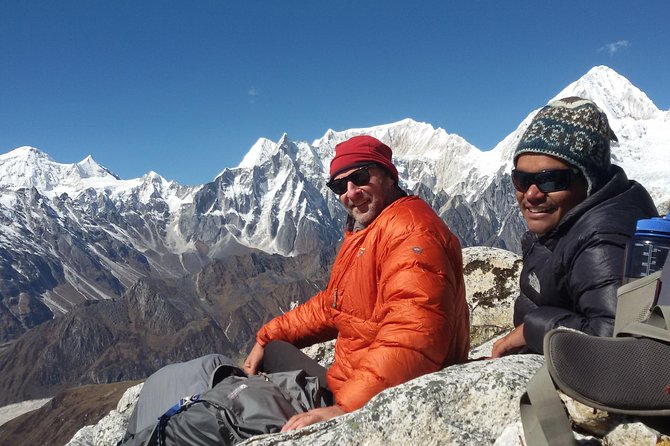
The trip is private, meaning only your group takes part. That gives you more control than a large group departure, particularly on walking speed and rest breaks. It also means the quality of communication with your assigned guide matters a great deal.
One guide associated with the experience is Gyanu. The available comments give him strong praise for warmth, patience, dedication, and practical support. You should ask if Gyanu will lead your departure, since the supplied information does not guarantee that he is assigned to every booking.
The company identifies its guides as government registered and highly experienced. You receive a porter as well, which lets you walk with a lighter daypack. Still, ask about the luggage limit, porter arrangement, and what you personally need to carry each day.
The private format suits couples, friends, and small families who want a set route without strangers joining the group. It may be less suitable if you prefer complete independence or want to change the plan without checking with an organized operator.
Who should book this Annapurna Circuit trek?
I would choose this trip if you want a broad taste of Nepal rather than one short mountain walk. You get Kathmandu, the Marsyangdi Valley, Manang, Thorong La, Muktinath, Mustang, Pokhara, and the listed Poon Hill area in one package.
It is a good fit for you if you value having permits, meals, a guide, a porter, and ground transport handled in advance. The high pass and long road days mean you should be ready for discomfort. This is not a soft adventure with hotel comforts each night.
Before booking, get written confirmation of four points: the Tilicho Lake detour, the exact walking route through Marpha, Tatopani, Ghorepani, and Poon Hill, the room arrangement in mountain lodges, and the transport used on each road section.
Free cancellation is available if you cancel at least 24 hours before the start time. The stated start time is 12:15 am, which is unusually early, so confirm whether this means an airport pickup, an arrival time, or a departure transfer.
Should you book it?
Book this Annapurna Circuit Trek if you want a well-supported private route with the major high-altitude sights included at a reasonable package price. The combination of Thorong La, Muktinath, mountain villages, hot springs, and Poon Hill gives you plenty of variety.
I would pause before booking only if you dislike long road transfers or are not prepared for the eight-hour pass day. Also confirm the Tilicho Lake and lower-valley sections first. If those details match your expectations, the trip offers a strong mix of mountain scenery, village life, religious sites, and practical support.
FAQ
How long is the Annapurna Circuit Trek?
The experience lasts approximately 14 days, including arrival and sightseeing in Kathmandu, the trek, transfers to Pokhara and Kathmandu, and departure from Tribhuvan International Airport.
What is the highest point on the route?
The highest point is Thorong La Pass at 5,416 meters.
Is a guide included?
Yes. The package includes a government registered guide, along with the guide’s salary, equipment, food, lodging, and insurance.
Is a porter included?
Yes. A porter is included to carry luggage, with the porter’s salary, equipment, food, lodging, and insurance covered.
Are meals included?
Breakfast, lunch, dinner, and tea or coffee with each meal are included during the trek. Meals in Kathmandu and Pokhara are not included.
Are trekking permits included?
Yes. The price includes the TIMS card, Annapurna Conservation Area permit, and other necessary paperwork and fees.
Is Tilicho Lake included?
Tilicho Lake is listed as a stop, but the daily schedule does not show a separate day for it. Ask the provider to confirm how the detour fits into your departure.
Is this a private tour?
Yes. Only your group participates in the activity.
What happens if bad weather cancels the trek?
If poor weather causes the experience to be canceled, you are offered a different date or a full refund. Canceling yourself at least 24 hours before the start time also qualifies for a full refund.
Latest treks added in Kathmandu
- Private Manaslu Circuit Trek at Himalayas★ 5.0 · 3 reviews
- Ghorepani Poonhill Trek★ 5.0 · 5 reviews
- Ghorepani Poon Hill Trek★ 5.0 · 16 reviews
- Upper Mustang Trekking★ 3.0 · 2 reviews
- Amazing 1 Day Trekking Experience in Kathmandu Nepal★ 5.0 · 24 reviews
- Upper Mustang Trekking★ 5.0 · 2 reviews
- Upper Mustang Trek★ 5.0 · 5 reviews
- Upper Mustang Trekking★ 5.0 · 4 reviews
Annapurna Base Camp Treks, compared.

Trekking in Annapurna/Langtang/Everest/Upper Mustang regions
Read our review →
Kathmandu to Annapurna Base Camp (ABC) 5-Day Trek
Read our review →Browse the lists this tour appears in