
REVIEW · KATHMANDU
Annapurna Circuit Trek
The big draw here is the Thorong La crossing, a high mountain pass reached after days of walking through pine forest, dry valleys, yak pasture, and Himalayan villages. You begin with Kathmandu temples and finish with a flight from Jomsom to Pokhara, so the trip feels like a full Nepal experience rather than a simple out-and-back hike.
I like the slow climb through Manang, where an acclimatization day gives you time to adjust and enjoy short walks. I also like the practical support: a guide, one porter for every two people, permits, sleeping bags when needed, breakfast, and a domestic flight are included. The main caution is that the description mixes an Annapurna Circuit route with Ghorepani and Poon Hill highlights. Ask for the exact route in writing before paying.
Key points to know before booking
- Thorong La is the main physical test: The pass-crossing day takes about seven hours and follows several days above 3,000 meters.
- Manang provides a useful rest day: You spend Day 9 acclimatizing with short walks and mountain views.
- The route includes simple lodge accommodation: Bathrooms may be outside rooms, and hot water depends on solar power.
- Support is built into the price: Guides, porters, permits, trekking insurance for the crew, breakfast, and basic equipment are included.
- Jomsom to Pokhara is by flight: This saves a long return walk, though domestic mountain flights can be affected by conditions.
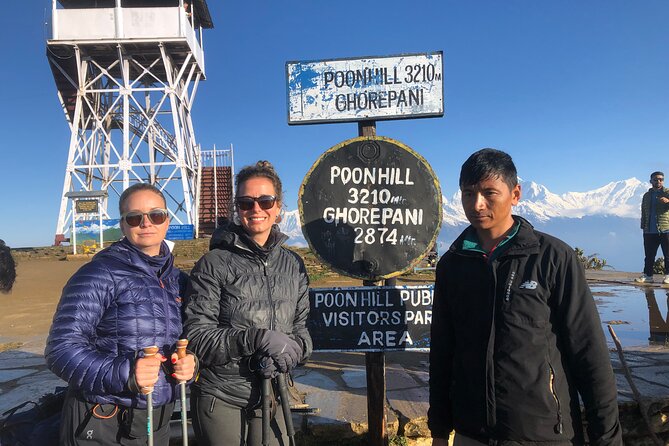
- Confirm Poon Hill before booking: Poon Hill appears in the promotional description, but the listed itinerary follows the Annapurna Circuit and does not show a Poon Hill day.
What the 16-day Annapurna Circuit actually covers
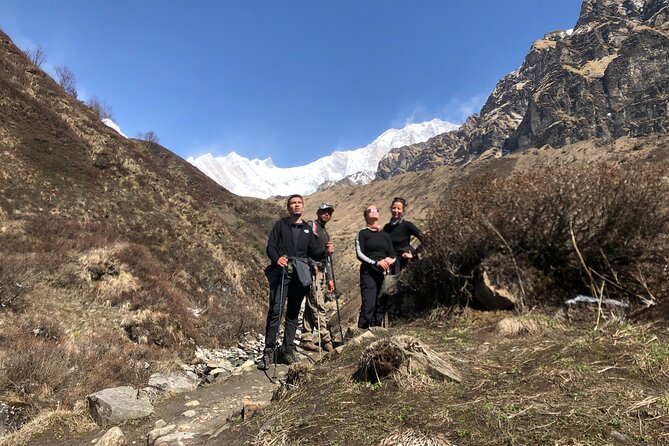
This is a demanding but well-supported trek through one of Nepal’s best-known mountain regions. The route begins with city sightseeing in Kathmandu, reaches the high valleys around Manang, crosses Thorong La, visits Muktinath, and ends in Pokhara.
The daily walking estimates range from three to eight hours. Most trekking days are listed at five to seven hours, or roughly 10 to 14 kilometers. That sounds manageable on paper, but the altitude, uneven trails, steep climbs, and cold mornings matter more than the distance.
The package is designed for people with moderate fitness. The operator recommends months of preparation through hill walking, stair climbing, jogging, or gym work. I would take that advice seriously. This is not a gentle cultural walk, even though the pace is gradual.
More Annapurna Treks in Kathmandu
- Annapurna Circuit Trek with Tilicho Lake
★ 5.0 · 368 reviews - Annapurna base camp trek 5 Days
★ 5.0 · 252 reviews - 14-Day Private Annapurna Base Camp Trek
★ 5.0 · 180 reviews
Days 1 and 2: Kathmandu temples before the trail
Your first day begins with airport pickup at Tribhuvan International Airport and a transfer to the hotel. A welcome dinner is included, and the evening orientation is generally held at the hotel around 5 or 6 pm.
Day 2 is a full sightseeing day. You visit Boudhanath Stupa, Pashupatinath Temple, Patan Durbar Square, and Swayambhunath Temple. Each stop is scheduled for about an hour, so this is an introduction rather than a slow study of Kathmandu.
The city tour adds real value. You get cultural context before heading into rural Nepal, and you can use the day to buy any missing trekking items. Jackets, walking poles, water bottles, and backpacks are widely available near the hotel.
Entry fees for the Kathmandu sights are not included. Keep some Nepali rupees available, since Nepali currency is also the only practical currency on the trek.
Days 3 to 5: Long drives and the first village trails
Day 3 is mostly transport. You drive toward Bhulbhule, with the journey taking about seven to eight hours. The route passes mountain views, rivers, and forest, then continues toward Nadi.
Long road transfers are part of the tradeoff here. They help the tour reach the trailhead without adding extra trekking days, but road travel in Nepal can be tiring. Bring water, snacks, and something to occupy you during the drive.
The walk to Jagat on Day 4 takes about five hours. You pass paddy fields, muddy paths, waterfalls, green hills, and distant snowy peaks. This is where the trip begins to feel less like a transport-based tour and more like a mountain journey.
On Day 5, you continue toward Dharapani. The route follows sections of the Kali Gandaki River, crosses a suspension bridge, and passes Tal and Karte. The entrance to Dharapani is marked by a stone Mani, a small but meaningful detail that helps connect the route with local Buddhist practice.
The early days bring variety, but they are not the highest or most dramatic section yet. They are important for building a steady rhythm before the harder altitude days.
Days 6 to 8: Chame, Pisang, and Manang
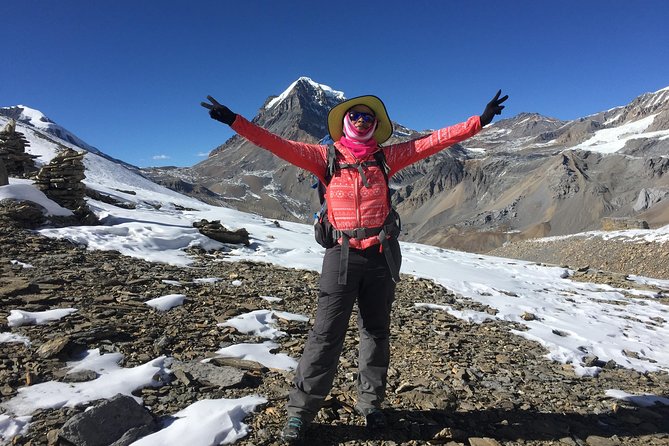
From Dharapani, the trail climbs toward Chame, the administrative center of Manang District. You pass Danaque and make a steep ascent to Timang, located below Lamjung Himal.
Day 7 leads to Pisang through fir and pine forest. The trail climbs over rocky ground and passes Bhratang before opening into a wide valley with views of Annapurna II and Pisang Peak.
I like this part of the route because the scenery changes in a clear sequence. Forest gives way to more open mountain country, and the villages begin to feel more remote. You should also expect the trail to become more demanding underfoot.
Day 8 takes you to Manang. The route climbs a steep ridge, then drops toward the airstrip at Hungde. Along the way, you may see Annapurna III, Annapurna IV, and views toward Tilicho Lake.
Manang is an important stop, not just an overnight village. It is the base for the acclimatization day that follows. You are now moving into the altitude zone where pacing, water, rest, and attention to symptoms matter.
Another trail to compare in Kathmandu:
- Everest Base Camp Trek – 14 Days
★ 5.0 · 1,499 reviews - Everest Base Camp Trek
★ 5.0 · 842 reviews - Everest Base Camp Trekking
★ 5.0 · 485 reviews - Everest Base Camp Trekking – 13 Day
★ 5.0 · 365 reviews
Day 9: The Manang acclimatization day
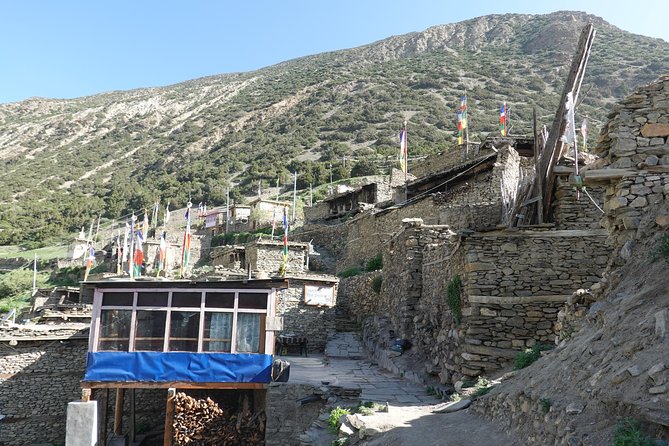
The rest day in Manang is one of the strongest parts of the plan. You do not simply sit in the lodge. The schedule allows short walks and time to look around the village while your body adjusts.
The tour notes that altitude-related problems can begin above 3,000 meters. That is not a guarantee of illness, but it is a clear warning to take the day seriously.
Drink at least three liters of clean water daily. You can use purification tablets or refill at regulated pure water stations. Bottled water is available at lodges, but the tour does not recommend relying on it.
A rest day also gives your guide a chance to watch how the group is coping. The operator uses English-speaking guides and groups of up to 16 people, with porters assigned at a ratio of one porter for two people.
Days 10 and 11: Yak pasture and High Camp
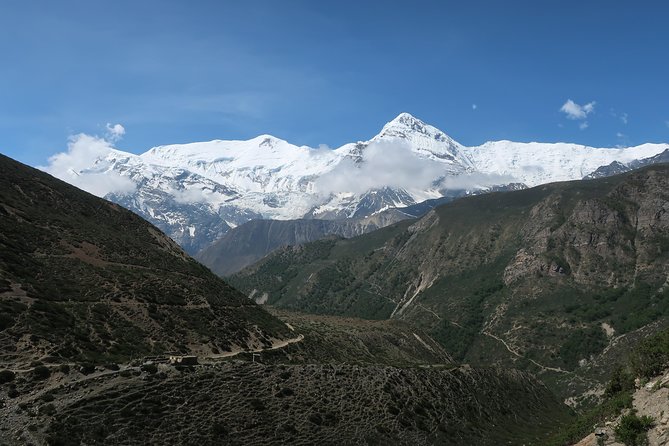
Day 10 climbs through Tenki Manang and leaves the Marshyangdi Valley. You cross near the Jarsang River, pass Yak Kharka, and continue to Ledar.
The setting becomes more exposed and austere. Yak pasture replaces farmland, and the trail feels increasingly high and remote. The walking time is about five hours, but the altitude makes a steady pace more important than speed.
Day 11 is shorter, at about three hours, but it is not necessarily easy. You leave Ledar and head toward High Camp over rough ground, with narrow sections above the Kali Gandaki River and some steep ups and downs.
This is a good example of why distance alone does not tell you how hard a day will be. Three hours at high altitude over rough trail can feel tougher than a longer walk at lower elevation.
Day 12: Crossing Thorong La to Muktinath
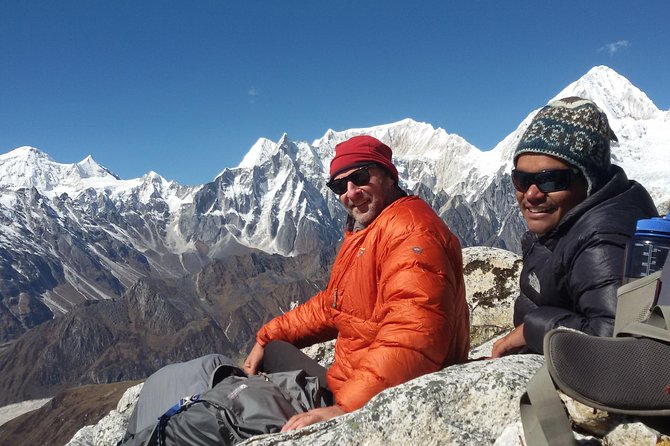
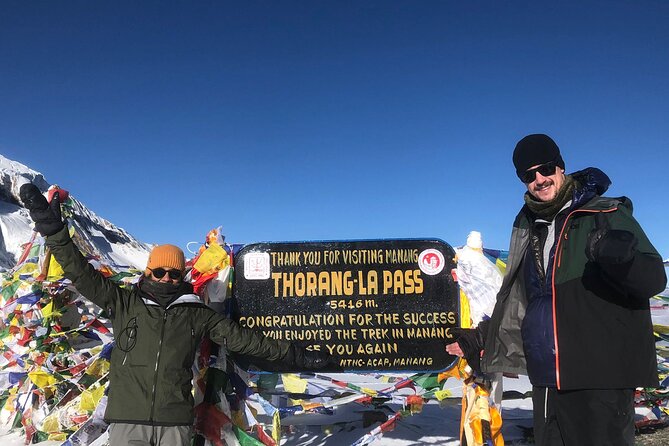
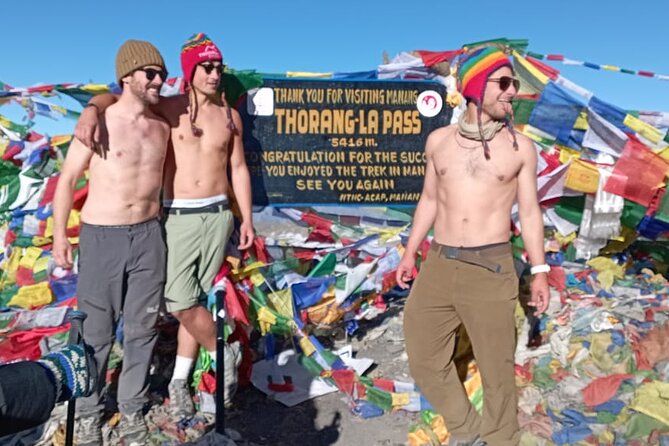
Thorong La is the central challenge of the trek. From High Camp, you cross the pass and continue to Muktinath. The day is listed at about seven hours.
The route is tough because you are climbing to a very high point, often in cold conditions, then descending for several hours. Your clothing, footwear, water supply, and pacing all matter.
Bring well-worn hiking boots or shoes. For trips from November through the first half of March, the operator recommends a jacket suitable for temperatures around zero degrees Celsius. At other times, a jacket for roughly 4 to 6 degrees Celsius is advised, though high mountain weather can change quickly.
You should also have travel insurance covering medical care, repatriation, helicopter rescue, air ambulance service, baggage, injury, and death. The operator says insurance is compulsory for Annapurna Circuit and Everest Base Camp treks.
Muktinath is a rewarding destination after the pass. You stay overnight rather than rushing straight through, which makes the crossing feel less like a single endurance test and more like part of a longer cultural route.
Days 13 to 15: Muktinath, Jomsom, and Pokhara
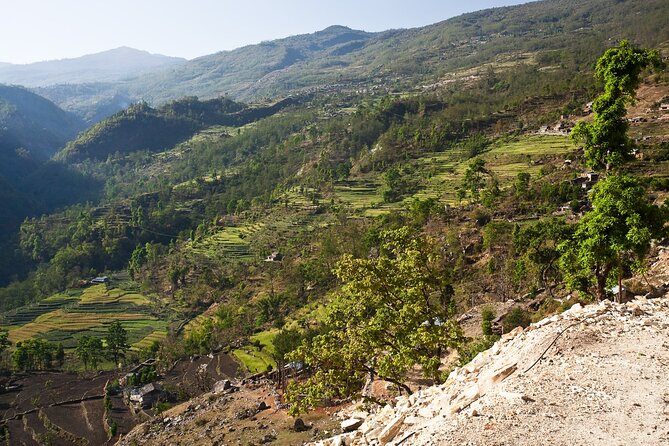
Day 13 allows time to visit Muktinath before continuing to Jomsom. The walking time is about five hours.
Jomsom is an important transition point. The high mountain trek ends here, and the return journey shifts from footpaths to air travel.
On Day 14, you take an early flight from Jomsom to Pokhara. You then have time to freshen up and visit Pokhara. A helicopter flight to Annapurna Base Camp is offered as an optional activity, not as part of the included price.
The Jomsom flight is convenient, but it is also one part of the schedule worth discussing with the operator. The information does not promise a backup plan for delays or cancellations. Ask how the company handles a missed flight, especially if you have an international connection soon after.
Day 15 takes you back to Kathmandu by tourist bus in about six to seven hours. A flight from Pokhara to Kathmandu is also possible, but the fare is not included.
The final road journey gives you another look at Nepal outside the trekking route, but it is long. If you value time more than savings, price the optional flight before you go.
Where you sleep and what you eat
In Kathmandu, you stay at the Himalayan Suite Hotel. In Pokhara, accommodation is listed at Hotel Dandelion or Lake Star. These are described as clean tourist hotels by Nepali standards, not European-style properties.
During the trek, you stay in simple family-run lodges. Bathrooms may be outside your room, and hot water depends on solar panels. You should not count on a warm shower every day.
Breakfast is included throughout the package, and the tour lists 15 breakfasts. Lunch and dinner are not included in Kathmandu, Pokhara, or on trekking days. That keeps the headline price lower, but you need a daily food budget in Nepali rupees.
A sleeping bag and duffle bag can be provided if needed. Excess luggage is stored at the Pokhara hotel, and the trekking baggage limit is listed at 10 to 13 kilograms per person.
What the $1,350 price includes
At $1,350 per person, the package offers solid value if you want one company to handle the main arrangements. It includes airport transfers, Kathmandu and Pokhara hotels with breakfast, trekking lodges with breakfast, transport to the trailhead, the Jomsom to Pokhara flight, permits, TIMS, guides, porters, trekking crew costs, sleeping equipment when necessary, and government taxes.
You still pay for Kathmandu sightseeing entry fees, lunches and dinners, personal expenses, visa fees, and the Pokhara to Kathmandu flight if you choose to fly. Those extras can add up, so do not treat $1,350 as the full cost of the holiday.
The value is strongest for first-time visitors who want help with permits, luggage, transport, and altitude planning. Independent hikers may spend less, but they will need to organize more and carry more responsibility.
Guides, group size, and the human side
The operator uses groups of up to 16 people, with a separate English-speaking guide for each trekking group. The named guides associated with past trips include Tikaram, Ganesh, Shankar Timalsina, Bini, Ram, Prakash, and Shishir Tamang, though you should confirm who will lead your departure.
The strongest pattern in the feedback is praise for guide and porter care. Tikaram is described as attentive and supportive, while Ganesh is noted for extensive experience on the mountains. Groups led by Bini, Pradip Tamang, Binod Gharti, and others were also described as encouraging and well organized.
That matters on a high-altitude route. A good guide does more than point out the trail. The guide helps set the pace, notices problems, explains local places, and manages the practical details when the group is tired.
Porter support also changes the experience. With one porter for two people, you carry only your daypack, but the stated weight limit should be respected. Pack lightly and tip the guide, porters, and drivers according to the service you receive.
The Poon Hill question you should ask
The promotional description highlights Ghorepani, Poon Hill, rhododendron forest, Jhinu Hot Spring, Landruk, and Dhampus. Those are associated with the Ghorepani and Poon Hill route, not with the 16-day itinerary shown here.
The day-by-day plan instead begins near Bhulbhule and follows the Annapurna Circuit through Manang, Thorong La, Muktinath, and Jomsom. It does not list Ghorepani, Poon Hill, Jhinu, Landruk, or Dhampus.
Poon Hill is famous for sunrise views toward Dhaulagiri and Annapurna, so this is not a small wording issue. If that sunrise is important to you, ask the company to confirm the route, number of trekking days, and any changes to accommodation, transport, and price.
Who should book this trek?
I would recommend this trip to a fit person who wants a supported Himalayan trek and is comfortable with basic lodges, long transport days, cold weather, and limited private facilities.
It may suit people in their early 60s if they are fit and prepare properly, but age alone is not the deciding factor. Your doctor should advise you if you have a health condition that could be affected by altitude.
This is not the best choice if you want luxury hotels, private bathrooms every night, included restaurant meals, or a relaxed sightseeing holiday. It is also a poor fit if you dislike changing plans, since mountain weather can affect flights and trail conditions.
Should you book the Annapurna Circuit Trek?
Book it if you want the classic high route with Manang, Thorong La, Muktinath, and Jomsom, plus a local support team and a fair amount of logistics handled for you. The combination of guides, porters, permits, breakfast, lodge accommodation, and the Jomsom flight gives the $1,350 price useful value.
Before booking, get three things confirmed: the exact route, the assigned guide, and the plan for transport delays. Most important, ask directly if Poon Hill is included. If it is not, treat this as an Annapurna Circuit trek rather than a Ghorepani Poon Hill trip.
The package is a strong option for prepared hikers who want mountain scenery, village life, and a demanding but organized crossing. Go in with realistic expectations about altitude, food costs, lodge comfort, and weather, and you will know exactly what kind of adventure you are buying.
FAQ
How long is the Annapurna Circuit Trek?
The tour lasts approximately 16 days, including arrival and departure days, Kathmandu sightseeing, trekking, the Jomsom to Pokhara flight, and the return to Kathmandu.
Where does the tour start?
The tour starts at Tribhuvan International Airport in Kathmandu, Nepal. The listed start time is 6:00 am.
Is airport pickup included?
Yes. Airport pickup and drop-off are included, along with a transfer to the Kathmandu hotel on arrival.
What meals are included?
Breakfast is included during the trip, with 15 breakfasts listed. A welcome dinner is also included. Lunch and dinner in Kathmandu, Pokhara, and during the trekking days are not included.
Is accommodation included?
Yes. You receive three-star category hotel accommodation in Kathmandu and Pokhara on a twin-sharing, bed-and-breakfast basis. During the trek, you stay in simple lodges with breakfast.
Is the Jomsom to Pokhara flight included?
Yes. The flight from Jomsom to Pokhara is included. A possible flight from Pokhara to Kathmandu is not included.
Is Poon Hill included in this itinerary?
The tour description discusses Ghorepani and Poon Hill, but the detailed day-by-day schedule does not list them. Confirm the exact route with the operator before booking.
How much luggage can I take on the trek?
The listed weight limit is 10 to 13 kilograms per person. One porter is provided for every two people, and excess baggage can be stored at the Pokhara hotel.
What cancellation terms apply?
You can cancel at least 24 hours before the experience starts for a full refund. Cancellations or changes made less than 24 hours before the start time are not accepted for a refund.
Latest treks added in Kathmandu
- Private Manaslu Circuit Trek at Himalayas★ 5.0 · 3 reviews
- Ghorepani Poonhill Trek★ 5.0 · 5 reviews
- Ghorepani Poon Hill Trek★ 5.0 · 16 reviews
- Upper Mustang Trekking★ 3.0 · 2 reviews
- Amazing 1 Day Trekking Experience in Kathmandu Nepal★ 5.0 · 24 reviews
- Upper Mustang Trekking★ 5.0 · 2 reviews
- Upper Mustang Trek★ 5.0 · 5 reviews
- Upper Mustang Trekking★ 5.0 · 4 reviews
Annapurna Base Camp Treks, compared.

Trekking in Annapurna/Langtang/Everest/Upper Mustang regions
Read our review →
Kathmandu to Annapurna Base Camp (ABC) 5-Day Trek
Read our review →Browse the lists this tour appears in