
REVIEW · KATHMANDU
Annapurna circuit Trek
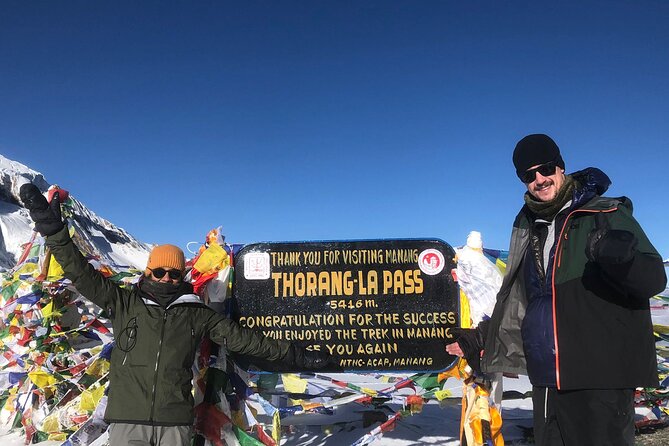
The best part of this Annapurna Circuit trek is the rapid change in scenery and culture. You begin with a long road transfer from Kathmandu, walk through pine country and high mountain villages, cross Thorong La at 5,416 meters, then descend toward Muktinath, Marpha, and the hot springs area of Tatopani.
I like the strong practical package: meals, porters, permits, transport, and mountain gear are included, and the private format lets your group work with the guide at its own pace. I also like the care attached to the Nature Explore team, especially guides such as Dinesh and Deepak, who are repeatedly praised for calm support and handling difficult moments. The main drawback is the tight schedule, with several long road or trekking days and little room for delays or extra acclimatization.
Key points to know before booking
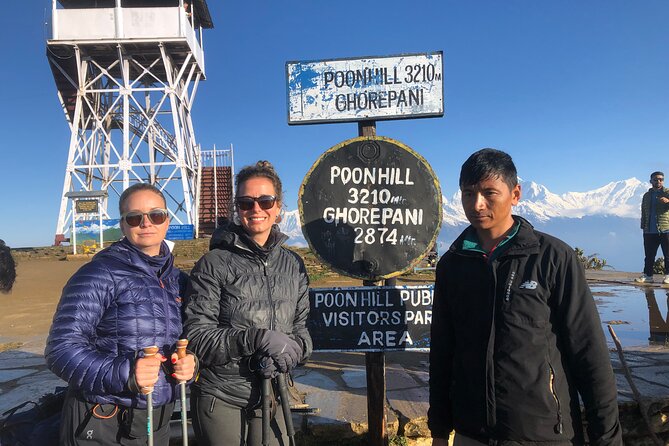
- Thorong La is the big test: You reach 5,416 meters on day nine, after sleeping at high altitude.
- The route changes character fast: Expect mountain valleys, Tibetan-influenced villages, dry high country, apple-growing Marpha, and lower hot-spring country.
- A private group gets personal support: Only your own party takes part, with an experienced guide and porter support.
- The package covers a lot: Food, tea or coffee, treated drinking water, accommodation, permits, local transport, and selected gear are included.
- The price is $998 per person: That is strong value if you use the included transport, meals, porter, permits, and equipment.
- This is not a casual walk: You need moderate physical fitness, comfort with basic mountain accommodation, and a serious attitude toward altitude.
What the 12-day Annapurna Circuit actually involves
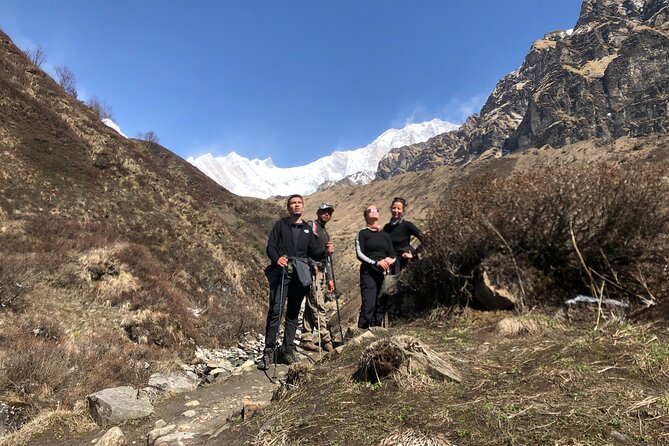
This is a compact version of the Annapurna Circuit. You are not spending weeks on the trail. Instead, the itinerary uses road transport at both ends and packs the high mountain section into a brisk middle stretch.
That makes the trip useful if you have limited time, but it also means the schedule is not loose. A delayed bus, bad weather, tired legs, or altitude trouble could affect later days. I would treat the published timing as an outline rather than a guarantee.
The listed price is $998 per person, and much of the expensive planning is already handled. You get airport pickup and drop-off, a three-star hotel in Kathmandu, one night in Pokhara after the trek, food, tea or coffee, fresh fruit after dinner, treated drinking water, accommodation during the trek, a guide, a porter, permits, local transport, and government taxes.
You still pay for international airfare, travel insurance, trekking equipment, extra hotel nights, Wi-Fi, laundry, snacks, cold drinks, and tips. Since the route reaches high altitude and the trip includes remote mountain roads, insurance is not a minor extra. Arrange a policy that suits trekking in Nepal and check its limits before you leave home.
More Annapurna Treks in Kathmandu
- Annapurna Circuit Trek with Tilicho Lake
★ 5.0 · 368 reviews - Annapurna base camp trek 5 Days
★ 5.0 · 252 reviews - 14-Day Private Annapurna Base Camp Trek
★ 5.0 · 180 reviews
Day 1: Kathmandu arrival and a useful soft landing
Your trip begins with pickup at Tribhuvan Airport in Kathmandu. The start point is clearly stated, and the package includes airport transfer and a three-star Kathmandu hotel.
This first day is less about sightseeing than getting organized. You can meet the guide, settle in, and check your equipment before leaving the city. Nature Explore provides a duffle bag and a down jacket, with the jacket returned after the trip. You also receive a company T-shirt as a gift.
The airport pickup matters more than it sounds. Kathmandu can feel confusing after a long international flight, so having someone meet you gives the trip a calmer start. Keep your arrival details accurate, and confirm the pickup time before flying.
Day 2: The long road to Dharapani
The journey to Dharapani runs through Besishahar and takes about seven to eight hours. Dharapani sits at about 2,000 meters, so this is a road day with an important altitude gain.
You will not be walking the full approach on this itinerary. Local shared bus or jeep transport is used, which keeps the cost down and allows the trek to fit into 12 days. The tradeoff is comfort. Mountain roads can make a long transfer feel tiring, and the exact timing may depend on road conditions.
Dharapani is where the trip begins to feel properly Himalayan. Give yourself an easy evening. Drink the treated water supplied during the trek, eat well, and avoid treating this as a normal sightseeing stop. Your body is beginning to adjust.
Day 3: Chame and the first proper trail day
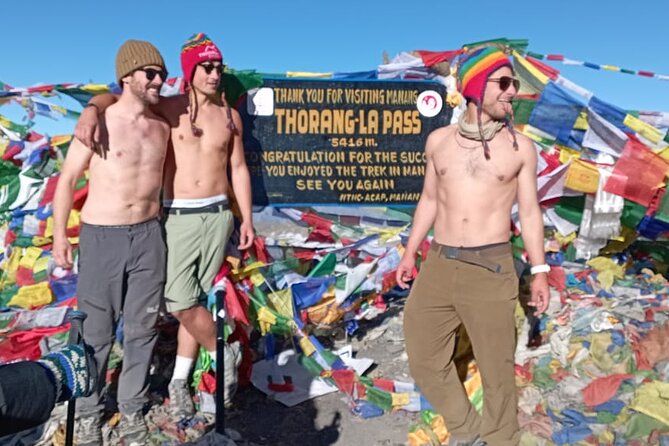
The walk from Dharapani to Chame takes about four to five hours, reaching roughly 2,600 meters. This is a manageable introduction to the trail, though you are already gaining altitude.
Chame is the administrative center of the Manang area and a natural overnight point. The appeal here is the transition from road travel to walking. You begin to notice the rhythm of mountain villages, bridges, forest paths, and changing views of the Annapurna range.
The guide and porter support are especially useful from this point. You can carry a lighter daypack while the porter handles the main load. Confirm what weight the porter will carry and pack with restraint. A lighter load helps on every later climb, especially before Thorong La.
Another trail to compare in Kathmandu:
- Everest Base Camp Trek – 14 Days
★ 5.0 · 1,499 reviews - Everest Base Camp Trek
★ 5.0 · 842 reviews - Everest Base Camp Trekking
★ 5.0 · 485 reviews - Everest Base Camp Trekking – 13 Day
★ 5.0 · 365 reviews
Day 4: Upper Pisang and the better mountain views
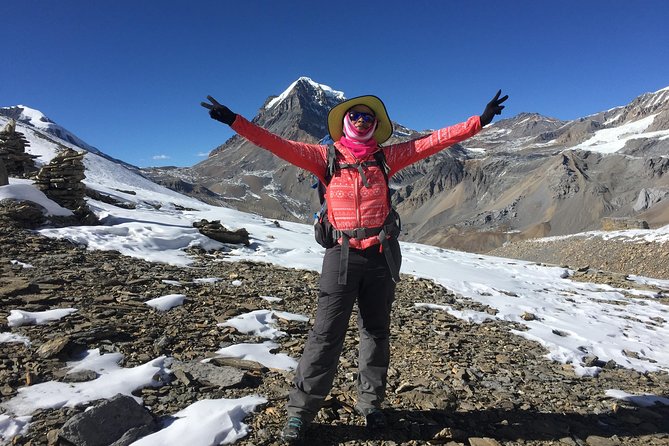
The trail to Upper Pisang takes four to five hours and climbs to about 3,300 meters. Upper Pisang is the higher option in the Pisang area, and the itinerary specifically uses the upper trail later toward Manang.
This section gives you a stronger sense of the high valley. The route becomes more open, the air cooler, and the mountains more prominent. Upper Pisang also brings you closer to the dry, high-altitude character that defines the Manang side of the circuit.
At this height, do not race. A four-hour walking day can still feel demanding if you climb too quickly. Keep your pace steady and tell the guide early if you develop a headache, unusual fatigue, or other altitude symptoms. A good guide can respond better when problems are reported early.
Day 5: Upper trail to Manang
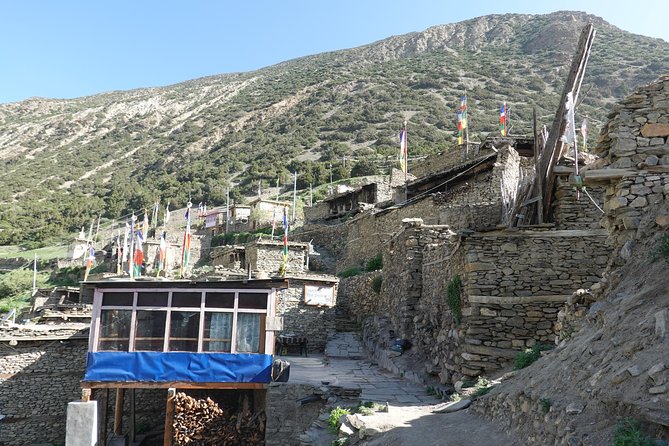
The walk to Manang takes seven to eight hours and reaches about 3,500 meters. This is one of the longest walking days, and it is not just a scenic stroll.
The upper route is valuable because it places you in the high valley sooner and gives the day more mountain character. Manang is one of the key settlements on the circuit, with a distinct culture shaped by its altitude, trade routes, and Tibetan Buddhist influence.
The long duration is the catch. You need to start with enough energy and keep snacks accessible, since extra snacks are not included in the package. You can buy food along the way, but prices and choices may vary, so carry a few personal favorites from Kathmandu or an early town.
Day 6: Acclimatization in Manang
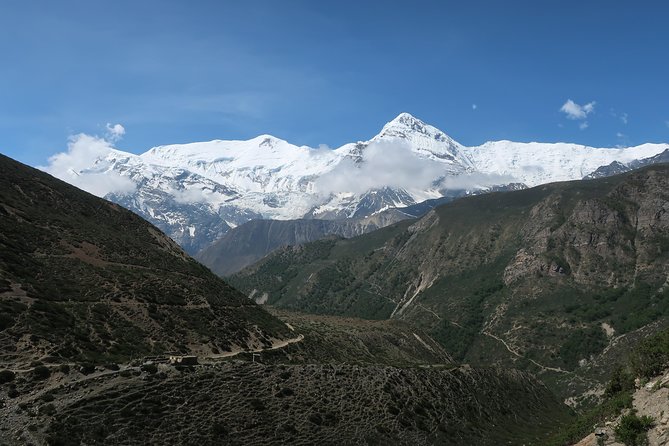
The scheduled acclimatization day is one of the most important parts of the trip. You are already at about 3,500 meters, and the next days rise above 4,000 meters before the pass.
An acclimatization day does not mean staying in bed all day. The supplied plan does not specify a particular activity, so your guide will determine how to use the time. You might take a short walk, rest, or spend time getting used to the altitude and the local setting.
This day also gives you a chance to check your clothing, boots, water, and medication before the high section. Do not view it as spare time that can be removed. On a compressed circuit, this pause is a key part of making the rest of the route manageable.
Day 7: Yak Kharka at 4,060 meters
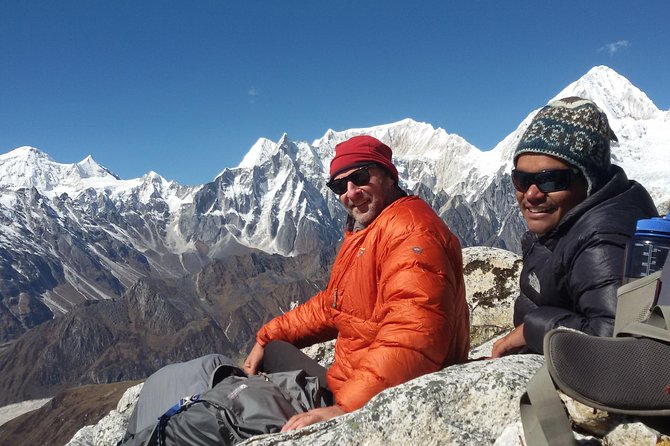
The trek to Yak Kharka takes three to four hours and reaches about 4,060 meters. The shorter walking time does not make this an easy day. Altitude changes the effort, and ordinary tasks can feel slower.
Yak Kharka is used as a high stopping point before Thorong Phedi. You will likely notice colder conditions and thinner air. Keep your day simple: walk steadily, drink regularly, eat the meals provided, and protect yourself from losing heat.
Accommodation during the trek is included, but the information does not promise hotel-style rooms. Expect mountain lodging rather than city comfort. Ask your guide what facilities are available each night, and keep essentials such as warm layers, a headlamp, and personal medication in your own bag.
Day 8: Thorong Phedi and the final high camp
The route to Thorong Base Camp or Thorong Phedi takes three to four hours and reaches about 4,500 meters. This is a short distance on paper, but it is a serious altitude day.
Thorong Phedi is the staging point for the pass crossing. The itinerary gives you a night here before the major push to Thorong La. That placement makes sense, since the pass is at 5,416 meters and the following day is both long and demanding.
The guide’s role becomes especially important here. Nature Explore’s team has received strong praise for staying attentive during medical problems on other Nepal treks, including an unexpected evacuation. That does not replace insurance or medical preparation, but it does make it reasonable to expect close support from the staff. Still, no operator can control altitude, weather, or road conditions. You must be ready to stop or change plans if your health requires it.
Day 9: Thorong La, 5,416 meters, then Muktinath
This is the defining day. You cross Thorong La at 5,416 meters, then descend to Muktinath at about 3,800 meters. The total walking time is listed at seven to eight hours.
The pass is the high point of the route in every sense. You get the satisfaction of crossing one of the world’s famous trekking passes, but the day asks for patience and stamina. The climb begins before the pass, and the descent afterward can be hard on knees and tired legs.
Muktinath is culturally important to both Hindus and Buddhists. That mix of faiths is one of the reasons this route feels like more than a mountain hike. You are moving through a region where religion, trade, village life, and high-altitude travel meet.
Pack your day bag carefully. You need warm layers, water, sun protection, personal medication, and snacks. The package includes meals and treated water, but not extra drinks or snacks purchased along the way.
Day 10: Jomsom and Marpha
The walk to Marpha via Jomsom takes about six to seven hours, with Marpha listed at roughly 2,650 meters. After Thorong La, the descent gives your body some relief, though the distance still makes this a full day.
Jomsom is the transport and administrative center of the Kali Gandaki area. Marpha is known for its stone-paved village setting and apple-growing culture, giving the trek a different mood from the high settlements around Manang.
This is one of the route’s best changes of pace. You leave the stark high pass behind and move into a lower valley with more vegetation and agricultural life. You will also notice that the road network plays a larger role here, which is practical but can reduce the sense of wilderness in some sections.
Day 11: The road to Tatopani
The transfer to Tatopani takes about five hours by bus or jeep, descending to about 1,190 meters. This is a major drop from the high country and usually feels welcome after the pass.
Tatopani is associated with hot springs, though the supplied itinerary does not specifically promise entry or a bathing stop. Ask the guide what is possible on the day rather than assuming it is included.
The road ride can be bumpy and tiring, but it saves several walking days. This is the clearest example of the trip’s central compromise: you gain a fast, affordable circuit, but you give up some of the slower trail experience that comes with a longer itinerary.
Day 12: Pokhara and the end of the trip
The final drive to Pokhara takes about six hours, ending at roughly 740 meters. The package includes one hotel night in Pokhara after the trek, so you are not expected to finish the long road transfer and immediately leave Nepal.
Pokhara is a practical place to recover after the mountains. Your formal trip ends here, not back in Kathmandu, so plan your onward travel carefully. If your international flight leaves from Kathmandu, you will need to arrange the next part of your journey separately.
The one-night Pokhara stay adds useful value. It gives you a buffer after the road journey and a chance to wash clothes, rest, and enjoy a lower-altitude setting before flying or continuing your visit.
Guides, porters, and the feel of a private trip
This is a private activity, so only your own group takes part. That matters if you want direct communication and a little flexibility, though the itinerary remains fairly fixed because of the high pass and transport schedule.
Dinesh and Deepak are names associated with the Nature Explore guiding team, along with staff such as Nara, Ram, Tej, and Chhabin. The strongest praise is directed at the company’s warmth, airport-to-airport coordination, medical support, and ability to help people with different fitness levels.
That does not mean the trek is easy. A caring guide can explain the route, monitor your condition, and help with logistics, but you still need to train and listen to your body. The porter support is a major comfort, especially on the approach to Thorong La.
What the $998 price really buys you
For a 12-day Nepal trek, $998 is attractive because the inclusions are broad. Airport transfers, Kathmandu lodging, Pokhara lodging, local ground transport, meals, tea or coffee, fruit after dinner, treated water, accommodation on the trail, permits, guide, porter, taxes, a duffle bag, and a down jacket all reduce the number of separate costs you must manage.
The value is strongest for first-time visitors who do not want to arrange buses, permits, lodging, food, and porters independently. It also suits a private group that wants one point of contact from arrival through the finish.
Budget for the exclusions. International flights, insurance, equipment, extra nights, laundry, Wi-Fi, cold drinks, snacks, and tips can add up. The free cancellation window is 24 hours before the start time, after which the payment is not refunded, so check your plans before that deadline.
Who should book this Annapurna Circuit trek?
I would recommend it to a reasonably fit person who wants the main Annapurna Circuit highlights in less than two weeks. It is a good match if you value organized transfers, a named guide, porter help, included meals, and a private group more than a slow, independent trek.
It is less suitable if you want long rest periods, extensive side walks, luxury lodging, or a completely flexible schedule. The 5,416-meter pass is not a small detail, and the itinerary includes several long days plus tiring road transfers.
Before booking, ask Nature Explore to confirm current road conditions, exact accommodation, daily walking pace, porter arrangements, and how the acclimatization day will be handled. Those details can shape the experience as much as the headline route.
FAQ
Where does the Annapurna Circuit trek start?
The trip starts at Tribhuvan Airport in Kathmandu, Nepal, where airport pickup is offered.
How long does the trek last?
The experience lasts approximately 12 days and ends in Pokhara.
What is the highest point on the itinerary?
The highest point is Thorong La, at 5,416 meters.
Is the trip private?
Yes. Only your own group participates in this private tour or activity.
What meals are included?
Breakfast, lunch, and dinner are included during the trek. Tea or coffee and fresh fruit after dinner are also included.
Is drinking water provided?
Yes. Treated drinking water is included during the trek.
Are a guide and porter included?
Yes. The package includes an experienced guide and porter support.
Are permits included?
Yes. The Annapurna conservation entrance permit and TMIS card are included.
Is travel insurance included?
No. Travel insurance is not included, so you must arrange it separately.
What is the cancellation policy?
You can cancel at least 24 hours before the experience start time for a full refund. Cancellations or changes made less than 24 hours before the start are not accepted for a refund.
Should you book it?
Book this trek if you want a well-supported, time-efficient Annapurna Circuit with the major high point, cultural stops, meals, permits, porter assistance, and local transport bundled together. The team’s reputation for personal care is a real advantage, especially on a route where altitude and logistics matter.
Skip it if you need a slow itinerary or dislike long vehicle transfers. For the right person, the $998 package offers a practical way to cross Thorong La and reach Muktinath, Marpha, Tatopani, and Pokhara without managing every moving part alone.
Latest treks added in Kathmandu
- Private Manaslu Circuit Trek at Himalayas★ 5.0 · 3 reviews
- Ghorepani Poonhill Trek★ 5.0 · 5 reviews
- Ghorepani Poon Hill Trek★ 5.0 · 16 reviews
- Upper Mustang Trekking★ 3.0 · 2 reviews
- Amazing 1 Day Trekking Experience in Kathmandu Nepal★ 5.0 · 24 reviews
- Upper Mustang Trekking★ 5.0 · 2 reviews
- Upper Mustang Trek★ 5.0 · 5 reviews
- Upper Mustang Trekking★ 5.0 · 4 reviews
Annapurna Base Camp Treks, compared.




Trekking in Annapurna/Langtang/Everest/Upper Mustang regions
Read our review →


Kathmandu to Annapurna Base Camp (ABC) 5-Day Trek
Read our review →Browse the lists this tour appears in