
REVIEW · KATHMANDU
Annapurna Base Camp Trekking
The heart of this trip is the walk into the Annapurna Sanctuary, where forests gradually give way to bare rock, waterfalls, glacial rivers, and a ring of high peaks. You also get a sunrise at Poon Hill, village life in Chhomrong, a rest at Jhinu Danda’s hot spring, and time in Kathmandu and Pokhara.
I like the strong mix of scenery and culture, from Patan’s old royal square and Buddhist Boudha Stupa to small mountain villages and suspension bridges. I also like the practical setup: a private guide and porter, sleeping and duffle bags, permits, medical kit, teahouse lodging, and hotel stays in Kathmandu and Pokhara are included.
The main caution is the pace. This is a moderate physical trek with long days on stone steps and steep sections, and the itinerary includes several five-hour walking days. The $1,200 price is useful for a 16-day program, but you must still budget for lunches, evening meals outside the trek, insurance, tips, visa costs, and possible transport changes.
Key points to know before booking
- Poon Hill adds a superb sunrise stop: You rise early from Ghorepani for views of Annapurna, Dhaulagiri, Mustang, Pokhara, and more than 20 high peaks.
- The route builds gradually: Forests, farms, waterfalls, and villages lead toward the higher, barer terrain around Annapurna Base Camp.
- Kathmandu sightseeing is included: Patan Durbar Square, Swayambhunath, Pashupatinath, and Boudha Stupa give you a useful cultural start.
- The trip uses teahouses: You sleep in simple mountain lodges rather than camping, while three-star hotels are used in Kathmandu and Pokhara.
- Private support is part of the deal: Your group has an English-speaking licensed trek leader, an assistant leader, porter support, permits, and a medical kit.
- Chitwan is optional: Jungle walks, safari activities, canoeing, bird watching, and Tharu cultural shows can be added, but the main 16-day schedule does not require them.
Kathmandu begins with temples, courtyards, and a welcome meal
Your first day is deliberately easy. A Vyas Treks & Expedition representative meets you at Tribhuvan International Airport, takes you to your hotel, and gives you time to rest. A welcome dinner introduces you to Nepalese food, which is a pleasant way to begin before the walking starts.
Day two is a full cultural circuit. At Patan Durbar Square, you’ll see temples, an old royal palace, and monuments tied to the former kingdom. This is not just a quick photo stop. It gives you a first look at the artistic and religious traditions that shape the Kathmandu Valley.
Swayambhunath, often called the Monkey Temple, sits above the valley and offers broad views of Kathmandu and the surrounding hills. Expect bells, monks, a small wooded area, and monkeys that may show an interest in your food or belongings.
Pashupatinath is the most important Hindu temple in Nepal. The complex includes many smaller shrines, meditation areas, religious ceremonies, and the Bagmati River. It can be a powerful but serious visit, especially when funeral rites are taking place.
At Boudha Stupa, the mood changes. The large stupa, all-seeing eyes, golden statues, and Buddhist prayer activity create a calmer final stop. Admission tickets for these city sights are not included, so keep a little money available.
More Annapurna Treks in Kathmandu
- Annapurna Circuit Trek with Tilicho Lake
★ 5.0 · 368 reviews - Annapurna base camp trek 5 Days
★ 5.0 · 252 reviews - 14-Day Private Annapurna Base Camp Trek
★ 5.0 · 180 reviews
Pokhara gives you your first broad Himalayan view
On day three, you travel by luxury tourist bus from Kathmandu to Pokhara, a journey of about five to six hours. The bus ride takes time, but it avoids the need for a domestic flight on this schedule. Domestic flights between Kathmandu and Pokhara are listed as extra, while ground transport described in the program is included.
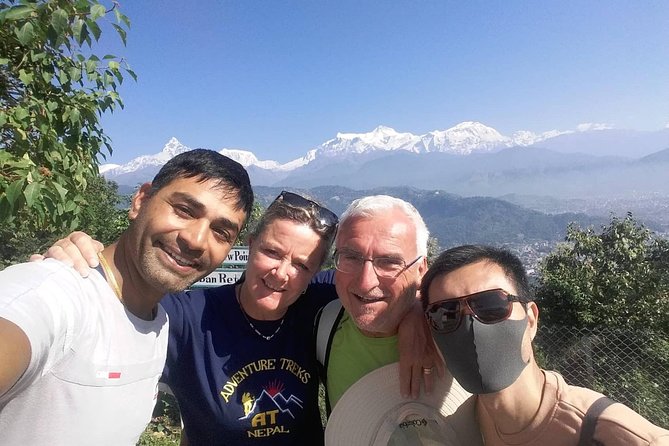
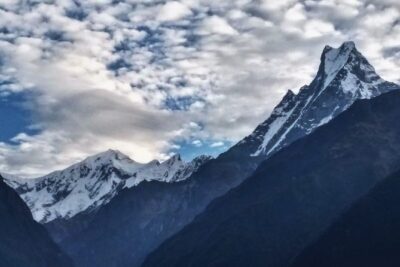
Pokhara is the visual preview of the trek. From the city and Phewa Tal, you may see Dhaulagiri, Manaslu, Machhapuchhre, and several Annapurna peaks. The lake area is also a useful pause before the walking begins, although the itinerary gives you limited time here at first.
On day four, a private vehicle takes you to Nayapul, the trailhead. The first walk follows a valley, crosses the Bhurundi Khola, and reaches Tikhudhunga. This opening section lets you settle into the rhythm without putting the hardest steps at the start.
Ghorepani and Poon Hill bring the first big reward
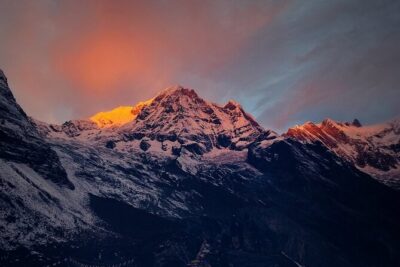
Day five climbs toward Ghorepani on stone steps. The route passes waterfalls, small villages, tea houses, and views of Annapurna South. The stairs are the key fact here: five hours of climbing can feel demanding, especially if you have not trained for sustained uphill walking.
Ghorepani sits high enough to give you a fine mountain outlook, including Annapurna South and Nilgiri. The village has small shops selling local products such as bags and crafts, and Wi-Fi is available. Do not expect a city hotel experience. This is a mountain stop, and the simpler setting is part of the route’s appeal.
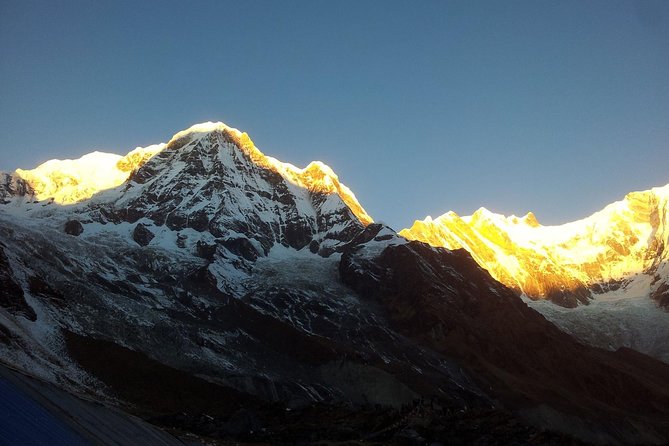
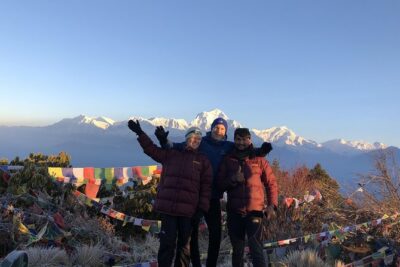
Day six starts before sunrise with the climb to Poon Hill. You can have coffee while waiting for light to reach the Annapurna and Dhaulagiri ranges. The views include Mustang, Pokhara, and more than 20 high mountains, making this one of the most memorable early moments of the trip.
After breakfast back at Ghorepani, you continue toward Tadapani. The trail climbs a ridge, then drops through rhododendron forest and past waterfalls. The contrast is excellent: an open sunrise viewpoint in the morning, then shaded woodland and running water later in the day.
Chhomrong shows village life below Annapurna
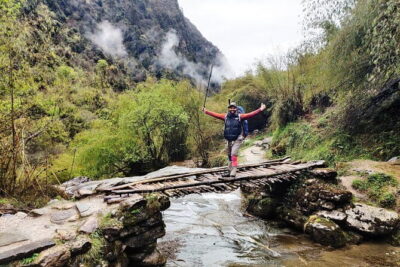
From Tadapani, the route descends through a large rhododendron forest before opening onto terraced fields. You pass waterfalls, cross a suspension bridge, and continue through a mix of uphill and downhill sections to Chhomrong.
Chhomrong is an important village for this trek because it sits below the Annapurna massif and marks a clear transition toward the sanctuary. Its setting gives you an immediate sense of the scale of the mountains above the homes and terraces.
The next day includes plenty of stone steps, a suspension bridge over the Chhomrong Khola, and an uphill section toward Inuwa. From there, the trail passes through forest to Kuldihar before descending to Bamboo. The day is listed at about five hours, but repeated steps can make it feel more strenuous than the clock suggests.
I like this part because the route is not just a march toward a famous endpoint. You see farms, bridges, forests, and settlements that make the mountain region feel lived in. The tradeoff is that the trail is rarely flat for long.
Another trail to compare in Kathmandu:
- Everest Base Camp Trek – 14 Days
★ 5.0 · 1,499 reviews - Everest Base Camp Trek
★ 5.0 · 842 reviews - Everest Base Camp Trekking
★ 5.0 · 485 reviews - Everest Base Camp Trekking – 13 Day
★ 5.0 · 365 reviews
Bamboo to Deurali changes the feel of the trek
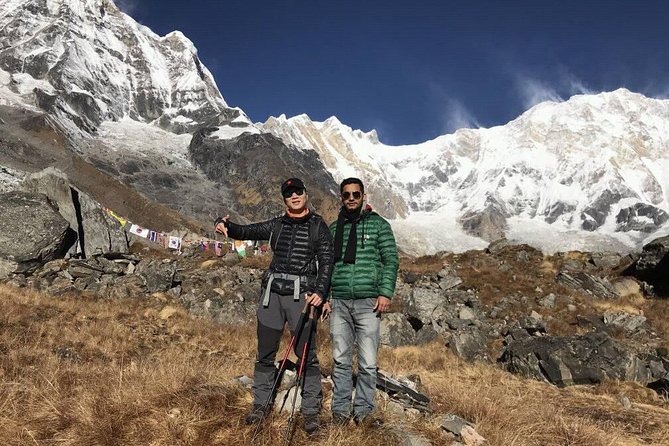
From Bamboo, the trail passes through damp, cool forest. It climbs in places quite steeply, then opens near Himalaya Hotel, where you can see the glacial river below. After that, the forest becomes drier and the route continues toward Hinku Cave and Deurali.
The scenery grows more exposed as you gain ground. Sparse vegetation lets you see the valley, cliffs, waterfalls, and surrounding hills more clearly. From Deurali, you can also enjoy views toward Dhaulagiri.
This is one of the days when good pacing matters. The itinerary gives you about five hours, but the terrain includes both steep climbs and a descent to a river before another ascent. Your guide and porter support are valuable here, especially if you need help managing your pace or pack.
Annapurna Base Camp is the main mountain day
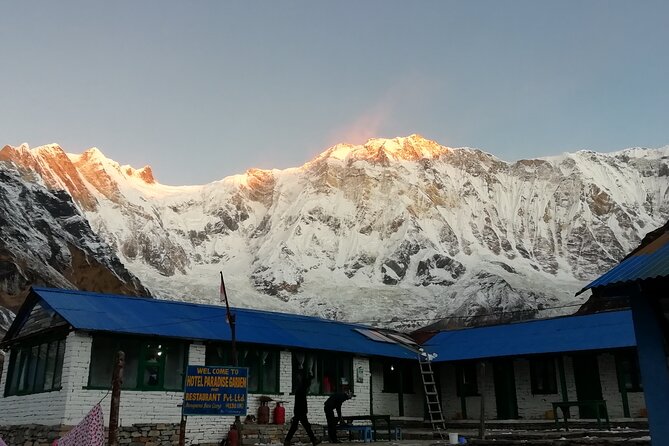
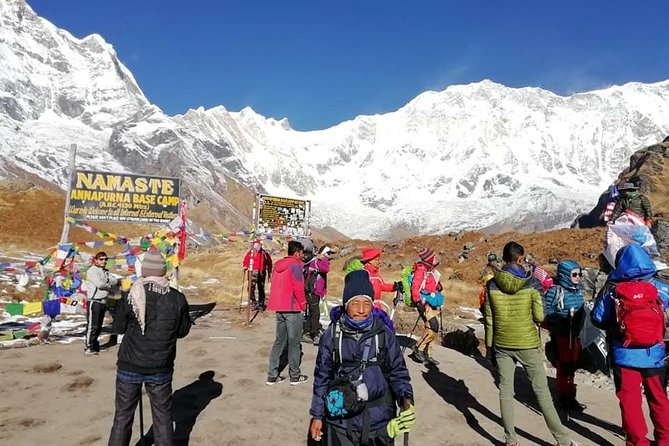
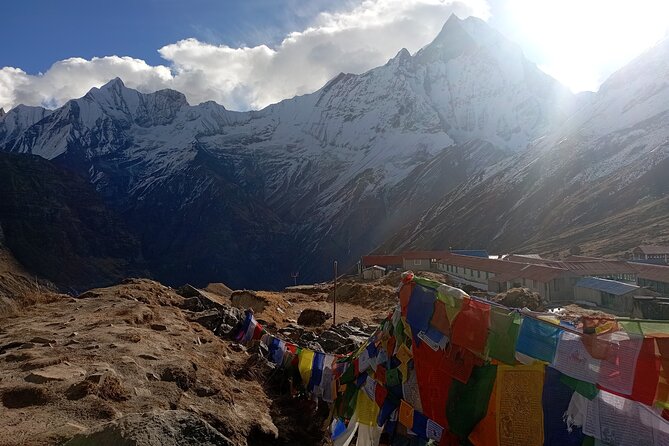
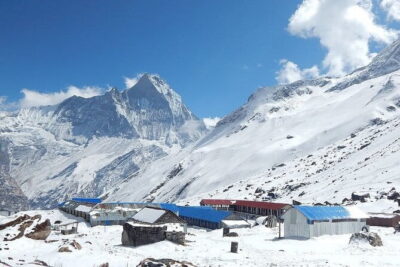
Day ten takes you from Deurali to Annapurna Base Camp. The program again lists about five hours of trekking. As you approach the base camp, the scenery becomes more open, with surrounding hills, river valleys, and mountain faces replacing much of the earlier forest.
The destination is not only a viewpoint. It is the point where the route’s different elements come together: the terraced lower hills, rhododendron woods, waterfalls, suspension bridges, and increasingly bare upper terrain. You have been walking toward the Annapurna massif for several days, so reaching base camp feels like a proper payoff rather than a quick sightseeing stop.
The itinerary names Annapurna, Himchuli, Machhapuchhre, Manaslu, Ganesh Himal, and other peaks among the region’s notable mountain views. Visibility depends on weather, so flexibility matters. This experience requires good weather, and poor conditions can lead to a changed date or a full refund under the stated policy.
The return route brings hot springs and easier downhill miles
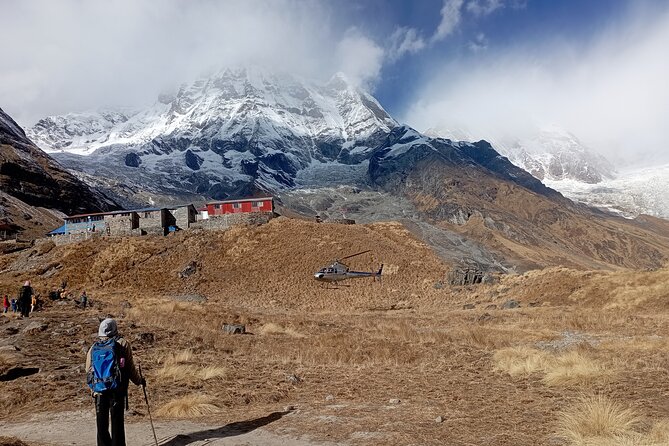
Day eleven is mainly downhill. You pass Machhapuchhre Base Camp, Deurali, Himalaya Hotel, and Doban before spending the night at Bamboo. Downhill walking is usually less demanding on the lungs, but steep steps can still be tough on knees.
The route then returns toward Chhomrong before dropping sharply to Jhinu Danda. The descent through rain forest and farms is scenic, but the stone steps are tricky. At Jhinu Danda, you have the afternoon to rest and visit the hot spring area.
Jhinu is a smart inclusion in a demanding route. It gives your legs a slower afternoon before the final walking day, and the combination of farms, forest, and warm water feels different from the high mountain section.
On day thirteen, you walk from Jhinu Danda to Nayapul through the hills of western Nepal. After lunch along the way, the trek ends and a vehicle takes you back to Pokhara. This is a satisfying close to the sanctuary portion, but the return drive means the day is still active.
Pokhara and Kathmandu provide a soft landing
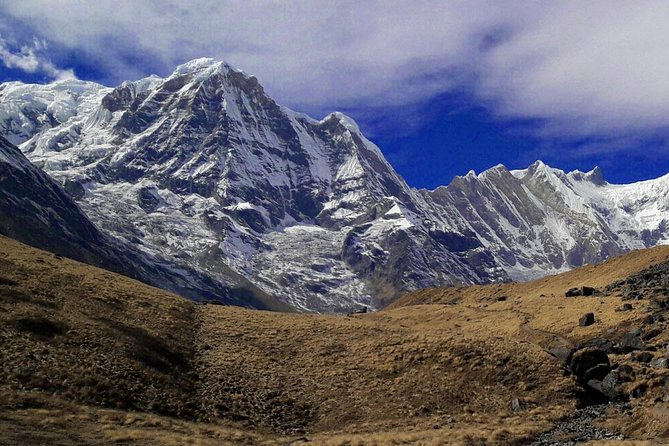
You spend another night in Pokhara, then have a half-day option on day fourteen. You can visit Davis Falls, Gupteshwor Cave, and Bindabasini Temple, or go boating on Phewa Lake. Admission is not included for this sightseeing portion, and the choice depends on your interests and energy after the trek.
The final drive to Kathmandu takes about six hours. Back in the city, you can rest or shop in Thamel before a farewell dinner. The next day, a company representative takes you to Tribhuvan International Airport three hours before your flight.
The optional Chitwan program is worth considering if you want a second kind of Nepal experience. It can include jungle safari activities, jungle walks, canoeing, bird watching, and Tharu cultural shows. Tharu communities are among Nepal’s indigenous peoples. Chitwan is not needed to complete the Annapurna trek, so treat it as an add-on rather than a built-in part of the 16-day route.
What the $1,200 price really covers
At $1,200 per person, the package offers a useful amount of support for a 16-day trip. It includes airport transfers, ground transport listed in the schedule, three-star hotels with breakfast in Kathmandu and Pokhara, teahouse accommodation during the trek, a private guide and porter, sleeping and duffle bags, permits, paperwork, staff costs, taxes, and a medical kit.
You also receive an English-speaking, government-licensed trek leader and assistant trek leader. One guide connected with the company is Mr. Pradip, who has led this route. The private format means only your group takes part, which is useful if you want the walking pace and city stops handled around your own group.
The price does not cover international flights, Nepal’s visa, travel or rescue insurance, tips, alcohol, personal expenses, lunches and evening meals in Kathmandu or Pokhara, extra hotel nights, or domestic flights. Breakfast is included throughout the stated schedule, but you should plan separately for meals during the trek and other daily spending.
Free cancellation is available up to 24 hours before the start time. Inside that window, payment is not refunded, and poor weather may lead to another date or a full refund. Confirm the transport details carefully if you arrive early, leave late, or want to add Chitwan.
Who should book this Annapurna route
You should consider this trip if you want a guided Himalayan trek without carrying every piece of equipment yourself. It suits someone who values a planned route, local staff, teahouse nights, cultural sightseeing, and a private group format.
You need a moderate fitness level and comfort with repeated uphill and downhill walking. The stone steps near Ghorepani, Chhomrong, and Jhinu Danda are the main physical issue, not just the total number of hours.
I would choose this program if Poon Hill sunrise and Annapurna Base Camp are both priorities. I would look elsewhere if you want a slow itinerary with short walking days, luxury mountain lodging, or every meal and transport cost included.
FAQ
How long is the Annapurna Base Camp trek?
The complete program lasts approximately 16 days, including Kathmandu sightseeing, transport to and from Pokhara, the trek, and return airport transfer.
What is the tour price?
The listed price is $1,200 per person.
Is airport pickup included?
Yes. Airport pickup and drop-off in a private vehicle are included.
Is this a private or group tour?
It is a private activity, so only your group participates. Group discounts are also offered.
What accommodation is provided?
You receive three-star hotel accommodation in Kathmandu and Pokhara with breakfast, plus teahouse accommodation during the trek.
Is a guide included?
Yes. The package includes an experienced, English-speaking, government-licensed trek leader, an assistant trek leader, and porter support.
Are trekking permits included?
Yes. Necessary paperwork and trekking permits, including ACAP and TIMS, are included.
Are meals included?
Breakfast is included for the stated 15 breakfasts, along with the welcome and farewell meals. Lunches and evening meals in Kathmandu and Pokhara are not included.
Are domestic flights between Kathmandu and Pokhara included?
No. Domestic flights between Kathmandu and Pokhara are listed as an extra cost. The itinerary uses ground transport by tourist bus and private vehicle.
Can I cancel for a full refund?
Yes, if you cancel at least 24 hours before the experience start time. Cancellations within 24 hours are not refunded. If poor weather causes cancellation, you are offered another date or a full refund.
Should you book it?
Book this Annapurna Base Camp program if you want a well-supported route with a strong mix of mountain scenery, village walking, Kathmandu culture, Poon Hill sunrise, and time in Pokhara. The best value comes from the included staff, permits, equipment, hotels, and teahouses.
Before paying, make sure you are ready for steep stone steps and several five-hour trekking days. Also set aside money for meals, insurance, tips, visa costs, and personal expenses. If those terms suit you, this is a practical way to reach Annapurna Base Camp while leaving the route planning and logistics to a local trekking company.
Latest treks added in Kathmandu
- Ghorepani Poon Hill Trek★ 5.0 · 16 reviews
- Private Manaslu Circuit Trek at Himalayas★ 5.0 · 3 reviews
- Ghorepani Poonhill Trek★ 5.0 · 5 reviews
- Upper Mustang Trekking★ 3.0 · 2 reviews
- Amazing 1 Day Trekking Experience in Kathmandu Nepal★ 5.0 · 24 reviews
- Upper Mustang Trekking★ 5.0 · 2 reviews
- Upper Mustang Trek★ 5.0 · 5 reviews
- Upper Mustang Trekking★ 5.0 · 4 reviews
Annapurna Base Camp Treks, compared.

Trekking in Annapurna/Langtang/Everest/Upper Mustang regions
Read our review →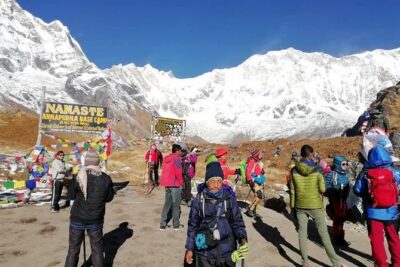
Kathmandu to Annapurna Base Camp (ABC) 5-Day Trek
Read our review →Browse the lists this tour appears in