
REVIEW · KATHMANDU
Annapurna Base Camp Trek
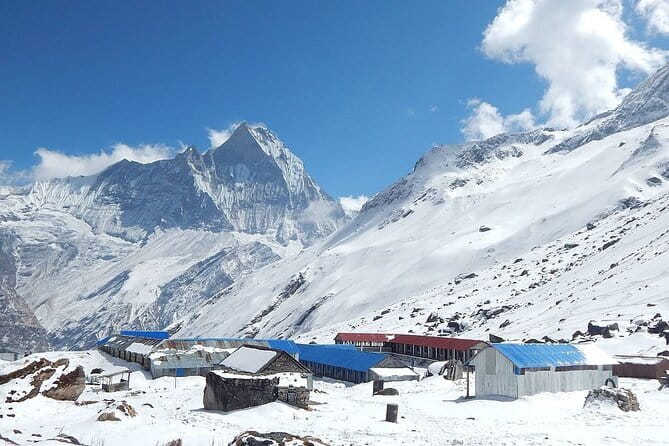
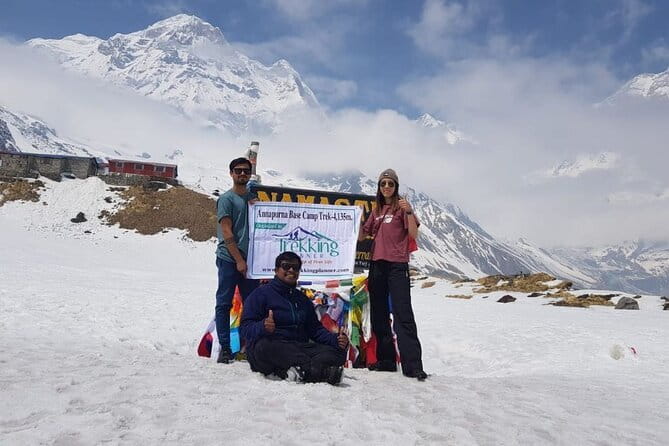
The great prize here is Annapurna Base Camp at 4,130 meters, reached through waterfalls, terraced fields, Gurung villages, rhododendron woods, and the narrow mountain basin known as the Annapurna Sanctuary. You also get Poon Hill, Machhapuchhre Base Camp, and time in Kathmandu, all in one 12-day trip.
I like the route’s variety. One day brings suspension bridges and stone steps, another brings glacial valleys and sheer rock walls. I also like that the package includes an English-speaking guide, conservation fees, airport transfers, lodge accommodation, and a full Kathmandu sightseeing day. Guide Aneel is singled out for careful support, while Machhindra and Radhika are named as key members of the local team.
The catch is the altitude and the amount of up-and-down walking. The route is rated moderate, but 4,130 meters is serious terrain, and some sections can be slippery. Domestic flights, most meals, porters, insurance, and personal trekking gear cost extra, so the advertised price is not the final trip budget.
Key points to know before you book
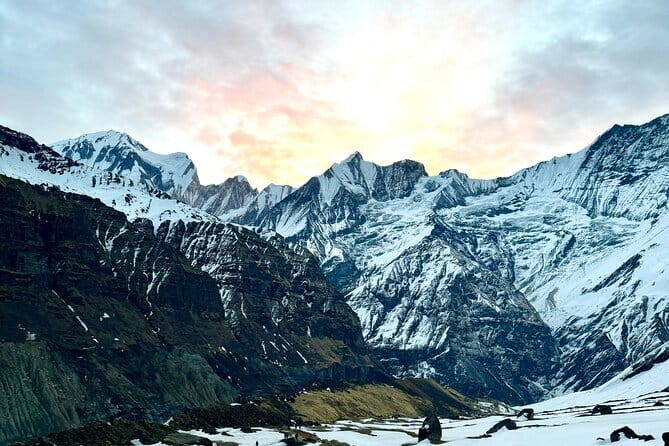
- Reach 4,130 meters at Annapurna Base Camp: The highest point is reached after a strenuous walk from Deurali through Machhapuchhre Base Camp.
- See Poon Hill as part of the route: The trek includes Ghorepani and Poon Hill before moving toward the Annapurna Sanctuary.
- Stay in teahouse lodges: Overnight stops include Ghandruk, Chhomrong, Bamboo, Deurali, Annapurna Base Camp, and Jhinu Danda.
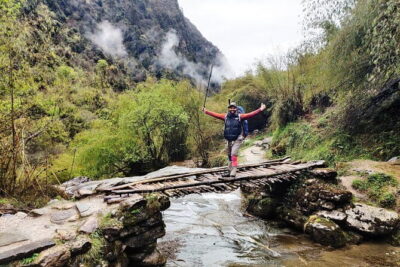
- Expect real mountain walking: Stone stairs, suspension bridges, forest paths, steep sections, and repeated climbs make this more than a sightseeing tour.
- Add Kathmandu culture at the end: The final sightseeing day covers Pashupatinath, Boudhanath, Swayambhu, and Kathmandu Durbar Square.
- Budget for extras: Domestic flights, three daily meals, porter service, travel insurance, hot showers, entrance fees, tips, and personal equipment are not included.
What the Annapurna Base Camp route gives you
This trek works because it changes scenery constantly. You begin among lower Himalayan villages and farmland, then move through forests and river valleys before reaching a cold, high mountain basin. The route is usually walked clockwise, from Nayapul toward Ulleri, Ghorepani, Tadapani, Chhomrong, Deurali, and Annapurna Base Camp.
The approach is as important as the destination. You will see gushing waterfalls, terraced hillsides, narrow valleys, and tall cliffs with thin waterfalls dropping down their faces. The trail also passes through Gurung communities, where local culture and village hospitality are a major part of the experience.
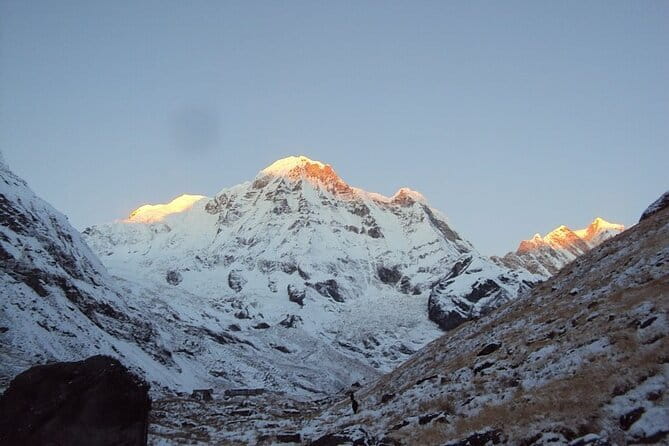
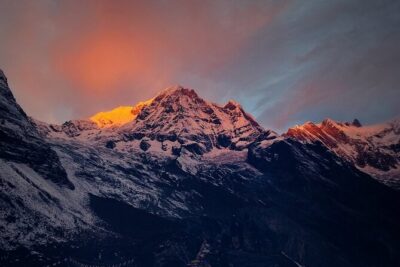
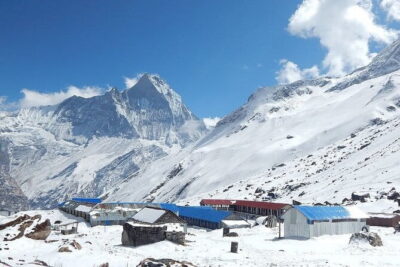
The mountain views include Annapurna South, Annapurna I, Annapurna III, Hiunchuli, Gangapurna, Machhapuchhre, and Gandharvachuli. At the base camp, the mountains rise around the sanctuary in a much more enclosed and dramatic setting than on the lower trail.
The price is listed at $1,440 per person. That is a useful starting point for a guided trek with permits, lodge accommodation, airport transfers, a Kathmandu hotel stay, and sightseeing included. Still, you need to read the inclusions carefully. Domestic flights are not included, and the package does not cover all three meals each day, porter service, insurance, equipment, hot showers, or temple entry fees.
More Annapurna Treks in Kathmandu
- Annapurna Circuit Trek with Tilicho Lake
★ 5.0 · 368 reviews - Annapurna base camp trek 5 Days
★ 5.0 · 252 reviews - 14-Day Private Annapurna Base Camp Trek
★ 5.0 · 180 reviews
Day 1: Arriving in Kathmandu at 1,300 meters
You are met at Tribhuvan International Airport and taken to your hotel. The first day is intentionally easy, with a trip briefing and an introduction to your guide.
This is a good arrangement for a high-altitude trek. You have time to recover from your international flight, ask questions, and check your clothing and equipment before leaving Kathmandu. The package includes two nights in Kathmandu on a bed-and-breakfast plan, though you should confirm the exact hotel location because the supplied program refers to the Thamel area in one place.
The guide briefing is especially useful here. You should use it to confirm the walking plan, meals, domestic flight arrangements, porter needs, and what happens if weather affects transport.
Day 2: Flying to Pokhara and walking from Ulleri
The morning begins with a transfer to Kathmandu’s domestic airport and a roughly 30-minute flight to Pokhara. A private vehicle takes you onward to Nayapul, followed by a local vehicle to Ulleri. Your trek begins at Ulleri.
The trail climbs toward Ghandruk, a Gurung village at about 1,940 meters. This is a strong first walking day because it introduces you to the route’s basic rhythm: vehicle transfer, stone paths, uphill walking, and lodge accommodation.
Ghandruk is one of the most appealing stops on the route because the village setting brings culture into the trek. You are not simply walking from one mountain viewpoint to another. You are passing through a community with its own traditions, homes, and daily life.
The transport connections make this day long. The domestic flight is also outside the tour price, and flights in the mountains can be affected by weather. Confirm how your operator handles delays before departure.
Day 3: Gurung villages and Chhomrong
After breakfast, you continue through the foothills toward Chhomrong. The day is described as a chance to meet friendly villagers and see Gurung culture, local nature, and village life.
Chhomrong is an important junction for the Annapurna Sanctuary route. It also signals a change in the walk. From here, the path becomes more focused on river valleys, forest, bridges, and steady altitude gain.
You stay in a local lodge. Teahouses are practical rather than luxurious. The package includes lodge accommodation, but facilities can be basic, and hot showers are specifically excluded. Bring small notes or cash for personal purchases, drinks, showers, and other extras.
Another trail to compare in Kathmandu:
- Everest Base Camp Trek – 14 Days
★ 5.0 · 1,499 reviews - Everest Base Camp Trek
★ 5.0 · 842 reviews - Everest Base Camp Trekking
★ 5.0 · 485 reviews - Everest Base Camp Trekking – 13 Day
★ 5.0 · 365 reviews
Day 4: Stone steps, forest, and Bamboo
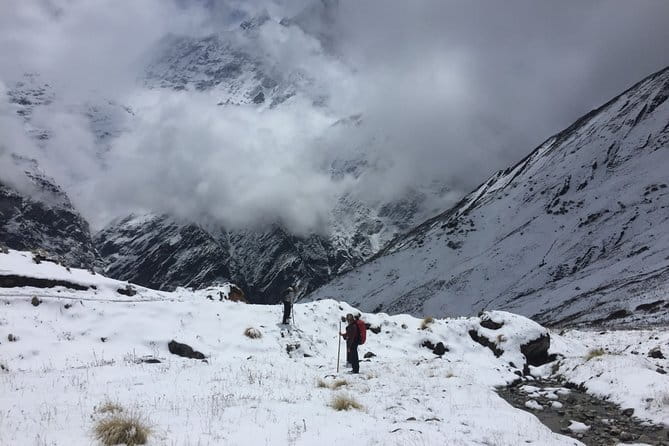
Leaving Chhomrong means descending about 2,500 stone steps before crossing the Chhomrong Khola on a suspension bridge. The trail then climbs near Sinuwa, passes through forest toward Kuldihar, and descends to Bamboo.
This is a classic Himalayan walking day, and it can be harder than the map suggests. A descent is not always easy when it is followed by another climb. The repeated steps will test your knees and pacing, so take your time rather than trying to match the guide’s speed.
The forest gives the day a cooler, more enclosed feel. Bamboo is a sensible overnight stop because it breaks up the route before the trail moves higher into colder country. You sleep in a teahouse lodge.
Day 5: Bamboo to Deurali through the river valley
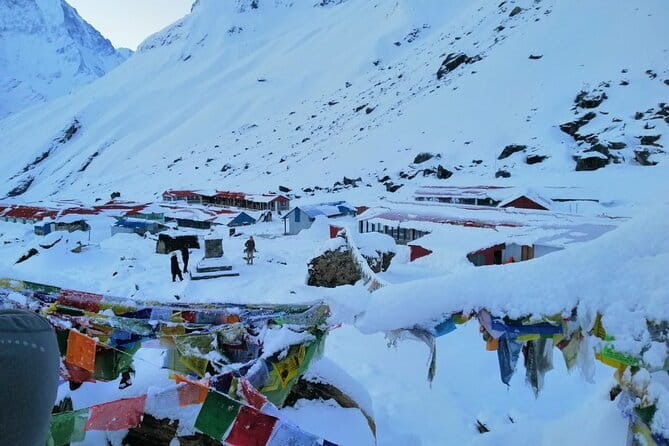
The trail from Bamboo begins in a damp, cold bamboo forest. You walk close to a glacial river and can visit Hinku Cave along the way. The path follows the river before climbing toward Deurali.
This section is one of the most scenic parts of the trek. Vertical rock faces rise above the route, with narrow waterfalls running down the cliffs. The sound of the river and the enclosed valley make this feel more remote than the lower villages.
You stay at Deurali, an important staging point before Base Camp. The altitude is now becoming a serious factor, so keep your pace controlled. Drink water regularly, tell your guide if you feel unwell, and avoid treating the next day as a race.
Day 6: Deurali to Annapurna Base Camp
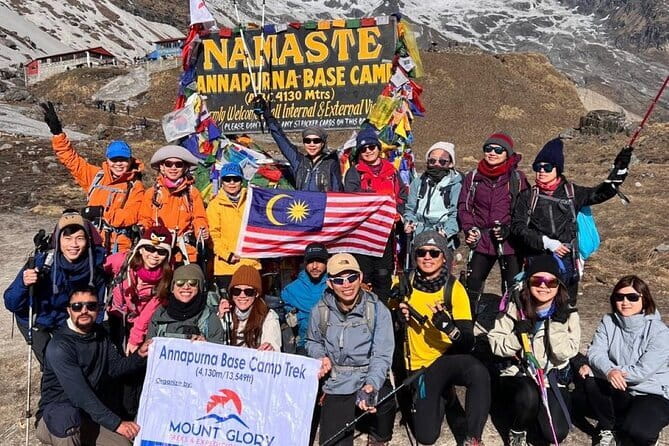
This is the big day: around five to six hours from Deurali to Annapurna Base Camp, at 4,130 meters, via Machhapuchhre Base Camp at 3,700 meters.
The trail climbs gently through a river bed before becoming steeper along the mountain side. The section from Bagar to Machhapuchhre Base Camp is described as strenuous, and you should believe that description. The air is thinner, the trail is more exposed, and the steady climb takes effort even when the distance does not look extreme.
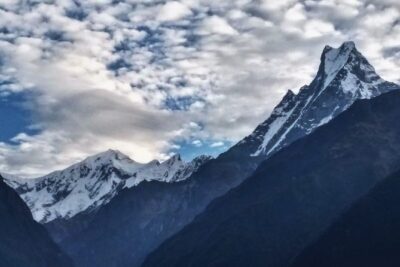
At Machhapuchhre Base Camp, you get views of the distinctive Machhapuchhre, along with Hiunchuli, Annapurna South, Annapurna I, Annapurna III, Gandharvachuli, and Gangapurna. The route then continues into the Annapurna Sanctuary and on to Base Camp.
Overnight at 4,130 meters is the part of the itinerary that demands the most respect. The package calls for a moderate fitness level, but altitude affects people differently. Anyone with heart problems, serious medical conditions, or a back problem should not take this trip, and it is not recommended during pregnancy.
Day 7: Morning at Base Camp and the return to Bamboo
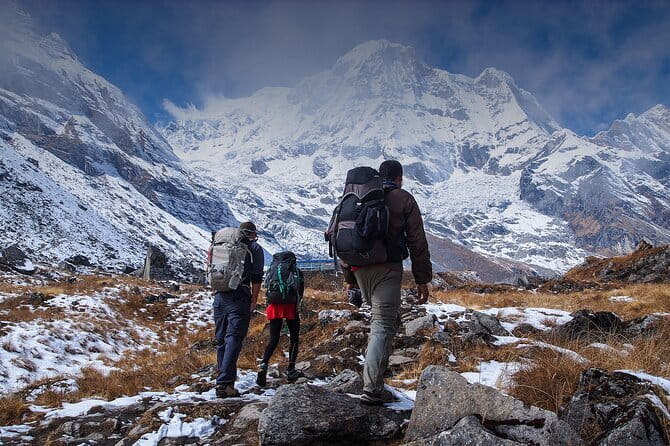
You have time in the morning for photographs before retracing the route toward Bamboo. The return is mainly downhill and is described as easier, though downhill walking can still be tiring after the previous day’s climb.
The return route gives you a second look at scenery that may have appeared very different in changing light. It also provides relief after the cold, high overnight stop. You spend the night at Bamboo.
A practical tip: keep warm layers close on Base Camp morning. The packing advice calls for a down jacket, sleeping bag, thermal layers, fleece, gloves, warm socks, a hat, and a waterproof jacket. Those items are not decorative extras at this altitude.
Day 8: Bamboo, Chhomrong, and the hot springs at Jhinu Danda
This is another day of repeated climbs and descents. From Bamboo, the trail climbs to Kuldihar, drops to the Chhomrong Khola, climbs again to Chhomrong, and finally descends to Jhinu Danda.
It is a good example of why distance alone does not tell you how hard a Himalayan trek will be. You may be heading back down overall, yet still face several demanding uphill sections.
Jhinu Danda adds one of the trip’s most welcome comforts. After checking into the lodge, you can walk down for a hot spring bath. The bath is not included as a special service in the package, and hot showers are listed as extra, so carry money for local costs. Still, this stop gives your legs a chance to relax before the final walk out.
Day 9: Walking out to Siwai and driving to Pokhara
The trail continues downhill to Siwai, where you catch a vehicle to Pokhara. After several days on foot, the change back to road travel can feel abrupt, but it saves time and gives you a comfortable transition out of the mountains.
Pokhara is not presented as a full sightseeing day in this plan. The main value of the stop is rest and transport. The next morning, you return to Kathmandu.
Day 10: Returning to Kathmandu
You travel to Kathmandu after breakfast. If you fly, you may have time to visit sites in Kathmandu on the same day. If you drive, the trip takes about five to six hours.
This is another cost and planning point to settle before booking. Domestic flights are excluded, and the choice between flying and driving changes both the price and the amount of free time you have.
The package includes two Kathmandu hotel nights on bed and breakfast. Ask exactly which nights are covered, since the schedule includes arrival, the return from the trek, and the final sightseeing day.
Day 11: Four major Kathmandu sights
The final full day is a guided Kathmandu Valley tour beginning at 9 a.m. You visit Pashupatinath, Boudhanath, Swayambhu, and Kathmandu Durbar Square with an English-speaking guide.
This is a worthwhile finish because it places the mountain trek in a wider cultural setting. Pashupatinath and Boudhanath are major religious sites, while Swayambhu and Kathmandu Durbar Square add historic and architectural interest.
Entrance fees to temples, monasteries, and other sites are not included. Carry money for admissions and personal expenses. The full-day format also means you should expect a busy schedule, especially after the physical effort of the trek.
Guides, group style, and the human side of the trip
This is a private activity, so only your own group participates. That matters on a trek because walking speed, rest stops, and daily decisions can be adjusted more easily than in a large mixed group.
The guide team receives strong praise for safety, support, local knowledge, and arranging a smooth experience. Aneel is specifically named as an excellent guide, while Machhindra and Radhika are associated with the local operation and customer support. The director, Machhindra Achary, is also personally involved in making the trek run well.
You receive an English-speaking guide, guide salary, guide insurance, government taxes, conservation fees, and a TIMS card. A first-aid kit is compulsory for groups of more than six people. Ask how medical support is handled for smaller groups and confirm that your own travel insurance includes trekking and emergency rescue.
A porter is not included. The stated arrangement is one porter for two people, carrying up to 30 kilograms in total. If you want porter help, arrange and budget for it before departure rather than assuming it is part of the $1,440 price.
What the $1,440 price really covers
The tour price has genuine value because it combines several services that can be awkward to arrange independently: airport pickup and drop-off, Kathmandu hotel nights, guide service, trekking permits, lodge accommodation, and the final city tour.
It does not cover the whole cost of a 12-day Nepal trip. You need to add:
- Domestic flights between Kathmandu and Pokhara
- Three daily meals during the trek
- Porter service
- Travel and emergency rescue insurance
- Personal trekking equipment
- Drinks, phone use, laundry, and hot showers
- Temple and monastery entrance fees
- Tips and gratuities
There is also a confusing meal detail in the package. It lists four dinners, seven breakfasts, and two lunches as included, while the exclusions say all three daily trekking meals are not included. Get written clarification on exactly which meals are covered before paying.
Who should book this trek?
You should consider it if you want a guided Himalayan trek with a famous destination, varied scenery, local villages, teahouse stays, and a cultural extension in Kathmandu. It suits people with a moderate fitness level who are comfortable walking uphill and downhill for several hours at a time.
You should think twice if you dislike basic lodging, cold conditions, stone steps, unreliable mountain transport, or repeated changes in elevation. The route is not suitable for wheelchair users, people with serious medical conditions, those with heart complaints, or people with back problems. Pregnant women are advised not to participate.
Pack for changing conditions. The recommended list includes warm clothing, a down jacket, sleeping bag, full sleeves, warm hat, sunglasses, gloves, warm socks, trekking boots, slippers, thermal underwear, fleece, water bottle, day bag, Gore-Tex jacket, sun and cold creams, and a headlamp.
The trek operates in all weather conditions. If bad weather forces cancellation, the stated policy offers an alternative date or a destination of the same value. For your own booking, cancellation is free up to 24 hours before the start time. Inside 24 hours, the amount paid is not refunded.
Should you book the Annapurna Base Camp Trek?
Book this trip if you want a well-supported route to Annapurna Base Camp and appreciate having Kathmandu sights added at the end. The strongest parts are the changing scenery, the Gurung villages, Poon Hill, the Annapurna Sanctuary, the private group format, and the guide support associated with Aneel, Machhindra, and Radhika.
Do not book it without first confirming the meal plan, domestic flight cost, porter arrangements, hotel details, and insurance requirements. The route is rewarding, but the altitude is real and the extra costs add up.
For a fit walker prepared for cold nights, basic lodges, steep steps, and a high mountain finish, this is a well-rounded introduction to the Annapurna region. For anyone expecting a gentle holiday, it is the wrong choice.
FAQ
How long does the Annapurna Base Camp Trek take?
The full program lasts approximately 12 days, including arrival and departure in Kathmandu, the trek, transport through Pokhara, and a Kathmandu Valley sightseeing day.
What is the highest point on the trek?
Annapurna Base Camp is at 4,130 meters, or about 13,545 feet. Machhapuchhre Base Camp is reached earlier at 3,700 meters.
Is accommodation included?
Yes. Teahouse or lodge accommodation is included during the trek, along with two nights in a Kathmandu hotel on a bed-and-breakfast plan.
Are domestic flights included in the price?
No. The flights between Kathmandu and Pokhara are not included. A private vehicle is arranged from Pokhara to Nayapul, and local transport continues toward Ulleri.
Are meals included during the trek?
The package lists four dinners, seven breakfasts, and two lunches as included, but the exclusions say three daily meals are not included. Confirm the exact meal arrangement with Oriental Journeys before booking.
Is a porter included?
No. Porter service is excluded. The stated porter arrangement is one porter for two people, carrying a maximum of 30 kilograms.
What happens if bad weather cancels the trip?
You are offered an alternative date or an alternative destination of the same value. The tour operates in all weather conditions, so you should pack suitable warm and waterproof clothing.
Latest treks added in Kathmandu
- Private Manaslu Circuit Trek at Himalayas★ 5.0 · 3 reviews
- Ghorepani Poonhill Trek★ 5.0 · 5 reviews
- Ghorepani Poon Hill Trek★ 5.0 · 16 reviews
- Upper Mustang Trekking★ 3.0 · 2 reviews
- Amazing 1 Day Trekking Experience in Kathmandu Nepal★ 5.0 · 24 reviews
- Upper Mustang Trekking★ 5.0 · 2 reviews
- Upper Mustang Trek★ 5.0 · 5 reviews
- Upper Mustang Trekking★ 5.0 · 4 reviews
Annapurna Base Camp Treks, compared.

Trekking in Annapurna/Langtang/Everest/Upper Mustang regions
Read our review →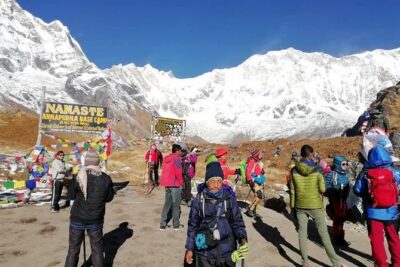
Kathmandu to Annapurna Base Camp (ABC) 5-Day Trek
Read our review →Browse the lists this tour appears in