
REVIEW · KATHMANDU
Annapurna Base Camp trek
Annapurna Base Camp is the kind of trek where the scenery changes almost every day. You move from terraced farmland and isolated villages into rhododendron forest, bamboo groves, and the high mountain bowl beneath Annapurna. The goal is dramatic, but the route is just as rewarding.
I like the small group limit of 10, which makes it easier to keep a steady pace and speak with your guide. I also like that permits, meals, tea-house accommodation, public transport, and hotel transfers are built into the $999 price. The catch is simple: six hours of walking most days is a serious commitment, and Wi-Fi, hot showers, battery charging, drinks, insurance, and trekking gear cost extra.
Key points to know before booking
- Six hours of hiking most days: This is a proper mountain trek, not a sightseeing tour with a few walks.
- A small group of up to 10: You get more personal attention than on a large coach-style departure.
- Tea-house accommodation: Expect practical mountain lodging rather than private hotels throughout the route.
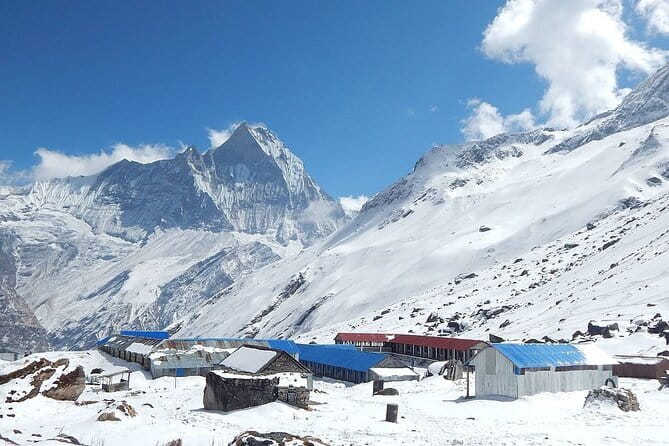
- Annapurna Base Camp is the prize: The route leads through forests, farmland, villages, and high mountain terrain to the foot of Annapurna.
- Most major basics are included: Permits, accommodation, meals, guide, local taxes, and transport are covered.
- Guide support is a major strength: The operator has worked with guides such as Rajesh, Amit, Ganesh, Rajan, Milan, Resham, Basanta, and Prakash on Annapurna-area trips.
Why the Annapurna Base Camp route still earns its reputation
The appeal of this trek is its steady change of scenery. You are not simply walking toward a mountain and waiting for the view to improve. The route passes through rhododendron forests, bamboo stands, terraced fields, and small villages, giving you a close look at both Himalayan nature and daily life.
The final approach to Annapurna Base Camp provides the big payoff. You reach the foot of Annapurna after days of walking, rather than arriving by road or flying over the mountains. That makes the setting feel earned. You have already adjusted to long walking days, simple rooms, changing weather, and the rhythm of village life.
At $999 per person, this is not a bare-bones independent trek. The price covers accommodation, meals listed in the itinerary, the Annapurna Conservation Area permit, TIMS card, local taxes, a registered English-speaking guide, hotel pickup and drop-off, and round-trip public transportation. Add those costs separately and the package begins to look sensible, especially if you value help with permits and transport.
Still, you should check exactly how the 14 days are divided before paying. The information provided gives the total duration and overall route character, but not a full day-by-day schedule with every overnight stop. Ask for that plan, including walking hours, altitude changes, rest periods, and the return route.
More Annapurna Treks in Kathmandu
- Annapurna Circuit Trek with Tilicho Lake
★ 5.0 · 368 reviews - Annapurna base camp trek 5 Days
★ 5.0 · 252 reviews - 14-Day Private Annapurna Base Camp Trek
★ 5.0 · 180 reviews
Starting in Kathmandu, then leaving the city behind
The experience is based in Kathmandu, with hotel pickup and drop-off included. The listed operating hours run from 5:15 AM to 10:45 PM every day, which gives the operator room to handle early departures and late arrivals.
The journey uses public transportation rather than private vehicles throughout. That helps hold down the cost and gives you a more local experience, but it may also mean less space, less control over timing, and a less polished ride than a private transfer. If comfort matters to you, ask how much of the route uses public buses and what luggage arrangements are provided.
A pre-trek briefing is important here. The operator has been praised for answering questions about gear, conditions, and itinerary changes before departure. Rajesh is often involved in planning and communication, while guides such as Amit, Ganesh, Rajan, and Milan have led Himalayan trips for the company. Your assigned guide may differ, so confirm the name and role before setting out.
You will need to provide each participant’s passport name, passport number, expiry date, and country at booking. That is standard for permits, but it is worth having the details ready so the paperwork does not slow things down.
Walking through farms, forests, and village life
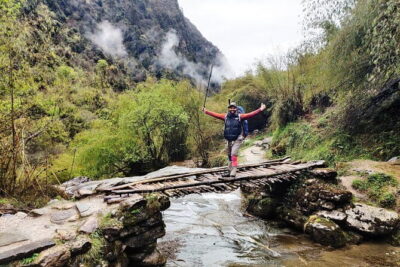
The early and middle sections are where the route feels most connected to local life. You pass terraced farmland, villages, and forested trails rather than spending the entire trek in an empty high-altitude setting.
Rhododendron forests are one of the route’s visual highlights. Bamboo groves add another texture, and the wooded sections offer shade when the sun is strong. The exact appearance depends on season and weather, but the route is designed to give you more than mountain panoramas.
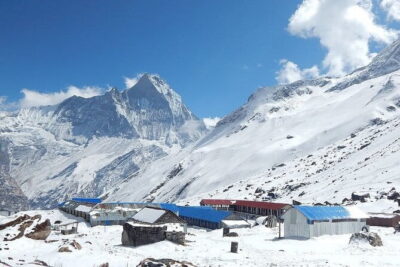
The villages matter, too. Tea houses are not just places to sleep. They are practical stopping points where you eat, rest, and experience the basic rhythm of trekking communities. You should expect simple accommodation, shared facilities in some places, and a quieter evening than you would have in Kathmandu or Pokhara.
The tradeoff is comfort. Wi-Fi, hot showers, and battery charging are not included. These may be available for an additional fee, but the information provided does not promise them at every stop. Carry a charging plan, limit power use, and do not count on a strong internet connection for daily communication.
Six hours a day is the real test
The tour calls for roughly six hours of hiking each day. That is the most important fact to understand before booking. A moderate fitness level is required, but the word moderate can feel generous if you are not used to walking uphill for several consecutive days.
You should prepare for repeated climbs, descents, uneven trails, and tired legs. The challenge comes less from one heroic day than from doing a long walk again and again. Comfortable boots, trekking clothing, a waterproof layer, a warm layer, and a properly fitted daypack are sensible basics, but trekking gear is not included.
The guides appear to be a strong part of the service. One guide, Milan, has been credited with helping when a participant twisted an ankle, including arranging further assistance. That is the kind of support you want in the mountains. Ganesh, Amit, Rajan, Basanta, Resham, and Prakash are also names connected with the company’s Annapurna work.
That said, a guide cannot remove every risk. Personal insurance is not included, and you should arrange insurance that covers trekking at the elevations included in your final itinerary. Ask the operator for the highest overnight point and the maximum altitude before booking an insurance policy.
Another trail to compare in Kathmandu:
- Everest Base Camp Trek – 14 Days
★ 5.0 · 1,499 reviews - Everest Base Camp Trek
★ 5.0 · 842 reviews - Everest Base Camp Trekking
★ 5.0 · 485 reviews - Everest Base Camp Trekking – 13 Day
★ 5.0 · 365 reviews
Tea houses give the trek its character
Tea-house lodging keeps the tour grounded. You spend nights in local mountain accommodation instead of returning to a city hotel after each walk. That helps you experience the route as a journey, not as a series of day trips.
Accommodation is included according to the itinerary, but the details are not fully specified. Ask if rooms are private or shared, how bathrooms are arranged, and what bedding is supplied. These questions are especially useful if you have never done a tea-house trek.
Meals listed as breakfast, lunch, and dinner are included. This is a meaningful saving because food costs rise in remote mountain areas. Drinks are not included, and the wording also excludes food and drinks unless specified, so use the meal schedule as your guide and budget extra for tea, bottled drinks, snacks, and any meals outside the stated plan.
The food itself is part of the practical experience. Do not expect a restaurant menu from home at every stop. The point of the included meals is to keep you walking, warm, and fueled, not to provide a culinary tour.
Reaching the foot of Annapurna
The final high section is the reason most people choose this trek. After walking through lower forests, farms, and villages, you move into a more austere mountain setting and reach Annapurna Base Camp.
Cold is a real consideration. One participant specifically described the base camp as very cold, even though the scenery made the effort worthwhile. Bring warm layers, gloves, a hat, and clothing that can handle changing conditions. The exact temperatures will depend on the season, and the tour description does not give a fixed weather range.
The base camp itself is not a quick photo stop in the usual sense. You have spent many days approaching it on foot, and the surrounding peaks give the moment its force. Take time to look around, but also listen to your body. The high point of the trek should not become a race.
Weather can shape the experience. Clear skies bring the best mountain views, while cloud and rain can hide peaks. One past trek in monsoon conditions still had good mountain views, but that should not lead you to assume every rainy-season departure will be clear. If views are your main goal, ask about the operator’s recommended travel periods.
What the $999 price really covers
The price is reasonable for a guided 14-day trek if you use the included services. You are paying for a registered local guide, accommodation, meals, permits, local taxes, hotel transfers, and round-trip public transportation. Organizing all of that independently would take time and still leave you responsible for paperwork and route decisions.
The small group is another part of the value. A maximum of 10 people is large enough to share the experience but small enough for a guide to notice when someone is struggling. It also makes communication easier than on a large group departure.
Budget beyond the headline price. You will need money for drinks, Wi-Fi, hot showers, charging, souvenirs, temple and monastery entrance fees, personal shopping, trekking equipment, and personal insurance. Souvenir photos may also be available for purchase, but they are not part of the package.
Group discounts are offered, though the discount amount is not specified. If you are booking with friends or family, ask for the exact price before confirming. Confirmation is received at booking, and cancellation is free if you cancel at least 24 hours before the local start time. Late cancellations and late changes are not refunded or accepted.
Who should choose this trek
This tour suits an active person who wants a structured Himalayan experience without arranging every permit, meal, transfer, and overnight stay alone. It is particularly useful if you are visiting Nepal for the first time and want a local guide to explain the mountains, culture, history, and village life as you walk.
It also suits small groups of friends and couples. Several trips connected with the operator have included families, solo hikers, and mixed-age groups, but the six-hour walking schedule remains the main filter. A child or older participant should be assessed honestly against the full route, not just the most attractive photographs.
I would be cautious about booking if you dislike basic lodging, public transport, cold conditions, or repeated uphill walking. I would also pause if you need dependable internet, private bathrooms, or hotel-level comfort each night.
My practical advice before you go
Ask for the complete itinerary, not just the 14-day headline. You need the overnight locations, walking times, altitude figures, rest arrangements, and transport details.
Confirm who will guide your group. The operator has a pool of experienced local guides, but the names above do not guarantee who will lead your departure. A direct pre-trip briefing can also clarify what equipment you need to bring and what can be rented or purchased locally.
Pack lightly but seriously. You need clothing for sun, rain, cold, and long walking days. Since battery charging may cost extra, bring spare power capacity if you rely on your phone for photos, maps, or communication.
Finally, leave room for changes. Flight problems and illness have caused itinerary adjustments on past trips, and the company has helped reschedule some departures. That flexibility is useful, but it is still wise to allow buffer time around your trek if your international flight schedule is tight.
Should you book the Annapurna Base Camp trek?
I would book this trek if you want the classic Annapurna experience with a local guide, included permits and meals, and a group small enough to feel personal. The package offers good value for a demanding 14-day journey, and the operator’s strongest qualities appear to be communication, guide support, and flexibility.
I would not book it casually. Six hours of walking most days, tea-house lodging, cold conditions, extra costs, and public transportation are part of the deal. Get the full itinerary, confirm the altitude and accommodation details, buy suitable insurance, and make sure your fitness matches the route. If those points suit you, this is a sensible way to reach Annapurna Base Camp on foot.
FAQ
How long does the Annapurna Base Camp trek last?
The trek lasts approximately 14 days.
How many hours will I walk each day?
You should expect to hike for around six hours each day.
How large is the group?
The group has a maximum of 10 participants.
Is a guide included?
Yes. A government-registered, English-speaking professional local guide is included.
Are permits included in the price?
Yes. The Annapurna Conservation Area permit and TIMS card are included.
Are meals included?
Breakfast, lunch, and dinner are included according to the itinerary. Drinks and food outside the specified meals are not included.
Where will I sleep?
You will stay in tea houses during the hike. Accommodation is included according to the itinerary.
Is hotel pickup included?
Yes. Hotel pickup and drop-off are included.
Is transportation included?
Yes. Round-trip transportation by public transport is included.
What is not included?
Drinks, Wi-Fi, hot showers, battery charging, personal shopping, trekking gear, personal insurance, temple and monastery entrance fees, and souvenir photos are not included.
Latest treks added in Kathmandu
- Private Manaslu Circuit Trek at Himalayas★ 5.0 · 3 reviews
- Ghorepani Poonhill Trek★ 5.0 · 5 reviews
- Ghorepani Poon Hill Trek★ 5.0 · 16 reviews
- Upper Mustang Trekking★ 3.0 · 2 reviews
- Amazing 1 Day Trekking Experience in Kathmandu Nepal★ 5.0 · 24 reviews
- Upper Mustang Trekking★ 5.0 · 2 reviews
- Upper Mustang Trek★ 5.0 · 5 reviews
- Upper Mustang Trekking★ 5.0 · 4 reviews
Annapurna Base Camp Treks, compared.

Trekking in Annapurna/Langtang/Everest/Upper Mustang regions
Read our review →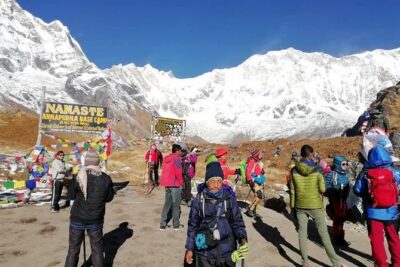
Kathmandu to Annapurna Base Camp (ABC) 5-Day Trek
Read our review →Browse the lists this tour appears in