
REVIEW · KATHMANDU
Annapurna Base Camp Trek
Annapurna Base Camp gives you the big Himalayan experience in a manageable package: rhododendron forests, stone steps, suspension bridges, and huge peaks rising above the trail. The route also includes Poon Hill, a fine bonus viewpoint at 3,210 meters, before carrying on toward the base camp.
I like the small group limit of 10, which makes it easier to keep a steady pace and ask your guide for help. I also like that the price covers airport pickup, transport, hotels, teahouses, a professional guide, and most meals. Guides named in past bookings include Krishna, Tulsi, Anil, Suvi, and Arjun, though your assigned guide may be different.
The main consideration is the physical demand. You will hike for roughly 4 to 7 hours a day, often on stone steps and at high altitude, and some days include steep climbs. The itinerary is well organized, but it is not a casual sightseeing holiday.
Key points to know before booking
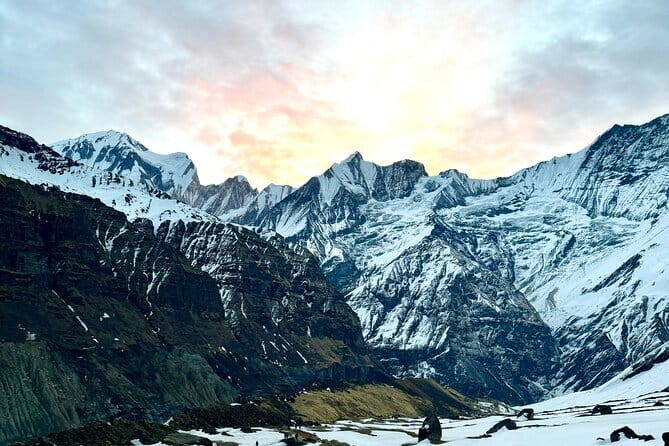
- Poon Hill adds a second major viewpoint: The short early hike to 3,210-meter Poon Hill gives you a strong mountain panorama before the main climb to base camp.
- The group stays small: A maximum of 10 people allows more personal attention than a large trekking party.
- Meals are mostly handled on the trail: Breakfast, lunch, and dinner are included on many trekking days, while lunch and dinner in Kathmandu and Pokhara are your responsibility.
- The route mixes comfort and simplicity: You stay in Kathmandu and Pokhara hotels or guesthouses, then use teahouses in the mountains.
- The return includes Jhinu Danda: You have the chance to walk to natural hot-spring pools beside the Modi River.
- The package covers the awkward logistics: Airport pickup, shared transfers, accommodation, taxes, and a professional guide are included.
Why this 14-day route works well
The Annapurna Base Camp trek is a good choice if you want a serious Himalayan walk without having to arrange every transfer, room, and meal yourself. The route starts in Kathmandu, shifts to Pokhara, then gradually moves from lower villages and forests into the high mountain bowl around Annapurna Base Camp.
You are not simply walking to one viewpoint and returning. The route has several distinct stages. Poon Hill gives you an early reward, Gurung villages add a human side to the trek, and the approach to Machhapuchhre Base Camp and Annapurna Base Camp becomes increasingly dramatic.
The pace is still demanding. Hiking for four to seven hours a day can sound reasonable on paper, but steep stone stairways and altitude change the calculation. You should arrive with a moderate level of fitness and be comfortable walking for several consecutive days.
More Annapurna Treks in Kathmandu
- Annapurna Circuit Trek with Tilicho Lake
★ 5.0 · 368 reviews - Annapurna base camp trek 5 Days
★ 5.0 · 252 reviews - 14-Day Private Annapurna Base Camp Trek
★ 5.0 · 180 reviews
Kathmandu arrival, airport pickup, and the road to Pokhara
Your trip begins at Tribhuvan International Airport, where an airport representative meets you and takes you to your Kathmandu hotel by private tourist vehicle. Day one is intentionally light. You can rest, recover from the flight, or visit the company office to go over the trek details.
That first day matters more than it may seem. You are moving into a multi-day mountain trip, so having someone meet you at the airport and explain the plan can remove a lot of early confusion. It is especially useful if you are arriving in Nepal for the first time.
On day two, you travel about 200 kilometers by tourist bus from Kathmandu to Pokhara. The ride takes roughly six hours, with lunch along the way, although the day is listed as lasting about 12 hours. Road travel in Nepal can be tiring, so do not treat this as a quick transfer between two nearby cities.
Pokhara is your last comfortable city stop before the trek. You spend the night in a guesthouse, and lunch and dinner here are not included. That gives you freedom to choose your own meal, but remember to budget for it.
Nayapool to Ghorepani, forests and stone steps
The walking begins after about an hour of driving from Pokhara to Nayapool. From there, the trail follows the Modi River toward Birethani, with small teahouses appearing along the route.
This opening section eases you into the rhythm of the trek. You get a first look at village life and trail-side lodges, rather than being dropped immediately into a high-altitude setting. It also gives your guide a chance to see how the group handles the pace.
The following section takes you from Ulleri through rhododendron and oak forests to Banthanti, then onward to Ghorepani. The route includes many stone steps, so this is not just a gentle woodland walk. The forests are a welcome change from the road journey, but the stairs can make the day feel longer than the distance suggests.
Ghorepani is an important stop because it serves as the base for Poon Hill. It is also a popular overnight point, so the village has a strong trekking feel, with teahouses serving people preparing for an early morning start.
Poon Hill at 3,210 meters
The Poon Hill morning begins early, with a hike of about 45 minutes to the viewpoint. At 3,210 meters, it is the highest point listed before the base camp portion of the trip.
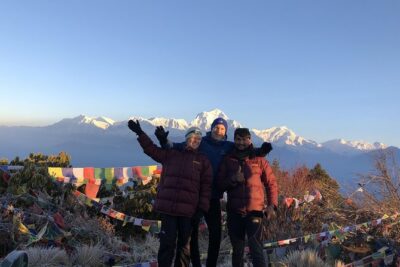
This is one of the smartest parts of the route. You get a major mountain viewpoint without committing to a full day of walking, and the short climb tests how your body responds to altitude. The top is described as a photographer’s viewpoint, with views toward Dhaulagiri, Machhapuchhre, and the Annapurna peaks when the skies are clear.
You should expect cold conditions at this hour, even if the lower valleys felt warm. The climb is short, but the early start and altitude can make it feel brisk. After the viewpoint, the route continues toward Tadapani, where the next day begins.
Another trail to compare in Kathmandu:
- Everest Base Camp Trek – 14 Days
★ 5.0 · 1,499 reviews - Everest Base Camp Trek
★ 5.0 · 842 reviews - Everest Base Camp Trekking
★ 5.0 · 485 reviews - Everest Base Camp Trekking – 13 Day
★ 5.0 · 365 reviews
Tadapani, Gurung villages, and Chhomrong
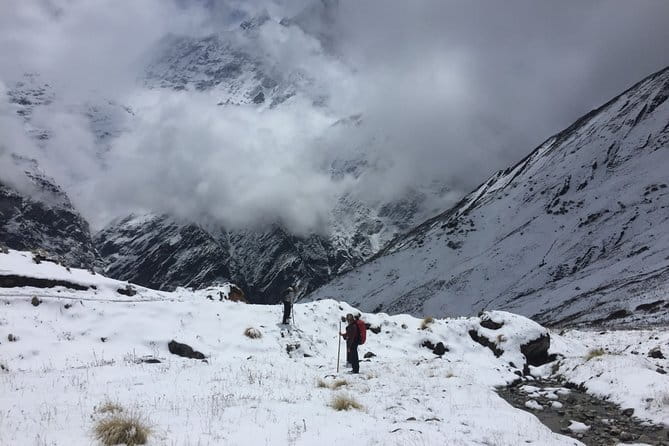
From Tadapani, the trail drops gradually through rhododendron forest before crossing the Kimsung River. You then climb toward Gurjung, a Gurung village, and continue to Chhomrong.
This is a particularly varied section. You move from forest to river crossing to village, with the mountains appearing and disappearing as the trail bends through the hills. Chhomrong is spread across a hillside and has views toward the Annapurna range and Machhapuchhre.
The village is also a practical staging point for the higher trail. You may enjoy the views here, but the next sections become more remote and more focused on the mountain route itself. The accommodation is simple, as you should expect in a teahouse-based trek.
Chhomrong to Bamboo through Sinuwa
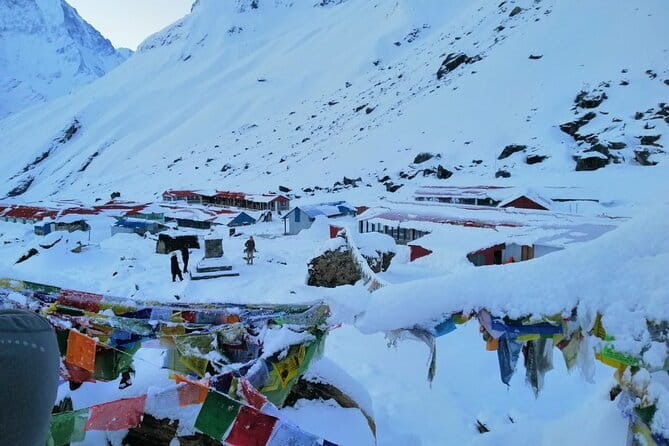
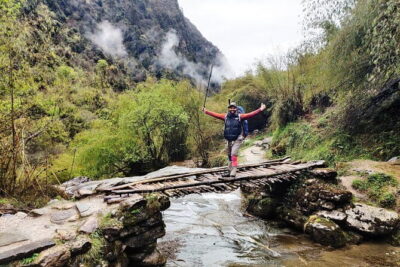
Leaving Chhomrong means descending stone steps to Chhomrong Khola. You cross a suspension bridge, then climb steeply to Sinuwa. After a short jungle section and an easier downhill stretch, you reach Bamboo.
This is a classic example of Annapurna trail logic: one day can contain both a descent and a climb, even when the overall route is moving higher. Do not assume that downhill means easy. Long stone stairways can be hard on your knees, and the climb after the bridge will test your legs.
Bamboo is a useful overnight stop because it breaks up the approach to the higher parts of the valley. The forests also change as you go, with bamboo and rhododendron forming much of the scenery.
Dovan and Himalaya, a quieter stretch of trail
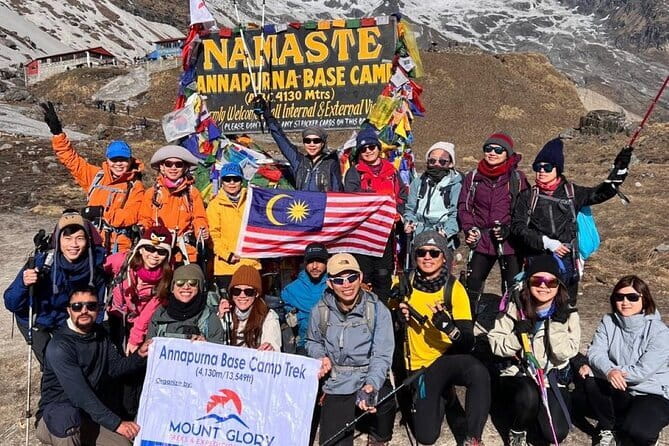
The walk from Dovan to Himalaya is described as particularly quiet. Loud noise is discouraged because of a temple along the way, and the trail passes first through bamboo forest before changing to rhododendron forest.
That quieter atmosphere is one of the more unusual details of the trek. It gives you a break from conversation and trail noise, and it asks you to pay attention to the setting rather than rushing through it.
The path includes several small waterfalls and continues to feel more remote than the villages lower down. The day is still a physical effort, but the forest provides shade and a steady rhythm before the trail opens into more exposed mountain surroundings.
Deurali to Machhapuchhre Base Camp
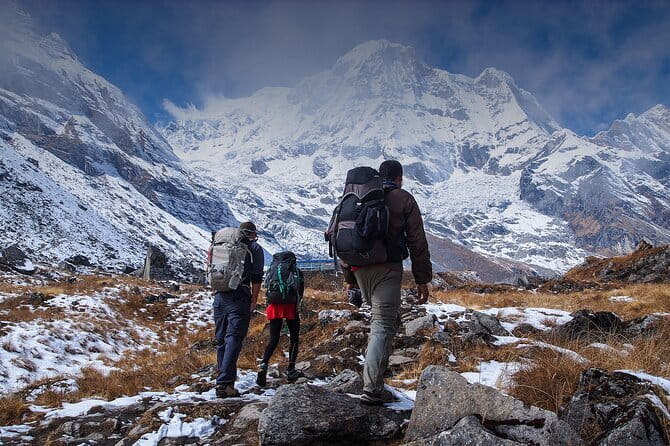
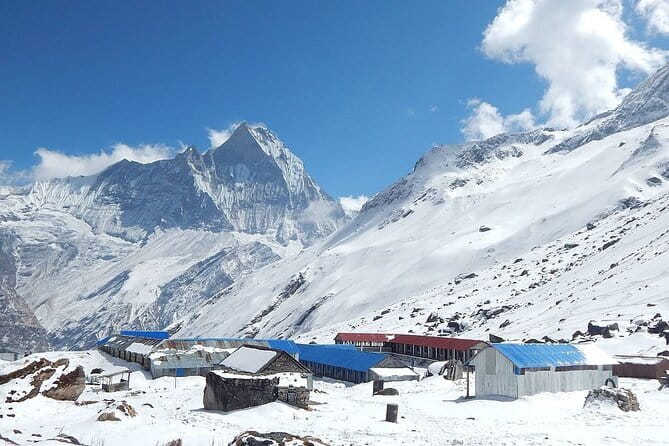
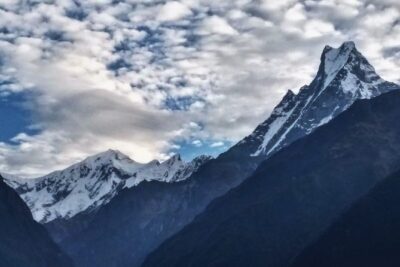
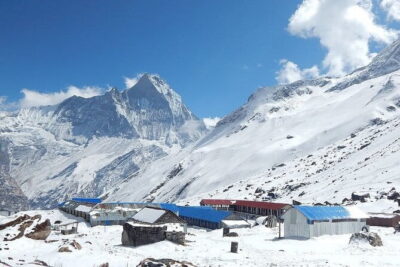
From Deurali, the trail follows a river bed before a tiring climb to Machhapuchhre Base Camp. Here, mountains surround the route, with views toward Annapurna, Machhapuchhre, Gangapurna, and Himchuli.
This is where the trek begins to feel like a high mountain journey rather than a hill walk through villages. The scenery becomes larger, and the trail environment becomes more austere. You should expect the effort to feel greater here, especially after several days of walking.
Machhapuchhre Base Camp is not the final destination, but it is a major scenic stop. The mountains close in around you, creating a powerful sense of scale. Your guide’s support becomes particularly useful during this part of the route, since the group needs to maintain a sensible pace.
Annapurna Base Camp and the sunrise return
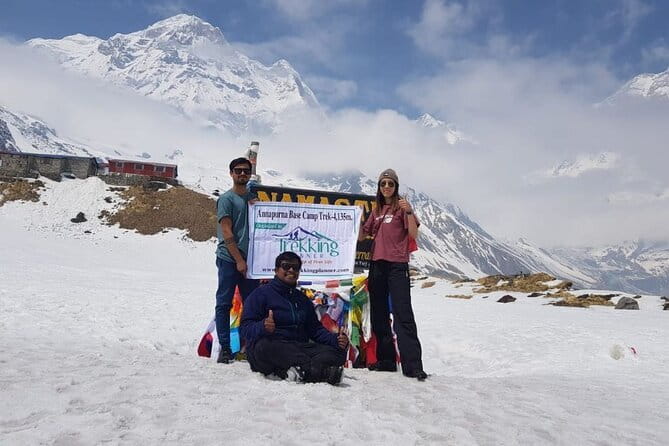
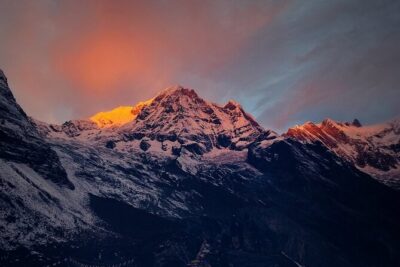
The next stage takes you to Annapurna Base Camp, the high point of the trip. The itinerary highlights sunrise at ABC, followed by a return along the same route through Machhapuchhre Base Camp, Deurali, Himalaya, Bamboo, and onward to Sinuwa.
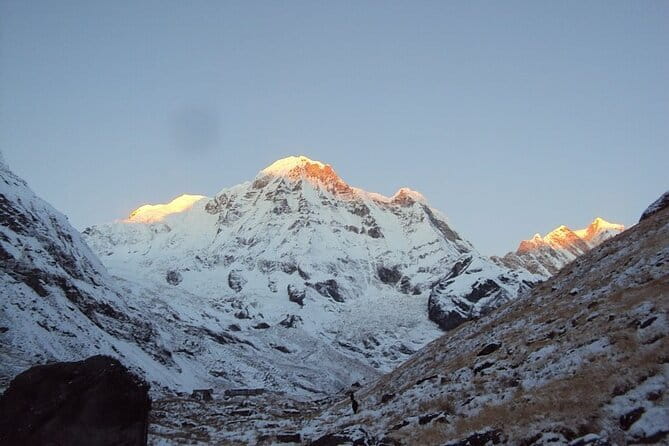
The sunrise is the emotional center of the trek. You are surrounded by high peaks, and the changing light gives the mountain bowl a different character from the previous afternoon. It is also a long day because the route does not stop at the viewpoint. You need to be ready for the return walk after the early start.
The return is described as mostly downhill and easier in walking terms, but downhill does not mean effortless. Your legs will already be tired, and the repeated steps can be hard on knees and ankles. The advantage is that you retrace familiar ground rather than learning a new route while fatigued.
Chhomrong, Jhinu Danda, and the end of the trail
After reaching Sinuwa, the route continues toward Chhomrong. Lunch is scheduled there, and the village once again gives you broad views of the Annapurna and Machhapuchhre peaks.
The next stop is Jhinu Danda, where natural hot-spring pools sit beside the Modi River. The pools are about a 20-minute walk from the hotel. This is a welcome way to loosen tired muscles, though the short walk still comes after many days on the trail.
I like this ending because it gives the trek a gentle change of pace. The journey does not finish immediately after the base camp sunrise. Instead, you get one more mountain village and a chance to rest at the hot springs before returning to the road.
Day 13 includes a stop at Malekhu for lunch. The town is known for fish and fish products, and the scheduled stop lasts about 30 minutes. It is a practical break during the return journey rather than a major sightseeing visit.
On day 14, the drive passes by Pashupatinath Temple. The listed stop is only about five minutes for photographs, and admission is not included. Treat this as a brief final look, not a full temple visit.
What the $925 price covers
At $925 per person, the package offers good value if you want a supported trek rather than a self-arranged route. The price includes accommodation, all taxes and handling charges, a professional guide, shared round-trip transfers, and the airport pickup arrangement.
Food coverage is also strong during the mountain portion. The package includes 13 breakfasts, 10 lunches, and 10 dinners. Lunch and dinner in Kathmandu and Pokhara are not included, so you will need extra money for those city meals.
Accommodation changes with the setting. In Kathmandu and Pokhara, you stay in hotels or a guesthouse. On the trail, you use teahouses. That means basic mountain lodging, not resort comfort, but it keeps you close to the route and avoids the trouble of finding rooms yourself each evening.
A maximum group size of 10 is another reason the price may make sense. You are not paying only for transport. You are also buying coordination, a guide, and help when the route becomes tiring or confusing.
Guide support and the small-group advantage
The strongest part of this arrangement is the human support. Named guides in past bookings include Krishna, Tulsi, Anil, Suvi, and Arjun, but no particular guide is guaranteed for your departure.
That distinction matters. The company has a record of assigning guides who help with pacing, route details, and changes in a trekker’s needs. One past booking included a porter added shortly before departure after the trekker became unwell, which shows why it is useful to speak up early if carrying your own bag becomes too much. A porter is not listed as included, so you should confirm that separately before booking.
The group limit also helps if you are anxious about your first long trek. You can ask questions without trying to catch the attention of a large crowd, and the guide can keep an eye on the group’s pace.
Who should book this trek
I would recommend this trek to an active person who wants a structured introduction to Himalayan trekking. It suits you if you like long days outdoors, simple teahouse accommodation, changing scenery, and the security of having transport and rooms arranged.
It is also a good fit for a first major trek if you are prepared to train and accept basic conditions. The route includes forests, villages, bridges, steep steps, high-altitude sections, and an early morning viewpoint hike.
You should think twice if you want flexible city sightseeing, short walking days, or high-end accommodation. The itinerary is fixed enough that you cannot simply skip a difficult section without affecting the group and transport plan.
Children must be accompanied by an adult, and the activity requires moderate physical fitness. The booking confirmation is provided at the time of reservation. Free cancellation is available up to 24 hours before the start time, while cancellations or changes inside that window are not refunded. If poor weather cancels the trek, you are offered another date or a full refund.
Should you book the Annapurna Base Camp trek?
Book it if you want Poon Hill, Annapurna Base Camp, teahouse life, and organized support in one 14-day plan. The combination of a small group, included trail meals, airport pickup, and experienced guide support gives you a practical way to tackle a demanding route.
Before paying, confirm what luggage support is available, ask which guide will lead your departure, and budget separately for Kathmandu and Pokhara dinners and lunches. If you are ready for long walking days and simple rooms, the $925 cost is a fair package price for the amount of planning and trail support included.
FAQ
How long is the Annapurna Base Camp trek?
The experience lasts approximately 14 days, including arrival in Kathmandu, travel to Pokhara, the trek, the return journey, and the final stop near Pashupatinath Temple.
Where does the trek begin?
The meeting point is Tribhuvan International Airport in Kathmandu, Nepal. An airport representative meets you and arranges transport to the hotel.
How large is the trekking group?
The group can include a maximum of 10 people.
What level of fitness do I need?
You should have a moderate level of physical fitness. The trek involves about 4 to 7 hours of hiking each day and includes high-altitude sections, steep climbs, and stone steps.
Are meals included?
Breakfast is included 13 times, lunch 10 times, and dinner 10 times. Lunch and dinner in Kathmandu and Pokhara are not included.
What type of accommodation is provided?
Accommodation in Kathmandu and Pokhara is provided in hotels or a guesthouse. During the trek, you stay in teahouses.
Is Poon Hill included?
Yes. The itinerary includes a short hike to Poon Hill, which is listed at 3,210 meters and is known for views toward the Annapurna, Dhaulagiri, and Machhapuchhre peaks.
Does the trek include airport pickup and transport?
Yes. Airport pickup, round-trip shared transfer, and the road journey between Kathmandu and Pokhara are included. The itinerary also includes transport between Pokhara and Nayapool.
What is the cancellation policy?
You can cancel up to 24 hours before the start time for a full refund. Cancellations or changes made less than 24 hours before the start time are not accepted or refunded. If poor weather cancels the experience, you are offered a different date or a full refund.
Latest treks added in Kathmandu
- Private Manaslu Circuit Trek at Himalayas★ 5.0 · 3 reviews
- Ghorepani Poonhill Trek★ 5.0 · 5 reviews
- Ghorepani Poon Hill Trek★ 5.0 · 16 reviews
- Upper Mustang Trekking★ 3.0 · 2 reviews
- Amazing 1 Day Trekking Experience in Kathmandu Nepal★ 5.0 · 24 reviews
- Upper Mustang Trekking★ 5.0 · 2 reviews
- Upper Mustang Trek★ 5.0 · 5 reviews
- Upper Mustang Trekking★ 5.0 · 4 reviews
Annapurna Base Camp Treks, compared.

Trekking in Annapurna/Langtang/Everest/Upper Mustang regions
Read our review →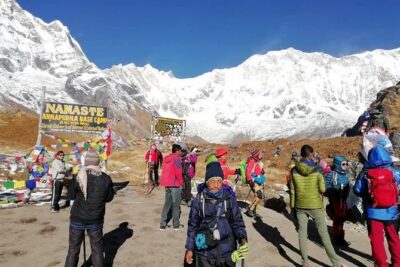
Kathmandu to Annapurna Base Camp (ABC) 5-Day Trek
Read our review →Browse the lists this tour appears in