
REVIEW · KATHMANDU
Annapurna Base Camp Trek
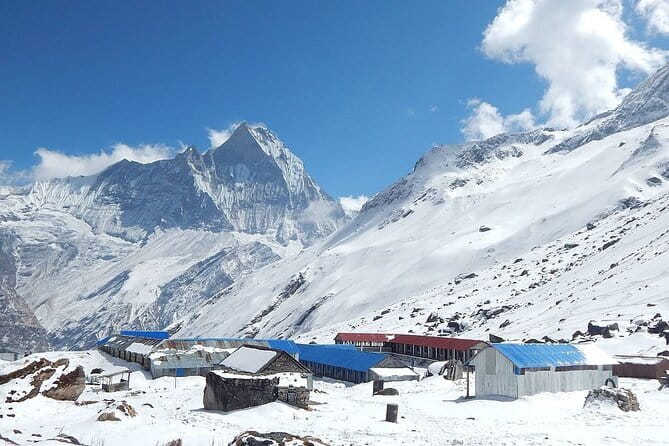
Annapurna Base Camp is a big Himalayan walk packed into 10 demanding days. You start with a long ride from Kathmandu, climb through villages and forest, catch sunrise from Poon Hill, then reach the amphitheater of peaks at 4,130 meters. The route gives you both village life and serious mountain scenery without requiring a month away.
I like two things here: local guide support and a package that covers the costly, fiddly parts. Your guide handles permits, food planning, safety, and route logistics, while the price includes porters, two Kathmandu hotel nights, transport planning, and basic first aid. The private format also lets your group move at its own pace within the fixed schedule.
The catch is the pace. Ten days is tight, especially once you reach the higher camps and then return to Sinuwa. You need moderate fitness, an early start at 6:15 am, and a willingness to trade comfort for mountain views. Ask the company to confirm the day-by-day route details before departure, including the reference to crossing Khumbu Glacier on the Sinuwa to Deurali day.
Key points to know before you book
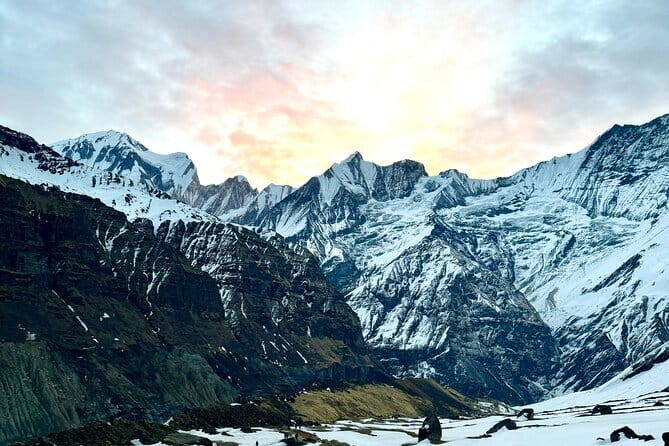
- Poon Hill sunrise comes early: You climb before breakfast for views of Annapurna and Dhaulagiri, then return to Ghorepani to eat.
- The trek is privately operated: Only your own group takes part, with an English, Hindi, or Chinese-speaking government-licensed guide.
- The $700 package covers a lot: Meals, permits, porters, guide costs, trekking equipment, transport, food, and accommodation for the trekking staff are included.
- You get support in Kathmandu too: Airport pickup and drop-off plus two Kathmandu hotel nights are included before and after the trek.
- Several guides have earned specific praise: Madan Neupane arranged trips, while Rishi and Roshan Pandey were singled out for personal care and help on the trail.
- Pack for long walking days: Water bottles, sunglasses, a charger, light snacks, chocolate, and a small personal bag are specifically useful here.
Why this 10-day Annapurna route works
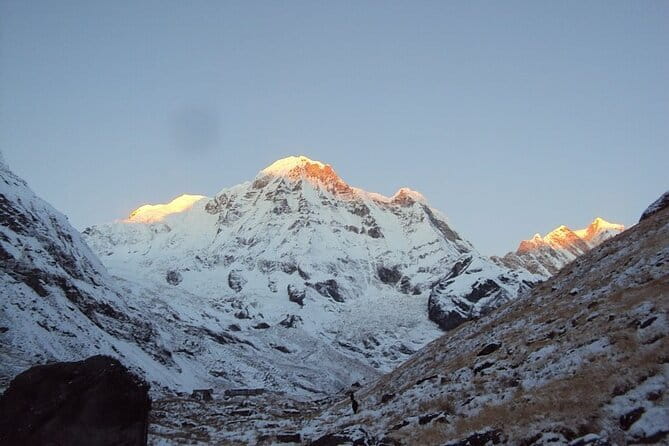
The appeal of this trek is its changing scenery. You begin beside river valleys and farm villages, pass through forest, climb above the tree line, and finish among high peaks at Annapurna Base Camp. Few short Himalayan treks give you such a clear sense of progression.
You also get two mountain goals rather than one. Poon Hill provides the sunrise viewpoint, while Annapurna Base Camp is the main destination. That makes the middle of the trek feel varied instead of like a simple march to one camp.
The route is not easy. Several days run for five to seven hours, and the trail includes long uphill sections, steep descents, stone steps, and thinner air as you gain height. The schedule is suitable for someone with moderate fitness, but you should not treat that phrase lightly.
Touch The Himalaya Treks and Expedition uses local guides from the Annapurna region. That matters in practical ways. A local guide can help with permits, tea house arrangements, pacing, and communication in villages. The company also says its guides are first-aid trained and experienced with high-altitude conditions.
This is a private activity, not a large mixed group. You can expect the guide and porters to work with your party alone. The package includes an English, Hindi, or Chinese government-licensed guide, so confirm your preferred language at booking.
More Annapurna Treks in Kathmandu
- Annapurna Circuit Trek with Tilicho Lake
★ 5.0 · 368 reviews - Annapurna base camp trek 5 Days
★ 5.0 · 252 reviews - 14-Day Private Annapurna Base Camp Trek
★ 5.0 · 180 reviews
Day 1: Kathmandu to Pokhara by road or air
Your first day is mostly about getting into position. The road from Kathmandu to Pokhara takes about seven hours by tourist bus or car, following the Trishuli River and passing rural scenery. A flight is also possible, though the package information does not give a flight duration or state whether its cost is included.
Pokhara is the practical gateway for the trek. After a long bus ride, you have little walking to do, but the day still takes energy. If you are sensitive to road travel, ask about the transport option before you arrive in Nepal.
The company provides two nights of Kathmandu accommodation, one before and one after the trek, along with airport pickup and drop-off. The supplied schedule does not spell out your Pokhara hotel arrangement, so confirm where that night is included and what transport you will use.
Day 2: Nayapul to Ulleri through village country
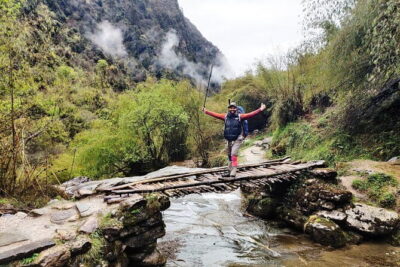
After breakfast, you drive about an hour to Nayapul and begin walking. The trail follows the Modi Khola River and passes through villages, giving you an early look at local life before the route turns higher.
The walk to Ulleri takes about five hours according to the schedule. This is your first real test, with the route gaining height through a mix of settlement and mountain scenery. The day is short compared with the next stages, but your legs are still adjusting to the walking routine.
Ulleri is an important early stop because it moves you beyond the road access and into the trekking rhythm. Keep your daypack light. Your porter arrangement means you should not need to carry all your clothing and gear yourself, but you will want water, sun protection, snacks, and a charger close at hand.
Day 3: Ulleri to Ghorepani and the high forest
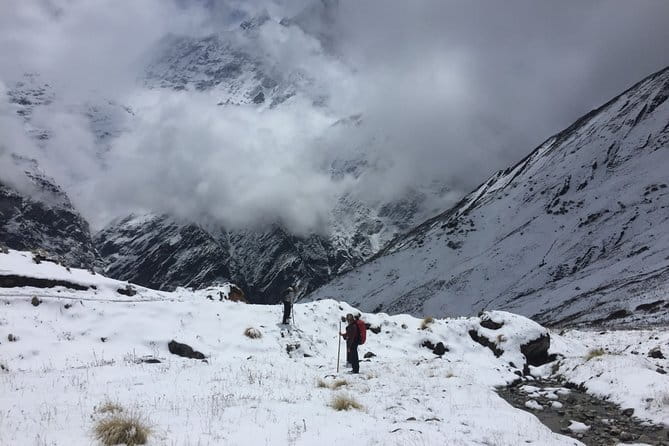
The walk from Ulleri to Ghorepani takes about six to seven hours, although the listed stop duration is five hours. That difference is worth noting. Mountain walking times vary with group pace, rest stops, weather, and trail conditions.
You pass through lush forest and continue upward toward Ghorepani. Views of the Annapurna range open up as you gain height. This is a scenic day, but it is also one of the days when the route can feel relentless.
Ghorepani is best understood as a staging point for Poon Hill. You will want an early night because the next morning begins before breakfast. Tea house accommodation is part of the normal trekking setup, but the listing does not describe room standards, so pack a warm layer and keep expectations practical.
Another trail to compare in Kathmandu:
- Everest Base Camp Trek – 14 Days
★ 5.0 · 1,499 reviews - Everest Base Camp Trek
★ 5.0 · 842 reviews - Everest Base Camp Trekking
★ 5.0 · 485 reviews - Everest Base Camp Trekking – 13 Day
★ 5.0 · 365 reviews
Day 4: Poon Hill sunrise, then on to Tadapani
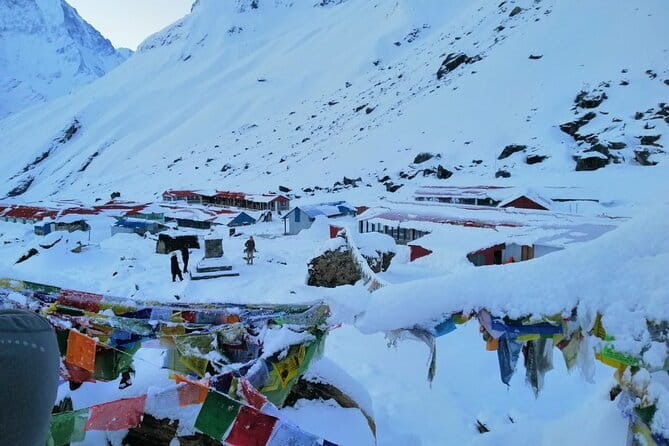
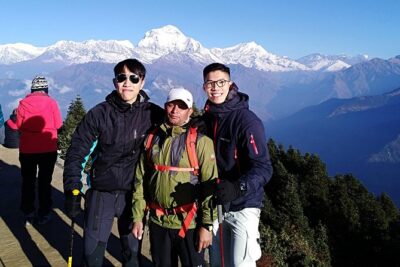
The early climb to Poon Hill is one of the smartest features of this route. You leave before breakfast to watch the sun reach the Annapurna and Dhaulagiri ranges, then return to Ghorepani for a meal.
The viewpoint gives you a dramatic mountain payoff without waiting until the final day. Sunrise timing can mean cold air and a sleepy start, but this is exactly the sort of effort that tends to feel worthwhile once the peaks begin to glow.
After breakfast, you continue to Tadapani. The walking time is listed as about four hours, making this one of the shorter days on paper. Even so, the early start and the previous day’s climb can leave you tired.
Tadapani brings more forest walking and mountain views. It also breaks up the route before you descend toward Sinuwa. Ask your guide about the exact morning departure time, since sunrise walks depend on the season.
Day 5: Tadapani to Sinuwa through forest and villages
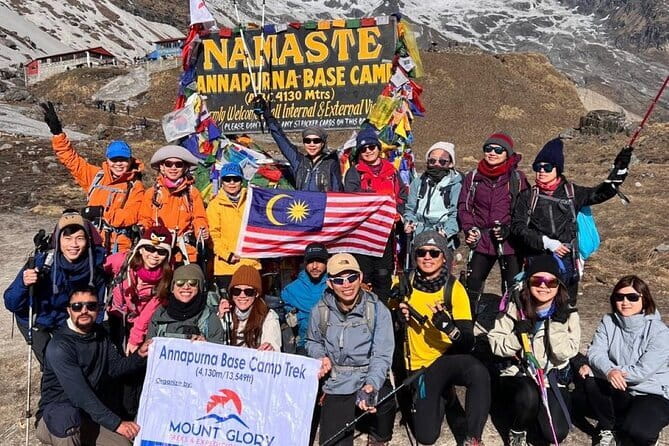
The trek from Tadapani to Sinuwa takes about six to seven hours. You descend through forest and pass several small villages, with views of the Annapurna range appearing between sections of trail.
This day changes the feel of the trek. You are no longer simply climbing toward the highest point. You lose some height, cross varied ground, and prepare for the approach to the sanctuary.
A descent can be harder than it sounds. Stone steps and uneven paths put pressure on knees, especially after several walking days. Trekking poles are not listed among the inclusions, so bring your own if you use them.
Sinuwa is also where the schedule becomes more serious. From here, the route moves toward Deurali and then Annapurna Base Camp. Keep your water bottle filled and use the snacks recommended by the operator, particularly chocolate or other compact food for long walking periods.
Day 6: Sinuwa to Deurali and the higher trail
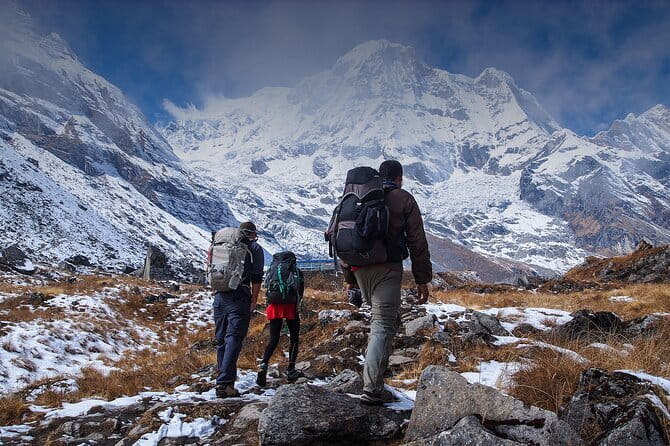
The walk to Deurali takes about five to six hours. The trail climbs steadily through forest, and the scenery becomes more rugged as you approach the higher section of the route.
The itinerary also says you will cross Khumbu Glacier on this day. Khumbu Glacier is associated with the Everest region, not the Annapurna Base Camp route, so this detail needs confirmation before you travel. It may be a wording mistake or a reference to another crossing, but you should ask the operator to clarify the exact trail.
Deurali is a key night because altitude begins to matter more as you approach the sanctuary. Your guide is expected to monitor conditions and help manage the pace. You should still take responsibility for speaking up if you feel unwell, unusually tired, or affected by the altitude.
Day 7: Deurali to Machapuchare Base Camp and Annapurna Base Camp
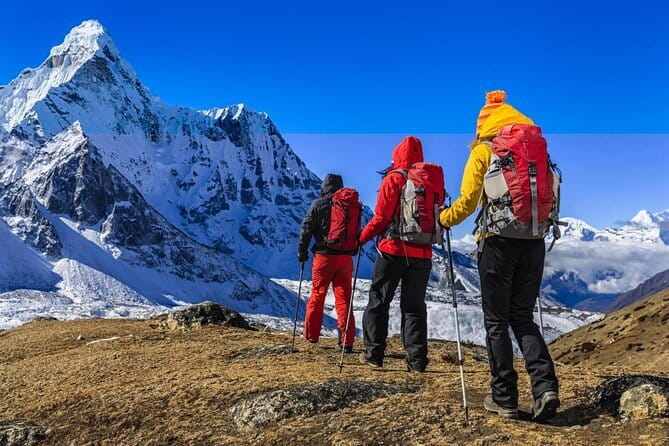
This is the main mountain day. You walk from Deurali to Machapuchare Base Camp, then continue to Annapurna Base Camp, with the full section taking about six to seven hours.
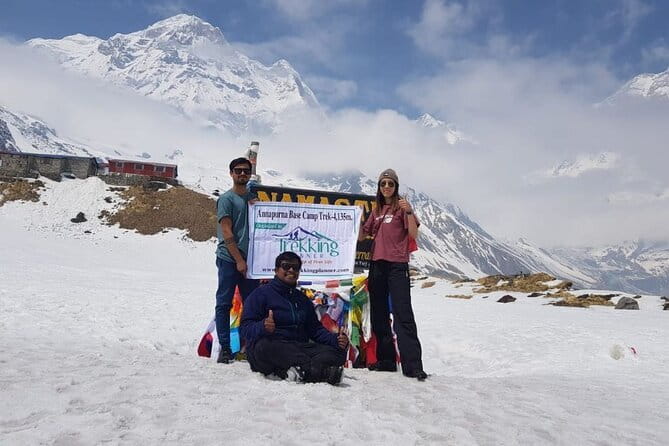
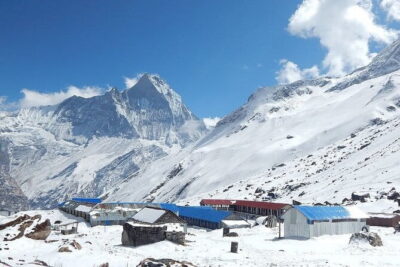
The route becomes more open and rugged as you leave the forest behind. The reward is the setting around Annapurna Base Camp, where the surrounding peaks create a powerful enclosed mountain scene. The final approach is likely to feel earned after the steady climbs and long days below.
The itinerary does not give the exact overnight elevation, but Annapurna Base Camp is at roughly 4,130 meters. At this height, cold, fatigue, and altitude are real considerations. Move slowly, drink regularly, and follow your guide’s advice.
This is also the point where the private format helps. Your guide can set a pace for your group rather than a large crowd, and the porters handle the heavier bags. Do not expect luxury. The value lies in getting safely to the high camp with the major logistics arranged.
Day 8: Return from Annapurna Base Camp to Sinuwa
After time at Annapurna Base Camp, you retrace the route toward Sinuwa. The walk takes about six to seven hours, while the listed stop duration is five hours.
The descent lets you revisit familiar sections from a different angle, but it is not an easy recovery day. Long downhill stretches can be hard on your knees, and fatigue from the high camp can slow everyone down.
This is where a good guide earns trust. The company’s package includes guide and porter salaries, insurance, equipment, food, accommodation, and transport for the trekking staff. You are not left to solve those arrangements while tired on the trail.
Day 9: Sinuwa to Jhinu, hot springs, then Pokhara
The final walking section runs from Sinuwa to Jhinu and takes about five to six hours. Once you reach Jhinu, you can relax in the nearby natural hot springs before driving to Pokhara in roughly one to two hours.
The hot springs are a welcome finish after the high route. They give the day a clear reward, though you should still allow time for the walk and road transfer. This is not a lazy spa day from start to finish.
You spend the evening in Pokhara before returning to Kathmandu. Confirm the exact Pokhara accommodation and transfer plan, since those details are not fully set out in the supplied schedule.
Day 10: Pokhara back to Kathmandu
The final transfer is either a scenic seven to eight-hour drive or a short flight. The road option gives you another look at the river valleys and countryside, but it is a long way after nine active days.
Once you reach Kathmandu, you have free time for shopping or exploring before departure. The included post-trek Kathmandu night is useful if your flight does not leave immediately, though you should confirm the hotel and airport transfer details.
What the $700 price really covers
At about $700, this is a strong-value package if all listed inclusions apply to your booking. You receive airport transfers, two Kathmandu hotel nights, meals during the trek, permits, guide and porter services, trekking staff expenses, a duffel bag, a map, and a basic first-aid kit.
The company also handles the administrative work. Permits, transport planning, and staff arrangements are easy to overlook when you organize a Himalayan trek yourself. Having those pieces gathered into one package can be worth more than a small price difference.
There are still costs to plan for. Tips for the guide and porter are not included. You may also buy meals at tea houses during the trek, and you should budget for personal drinks, snacks, charging, and any extra transport not covered by the final confirmation.
Ask for a written list of inclusions before paying. In particular, check the Pokhara hotel, flight or road transfer costs, tea house arrangements, and the exact number of included meals.
Guides, porters, and the human side of the trek
The strongest personal details connected with this trek involve the staff. Madan Neupane has handled arrangements and communication, and one solo woman specifically found his availability reassuring. That matters if you are traveling alone and want a clear contact before arrival.
Guide Rishi was praised for taking close care of a solo trekker over nine days. Roshan Pandey was credited with helping a group complete the demanding 10-day schedule. Arjun and Ganesh worked as porters for a group, transferring baggage between camps.
These names do not guarantee who will lead your departure. Ask for your guide’s name before you arrive and confirm the guide’s language, first-aid training, and porter arrangement.
The staff praise is a real strength, but it should not replace preparation. A friendly guide cannot remove steep climbs, cold mornings, or altitude. Your job is to arrive fit enough to walk for several hours on repeated days and to tell the guide early if something feels wrong.
Who should book this trek
I would choose this trek if you want a private Annapurna route with a clear schedule, local support, and a price that includes most major services. It suits first-time Himalayan trekkers who want help with permits, meals, porters, and transport rather than managing every detail alone.
It also suits experienced walkers who value a compact itinerary and a private group. The Poon Hill sunrise adds variety, while the base camp finish provides the main goal.
I would be cautious if you want a relaxed holiday or dislike early starts. The 10-day plan has several long walking days and little spare time. Anyone with a medical concern related to altitude or strenuous walking should seek professional advice before booking.
Cancellation is flexible only up to three full days before the start time. Within that final three-day window, refunds and changes are not accepted. The activity begins at 6:15 am from Thamel in Kathmandu and ends back at the meeting point after the return arrangements.
Should you book the Annapurna Base Camp Trek?
Book it if you want a well-supported private trek with Poon Hill, Annapurna Base Camp, meals, permits, porters, Kathmandu lodging, and local guides bundled into one plan. The personal care associated with guides such as Rishi and Roshan, along with Madan’s pre-trip communication, adds confidence.
Before booking, confirm the Pokhara accommodation, transport choices, exact guide, and the strange Khumbu Glacier reference. If those points are clear and you are ready for long days, this is a practical, good-value route into the Annapurna mountains.
FAQ
How long does the Annapurna Base Camp Trek take?
The trek takes approximately 10 days, including transport between Kathmandu, Pokhara, and the trailhead.
What is the price of the trek?
The listed price is $700.
Where does the trek start?
The activity starts at Thamel, Kathmandu, at 6:15 am.
Is airport pickup included?
Yes. Airport pickup and drop-off are included, along with two nights of accommodation in Kathmandu before and after the trek.
Are meals included during the trek?
Breakfast, lunch, and dinner during the trek are included. You can also buy meals at tea houses if you want additional food.
Are permits included?
Yes. The necessary trekking permits and fees are included.
Is this a private activity?
Yes. Only your own group participates in the activity.
What should I bring?
Bring water bottles, sunglasses, a charger, and light snacks such as chocolate for long walking days. The operator also provides a duffel bag and trekking maps.
What is the cancellation policy?
You can receive a full refund if you cancel at least three full days before the local start time. Cancellations or changes made less than three full days before departure are not accepted.
Latest treks added in Kathmandu
- Private Manaslu Circuit Trek at Himalayas★ 5.0 · 3 reviews
- Ghorepani Poonhill Trek★ 5.0 · 5 reviews
- Ghorepani Poon Hill Trek★ 5.0 · 16 reviews
- Upper Mustang Trekking★ 3.0 · 2 reviews
- Amazing 1 Day Trekking Experience in Kathmandu Nepal★ 5.0 · 24 reviews
- Upper Mustang Trekking★ 5.0 · 2 reviews
- Upper Mustang Trek★ 5.0 · 5 reviews
- Upper Mustang Trekking★ 5.0 · 4 reviews
Annapurna Base Camp Treks, compared.
Trekking in Annapurna/Langtang/Everest/Upper Mustang regions
Read our review →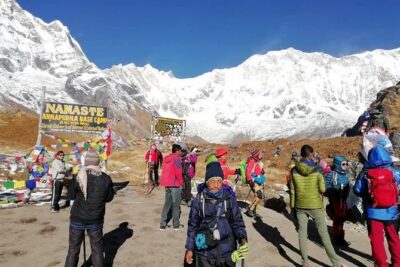
Kathmandu to Annapurna Base Camp (ABC) 5-Day Trek
Read our review →Browse the lists this tour appears in