
REVIEW · KATHMANDU
Annapurna Base Camp Trek
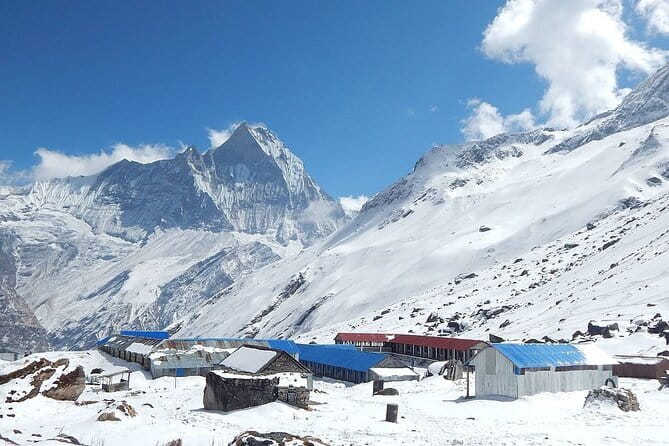
The best part of this Annapurna Base Camp trek is how quickly the scenery changes. In nine days, you move from Kathmandu and Pokhara by road into terraced hills, forest trails, stone villages, waterfalls, and a high mountain bowl surrounded by Annapurna I, Annapurna South, Machhapuchhre, Hiunchuli, and Gangapurna.
I like the efficient private transport and the fact that your guide, porter, permits, lodging, meals, and conservation fees are arranged together. I also like the personal service: Rojesh helps with planning, while guides such as Karma and porter Dami have been praised for keeping trekkers well cared for. The main drawback is the pace. Four to seven hours of walking on several days, with steep climbs and descents, calls for solid fitness.
Key points before you book
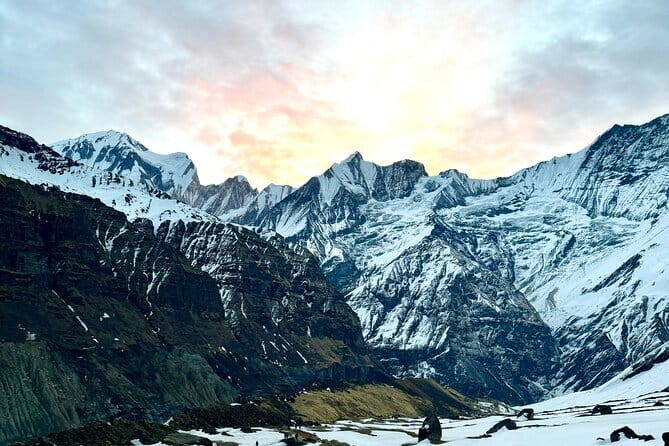
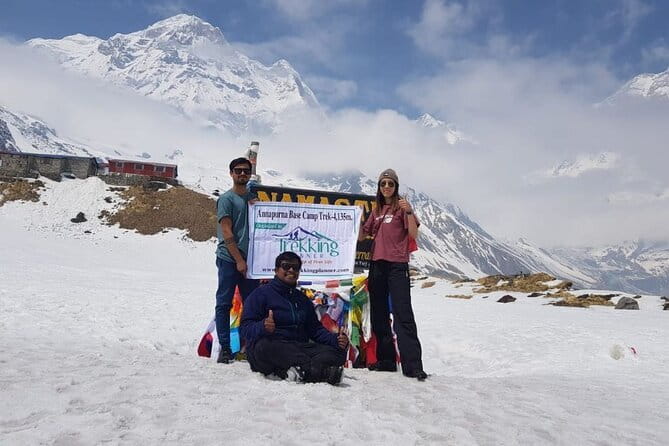
- The summit goal is 4,130 meters: Annapurna Base Camp sits inside the Sanctuary, ringed by some of Nepal’s most famous peaks.
- You get private ground transport: Kathmandu to Pokhara, Pokhara to Jhinu Danda, and the return journeys are covered by private vehicle or jeep.
- The route mixes comfort and simplicity: You sleep two nights in Pokhara and use tea houses or local lodges during the trek.
- The mountain approach is varied: Expect terraced farms, ethnic villages, bamboo forest, rhododendron country, gorges, and high alpine scenery.
- Planning support is part of the package: Rojesh helps tailor the trip, while an English-speaking guide and porter accompany you.
- The package is strongest for a private group: Only your own party takes part, which allows some flexibility in planning.
Why the Annapurna Sanctuary route works so well
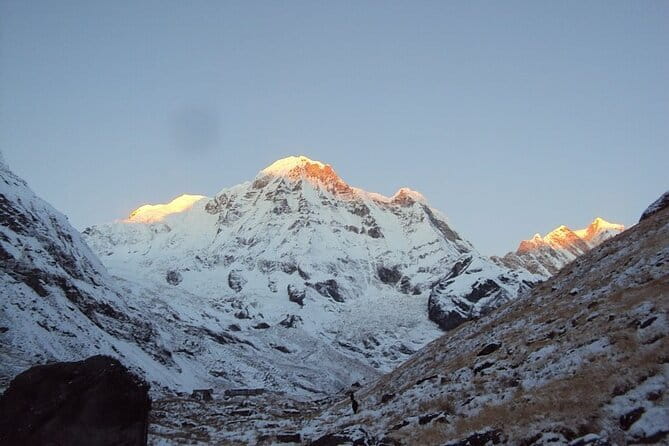
Annapurna Base Camp is a compact Himalayan trek with a clear payoff. You do not spend weeks crossing high passes. Instead, the trail gradually leads you from the middle hills into a dramatic mountain amphitheater.
The route has a pleasing mix of scenery. Terraced farms show how people use steep land for food. Forest sections bring bamboo and rhododendron. Villages offer a closer look at rural Nepalese life. Higher up, the trees thin out and the great peaks take over.
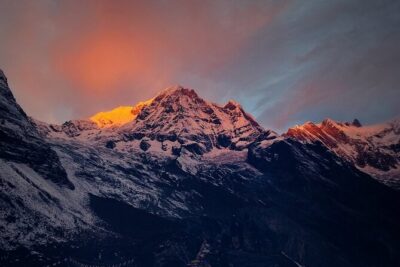
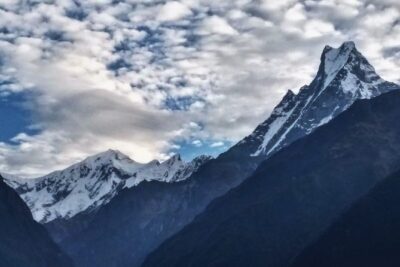
The final destination is not just a viewpoint from a distant ridge. You reach the base camp itself, at 4,130 meters, surrounded by Annapurna I at 8,091 meters, Annapurna II at 7,937 meters, Annapurna South at 7,219 meters, Gangapurna at 7,455 meters, and Hiunchuli at 6,441 meters. Machhapuchhre, also called Fishtail, is another major presence along the way.
The trip is private, which matters here. You are not tied to a large group with widely different walking speeds. Your guide can keep an eye on the day’s pace and help with the practical side of the trek.
More Annapurna Treks in Kathmandu
- Annapurna Circuit Trek with Tilicho Lake
★ 5.0 · 368 reviews - Annapurna base camp trek 5 Days
★ 5.0 · 252 reviews - 14-Day Private Annapurna Base Camp Trek
★ 5.0 · 180 reviews
Days 1 and 2: Kathmandu to Pokhara, then into the hills
The journey begins with a private drive from Kathmandu to Pokhara, taking about six to seven hours. This is a full road day, not a quick transfer, but it gives you a look at Nepal beyond the capital. The route follows changing hill country, river valleys, terraced farmland, and small settlements.
Pokhara is useful as more than an overnight stop. You spend two nights there during the trip, giving you a softer start and finish around the demanding walking days. The package includes accommodation in Pokhara, but lunch and dinner there are extra, so plan for those costs.
On the second day, a private jeep takes you from Pokhara to Jhinu Danda in about four hours. The road passes through terraced fields, rural villages, and steep green hills. From Jhinu Danda, the route connects with the trekking section and Chhomrong area.
This is an efficient start, but you should not mistake it for a relaxed sightseeing tour. The transport gets you close to the trail so more of your time goes toward the Annapurna route. Roads in the hills can make the journey feel long, even when the distance does not look great on a map.
Day 3: Chhomrong to the Bamboo country
The trail from Chhomrong toward Doban and Bamboo takes roughly six to seven hours, making it one of the more demanding walking days. Chhomrong is an important village on the route, with mountain views and a strong sense of the stepped settlement pattern found in the middle hills.
The day begins with a steep descent from Chhomrong. That descent saves effort later in the route, but it can be hard on knees, especially if you are not used to long downhill sections. Afterward, the path continues through forest and along hilly gorges.
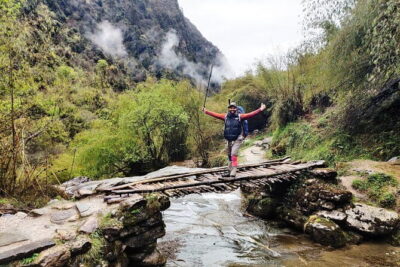
Bamboo forest gives this section its character. You may also pass waterfalls and hear the water moving through the gorge below. The route feels enclosed at times, then opens to mountain views. This changing rhythm keeps the walk interesting, though the forest can limit wide views for parts of the day.
Your overnight stop is in the Bamboo area, using a tea house or local lodge. These are practical mountain accommodations rather than polished hotels. The value is their location on the trail and the chance to rest without returning to the road system.
Day 4: Bamboo to Deurali and the higher trail
The walk from Doban toward Deurali takes about three to four hours. Compared with the previous day, it is shorter, but the trail continues upward and the altitude becomes more noticeable.
You keep moving through bamboo and rhododendron forest as the route enters the Annapurna Sanctuary. The forest helps break up the climb, and the sound of streams and waterfalls adds interest. At the same time, the trail can feel steep and enclosed, so this is a day for patience rather than speed.
Deurali is an important stopping point before the final push toward base camp. The shorter walking time gives you a chance to recover from the longer day before it. Do not treat this as spare time to overexert yourself. The next morning leads higher, and a steady pace is more useful than rushing.
Meals are covered during the trek. The package includes seven lunches, six dinners, and eight breakfasts, which covers the main route and the overnight pattern described for this nine-day schedule. Bottled water, soft drinks, alcohol, and other drinks are not included.
Another trail to compare in Kathmandu:
- Everest Base Camp Trek – 14 Days
★ 5.0 · 1,499 reviews - Everest Base Camp Trek
★ 5.0 · 842 reviews - Everest Base Camp Trekking
★ 5.0 · 485 reviews - Everest Base Camp Trekking – 13 Day
★ 5.0 · 365 reviews
Day 5: Machhapuchhre Base Camp to Annapurna Base Camp
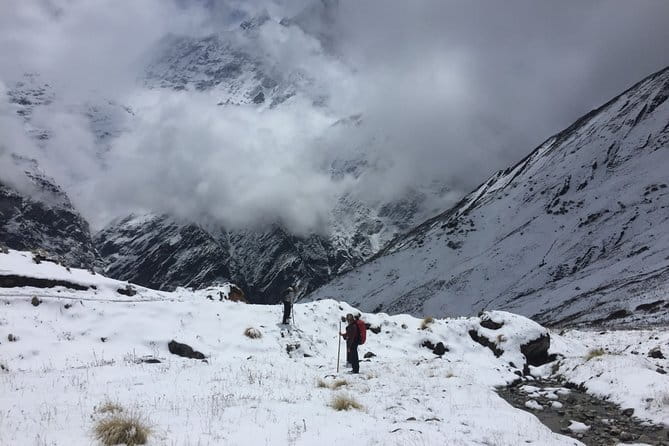
The walk from Deurali to Annapurna Base Camp, passing Machhapuchhre Base Camp, takes about five to six hours. This is the trip’s main mountain day.
The trail climbs gradually into a colder, more open setting. The forest gives way to wide views and high peaks. Machhapuchhre Base Camp provides a major visual moment before you continue toward the Annapurna Sanctuary itself.
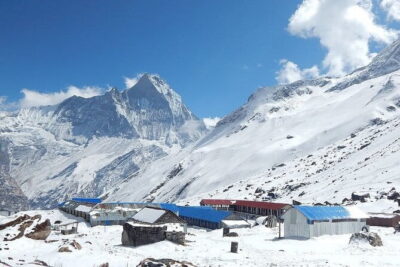
The final approach is special because the mountains surround you rather than sitting in one distant wall. Annapurna I, Annapurna South, Hiunchuli, Gangapurna, and Machhapuchhre form the dramatic setting. At 4,130 meters, ABC is high enough to feel like a serious Himalayan destination, but the route reaches it without the technical climbing required for a summit.
This is also the point where fitness and pacing matter most. Your guide is there throughout the trek, but you still need to listen to your body and keep your expectations realistic. The itinerary gives you one day to reach base camp, so there is not much room for an easy, slow approach if you are struggling.
The overnight stay is part of the tea-house arrangement. Conditions are basic, and the altitude can make a simple room feel very welcome. Bring patience, warm layers, and a willingness to value location over comfort.
Day 6: Sunrise at Annapurna Base Camp, then back to Bamboo
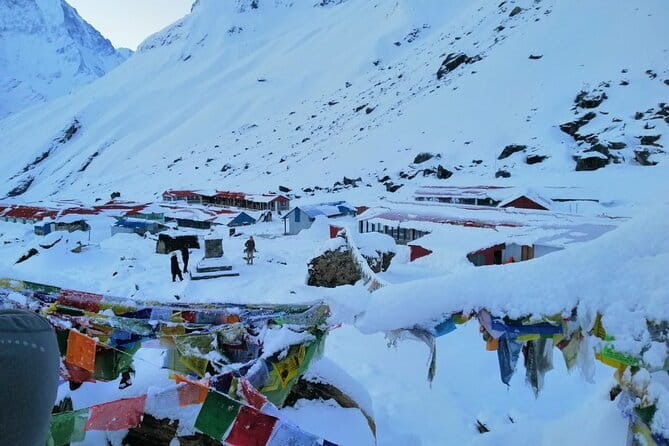
The morning at ABC is one of the strongest reasons to choose this route. As the sun comes up, the peaks take on changing light, and the high mountain bowl becomes the focus of the day.
After the morning view, you walk back toward Bamboo. The schedule lists about six hours for this return. Descending is often easier on breathing, but it can still be hard on knees and tired legs. The same trail feels different in reverse, with more attention on the forest, streams, and changing views below.
This out-and-back structure is practical. You reach the main goal, see it in early light, and then return along a known route rather than taking a much longer circuit. The tradeoff is that part of the trail is repeated. For many people, the chance to see the peaks at sunrise is worth that repetition.
Day 7: Bamboo to Jhinu Danda
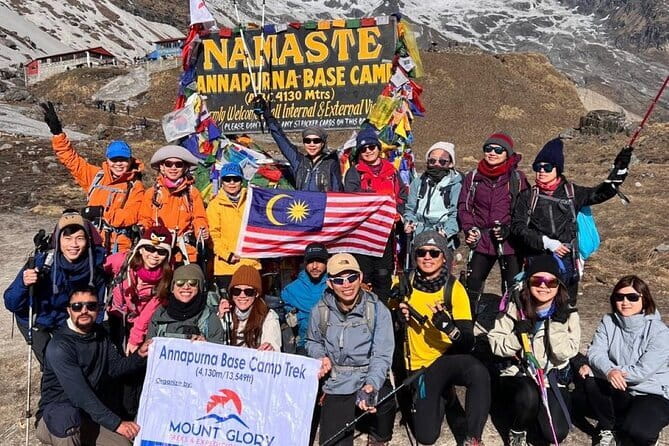
The walk from Bamboo to Jhinu Danda takes about five to six hours. The trail drops through bamboo and rhododendron forest, with views opening as you leave the higher section.
Jhinu Danda is a useful final trekking stop because it reconnects the route with the road system. The day still includes plenty of walking, but the direction is generally toward lower ground and warmer conditions.
The route’s cultural side is especially clear around the village sections. You pass through communities shaped by farming, mountain trade, and tourism. The package does not include formal cultural tours, so the guide becomes important for explaining what you see and helping you move through villages respectfully.
Days 8 and 9: Return to Pokhara and Kathmandu
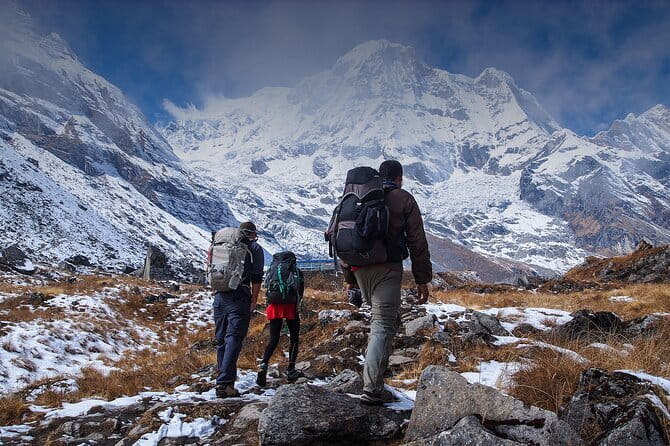
From Jhinu Danda, a private jeep takes you back to Pokhara in about three to four hours. The road descends through hills, farms, and small villages. After several days on foot, this drive gives your legs a needed break.
You have accommodation in Pokhara included, but meals there are not. This is a good place to budget for your own food and any personal activities. Sightseeing in Pokhara is also not part of the package, so you should arrange extra time if you want to explore beyond the trek schedule.
The final day is another six to seven-hour private drive from Pokhara to Kathmandu. It retraces the broad route from the beginning. The return is useful and straightforward, though road conditions and traffic can make it a long day.
The trip ends back at the Odyssey Treks office in Khusibun, Kathmandu. Pickup is offered, and the stated meeting point is the Odyssey Treks office, open Monday through Sunday from 10:15 a.m. to 5:15 p.m.
What the $995 price really covers
At $995 per person, the package has solid value if you want the main logistics handled in one booking. It includes private transport between Kathmandu, Pokhara, and Jhinu Danda, two nights in Pokhara, tea-house lodging on the trail, meals during the trek, an English-speaking guide, and a porter.
It also covers the Annapurna conservation fee and TIMS fee. Guide and porter allowances, their insurance, equipment, and transportation are included as well. Those items can add up when arranged separately, so the price is more useful than a simple room-and-transport comparison.
You still need to budget for Kathmandu accommodation and meals, Pokhara lunches and dinners, drinks, travel insurance, tips, laundry, phone calls, bar bills, and optional sightseeing. Guide, porter, and driver tips are not included, so keep cash aside for that.
The package is best value if you want a private trek with a guide and do not want to manage permits, transport, lodging, and meal arrangements yourself. It is less attractive if you want a luxury stay, extensive sightseeing in Kathmandu and Pokhara, or a trip with no long road days.
Guide support and the private format
Rojesh is the main planning contact and can help shape the trek around your available time. This matters because the standard plan is nine days, while a shorter five-day ABC trek has also been arranged for some groups. You should confirm the exact walking schedule before booking if your dates are tight.
Karma has served as a guide on the route, with Dami working as porter. Their role is more than carrying bags or pointing out the trail. They handle the daily practical details so you can focus on walking, scenery, and staying on schedule.
The private format also helps with communication. You are traveling only with your own group, rather than being placed with strangers. Still, private does not mean effortless. The physical demand remains the same, and the itinerary is not designed for a completely sedentary holiday.
The stated fitness requirement is moderate. You should be comfortable with repeated uphill and downhill walking, several days of four to seven hours on foot, and basic lodge conditions. Travel insurance is your responsibility and is worth arranging before you go.
Should you book this Annapurna Base Camp trek?
I would choose this trek if you want a well-organized private route to 4,130 meters with strong mountain views, village scenery, guide support, and most major costs bundled together.
It suits you best if you have moderate fitness, nine days available, and a preference for practical tea-house lodging over luxury. The private vehicle transfers are a real help, and the care provided by the guide and porter team adds comfort on a demanding route.
I would look elsewhere if you want short walks, high-end accommodation, included sightseeing in Kathmandu and Pokhara, or a trip with no long road transfers. For the right hiker, though, the mix of forest, farms, villages, and towering Himalayan peaks gives this trek a clear sense of place and a satisfying final goal.
FAQ
How long is the Annapurna Base Camp Trek?
The planned experience lasts approximately nine days.
What is the highest point on the trek?
Annapurna Base Camp sits at 4,130 meters.
Where does the trek start and end?
The activity begins at Odyssey Treks Pvt. Ltd. in Khusibun, Kathmandu, and ends back at the same meeting point.
Is transportation from Kathmandu to Pokhara included?
Yes. Private vehicle transportation from Kathmandu to Pokhara and back is included.
Is transportation from Pokhara to the trekking route included?
Yes. Transportation from Pokhara to Jhinu Danda and back by jeep is included.
Is a guide provided?
Yes. An English-speaking trekking guide accompanies you throughout the trip.
Is a porter included?
Yes. Porter service from Kathmandu for the trek is included.
Where do you sleep during the trek?
You stay in tea houses or local lodges during the trekking section and have two nights of accommodation in Pokhara.
Are meals included?
Breakfast is included eight times, lunch seven times, and dinner six times. Lunch and dinner in Pokhara are not included.
What is the cancellation policy?
You receive a full refund when you cancel at least six full days before the start time. Cancellation two to six full days ahead receives a 50 percent refund. Cancellations less than two full days before the start time are nonrefundable.
Latest treks added in Kathmandu
- Private Manaslu Circuit Trek at Himalayas★ 5.0 · 3 reviews
- Ghorepani Poonhill Trek★ 5.0 · 5 reviews
- Ghorepani Poon Hill Trek★ 5.0 · 16 reviews
- Upper Mustang Trekking★ 3.0 · 2 reviews
- Amazing 1 Day Trekking Experience in Kathmandu Nepal★ 5.0 · 24 reviews
- Upper Mustang Trekking★ 5.0 · 2 reviews
- Upper Mustang Trek★ 5.0 · 5 reviews
- Upper Mustang Trekking★ 5.0 · 4 reviews
Annapurna Base Camp Treks, compared.
Trekking in Annapurna/Langtang/Everest/Upper Mustang regions
Read our review →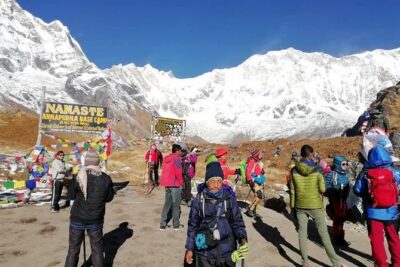
Kathmandu to Annapurna Base Camp (ABC) 5-Day Trek
Read our review →Browse the lists this tour appears in