
REVIEW · KATHMANDU
Annapurna Base Camp Trek
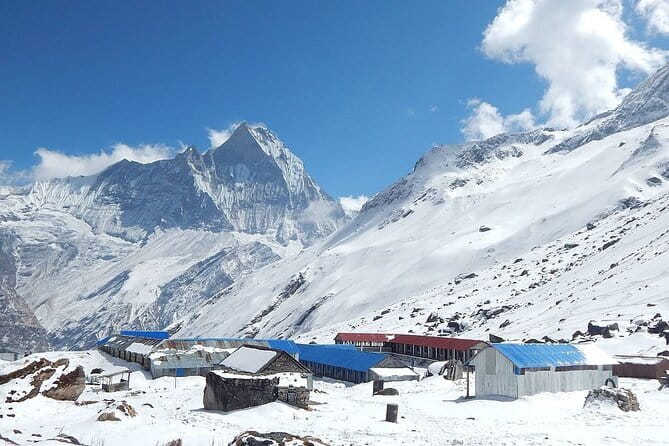
The great appeal of the Annapurna Base Camp trek is the way it packs villages, forests, rivers, hot springs, and enormous mountain views into 12 days. You begin with Nepalese city life in Kathmandu and Pokhara, then walk into the mountains through Gurung communities before sleeping beneath the peaks at Base Camp.
I like two things right away. First, the route gives you real variety: Ghandruk and Chhomrong bring village life and local culture, while rhododendron, bamboo, and damp mountain forests change the feel of the walk each day. Second, the $810 price includes the major costs that can quickly add up, including meals on the trek, permits, a guide, shared porter service, tea houses, transport, and airport transfers.
The main consideration is the physical demand. This is not a gentle sightseeing tour. You will handle steep climbs, long descents, cold conditions, and a famous staircase section of roughly 2,500 steps. The schedule also has a few unclear timing details, so ask the operator to confirm the exact transport and walking plan before you pay.
The trek in five useful points
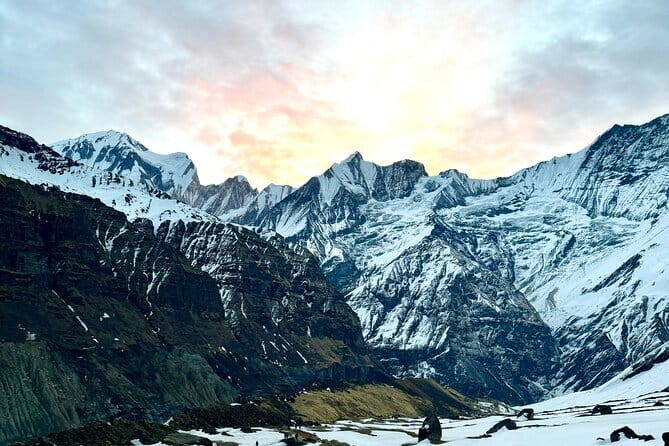
- Base Camp at the heart of the trip: Day 7 brings you through Machhapuchre Base Camp to Annapurna Base Camp, with a wide mountain panorama inside the sanctuary.
- A real village route: Ghandruk and Chhomrong offer Gurung culture, local homes, tea houses, and a chance to visit the Gurung Museum if time allows.
- Forests change as you climb: Expect rhododendron woods, bamboo groves, cold damp forest, glacial rivers, waterfalls, bridges, and increasingly sparse vegetation.
- A strong package price: At $810 per person, the tour covers eight tea-house nights, food during the trek, permits, staff costs, and transport between Kathmandu and Pokhara.
- A satisfying recovery stop: On Day 9, a short walk from Jhinu Danda leads to natural hot springs, a welcome break after the return from Base Camp.
- Private group format: Only your own group takes part, with a government-certified English-speaking guide and a porter shared between two trekkers.
Why Annapurna Base Camp works as a 12-day trek
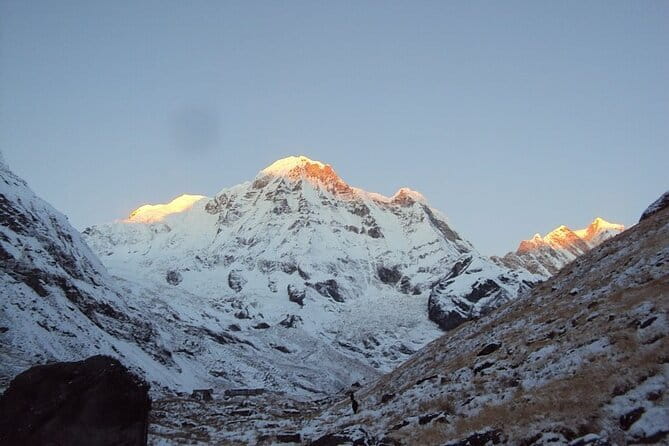
Annapurna Base Camp is a good choice if you want a serious Himalayan walk without committing to a very long expedition. The route rises through settled valleys and forest before reaching a high mountain bowl surrounded by peaks. It feels like a complete journey, not simply a hike to one viewpoint.
You also get two different kinds of Nepal. Kathmandu gives you temples, markets, and the busy Thamel district. Pokhara is slower, with Fewa Lake, lakeside restaurants, boating, and open views toward the Annapurna and Dhaulagiri ranges when the weather cooperates.
The mountain section is the reason to come. The route passes small settlements, bridges over rushing water, waterfalls, and tea houses where you can stop for food and rest. The scenery changes often enough to keep the walking interesting, even on demanding days.
This experience suits you best if you have moderate physical fitness and are comfortable with basic mountain accommodation. It also works well for friends, couples, and solo participants who like having a guide and porter while still traveling as a private group.
More Annapurna Treks in Kathmandu
- Annapurna Circuit Trek with Tilicho Lake
★ 5.0 · 368 reviews - Annapurna base camp trek 5 Days
★ 5.0 · 252 reviews - 14-Day Private Annapurna Base Camp Trek
★ 5.0 · 180 reviews
Kathmandu arrival and the evening briefing
Day 1 is deliberately light. A representative meets you at Tribhuvan International Airport and takes you to your hotel. Around 7 pm, the trek leader gives a pre-trip briefing.
Use that meeting well. Ask about the expected walking pace, bag weights, weather, tea-house facilities, and the route to Annapurna Base Camp. You can also clarify the return transport, because the package uses a tourist bus between Kathmandu and Pokhara rather than a private long-distance vehicle.
If your flight arrives early, you have time to explore Thamel, walk through the old market area of Ason, or ask the tour manager to help arrange another local activity. Do not fill every spare hour. The trek starts soon, and a quiet first evening may serve you better than a late night out.
Your Kathmandu hotel stay is on a bed-and-breakfast basis. The package also includes a Nepalese farewell dinner with local food and performances, giving the city portion a pleasant cultural finish.
Pokhara adds a calmer start
After breakfast on Day 2, you travel from Kathmandu to Pokhara by tourist bus. The drive takes much of the day, so treat this as a travel day rather than a sightseeing day with a tight schedule.
Pokhara is known as the lake city, and the lakeside area is your base. If the sky is clear, look north for Mt. Fishtail, Annapurna, and Dhaulagiri. Fewa Lake is the main easy outing, with boating and a visit to Tal Barahi Temple.
I like this overnight in Pokhara because it gives you time to adjust before the trail. You can eat at a lakeside restaurant, pick up small supplies, and take a gentle walk. Street food and souvenirs are part of the appeal, but keep your evening sensible. The next morning begins the uphill work.
Ghandruk brings the first village experience
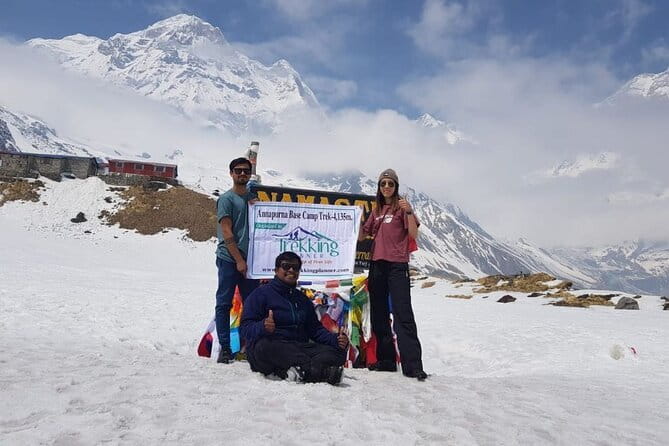
On Day 3, a private vehicle takes you to Nayapul, the starting point of the trek. From there, the trail passes through Birethanti and climbs through forest toward Ghandruk.
Ghandruk is one of the important Gurung settlements in the area. This is your first strong chance to see how a mountain village fits into the trekking route, rather than simply passing through a forest. If the schedule allows, visit the Gurung Museum and spend time walking around the village.
The day takes about five hours of trekking. That sounds manageable, but the early climb can feel demanding after the bus and car journey. Ghandruk is a good first overnight because it gives you a cultural stop before the trail becomes more focused on altitude and mountain scenery.
The first tea-house night also tells you what basic accommodation means here. You have a roof, food, and a place to sleep, but this is not a hotel experience. Bring a warm layer and keep useful items easy to reach.
Another trail to compare in Kathmandu:
- Everest Base Camp Trek – 14 Days
★ 5.0 · 1,499 reviews - Everest Base Camp Trek
★ 5.0 · 842 reviews - Everest Base Camp Trekking
★ 5.0 · 485 reviews - Everest Base Camp Trekking – 13 Day
★ 5.0 · 365 reviews
Chhomrong and the staircase test
Day 4 is one of the route’s more demanding sections. You walk toward Kimrung Danda, descend steeply to Kimrung Khola, then climb again to Chere Danda before a gentler approach to Chhomrong.
Chhomrong sits at the foot of the Annapurna massif, so the setting feels increasingly high and dramatic. The six-hour day includes repeated changes in direction and elevation. You should not judge the difficulty only by distance. Downhill sections can tire your knees, and the following climbs ask for steady effort.
The route’s staircases become a real feature here and later. On the return journey, a section of around 2,500 steps is specifically noted, so trekking poles may be useful if you already use them. The best strategy is a slow rhythm, short rests, and water before you feel thirsty.
Bamboo and the forest route
The next section descends about 2,500 steps to Chhomrong Khola, then climbs toward Sinuwa. From there, you walk through forest to Kuldihar before an easier downhill stretch to Bamboo.
The overnight is listed as Bamboo, even though the stop label in the schedule says Ghandruk. That is worth confirming with the operator, though the written description clearly places you in Bamboo. The walk takes about five hours.
This part of the route is less about sweeping views and more about the feel of the trail. You are moving through forest, crossing streams, and following the river valleys that lead toward the sanctuary. The repeated descent and ascent can be tiring, but it also gives the trek its classic mountain-path character.
The package includes lunch and dinner during the trekking days, so you do not need to budget for every meal separately. Drinks, laundry, and personal purchases are extra. Carry some cash for those items, since the package does not include them.
Deurali marks the change in scenery
From Bamboo, the trail enters a cold, damp bamboo forest. Steeper climbs lead to Himalayan Hotel, described as a familiar landmark on the route. After that, the forest opens enough to reveal the glacial river below.
You then climb through a drier section toward Hinku Cave, descend closer to the river, and finish with a gentler ascent to Deurali. The listed walking time for this day is unclear, appearing as four minutes, which cannot represent the full route described. Ask for the intended duration and departure time before the trek begins.
The setting changes as you gain height. Dense vegetation gives way to more open ground, colder air, and larger views. This is also a good day to keep your pace controlled. You want energy left for the following morning, when the route reaches its main goal.
Machhapuchre Base Camp to Annapurna Base Camp
Day 7 is the hardest and most rewarding day. You start early, pass through Bagar, and climb to Machhapuchre Base Camp, commonly shortened to MBC. From there, you continue toward Annapurna Base Camp through the sparse vegetation of the Annapurna Sanctuary.
This is the point where the route becomes a mountain experience in the fullest sense. The vegetation thins, the trail opens, and the surrounding peaks begin to dominate the view. At Base Camp, you are surrounded by some of the highest mountains in the region, with a 360-degree panorama described as the trip’s defining sight.
The effort is not minor. You should expect a long day, colder conditions, and less plant cover than on the lower trail. Start with enough water and warm clothing close at hand. Weather can change the experience, and clear skies make a major difference to the views.
Sleeping at Annapurna Base Camp gives you more than a quick arrival and photo stop. You get the chance to experience the setting at the end of the day and again in the morning. The high point is scenic, but it is also a test of pacing and preparation.
The return route and Jhinu hot springs
Day 8 retraces the route to Bamboo. The day is mainly downhill and takes about seven hours. Downhill walking is easier on your breathing, but it can be hard on your knees, especially after the climb to Base Camp.
Day 9 brings another mixed section. You climb to Kuldighar, descend to Chhomrong Khola, climb the 2,500 steps to Chhomrong, and then descend to Jhinu Danda. The route is a reminder that returning is not simply one long downhill walk.
The reward is the natural hot springs, about 20 minutes on foot from Jhinu Danda. This is one of the smartest parts of the schedule. After several demanding days, warm water gives you a chance to relax before the final walk out.
Do not expect the hot springs to replace rest. You still have the final descent to Nayapul on Day 10. Enjoy the stop, but keep enough energy for the road transfer back to Pokhara.
Nayapul, Pokhara, and Kathmandu
Day 10 follows the trail downhill from Jhinu to Nayapul, a walk of about six hours. From Nayapul, you drive to Pokhara and return to the hotel.
This overnight is useful. You can shower, eat a wider range of food, and sleep in a proper hotel before the long journey back to Kathmandu. The package includes the Pokhara hotel on a bed-and-breakfast basis, while trek meals are included on the mountain days.
Day 11 is an early drive to Kathmandu, listed at about eight hours. The tourist bus keeps the package cost down, but it also means you should allow patience for a long road day. Once back in Kathmandu, Thamel is the obvious place to buy souvenirs and Nepalese handmade products.
Day 12 is departure day. A representative takes you to the airport three hours before your scheduled flight. The airport transfer is included, which is helpful after a trip with several changes of transport.
What the $810 price really covers
At $810 per person, this is a strong value if you would otherwise arrange each part separately. The package includes two hotel nights in Kathmandu and Pokhara on a bed-and-breakfast plan, eight nights in trekking lodges or tea houses, trek meals, permits, entry fees, staff allowances, staff insurance costs, a duffel bag, and airport and hotel transfers.
It also includes a professional, government-certified English-speaking guide and a porter shared between two trekkers. The shared porter arrangement keeps the cost reasonable, but it means you should pack with restraint. Your duffel is carried, while you still need a daypack with water, warm layers, rain protection, and personal essentials.
The price does not include travel insurance, and your policy must cover helicopter rescue in an emergency. It also excludes drinks, laundry, tips, trip cancellation charges, personal expenses, and costs caused by extending the trip after unforeseen problems.
The package’s main weakness is that the transport and timing details are not perfectly clear. The long-distance Kathmandu to Pokhara journeys use a tourist bus, and one trekking day has an incorrect-looking time entry. Get those points confirmed in writing.
Who should book this trek
You should consider it if you want:
- A private group rather than a large shared departure
- A guided Himalayan trek with permits and meals arranged
- A route combining villages, forests, rivers, hot springs, and high peaks
- A manageable 12-day schedule rather than a longer expedition
- Support from a guide and shared porter
- A clear cultural component in Kathmandu, Pokhara, Ghandruk, and Chhomrong
You should think twice if you dislike steep staircases, basic tea houses, long bus rides, or changing weather. The experience requires moderate fitness, and the Base Camp day is specifically the most strenuous part.
The package has a 5 out of 5 rating shown with 21 reviews and a 100 percent recommendation figure. The praise centers on mountain scenery, bridges, waterfalls, friendly local communities, sunrise views, tea-house camaraderie, and the sense of achievement after reaching Base Camp. The repeated practical message is simple: the trail can leave you sore, but the setting and shared effort make that soreness worthwhile.
Should you book the Annapurna Base Camp trek?
I would book this trek if you want a well-supported first Himalayan route and accept that comfort will be basic. The strongest reasons are the varied scenery, the Gurung villages, the included services, and the chance to spend the night at Annapurna Base Camp rather than rushing in and out.
Before booking, confirm the exact walking times, the Day 5 overnight location, the bus schedule, porter arrangements, and what happens if weather disrupts the route. Free cancellation is available up to 24 hours before the start time, and a weather cancellation offers a different date or full refund, subject to the stated policy.
For fit walkers who want Nepal’s mountains without arranging every permit, meal, bed, and transfer alone, this is a sensible package. For anyone seeking an easy holiday, it is the wrong trip. The mountain views come with stairs, cold nights, long days, and a fair amount of effort.
FAQ
How long does the Annapurna Base Camp trek take?
The experience lasts approximately 12 days, including time in Kathmandu and Pokhara, the trek to Base Camp, the return walk, and departure arrangements.
Where does the trek begin?
The walking portion begins at Nayapul, reached by vehicle from Pokhara. The overall trip begins with your arrival in Kathmandu.
Is transportation from Kathmandu to Pokhara included?
Yes. The package includes long-distance transportation between Kathmandu and Pokhara by tourist bus, in both directions.
Are airport transfers included?
Yes. Private car transfers are included for airport and hotel transfers. On the final day, a representative takes you to the airport three hours before your scheduled flight.
Are meals included?
Breakfast is included at the Kathmandu and Pokhara hotels. Breakfast, lunch, and dinner are included during the trek, with the package specifying 11 breakfasts, 8 lunches, and 8 dinners.
Where do you sleep during the trek?
You spend eight nights in trekking lodges or tea houses in the Annapurna trekking area. The itinerary includes nights at Ghandruk, Chhomrong, Bamboo, Deurali, Annapurna Base Camp, and Jhinu Danda.
Is a guide included?
Yes. A government-certified, English-speaking trekking guide accompanies the group during the trek.
Is porter service included?
Yes. A porter is included on a shared basis of one porter for two trekkers. The package also includes a duffel bag.
Do I need travel insurance?
Yes. Travel insurance is not included, and your policy must cover helicopter rescue in case of an emergency.
What happens if bad weather cancels the experience?
If poor weather causes cancellation, you will be offered a different date or a full refund. You can also cancel up to 24 hours before the experience start time for a full refund under the stated cancellation policy.
Latest treks added in Kathmandu
- Private Manaslu Circuit Trek at Himalayas★ 5.0 · 3 reviews
- Ghorepani Poonhill Trek★ 5.0 · 5 reviews
- Ghorepani Poon Hill Trek★ 5.0 · 16 reviews
- Upper Mustang Trekking★ 3.0 · 2 reviews
- Amazing 1 Day Trekking Experience in Kathmandu Nepal★ 5.0 · 24 reviews
- Upper Mustang Trekking★ 5.0 · 2 reviews
- Upper Mustang Trek★ 5.0 · 5 reviews
- Upper Mustang Trekking★ 5.0 · 4 reviews
Annapurna Base Camp Treks, compared.




Trekking in Annapurna/Langtang/Everest/Upper Mustang regions
Read our review →


Kathmandu to Annapurna Base Camp (ABC) 5-Day Trek
Read our review →Browse the lists this tour appears in