
REVIEW · KATHMANDU
Annapurna Base Camp Trek – 11 Days
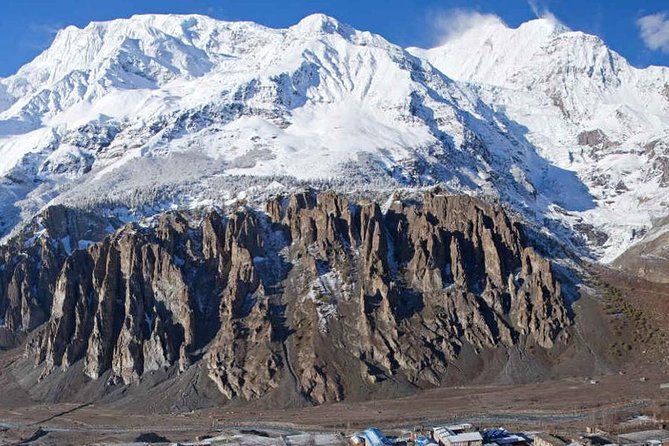
Annapurna Base Camp is a fine choice if you want Nepal’s big mountain scenery without signing up for a long expedition. In 11 days, you move from river valleys and terraced farms to Poon Hill sunrise, rhododendron forest, stone stairways, and the snowy bowl around Annapurna Base Camp.
I like the mix of scenery and village life, and I like that the price includes permits, meals, a guide, porter support, a sleeping bag, down jacket, and basic medical equipment. The main catch is the physical demand: long uphill and downhill sections, high altitude, and early starts make this a serious trek, not a casual walk.
Key points at a glance
- Poon Hill sunrise: An early climb brings wide views of Annapurna, Dhaulagiri, Nilgiri, and Lamjung Himal.
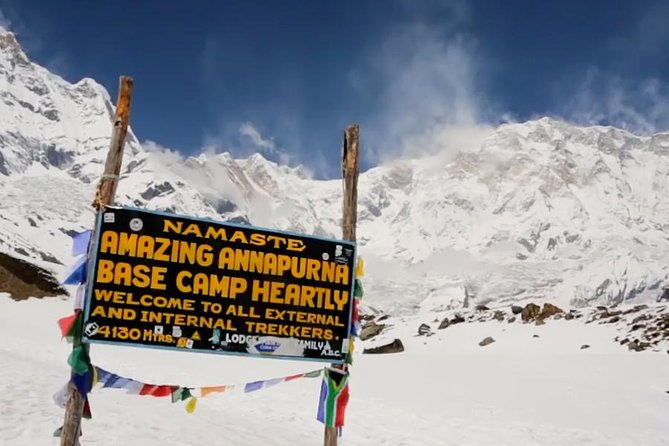
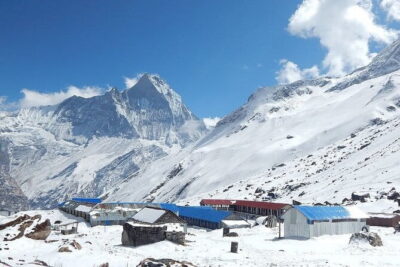
- Annapurna Base Camp at 4,130 meters: The route finishes in a dramatic mountain amphitheater reached by way of Machhapuchhre Base Camp.
- Jhinu Danda hot spring: A warm soak offers welcome relief after steep stone stairways.
- Private trekking format: Only your group takes part, with a local government-licensed English-speaking guide.
- Useful inclusions: Permits, guesthouse accommodation, meals, staff costs, a down jacket, sleeping bag, duffel bag, first-aid kit, and pulse oximeter are included.
- Strong overall rating: The experience is rated 4.9 from 30 ratings, with 97 percent recommending it.
What the 11-day Annapurna route actually feels like
This trek gives you several versions of Nepal in one trip. You begin with a road journey from Kathmandu to Pokhara, then trade the bus for village paths, suspension bridges, forest trails, and flights of stone steps.
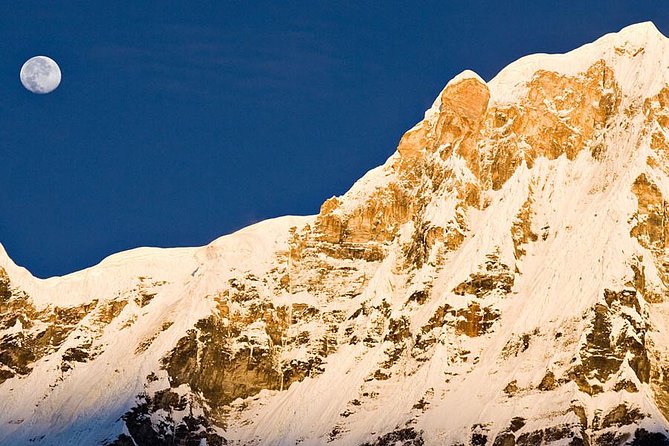
The route includes two big scenic rewards. Poon Hill offers a sunrise viewpoint above the foothills, while Annapurna Base Camp puts you inside a ring of high peaks. These are different experiences: Poon Hill is about a broad mountain panorama, while Base Camp feels enclosed by the mountains around you.
You also get cultural contact along the way. The route passes through villages such as Birethanti, Ghorepani, Chhomrong, Sinuwa, and Jhinu Danda. Accommodation is in the best available guesthouses, mainly in twin rooms, so you should expect practical mountain lodging rather than hotel comfort.
The trek is private, which matters if you prefer your own pace and do not want to join a large walking group. Still, private does not mean easy. The route has repeated ascents and descents, and your knees may feel the stone steps as much as your lungs feel the altitude.
More Annapurna Treks in Kathmandu
- Annapurna Circuit Trek with Tilicho Lake
★ 5.0 · 368 reviews - Annapurna base camp trek 5 Days
★ 5.0 · 252 reviews - 14-Day Private Annapurna Base Camp Trek
★ 5.0 · 180 reviews
Day 1: Kathmandu to Pokhara by Prithvi Highway
The trip starts at 6:15 am from Kathmandu. After breakfast, you take a tourist bus toward Pokhara on the Prithvi Highway.
This is not a quick transfer. The road journey takes you past rivers, terraced farms, villages, and towns, giving you an immediate look at rural Nepal. It is a useful change of pace from Kathmandu, though a full day on a mountain highway can feel tiring before the walking begins.
The bus transfer is included, along with the return journey at the end. Keep your daypack close, with water, snacks, medication, and anything you may want during the ride. The itinerary does not present this as a sightseeing stop with a fixed attraction, so think of Day 1 as a scenic transfer day.
Day 2: Nayapul, Birethanti, and the first trail
From Pokhara, you drive through the countryside for about two hours to Nayapul. The walking begins by crossing a suspension bridge over the Modi River and continuing toward Birethanti.
This first stretch helps you get used to the rhythm of the trek. You move away from roads and into a trail system shaped by rivers, farms, and village life. The bridge crossing is a small but memorable start, and the route introduces the Modi River corridor that you follow in different forms later.
Do not expect every day to be a mountain viewpoint. This part is valuable because it shows how the trek connects ordinary settlements with high Himalayan routes. It also gives your guide a chance to see how you handle the first walking hours.
Day 3: Rhododendron forest and Ghorepani
The trail enters thick rhododendron forest as you walk through Banthanti and Nangethanti toward Ghorepani. The route is described as an easy forest walk in places, but it also includes an uphill climb on stone stairs.
Ghorepani is important because it sets up the next morning’s Poon Hill start. You will want an early night here, since the sunrise walk begins before breakfast or at least very early in the morning.
The forest is one of the route’s softer moments. Instead of only exposed rock and snow, you get trees, orchids, ferns, and shaded paths. The stone steps are the less romantic part. They can be slippery or tiring, especially after several hours of walking, so shoes with good grip matter.
Another trail to compare in Kathmandu:
- Everest Base Camp Trek – 14 Days
★ 5.0 · 1,499 reviews - Everest Base Camp Trek
★ 5.0 · 842 reviews - Everest Base Camp Trekking
★ 5.0 · 485 reviews - Everest Base Camp Trekking – 13 Day
★ 5.0 · 365 reviews
Day 4: Poon Hill sunrise and the road toward Jhinu Danda
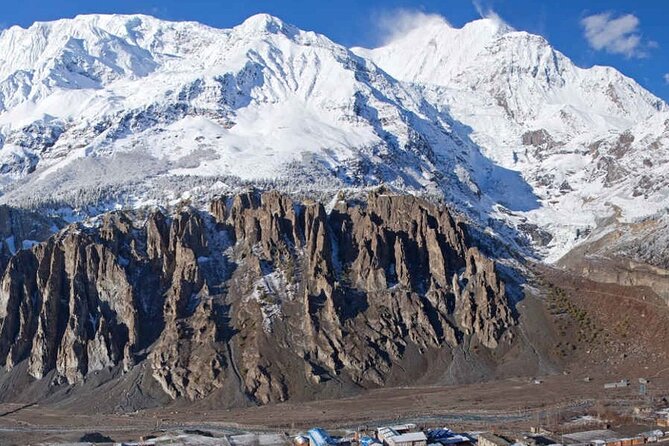
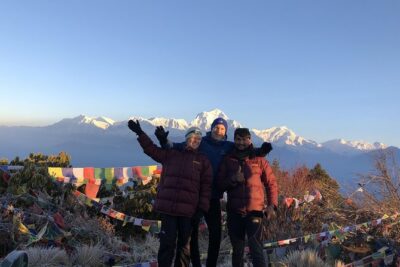
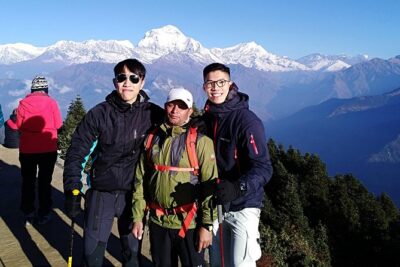
Day 4 begins with an early ascent to Poon Hill. The viewpoint looks toward the Annapurna and Dhaulagiri ranges, with views that also include Nilgiri at 7,061 meters and Lamjung Himal at 6,983 meters.
Sunrise is the reason for the early start. The cold and darkness are part of the deal, but the reward is a changing view as light reaches the snowy peaks. Bring warm layers even if the lower villages feel mild.
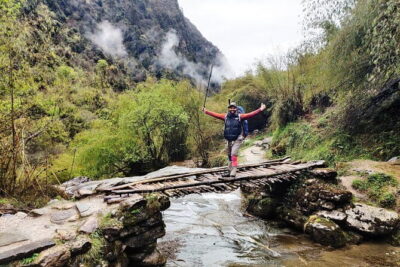
After Poon Hill, the route continues through uphill and downhill sections, forest, and a suspension bridge over Kimrong Khola. It then reaches Jhinu Danda, where you can take a short rest in the hot spring.
This is a demanding day because the sunrise walk is only the beginning. The hot spring is well placed, but do not treat it as a full recovery day. You still need to walk afterward, and a long soak may leave you feeling sluggish.
Day 5: Forest paths, Chhomrong Khola, and Sinuwa
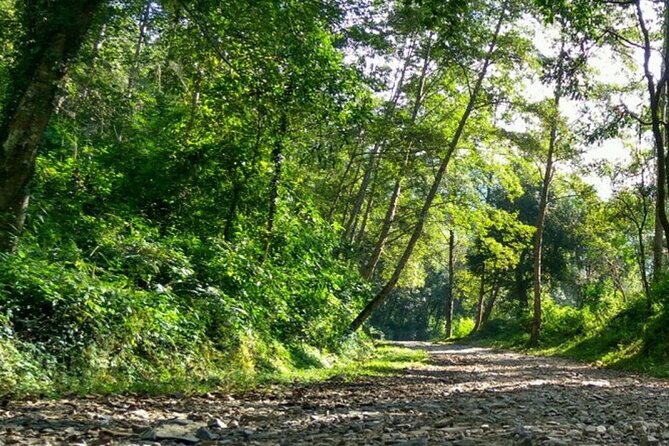
The next stage is described as an easier walk through rhododendron forest, with orchids and ferns along the trail. You descend stone stairs, cross Chhomrong Khola, and climb again toward Sinuwa.
The repeated pattern is typical of the Annapurna approach: down to a river, then up the other side. You should not read easy walk as flat walking. The forest may feel gentle, but the stairs still require steady effort.
Sinuwa marks a shift toward the higher sections of the trek. From here, the route follows trails connected with the Modi Khola valley and moves closer to the mountain zone. This is a good point to keep an eye on hydration and how your body handles elevation.
Day 6: Toward Deurali and Machhapuchhre Base Camp
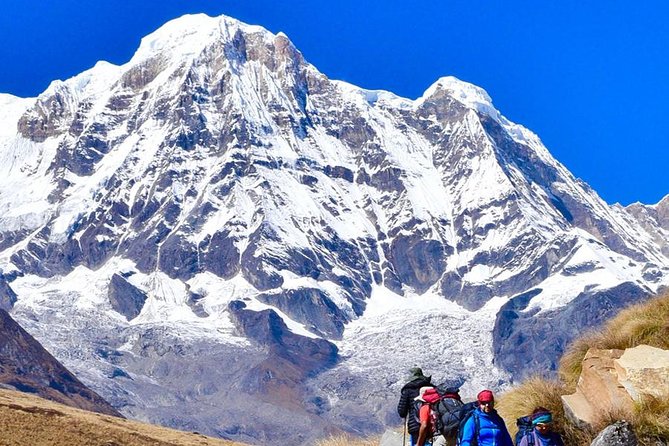
The itinerary places the approach to Deurali and Machhapuchhre Base Camp on this section of the trek. You climb on stone steps toward open views of snow-capped peaks, reaching Machhapuchhre Base Camp at 3,700 meters.
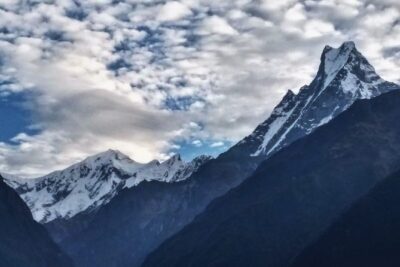
Machhapuchhre is also called Fishtail, though that nickname is not needed to appreciate the sharp mountain profile. At this height, the scenery changes quickly. Forest gives way to more exposed mountain terrain, and the air becomes thinner.
This is one of the days where your guide’s judgment matters. The package includes an oximeter to check pulse, oxygen saturation, and heart rate, plus first-aid supplies. Those tools do not replace good pacing or medical care, but they show that altitude monitoring is part of the operating plan.
Day 7: Annapurna Base Camp at 4,130 meters
From Machhapuchhre Base Camp, the route follows moraine paths toward Annapurna Base Camp. The trail continues beside the Modi Khola, with views of snowy peaks and stretches of rhododendron and fir forest lower down.
Reaching Base Camp is the central achievement of the trek. At 4,130 meters, you are high enough for altitude to matter, even if you feel strong at lower elevations. Walk slowly, follow your guide’s advice, and tell the guide at once if you feel unwell.
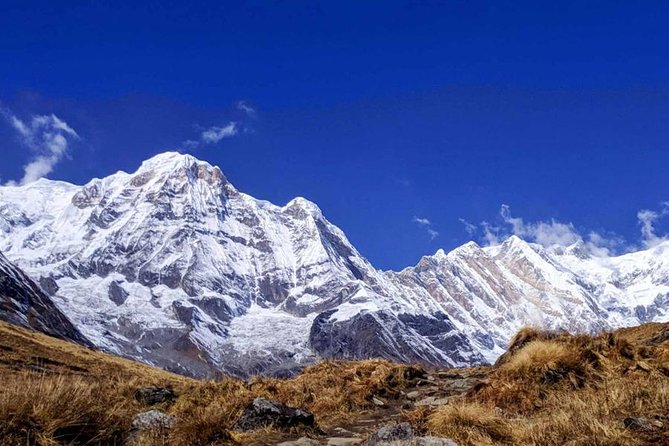
The setting is different from Poon Hill. Poon Hill gives you distance and scale. Annapurna Base Camp places you among the peaks, with mountain walls rising around the route. The moraine walking can feel rough underfoot, so careful steps are more useful than speed.
The itinerary descriptions place the Base Camp visit across the Machhapuchhre and following day sections, so confirm the exact overnight arrangement and timing with Base Camp Adventure before departure. The broad route is clear, but the daily stopping points may shift with weather and trail conditions.
Day 8: Descending from the high mountain zone
The return begins by descending through the moraine route from Machhapuchhre Base Camp and following the Modi Khola trails. You pass through fir and rhododendron forest as you move away from the highest section.
Downhill walking is not automatically easier. It can be hard on knees and toes, particularly after the steep approach to Base Camp. Trekking poles, if you already use them, may help, but personal trekking equipment is not included, so you need to bring your own preferred gear.
The return gives you a chance to notice details missed on the way up. You may find the forest more open and colorful in daylight, and the lower altitude usually makes breathing feel easier. The route still requires stamina, so save some energy for the remaining days.
Day 9: Sinuwa, Chhomrong, and another Jhinu stop
The route first climbs through forest to Sinuwa, descends to Chhomrong Khola, and then rises by stone steps to upper Chhomrong. From there, you descend to Jhinu Danda for another chance to enjoy the hot spring.
This is a useful reminder that the Annapurna Base Camp route is not a simple downhill line after the summit. Rivers cut across the route, and the trail repeatedly climbs away from them. You should expect more effort even after reaching the main goal.
A second hot spring stop can be welcome, especially if your legs are tired. Bring a swimsuit or suitable clothing if you plan to use it, and keep your belongings secure. The included package covers meals and accommodation, but personal drinks and laundry are extra.
Day 10: Nayapul to Pokhara
The trek ends with a descent to Nayapul along trails beside the Modi Khola. From Nayapul, you drive back to Pokhara.
This final walking day is a good example of the trip’s changing scale. You move from high mountain paths back toward roads, villages, and the lowland travel network. The drive gives you a comfortable transition after the trek, though the exact timing may depend on trail and road conditions.
The itinerary allows for an evening in Pokhara, with the option to rest or spend time there. Since no specific evening activity is included, treat it as free time rather than a guided sightseeing program.
Day 11: Pokhara to Kathmandu
The return to Kathmandu begins early by tourist bus. The route again follows the highway, with greenery, villages, and countryside along the way.
After arrival, you can rest or make your own plans in the capital. The activity ends back at the meeting point in Kathmandu, and surface transport to and from Kathmandu is included.
The early departure is practical, but this final day is still a long road day. If you have an international flight soon after, leave a sensible buffer rather than assuming the bus will arrive at an exact hour.
What the $986 price includes
At $986 per person, the package offers solid value if you need a guided trek with core equipment and logistics arranged. It includes:
- Surface transfers from and back to Kathmandu
- Trekking permits and entry fees
- Best available guesthouse accommodation, mainly in twin rooms
- A local government-licensed English-speaking guide
- Food, accommodation, salary, insurance, equipment, medicine, and transportation for trekking staff
- Nine lunches, eight dinners, and ten breakfasts
- Down jacket, sleeping bag, and duffel bag
- Annapurna Base Camp route map
- First-aid medical kits and an oximeter
That list removes several costs that can surprise independent trekkers. You still need to budget for alcoholic drinks, hot and cold drinks, laundry, personal trekking equipment, international airfare, airport departure tax, travel insurance, and staff tips.
The biggest value comes from the staff and permit coverage. You are not only buying a walking route. You are paying for transport coordination, guide support, accommodation, meals, and a team structure that includes staff insurance and equipment.
Guide support and the human side of the trek
The experience uses a private group and a local English-speaking guide. That gives you more direct contact with the guide and may make it easier to discuss pace, rest, and symptoms than it would be in a large group.
Several guide names connected with past departures include Prakash, Shiva, Naba, and Saroj Dhakal. The information does not guarantee which person will lead your trip, so ask for the assigned guide’s name before departure if that matters to you.
The strongest praise centers on friendly, patient, helpful guides and well-organized support. One detailed account also describes a solo trek handled from airport pickup through the hotel and mountain route, while another praises a guide named Prakash for making the walking feel easier and more cheerful.
There is one useful note of caution. A separate complaint describes an unprofessional guide experience, followed by a company response saying the trip may have been posted to the wrong company page and that the named company had not arranged such a solo Annapurna trek in the previous four months. I would not treat that isolated dispute as a clear pattern, but I would confirm your booking contact, guide, and inclusions in writing.
Who should book this trek
I would recommend it for you if you want a classic Nepal trek with a clear finish, mountain villages, a major sunrise viewpoint, and a private guide. It suits people with a moderate level of fitness who can manage repeated uphill and downhill walking.
You should be comfortable with basic guesthouse accommodation and shared rooms, early starts, long bus journeys, and changing weather. The package does not include personal trekking equipment, so you need to prepare rather than assume every item is supplied.
This is not the right pick if you want a relaxed sightseeing holiday, luxury rooms, or a route with little climbing. The altitude and stone steps make the trek physically serious, even though it is one of Nepal’s best-known routes.
Booking and cancellation details
Confirmation is provided when you book, and the meeting point is in Kathmandu at 6:15 am. The tour operates as a private activity for your group and is near public transportation.
You can cancel free of charge up to 24 hours before the local start time for a full refund. Cancellations or changes inside 24 hours are not accepted for a refund. If poor weather causes cancellation, you are offered another date or a full refund.
Should you book the Annapurna Base Camp Trek?
I would book this trek if your priority is a well-supported route that combines Poon Hill and Annapurna Base Camp in one trip. The included permits, meals, staff support, guide, guesthouses, and trekking equipment make $986 a reasonable package price.
Before paying, confirm the daily schedule around Machhapuchhre Base Camp and Annapurna Base Camp, ask who your guide will be, and check exactly what personal equipment you must bring. If you are fit enough for long stair sections and ready for basic mountain lodging, this gives you a strong introduction to Nepal’s high mountain routes without having to organize every detail yourself.
FAQ
Where does the Annapurna Base Camp Trek start?
It starts at the meeting point in Kathmandu, Nepal, with a stated start time of 6:15 am.
How long does the trek last?
The experience lasts approximately 11 days.
Is transportation from Kathmandu included?
Yes. Surface transportation from Kathmandu to Pokhara and back to Kathmandu is included.
Is Pokhara part of the itinerary?
Yes. You travel from Kathmandu to Pokhara on Day 1, return to Pokhara from Nayapul on Day 10, and travel back to Kathmandu on Day 11.
What altitude does Annapurna Base Camp reach?
Annapurna Base Camp is reached at approximately 4,130 meters.
How high is Machhapuchhre Base Camp?
Machhapuchhre Base Camp is listed at 3,700 meters.
Is a guide included?
Yes. A local government-licensed English-speaking trekking guide is included.
Is this a private tour?
Yes. Only your group participates in the activity.
Are meals included?
Yes. The package includes 10 breakfasts, nine lunches, and eight dinners.
What equipment is provided?
A down jacket, sleeping bag, duffel bag, route map, first-aid medical kits, and an oximeter are included. Personal trekking equipment is not included.
Is travel insurance included?
No. You must arrange your own travel insurance.
Can I cancel for a full refund?
Yes, if you cancel at least 24 hours before the local start time. Poor-weather cancellations offer a different date or a full refund.
Latest treks added in Kathmandu
- Private Manaslu Circuit Trek at Himalayas★ 5.0 · 3 reviews
- Ghorepani Poonhill Trek★ 5.0 · 5 reviews
- Ghorepani Poon Hill Trek★ 5.0 · 16 reviews
- Upper Mustang Trekking★ 3.0 · 2 reviews
- Amazing 1 Day Trekking Experience in Kathmandu Nepal★ 5.0 · 24 reviews
- Upper Mustang Trekking★ 5.0 · 2 reviews
- Upper Mustang Trek★ 5.0 · 5 reviews
- Upper Mustang Trekking★ 5.0 · 4 reviews
Annapurna Base Camp Treks, compared.
Trekking in Annapurna/Langtang/Everest/Upper Mustang regions
Read our review →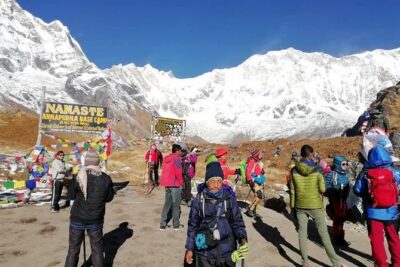
Kathmandu to Annapurna Base Camp (ABC) 5-Day Trek
Read our review →Browse the lists this tour appears in