
REVIEW · KATHMANDU
Annapurna Base Camp Trek
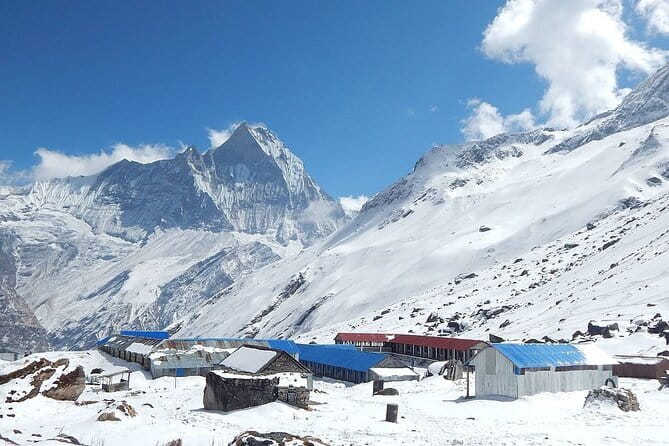
The great pull of this Annapurna Base Camp trek is its variety. In two weeks, you move from Kathmandu and Pokhara into forest trails, Gurung villages, high mountain country, and the great bowl of peaks around base camp. The route also includes Poon Hill, giving you two major Himalayan viewpoints rather than one.
I like the sensible route design, which builds from lower villages toward 4,130-meter Annapurna Base Camp. I also like the private format, with guide Damu and porter support available to your group rather than a large tour crowd. The catch is simple: this is a serious walking holiday, with several five- to seven-hour days and limited inclusions for meals and drinks.
Key points to know before booking
- Poon Hill and Annapurna Base Camp in one route: You get an early mountain viewpoint plus the main base camp goal.
- A private trip for your group: The itinerary can be adjusted around personal needs, according to the supplied experience details.
- Guide Damu receives repeated praise: His planning, punctuality, English, humor, and calm support are important parts of the experience.
- The highest point is 4,130 meters: Altitude and weather can change the character of the trek quickly.
- The $769.24 price is not all-inclusive: Breakfast, transport, taxes, and fees are included, but lunch, dinner, snacks, bottled water, hot drinks, and alcohol are not.
- Fourteen days includes city time: The schedule has arrival, return travel, a rest day in Kathmandu, and departure, not fourteen full days on foot.
Why this Annapurna route works so well
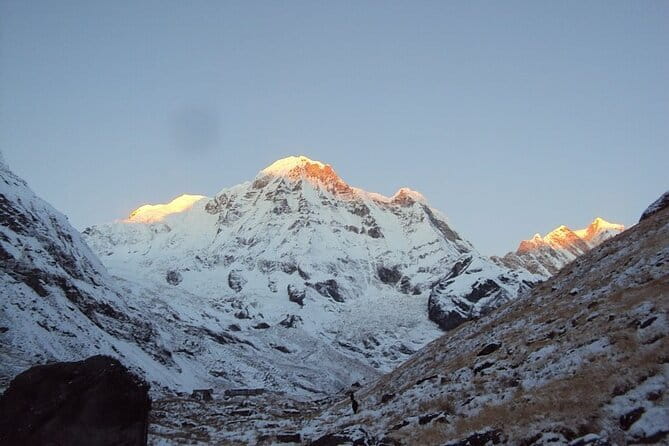
Annapurna is a good choice if you want a classic Himalayan trek without committing to a very long expedition. The route passes through the Annapurna Conservation Area and the Ghandruk Valley, known for Gurung culture and mountain views. Machhapuchhre, often called Fish Tail Mountain, is one of the memorable peaks in this part of Nepal, along with the Annapurna range and Dhaulagiri.
The route has a pleasing rhythm. You begin with roads and lower elevations, then walk through villages and woodland before reaching the stark, high setting of base camp. After the summit point of the trip, you descend through Bamboo, Chomrong, and Jhinu Danda before returning to Pokhara.
I also appreciate that the itinerary does not treat the base camp as a quick photo stop. It gives you a separate day for Poon Hill, a day to reach Deurali, and a full day to approach Annapurna Base Camp. That helps the trip feel like a journey through changing places, not just a race to one altitude.
More Annapurna Treks in Kathmandu
- Annapurna Circuit Trek with Tilicho Lake
★ 5.0 · 368 reviews - Annapurna base camp trek 5 Days
★ 5.0 · 252 reviews - 14-Day Private Annapurna Base Camp Trek
★ 5.0 · 180 reviews
Days 1 and 2: Kathmandu to Pokhara
Day 1 is your arrival in Kathmandu, at about 1,350 meters. The plan lists arrival, rather than a city sightseeing program, so you should treat this as a settling-in day. It is a useful buffer before the trek, especially if your flight or baggage is delayed.
On Day 2, you drive about 220 kilometers to Pokhara. The listed time is around six hours, though road conditions can affect any Nepal overland journey. The air-conditioned vehicle is included, which matters on a long transfer.
Pokhara, at roughly 860 meters, gives you a lower and calmer base before the walking begins. It is also the gateway for this side of the Annapurna region. You do not fly between Kathmandu and Pokhara on this plan, so the road transfer is part of the experience and part of the time budget.
Days 3 and 4: Nayapul, Hille, and Ghorepani
Day 3 starts with a drive to Nayapul, followed by about four hours of walking to Hille village at 1,496 meters. This is a gradual introduction rather than an immediate high-altitude test. You begin learning the daily pattern of walking, resting, eating, and reaching a mountain village before dark.
Day 4 takes you to Ghorepani, at about 2,840 meters, in a listed seven hours. This is one of the longer early days and a real step up in elevation. The distance is not the only issue. Uphill paths and stone steps can make a day feel longer than the raw walking time suggests.
Ghorepani is important because it positions you for Poon Hill before the main route continues toward base camp. Pack a warm layer where you can reach it quickly. The supplied experiences include unexpected cold and snowfall, even during a season when some people expected spring conditions.
Day 5: Poon Hill and Tadapani
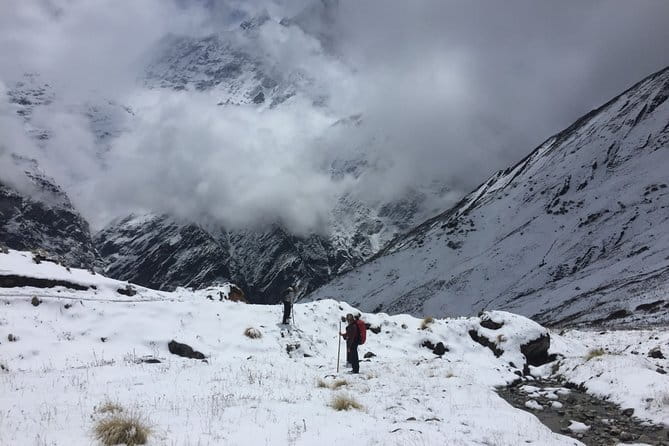
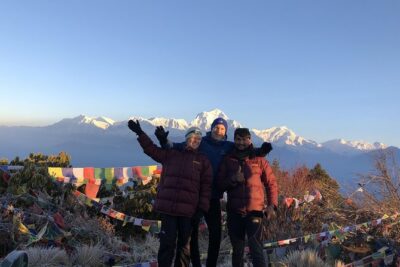
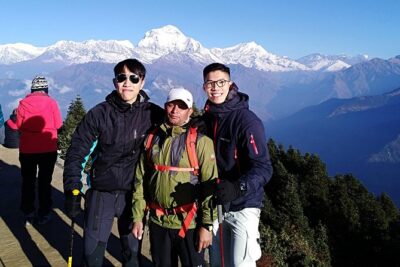
The morning hike to Poon Hill is one of the strongest parts of the itinerary. You then continue to Tadapani, at 2,520 meters, with about five hours of trekking listed for the day.
Poon Hill gives you a major Himalayan viewpoint early in the trip. The timing means an early start, but that is the trade-off for morning mountain views. Afterward, the trail continues to Tadapani, keeping the route moving instead of sending you back the way you came.
I like this addition because it gives you a second goal beyond Annapurna Base Camp. If clouds or weather affect the view at base camp, Poon Hill still provides a separate chance for a memorable mountain morning. The drawback is the early start after the previous day’s climb to Ghorepani, so this is not a lazy sightseeing morning.
Another trail to compare in Kathmandu:
- Everest Base Camp Trek – 14 Days
★ 5.0 · 1,499 reviews - Everest Base Camp Trek
★ 5.0 · 842 reviews - Everest Base Camp Trekking
★ 5.0 · 485 reviews - Everest Base Camp Trekking – 13 Day
★ 5.0 · 365 reviews
Days 6 and 7: Sinuwa to Deurali
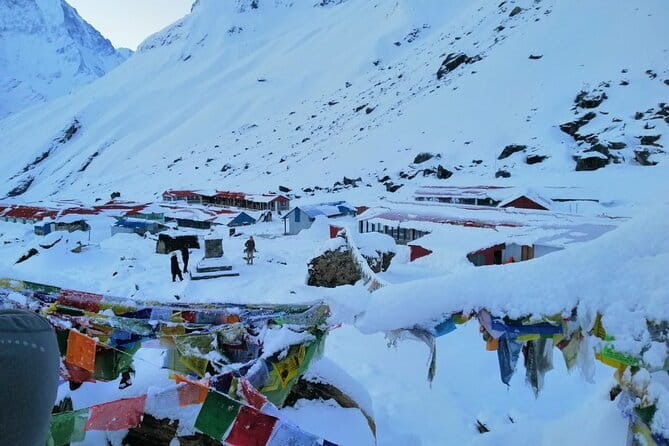
Day 6 leads to Sinuwa, at about 2,340 meters, in roughly five hours. Day 7 continues to Deurali, at about 3,230 meters, with a listed seven-hour walking day.
This is where the trek begins to feel more demanding. You are gaining altitude while still putting in full walking days. The route’s value lies in this gradual progression, but you need to respect the pace. A moderate fitness level is required, and that phrase should not be read as meaning easy.
The private format helps here. Damu is described as attentive to personal needs and careful with the daily plan. That does not remove the physical work, but it gives you someone to help manage pace, timing, and changes caused by weather or fatigue.
Day 8: Reaching Annapurna Base Camp at 4,130 meters
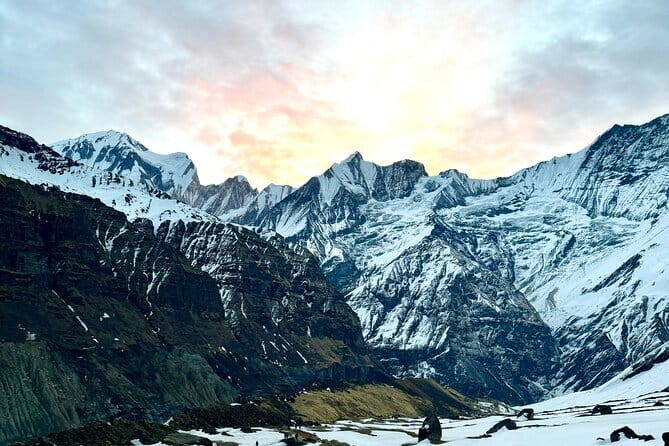
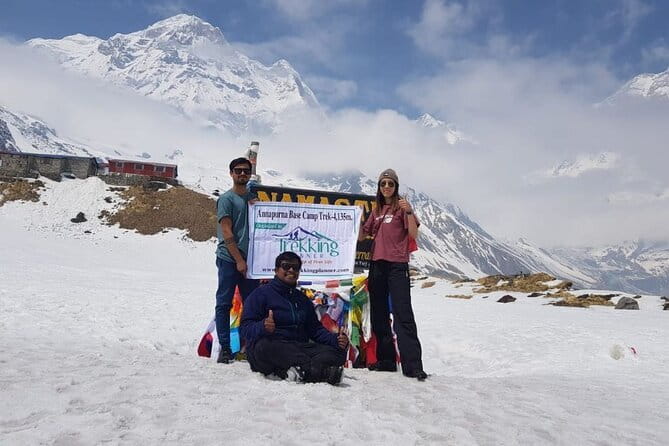
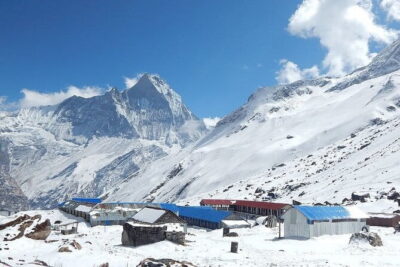
The walk from Deurali to Annapurna Base Camp is listed at four hours. This is the emotional center of the trek. You reach 4,130 meters, surrounded by the high peaks of the Annapurna area.
A four-hour day does not mean an easy day. At this height, cold, snow, thinner air, and changing weather can affect how quickly you move. One supplied experience describes unexpected snowfall and a canceled helicopter, a useful reminder that mountain plans can change quickly.
Base camp is valuable not simply because it is the highest point. It is the place where the route’s earlier forests, villages, and climbing days come together. You have earned the change in scenery through steady progress. Take your time here, follow your guide’s advice, and keep warm.
Days 9 and 10: Bamboo, Chomrong, and Jhinu Danda
After base camp, Day 9 descends to Bamboo at about 2,050 meters in roughly six hours. Descending can feel easier on your lungs, but it can be hard on knees and ankles. Trekking poles, if you use them, can be useful on this part of the route, though the tour information does not state that equipment is supplied.
Day 10 continues to Jhinu Danda at about 1,700 meters via Chomrong. The walking time is listed at six hours. Chomrong is one of the key settlements on this route, and the descent brings a noticeable change after the high base camp section.
The lower elevation is welcome, but do not assume the trek is finished. You still have a full walking day ahead, and tired legs can make the final sections surprisingly demanding. This is also a good point to appreciate the route’s shape: you return by a different set of trail sections rather than simply retracing every step.
Days 11 and 12: Returning to Pokhara and Kathmandu
Day 11 takes you toward Nayapul and then back to Pokhara. The schedule lists eight hours, combining trekking and driving. That makes this a long transition day, so keep your expectations practical. You are not getting a relaxed final morning in the mountains.
Day 12 is the drive back to Kathmandu. The exact driving time is not given, but this is another road-transfer day. After many days on foot, sitting in a vehicle may sound easy, though long road travel can still be tiring.
The plan then gives you Day 13 as a rest day in Kathmandu. I consider this a smart inclusion. It gives you time to recover, handle any unexpected delay, and enjoy the city before the final departure on Day 14.
What the $769.24 price really covers
At $769.24 per person, the price has value if you want a private, guided trek with transport built into the plan. Breakfast, an air-conditioned vehicle, all listed fees, and taxes are included. Guide and porter support are central to the organized format described in the experiences.
The price does not cover lunch, dinner, snacks, bottled water, coffee, tea, or alcohol. Those costs add up during fourteen days, especially in mountain villages where supplies must reach remote settlements. Budget separately for food and drinks rather than treating the headline price as your full trip cost.
The itinerary also includes Kathmandu and Pokhara transfers, not only trail time. That makes comparison with a shorter trek package tricky. Look at the full structure: two city transfers, a rest day, Poon Hill, and Annapurna Base Camp.
The private arrangement can also be good value for people who care about flexibility. Experiences with Damu describe an itinerary that could be adjusted around personal needs. Still, ask exactly what porter service, accommodation, permits, and meals are covered before paying, since the supplied details do not spell out every trekking service.
The guide and the private-trip advantage
Damu, also identified as Damodar, is the name most closely linked with this experience. The supplied accounts describe him as organized, punctual, humorous, clear in English, and experienced in Nepal trekking. One account also identifies Bahta as a porter on an ABC trek.
Those details matter because a guide does more than lead the way. On a route with unexpected snow, weather changes, tired legs, and altitude concerns, good communication can make the day feel manageable. The strongest pattern in the supplied experiences is personal attention, careful planning, and a friendly relationship between guide and group.
A private trip is not automatically better for everyone. Solo hikers or couples may value the freedom and direct support, while social trekkers might prefer a larger group. This format suits you best if you want to ask questions, adjust the daily rhythm, and avoid being tied to strangers’ walking speeds.
Fitness, weather, and what to pack
The required fitness level is listed as moderate, but the itinerary includes several five- to seven-hour days and a high point above 4,000 meters. You should be comfortable walking uphill and downhill for much of a day. The base camp section can feel harder than the time estimate suggests because of altitude and cold.
Weather deserves respect. The supplied experiences include bad weather, unexpected snowfall, and a canceled helicopter. Even if your own trip has clear conditions, pack for cold and changing weather rather than relying on a seasonal assumption.
Because meals beyond breakfast are excluded, you should also plan for your own lunch, dinner, snacks, drinks, and bottled water. The tour information does not specify equipment rental, accommodation standards, or a packing list, so ask before departure about those items.
Booking details and cancellation
The meeting point is in Kathmandu, Nepal, and the activity ends back at that meeting point after the return portion of the trip. It is a mobile-ticket activity, and confirmation is provided at booking.
Service animals are allowed, and the starting point is near public transportation. The tour is private, so only your group participates.
Free cancellation is available if you cancel at least 24 hours before the experience start time. Cancellations made less than 24 hours ahead, along with late changes, are not accepted for a refund. The cutoff follows local time.
Is this Annapurna trek right for you?
I would choose this trip if you want a well-known Nepal trek with both Poon Hill and Annapurna Base Camp, plus a private guide and porter setup. The route offers a good mix of village life, Gurung culture, forest walking, high mountain views, and a clear summit goal.
I would pause if you want short walks, full-board pricing, or a soft adventure with little weather risk. The long walking days, 4,130-meter altitude, and excluded meals require preparation.
For a first serious Himalayan trek, this plan has a sensible shape and a strong human element through Damu’s reported support. Book it after confirming accommodation, permits, porter arrangements, and the exact meal costs. If those details fit your budget, the route gives you a substantial Annapurna experience without stretching into a much longer expedition.
FAQ
Where does the Annapurna Base Camp Trek start?
The trek starts at the meeting point in Kathmandu, Nepal.
How long does the experience last?
The planned duration is approximately 14 days, including arrival in Kathmandu, travel to and from Pokhara, trekking days, a rest day in Kathmandu, and final departure.
What is the highest point on the trek?
Annapurna Base Camp is listed at 4,130 meters.
Is this a private tour?
Yes. Only your group participates in the activity.
What meals are included?
Breakfast is included. Lunch, dinner, snacks, bottled water, coffee, tea, and alcoholic drinks are not included.
Is transportation included?
An air-conditioned vehicle and the listed fees and taxes are included. The schedule includes drives between Kathmandu, Pokhara, Nayapul, and the trekking area.
What fitness level is required?
A moderate physical fitness level is required. The itinerary includes walking days of about four to seven hours, with some longer combined trekking and driving days.
Latest treks added in Kathmandu
- Ghorepani Poonhill Trek★ 5.0 · 5 reviews
- Ghorepani Poon Hill Trek★ 5.0 · 16 reviews
- Private Manaslu Circuit Trek at Himalayas★ 5.0 · 3 reviews
- Upper Mustang Trekking★ 3.0 · 2 reviews
- Amazing 1 Day Trekking Experience in Kathmandu Nepal★ 5.0 · 24 reviews
- Upper Mustang Trekking★ 5.0 · 2 reviews
- Upper Mustang Trek★ 5.0 · 5 reviews
- Upper Mustang Trekking★ 5.0 · 4 reviews
Annapurna Base Camp Treks, compared.
Trekking in Annapurna/Langtang/Everest/Upper Mustang regions
Read our review →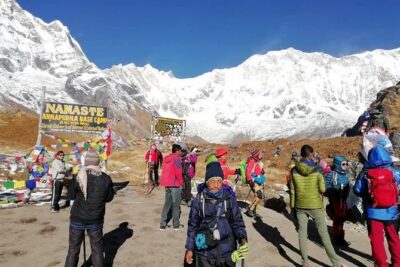
Kathmandu to Annapurna Base Camp (ABC) 5-Day Trek
Read our review →Browse the lists this tour appears in