
REVIEW · KATHMANDU
Annapurna Base Camp Short trek
Annapurna Base Camp is the kind of trek where the scenery keeps changing before you have time to settle into one view. You move from terraced farmland and Gurung villages to rhododendron, oak, and bamboo forests, then into high mountain country beneath Annapurna and Machhapuchhre. The reward comes at 4,130 meters, when sunrise reaches the peaks around base camp.
I like the strong mix of nature and village life, especially Ghandruk, Chhomrong, and the forest trail beside the Modi Khola. I also like that the price includes a guide, permits, trail lodging, three meals a day, and two hotel nights in Pokhara. The main drawback is the pace: eight hours of walking on the hardest day, plus long stair sections, makes this a serious hike rather than a gentle mountain holiday.
Key points at a glance
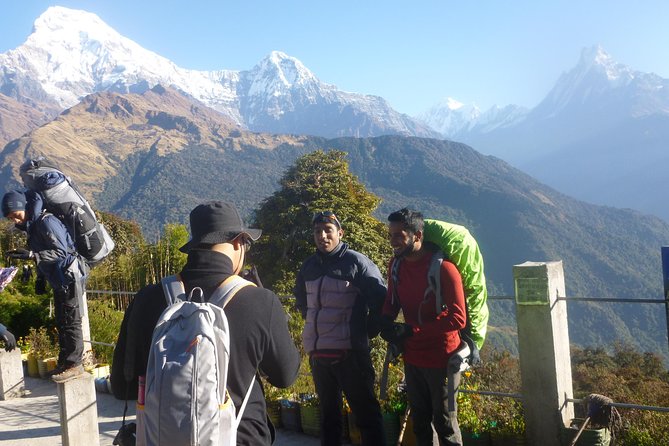
- Annapurna Base Camp at 4,130 meters: Reach the famous bowl beneath the Annapurna Massif and watch sunrise on the surrounding peaks.
- A changing trail: Walk through Gurung villages, terraced farmland, bamboo forest, grassland, river valleys, and rocky high-altitude paths.
- Private group format: Only your own group takes part, with a professional trekking guide included.
- Pokhara built into the plan: Stay two nights with breakfast in the City of Lakes, with free time for boating, cycling, and exploring.
- A demanding return route: The descent includes long stone stairways, but the stop at Jhinu Danda’s natural hot spring offers a welcome break.
- Practical package pricing: At $897.44 per person, the fee covers many core trekking costs, but not insurance, evacuation, personal spending, or tips.
What the Annapurna Base Camp route really offers
This trek is best understood as a gradual change of worlds. The opening road journey takes you from Kathmandu toward Pokhara along the Prithvi Highway. Terraced farmland, the Trishuli River, hills, and roadside towns fill the window. It is a long drive, not a scenic flight, so you should expect a full day of sitting and stop for lunch and toilets along the way.
That slower start has one advantage: you see how quickly Nepal shifts from city streets to rural hills. After reaching Pokhara, you have time to put down your luggage and enjoy the city. Boating and cycling are listed as options, and the lakeside setting gives you a pleasant pause before the walking begins.
The route then goes by road toward Ghandruk, a Gurung village with views toward the Annapurna range and Machhapuchhre, also called Fishtail. From Ghandruk, you descend through forest to the Kimrong River, climb again, and finish at Kimrong village. This first walking section takes about four hours, after roughly three hours of driving.
That pattern is important. This is not a trek with a short approach and instant mountain views. Roads carry you deep into the region, while the walking days link villages, forest paths, bridges, and lodges. You get a fuller sense of the area, but you also need to be comfortable with changing transport and uneven trails.
More Annapurna Treks in Kathmandu
- Annapurna Circuit Trek with Tilicho Lake
★ 5.0 · 368 reviews - Annapurna base camp trek 5 Days
★ 5.0 · 252 reviews - 14-Day Private Annapurna Base Camp Trek
★ 5.0 · 180 reviews
Day 1: Kathmandu to Pokhara by the Prithvi Highway
The first day is devoted mainly to the road from Kathmandu to Pokhara. You pass terraced fields, the Trishuli River, and several towns along the highway. No meals are included on this day, so plan to pay for food during the journey.
Pokhara is more than a transit stop here. You spend two nights in a hotel with breakfast included, which gives you time to rest before and after the high section of the trek. The city is also useful for practical preparation, such as checking luggage and making sure you have what you need for the trail.
I would not book this itinerary expecting a leisurely first day. The drive takes up much of it. Still, the inclusion of Pokhara helps the trip feel less rushed than a schedule that sends you straight from Kathmandu into the hills.
Day 2: Ghandruk and Kimrong village
A drive of about three hours brings you to Ghandruk. The village is known here for its Gurung setting, mountain views, and seasonal cherry blossoms. It is a good early introduction to the people and settlements of the Annapurna region before the route turns more heavily toward forest and high mountain terrain.
The walk from Ghandruk descends through woodland to the Kimrong River, then climbs to Kimrong village. You cover about four hours on foot, with breakfast, lunch, and dinner included, along with overnight lodging on the trail.
This is a manageable first walking day, but it is not flat. The descent followed by a climb gives you an early reminder that distance alone does not describe a Nepal trekking day. A guide is useful here, not only for route finding but also for helping you settle into the pace and routine of trail lodges.
Day 3: Kimrong, Chhomrong, Sinuwa, Bamboo, and Deurali
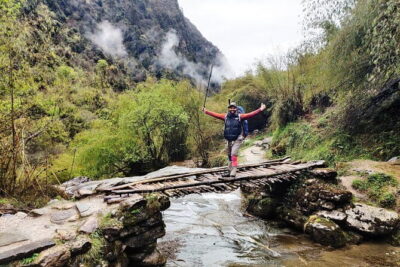
This is one of the more varied days. You climb through forest to open ground, then continue to Chhomrong at about 2,310 meters. From there, the route drops down a long stone staircase, crosses a suspension bridge, and climbs again toward Sinuwa.
The trail then passes through bamboo forest and hillside sections before reaching Bamboo and continuing to Deurali. The walking time is listed at about six hours, with all three meals and overnight accommodation included.
The repeated climbs and descents matter more than the distance. You lose elevation, cross the bridge, then gain it again. The stairs can be tiring, especially if wet, so trekking poles would be a practical personal item, though they are not listed as part of the package.
This section gives you some of the best forest walking on the route. Bamboo, oak, and rhododendron provide shade, while openings in the trees reveal steep valley walls and mountain peaks. If you prefer high viewpoints from the start, this day may feel slow. If you enjoy the way a trail changes by the hour, it is rewarding.
Another trail to compare in Kathmandu:
- Everest Base Camp Trek – 14 Days
★ 5.0 · 1,499 reviews - Everest Base Camp Trek
★ 5.0 · 842 reviews - Everest Base Camp Trekking
★ 5.0 · 485 reviews - Everest Base Camp Trekking – 13 Day
★ 5.0 · 365 reviews
Day 4: Deurali to Machhapuchhre Base Camp and Annapurna Base Camp
The push to base camp is the toughest and most important day. You start early and follow rocky trails with both climbs and descents. The forest gives way to a wide grassy area, where the peaks begin to feel closer and more exposed.
The trail follows the river before a long staircase leads toward Machhapuchhre Base Camp. This is a key pause on the route. Machhapuchhre, or Fishtail, has a distinctive profile, and the mountain looks much larger from this close range.
After resting, you continue toward Annapurna Base Camp. The total walking time is about eight hours, so you should treat this as a full mountain day rather than a simple final approach. Weather can change quickly in high country. Conditions described on similar trips have included rain, hail, and snowstorms, so you should be ready for more than clear blue skies.
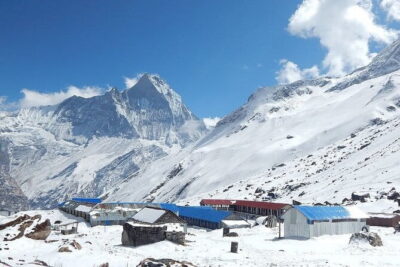
The base camp itself is the centerpiece of the journey. You are at the foot of the Annapurna Massif, surrounded by huge peaks and open mountain space. The setting is dramatic because the trail has carried you from warm valleys and shaded forests into a high, quiet basin.
Accommodation on the trail is included, but you should expect a lodge rather than a city hotel. The package does not promise private rooms, luxury facilities, or particular amenities. Its value lies in getting you to the right place with food, lodging, permits, and guide support arranged.
Day 5: Sunrise at Annapurna Base Camp and the return to Sinuwa
The early morning view is the reason to protect this night in the itinerary. Sunrise reflects on the Annapurna range, changing the color and character of the peaks within minutes. You eat breakfast, then retrace the route downhill.
The return to Sinuwa takes about seven hours. Although downhill walking may feel easier on your lungs, it can be hard on your knees, particularly after the long climb the day before. The trail passes back through grassland, rocky sections, and forest before reaching Sinuwa by late day.
This day rewards an early start and sensible pacing. Stop to look back at the mountains rather than treating the descent as a race. The views often change more on the way down because you are now facing features that were behind you during the approach.
Day 6: Sinuwa, Chhomrong, and the hot spring at Jhinu Danda
From Sinuwa, you descend a long series of stairs to the suspension bridge, then climb another long section to Chhomrong. This is a demanding bit of trail even though you are heading back toward lower country.
From Chhomrong, the route takes a different path toward Jhinu Danda. The descent is steep, but the natural hot spring provides a memorable rest point. A soak after several days of stairs and mountain walking is one of the more human pleasures of this itinerary.
You continue downhill and spend the night at an inn. The walking time is about six hours, with breakfast, lunch, and dinner included. This is a day when good footwear matters. Stone steps can be awkward, and a steep descent is not automatically easy.
Day 7: Nayapul and a final afternoon in Pokhara
The last walking section goes through farmland toward Nayapul. The trail is described as pleasant and relatively free of climbs, a welcome change after the high route and the stair-heavy days around Chhomrong.
From Nayapul, you drive about three hours back to Pokhara along winding roads beside the Modi Khola. Breakfast is included, and you have time to return to the hotel, rest your legs, and enjoy more of the city.
This second stay in Pokhara is a useful feature. You do not have to leave the mountains and immediately continue to Kathmandu. Use the time for a boat ride, a cycle, or simply a slow meal and a proper rest.
Day 8: Pokhara to Kathmandu
The final day follows the same general highway route back to Kathmandu. Hills, white rivers, and terraced farmland pass outside the window, with a lunch and toilet stop along the way.
After reaching the capital, you can freshen up and walk around Thamel. The plan leaves room for nightlife and souvenir shopping, though the exact arrival time will depend on road conditions and the pace of the drive.
This final road day is practical but long. If you have a flight immediately after the trek, allow plenty of extra time. The provided plan does not promise a fixed arrival hour, and Nepal’s highway journeys can take longer than the schedule suggests.
What the $897.44 price includes
At $897.44 per person, this is not a bare-bones hiking permit. The fee includes two hotel nights in Pokhara with breakfast, TIMS permits, a professional trekking guide, guide insurance and allowances, three meals a day during the trek, and overnight lodging along the trail.
That package can represent good value if you want one company handling the main arrangements. Food and shelter are not small costs during a multi-day trek, and having a guide makes the route easier to manage. The private format also means your group is not combined with strangers.
The important exclusions are travel and medical insurance, emergency evacuation, personal expenses, telephone calls, alcoholic drinks, donations, and tips for guides and porters. Tips are expected, so include them in your budget rather than treating the advertised price as the final amount.
Porters are mentioned in the trip feedback, and several named guides received strong praise for being attentive and helpful. Names associated with past trips include Jog Gurung, Jog Bahadur Gurung, Ganesh, Calvin, Osman, and Hori. You should confirm who will lead your own departure, since the listing does not assign one specific guide to every booking.
Who will enjoy this trek most
You should consider this trip if you want a private guided trek with a clear route to Annapurna Base Camp and a practical amount of support. It suits people who value mountain scenery, village contact, forest walking, and simple trail accommodation more than luxury.
The itinerary is also a good fit if you want Pokhara included rather than treating it as an airport stop. The two hotel nights give you room to rest, and the city adds a softer ending to a demanding mountain week.
You need reasonable fitness for long walking days and repeated stairs. The hardest day takes about eight hours, and several other days run six or seven hours. The listing says most people can participate, but it does not make the trek easy. If you have a medical condition, arrange travel and medical insurance and get appropriate advice before booking.
Booking details worth checking first
Pickup is offered, and the meeting point is Tribhuvan Airport in Kathmandu. Confirmation is provided at booking, and the activity is offered as a private tour for your own group.
The cancellation rule is simple: cancel at least 24 hours before the local start time for a full refund. Cancellations or changes made inside that period are not accepted for a refund.
Before paying, I would confirm the exact hotel in Pokhara, the type of trail lodging, the porter arrangement, the guide’s name, and the transport schedule. These points can make a real difference during an eight-day trek, even though they are not fully detailed in the plan.
Should you book the Annapurna Base Camp Short Trek?
Book it if you want the classic Annapurna Base Camp route with a guide, meals, permits, trail lodging, and Pokhara stays gathered into one price. The scenery changes constantly, and the sunrise at base camp gives the trip a clear high point. The hot spring at Jhinu Danda is another welcome touch.
Think twice if you want short walking days, polished hotels, or a relaxed sightseeing tour. This is a real mountain trek with long stairs, rocky trails, basic lodging, and a demanding eight-hour push to base camp.
For a fit walker who accepts those limits, the $897.44 package offers a sensible way to see the Annapurna region without arranging every road transfer, meal, permit, and lodge yourself. Confirm the final guide and porter details, insure yourself properly, and arrive ready for both spectacular views and hard work.
FAQ
How long is the Annapurna Base Camp Short Trek?
The experience lasts approximately eight days, beginning in Kathmandu and ending after the return drive from Pokhara.
What is the highest point on the trek?
The highest point is Annapurna Base Camp at 4,130 meters.
What meals are included?
Three meals per day, breakfast, lunch, and dinner, are included during the trekking portion. Breakfast is included during the two hotel nights in Pokhara. No meals are included on the first drive from Kathmandu to Pokhara.
Is transportation included?
The itinerary includes road transport between Kathmandu, Pokhara, Ghandruk, Nayapul, and Kathmandu. Pickup is offered, with the meeting point at Tribhuvan Airport in Kathmandu.
Is this a private tour?
Yes. Only your own group takes part in the activity.
What is not included in the price?
Travel and medical insurance, emergency evacuation, personal expenses, telephone calls, alcoholic beverages, donations, and tips for guides and porters are not included.
Latest treks added in Kathmandu
- Private Manaslu Circuit Trek at Himalayas★ 5.0 · 3 reviews
- Ghorepani Poonhill Trek★ 5.0 · 5 reviews
- Ghorepani Poon Hill Trek★ 5.0 · 16 reviews
- Amazing 1 Day Trekking Experience in Kathmandu Nepal★ 5.0 · 24 reviews
- Upper Mustang Trekking★ 5.0 · 2 reviews
- Upper Mustang Trekking★ 3.0 · 2 reviews
- Upper Mustang Trek★ 5.0 · 5 reviews
- Upper Mustang Trekking★ 5.0 · 4 reviews
Annapurna Base Camp Treks, compared.
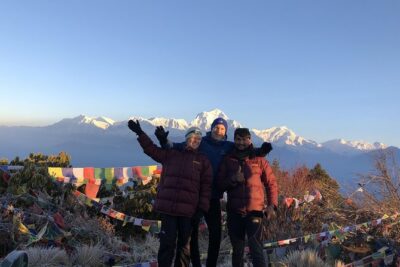

Trekking in Annapurna/Langtang/Everest/Upper Mustang regions
Read our review →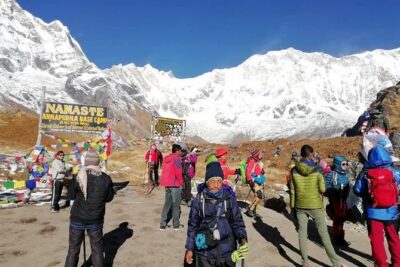
Kathmandu to Annapurna Base Camp (ABC) 5-Day Trek
Read our review →Browse the lists this tour appears in