
REVIEW · NEPAL
Kathmandu/Pokhara: Annapurna Circuit Trek 10 days
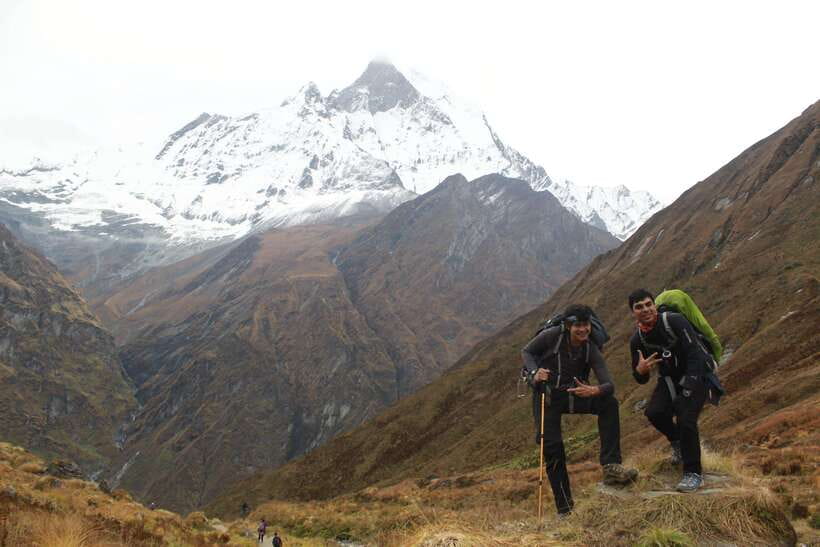
The big prize here is Thorong La Pass, reached at 5,416 meters after a steady climb through villages, pine forests, and high alpine country. On the other side, you descend toward Muktinath and the Kali Gandaki Gorge, where the scenery shifts fast from dry, Tibetan-style hills to river valleys and cultivated slopes.
I like the route’s cultural variety and the small private-group setup. I also like the steady support built into the trip. Guides named Kim, Khim, Milan, and Nir have been praised for care, route planning, humor, and attention to altitude. The main drawback is the pace: ten days is a tight schedule for such a high pass, and meals, gear, insurance, showers, and charging are extra.
Key points at a glance
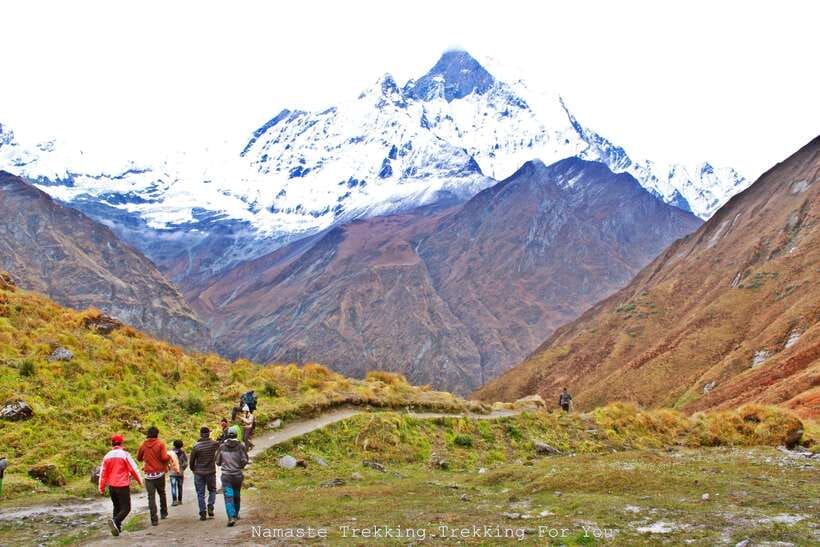
- Thorong La at 5,416 meters: The trek’s hardest and most memorable day, with an early start and a long descent to Muktinath.
- A route that changes character daily: Begin beside the Marsyangdi River, pass through alpine forests, then enter dry high country near Manang.
- Private English-speaking guide: Ask which guide is assigned. Kim, Khim, Milan, and Nir have all been named in recent praise for their care and flexibility.
- Teahouse lodging included: Your room is covered, but meals and some comforts, such as hot showers and charging, cost extra.
- ACAP and TIMS permits included: The $430 price covers key permits, transport to the trailhead, guide service, maps, a first aid kit, taxes, and a farewell dinner.
- Important route check: The detailed ten-day schedule ends in Jomsom. Tatopani, Ghorepani, and Poon Hill are described as part of the wider route, but they are not included in that day-by-day plan.
Why this Annapurna Circuit feels so varied
The Annapurna Circuit is a fine choice if you want more than one kind of Himalayan view. You begin in the lower hills, where terraced fields and subtropical vegetation soften the approach. As you walk beside the Marsyangdi River, the valley narrows and the trail rises through villages and woodland.
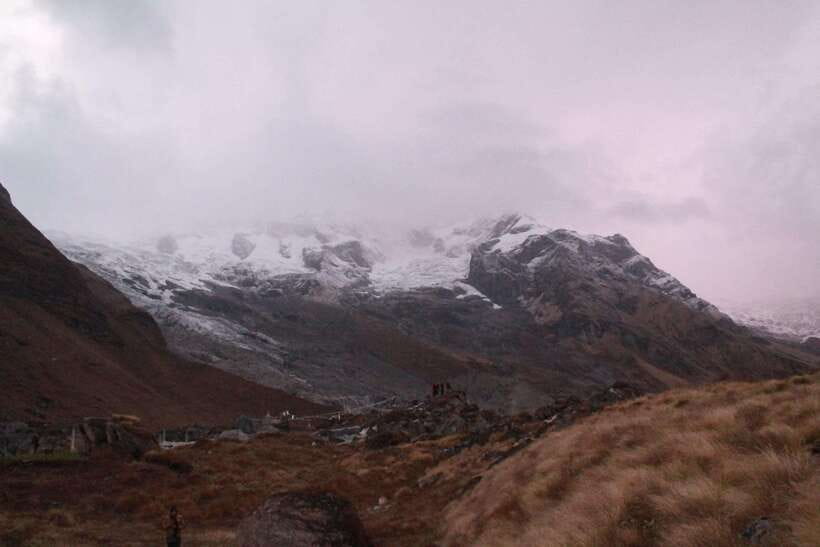
Near Manang, the air gets thinner and the scenery turns spare. Brown ridges, snowy summits, prayer flags, and stone settlements give the route a distinctly high-mountain feel. After Thorong La, the dry valley toward Muktinath feels different again, and the Kali Gandaki corridor brings a new mix of cliffs, river views, orchards, and old villages.
That variety is the real strength of the circuit. You are not looking at the same type of scenery for ten days. You are moving through several ecological zones, with local culture changing along the way.
The trek also supports businesses in villages along the route. Your accommodation, meals, transport, and guide fees help keep money in the local economy. That matters here because the path connects communities that depend heavily on trekking activity.
More Annapurna Treks in Nepal
- Annapurna Circuit Trek with Tilicho Lake
★ 5.0 · 368 reviews - Annapurna base camp trek 5 Days
★ 5.0 · 252 reviews - 14-Day Private Annapurna Base Camp Trek
★ 5.0 · 180 reviews
Day 1: Kathmandu to Dharapani by road
The first day is mostly transport. You drive from Kathmandu to Dharapani, a trip listed at six to eight hours, with Dharapani at 1,860 meters.
This is not a gentle sightseeing day. Road conditions and traffic can make the journey feel long, so prepare for a full day sitting in a vehicle before you begin the main walk. The benefit is that you reach the lower section of the circuit quickly and save walking days for the higher country.
Dharapani is your first proper base on the trail. From here, the route begins its gradual climb toward Chame and Manang. Since transportation from Kathmandu or Pokhara is included, you do not need to arrange this part separately.
Day 2: Dharapani to Chame through rising forest
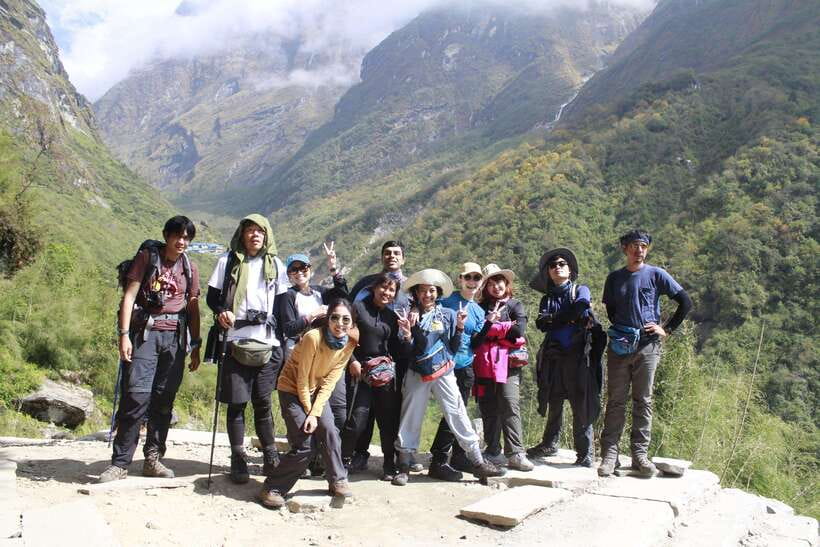
The walk to Chame takes about four to five hours and reaches 2,670 meters. The route follows the Marsyangdi valley through a mix of villages, cultivated slopes, and forest.
This is a useful first walking day because the altitude gain is noticeable but not extreme. You get a feel for the guide’s pace, your boots, and your daypack before the route becomes more demanding.
Chame is an important point on the journey because the surroundings begin to feel more alpine. You will see the character of the valley change as the trail climbs. Keep your camera ready, but do not let photographs distract you from drinking water and walking at a comfortable pace.
Day 3: Chame to Pisang and the first high-country feel
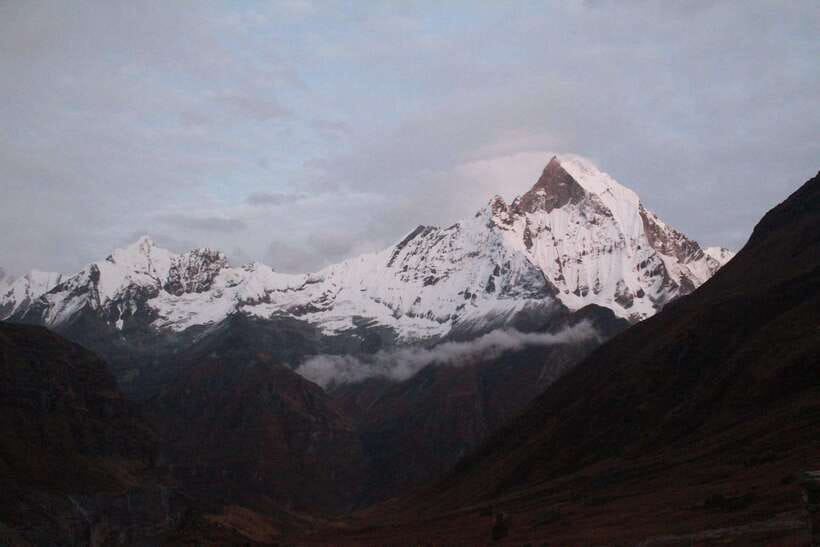
The five to six-hour walk from Chame to Pisang brings you to 3,300 meters. The mountains appear more imposing, and the route begins to feel like a serious high-altitude trek rather than a hill walk.
Pisang has a strong sense of place, with mountain scenery and traditional settlement patterns. This is also where your body may begin to notice the thinner air. You should not race ahead, even if the walking distance seems manageable.
The private group format helps here. A guide can keep an eye on how you are coping and adjust the day’s rhythm. Several praised guides on this trip have been described as checking comfort each day and planning the route together with the group.
More Trekking Tours in Nepal
- Everest Base Camp Trek – 14 Days
★ 5.0 · 1,499 reviews - Everest Base Camp Trek
★ 5.0 · 842 reviews - Everest Base Camp Trekking
★ 5.0 · 485 reviews - Everest Base Camp Trekking – 13 Day
★ 5.0 · 365 reviews
Day 4: Pisang to Manang at 3,540 meters
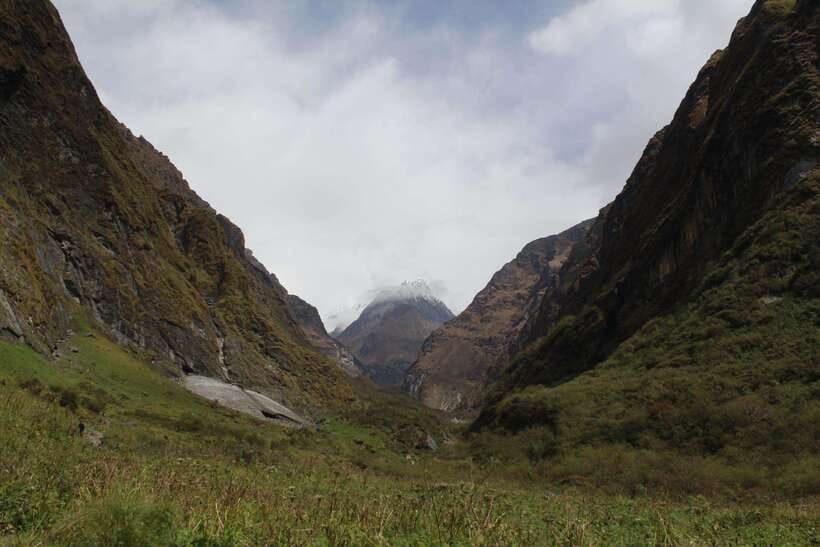
The walk to Manang takes five to seven hours. Manang is one of the most important stops on the circuit because it gives you access to the higher section and a chance to slow down before the major pass.
You move through increasingly dry country, with large mountain views and settlements shaped by the cold, high environment. The route is physically manageable for many fit trekkers, but the altitude now deserves real respect.
Manang is not simply a place to sleep. It is the point where your body must begin adapting. Eat properly, drink often, and avoid treating the rest day as a chance for a hard workout. Your guide can help you decide how much exploring is sensible.
Day 5: Acclimatization in Manang
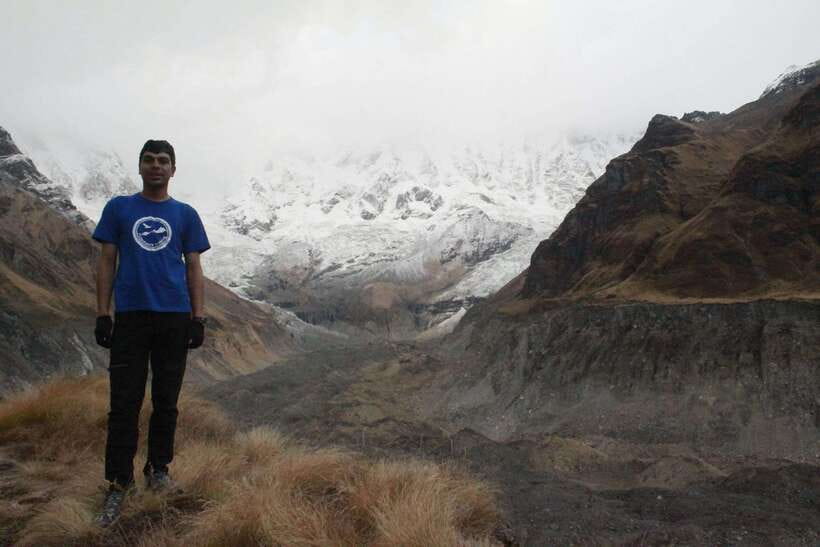
The schedule includes a full acclimatization day at 3,540 meters. This is one of the most important features of the plan, not wasted time.
You have a chance to explore Manang, rest, and let your body respond to the altitude before moving higher. The exact activity is not fixed, so your guide can help shape the day around how you feel.
This is where the private format has a practical edge. You are not tied to a large group with one pace and one mood. If you need a quieter day, you can discuss it. If you are feeling good, you can make better use of the time without turning it into an exhausting outing.
Day 6: Manang to Yak Kharka at 4,000 meters
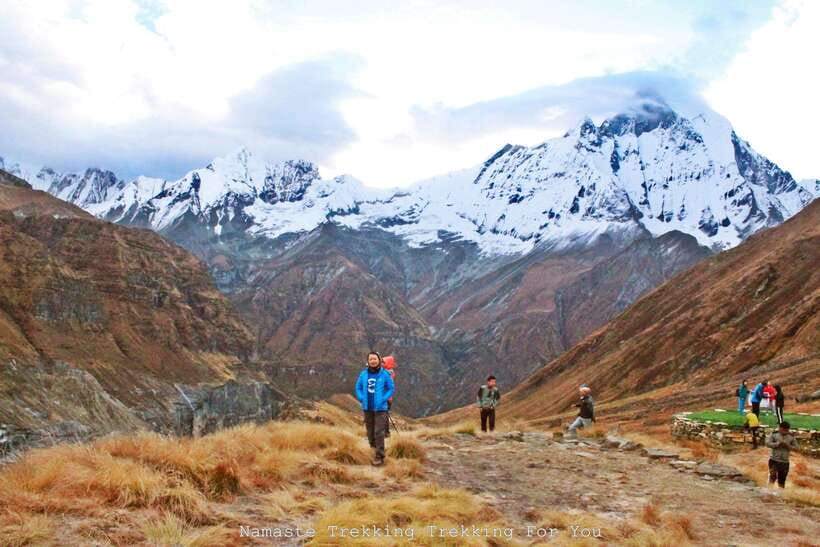
The four to five-hour walk to Yak Kharka is shorter than some earlier days, but the altitude makes it more demanding. At 4,000 meters, every climb can feel bigger than it looks on paper.
The scenery is now open and rugged, with fewer trees and a stronger sense of exposure. You are moving toward the high pass, so the day is about controlled progress rather than speed.
This is a good point to be honest with yourself. Headaches, unusual tiredness, or feeling unwell should be discussed with your guide. The itinerary is fixed on paper, but safe trekking depends on responding to conditions in real time.
Day 7: Yak Kharka to Thorong Phedi
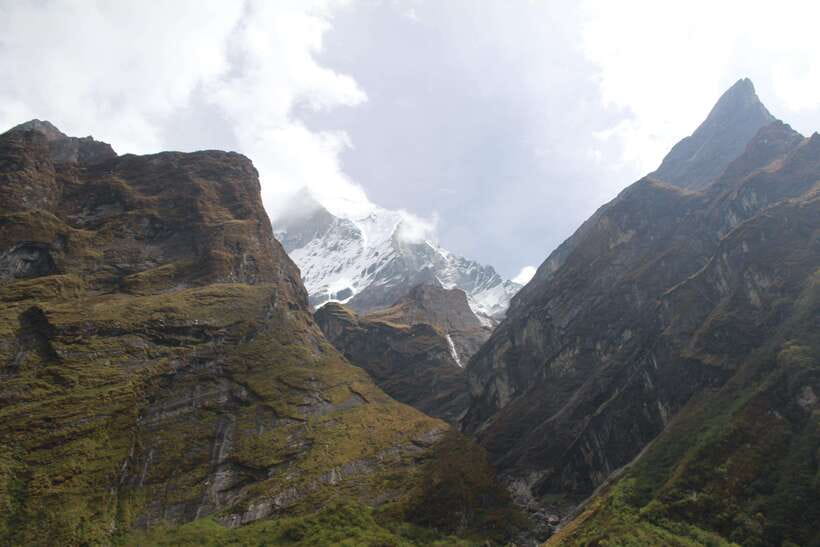
The walk to Thorong Phedi takes three to four hours and reaches 4,450 meters. The shorter distance does not mean an easy day. You are sleeping high, and the next morning brings the toughest section of the trek.
Thorong Phedi is a staging point below the pass. The afternoon is best used for rest, food, and preparing clothing and equipment for an early start. This is not the place to discover that your jacket is buried at the bottom of your bag.
The trip does not include personal gear, so you need to bring or arrange suitable cold-weather clothing, a sleeping bag, and other trekking equipment. Travel insurance that covers high-altitude trekking is mandatory.
Day 8: Crossing Thorong La to Muktinath
This is the defining day. You climb from Thorong Phedi to Thorong La at 5,416 meters, then descend to Muktinath at 3,710 meters. The full day takes about seven to nine hours.
The pass is a major physical challenge, but it also gives you the wide Himalayan views that make the effort worthwhile. The route offers views toward Annapurna, Dhaulagiri, and Manaslu, subject to weather and visibility.
The descent matters as much as the climb. After the pass, your legs are tired, and the drop to Muktinath can be hard on knees. Good pacing and careful foot placement help. Your guide’s role is especially important here, and the strongest praise for this trip centers on guides who kept people calm, supported, and safe through demanding sections.
Muktinath is a sacred town with temples and monasteries. Reaching it after the pass gives the day more than a physical finish. You move from a high mountain crossing into a place with deep religious importance.
Day 9: Muktinath to Jomsom through the Kali Gandaki region
The walk to Jomsom takes five to six hours and descends to 2,720 meters. The route follows the Kali Gandaki area, known for dramatic terrain between the Annapurna and Dhaulagiri ranges.
The scenery here is drier and more open than the lower Marsyangdi valley. Muktinath and Jomsom also give the trek a different cultural feel, with old settlements, religious sites, and the distinctive character of the Mustang region.
The itinerary also describes Marpha, known for apple orchards, and Tatopani, known for natural hot springs. However, the detailed ten-day schedule goes from Muktinath to Jomsom and then by road to Pokhara. If Marpha, Tatopani, Ghorepani, or Poon Hill matter to you, ask Peak to Peak Treks to confirm exactly which route your departure follows before booking.
Day 10: Jomsom to Pokhara by road
The final day is a six to eight-hour drive to Pokhara. After nine days of walking, this is a long sitting day, but it gets you back to a major city without adding another trek stage.
The trip description presents the wider Annapurna journey as continuing through Tatopani, rhododendron forests, Ghorepani, and a Poon Hill sunrise. Those are appealing additions, especially if you want forest scenery after the high pass. Still, the supplied day plan ends with the Jomsom to Pokhara drive, so treat the Poon Hill section as a route detail that needs confirmation, not a guaranteed part of this exact ten-day schedule.
What the $430 price really covers
At $430 per person, this is a competitive package for a private ten-day trek, mainly because several important costs are bundled together. You get ACAP and TIMS permits, transportation from Kathmandu or Pokhara to the trailhead, an English-speaking guide, teahouse accommodation, trekking maps, a first aid kit, government taxes, service charges, and a farewell dinner.
That is a useful base price, but it is not an all-in budget. Meals during the trek are excluded, so you need to budget for breakfast, lunch, and dinner each day. Hot showers and charging can also cost extra at some teahouses.
You must also supply or arrange personal gear. The stated exclusions include sleeping bags, jackets, trekking poles, and similar equipment. International flights and travel insurance are separate, and the insurance must cover high-altitude trekking.
The best way to judge the price is to see it as a guided trekking package, not a fully prepaid holiday. If you already own suitable gear and understand the extra food costs, the value is strong. If you need to rent or buy cold-weather equipment, your real budget will be higher.
The guide can shape the whole trek
The most highly praised part of this experience is the guide service. Kim, also referred to as Khim, was singled out for warmth, humor, professional care, route knowledge, and daily support. Milan was praised for making people feel safe and for offering strong personal attention. Nir was valued for discussing the plan each day, choosing good accommodation, and finding ways around dusty or unpleasant road sections.
These names are useful when you contact the operator, but they do not guarantee who will lead your departure. Ask for the assigned guide and confirm whether porter support is included, since one recent departure specifically mentioned a porter named Dill while the package details only explicitly include an English-speaking guide.
The private group format is a major plus for a high-altitude trek. You can speak openly about your energy, adjust the day’s rhythm, and get direct help when the route becomes hard. At the same time, a private guide cannot remove the physical demands of the pass. You still need sensible preparation.
Who should choose this trek?
This route suits you if you want a serious mountain challenge with strong cultural variety and you can handle long walking days at altitude. It is a good match for people who prefer teahouses over luxury hotels and who value a guide’s personal support.
It is less suitable if you want a relaxed holiday, dislike long road transfers, or have not prepared for cold, high-altitude conditions. Pregnancy is specifically listed as a reason not to take this activity.
You should also be comfortable making decisions about your own limits. The guide can support you, but the itinerary reaches 5,416 meters in only ten days. Fitness, acclimatization, insurance, and proper equipment matter.
Should you book the Annapurna Circuit Trek?
Book it if Thorong La is your main goal and you want a private guided route with permits, teahouse lodging, and core transport arranged for $430. The scenery changes constantly, the cultural stops are meaningful, and the guide support appears to be the strongest part of the package.
Before paying, confirm three things: the exact guide, the meals and extra costs, and whether Marpha, Tatopani, Ghorepani, and Poon Hill are truly included. If the ten-day schedule is exactly as shown, you finish at Jomsom and drive to Pokhara. If you want the longer version with hot springs and the Poon Hill sunrise, ask for a revised itinerary.
Free cancellation up to 24 hours before departure and reserve-now, pay-later terms give you some planning flexibility. Still, use that time to check your insurance and gear. For a demanding Himalayan trek, those details matter more than a low headline price.
FAQ
How long does the Annapurna Circuit Trek take?
The stated duration is 10 days, including road transport from Kathmandu to Dharapani and from Jomsom to Pokhara.
What is the highest point on the trek?
The highest point is Thorong La Pass at 5,416 meters, or 17,769 feet.
Is transportation included?
Yes. Transportation from Kathmandu or Pokhara to the trailhead is included, as well as the final drive from Jomsom to Pokhara in the stated itinerary.
Are meals included?
No. Meals during the trek are not included in the price. Hot showers and charging facilities are also extra at some teahouses.
What accommodation is provided?
Teahouse accommodation is included during the trek.
Is travel insurance required?
Yes. You need travel insurance that covers high-altitude trekking.
Is the trek private and guided in English?
Yes. The activity is for a private group and includes an English-speaking guide. The guide may vary by departure, so ask which guide is assigned.
Latest treks added in Nepal
- Private Manaslu Circuit Trek at Himalayas★ 5.0 · 3 reviews
- Ghorepani Poonhill Trek★ 5.0 · 5 reviews
- Ghorepani Poon Hill Trek★ 5.0 · 16 reviews
- Upper Mustang Trekking★ 3.0 · 2 reviews
- Amazing 1 Day Trekking Experience in Kathmandu Nepal★ 5.0 · 24 reviews
- Upper Mustang Trekking★ 5.0 · 2 reviews
- Upper Mustang Trek★ 5.0 · 5 reviews
- Upper Mustang Trekking★ 5.0 · 4 reviews
Annapurna Base Camp Treks, compared.

Trekking in Annapurna/Langtang/Everest/Upper Mustang regions
Read our review →
Kathmandu to Annapurna Base Camp (ABC) 5-Day Trek
Read our review →Browse the lists this tour appears in