
REVIEW · KATHMANDU
Kathmandu: 8-Day Annapurna Circuit Trek via Thorong La Pass
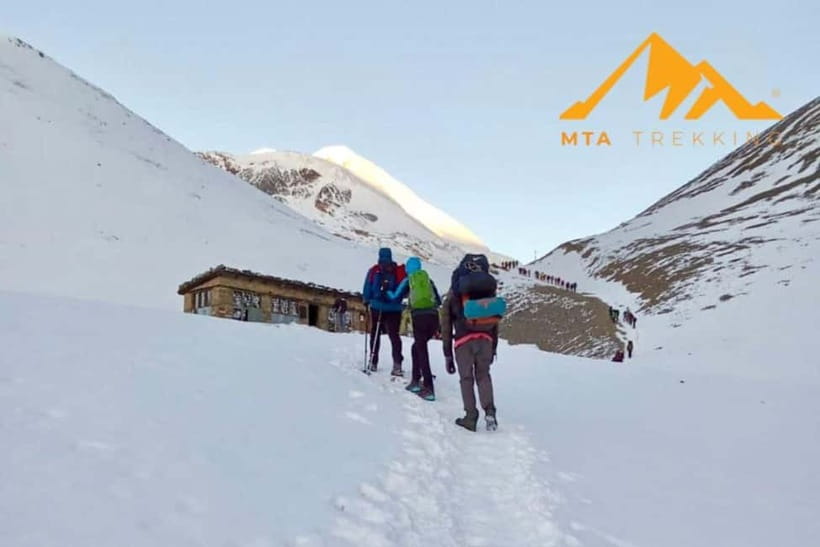
Crossing Thorong La Pass at 5,416 meters is the defining moment of this Nepal trek. You start before dawn, climb through cold mountain air with prayer flags snapping in the wind, then descend toward Muktinath and the deep Kali Gandaki Gorge. It is a demanding route, but the reward is a fast-moving journey through forests, high valleys, Buddhist villages, and sacred Hindu and Buddhist sites.
I like the way this trip includes a full acclimatization day in Manang, and I like the strong practical support from the guides. Guides named on recent departures include Chakra, San Bhai, Shishir, and Ghanshyam. The biggest concern is the pace: eight days leaves little room for error, and the Thorong La crossing requires real stamina and altitude preparation.
Key points to know before booking
- Thorong La is the big test: The pass reaches 5,416 meters, with a 4 AM start and a seven to eight hour day from Thorong Phedi to Muktinath.
- Manang provides one acclimatization day: You can rest, visit monasteries and the cultural museum, or take a short hike toward glacial lakes.
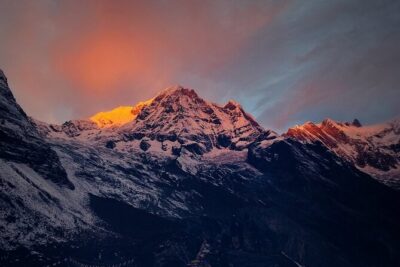
- Upper Pisang brings some of the best early views: You walk through pine forest and apple orchards with Annapurna II, Annapurna IV, and Pisang Peak nearby.
- Muktinath adds cultural depth: Its temples and shrines are important to both Hindu and Buddhist pilgrims.
- The $348 price covers a lot: Permits, seven teahouse nights, guide services, staff costs, and scheduled transport are included, with some package conditions.
- A porter costs extra: Budget $20 per day if you do not want to carry your own main bag.
Why this trek is worth your time
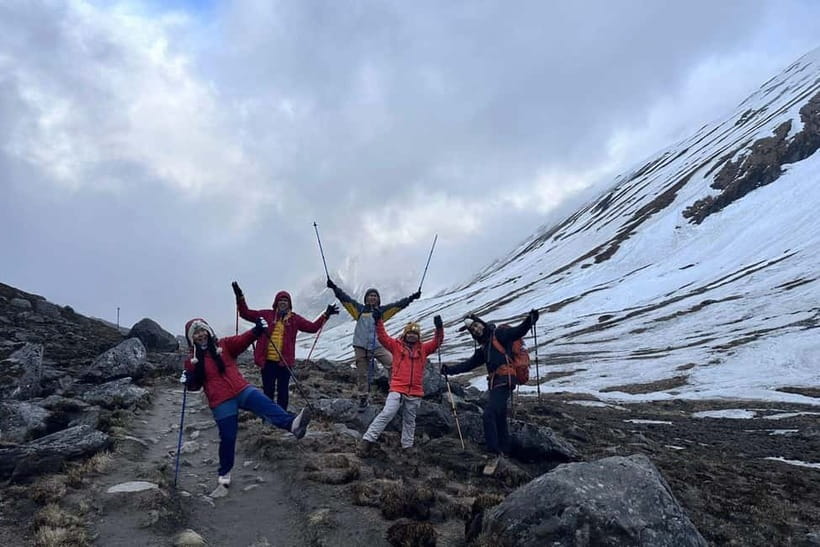
The Annapurna Circuit is appealing because the scenery changes quickly. You begin with green hills, rivers, forests, and busy road corridors near Besisahar. By Manang, the air is thin and the valley feels stark and high. After Thorong La, the route drops toward Mustang and Muktinath, where the setting becomes drier and more open.
I especially like the combination of mountain views and village life. Upper Pisang is not just a place to sleep. It gives you time to see the difference between the upper and lower parts of the village, walk near old stone buildings, and look across at snowy peaks. Braga offers another worthwhile stop, with a hillside monastery that you can visit if it is open.
The cultural side also matters. Muktinath is a sacred place for Hindus and Buddhists, so the final descent is not just a scenic finish. You get a chance to see shrines and temples used by pilgrims, then spend the night before the long drive to Pokhara.
This is not a gentle walking holiday. Some days are short on paper, but altitude makes four hours feel different from four hours at sea level. The schedule is well arranged in broad terms, yet the jump from Thorong Phedi to the pass is serious. You need to be comfortable with early starts, rough paths, basic accommodation, and long transport days.
More Annapurna Treks in Kathmandu
- Annapurna Circuit Trek with Tilicho Lake
★ 5.0 · 368 reviews - Annapurna base camp trek 5 Days
★ 5.0 · 252 reviews - 14-Day Private Annapurna Base Camp Trek
★ 5.0 · 180 reviews
Day 1: Kathmandu to Chame through Besisahar
The first day is mostly a road journey. You leave Kathmandu early and travel through towns, green hills, and winding roads toward Besisahar. The drive takes about nine to ten hours, then you change to a local jeep for roughly three to four hours toward Chame.
That vehicle change matters. Roads beyond Besisahar are rougher and slower, and a shared local jeep is part of the practical reality of reaching the trailhead. You can expect river views, forest, and scattered villages, but you should also expect a tiring day of sitting in a vehicle.
Arrival in Chame is planned for the evening, followed by a teahouse stay. Keep your first-night expectations simple. The value of this day is not sightseeing in Kathmandu or a relaxed arrival. It is getting deep into the route so the walking can begin on day two.
Day 2: Chame to Pisang and the first big mountain views
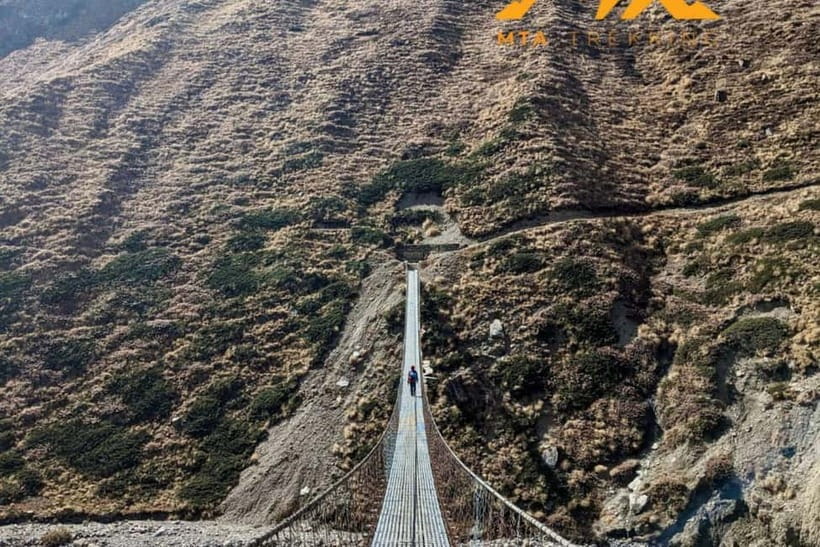
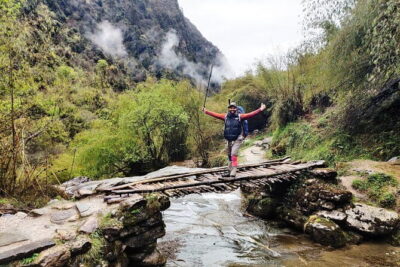
The walk from Chame to Pisang takes about four to five hours. Pine forests and apple orchards give the morning a pleasant start, and a suspension bridge adds a small touch of adventure before the trail climbs toward Dhukur Pokhari.
Dhukur Pokhari is a sensible lunch stop, breaking up the day before the approach to Pisang. As you continue, the views open toward Annapurna II, Annapurna IV, and Pisang Peak. This is one of the better days for seeing how quickly the route changes from forested valley to high mountain terrain.
Pisang has upper and lower sections, and exploring both helps you understand the village rather than treating it as a bed for the night. Upper Pisang is especially appealing for its mountain outlook. You stay in a teahouse, where conditions are basic but suited to a route that prioritizes access and scenery over comfort.
Day 3: Pisang to Manang through Braga
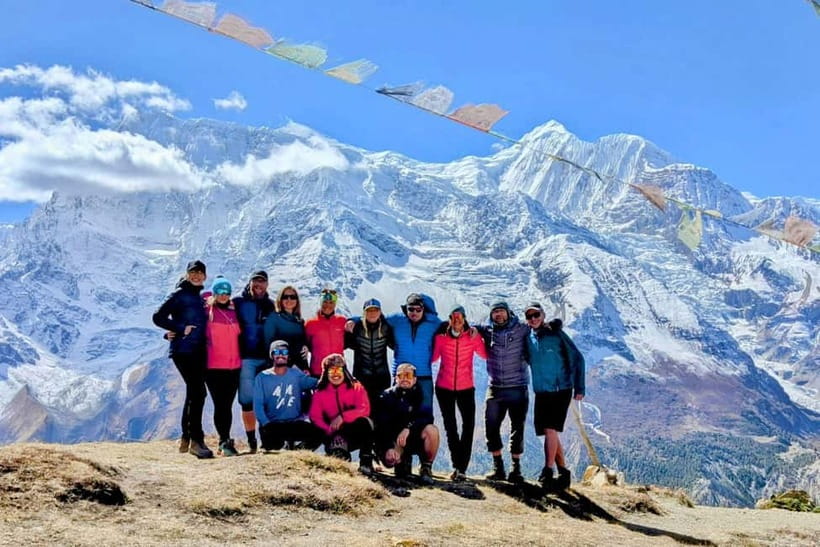
The walk to Manang takes about five to six hours. You continue through pine valleys, cross suspension bridges, and follow slopes toward Braga and Manang.
Braga is worth attention if the monastery is open. Its hillside position gives it a strong visual presence, and a stop here adds a cultural pause to an otherwise steady walking day. After Braga, the route continues toward Manang, with Annapurna and Gangapurna views helping mark the approach.
Manang is an important stop because altitude becomes a serious factor from here onward. Settle into your teahouse, eat well, and avoid treating the town as a late-night social stop. The next day is set aside for acclimatization, and using it properly can make the pass crossing safer and more manageable.
Another trail to compare in Kathmandu:
- Everest Base Camp Trek – 14 Days
★ 5.0 · 1,499 reviews - Everest Base Camp Trek
★ 5.0 · 842 reviews - Everest Base Camp Trekking
★ 5.0 · 485 reviews - Everest Base Camp Trekking – 13 Day
★ 5.0 · 365 reviews
Day 4: Manang acclimatization day
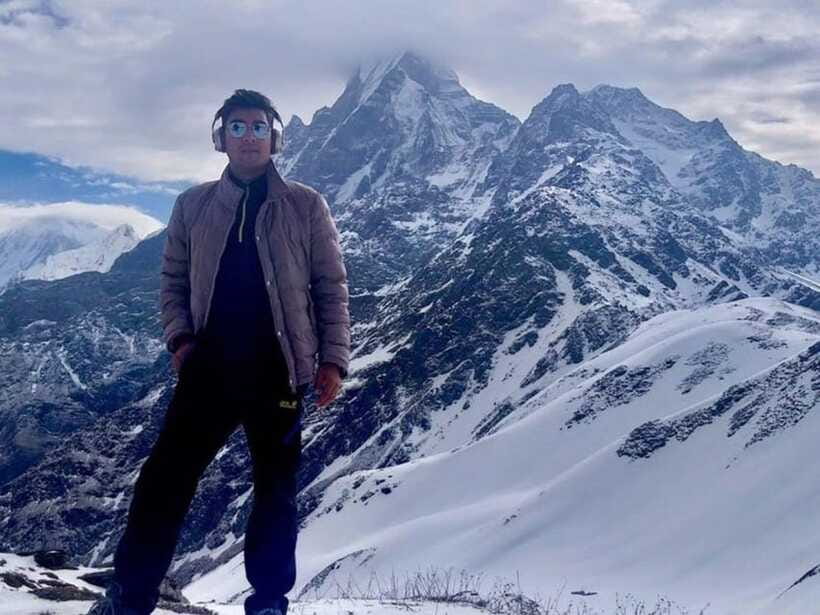
The rest day in Manang is one of the most important parts of the schedule. You can explore viewpoints, monasteries, and a cultural museum at a relaxed pace, or take a short hike toward glacial lakes with views of Gangapurna and Tilicho peaks.
The aim is not to cover a huge distance. A gentle outing followed by a return to the lodge gives your body time to adjust while keeping you active. Your guide can help judge how far you should go, but you still need to pay attention to how you feel.
Altitude sickness is listed as a reason this trek may not suit you. Headaches, unusual tiredness, nausea, or worsening breathlessness should not be brushed aside. The high pass cannot be forced, and a good guide will take your condition seriously.
Manang is also a good place to enjoy the human side of the route. You have time to see village life, learn about local traditions from your guide, and look across the valley without rushing to the next sleeping stop. I would treat this day as essential rather than optional.
Day 5: Manang to Yak Kharka
The trek from Manang to Yak Kharka takes about four hours, with a steady climb past Tengi. You may meet local people moving with pack animals, a reminder that these trails are also working routes, not just recreational paths.
Gunsang is a useful place to stop for lunch. The views toward Annapurna II and IV continue, but the feel of the route becomes more alpine as you move through juniper forest. The trail is shorter than several other days, yet altitude keeps the effort honest.
Yak Kharka is a practical overnight stop before Thorong Phedi. Rest at the guesthouse, drink what is available to you, and keep your gear organized for the following morning. The earlier you prepare, the less stressful the pre-dawn departure will be.
Day 6: Yak Kharka to Thorong Phedi
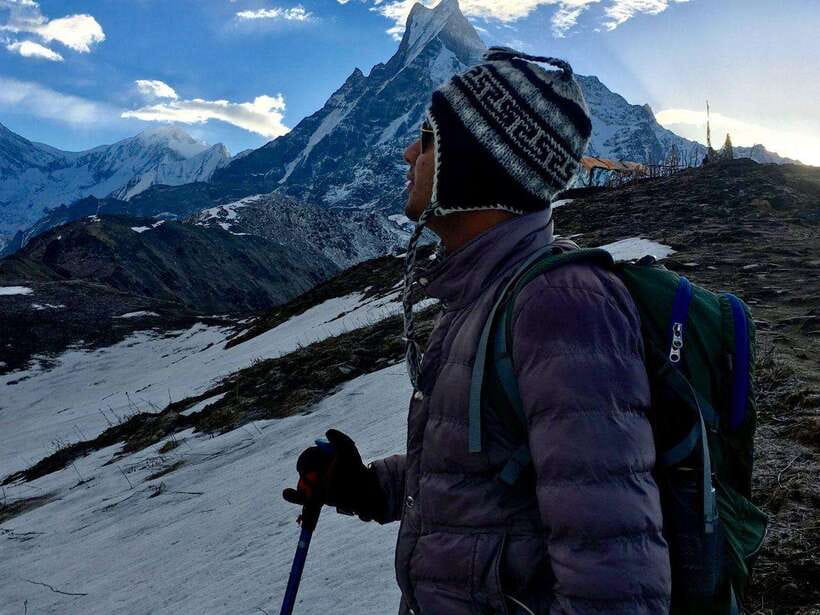
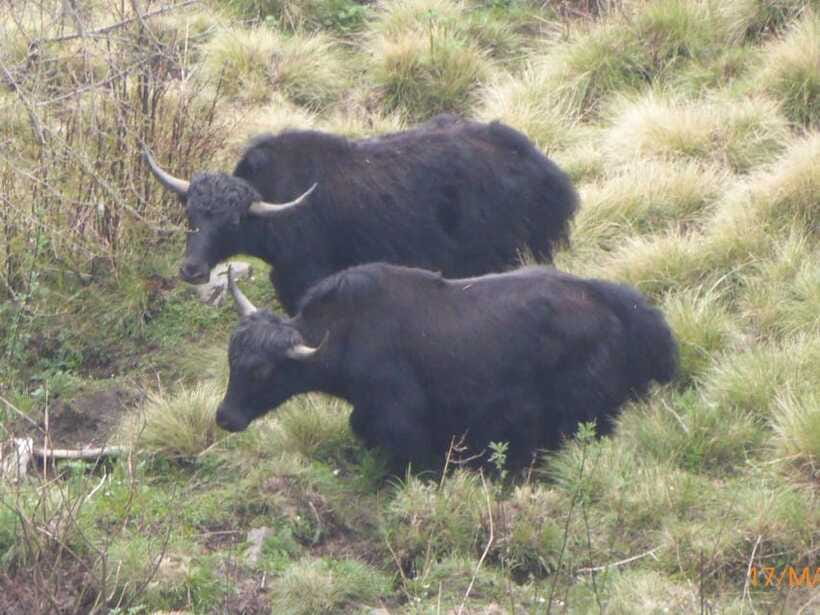
This four to five hour walk takes you across alpine pasture toward Thorong Phedi, the base for the pass. Horses and Himalayan griffons may be part of the scene, while suspension bridges and rocky slopes make the route feel more exposed than the lower sections.
Thorong Phedi is not a place where you want a packed evening. The next day starts around 4 AM, so use the afternoon to rest, eat, check your warm clothing, and keep sunglasses and sunscreen within reach. Cold, sun, wind, and altitude can all become more intense above the pass.
Accommodation here is a teahouse, and comfort is limited. That is normal for the route. The important thing is to protect your energy for the pass rather than expect a long list of facilities.
Day 7: Thorong La to Muktinath
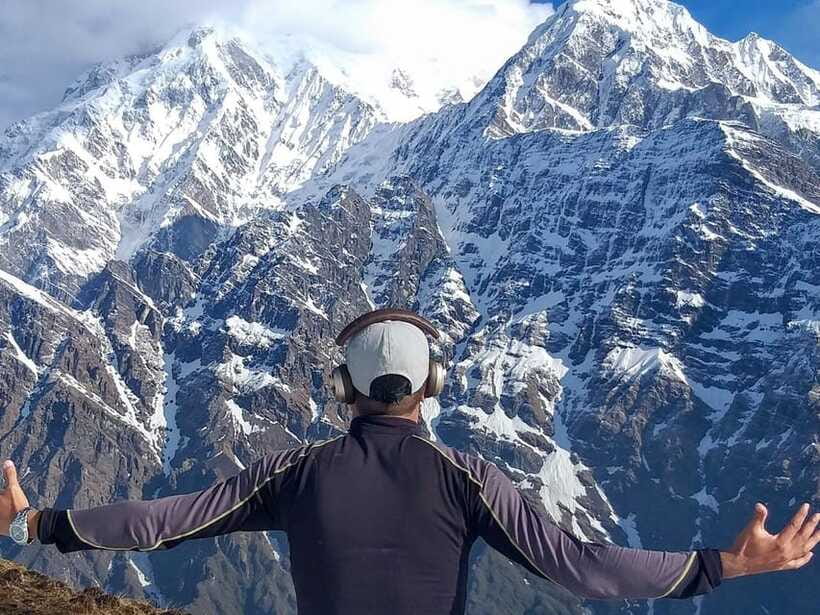
This is the hardest and most memorable day. You leave around 4 AM to reach Thorong La before strong winds build. The full day takes about seven to eight hours and combines a long climb with a major descent.
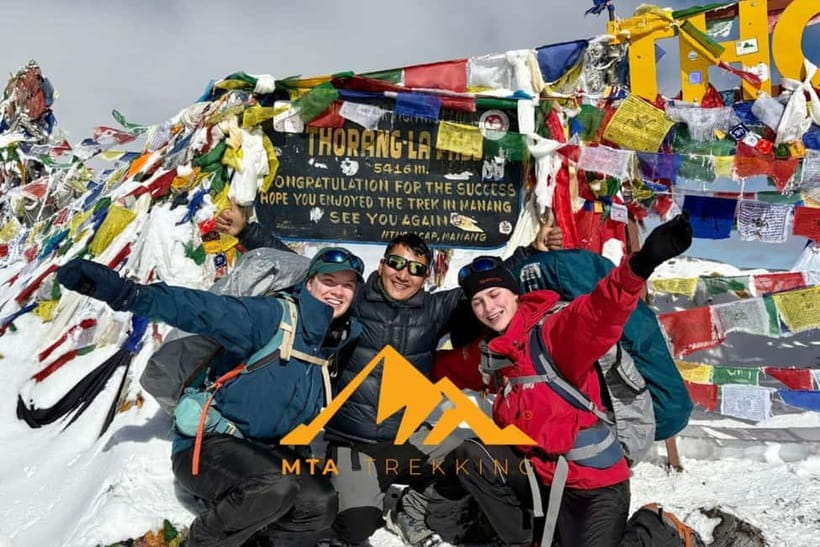
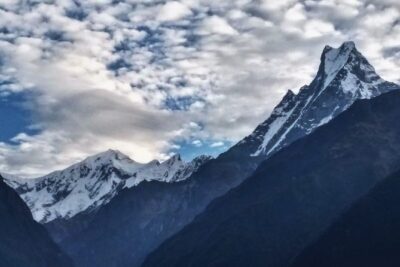
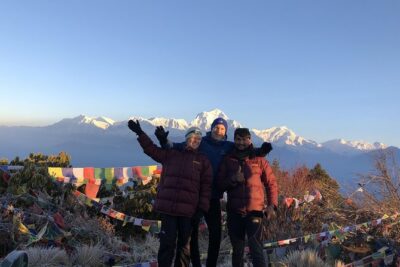
At 5,416 meters, the pass is high enough that every step matters. Snow-capped peaks and prayer flags provide the visual reward, but you should focus on a steady pace, warm layers, and instructions from your guide. The guide’s role is particularly important here because the route, weather, and your physical condition all affect the crossing.
After the pass, you descend into the Kali Gandaki Gorge, described as one of the world’s deepest. The change from the high pass toward Muktinath is dramatic, and the descent can be hard on tired knees. Trekking poles would be a sensible personal addition, although they are not listed among the included items.
Muktinath gives the day a meaningful finish. Its temples and shrines are sacred to Hindus and Buddhists, and you can explore the site after arriving. You then spend the night at a teahouse, likely ready for a hot meal and sleep more than a long evening out.
One recent departure added a stop at hot springs after the pass. That is not part of the stated itinerary, so you should treat it as a possible extra rather than a guaranteed feature.
Day 8: Muktinath to Pokhara by bus
The final day is another long transport day, lasting about nine to ten hours. You travel through the lower Mustang Valley toward Pokhara, then check into Hotel Orchid, described as a tourist-standard luxury hotel.
After seven nights in teahouses, a hotel room in Pokhara should feel welcome. You can rest, walk around the lakeside streets, eat local or international food, and attend the included farewell Nepalese dinner in Lakeside Pokhara.
There is one transport detail worth confirming before you pay. The daily plan says Muktinath to Pokhara by local bus, while the included transport information refers to Jomsom to Pokhara by bus and also mentions a luxury sofa-seater tourist AC bus from Pokhara to Kathmandu. Another note says a tourist bus to Pokhara is offered for people staying in Kathmandu. Ask the operator to spell out your exact pickup and final transport arrangements, especially if you need to continue beyond Pokhara.
What the $348 price really covers
At $348 per person, the package offers strong value if you choose the Full Package. It includes hotel pickup and drop-off, an authorized English-speaking guide, trekking permits, required paperwork, the Trekkers Information Management System fees, government tax, guide insurance, seven teahouse nights, staff expenses, and scheduled transportation.
Full Package meals include breakfast, lunch, and dinner during the trek. The Standard Package does not include all food and drinks, so check which version you are buying before comparing prices. Mineral water, tea and coffee outside breakfast, hot water, and hot showers cost extra or are not included.
A porter is also extra at $20 per day. I consider that a sensible expense if you are not accustomed to carrying your own equipment at altitude. If you carry your own bag, pack carefully and keep the load light.
The final Pokhara hotel night and farewell dinner add useful comfort after the hardest walking day. The price is not a luxury trek, but it covers the main logistics that can be difficult to arrange independently.
Guides, communication, and group style
The activity offers English and Hindi-speaking guides, and private groups are available. Recent guide names connected with the trip include Chakra, San Bhai, Shishir, and Ghanshyam. The strongest pattern is attentive support, fast communication before departure, and guides who adjust the pace when needed.
That matters more here than polished presentation. You want a guide who watches your condition, organizes transport, answers questions, and helps you understand the Himalayan, Hindu, and Buddhist customs along the route.
Before departure, passport details must be sent in advance so permits can be prepared. Bring a passport or copy, and keep your travel insurance details handy.
Packing and preparation for Thorong La
Bring warm clothing, sunglasses, sunscreen, comfortable trekking clothes, and travel insurance. A winter sleeping bag is required for November and December treks unless you arrange a rental.
The schedule lists no sleeping bag as an included item, so ask about rental options if you do not own one. I would also keep a headlamp, personal medication, a water bottle, and a small daypack accessible, although only the listed items are formally required.
The most useful preparation is physical and practical. You need to manage several walking days, steep climbs, cold mornings, and the long pass crossing. Pregnant people, anyone with altitude sickness, and people over 70 are listed as unsuitable for this activity.
The strongest period-specific point comes from a September departure, when the route had fewer crowds and only one rainy day. Conditions vary, so you should still prepare for wet weather and changing mountain conditions.
Should you book this trek?
Book it if you want the classic Thorong La experience in a compact schedule and you value having permits, guides, teahouses, meals, and transport arranged. It suits fit hikers who can handle basic accommodation, long road transfers, an early pass start, and a fast pace.
Think twice if you need flexible rest days, dislike rough bus and jeep rides, or have little experience with high altitude. The Manang acclimatization day helps, but it does not turn this into an easy trek.
For the price, the package gives you a practical route through the Annapurna region with strong guide support and a comfortable finish in Pokhara. Confirm the Standard versus Full Package, porter costs, exact transport, and sleeping-bag arrangements before booking. If those details fit your needs, this is a well-organized way to cross one of Nepal’s great mountain passes without arranging every permit and vehicle yourself.
FAQ
How long is the Annapurna Circuit trek?
The activity lasts eight days. The route includes seven nights in teahouses or lodges during the trek, followed by a final night at Hotel Orchid in Pokhara.
How high is Thorong La Pass?
Thorong La Pass reaches 5,416 meters. The crossing starts around 4 AM from Thorong Phedi and takes part of a seven to eight hour trekking day to Muktinath.
Is an acclimatization day included?
Yes. Day four is an acclimatization day in Manang, with options including viewpoints, monasteries, a cultural museum, and short hikes toward glacial lakes.
Are meals included?
Breakfast, lunch, and dinner during the trek are included with the Full Package. Food and drinks are not included in the Standard Package. Mineral water, tea and coffee outside breakfast, hot water, and hot showers are also excluded.
Is a porter included?
No. A porter is available to hire for $20 per day. The guide is included, but porter services are separate.
What languages do the guides speak?
The available guide languages are English and Hindi. Private groups can also be arranged.
Can I cancel the booking?
You can cancel up to 24 hours in advance for a full refund. The reserve-now, pay-later option lets you hold a place without paying on the day of booking.
Latest treks added in Kathmandu
- Private Manaslu Circuit Trek at Himalayas★ 5.0 · 3 reviews
- Ghorepani Poonhill Trek★ 5.0 · 5 reviews
- Ghorepani Poon Hill Trek★ 5.0 · 16 reviews
- Amazing 1 Day Trekking Experience in Kathmandu Nepal★ 5.0 · 24 reviews
- Upper Mustang Trekking★ 5.0 · 2 reviews
- Upper Mustang Trekking★ 3.0 · 2 reviews
- Upper Mustang Trek★ 5.0 · 5 reviews
- Upper Mustang Trekking★ 5.0 · 4 reviews
Annapurna Base Camp Treks, compared.

Trekking in Annapurna/Langtang/Everest/Upper Mustang regions
Read our review →
Kathmandu to Annapurna Base Camp (ABC) 5-Day Trek
Read our review →Browse the lists this tour appears in