
REVIEW · KATHMANDU
From Kathmandu: 11-Day Annapurna Base Camp Trek
Annapurna Base Camp is the prize here, but the route earns its keep long before you reach it. You walk through Gurung villages, terraced farmland, waterfalls, and rhododendron forest before entering a vast bowl of high peaks around the sanctuary.
I like the practical design: domestic flights save road time, and the package includes permits, meals, teahouse nights, porter support, a down jacket, and sleeping bag. I also like the human side, with an English-speaking licensed leader and guides described as kind, helpful, and ready to answer questions about both the trek and local life.
The main tradeoff is the pace. This is the shorter 11-day version, so several days involve five to eight hours of walking, with a long descent from base camp to Bamboo. If you want more time in the mountains, the 14-day Annapurna Sanctuary option may suit you better.
Key points to know before booking
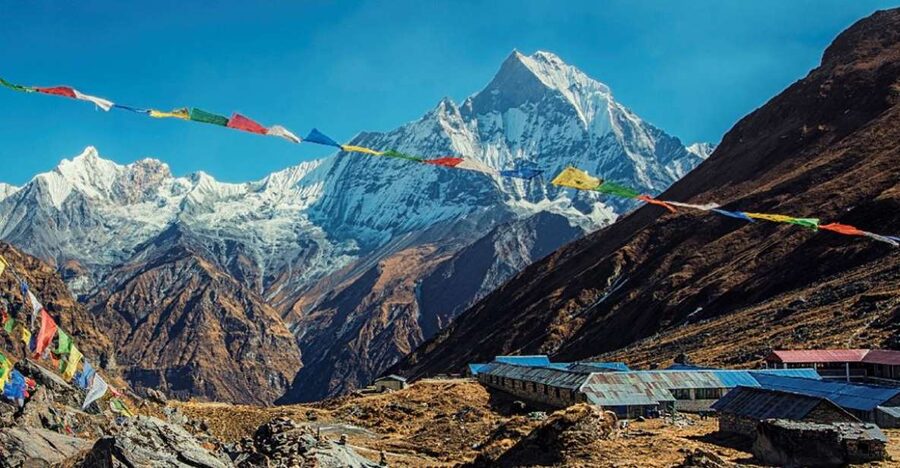
- Annapurna Base Camp reaches 4,130 meters: The highest overnight goal comes after Machhapuchhre Base Camp at 3,700 meters.
- Pokhara keeps the approach efficient: A 30-minute flight replaces a long overland journey from Kathmandu.
- The trek mixes comfort and simplicity: You get three-star hotels in Kathmandu and Pokhara, then seven nights in teahouses or guesthouses.
- Porter support is built in: One porter is provided for every two trekkers, while the leader carries a medical kit.
- Spring and autumn offer the safest bet for views: Winter is quieter but colder, and monsoon brings rain.
- The price covers many costly basics: At $1,699 per person, flights, permits, meals during the trek, staff costs, and equipment are included.
Why Annapurna Base Camp makes a strong short trek
Annapurna I rises to 8,091 meters and is the 10th highest mountain in the world. The wider Annapurna massif includes thirteen peaks above 7,000 meters and sixteen more over 6,000 meters, so this is not a walk toward one isolated summit. You are heading into a broad mountain sanctuary ringed by serious peaks.
That scale matters. The trek begins in cultivated hills and inhabited villages, then moves through forests and narrow valleys before reaching the high alpine zone. The change is gradual enough to feel like a journey, yet the 11-day schedule keeps the route workable for someone with limited holiday time.
I find the route especially appealing because it offers more than mountain viewpoints. You pass through communities connected with the Gurung people, see terraced farms, and have chances to visit the Gurung museum in Ghandruk if the timing allows. The mountain setting is the headline, but village life gives the trek its texture.
This is still a real physical undertaking. The walking days range from three to eight hours, and the route includes repeated climbs and descents. The shorter schedule does not mean an easy schedule.
More Annapurna Treks in Kathmandu
- Annapurna Circuit Trek with Tilicho Lake
★ 5.0 · 368 reviews - Annapurna base camp trek 5 Days
★ 5.0 · 252 reviews - 14-Day Private Annapurna Base Camp Trek
★ 5.0 · 180 reviews
Kathmandu to Pokhara, setting up the trek
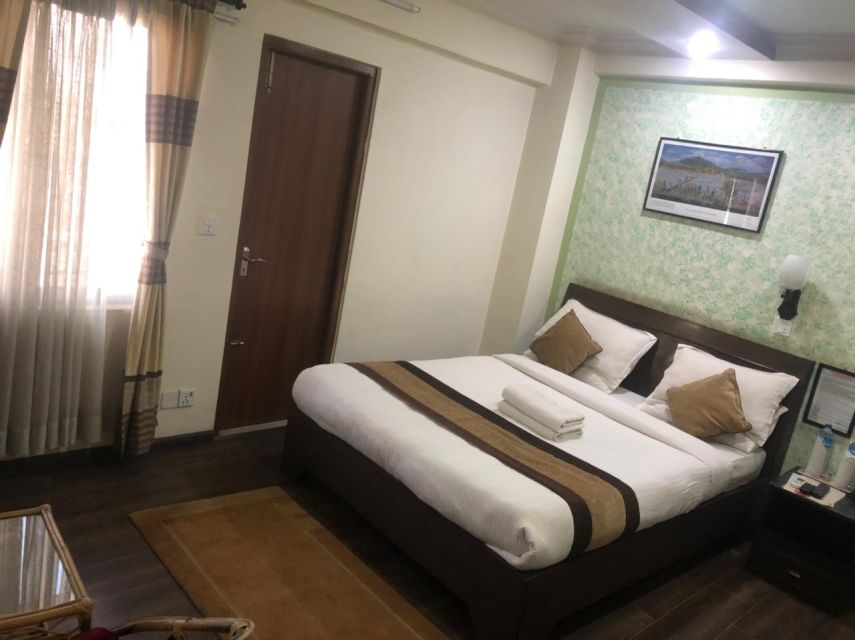
Day one is a soft landing in Kathmandu at 1,300 meters. The plan includes hotel accommodation and a welcome dinner, which gives you a simple start before the walking begins. Pickup is available from accommodation in Thamel, and the package includes three-star hotel nights in Kathmandu and Pokhara with breakfast.
On day two, you fly to Pokhara in about 30 minutes. The right side of the plane is recommended for the best Himalayan views, though sightlines depend on weather and the flight itself. Pokhara sits at 823 meters and is widely known as the Lake City, with views toward Dhaulagiri, Manaslu, Machhapuchhare, and Annapurna.
From the airport, the operator provides a pickup and a private vehicle drive of about one hour and 20 minutes to Nayapul, near Birethanti. This transfer is useful because it places you directly at the trailhead instead of spending most of the day on roads.
The first walking section leads to Ghandruk and takes five to six hours. Ghandruk is a beautiful Gurung village and one of the most appealing early stops on the route. If time permits, you can visit the Gurung museum, adding cultural context to the mountain scenery.
Day two includes breakfast, lunch, and dinner. That detail sets the pattern for the trek: food is covered during the walking portion, so you do not need to budget separately for ordinary meals each day.
Ghandruk and Chhomrong, the trail gathers height
Day three takes you from Ghandruk to Chhomrong at 2,170 meters. The walk lasts about five to six hours, so you gain height at a steady but noticeable rate. Chhomrong is an important point on the route, and it marks the transition from lower hill villages toward the higher sanctuary.
The views become more focused on the Annapurna group as you go. You will also see more evidence of how people farm steep ground, with terraces cut into the hillsides. These fields are not decoration. They explain why villages sit where they do and why the trail often rises and falls instead of following a flat line.
Day four runs from Chhomrong to Bamboo at 2,310 meters and takes four to five hours. The name suggests a woodland setting, and this part of the route moves through the kind of lush forest that makes the Annapurna trek feel different from a bare, high-altitude crossing.
The lower sections are also where waterfalls and streams add variety. Conditions can be wet underfoot, especially during the monsoon months from June through August. Good footwear and a willingness to accept mud are more useful here than polished city shoes.
Bamboo to Deurali, entering the high country
On day five, you walk from Bamboo to Deurali at 3,230 meters. This takes three to four hours, which is one of the shorter walking days, but the altitude makes it important. A short day is not necessarily an effortless day when you are gaining height.
The route continues through forest and mountain valley. Rhododendrons are a key feature, especially in spring when the hills can be at their most colorful. The supplied seasonal advice points to March through May as one of the best periods for warm, sunny conditions and clear views.
Deurali is a useful staging point before base camp. You are now above 3,000 meters, and the next day brings the biggest visual payoff of the trek. Listen to your body, walk at a steady pace, and use the shorter day to rest rather than treating it as extra time for a long side excursion.
Accommodation during these nights is in teahouses or guesthouses. Expect a functional mountain stay rather than hotel service. The benefit is location and simplicity. You sleep close to the trail and spend your time in the mountains instead of returning to a city each evening.
Another trail to compare in Kathmandu:
- Everest Base Camp Trek – 14 Days
★ 5.0 · 1,499 reviews - Everest Base Camp Trek
★ 5.0 · 842 reviews - Everest Base Camp Trekking
★ 5.0 · 485 reviews - Everest Base Camp Trekking – 13 Day
★ 5.0 · 365 reviews
Machhapuchhre Base Camp to Annapurna Base Camp
Day six is the central day of the trek. From Deurali, you walk to Machhapuchhre Base Camp at 3,700 meters, then continue to Annapurna Base Camp at 4,130 meters. The full day takes five to six hours.
Machhapuchhre is also known as Fishtail, and its presence is one of the memorable features of the route. The stop at its base camp breaks up the climb and gives you a chance to take in the mountain walls around you.
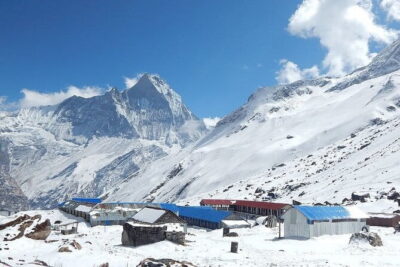
Annapurna Base Camp is not simply a signpost at the end of a trail. It places you inside a dramatic mountain bowl, with peaks rising around the sanctuary. The package describes panoramic mountain views, but the real value is the sense of enclosure: you are surrounded rather than merely looking at a distant range.
At 4,130 meters, this is high enough for altitude to matter. The itinerary does not promise a special acclimatization day, so the compact schedule demands sensible pacing. If you develop health concerns, follow your leader’s advice and remember that rescue insurance is not included in the price.
The trek includes a down jacket and sleeping bag, which is useful at this point. You should still bring suitable personal clothing and be ready for cold conditions. The exact equipment needed depends on the season, but the operator’s supplied gear reduces the amount of bulky kit you need to carry from home.
The long return to Bamboo and Jhinu Danda
Day seven takes you from Annapurna Base Camp back to Bamboo. The descent lasts seven to eight hours, making it the longest walking day on the schedule. Descending can feel easier on the lungs, but it can be tough on knees and ankles after several days on the trail.
This is the day to keep your pace controlled. Do not burn energy early simply because the trail is going downhill. You are still walking for most of the day, and the route can be rough or wet in places.
Day eight leads from Bamboo to Jhinu Danda at 1,760 meters, a five to six-hour walk. The drop in altitude is substantial, and the return to warmer, lower country changes the feel of the trek. Forest, villages, and cultivated hills come back into the picture.
Jhinu Danda is one of the route’s appealing stops, but the supplied details do not promise a particular included activity there. Treat it as a mountain village stop and a useful part of the descent rather than booking the trek solely for a specific attraction.
By this stage, the package’s porter arrangement matters. One porter serves two trekkers, and the staff costs include salaries, insurance, equipment, food, and accommodation. You will still need a day pack with personal essentials, but the arrangement can make the walking more manageable.
Naya Pul, Pokhara, and the flight home
Day nine is the final trail day. You walk to Naya Pul for about six hours, then take a one-hour drive to Pokhara. After the quiet of the trail, Pokhara gives you a more comfortable base and a chance to rest before returning to Kathmandu.
The package includes hotel accommodation in Pokhara with breakfast, along with the private ground transport described in the itinerary. Lunch in Pokhara is not included, so plan to pay for that meal yourself. Lunch in Kathmandu is also excluded.
Day ten is the flight back to Kathmandu. Day eleven is departure, with airport transport provided by the operator and breakfast included. International flights, Nepal’s visa fee, personal expenses, excess baggage, and any extra hotel nights are outside the package.
The provision for extra nights matters. If your arrival is early, your departure is late, or you return from the mountain sooner than planned, additional accommodation in Kathmandu or Pokhara costs extra. Build some financial room into your plan instead of treating $1,699 as the final possible spend.
What the $1,699 price really covers
At first glance, $1,699 is not a bargain-basement trekking price. But the inclusions are broad. You receive domestic flights between Kathmandu and Pokhara, three hotel nights, seven teahouse or guesthouse nights, all trek meals, permits, private ground transport, staff costs, a porter arrangement, and basic trekking equipment.
Permits include the Annapurna Conservation Area Permit and TIMS paperwork. Government and local taxes are also covered. These details save time and reduce the chance of facing a string of small charges during the trek.
The value depends on what you would otherwise arrange yourself. If you want a guided trek with flights, porters, meals, and paperwork handled in one package, the price is easier to justify. If you already have gear, know the route, and prefer to organize transport and accommodation independently, you may prefer a more flexible plan.
Travel and rescue insurance is not included. That is a serious omission only if you fail to arrange it yourself. For a high-altitude trek, insurance that covers trekking and possible rescue is a sensible personal expense, even though the package includes a medical kit carried by the leader.
Seasons, weather, and practical preparation
The strongest seasons are autumn, from September through November, and spring, from March through May. You can expect generally warm, sunny conditions and a better chance of clear mountain views, although mountain weather is never guaranteed.
Winter, from December through February, can bring quieter trails and more time alone in nature. The cost is cold weather, which can be harsh at altitude. The included sleeping bag and down jacket help, but you still need proper personal layers.
The monsoon months, from June through August, bring rain. Wet trails, cloud, and reduced views can change the experience, though the route’s waterfalls and forests may look especially lush. If clear mountain scenery is your main reason for booking, spring or autumn is the safer choice.
You need a passport for the activity. Bring personal clothing for changing conditions, sturdy footwear, and whatever small items you normally need for long walking days. The operator supplies a duffel bag, t-shirt, trekking map, down jacket, and sleeping bag.
Who this 11-day route suits best
I would choose this version if you have limited time and want the Annapurna Base Camp experience without committing to a longer itinerary. It suits people who value a fixed plan, included transport, and support from an English-speaking leader.
It is also a good fit if you want a balance between organized travel and local contact. Staying in teahouses, walking through villages, and using porter support gives you a closer look at the region than a quick mountain flight or sightseeing tour.
I would think twice if you want slow mornings, many rest days, or a relaxed photography schedule. The seven to eight-hour return from base camp is demanding, and the trek gains height without a dedicated acclimatization day listed in the plan.
The activity has a rating of 5 from two verified bookings, and the strongest praise focuses on organization and helpful guides. A German participant specifically noted that questions about both arrangements and local subjects were answered. That is the kind of support you want when the trail, altitude, and daily timing all matter.
Should you book this Annapurna Base Camp trek?
Book it if you want a carefully arranged 11-day route with the major costs handled in advance. The combination of flights, permits, meals, porters, equipment, and licensed English-speaking leadership gives the price real value.
Choose the 14-day Annapurna Sanctuary option instead if you want a slower pace or more time in the mountains. For this shorter version, aim for spring or autumn, arrange rescue insurance, and prepare for long walking days.
If you are comfortable with that tradeoff, this is a strong way to reach Annapurna Base Camp without spending weeks organizing every transfer and teahouse yourself.
FAQ
How long is the Annapurna Base Camp trek?
The full activity lasts 11 days, including arrival and departure days, flights between Kathmandu and Pokhara, and the trekking route.
What is the highest point on the trek?
Annapurna Base Camp is at 4,130 meters, or 13,545 feet. The route also passes Machhapuchhre Base Camp at 3,700 meters.
Are meals included?
Breakfast, lunch, and dinner are included during the trek. The package also includes a welcome dinner and farewell dinner. Lunch in Kathmandu and Pokhara is not included.
Are flights between Kathmandu and Pokhara included?
Yes. The package includes domestic flights from Kathmandu to Pokhara and back to Kathmandu. The outbound flight takes about 30 minutes.
What accommodation is provided?
You receive three nights in three-star hotels in Kathmandu and Pokhara with breakfast, plus seven nights in teahouses or guesthouses during the trek.
Is a porter included?
Yes. Porter service is provided at a ratio of one porter for every two trekkers. Staff salaries, insurance, equipment, food, and accommodation are also included.
When is the best time to go?
September through November and March through May are described as the best seasons for sunny weather and mountain views. December through February is colder but may be quieter, while June through August brings monsoon rain.
Latest treks added in Kathmandu
- Private Manaslu Circuit Trek at Himalayas★ 5.0 · 3 reviews
- Ghorepani Poonhill Trek★ 5.0 · 5 reviews
- Ghorepani Poon Hill Trek★ 5.0 · 16 reviews
- Upper Mustang Trekking★ 3.0 · 2 reviews
- Amazing 1 Day Trekking Experience in Kathmandu Nepal★ 5.0 · 24 reviews
- Upper Mustang Trekking★ 5.0 · 2 reviews
- Upper Mustang Trek★ 5.0 · 5 reviews
- Upper Mustang Trekking★ 5.0 · 4 reviews
Annapurna Base Camp Treks, compared.

Trekking in Annapurna/Langtang/Everest/Upper Mustang regions
Read our review →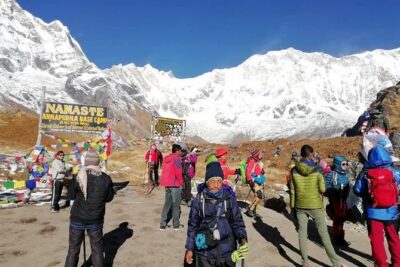
Kathmandu to Annapurna Base Camp (ABC) 5-Day Trek
Read our review →Browse the lists this tour appears in