
REVIEW · NEPAL
Mardi Himal Trek
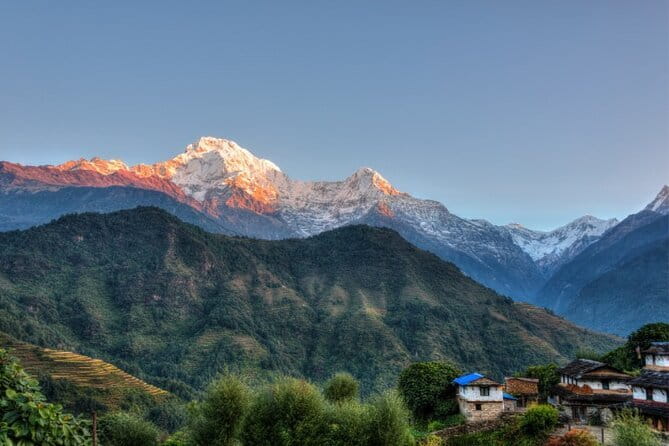
Mardi Himal gives you a close look at the Annapurna range without asking for two weeks on the trail. In five days, you walk from Dhampus through forested hills and high mountain country toward views of Machhapuchhre, Annapurna South, Hiunchuli, and Mardi Himal.
I like the practical shape of this trip: private transport from Pokhara and a licensed guide remove much of the trail planning, while the porter arrangement keeps your load manageable. I also like the human side, with guides such as Lama and Navaraj Nepal praised for care, flexibility, and good communication.
The main catch is the pace. Seven-hour trekking days are listed for the first four days, and the route reaches high ground quickly. You need moderate fitness, and you should confirm the exact overnight stops and meal count before paying.
Key points to know before you book
- Five days from Pokhara: The route begins and ends around Lakeside, so you do not need extra internal transport between the trek and your hotel.
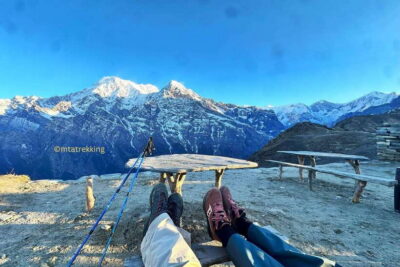
- Mountain views arrive in stages: Dhampus, Low Camp, High Camp, and the Mardi Himal View Point each bring a different view of the Annapurna range.
- Base Camp or View Point: On the highest hiking day, you can choose between Mardi Himal Base Camp and Mardi Himal View Point.
- Private group format: Only your own group takes part, giving you more say over pace and route choices.
- Porter support is shared: Two visitors receive one porter, so you should pack sensibly and keep essentials in your day bag.
- Good value at $399: The price includes transport, guide, porter support, accommodation, park and other listed fees, and trekking meals.
Why this short Himalayan trek works
I see Mardi Himal as a good middle ground. It gives you a real multi-day trek, with simple mountain accommodation and long walking days, but it does not require the larger time commitment of a long Himalayan route.
The setting changes quickly. You begin near Pokhara, reach Dhampus by road, and then trade city views for village paths, forest, open ridges, and high camps. The closer you get to the upper route, the more the Annapurna peaks become the focus.
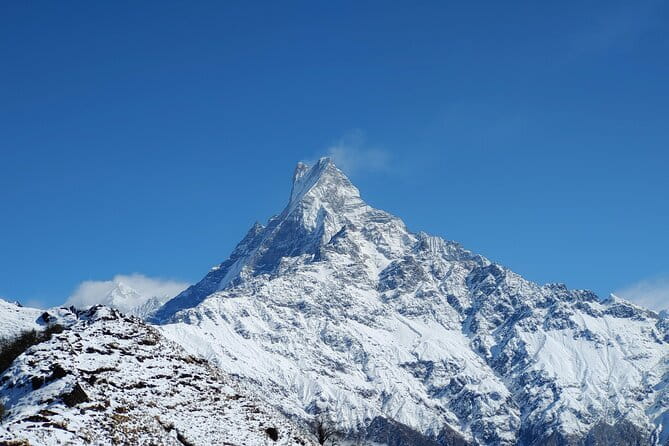
The best part is the view of Machhapuchhre, also called Fishtail. The route is especially appealing if you want a close mountain face rather than a trek that spends most of its time in lower villages.
This is not a gentle sightseeing walk. The schedule gives about seven hours of trekking on each of the first four days. You should expect sustained uphill and downhill walking, basic lodging, and changing weather. The operator lists a moderate fitness level, which is a fair description, but the day to the View Point or Base Camp will still feel demanding.
More Mardi Himal Treks in Pokhara
- Pokhara: 4-Day Mardi Himal Trek
★ 4.9 · 59 reviews - Private Mardi Himal Trek
★ 5.0 · 42 reviews - From Pokhara: 4-Day Mardi Himal Base Camp Trek
★ 4.9 · 31 reviews
Day 1: Dhampus begins the walk
Your guide collects you from your hotel in Pokhara at about 10:45 in the morning. The drive to Dhampus takes roughly one hour, so you reach the trailhead without losing a full morning to road travel.
Dhampus is a useful starting point because it places you directly among foothills, villages, and mountain views. From here, the trek moves away from the road and into the route toward the forest camps. The day is listed at about seven hours, so do not treat the drive as the main part of the day.
I like this first day because it gives you a proper transition. You leave Lakeside, pass into the hill country, and begin walking on the same day. You also have a guide beside you from the start, which helps with pace and local arrangements.
The supplied schedule does not give a clear overnight name for Day 1, though Day 2 begins from Forest Camp. Ask your guide to confirm the exact sleeping stop before departure. That small detail matters if you want to know how much walking remains after Dhampus.
Day 2: Forest Camp, Low Camp, and High Camp
The second day is described as the walk from Forest Camp to High Camp, with Low Camp along the way. The stop heading also refers to Lwang Ghalel, so the published route details are not perfectly consistent. Get the day’s exact trail plan from the operator before you start.
The important part is the climb toward High Camp. Low Camp is a natural pause, and it is one of the places where the mountain views begin to open. The route moves from forested ground toward more exposed high-country terrain, with Fishtail, Annapurna, and Hiunchuli becoming more prominent.
This is one of the harder days because you gain height while still covering about seven hours. You will want a light day pack with water, warm layers, rain protection, and any personal medicine. Your porter carries the main luggage, but you should not expect to reach that bag during the day.
High Camp is valuable because it puts you close to the next morning’s main goal. The tradeoff is comfort. The included accommodation is on a double-occupancy basis, and the route uses trekking lodges rather than city hotels. Expect a practical overnight stop, not resort service.
Day 3: Choosing Mardi Himal Base Camp or View Point
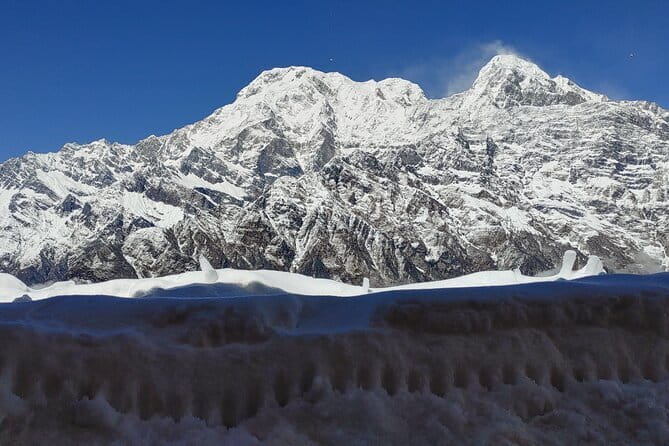
Day 3 is the centerpiece. You hike toward either Mardi Himal Base Camp or Mardi Himal View Point, depending on your preference. The route offers views of Fishtail, Annapurna, and Hiunchuli, and this is where the trek earns its reputation for big scenery in a short time.
The View Point is the clear choice if your priority is a broad mountain panorama and a shorter or more flexible high-day option. Base Camp is the choice if reaching a named destination matters most to you. The supplied information does not state the exact distance difference or the precise time for each option, so discuss your choice with your guide before setting out.
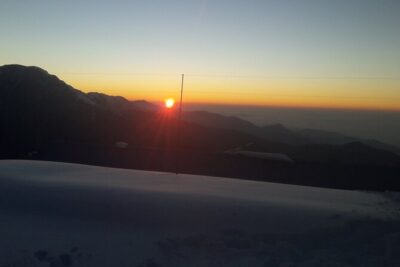
The day is again listed at about seven hours. Weather can change the experience completely, and the operator specifically notes that the trip depends on good conditions. On a clear morning, you should have the best chance of seeing the peaks. In cloud or rain, the high route can feel very different.
I would not rush this day. The mountain views are the reason to take the trek, and a private group gives you more room to stop, adjust your pace, and make the choice that suits your energy. At the same time, you should follow your guide’s advice if conditions become poor.
Another trail to compare in Pokhara:
- Poon hill Trek 3 days
★ 5.0 · 176 reviews - Trekking in Annapurna/Langtang/Everest/Upper Mustang regions
★ 5.0 · 161 reviews - Pokhara: 4-Day Ghorepani, Poonhill & Ghandruk Mountain Trek
★ 5.0 · 132 reviews - Ghorepani – Poon Hill Trek 3N-4D
★ 5.0 · 125 reviews
Day 4: Down through Badal Danda to Landruk
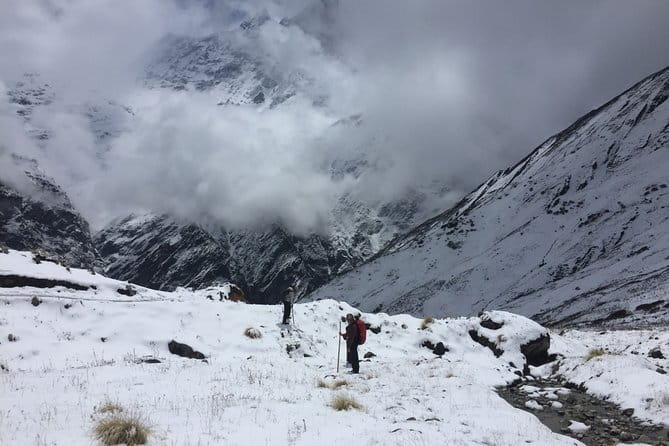
After the high route, the trek turns downhill toward Landruk. The schedule refers to the descent from Badal Danda, with a walking day of about seven hours.
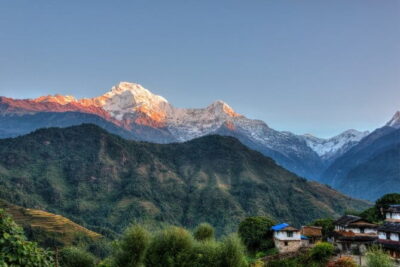
Landruk gives the trip a more settled village finish. You can see local houses, farmland, and daily life, along with views of Annapurna South and Hiunchuli. After the stark upper ridges, this change in scenery is welcome.
Downhill walking can sound easy, but it can be tough on knees and thighs after several days on foot. Trekking poles may help, though personal trekking equipment is not included. Good shoes matter more here than fancy equipment.
I like Landruk as the final overnight village because it lets you see more than mountains. You get a glimpse of how people live along the hill route, rather than spending every night in a high camp. Keep in mind that the route description does not provide exact elevation figures, distances, or the name of every overnight lodge, so ask for those details if they affect your planning.
Day 5: Short walk to Siwai and the ride back
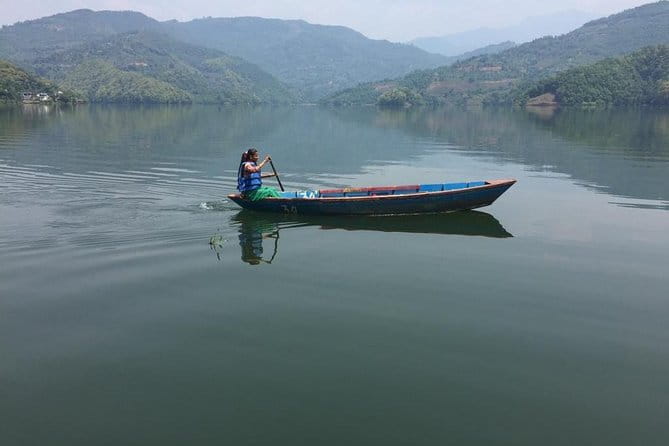
The last walking section runs from Landruk to Siwai and takes about one and a half hours. That is a much easier finish than the earlier days, and it gives you time to complete the trek without another long mountain crossing.
Siwai is the endpoint of the trail portion. From there, transport takes you back to Pokhara, and the trip ends at your hotel in Lakeside. The return to the same area where you started is a real convenience. You do not need to arrange a separate transfer from a distant roadhead.
The schedule does not state the exact driving time from Siwai to Pokhara. Ask your guide for the expected arrival time, especially if you have a flight, bus, or other booking later that day. I would leave a generous buffer.
What the $399 price actually covers
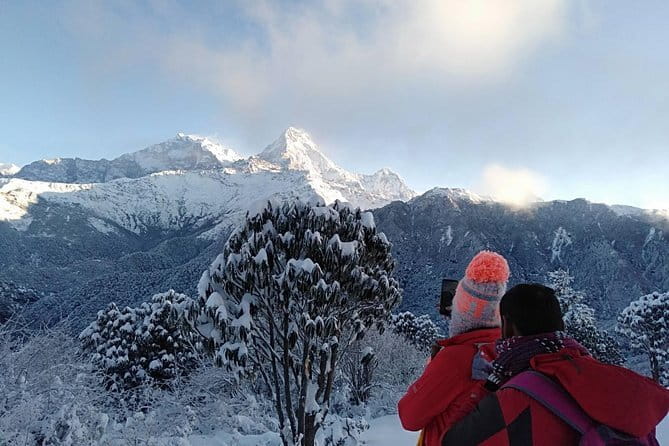
At $399, this is more than a guide-only walking package. The listed price includes private transportation, a government-licensed guide, one porter for every two people, accommodation during the trek, all listed fees and taxes, and trekking meals.
The meal plan is described as five breakfasts, four lunches, and four dinners. Another part of the package also lists five lunches, so there is a small inconsistency worth clearing up before booking. The trek is five days, but only four dinners make sense if the final night is not spent on the trail.
Seasonal fruit after dinner is included on each trekking day, a modest detail but a pleasant one after a long walk. Meals and accommodation in Kathmandu or Pokhara are not included, so you need to budget for those separately.
You also pay extra for personal trekking equipment, showers, laundry, phone calls, battery charging, and tips. Those costs can be easy to overlook in Nepal, especially if you want to charge devices each night or use hot showers at the lodges.
The porter arrangement is two people to one porter. That is helpful, but it does not mean you can bring a large suitcase. Pack a compact trekking bag and carry valuables, documents, water, warm layers, and medication yourself.
Guides, planning, and the private-group advantage
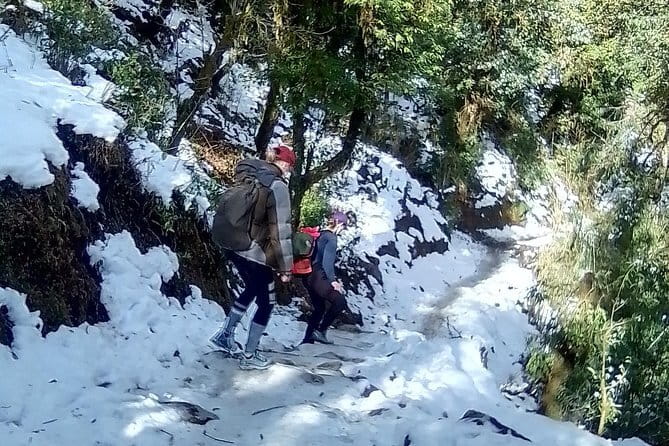
The company assigns a licensed guide, but the exact guide for your departure is not named in the tour details. Guides connected with this trekking team include Lama and Navaraj Nepal, also called Mr Nepal in some trip planning. Their praised qualities include patience, communication, local trail knowledge, and the ability to adjust plans to a group’s needs.
Jayaram, the founder, handles trip planning and has been described as responsive from the first contact. That matters if you are arranging transport, asking about equipment, or trying to understand how the route works before arriving in Nepal.
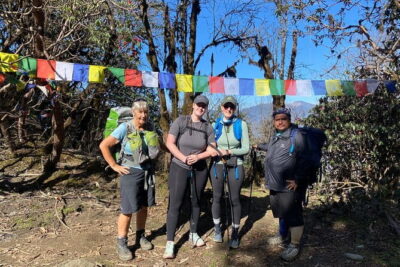
Because this is a private activity, only your group takes part. You are not tied to the pace of a large mixed group. That can make a real difference on the long days, especially if one person wants more photo stops or needs a slower pace.
Private does not mean effortless. The guide still needs to manage weather, trail conditions, and the group’s fitness. You should be ready to walk at a steady pace and accept changes if conditions make the high route unsafe.
Conditions, equipment, and comfort
The tour requires moderate physical fitness. Seven-hour days, high-ground walking, and a long descent make this a poor fit if you are looking only for short walks from Pokhara.
Personal trekking equipment is not included. The supplied details do not provide a packing list, so ask the company for current advice before leaving. At a minimum, plan for proper walking footwear, warm clothing, rain protection, a small day pack, and personal toiletries. Those are practical needs, not optional extras, on a five-day route.
Accommodation is included on a double-occupancy basis during the trek. The information does not promise private rooms, upgraded lodges, or attached bathrooms. If privacy matters, ask what room arrangements are available for your dates and whether a single supplement applies.
Weather is an important factor. The operator can cancel if conditions are poor, offering another date or a full refund. That policy is useful, but you should still avoid scheduling an important onward journey too close to the end of the trek.
Who should choose Mardi Himal
I would choose this trek if you have five days, want strong mountain views, and prefer a private setup with transport and meals arranged. It suits someone who wants more than a day walk around Pokhara but does not have time for a longer Himalayan trip.
It is also a good choice for first-time multi-day trekkers who want support. The company provides a guide, porter arrangement, lodging, meals, and transport, so you do not have to build the route from separate bookings.
I would hesitate if you dislike basic accommodation, long walking days, or changing plans in poor weather. I would also ask more questions before booking if you need exact distances, elevation figures, private rooms, or a fixed return time.
The experience has earned a 100 percent recommendation figure from 30 submitted ratings, with particular praise for organization, guide support, and the way the team handled planning and transport. That is encouraging, though you should still check the current guide assignment and the details of your own departure.
Should you book the Mardi Himal Trek?
Book it if your priority is a short, well-supported trek with close Annapurna views and a private group. The $399 price is strong when you count transport, guide, porter support, lodging, meals, and listed fees.
Before paying, confirm four things: the exact Day 1 and Day 2 overnight stops, whether your package includes four or five lunches, the route choice between Base Camp and View Point, and the equipment you need to bring.
If you can handle seven-hour days and basic mountain accommodation, this is a practical way to get into the Himalayas from Pokhara. If you want a relaxed holiday with easy walks and hotel comfort, choose something gentler.
FAQ
Where does the Mardi Himal Trek start?
The trek starts at Lakeside in Pokhara. The guide picks you up from your hotel, and the group drives to Dhampus, the walking start point.
Where does the trek end?
The walking section ends at Siwai. Afterward, private transport takes you back to Pokhara, and the experience ends at your hotel in Lakeside.
How long is the Mardi Himal Trek?
The trip lasts approximately five days and includes four nights on the trek.
What time does the tour start?
The listed start time is 10:45 am. The guide collects you from Lakeside in Pokhara.
Is transportation included?
Yes. Private transportation from Pokhara to Dhampus and back from Siwai to Pokhara is included.
Is a guide included?
Yes. The package includes a government-licensed, experienced guide. The exact guide for your departure is not specified in the tour details.
Is porter support included?
Yes. The arrangement is one porter for every two people.
Are meals included?
Meals during the trek are included. The stated plan includes five breakfasts, four lunches, and four dinners, although another part of the meal description lists five lunches. Confirm the final meal count before booking.
Can I cancel for a full refund?
You can cancel at least 24 hours before the local start time for a full refund. Cancellations or changes made less than 24 hours before the start are not accepted for a refund. If poor weather or an unmet minimum group requirement causes cancellation, you are offered another date or a full refund.
Latest treks added in Pokhara
- Pokhara: Majestic Mardi Base Camp Guided Trek with HotSpring★ 5.0 · 6 reviews
- Pokhara: 9-Day Annapurna Base Camp Trek with Poon Hill★ 5.0 · 6 reviews
- Pokhara: 5-Day Ghorepani and Poon Hill Private Trek★ 5.0 · 4 reviews
- Pokhara: 5-Day Trek to Annapurna Base Camp and Hot Springs★ 5.0 · 4 reviews
- Pokhara: 7-Day Annapurna Base Camp Trek & Hot Spring★ 4.0 · 3 reviews
- Pokhara:4-Day Ghorepani Poon Hill Guided Trek via Ghandruk★ 5.0 · 3 reviews
- Pokhara: 4-Day Poon Hill and Ghandruk Guided Trek★ 5.0 · 14 reviews
- Pokhara: 4-Day Beautiful Ghorepani Poon Hill & Ghandruk Trek★ 4.8 · 21 reviews
Mardi Himal Treks, compared.


Mardi Himal Trek – 8 Days | Hidden Gem of the Annapurnas
Read our review →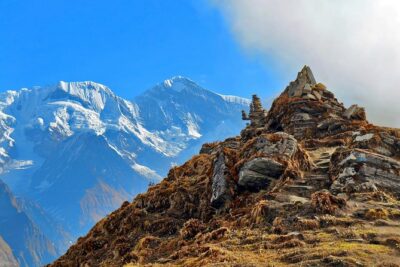
Browse the lists this tour appears in