
REVIEW · TANZANIA
6 Days Marangu Route Trekking
Kilimanjaro’s Marangu Route gives you a clear six-day path to Africa’s highest point, with wooden huts instead of tents and a useful acclimatization day at Horombo. You begin in monkey-filled rainforest, cross moorland and lava-stone ridges, then make the hard midnight climb toward Uhuru Peak.
I like the hut-to-hut format, which removes the need to carry a tent, and I like the extra day at Horombo, where you can walk higher before sleeping lower. The main drawback is the summit day: it begins around midnight, reaches 5,895 meters, and demands a long descent on tired legs.
Key points before you book
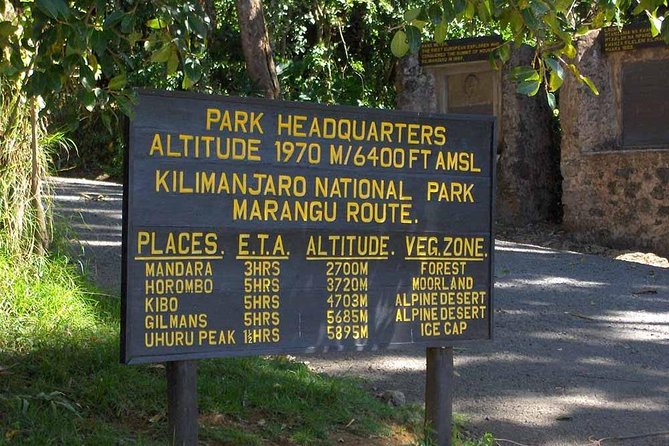
- Marangu Gate starts the climb at 1,843 meters, with registration and a rainforest walk.
- Mandara and Horombo huts provide bunk beds, but you still need your own sleeping bag.
- Day three is for acclimatization, with options including Zebra Rock and Mawenzi Peak.
- The summit attempt starts around midnight, reaching Gillmans Point before Uhuru Peak.
- Guides, cooks, porters, taxes, parking, and gate transfers are included in the $1,800 price.
- The experience is private, so only your own group takes part.
Why the Marangu Route works for a six-day climb
The Marangu Route is often called the Coca-Cola Route, but this trip is no soft stroll. You still gain more than 4,000 meters, sleep at altitude, and face a steep summit night. What makes the route practical is its hut system and straightforward trail.
You begin at Marangu Gate on the eastern side of Kilimanjaro. The trail rises through forest, then changes to moorland and open high-altitude ground before reaching Kibo Hut. From there, you make the final climb to the crater rim and Uhuru Peak.
At $1,800 per person, the price includes the parts that matter most on a guided mountain climb: professional guides, cooks, porters, government taxes, parking fees, and transfers to and from the route gate. International flights, insurance, visas, drinks, and your sleeping bag remain your responsibility.
That package can offer solid value if you want a supported climb rather than arranging every part yourself. The private format is also useful for a couple, family, or small group that wants the schedule centered on its own pace. Still, you should ask what group size your private booking allows and confirm the exact transfer plan before paying.
The six-day schedule is also worth reading carefully. Day five is the summit attempt and descent, while day six continues down to Marangu Gate. In practice, summit day is the toughest part by far, even though the stated walking time is about six hours. The description also calls the ascent a five-day climb, so confirm how the operator counts the days when you arrange transport and hotel nights.
More Kilimanjaro Climbs in Tanzania
- 8-Day Small-group Lemosho Kilimanjaro Summit Trekking
★ 5.0 · 186 reviews - Best Kilimanjaro Adventure 7 days Machame route Trekking
★ 5.0 · 42 reviews - Kilimanjaro 7 Day Private Trekking Experience
★ 5.0 · 40 reviews
Day one, from Marangu Gate to Mandara Hut
Your climb begins at Marangu Gate, at 1,843 meters. Registration takes place here, and you meet the guides, cooks, and porters who will support the group.
The first section passes through dense, mist-covered rainforest. This is one of the most enjoyable parts of the route because the mountain feels alive and close around you. You might spot blue monkeys, black-and-white colobus monkeys, or bushbabies among the trees.
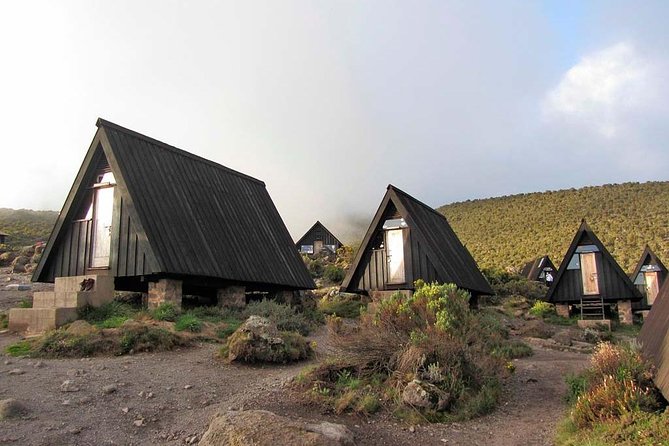
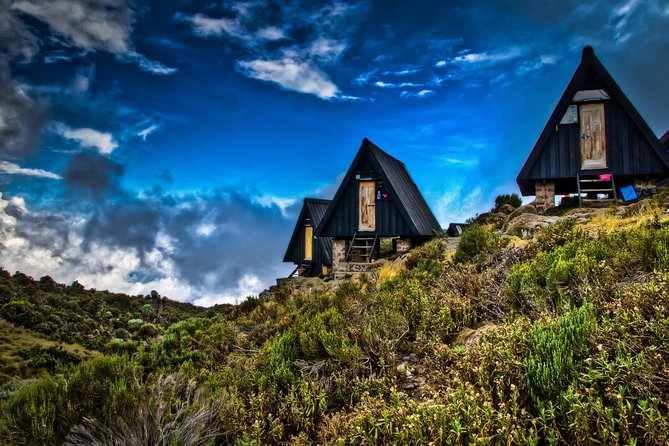
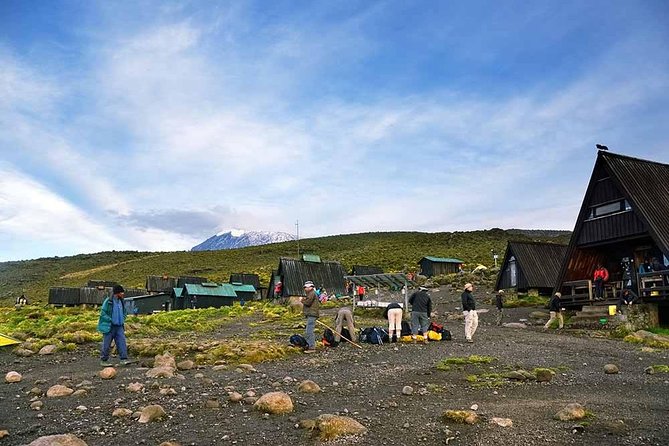
The planned walking time is about four hours. A picnic lunch stop at Kisambioni breaks up the climb before you continue toward Mandara Hut at 2,700 meters. The hut complex consists of wooden, A-shaped buildings with rooms holding four bunk beds each.
This setup is a real advantage for anyone who prefers a bed and roof to a tent. It does not mean you can pack lightly without thought. You must bring your own sleeping bag, and the supplied information does not promise bedding or other personal mountain equipment.
Day one is a gentle introduction compared with what follows, but you should still keep your pace slow. The early rainforest section can feel easy, and that is exactly when some people walk too fast. Save energy, drink as instructed by your guide, and use the first day to learn how your body reacts to the climb.
Day two, the change from forest to moorland
Day two takes you from Mandara Hut to Horombo Hut, at 3,720 meters. The walking time is about six hours, and the route passes around Maundi Crater before heading northwest.
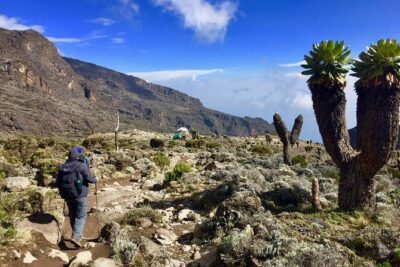
Maundi Crater is a volcanic vent remnant with tussock grasses and broad views. This is a good morning for looking around rather than staring only at your boots. The path crosses a stream, reaches grassland, and then moves into moorland as the trees thin out.
That change in plant life helps you feel the height you are gaining. The air becomes cooler and the surroundings more open, with rocky ground and high-altitude vegetation replacing the rainforest.
Horombo Hut sits in a rocky valley. On a clear day, you may see Moshi below, and sunset can be a memorable reward after the long walk. The setting is appealing, but the altitude is now serious. At 3,720 meters, you may notice headache, poor sleep, shortness of breath, or reduced appetite. Tell your guide about symptoms rather than trying to hide them.
The schedule calls for an overnight stay at Horombo. That night matters because the next day is not a simple rest day. It is used to gain more altitude during the day and then return to Horombo to sleep.
Day three, the Horombo acclimatization advantage
The extra day at Horombo is one of the strongest features of this plan. You spend about three to five hours walking, with a stated distance of 10 kilometers and an altitude gain and loss of 818 meters.
You can choose a guided short hike around the area. Zebra Rock, at about 4,000 meters, takes a couple of hours. A longer option heads toward Mawenzi Peak, the eastern summit of Kilimanjaro, and takes four to five hours there and back.
The point is not to reach a new overnight camp. You climb higher, let your body experience the altitude, then return to sleep at Horombo. That pattern can help you adjust before the move to Kibo Hut and the summit attempt.
This is also a day to watch your own condition honestly. A scenic walk is not worth pushing through serious altitude symptoms. The itinerary gives you choices, so speak with your guide about the right level of effort. The guide team is central here, and Hashim is specifically named in the available feedback as someone who provided support throughout a Kilimanjaro climb.
The day offers a welcome pause from the simple upward march. You can enjoy the rocky valley, take in views toward Moshi when conditions allow, and prepare mentally for the much harsher ground ahead.
More six-day treks in Tanzania
- 6 Days Machame Route Kilimanjaro Climbing Trekking Tour
★ 5.0 · 34 reviews - 6 Days Machame Route Kilimanjaro Trekking
★ 5.0 · 13 reviews - 6 Days Trekking Marangu Route Mount Kilimanjaro
★ 5.0 · 3 reviews - Singalila Ridge Trek from Darjeeling – 6 Days
★ 5.0 · 56 reviews
Day four, crossing the Saddle to Kibo Hut
From Horombo, the route becomes steeper and rockier. You pass Last Water and enter a stark stretch leading to the Saddle, the broad lava-stone ridge between Mawenzi and Kibo.
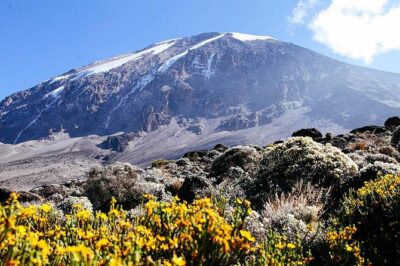
This is one of the most distinctive sections of the climb. The vegetation becomes sparse, and the mountain feels more exposed. You can see the upper reaches of Kilimanjaro ahead while crossing open ground toward Kibo Hut.
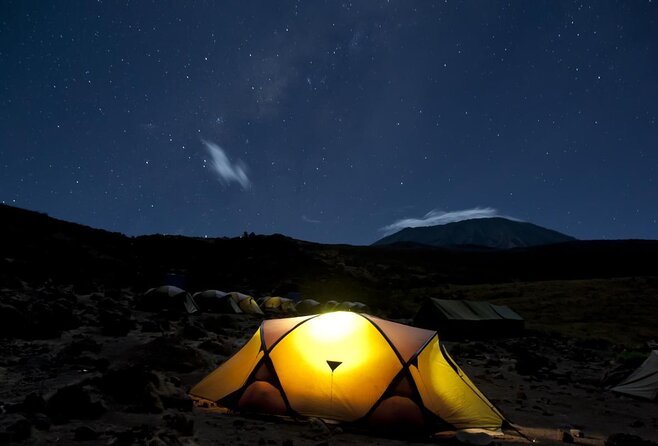
The day takes about six hours, ending at 4,703 meters. Kibo is the final overnight stop before the summit. A hot meal is planned for the afternoon, followed by a quiet evening and an early bedtime.
Do not expect a normal night of sleep. You are at high altitude, excited, and preparing to leave around midnight. The best use of the afternoon is to eat what you can, organize your summit clothing and water, and rest. Put gloves, layers, headlamp, and other essentials where you can reach them quickly.
The description does not include admission on this day, so clarify how park fees are handled. Government taxes are included in the package, but the wording lists some daily admission items separately. That is a small point, yet it is worth settling before you start.
Day five, the midnight climb to Uhuru Peak
Summit day is the physical and mental test. You set off around midnight, climb a long scree slope past Hans Meyer Cave, then follow a zigzag trail toward Gillmans Point on the crater rim.
Gillmans Point sits at 5,685 meters. The final approach is steep, rocky, and includes a short section of scrambling. This is described as the hardest part of the route, and it is where a steady pace matters most.
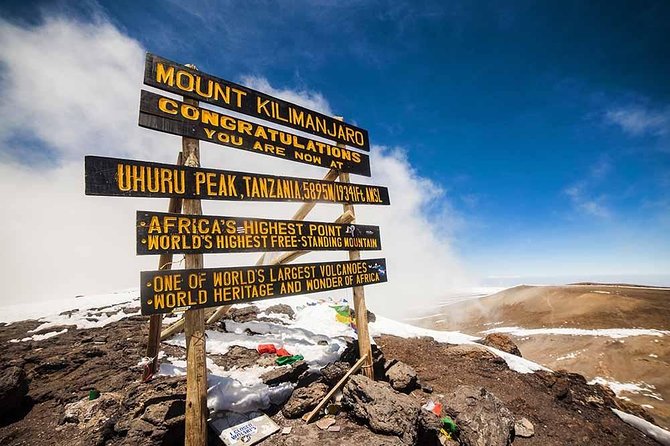
Once you reach Gillmans Point, you still have about two hours to Uhuru Peak. At 5,895 meters, Uhuru is the highest point in Africa. The reward is a sunrise over the ice fields and Mawenzi peaks, assuming conditions allow clear views.
Keep your expectations practical. At this altitude, you may move slowly, feel cold, and have little interest in food. The goal is not speed. Follow your guide, take short rests, and pay attention to symptoms. Your guide’s judgment is important if you need to turn around.
The descent begins after a short time at the summit. This is why day five can feel much longer than the stated six hours. You have the summit approach, time at the top, and a substantial descent still ahead. The exact overnight arrangement after the summit should be confirmed because the supplied schedule moves directly to day six, when you descend to Marangu Gate.
Day six, back through the rainforest
After breakfast, you retrace the route toward Mandara Hut and then continue down through the rainforest to Marangu Gate. The listed walking time is about five hours.
This descent gives you a second look at the forest, now with the satisfaction of having crossed the mountain’s harsher upper zones. The change from open moorland to thick trees can feel dramatic, especially after the cold and bare ground around Kibo.
At the gate, you receive summit certificates and have a short celebration with the porters. A transfer then takes you back to your hotel, where a hot shower and a Kilimanjaro beer should feel well earned.
The last day is easier than summit day, but downhill walking can still be hard on knees and feet. Use trekking poles if you normally rely on them, keep your pace controlled, and do not treat the final descent as an effortless walk.
What the $1,800 price covers
The price includes breakfast, parking fees, transfers to and from the Kilimanjaro route gate, government taxes, professional mountain guides, cooks, and porters.
That is a useful bundle because the support crew handles the practical work while you concentrate on walking and acclimatizing. Porters carry group equipment and supplies, while cooks prepare meals. Guides manage the route and provide support during the climb.
You still need to budget for international flights, travel insurance, visa fees, alcoholic and non-alcoholic drinks, and personal equipment. Your sleeping bag is specifically not supplied with the bunk beds, so include rental or purchase costs if you do not already own one.
Insurance deserves special attention. The tour price does not include it, and a mountain climb at this altitude is not the place to travel without suitable cover. Check that your policy includes trekking at Kilimanjaro’s maximum height and any emergency arrangements you may need.
Who should book this climb
This trip suits you if you have a moderate level of physical fitness and want a guided ascent with hut accommodation. You should be comfortable walking for several hours on consecutive days and preparing for one steep, cold, early-morning summit push.
It is a good fit if you dislike camping or want a simpler sleeping arrangement than a tent-based route. The private format also helps if you want your own group rather than joining a large shared departure.
I would think twice if you want a relaxed mountain holiday. The first few days are manageable, but altitude, poor sleep, cold conditions, and the summit schedule make this a demanding experience. The six-day timing is also fairly focused, so anyone concerned about acclimatization should ask if a longer version is available.
The strongest practical choice in the plan is the Horombo acclimatization day. Use it well, listen to the guides, and do not mistake the route’s hut system for an easy climb.
Small details that matter before departure
Pickup is offered, and the stated meeting point is Kilimanjaro International Airport, with a 7:30 a.m. start time. Confirm your arrival time and hotel transfer details before booking flights.
Booking confirmation is provided at the time of purchase. Cancellation is free if you cancel at least 24 hours before the local start time. Changes or cancellations inside that window are not accepted for a refund.
The experience is private, but the supplied information does not state the maximum number of people in your group. Ask this directly, especially if you are booking for several people and want a particular pace.
The tour is operated by Kilimanjaro 360 Expedition. The available feedback gives the company a top overall rating from two entries and specifically names Hashim for supportive guiding. That is encouraging, but you should still request the name of your assigned lead guide and confirm what equipment, meals, and post-climb arrangements are included.
Should you book the Marangu Route?
Book it if you want a supported Kilimanjaro climb with huts, a private group, and a built-in acclimatization day. The route gives you varied scenery, from rainforest and monkeys to volcanic ridges and the summit ice fields, while the included guides, cooks, and porters make the logistics far easier.
Do not book it simply because the price looks manageable or because the route has huts. The summit day is serious, and the final success depends on your fitness, pacing, health, and response to altitude.
For the right person, this is a practical way to attempt Uhuru Peak without camping. Confirm the overnight plan after the summit, clarify the admission-fee wording, arrange insurance, and pack your own sleeping bag. If those details suit you, the $1,800 package offers a strong starting point for a focused Kilimanjaro climb.
FAQ
Where does the climb begin?
The climb begins at Marangu Gate in Kilimanjaro National Park, at an altitude of 1,843 meters.
What time does the experience start?
The stated meeting time is 7:30 a.m. at Kilimanjaro International Airport.
Is pickup offered?
Yes. Transfers to and from the Kilimanjaro route gate are included, and pickup is offered.
Where do you sleep during the climb?
You sleep in wooden bunk huts at Mandara Hut, Horombo Hut, and Kibo Hut. You must bring your own sleeping bag.
Is there an acclimatization day?
Yes. Day three is an acclimatization day at Horombo, with guided options including Zebra Rock and a longer walk toward Mawenzi Peak.
What is included in the price?
The price includes breakfast, parking fees, route-gate transfers, government taxes, professional mountain guides, cooks, and porters.
Can you cancel for a full refund?
Yes, if you cancel at least 24 hours before the experience start time. Cancellations or changes made less than 24 hours before the start are not accepted for a refund.
Latest treks added in Tanzania
- 6 Days Machame Route Kilimanjaro Trekking★ 5.0 · 13 reviews
- Mount Kilimanjaro day trip trekking★ 5.0 · 12 reviews
- 5 Days Marangu Route Kilimanjaro Trekking★ 5.0 · 4 reviews
- 3 Days Mount Meru trekking★ 4.5 · 7 reviews
- 8 Days Lemosho Route Kilimanjaro Trekking★ 5.0 · 5 reviews
- 7 Days Machame Route Kilimanjaro Trekking★ 5.0 · 9 reviews
- 7 Days Machame Route Trek Mount Kilimanjaro★ 5.0 · 12 reviews
- 5 Days Marangu Route – Mount Kilimanjaro Trek★ 5.0 · 5 reviews
Kilimanjaro Climbs, compared.
8-Day Small-group Lemosho Kilimanjaro Summit Trekking
Read our review →
Best Kilimanjaro Adventure 7 days Machame route Trekking
Read our review →
Kilimanjaro 7 Day Private Trekking Experience
Read our review →
6 Days Machame Route Kilimanjaro Climbing Trekking Tour
Read our review →
Kilimanjaro Trekking 7Days 6Night Lemosho Route
Read our review →
Browse the lists this tour appears in