
REVIEW · KATHMANDU
Annapurna Circuit Trek
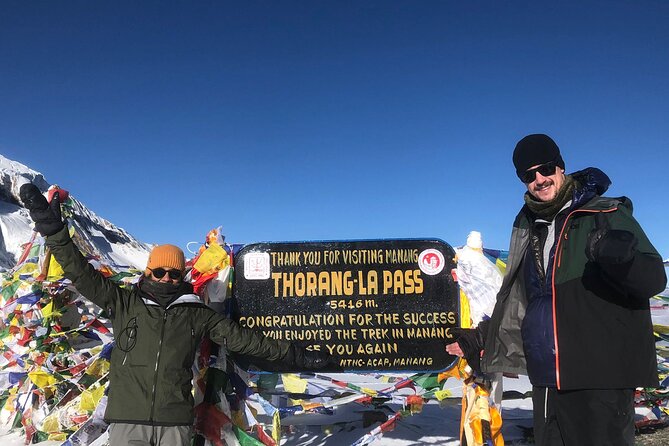
The big prize here is Thorung La at 5,416 meters, reached after days of walking from warm river valleys into the thin air of Manang. You also get a fine finale at Poon Hill, where sunrise reaches across Dhaulagiri, Annapurna, and Machhapuchhre.
I like the steady change in scenery, from suspension bridges and terraced fields to pine forests, dry high valleys, and the Kali Gandaki. I also like the practical support: a local guide, tea-house lodging, meals on trek, and transport arranged between the trail sections. The main caution is that the advertised material mixes an Annapurna Circuit trek with Sarangkot, Kathmandu sightseeing, and Pokhara activities, so confirm the final program before paying.
- Thorung La crossing at 5,416 meters: The trek’s hardest and most memorable day, with an early start and a long descent to Muktinath.
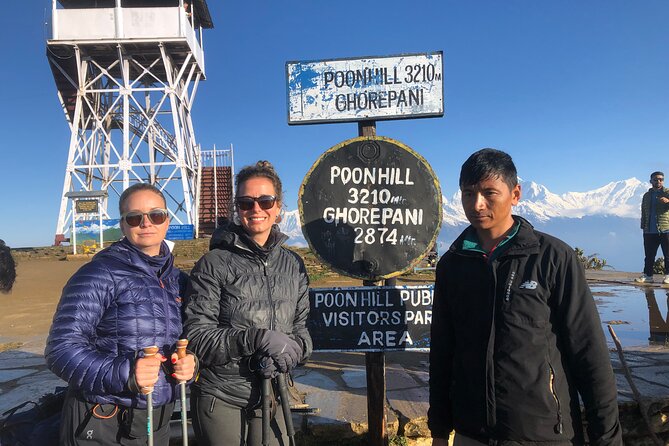
- Poon Hill sunrise: A shorter mountain viewpoint after the high pass, with a wide roll call of Himalayan peaks.
- Tea-house travel: You sleep in simple lodges and eat along the route rather than camping.
- Local support: Outfitter Nepal supplies an experienced guide, with porter arrangements available, though the porter cost and group allocation should be confirmed.
- Small-group format: The stated maximum is 10 people, with larger parties divided among guides.
- Good package value: At $994 per person, transport, meals on trek, lodging, guide costs, taxes, and service charges are included.
The Annapurna route, from river valleys to high passes
This is a brisk 12-day version of the Annapurna Circuit. You begin near Besisahar, walk through Chamje, Dharapani, Chame, Pisang, and Manang, cross Thorung La, descend to Muktinath, then work your way through Tatopani and Ghorepani to Pokhara.
I would not call it a gentle all-levels hike. The route includes several five to eight-hour walking days, steep climbs, loose or rocky sections, thin air, and a pass higher than 5,400 meters. The trail itself is well established, but the altitude makes this a serious mountain trek.
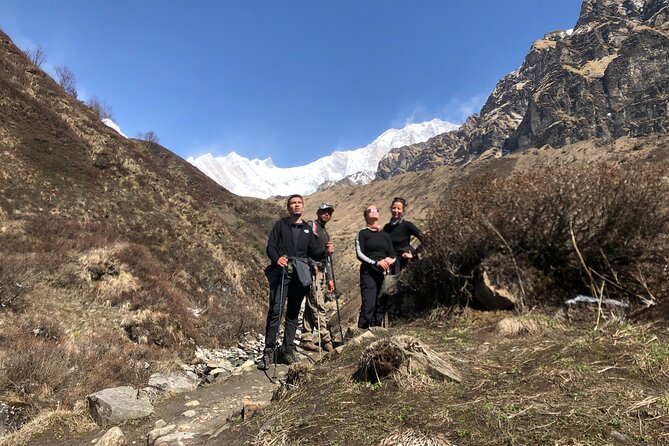
The reward is variety. Lower sections bring river gorges, cultivated land, pine and oak woods, suspension bridges, and villages. Above Manang, the air gets colder and thinner, the vegetation becomes more sparse, and the mountains seem much closer. After Thorung La, the scenery changes again as you enter the dry Kali Gandaki valley and the Mustang side of the Himalayas.
Day 1: Kathmandu to Chamje by bus and jeep
Your guide collects you at about 7:00 a.m., with the stated meeting time listed as 6:15 a.m. I would clarify the exact pickup time the day before. After breakfast, you travel to the bus terminal for the ride toward Besisahar.
The bus follows the Kathmandu to Pokhara highway as far as Dumre, then the trip becomes more dramatic beside the Marshyangdi River. At Besisahar, you change to a local jeep for Chamje, where you spend the night.
This is a long transport day, not a sightseeing day. The local bus and jeep give you a useful look at everyday movement in Nepal, but road travel can feel tiring after an early start. Pack snacks, water, and a light layer where you can reach them. Your main luggage is intended to go with the porter, while you carry a day pack.
More Annapurna Treks in Kathmandu
- Annapurna Circuit Trek with Tilicho Lake
★ 5.0 · 368 reviews - Annapurna base camp trek 5 Days
★ 5.0 · 252 reviews - 14-Day Private Annapurna Base Camp Trek
★ 5.0 · 180 reviews
Day 2: Chamje to Dharapani through Tal
The walking starts with a descent to the river and a suspension bridge, followed by a steep climb to Sattale at about 1,550 meters. The path rises and falls above the river, then opens toward Tal, a level plain at about 1,700 meters.
Beyond Tal, the valley tightens. In places, the trail is cut directly from rock, and the route passes Karte before continuing toward Dharapani. This is a good early lesson in the character of the circuit: the distances may look manageable, but steep ground and repeated ups and downs take time.
The villages and farmland matter here. You are not simply marching toward a mountain viewpoint. You pass through settled valleys where Gurung communities farm, work, and maintain links with the wider region.
Day 3: Dharapani to Chame through pine and oak
The route climbs through Bagarchhap, a Bhote village marked by prayer flags and a Buddhist monastery. From there, you continue through pine and oak woods toward Danaque and Timang, set below Lamajung Himal.
The trail eventually levels out before reaching Chame, the administrative center of Manang District and your overnight stop. Annapurna II begins to appear ahead, giving you the first strong sense of the high peaks to come.
This five-hour day is shorter than some later stages, which is helpful. You can settle into the tea-house routine: walk, eat, dry clothes when possible, and prepare your day pack for the morning. Lodges are included, but the information does not specify private bathrooms, room types, or charging arrangements, so ask your operator what is available on your departure.
Day 4: Chame to Manang by way of Pisang
Lamjung Himal catches the morning light as you leave Chame. You pass an apple orchard and climb through fir and pine forest toward Bhratang, then cross wooden bridges and follow a high, winding trail.
Pisang is one of the key settlements on this section. The valley becomes wider and more dramatic as you approach Manang, with Annapurna II and other peaks appearing through changing angles in the gorge. The five-hour walking time sounds moderate, but the steady gain in height means you should keep your pace easy.
This is where the trip begins to feel distinctly high Himalayan. The villages have a more Tibetan Buddhist influence, and the scenery shifts from thick woodland to open slopes and stone-built settlements.
Another trail to compare in Kathmandu:
- Everest Base Camp Trek – 14 Days
★ 5.0 · 1,499 reviews - Everest Base Camp Trek
★ 5.0 · 842 reviews - Everest Base Camp Trekking
★ 5.0 · 485 reviews - Everest Base Camp Trekking – 13 Day
★ 5.0 · 365 reviews
Day 5: Manang and the Annapurna valley
The route climbs to a ridge with views across the Manang valley and toward Tilicho Peak. After passing the airstrip at Humde, you reach broad plains where Annapurna III and Annapurna IV rise above the valley.
The trail crosses the Marsyangdi on a wooden bridge near Mungji, then passes cultivated fields and Braga. Braga is known for its monastery, an important cultural stop rather than just another photo point. The area shows how farming continues at altitude, with fields occupying every workable patch of ground.
You spend the night in Manang. This is a useful staging point before the pass, and it gives you time to adjust to the change in elevation.
Day 6: Manang acclimatization day
You stay in Manang for a rest and acclimatization day. That does not mean doing nothing. Optional walks include a route toward an icefall, a climb above the village for views of the Annapurna range and Manang valley, and a visit to Gangapurna Glacier Lake.
There is also a Himalayan Rescue Association aid post in Manang. A visit can give you a clearer understanding of altitude problems and why the schedule includes a pause here.
I would take this day seriously. The next stages go higher, and a rest day is not wasted time. Keep the optional walk easy, drink regularly, and tell your guide promptly if you develop a headache, nausea, unusual fatigue, or breathing trouble. The stated itinerary places this stop at four hours, but the main purpose is acclimatization, not a full trekking day.
Day 7: Manang to Yak Kharka
The trail climbs gently through Gunsang toward Yak Kharka. The walking time is listed at about four hours, but the itinerary correctly warns that the day can feel tiring because you are moving into thinner air.
The views are open and steady, with mountain scenery in several directions. This is a day for patience. You gain height without the drama of a single huge climb, yet every step costs more effort than it did lower down.
Yak Kharka is a functional overnight stop before Thorung Phedi. Expect a simple lodge setting and a colder night than in the lower valleys. Keep your sleeping clothes and warm layer in your own day pack instead of burying them in the main luggage.
Day 8: Yak Kharka to Thorung Phedi
You cross the headwaters of the Marsyangdi on a covered wooden bridge, climb briefly, then follow a narrow path across an unstable scree slope before descending to Thorung Phedi.
This four-hour day is short on paper, but the terrain deserves respect. Loose rock and exposure can slow the group, and your guide’s role is important here. Stay together and do not rush ahead for photographs.
Thorung Phedi is the launch point for the pass crossing. Try to eat, hydrate, and organize clothing before bed. You will start early the next morning, and the pass day is the hardest stage of the trip.
Day 9: Thorung La to Muktinath
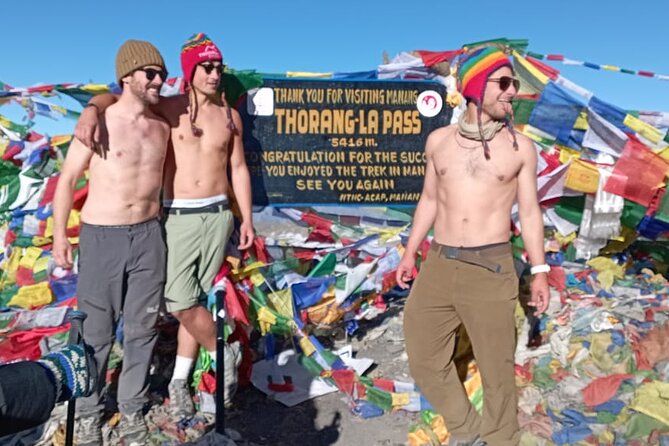
You leave early for Thorung La. The trail is steep at first, then eases as you climb toward the pass, marked by a chorten and prayer flags. The ascent takes about four hours according to the schedule, but altitude and weather can change the pace.
At 5,416 meters, the views reach across snow-covered mountains, the upper Kali Gandaki valley, and the brown and purple hills of Mustang. This is the defining day of the circuit.
The descent to Muktinath drops about 1,600 meters and can be hard on your knees. Trekking poles would be useful, though they are not listed among the inclusions. The views toward Dhaulagiri help keep the descent interesting, but do not underestimate it. Muktinath is a major pilgrimage site, important to both Hindu and Buddhist visitors, and the stop adds a strong spiritual dimension to the trek.
Day 10: Muktinath to Tatopani by jeep
The morning includes time to visit Muktinath and pray for yourself, friends, and family. After breakfast, you take a local jeep toward Tatopani along the Kali Gandaki River.
This switch from walking to road travel is practical. It shortens the route and lets you cover ground that would otherwise require more days. It also means this section may feel less like a continuous foot circuit than the classic older versions of the Annapurna trek.
The ride can be adventurous, and you should expect a rougher experience than a private car transfer. The package specifically includes the Muktinath to Tatopani ground transfer, but not every detail of the vehicle or road conditions.
Day 11: Tatopani to Ghorepani
The trail begins across flatter ground, then climbs steeply for about an hour. It continues through villages and farmland, with communities connected to service in the Gorkha and Indian regiments.
You pass small settlements including Phalate and Chitre before reaching Ghorepani. Rhododendron woods, monkeys, birds, and mountain views fill this seven-hour day.
This section brings you back into greener country after the dry heights around Muktinath. It is also a demanding late-stage climb. Your legs have already dealt with the pass and its descent, so take the uphill sections slowly and keep enough water close at hand.
Day 12: Poon Hill sunrise and the road to Pokhara
The final morning starts early with a walk to Poon Hill at 3,232 meters. From the viewpoint, you may see Dhaulagiri, Tukuche Peak, Nilgiri, Annapurna I, Annapurna South, Annapurna III, Machhapuchhre, Annapurna IV, Annapurna II, Lamjung Himal, and other snow-covered peaks.
After returning to the lodge for breakfast, you descend through rhododendron and oak forest toward Banthanti and continue toward Ulleri before taking transport onward to Pokhara. The full day is listed at about seven hours.
Poon Hill is a smart ending. You get one last mountain panorama without another high pass, and the lower forest trail feels very different from the bare slopes above Manang.
What the $994 price really covers
At $994 per person, the package offers solid value if you want the basics arranged. It includes tea-house accommodation, government taxes, VAT, service charges, an experienced guide, guide expenses, listed transport, 11 dinners, 12 lunches, and 12 breakfasts.
You still pay for alcoholic and non-alcoholic drinks, desserts, city lunches and dinners, the Nepal entry visa, international flights, travel insurance, tips, and other personal costs. Travel insurance is compulsory, and I would treat it as essential because the route reaches 5,416 meters.
The porter details need careful checking. The information says a porter costs $20 per day if you need one, while also describing a porter for each two trekkers carrying about 20 kilograms total. Ask in writing if your $994 price includes a porter, how much luggage you may send, and what happens for a solo booking.
The single supplement is listed as $0.00 but is also described as mandatory and payable directly on arrival. That is unclear. Get the exact amount before booking.
Guides, group size, and daily comfort
The stated maximum is 10 people. Groups of 11 to 14 are assigned two guides, and larger parties may be split while staying at the same lodges. The guide-to-group plan is useful on steep and high sections, especially around Thorung La.
Outfitter Nepal has used guides including Balaram Khadka, Jitu, Kamal Tiwari, Ram, Kapil, Indra, Hom, Rabi, and Sanjaya on its Nepal treks. You should not assume one of these people will lead your departure, but you can ask who is assigned. Past service details also describe porters such as Buddhi, Vimsan, Razan, Suman, and Rajan.
The most consistent strength of the operation is personal support. Guides are described as adjusting the pace, helping with equipment problems, and taking close care of safety and comfort. That matters more here than polished hotel service. On a high-altitude trek, a guide who pays attention can make a real difference.
Accommodation is in lodges and tea houses. Kathmandu and Pokhara hotel stays are described separately as two or three-star standard options, with upgrades available. The supplied schedule does not clearly show those city nights or the promised Kathmandu sightseeing day, so confirm exactly how many nights are included and where.
What to pack and what to confirm
Keep your day pack light but useful. The operator suggests water, a camera, sunscreen, a spare jacket, and personal essentials. Add warm layers for Manang and Thorung Phedi, sturdy walking shoes, sun protection, and clothing for a cold early start.
Before booking, confirm these points:
- Is this the Annapurna Circuit only, or does it also include Sarangkot and Kathmandu UNESCO sites?
- Are Kathmandu and Pokhara hotel nights included in the $994?
- Is a porter included, or is the $20 daily fee extra?
- What is the single supplement?
- What luggage weight can the porter carry?
- What is the exact pickup time on Day 1?
The cancellation terms allow a full refund if you cancel at least six full days before the local start time. A 50 percent refund applies two to six full days before departure. Less than two full days means no refund.
Who should book this trek?
I would choose this trip if you want a guided, supported route with the major Annapurna sights packed into less than two weeks. It suits fit walkers who accept simple lodging, long transport days, and the demands of high altitude.
I would not choose it if you want a slow circuit with plenty of spare days, private rooms throughout, or a clear, uninterrupted walking route. The itinerary is tight, and the combination of bus, jeep, and lodge travel may disappoint anyone expecting a fully foot-based trek.
FAQ
How long is the Annapurna Circuit trek?
The experience lasts approximately 12 days, beginning with transport from Kathmandu and ending in Pokhara.
What is the highest point on the route?
The highest point is Thorung La, at 5,416 meters.
Are meals included?
The package includes 11 dinners, 12 lunches, and 12 breakfasts. Alcoholic drinks, non-alcoholic drinks, desserts, and meals in Kathmandu or Pokhara are not included.
Is accommodation included?
Yes. Tea-house and lodge accommodation during the trek is included. Standard hotel accommodation in Kathmandu and Pokhara is described as available, but you should confirm the exact number of included nights.
Is a porter included?
The information says a porter can be arranged for $20 per day and also describes a porter for each two trekkers. Confirm your specific porter arrangement and fee before departure.
What is the cancellation policy?
You receive a full refund when canceling at least six full days before the local start time. A 50 percent refund applies two to six full days before departure. Cancellations less than two full days before departure are nonrefundable.
Should you book it?
Book this trek if the appeal is a high pass, varied mountain scenery, local villages, and practical support at a reasonable price. The guides and porters are the heart of the experience, and the route gives you a strong taste of the Annapurna region without requiring a camping setup.
Before you commit, clear up the Sarangkot wording, city hotel nights, guide assignment, porter fee, and single supplement. If those details match your expectations, the $994 package is a sensible choice for a fit walker who wants Nepal’s classic circuit handled by a local team.
Latest treks added in Kathmandu
- Private Manaslu Circuit Trek at Himalayas★ 5.0 · 3 reviews
- Ghorepani Poonhill Trek★ 5.0 · 5 reviews
- Ghorepani Poon Hill Trek★ 5.0 · 16 reviews
- Upper Mustang Trekking★ 3.0 · 2 reviews
- Amazing 1 Day Trekking Experience in Kathmandu Nepal★ 5.0 · 24 reviews
- Upper Mustang Trekking★ 5.0 · 2 reviews
- Upper Mustang Trek★ 5.0 · 5 reviews
- Upper Mustang Trekking★ 5.0 · 4 reviews
Annapurna Base Camp Treks, compared.




Trekking in Annapurna/Langtang/Everest/Upper Mustang regions
Read our review →


Kathmandu to Annapurna Base Camp (ABC) 5-Day Trek
Read our review →Browse the lists this tour appears in