
REVIEW · KATHMANDU
Manaslu Circuit Trek
The Manaslu Circuit Trek gives you a rare mix of high mountain scenery and village life without the polished feel of Nepal’s busiest routes. You cross suspension bridges, follow the Budhi Gandaki River, sleep in Gurung settlements, visit Pungyen Gompa, and finish with the demanding Larkya La Pass.
I like two things right away: the package covers the costly practical pieces, including permits, meals, lodging, a guide, a porter, transport, and gear rental; and the route builds slowly from river valleys to glacial country. Guides such as Mod, Chirring, and TB have been praised for patience, good humor, and careful support.
The main drawback is the pace and transport. You face long road journeys, basic mountain lodging, steep days at high altitude, and a pass crossing that can be stopped by weather. The itinerary also contains a few timing and place-name inconsistencies, so confirm the exact plan before paying.
Key points to know before booking
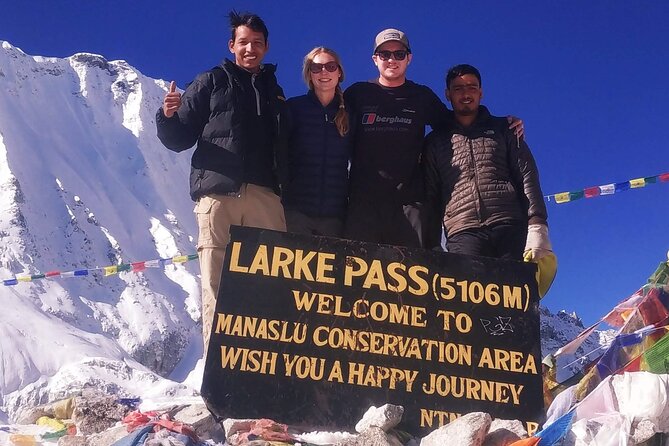
- Larkya La Pass is the major test: You reach roughly 5,000 meters before crossing the trek’s highest point, with views toward Manaslu, Annapurna II, Himlung Himal, Cheu Himal, and Kangaru.
- The route changes character every few days: River gorges and hot springs give way to pine forests, terraced fields, Tibetan-style villages, monasteries, glaciers, and open high country.
- Samagaon is more than an overnight stop: You spend an extra day there for an excursion to Pungyen Gompa and a better chance to adjust before going higher.
- The package is unusually full: Airport transfers, four Kathmandu hotel nights, sightseeing, permits, meals, guide, porter, first-aid kit, sleeping bag, down jacket, duffel bag, map, and rescue management are included.
- Expect a real trek, not a casual walking tour: The itinerary includes long days, repeated ascents and descents, basic lodging, and a difficult pass day.
- Weather can change the plan: One published account describes turning back from Larkya Pass because of bad weather, so flexibility and proper insurance matter.
Why the Manaslu Circuit feels different
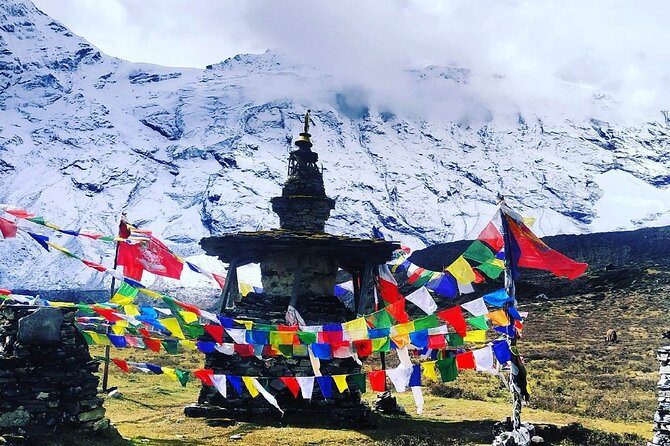
The Manaslu region sits east of the Annapurna area and follows the Budhi Gandaki River toward the Tibetan border. This route is appealing because the scenery changes at walking speed. You begin among warm river valleys, forests, suspension bridges, and Gurung villages. Higher up, the trees thin out, prayer walls and chortens become more common, and the mountains take over.
The cultural side is just as important as the views. You pass through Jagat, Deng, Namrung, Lho, Samagaon, and Samdo, each with a different feel. The route also includes a visit to Pungyen Gompa, an old monastery near Samagaon, where you can see a small prayer hall and local Buddhist traditions.
This is not a lodge-to-lodge holiday with easy roads and short walks. The package calls for a moderate level of fitness, but the high pass and long days make that description sound gentle. You should be ready for sustained walking, steep sections, cold conditions, and a schedule that leaves little room for a slow day.
More Manaslu Treks in Kathmandu
- Manaslu Circuit Trek
★ 5.0 · 292 reviews - Manaslu Circuit Trek:
★ 5.0 · 106 reviews - Manaslu Circuit Trek (15 Days)
★ 5.0 · 50 reviews
Days 1 and 2: Kathmandu, preparation, and four UNESCO sites
Your arrival day is simple. A representative meets you at Tribhuvan International Airport and takes you to Hotel Green Horizon in Kathmandu. You have the rest of the day to rest, sort your bags, or walk around Thamel, the city’s main tourist district.
The next day combines preparation with sightseeing. You visit the company office in Thamel, meet the guide and trekking team, and arrange any final equipment. That planning time matters because the trek moves into remote country quickly.
Kathmandu sightseeing includes Kathmandu Durbar Square, Swayambhunath Stupa, Pashupatinath Temple, and Boudhanath Stupa. These sites cover royal architecture, Buddhist worship, Hindu religious life, and the large Tibetan Buddhist community around Boudhanath.
The package includes a licensed guide and transport by car, jeep, or bus depending on group size. Admission tickets for sightseeing are listed separately, so confirm exactly which entrance fees are covered before you begin. The schedule runs until sunset, making this a full day rather than a quick city orientation.
Day 3: The long road to Machha Khola
The trek starts with a long drive from Kathmandu toward Machha Khola, across the Budhi Gandaki area. The journey is listed as lasting up to 12 hours, with roads following the Mahesh and Trishuli rivers before reaching the trailhead region.
This is one of the least glamorous parts of the trip, but it is useful to understand it in advance. Road conditions can make the transfer tiring, and you do not begin walking at a scenic mountain lodge after a short shuttle. You spend most of this day sitting in a vehicle.
There is a small inconsistency in the supplied plan: the summary refers to Baseri as the starting point, while the daily schedule names Machha Khola. Ask the operator to confirm the actual first overnight stop and drive route. That clarification is especially important if you are arranging separate accommodation or meeting anyone along the way.
Days 4 and 5: Hot springs, river crossings, and Jagat to Deng
From Machha Khola, the route follows the river through small settlements and uneven trails. You reach Tatopani, known for its natural hot springs. This is a welcome break after the first road journey and a chance to ease tired legs, though the listed visit is brief.
The trail then continues toward Jagat. Expect repeated ascents and descents rather than one steady climb. You cross streams and suspension bridges, pass through forest, and see the river cutting below the trail. This section introduces the physical rhythm of the trek: walk, climb, descend, cross water, and repeat.
The following day brings a gradual descent and then a climb toward Saguleri. The route crosses the Gata River, with views of Singri Peak before reaching Deng. Deng is an important change of mood. The valley feels more enclosed and remote, while the villages and Buddhist features become more noticeable.
The itinerary lists these as 12-hour activity days, though that figure may include the full day rather than 12 hours of walking. Ask for the expected walking time, not just the total activity duration. That is a useful question for anyone with limited trekking experience.
More Trekking Tours in Kathmandu
- Everest Base Camp Trek – 14 Days
★ 5.0 · 1,499 reviews - Everest Base Camp Trek
★ 5.0 · 842 reviews - Everest Base Camp Trekking
★ 5.0 · 485 reviews - Annapurna Circuit Trek with Tilicho Lake
★ 5.0 · 368 reviews
Days 6 and 7: Namrung, Lho, and the first grand views
The walk from Deng to Namrung continues beside the Budhi Gandaki River and through pastureland. You pass Mani walls, which are stone structures carved with Buddhist prayers, and cross more river channels. Mountain views become stronger as you gain height.
Namrung is a good point to notice how quickly the surroundings are changing. The lower forest and river gorge begin to give way to open slopes and more exposed views. You are also getting closer to the Manaslu range, so each walking day feels more tied to the main purpose of the route.
Day 7 is described as an easier half-day walk to Lho. You can see Himalchuli near the head of the Hinang Glacier and pass through Sho, a village noted for its apples. In Lho, the large Ribung Monastery provides a cultural stop and a good viewing point toward the Manaslu massif.
The plan also suggests an early walk to a nearby viewpoint for sunrise. This is one of the best small details in the program. You do not need a separate excursion or a long detour to enjoy a mountain morning, but you will need to rise early and accept that the weather may hide the peaks.
Days 8 and 9: Samagaon and Pungyen Gompa
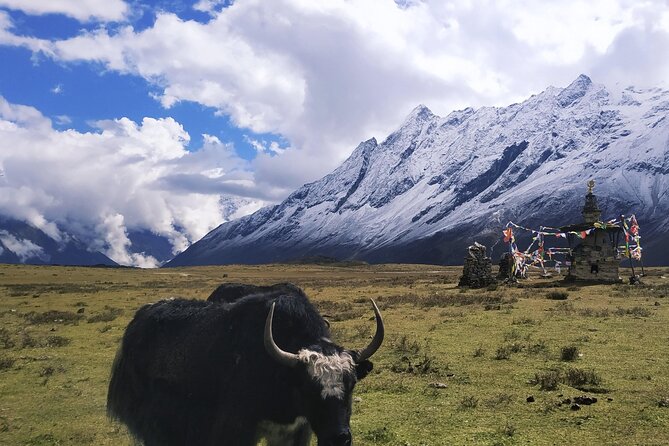
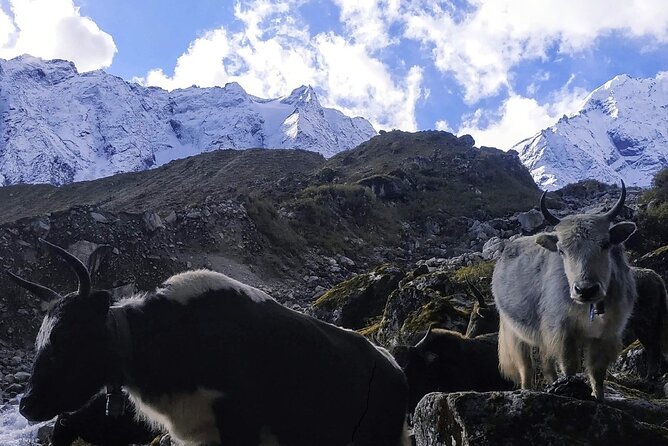
The walk to Samagaon brings views of Ganesh Himal, Himal Chuli, Siring Himal, and Manaslu. The route passes through forest, terraced farmland, chortens, and villages before reaching the broad settlement of Samagaon.
Samagaon is the key acclimatization point in the itinerary. You do not simply pass through and rush higher. The next day is set aside for an excursion toward Pungyen Gompa, an old monastery with a small prayer hall and views across the surrounding country.
The daily description calls this excursion a visit to Manaslu Base Camp, but the detail focuses on Pungyen Gompa rather than a confirmed base camp walk. Confirm whether the plan is for the monastery, the base camp, or both. They are not the same outing, and the difference affects distance and difficulty.
I like this part of the schedule because it combines altitude adjustment with a meaningful cultural stop. You get a day away from the main trail, but you are still walking rather than spending the whole day indoors. Keep the pace easy. The point is to prepare for higher ground, not to collect the longest possible route.
Days 10 and 11: Samdo and the high shelter at Dharamsala
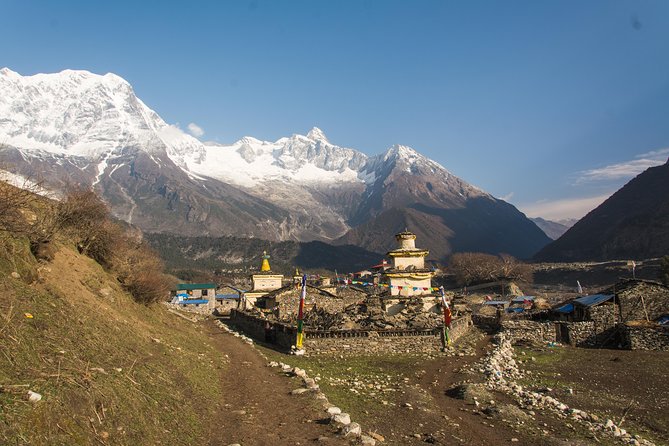
From Samagaon, you descend toward the Budhi Gandaki River, cross a wooden bridge, and climb toward Samdo. The path passes between two forks of the river, creating a striking change in the shape of the valley.
Samdo is close to the Tibetan border region and feels more exposed than the lower villages. The itinerary includes a rest day at Samdo for acclimatization, though the daily breakdown describes the move to Samdo on Day 10 and Dharamsala on Day 11. That wording is worth clarifying because the amount of rest before the pass is important.
Day 11 follows the river and rises gradually toward Dharamsala, also called Larkya Phedi in many trekking plans. The shelter sits at close to 5,000 meters and is a basic overnight stop. You see glacier moraines and high peaks, but comfort is limited at this altitude.
This is the point where you should pay attention to your body. The guide and first-aid kit are useful, but neither replaces travel insurance or a responsible decision if you feel unwell. Rescue operation costs are not covered by the package, and travel insurance is specifically excluded.
Day 12: Larkya La Pass and the descent to Bimthang
The pass day is the heart of the trek. From Dharamsala, you climb across glacier moraines and steep ground toward Larkya La. The route is physically demanding, especially in cold or snowy conditions, and the listed 30-minute stop at the pass clearly describes the viewpoint rather than the full walking day.
At the top, you can see Annapurna II, Cheu Himal, Himlung Himal, Larkya Peak, and nearby Manaslu country. The view is the reward, but reaching the pass safely is more important than staying there for photographs. Weather can close the route or force a change of plan, as one account from this operator’s trips makes clear.
After the pass, you descend toward Bimthang. That downhill section can be hard on tired knees, but it also brings a change in vegetation and temperature. Bimthang offers a place to rest among mountain views, rhododendron, and local hospitality.
Days 13 and 14: Rhododendron forest, Tilije, and Tal
From Bimthang, the trail follows ridges with views of Manaslu, Himlung Himal, and Lamjung Himal. You pass Sangre Kharka pasture, cross a bridge, and walk through rhododendron forest. In spring, the flowers add color to a route that has recently been dominated by rock, ice, and bare slopes.
You continue toward Tilije, then on Day 14 head toward Thonje and Dharapani. At Dharapani, you connect with the Annapurna Circuit trail. This connection changes the character of the walk because you are no longer on a completely separate route.
The trail crosses the Marsyangdi River and passes waterfalls before reaching Tal. After the high pass, these lower valleys may feel warm and lush by comparison. The day still includes substantial walking, so do not assume that crossing the pass means the physical work is over.
Days 15 to 17: Road return, Kathmandu, and departure
The return begins early with a local jeep from Tal or the surrounding area toward Besisahar. After lunch in Besisahar, you continue by road to Kathmandu, arriving in the evening. The full transfer is listed as another 12-hour day.
This is a tiring finish. If you have an international flight immediately after the trek, the itinerary provides a buffer night in Kathmandu, which is sensible. Day 16 is free for rest and shopping, followed by a farewell dinner in a Nepali cultural restaurant.
Day 17 includes a transfer to Tribhuvan International Airport. Airport pickup and drop-off are included, but international airfare, visa fees, and extra baggage are not. The plan lists four hotel nights in Kathmandu, although the exact distribution should be confirmed because the schedule includes arrival, pre-trek sightseeing, the post-trek return, and the final departure.
What the $1,386.67 price covers
At $1,386.67 per person, the value depends on how much support you want to arrange yourself. This is not just a walking guide. The package includes airport transfers, four Kathmandu hotel nights, city sightseeing with transport and a licensed guide, trek lodging, breakfast, lunch, dinner, transport, permits, a guide, a porter, a first-aid box, and rescue management service.
You also receive a sleeping bag and down jacket on rent, plus a T-shirt, duffel bag, and trekking map. Those details reduce the amount of equipment you need to buy or carry from home. Government fees, 13 percent VAT, and a 10 percent company service charge are also included.
You still pay for your Nepal visa, international flights, personal drinks, alcohol, laundry, electronic charging, insurance, rescue operations, and tips. A group discount is offered, and the maximum group size is 20. Ask how many people are expected in your departure group, since 20 is a very different experience from a small party.
The most valuable inclusion is likely the guide and porter support. Previous trips have highlighted Suman’s organization and guides including Mod, Chirring, and TB for their friendly care, patience, and attention to safety. Guide quality matters greatly on a route where weather, altitude, road conditions, and route changes can all affect the day.
Who should book this trek?
You should consider it if you want a serious Himalayan route with a strong cultural side, organized logistics, and support at high altitude. It suits people who enjoy village stays, long walking days, mountain passes, monasteries, and changing scenery more than resort comforts.
It is less suitable if you dislike rough roads, basic high-altitude shelters, repeated climbs, or uncertain weather. The route is not designed for a quick holiday. You need reasonable fitness and enough patience to accept a slow road transfer or a changed plan.
Ask these questions before booking:
- Is the first trailhead Baseri or Machha Khola?
- How many hours are actually spent walking each day?
- Is Day 10 a rest day at Samdo, or is Samdo simply the overnight stop?
- Does the Pungyen Gompa day include Manaslu Base Camp?
- What is the expected group size?
- Which hotel will be used in Kathmandu, Hotel Green Horizon or another property?
- What rescue costs are handled by the company, and what must your insurance cover?
The cancellation policy allows a full refund if you cancel at least 24 hours before the start time. Changes or cancellations inside that window are not accepted for a refund.
Should you book the Manaslu Circuit Trek?
I would book this if you want a well-supported, 17-day trek that combines the Larkya La challenge with real village and monastery stops. The included permits, meals, gear rental, guide, porter, transport, and Kathmandu services make the price reasonable for a packaged Himalayan journey.
I would not book it without clarifying the itinerary’s conflicting place names and acclimatization details. You should also carry proper travel insurance and accept that bad weather may prevent the pass crossing. If you are comfortable with those conditions, this offers a strong balance of mountain scenery, local culture, and practical support.
FAQ
How long is the Manaslu Circuit Trek?
The experience lasts approximately 17 days, including arrival and departure days, Kathmandu sightseeing, the trek, transport to and from the trail, and a free day in Kathmandu.
Where does the trek start?
The daily schedule says the trek begins with a drive from Kathmandu to Machha Khola. The general summary mentions Baseri, so you should confirm the precise starting point with Nepal Mountain Trekkers.
What is the highest point of the trek?
The highest point is Larkya La Pass. The itinerary describes the approach through glacier moraines and high mountain terrain at around 5,000 meters.
Is food included during the trek?
Yes. Breakfast, lunch, and dinner are included during the trekking portion. Personal drinks, alcohol, soft drinks, and other personal purchases are not included.
Are trekking permits included?
Yes. The package includes all required trekking permits and government fees listed in the tour details.
Is a guide and porter included?
Yes. A government licensed, English-speaking trekking guide and a porter are included.
Is trekking gear provided?
A sleeping bag and down jacket are available on rent through the package. You also receive a duffel bag, trekking map, and T-shirt with the company logo.
Does the tour include Kathmandu sightseeing?
Yes. The Kathmandu program includes Kathmandu Durbar Square, Swayambhunath Stupa, Pashupatinath Temple, and Boudhanath Stupa, with transport and a licensed sightseeing guide. Admission tickets are listed separately from the tour inclusions.
Latest treks added in Kathmandu
- Private Manaslu Circuit Trek at Himalayas★ 5.0 · 3 reviews
- Ghorepani Poonhill Trek★ 5.0 · 5 reviews
- Ghorepani Poon Hill Trek★ 5.0 · 16 reviews
- Upper Mustang Trekking★ 3.0 · 2 reviews
- Amazing 1 Day Trekking Experience in Kathmandu Nepal★ 5.0 · 24 reviews
- Upper Mustang Trekking★ 5.0 · 2 reviews
- Upper Mustang Trek★ 5.0 · 5 reviews
- Upper Mustang Trekking★ 5.0 · 4 reviews
Manaslu Circuit Treks, compared.
16 Day Private Manaslu Circuit Trek from Kathmandu
Read our review →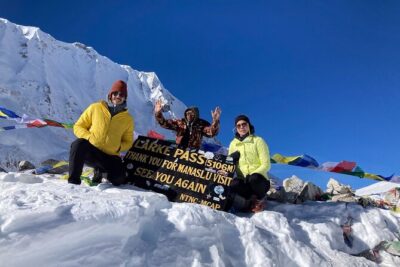
10 Days Manaslu Circuit Trek in Larke La Pass
Read our review →Browse the lists this tour appears in