
REVIEW · KATHMANDU
15 Days Manaslu Circuit Trek
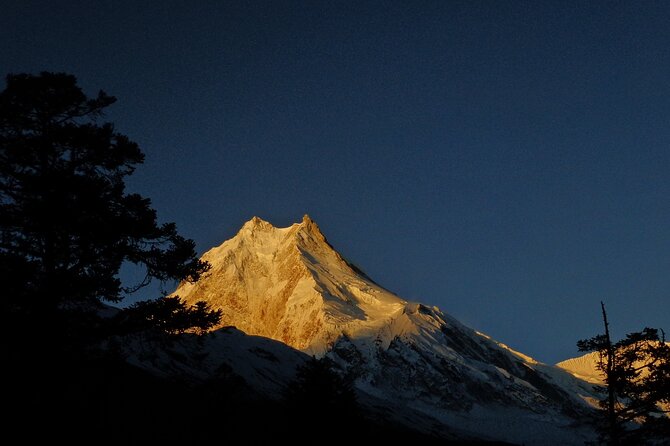
The Manaslu Circuit takes you from Kathmandu’s busy streets to high pasture, glacier country, and the 5,106-meter Larke La Pass. Along the way, you pass suspension bridges, hot springs, pine forests, Tibetan-style villages, and the great eastern face of Mt. Manaslu.
I like the strong mix of culture and scenery, especially the villages around Namrung, Lho, Samagaun, and Samdo. I also like the careful high-altitude schedule, with an acclimatization day in Samagaun and a short walk to Birendra Lake before the hardest crossing.
The main drawback is the road journey and the long walking days. The drive to Machhakhola takes about eight hours, and the Larke La crossing followed by the descent to Bimthang can take around ten hours. You need moderate fitness, patience, and a willingness to sleep in simple mountain lodges.
Key points to know before booking
- Larke La Pass is the big test: The 5,106-meter crossing is the longest and hardest day, with views of Himlung Himal, Cheo Himal, Kangguru, and Annapurna II.
- The route changes character daily: You move from subtropical river valleys and hot springs to low alpine forests, Tibetan villages, glaciers, and high pasture.
- Suresh and Sujan are named guide options: Both are praised for friendly, flexible service, strong communication, and a good sense of humor.
- Samagaun gives you a useful rest day: The Birendra Lake walk helps your body adjust before the route climbs higher.
- The $1,450 package covers a lot: Permits, private ground transport, porters, guides, trek meals, three Kathmandu hotel nights, and emergency arrangements are included.
- The group limit is 14 people: That is small enough to keep the trek fairly personal while still offering the support of a group.
Why the Manaslu Circuit feels different
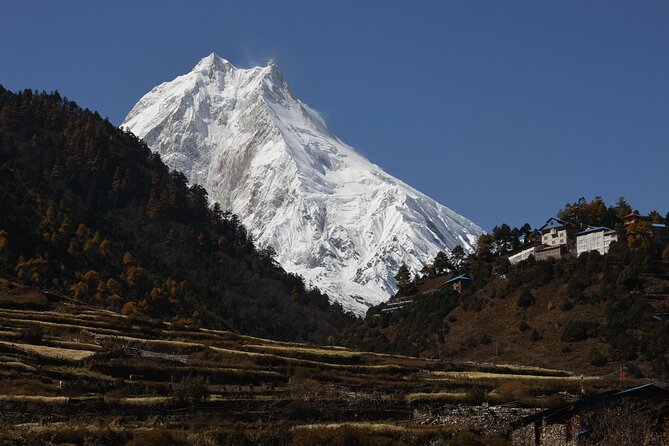
The Manaslu Circuit is a strong choice if you want a high Himalayan trek with fewer people than the most famous routes. It circles Mt. Manaslu, the world’s eighth-highest mountain at 8,163 meters, while following the Budhi Gandaki River north toward the Tibetan border area.
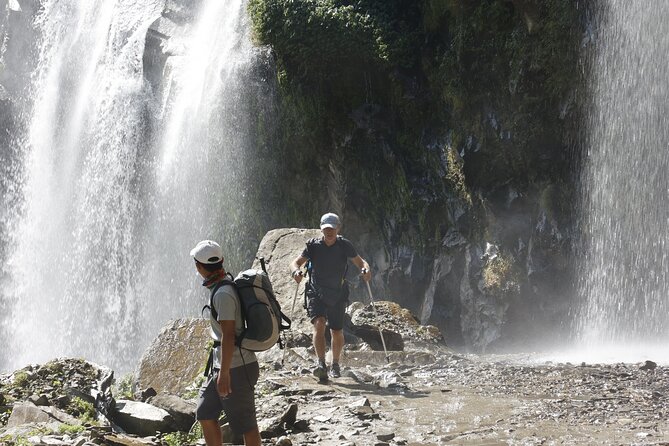
The route is not simply a mountain-view walk. You pass terraced farmland, waterfalls, forests, narrow river gorges, suspension bridges, glaciers, and villages where Tibetan influence becomes more visible as you gain height. The result is a trek with changing scenery and a clear sense of moving into a different cultural world.
I especially like the way the itinerary builds gradually. You start low, spend several days gaining height, rest at Samagaun, then make the high crossing only after reaching Samdo and Dharamsala. That schedule cannot remove altitude risk, but it is much more sensible than rushing straight toward the pass.
More Manaslu Treks in Kathmandu
- Manaslu Circuit Trek
★ 5.0 · 292 reviews - Manaslu Circuit Trek:
★ 5.0 · 106 reviews - Manaslu Circuit Trek (15 Days)
★ 5.0 · 50 reviews
Days 1 and 2: Kathmandu preparation
Your first day begins with an airport pickup. A company representative meets you at Tribhuvan International Airport and takes you to your hotel. You have time to rest, then meet the guide in the evening for a briefing about the next day.
Day two is set aside for preparation and gear arrangements. This is useful because the trek requires equipment suited to both warm river valleys and cold high country. You also have time to ask questions, check your pack, and make sure the walking plan is clear.
Three nights of hotel accommodation in Kathmandu are included on a bed-and-breakfast basis. Lunch and dinner in the capital are not included, so budget separately for those meals.
Day 3: The long road to Machhakhola
The drive to Machhakhola takes about eight hours after breakfast. The road is blacktopped as far as a little beyond Arughat, then changes to dirt as you continue through Sotikhola toward Machhakhola.
This is a practical, not glamorous, day. The private vehicle is valuable here because the rougher road can make the journey tiring. You are not walking yet, but you are already heading into remote country, and the changing road surface gives you a clear idea of what lies ahead.
Days 4 and 5: Hot springs, bridges, and river valleys
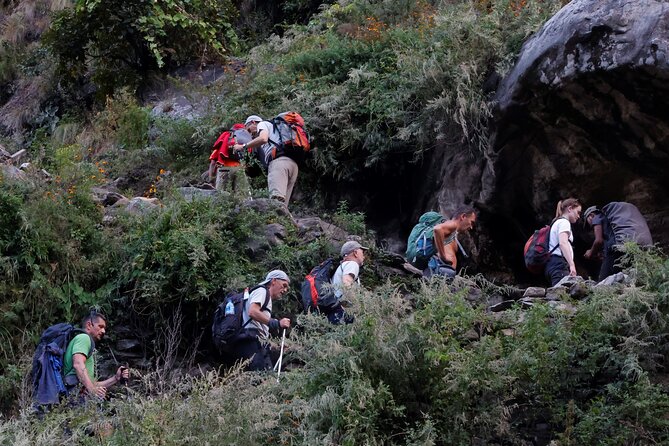
From Machhakhola, the trail follows the river and a rugged vehicle road toward Tatopani. The short stop at the natural hot spring is one of the route’s pleasant touches. After that, the walking becomes more serious as you cross the Budhi Gandaki and pass through Dobhan, landslide areas, Thulo Dhungga, and Yaruphant before reaching Jagat.
The day takes about seven hours. Expect uneven walking and repeated bridge crossings rather than a smooth mountain path.
The next stage leads from Jagat through Salleri and Sirdibas toward Philim. You cross a long suspension bridge, pass Ekle Bhatti and Nyak Phedi, and enter pine and bamboo forest before reaching Deng. This is where the route begins to feel more remote and more enclosed by the river gorge.
The villages and forests make these days rewarding, but the rugged road sections can be dusty and uncomfortable. Good footwear matters, and you should be prepared for a steady seven hours of walking.
More Trekking Tours in Kathmandu
- Everest Base Camp Trek – 14 Days
★ 5.0 · 1,499 reviews - Everest Base Camp Trek
★ 5.0 · 842 reviews - Everest Base Camp Trekking
★ 5.0 · 485 reviews - Annapurna Circuit Trek with Tilicho Lake
★ 5.0 · 368 reviews
Days 6 and 7: Entering Tibetan-influenced country
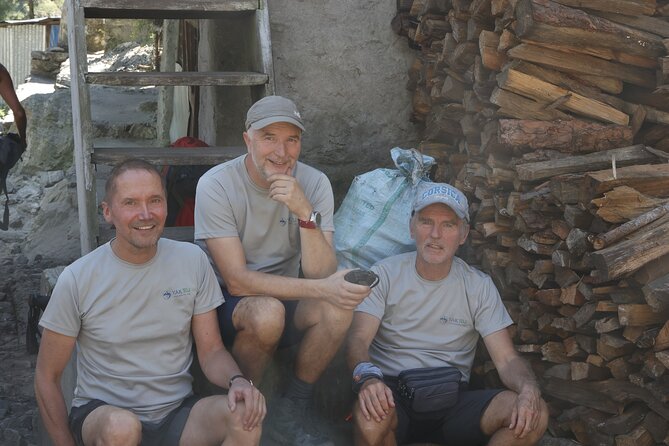
The trail from Deng to Namrung starts with a narrow, relatively flat section and a landslide area. After crossing bridges near Ghap, you walk beside cultivated fields and climb through low alpine forest.
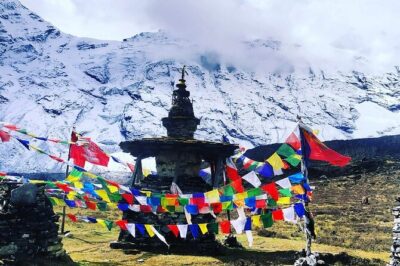
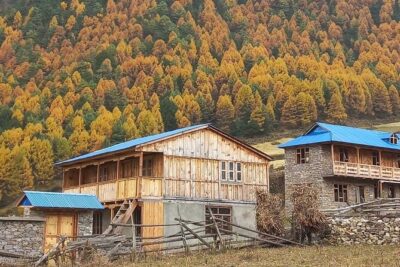
Namrung is one of the more interesting settlements on the route. Its residents have close cultural links to Tibet, and the village marks a noticeable change in the look and feel of the trek. The day takes around seven hours, so you still need to manage your pace carefully.
The route then passes through Bhanzam, Lihi, Sho, and Lho. At Lho, you visit Ribung Gompa, set on a hill with a fine view toward Manaslu. From there, the trail continues through pine and rhododendron forest to Shyala.
This is one of my favorite parts of the itinerary. You get village life, a monastery visit, forest walking, and increasingly dramatic mountain views without facing the hardest altitude yet. At about five hours, the day is also shorter than most of the earlier stages.
Days 8 and 9: Punggyen Gompa and acclimatization at Samagaun
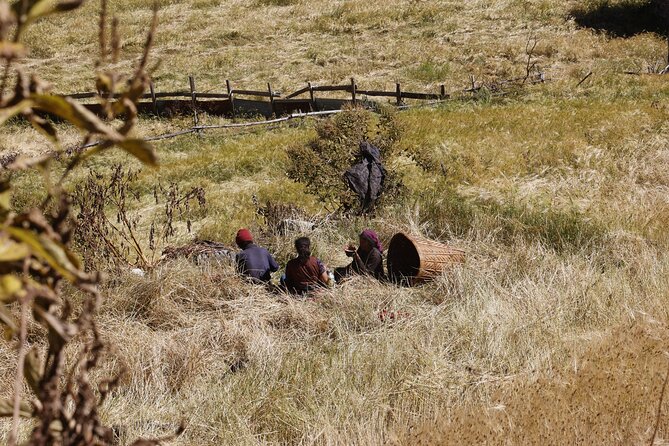
From Shyala, you climb toward Punggyen Gompa with a packed lunch. The trail crosses pasture and a river fed by the Pung Gyen glacier. From the gompa, you can see the eastern face of Manaslu along with a broad group of surrounding peaks.
You then descend by the same route and join the main trail to Samagaun. This is the largest village in the upper Manaslu area and an important point in the trek. The walk takes about five hours, but the altitude makes steady pacing important.
Day nine is planned as a rest and acclimatization day. The excursion to Birendra Lake gives you a useful reason to keep moving without committing to a full trekking stage. You might also see Himalayan thar in the area.
The schedule lists this day at up to eight hours, so ask your guide how long the planned outing will be for your group. The important point is that you sleep a second night at Samagaun before climbing higher. That pause is one of the best features of the program.
Days 10 and 11: Samdo and Dharamsala
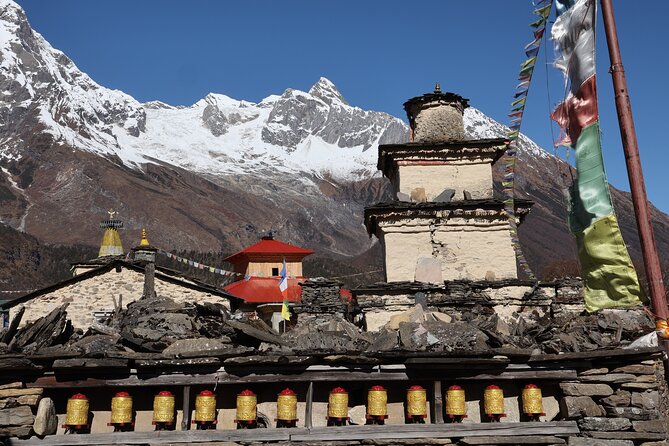
The walk to Samdo takes around five hours. You pass birch and juniper, cross the Budhi Gandaki on a wooden bridge, and reach a small village associated with Tibetan refugees.
Samdo is a memorable stop because it feels high, exposed, and culturally distinct. It also makes the next day manageable by breaking up the climb toward the pass.
From Samdo, you continue through high pastureland toward Dharamsala. Yaks graze beside the trail, while Manaslu North, Larkya Peak, and the Larkya Glacier appear to the left. Several rivulets and a gradual ascent lead you to the overnight stop.
Dharamsala is not a place to expect comfort or entertainment. It is a staging point for the pass, and the high altitude can make even a short walk feel demanding. Keep your evening quiet, follow your guide’s advice, and prepare your clothing and water for an early start.
Day 12: Crossing Larke La Pass
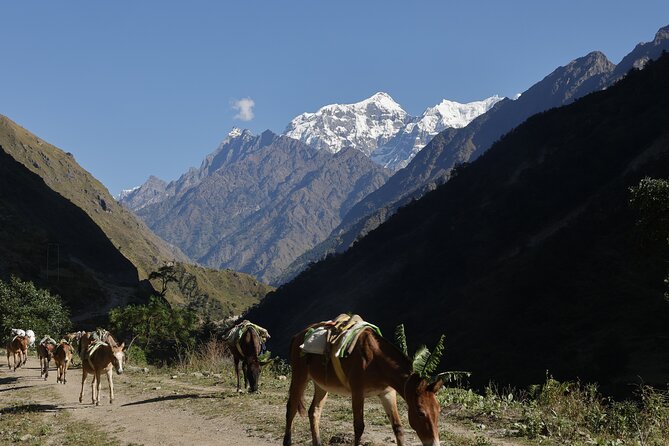
This is the trek’s major day. You start early after breakfast and climb toward the north side of the Larkya Glacier. The path becomes steep before reaching Larke La Pass at about 5,106 meters.
From the top, the views include Himlung Himal, Cheo Himal, Kangguru, Annapurna II, and several other peaks. The pass is the reward, but reaching it requires effort. Cold, altitude, steep ground, and a ten-hour schedule make this a serious walking day.
The descent to Bimthang is long. It can feel especially tiring after the climb, so do not judge the day only by the distance to the pass. Your guide’s pace and your group’s support matter here. The professional guide carries a satellite phone and oximeter, and emergency rescue arrangements are included, though the cost of a medical evacuation is not.
Once you reach Bimthang, you have crossed into the Manang district and the Annapurna region. That change gives the day a satisfying sense of completion.
Days 13 and 14: Forests, villages, and the return to Kathmandu
The route from Bimthang to Dharapani begins with the Kechakyu Khola Glacier area and then passes through rhododendron forest. You still get views of Manaslu before reaching Gho and continuing to Tilije.
Tilije is a traditional Gurung village and a useful place to recover after the pass. From here onward, hot showers, Wi-Fi, and electricity are available, according to the trip information. The walk takes about eight hours, so you will appreciate those basic comforts.
Day 14 is a long drive back to Kathmandu through Besishahar. The journey takes around ten hours. Private transport helps, but this remains a tiring road day, and delays or rough stretches are possible.
On arrival, you return to the hotel and attend a farewell dinner arranged by the company. It is a pleasant finish after nearly two weeks of walking, though you should not expect the return drive to feel like a quick transfer.
What the $1,450 price really covers
At $1,450 per person, the package offers solid value if you want a guided trek with much of the administration handled for you. It includes the necessary permits and paperwork, private ground transfers, porters and assistant guides according to group size, an English-speaking guide, and three Kathmandu hotel nights with breakfast.
During the trek, you receive breakfast on all 14 mornings, 12 lunches, 12 dinners, and tea and coffee. Meals in Kathmandu are excluded, along with tips, personal purchases, and medical evacuation costs.
The guide carries a satellite phone and oximeter, while rescue and evacuation arrangements are included in the package. That is useful peace of mind, but read the distinction carefully: arranging an evacuation does not mean the medical evacuation bill itself is covered.
The group maximum is 14 people. You may receive a more personal experience in a smaller group, but the exact number of porters and assistant guides depends on group size.
The guide can shape the whole trek
The strongest human element here is the guiding. Suresh is described as warm, flexible, and deeply familiar with the mountains, people, and local culture. Sujan is also noted for fluent English and French, a cheerful manner, and a real enthusiasm for guiding.
That matters on a route with long days, rough roads, changing altitude, and simple lodging. A guide who can explain the villages, answer questions, adjust the pace, and keep the group in good spirits adds real value.
You should confirm which guide will lead your departure, since the information names both Suresh and Sujan rather than promising one specific person. The guide and porter team are local, which is important if you want the trek to support people who know the route firsthand.
Who should book this trek?
I would recommend it to you if you want a challenging Himalayan circuit with cultural detail, varied scenery, and a less polished feel than Nepal’s most famous routes. It suits people who can handle seven to ten hours of walking on uneven trails and who accept that road travel and basic mountain accommodation are part of the deal.
You should think twice if you want short walking days, luxury lodges, or a tightly controlled schedule. The pass day is demanding, and the drive in and out takes a large part of the trip.
Confirmation is provided at booking, pickup is available, and group discounts may be offered. You can cancel for a full refund up to 24 hours before the local start time, but late cancellations and last-minute changes are not accepted.
Should you book the Manaslu Circuit?
Book this trek if you want a serious but well-supported route with high passes, Tibetan-influenced villages, monastery visits, and a gradual altitude schedule. The combination of Samagaun acclimatization, local guides, included permits, porters, trek meals, and private transfers makes the $1,450 price reasonable.
Do not book it simply because the route looks beautiful. You need moderate fitness, comfort with long walking days, and patience for rough roads. If that sounds manageable, the Manaslu Circuit offers a rewarding balance of mountain drama and everyday Himalayan life, with Larke La Pass as its hard-earned centerpiece.
FAQ
How long is the Manaslu Circuit Trek?
The experience lasts 15 days, including airport pickup and departure, Kathmandu preparation, the trek, transport days, and the return to Kathmandu.
Where does the experience start?
It starts at Tribhuvan International Airport in Kathmandu, Nepal. The listed start time is 5:45 am.
What is the highest point on the trek?
The highest point is Larke La Pass, at approximately 5,106 meters.
Is airport pickup included?
Yes. A company representative meets you at the international airport and takes you to the hotel at the start. An escort also takes you to the airport for your return flight.
Are Kathmandu hotels included?
Yes. Three nights in a three-star Kathmandu hotel are included on a bed-and-breakfast basis.
Are meals included?
Breakfast is included for 14 days, along with 12 lunches, 12 dinners, and tea and coffee during the trek. Lunch and dinner in Kathmandu are not included.
Is medical evacuation included in the price?
Emergency rescue and evacuation arrangements are included, but the medical evacuation cost itself is not included.
How large can the group be?
The maximum group size is 14 people. Porters and assistant guides are provided according to the group size.
Can I cancel for a full refund?
Yes. You can cancel at least 24 hours before the experience start time for a full refund. Cancellations or changes made less than 24 hours before the start are not accepted.
Latest treks added in Kathmandu
- Private Manaslu Circuit Trek at Himalayas★ 5.0 · 3 reviews
- Ghorepani Poonhill Trek★ 5.0 · 5 reviews
- Ghorepani Poon Hill Trek★ 5.0 · 16 reviews
- Amazing 1 Day Trekking Experience in Kathmandu Nepal★ 5.0 · 24 reviews
- Upper Mustang Trekking★ 5.0 · 2 reviews
- Upper Mustang Trekking★ 3.0 · 2 reviews
- Upper Mustang Trek★ 5.0 · 5 reviews
- Upper Mustang Trekking★ 5.0 · 4 reviews
Manaslu Circuit Treks, compared.
16 Day Private Manaslu Circuit Trek from Kathmandu
Read our review →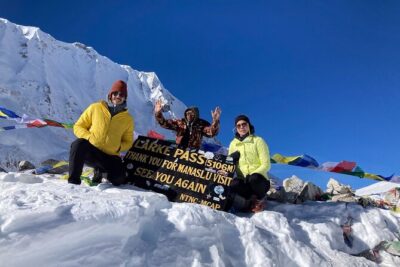
10 Days Manaslu Circuit Trek in Larke La Pass
Read our review →Browse the lists this tour appears in