
REVIEW · KATHMANDU
Manaslu Circuit Trek – Untouched trail
Manaslu is Nepal’s quieter high-country alternative to the better-known circuits. You move from river valleys and Gurung villages into juniper woods, glacial country, Sherpa settlements, and finally the 5,160-meter Larkya La Pass. The rewards are big mountain views, but the real charm is the steady change in people, plants, and altitude.
I like the route’s wilderness feel and the way it links several cultures in one trek. I also like that the $1,350 price includes permits, transport, tea-house lodging, meals, a guide, and rescue arrangements. The main catch is the pace: this is a serious high-altitude walk, with a nine-hour pass day and a 10-hour final day listed, so you need good fitness and a willingness to accept basic conditions.
Key points before you book
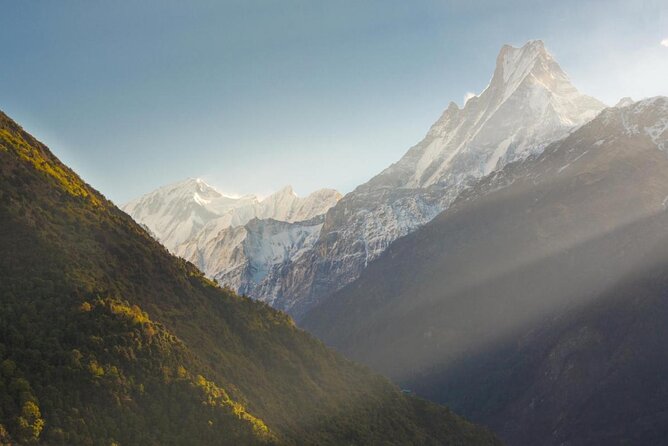
- Larkya La is the great test: The pass reaches 5,160 meters and brings views of Larkya Peak, Himlung, Cheo, Kang Guru, and Annapurna II.
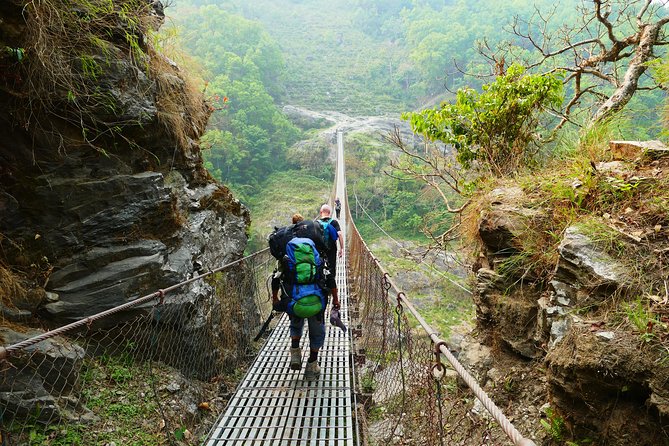
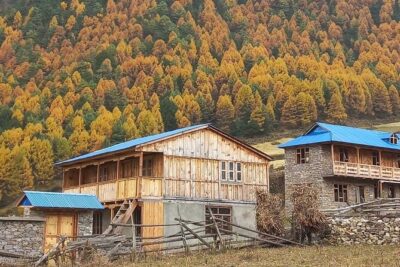
- The route changes character daily: You walk through river gorges, bamboo and rhododendron forest, alpine meadows, glacial moraines, and high desert-like country.
- Samagaon is more than a sleeping stop: You have an acclimatization day, a visit to Pungyen Gompa, and time to see its Mani stones and Sherpa culture.
- The package handles the paperwork: Special permits, Manaslu and Annapurna conservation permits, and TIMS are included.
- Bimal is the main contact named in the feedback: He is praised for arranging trips around a group’s time and budget, including longer versions of the circuit.
- The tour is private: Only your group takes part, which gives you more control than a fixed large-group departure.
Why the Manaslu Circuit feels different
The Manaslu Circuit circles the world’s eighth-highest mountain, Mount Manaslu at 8,163 meters, inside the 1,663-square-kilometer Manaslu Conservation Area. It is not a simple mountain-view walk. You begin low beside rivers and cultivated land, then climb through forest, pasture, and icy high country before dropping into the Annapurna Conservation Area.
That gradual change is the route’s best feature. At the start, the walk has warm, green valley scenery and village life. Near Samagaon and Samdo, the air is thinner, the trees are shorter, and the mountains feel much closer. At Larkya La, you are crossing glacier moraines at an altitude where the weather and your own energy matter.
The area also supports snow leopard, grey wolf, musk deer, blue sheep, and Himalayan tahr. You may not see these animals, but the conservation setting gives the walk a stronger sense of wild country. Birdlife includes variegated laughing-thrush, grandala, and northern goshawk.
More Manaslu Treks in Kathmandu
- Manaslu Circuit Trek
★ 5.0 · 292 reviews - Manaslu Circuit Trek:
★ 5.0 · 106 reviews - Manaslu Circuit Trek (15 Days)
★ 5.0 · 50 reviews
Kathmandu gives you two useful days
The trip begins with airport pickup and a private transfer to your hotel. Day one is deliberately light. You have time to rest, prepare your kit, shop for anything missing, and get your bearings in Kathmandu. A short visit to Kathmandu Durbar Square is included, though the day is mainly about arrival and preparation.
The second day is a sightseeing day around the Kathmandu Valley. You visit Boudhanath, Pashupatinath, and Swayambhunath, often called the Monkey Temple. Boudhanath introduces you to one of Nepal’s major Buddhist centers, while Pashupatinath is the country’s most important Hindu temple complex.
This is a sensible start to a demanding trek. You get time to adjust before the road and walking begin. Entrance fees for the Kathmandu sightseeing stops are not included, so keep some money aside for those visits. The package includes valley sightseeing, but the listed admission policy means you should not assume every ticket is covered.
The lower Manaslu trail, from Soti Khola to Deng
The itinerary then moves into the trekking section, with Soti Khola to Machha Khola listed as a six to seven-hour walk. The distance is about 14.1 kilometers, and the altitude rises from roughly 700 meters to 869 meters. The route passes through Gurung villages such as Lapubesi and Khanibesi.
This is a good introduction to the Manaslu route because it combines village life with demanding hilly paths. You should expect the terrain to feel rougher than the altitude figures suggest. The route follows river country, and the day involves sustained walking rather than one short climb.
From Machha Khola, you continue toward Khola Besi and Machhakhola at about 1,340 meters, with another six-hour walking day. One appealing stop is the hot spring at Khola Besi. It offers a chance to relax after the trail, though you should think of it as a simple mountain stop rather than a polished spa visit.
The next section leads through Philim, cultivated fields, Ekle Bhattai, and bamboo forest before reaching Deng. You cross the Budi Gandaki several times, and the river remains a constant companion. This section is valuable because the route still feels connected to working villages and farmland, not just to the high mountains.
Prok, Namrung, and the first major mountain views
After Deng, you cross the Budi Gandaki again and enter the upper valley. The walk passes through Prok village, where you can look toward Mount Siringi, then continues upstream across the river to Namrung.
The six-hour day is a clear step toward higher country. Forest and river crossings remain part of the route, but the mountain views become more important. Namrung is where the trip begins to feel like a true high-Himalaya journey rather than a long valley walk.
From Namrung, the route opens to views of Ganesh, Siringi, and Himchuli. You pass through Lihi, with its farm fields and chhortens, then continue via Sho to Lho. At Lho, Ribung Gompa adds a cultural stop, while Mount Manaslu becomes the main visual focus.
You continue through Shyala, where the views widen to Himchuli, Peak 29, Manaslu, and several snow-covered peaks. The day finishes at Samagaon. It is another six-hour walking day, but the altitude makes the effort more serious than the lower sections.
More Trekking Tours in Kathmandu
- Everest Base Camp Trek – 14 Days
★ 5.0 · 1,499 reviews - Everest Base Camp Trek
★ 5.0 · 842 reviews - Everest Base Camp Trekking
★ 5.0 · 485 reviews - Annapurna Circuit Trek with Tilicho Lake
★ 5.0 · 368 reviews
Samagaon is the trip’s cultural and practical center
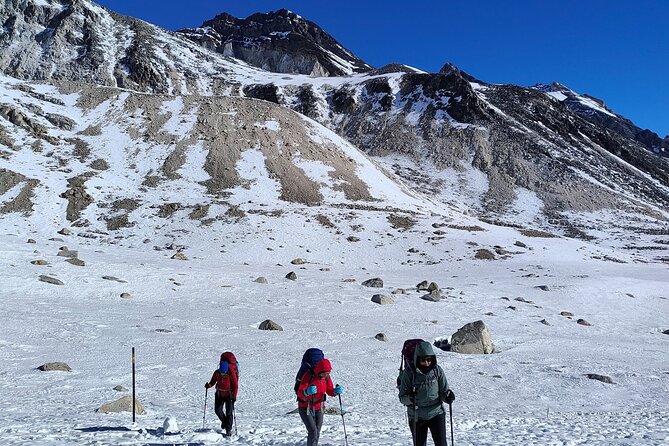
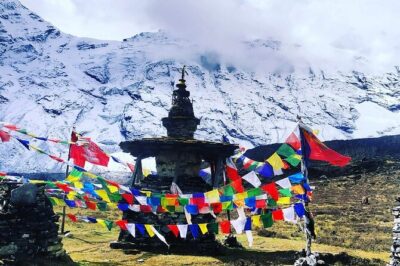
Samagaon gets a full acclimatization day, and that is one of the most important features of this schedule. You explore the village, see its thousands of Mani stones, and spend time among a Sherpa community. The slower day gives your body a chance to adjust before the route climbs higher.
You also visit Pungyen Gompa. The guide can explain local stories connected with the village and surrounding mountains. This is one of the places where the trip feels more personal than a simple peak-viewing tour. You are not just walking through scenery. You are moving through a living highland community with its own religious customs and mountain traditions.
The schedule does not give a full rest day after Samagaon, so do not treat acclimatization as optional. The next stages lead higher toward Samdo and Dharmashala. If you normally struggle with altitude, this is a point to discuss carefully with the operator before booking.
Samdo and Dharmashala bring you close to the pass
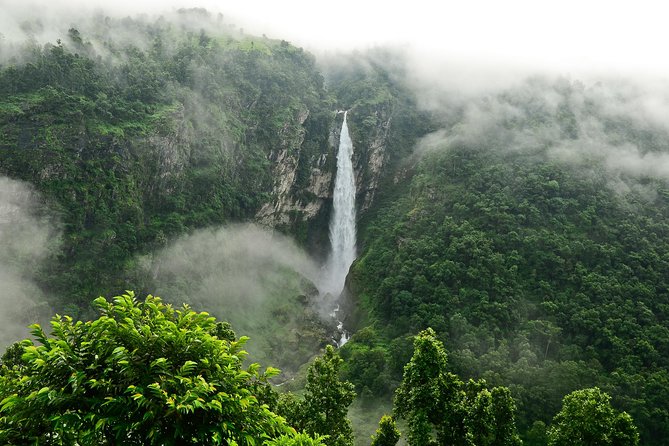
From Samagaon, you walk through birch and juniper forest, across the alpine grassland of Kermo Kharka, and over the Budi Gandaki on a wooden bridge. The destination is Samdo, with about five hours of walking listed.
Samdo is a high settlement and a natural staging point before the pass. The scenery is barer and the air thinner. Your day is not long by distance, but the altitude can make every uphill section feel slow. Plan to walk steadily, drink what you have purchased or carried, and keep your attention on how your body feels.
The following day takes you around Salka Khola with views toward the Larkya Glacier before reaching Dharmashala. This is another five-hour day, but Dharmashala is primarily a practical overnight stop before the pass. Accommodation is in a stone-built hut, and conditions are basic.
The package uses twin-sharing tea houses during the trek. That is useful to know before you go. Tea-house travel gives you shelter and a place to eat, but it does not promise hotel-style comfort. Personal costs such as hot showers, internet, phone calls, laundry, bar bills, and drinking water are extra.
Larkya La is the demanding high point
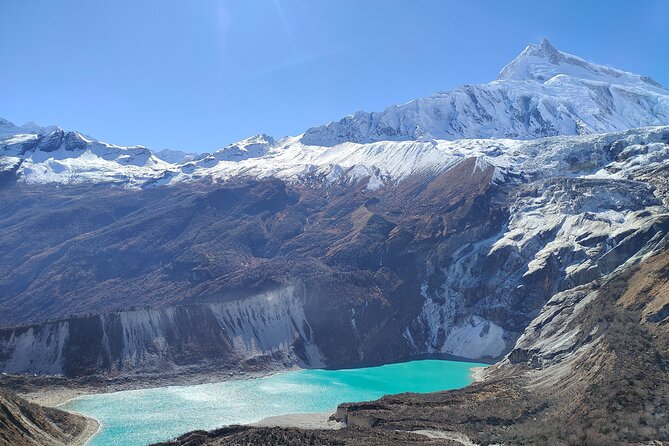
The pass day begins from Dharmashala and crosses glacier moraines before reaching Larkya La at 5,160 meters. The itinerary allows nine hours for this stage, making it the longest and most physically demanding day of the trip.
At the pass, you can look toward Larkya Peak, Himlung, Cheo, Kang Guru, and Annapurna II. After crossing, the route enters a dramatic mountain setting with Manaslu among the great views. The descent continues to Bimthang, where you spend the night.
This is the day that should guide your booking decision. You need a moderate level of physical fitness, but the pass also demands patience and sensible pacing. Weather can affect the crossing, and the operator states that poor weather may lead to a different date or a full refund if the experience is canceled.
The pass is rewarding because it brings together the route’s major elements: glacier country, high altitude, broad views, and a real sense of crossing from one mountain region to another. It is not a sightseeing stop reached by vehicle. You earn it over a long day.
The descent to Dharapani changes the region again
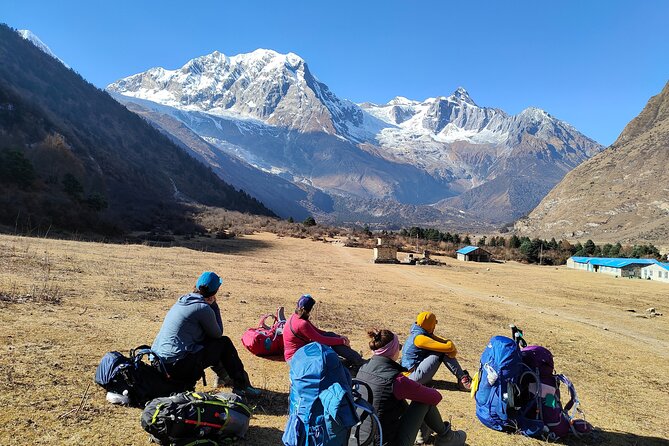
After Bimthang, you descend through Sangure alpine meadow and cross the Dudh River. You still have views of Manaslu, Lamjung, Himlung, and Cheo, but the route begins to feel greener and more settled.
Rhododendron forests and farm fields lead toward Gho, followed by the walk to Dharapani. This is a five-hour day, and Dharapani marks your entry into the Annapurna Conservation Area. That change gives the final section a useful sense of transition. You have crossed the high point of the Manaslu route and are now moving into another protected mountain region.
The last day is listed as a 10-hour day, after which you are free to choose where to go and stay. The itinerary does not spell out every detail of the final transfer, so I would confirm the exact transport plan before booking. Ground transportation is included as stated, along with airport pickup and drop-off, but the schedule wording makes this a detail worth checking.
What the $1,350 price covers
At $1,350 per person, the package has solid value if you use the included services. You receive:
- Airport pickup and drop-off
- Ground transportation listed in the plan
- Kathmandu Valley sightseeing
- Twin-sharing tea-house lodging during the trek
- An English-speaking trekking guide
- Special permits, Manaslu and Annapurna conservation permits, and TIMS
- Emergency rescue service arrangements
- Ten dinners, 12 breakfasts, and 11 lunches
The permit package matters here. Manaslu is a controlled trekking area, so arranging the required paperwork is not a minor detail. Having it handled by the operator removes a large practical task.
The price does not cover your Nepal visa, international flights, personal spending, drinking water, hot showers, phone and internet use, laundry, bar bills, entrance fees in Kathmandu, or tips. Emergency rescue cost is also listed separately, so you should check exactly how the rescue service arrangement works and what insurance you need.
The private format adds value for people who want a trip shaped around their group. Bimal is specifically praised for organizing a 14-day Manaslu trip around the group’s schedule and budget, and the company has also arranged a Manaslu and Tsum Valley combination. That suggests you can ask about a slower or expanded plan rather than treating 13 days as the only option.
Service, guides, and the private format
The strongest service theme is flexibility. Bimal is described as efficient, professional, and fair in arranging a trip around time and budget. The guide and porter teams are also praised for being friendly and helpful with requests along the route.
No individual guide name is provided in the tour details, so I would ask for the name and experience of the guide assigned to your group. That is especially useful for this route, where judgment around pacing, weather, and altitude matters.
Because this is a private activity, only your group participates. You will not be locked into the rhythm of a large departure, but a private trek also means your group must be honest about fitness and expectations. The guide can support you, but nobody can remove the long hours, high altitude, or basic tea-house conditions.
Who should book this trek?
I would recommend it to someone who wants a quieter Himalayan route, enjoys walking through villages as much as looking at peaks, and is comfortable with simple lodging. It suits people who value permits, transport, meals, and a guide being arranged in one package.
It is less suitable if you want short walking days, luxury rooms, guaranteed hot showers, or a relaxed holiday with only light exercise. The pass day is long, the final day is listed at 10 hours, and personal extras add to the advertised price.
The route may also suit repeat visitors to Nepal. The Manaslu and Tsum Valley option mentioned in the trip history could make sense if you want more time in the region, while the 13-day version keeps the plan focused on the main circuit.
Should you book the Manaslu Circuit Trek?
Book it if you want mountain views with a strong sense of place, and if you are ready for a real trek rather than a soft adventure. The combination of Gurung and Sherpa villages, Pungyen Gompa, the Manaslu and Annapurna views, and the Larkya La crossing gives this route plenty of substance.
Before paying, confirm the final-day transport, the assigned guide, the emergency rescue terms, and the expected cost of water and other personal needs. If you can handle the altitude and basic accommodation, the $1,350 package offers a practical way to reach one of Nepal’s most memorable high passes.
FAQ
How long is the Manaslu Circuit Trek?
The advertised duration is approximately 13 days, including arrival, Kathmandu sightseeing, trekking, and the final day after reaching Dharapani.
What is the highest point on the trek?
The highest point is Larkya La Pass at 5,160 meters.
Is accommodation included?
Yes. Twin-sharing tea-house accommodation is included during the trekking portion.
Are permits included in the price?
Yes. The package includes necessary paperwork, special permits, Manaslu and Annapurna conservation permits, and TIMS.
Are meals included?
Yes. The package includes 10 dinners, 12 breakfasts, and 11 lunches.
What happens if bad weather cancels the trek?
If poor weather causes the experience to be canceled, you are offered a different date or a full refund. Cancellation by you is free up to 24 hours before the start time.
Latest treks added in Kathmandu
- Private Manaslu Circuit Trek at Himalayas★ 5.0 · 3 reviews
- Ghorepani Poonhill Trek★ 5.0 · 5 reviews
- Ghorepani Poon Hill Trek★ 5.0 · 16 reviews
- Upper Mustang Trekking★ 3.0 · 2 reviews
- Amazing 1 Day Trekking Experience in Kathmandu Nepal★ 5.0 · 24 reviews
- Upper Mustang Trekking★ 5.0 · 2 reviews
- Upper Mustang Trek★ 5.0 · 5 reviews
- Upper Mustang Trekking★ 5.0 · 4 reviews
Manaslu Circuit Treks, compared.
16 Day Private Manaslu Circuit Trek from Kathmandu
Read our review →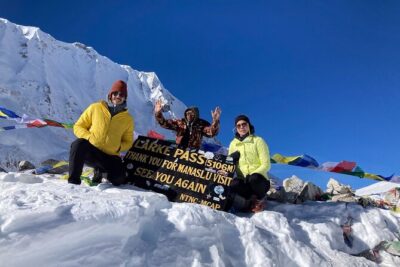
10 Days Manaslu Circuit Trek in Larke La Pass
Read our review →Browse the lists this tour appears in