REVIEW · KATHMANDU
Khopra Ridge Trek
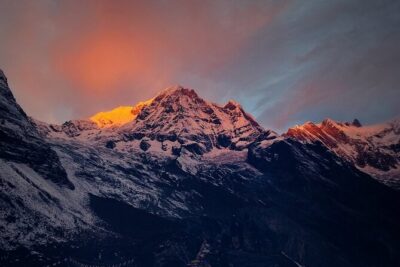
Khopra Ridge gives you a quieter Annapurna route, with basic homestays, rhododendron forests, buffalo pastures, and huge views of Annapurna South and Dhaulagiri. The high point is the optional hike to Khayer Lake at 4,827 meters, a demanding day that rewards steady walkers with a fine mountain setting.
I like two things here. First, you leave the busier Annapurna Sanctuary path after Tadapani and spend several nights on a less-used trail. Second, the route has a pleasing mix of Nepal: Kathmandu temples, Gurung villages, Pokhara’s lake, mountain ridges, a suspension bridge, and Tatopani’s hot springs.
The main consideration is comfort. Tea houses and homestays are described as basic, and several days involve five to six hours of walking with steep climbs and descents. The itinerary also includes long road transfers, including the return from Tatopani to Pokhara and the tourist bus back to Kathmandu.
Key points to know before you book
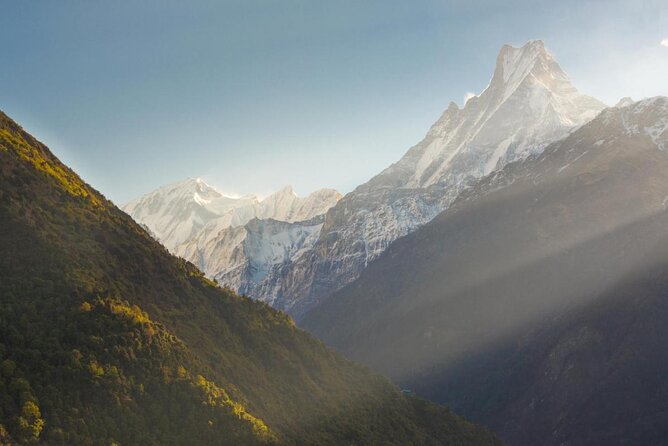
- Khopra Ridge is the star of the route: Reach 3,870 meters for close views of Annapurna South, Fang, Nilgiri, and Dhaulagiri.
- Khayer Lake adds a serious high-altitude day: The out-and-back walk reaches 4,827 meters and takes about six hours.
- You get a less developed trekking experience: Expect home-style lodging and basic tea houses rather than polished mountain hotels.
- The trip balances trekking with sightseeing: Kathmandu, Pokhara, the World Peace Stupa, and a possible Mountaineering Museum visit are part of the plan.
- Meals on the trek are included: You choose from the available lodge menu, which makes budgeting easier.
- This is a private trip: Only your own group takes part, with pickup offered and local guide and porter support arranged through Top of the World Treks.
Why Khopra Ridge feels different from the usual Annapurna route
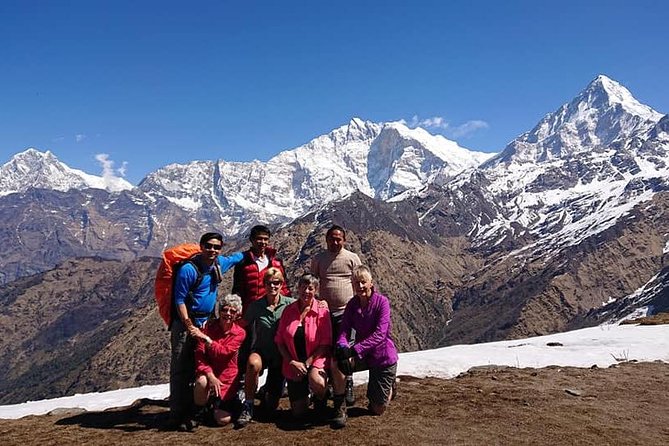
Khopra Ridge is a good choice if you want the Annapurna region without spending the whole trek on the most established trails. You still get the famous peaks, but the route turns away from the main Annapurna Sanctuary path after Tadapani.
That change matters. The accommodation is more modest, and the trail feels less set up for mass tourism. You may stay in home-style lodges where facilities are simple. In return, you get closer contact with village life and a quieter night in the hills.
The route also gives you a good range of scenery. You begin among villages and cultivated hillsides, walk through rhododendron and oak forests, cross open grazing ground, and climb above the tree line. Along the way, the views open toward Annapurna II, Annapurna III, Annapurna IV, Annapurna South, Machhapuchhare, Lamjung Himal, and Dhaulagiri.
I would not choose this trip if you want a soft adventure with a comfortable room each night. I would choose it if you want a proper Himalayan walk with local lodging, a private guide, and time to stop for mountain views.
More Trekking Tours in Kathmandu
- Everest Base Camp Trek – 14 Days
★ 5.0 · 1,499 reviews - Everest Base Camp Trek
★ 5.0 · 842 reviews - Everest Base Camp Trekking
★ 5.0 · 485 reviews
Kathmandu begins with temples, traffic, and Thamel
Your first day starts with airport pickup and roughly 45 minutes by bus to Thamel, Kathmandu’s main tourist district. After checking into the hotel, you have time for tea, a shower, dinner, and a short evening look at the city.
Thamel is useful rather than serene. It is where you can sort out last-minute trekking items, exchange money, and get used to Kathmandu’s crowded streets. The first evening is intentionally light, since the trip begins with an early start.
Day two gives you a full day in Kathmandu. The main visit is Swayambhunath, a Buddhist stupa and monastery more than 2,000 years old. The hilltop setting offers views across the valley, and monkeys are part of the scene.
The afternoon is for checking equipment and packing. This is a practical pause, not wasted time. You can make sure your bag is ready before leaving the city, and you have another chance to shop in Thamel.
Ghandruk introduces Gurung village life
On day three, you fly from Kathmandu to Pokhara, a short flight of about 45 minutes. Private transport then takes you to Nayapul, where the walking begins.
The trek to Ghandruk takes about five hours and finishes at roughly 1,940 meters. Ghandruk is one of the most appealing village stops on the route because it brings you into Gurung culture while offering early views of Annapurna South, Hiunchuli, Machhapuchhre, and Annapurna III.
This is a substantial first walking day, especially after the flight and road transfer. You should arrive with enough energy for the climb rather than treating it as a gentle stroll. The payoff is a mountain village setting and a clear sense that the trek has properly begun.
Tadapani brings forest trails and sunrise views
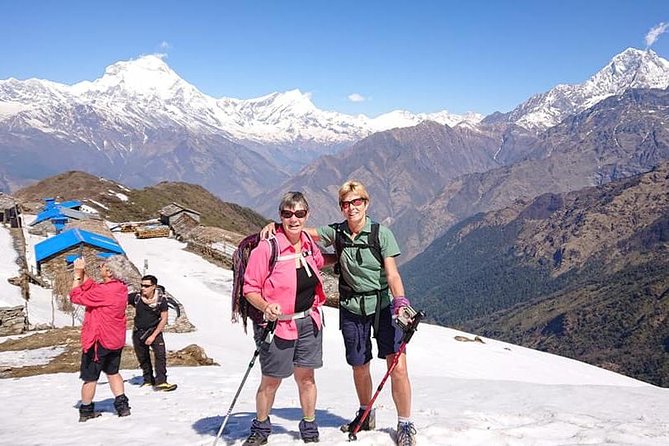
Day four climbs through rhododendron forest toward Tadapani at about 2,300 meters. The walk lasts around four hours, though the ascent makes it feel more demanding than the number suggests.
Keep your eyes open for monkeys, birds, and flowers. The route also gives you broad views of the Annapurna group, including Annapurna II, III, IV, and South, as well as Machhapuchhre and Lamjung Himal.
Tadapani is prized for sunset and sunrise. The overnight stop gives you a chance to see the mountains in changing light without adding a separate early morning excursion.
Another trail to compare in Kathmandu:
- Annapurna Circuit Trek with Tilicho Lake
★ 5.0 · 368 reviews - Everest Base Camp Trekking – 13 Day
★ 5.0 · 365 reviews - Everest Base Camp Trek
★ 5.0 · 350 reviews - Everest Base Camp Trek -14 Days
★ 5.0 · 321 reviews
The trail turns quieter at Dobato
On day five, the route leaves the main Annapurna Sanctuary trail. You walk through thick rhododendron forest, pass local water buffalo pastures, and climb gradually toward the open country above the tree line.
The walk takes about five hours and ends at Dobato, around 3,400 meters. This is where the basic nature of the route becomes more noticeable. Accommodation is in a simple camp or home-style tea house setting, rather than a developed resort.
Dobato is valuable because it gives you the feeling of moving into a wilder mountain area. The tradeoff is that you should be ready for fewer comforts and a colder night than in the lower villages.
Mulde View Point adds a superb morning
Day six starts early with a climb to Mulde View Point. The reward is a wide view toward both the Annapurna and Dhaulagiri ranges. After taking in the panorama, you return to Dobato for breakfast.
The route then descends through forests and pastures toward Deaurali or Lower Chistibung. You cross a suspension bridge and begin climbing again toward Upper Chistibung, around 3,000 meters.
This is a day of repeated changes in elevation. You descend after the morning viewpoint, then regain height later. The stated walking time is about five hours, but the uneven rhythm can be tiring. Take the descents carefully and save energy for the final uphill stretch.
Kopra Ridge delivers the mountain views
Day seven is shorter at about three hours, but it includes a steady climb above the tree line. The pace is intentionally slow, with time for rest and photographs.
Wildlife may include Himalayan thar and the Danfe pheasant. The trail reaches Kopra Ridge at approximately 3,870 meters, where the views become the main event.
Annapurna South is only about six kilometers away. Fang and Nilgiri appear to the north, while Dhaulagiri fills the western view. This close mountain setting is the strongest reason to choose Khopra Ridge instead of a more familiar Annapurna route.
Altitude is now a real factor. You may feel fine, or you may notice that every uphill step takes more effort. The slow schedule helps, but you still need to tell your guide if you feel unwell.
Khayer Lake is the hardest and most rewarding day
You spend a second night at Khopra Ridge, allowing a full day for the walk to Khayer Lake and its temple. The lake sits at about 4,827 meters, and the outing takes around six hours.
This is the most demanding part of the trip. The distance and altitude make it a serious mountain day, even for fit hikers. The route is not simply a scenic walk from one village to the next. You go high, return to the ridge, and spend the night back at the same accommodation.
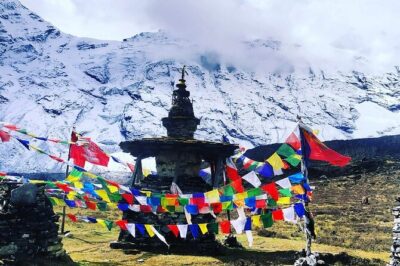
The benefit is a memorable high-altitude setting and a visit to a significant local religious site. You should treat this day as optional in spirit, even though it is a central feature of the itinerary. If your body is not responding well to the altitude, staying lower is the sensible choice.
Paudwar gives you a long descent through forest
Day nine begins with a descent from the ridge. Some sections are steep, and the trail first crosses open ground and buffalo pastures before entering oak and rhododendron forest.
The walk continues to Paudwar, where you spend the night. After the high country around Khopra, this return to village life makes a pleasant change. It also gives your legs a break from constant climbing, though steep downhill sections can be hard on knees.
The combination of open pasture, forest, and village is one of the route’s best features. You see how quickly the mountain environment changes as you lose altitude.
Tatopani closes the walking with hot springs
On day ten, you descend through fields to a small river and water mill. After crossing a suspension bridge, the route continues to Hillkharka at about 1,300 meters and then down to Tatopani at approximately 1,190 meters.
The walk takes around five hours. Tatopani is known for its hot springs, which provide a welcome chance to relax after the high ridge and long descents.
This is a good example of the trip’s variety. You begin among snow peaks and open ridges, then finish among fields, rivers, villages, and warm spring water. The road and walking conditions are still basic, but the stop has genuine practical value for tired legs.
Pokhara offers a proper pause after the mountains
Day eleven ends the trekking section. You take a local bus from Tatopani to Beni, then continue by taxi to Pokhara. The transfer takes about four hours according to the schedule, though road travel in Nepal can feel less predictable than the clock suggests.
Pokhara is built around Fewa Lake and works well as a recovery stop. You have time to rest, eat, and enjoy a more relaxed setting after several nights in small mountain lodges.
Day twelve is a sightseeing day. You take a boat across the lake and walk up to the World Peace Stupa, where you can look over Pokhara and toward the mountains. The visit also provides an introduction to Buddhism.
If the group wants to go, there is time for the Mountaineering Museum. The day involves about four hours of activity, but it is not another hard trekking day. This is one of the trip’s strongest planning choices because it prevents the high-altitude walk from being followed immediately by a rushed return to Kathmandu.
The bus back to Kathmandu is part of the experience
Day thirteen begins early with the tourist bus from Pokhara to Kathmandu. The listed travel time is about six hours.
This is not the fastest or most comfortable way to move between the two cities, but it is part of the overland rhythm of the trip. Once back in Kathmandu, the rest of the day is free for shopping and rest.
Day fourteen is less clearly defined. The schedule allows extra days at your own cost, and the final day includes free time and the possibility of arranging further plans. Confirm the exact departure schedule, hotel nights, airport transfer, and final-day arrangements before you pay.
Accommodation, food, and guide support
The accommodation changes with altitude and location. In Kathmandu and Pokhara, you use hotels. On the trek, you stay in basic lodges, tea houses, and homestay-style accommodation.
The company says it uses the best available lodging and includes all meals while trekking. You choose food from the menu available at each lodge. That arrangement is convenient and makes the price easier to understand, but it does not mean every meal or room will be luxurious.
The private format is a real benefit. Your group is not combined with strangers, so the walking pace and breaks can be managed more easily. The company has been associated with guides Biru Tamang and Bhoj, who have been praised for careful support, patient pacing, and strong organization on Nepal trips. Guide assignments can change, so ask who will lead your departure.
Porters are also part of the support system on trips arranged by the company. Ask exactly what luggage allowance, porter support, and personal daypack requirements apply to your booking.
Is the $1,461.49 price good value?
At $1,461.49 per person, this is not a budget walk, but the price covers more than the days on the trail. You are paying for airport pickup, Kathmandu and Pokhara arrangements, the Kathmandu to Pokhara flight, ground transfers, private guiding, trek accommodation, and meals during the trekking section.
The price also includes a rare route with a high point near 4,827 meters and a private group format. Those details add value if you want planning handled for you and prefer not to find lodges, transport, and guides independently.
The important comparison is comfort. You are not paying for upscale mountain accommodation. The route is intentionally simple, and local buses and road transfers are part of the plan. I see the price as reasonable for a supported private trek, but less attractive if you only want a short, comfortable Annapurna walk.
Who should book this Khopra Ridge itinerary?
This trip suits you if you have a moderate fitness level, enjoy walking for four to six hours, and accept steep climbs, steep descents, and basic rooms.
It is a particularly good fit if you want:
- A quieter alternative to the busiest Annapurna routes
- Close views of Annapurna South and Dhaulagiri
- A private group rather than a mixed departure
- A local home-style experience
- Time in both Kathmandu and Pokhara
- A challenging optional day to Khayer Lake
I would be cautious if you dislike shared or basic facilities, long bus rides, or changing plans caused by mountain weather. The route also reaches high altitude, so you should discuss the trip with a medical professional if you have concerns about strenuous walking or altitude.
The cancellation terms are straightforward: cancel at least 24 hours before the start for a full refund. Poor weather or failure to meet the minimum group size can lead to a new date, another experience, or a full refund.
Should you book it?
Book this trek if you want the Annapurna mountains with fewer developed facilities and more village contact. The combination of Ghandruk, Tadapani, Mulde View Point, Khopra Ridge, Khayer Lake, Tatopani, and Pokhara gives you far more variety than a simple point-to-point hike.
Think twice if you want a polished lodge-to-lodge holiday. The best part of this trip is also its challenge: simple accommodation, high altitude, changing trail conditions, and a quieter route.
For a fit walker who values mountain views, local support, and a less familiar path, the $1,461.49 price can make good sense. Before booking, confirm the final-day schedule, guide names, porter arrangements, and exactly what accommodation is available on your dates.
FAQ
How long does the Khopra Ridge Trek take?
The experience is planned for approximately 14 days, including Kathmandu, Pokhara, the trek, transport days, and free time.
What is the price per person?
The listed price is $1,461.49 per person.
Is this a private tour?
Yes. Only your own group participates in the private activity.
Is airport pickup available?
Yes. Pickup is offered, and the first day includes a transfer of about 45 minutes to Thamel in Kathmandu.
What fitness level is required?
A moderate physical fitness level is recommended. The itinerary includes several four to six hour walking days, steep sections, and a high point of 4,827 meters at Khayer Lake.
Are meals included?
All meals during the trek are included. You choose from the menu available at the lodge or tea house.
What type of accommodation should I expect?
Kathmandu and Pokhara use hotels. The trekking section uses basic lodges, tea houses, and homestay-style accommodation.
Does the trek visit Khayer Lake?
Yes. The route includes a walking day from Khopra Ridge to Khayer Lake and its temple, reaching about 4,827 meters.
Does the trip include Pokhara sightseeing?
Yes. The Pokhara portion includes a boat across Fewa Lake, a walk to the World Peace Stupa, and a possible visit to the Mountaineering Museum if the group wants to go.
What happens if bad weather cancels the trip?
If poor weather cancels the experience, you are offered a different date or a full refund. Cancellation for a full refund is also available if made at least 24 hours before the experience starts.
Latest treks added in Kathmandu
- Ghorepani Poonhill Trek★ 5.0 · 5 reviews
- Ghorepani Poon Hill Trek★ 5.0 · 16 reviews
- Private Manaslu Circuit Trek at Himalayas★ 5.0 · 3 reviews
- Upper Mustang Trekking★ 3.0 · 2 reviews
- Amazing 1 Day Trekking Experience in Kathmandu Nepal★ 5.0 · 24 reviews
- Upper Mustang Trekking★ 5.0 · 2 reviews
- Upper Mustang Trek★ 5.0 · 5 reviews
- Upper Mustang Trekking★ 5.0 · 4 reviews
Kathmandu Trekking Tours, compared.