
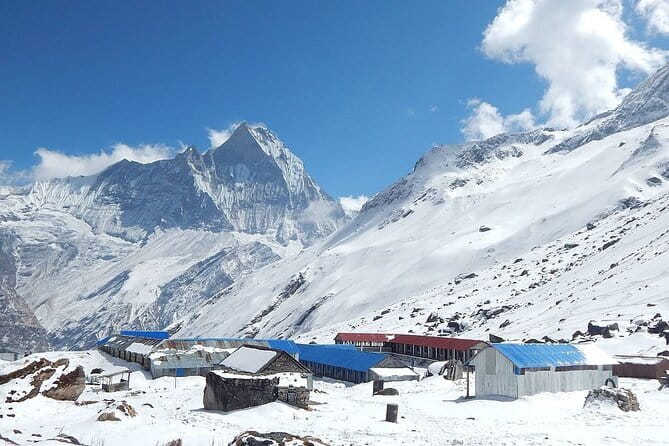
REVIEW · KATHMANDU
Annapurna base camp trek
Annapurna Base Camp gives you a fine slice of Nepal in one trip: mountain villages, high trails, and enormous Himalayan views. The route passes through Gurung and Magar communities, climbs to Poon Hill for sunrise, and finishes at Annapurna Base Camp, 4,130 meters above sea level.
I like the way the trip combines Pokhara’s lakes, cafés, caves, and optional adventure sports with a proper mountain walk. I also like the hot springs near Jhinu, a welcome reward after several hours on foot. The main caution is fitness: five to six hours of walking on some days, steep trails, cold conditions, and altitude make this more than a casual holiday walk.
Key points to know before booking
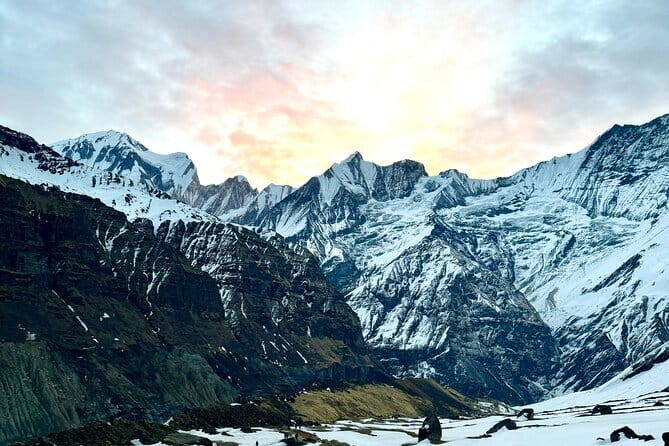
- Poon Hill comes early: At 3,210 meters, it offers a major sunrise and sunset viewpoint before the route heads higher.
- Annapurna Base Camp reaches 4,130 meters: The final goal is high enough that you need to take the pace and altitude seriously.
- Machhapuchhre Base Camp is part of the journey: The famous fishtail peak provides one of the trek’s most memorable mountain settings.
- Pokhara adds variety: Lakes, caves, restaurants, museums, paragliding, hot-air ballooning, and a zip flyer give you plenty to do around the walk.
- The route has cultural depth: Gurung, Ghale, and Magar communities share village life, food, customs, and hospitality along the trail.
- The package is small and fairly practical: A maximum of 15 people, accommodation, breakfast, guide, driver, entrance fees, and hotel transfers are included.
From Kathmandu to Pokhara, the trip gets moving
The official meeting point is the parking area at the domestic terminal of Tribhuvan International Airport in Kathmandu. From there, the trip takes you toward Pokhara, Nepal’s popular lake city and the gateway for the Annapurna route.
Pokhara is not just a place to sleep before the trek. I would give yourself time to appreciate its lakes, caves, eateries, bars, museums, and paragliding spots. The city has a softer pace than Kathmandu, and its water, mountain views, and outdoor activities make a useful transition from city travel to mountain walking.
You can also add an activity in Pokhara, such as paragliding, hot-air ballooning, or the zip flyer. These are not part of the listed package, so treat them as optional extras rather than included features. If you want a quiet start, spend your time around the lakes instead.
The walking portion formally begins at Nayapul, around a two-hour drive from Pokhara. That transfer matters. The adventure does not begin the moment you leave Kathmandu, and the first part of the trip includes road travel before you reach the trailhead.
More Annapurna Treks in Kathmandu
- Annapurna Circuit Trek with Tilicho Lake
★ 5.0 · 368 reviews - Annapurna base camp trek 5 Days
★ 5.0 · 252 reviews - 14-Day Private Annapurna Base Camp Trek
★ 5.0 · 180 reviews
Poon Hill brings the first big reward
The first major phase heads toward Ghorepani and Poon Hill. At 3,210 meters, Poon Hill is high enough to feel like a serious mountain stop, yet it comes before Annapurna Base Camp and helps build the rhythm of the trek.
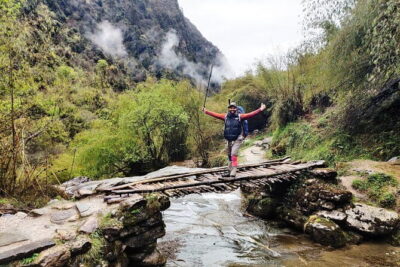
The route passes through green woodland filled with rhododendron, fig, bamboo, and juniper. Depending on the season, the forest can feel very different from the bare rock and snow you may picture when you think of the Himalayas. This section gives you shade, birdlife, village scenery, and changing views as the trail climbs.
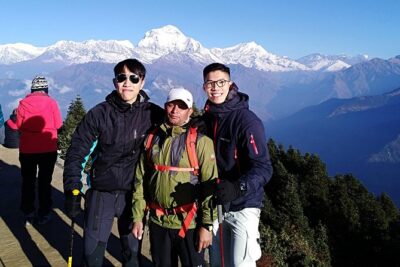
Poon Hill is especially valued for sunrise and sunset. You will want warm layers for this part, since early and late hours at 3,210 meters can be cold even when lower villages feel mild. The viewpoint gives you a broad look toward the Annapurna and Dhaulagiri massifs, two of the great mountain groups on this route.
The climb is not a free bonus. The route includes repeated uphill and downhill walking, and the early start for sunrise can make the day feel longer. Still, Poon Hill is one of the smartest features of the route. You receive a major Himalayan viewpoint before reaching the highest part of the trek.
Village life adds meaning between the mountain views
The Annapurna region is not only about peaks. Along the trail, you pass cultural villages connected with Gurung and Magar communities, with Hindu and Buddhist influences visible in local life. The housing style, food, and hospitality give the walk a human scale.
You may also meet people from Tibetan-origin communities as the route reaches the higher Himalayan belt. That change in culture is part of what makes the trek feel like a journey rather than a single walk to a viewpoint.
Food and lodging are practical parts of the trip. Accommodation is included according to the planned route, as is breakfast. Other food and drinks are not included, so budget for meals beyond breakfast. Alcohol is available for purchase, but it is not included, and the minimum drinking age is 18.
I would treat village stops with respect. You need clothing that works on the trail and in local religious settings. Shorts and sleeveless tops are not allowed in places of worship and selected museums, and both men and women must cover their knees and shoulders. A light layer and longer trousers solve much of this problem.
Machhapuchhre Base Camp points toward the final goal
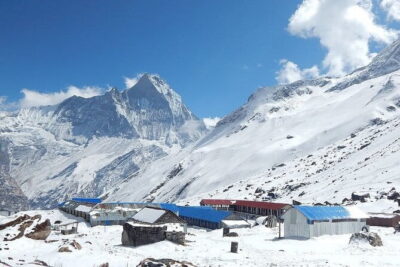
As the trail moves higher, the scenery changes from forest and village paths to a more exposed mountain setting. The route brings you toward Machhapuchhre Base Camp, a major stop before Annapurna Base Camp.
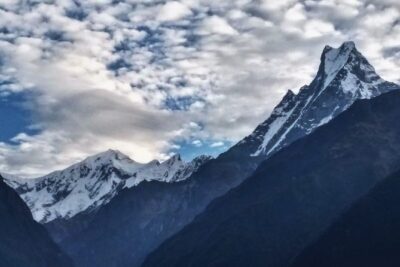
Machhapuchhre, often called Fishtail, is one of Nepal’s most recognizable peaks. Its shape gives this section a strong sense of place, and the base camp is more than a quick photo stop. It marks your arrival in the high mountain zone and prepares you for the final walk to Annapurna Base Camp.
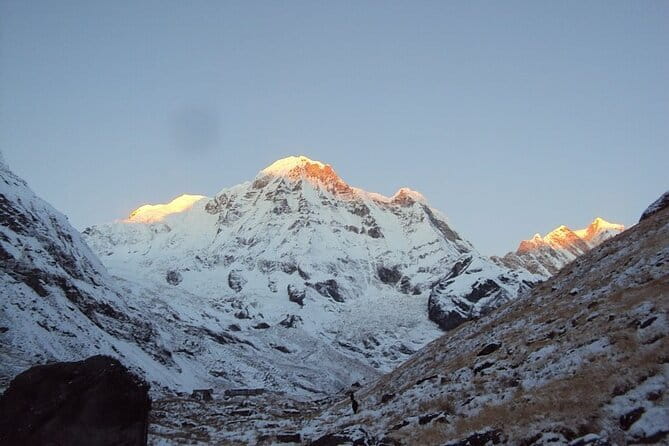
The mountain views can include Machhapuchhre, Dhaulagiri, the Annapurna range, Nilgiri, and Hiunchuli. Conditions can change, so you should not assume every peak will be clear at every stop. The best approach is to enjoy the views when they appear and keep the walking itself at the center of the day.
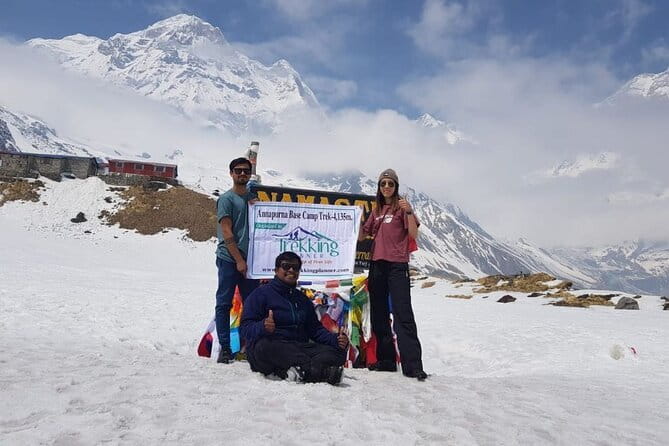
Annapurna Base Camp sits at 4,130 meters. That altitude is the serious part of the trip. The walking is often described as easy to moderate overall, but the elevation, stairs, weather, and long days make it demanding for anyone unused to mountain trails.
Another trail to compare in Kathmandu:
- Everest Base Camp Trek – 14 Days
★ 5.0 · 1,499 reviews - Everest Base Camp Trek
★ 5.0 · 842 reviews - Everest Base Camp Trekking
★ 5.0 · 485 reviews - Everest Base Camp Trekking – 13 Day
★ 5.0 · 365 reviews
Annapurna Base Camp is the high point, literally
At the base camp, you have reached the main goal of the route and one of its best photo settings. The surrounding peaks give the stop a large, enclosed mountain feel, with the Annapurna range rising around you.
This is where the trek’s separate pieces come together: the forest near Poon Hill, village life, the higher Tibetan-influenced communities, Machhapuchhre Base Camp, and the final climb through the high Himalayan belt.
You should expect to spend time taking photographs, but do not let the camera replace the moment. At this altitude, the air, cold, and effort are part of what makes the setting memorable. Take the pace seriously, listen to your guide, and avoid treating the base camp as a place to rush into and out of.
The package description gives the overall trip about 15 days, while the walking portion is commonly described as around seven to twelve days, with five to six hours of walking per day. Exact daily timing can vary, so you should expect a route with several full trekking days rather than a short excursion.
The return route includes Jhinu’s hot springs
The walk back is not simply a repeat of the climb. Near Jhinu, natural hot-water springs offer a chance to rest and refresh tired legs. After days of uphill and downhill walking, this stop has real practical value.
I like this kind of ending because it gives the route a change of pace. You are still surrounded by the mountains, but the focus shifts from reaching higher to recovering and enjoying the setting.
The return ultimately brings you back toward Pokhara and then to the trip’s meeting point in Kathmandu. Hotel pickup and drop-off are included, and the activity ends back at the stated meeting point at the domestic terminal parking area.
What $999 includes, and what it does not
The listed price is $999 per person. For a 15-day Nepal trek, that price is best judged by what it removes from your planning rather than by the number alone.
Included items are:
- Accommodation according to the route
- Breakfast
- Entrance fees
- A driver and guide
- Hotel pickup
- Hotel drop-off
That gives you a useful base package. You are not arranging every transfer alone, and you have support for the route and transport. A maximum group size of 15 is also more manageable than a large coach-style tour, especially on narrow mountain paths.
The price does not include food and drinks beyond the included breakfast. Alcoholic drinks cost extra. Optional activities in Pokhara, such as paragliding, hot-air ballooning, and the zip flyer, also should not be treated as part of the $999 unless separately confirmed.
I would keep extra money available for meals, drinks, optional activities, and personal purchases. The value is strongest if you want an organized trek with transport and a guide rather than a completely independent walk.
Fitness, weather, and altitude deserve honest attention
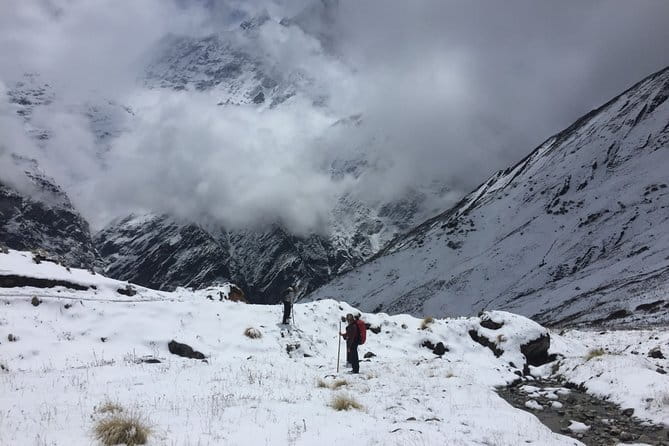
You need a moderate level of physical fitness. This is not presented as a technical mountaineering trip, but it does involve a moderate amount of walking, regular climbs and descents, and several days of five to six hours on foot.
The altitude is the bigger concern. Poon Hill reaches 3,210 meters, Machhapuchhre Base Camp comes higher, and Annapurna Base Camp reaches 4,130 meters. Even a fit person can find the height difficult, so you should be prepared for a slower pace and changing conditions.
The route can suit teenagers who are accustomed to walking. A family completed the trek with children aged 12 and 14, but that should not be read as a guarantee for every child. Age matters less than fitness, patience, cold-weather preparation, and the ability to manage long walking days.
October can be busy, with many people on the trail, and flexibility matters if you go then. Winter is possible but cold and less comfortable for anyone who dislikes low temperatures. Spring brings the appeal of rhododendron woodland, while weather in the mountains can still change.
The tour has received very strong overall feedback, with a 4.9 rating shown from seven reviews. The most consistent praise centers on helpful guides and porters, patience, and staff who make an effort to show more of Nepal than just the trail. That support is particularly useful when you are tired, uncertain about the route, or adjusting to altitude.
Practical details before you commit
Confirmation is provided when you book, and the activity is near public transportation. The stated meeting point is in Kathmandu, even though the walking begins near Nayapul after the journey to Pokhara.
You should arrive with clothing that can cover your knees and shoulders. This is needed for religious sites and selected museums, not just for comfort. Good walking clothes, warm layers for Poon Hill and the base camps, and sensible footwear are essential considerations, though the supplied details do not specify a particular packing list.
The free cancellation policy allows a full refund if you cancel at least 24 hours before the start time. Cancellations made less than 24 hours before the start, and changes made within that period, are not accepted for a refund. Cutoff times use local time in Nepal.
Who should book this Annapurna trek?
I would choose this trip if you want a structured Himalayan walk with a strong mix of scenery, village culture, and support. It works especially well for someone who wants more than a base camp photo, since Pokhara, Poon Hill, the local communities, Machhapuchhre Base Camp, and Jhinu all add different parts to the route.
It is also a sensible choice if you value having a guide, driver, accommodation, breakfast, and transfers arranged in advance. The small maximum group size should help keep the trip more personal than a large organized tour.
I would hesitate if you want a short holiday with little physical effort, dislike cold weather, or prefer complete independence. The route is long, the altitude is serious, and several costs remain outside the price.
For the right person, the $999 price offers a practical way to experience one of Nepal’s best-known mountain walks without arranging every moving part alone. Go for the views, but stay for the villages, the forests, the hot springs, and the patient rhythm of walking through the Himalayas.
FAQ
Where does the Annapurna Base Camp trek start?
The activity meeting point is at the TIA Domestic Terminal parking lot in Kathmandu. The walking portion begins at Nayapul, reached by a roughly two-hour drive from Pokhara.
How long does the trek take?
The full experience lasts about 15 days. The walking section is described as lasting around seven to twelve days, with roughly five to six hours of walking per day.
How high is Annapurna Base Camp?
Annapurna Base Camp is at 4,130 meters.
Does the route include Poon Hill?
Yes. The route includes Ghorepani Poon Hill at 3,210 meters, known for sunrise and sunset views.
Is Machhapuchhre Base Camp included?
Yes. Machhapuchhre Base Camp is included as part of the route before Annapurna Base Camp.
What is included in the $999 price?
Accommodation according to the route, entrance fees, breakfast, a driver and guide, hotel pickup, and hotel drop-off are included.
Are meals included?
Breakfast is included. Other food and drinks are not included. Alcoholic drinks can be purchased separately, and the minimum drinking age is 18.
How fit do I need to be?
You should have a moderate level of physical fitness. The trip involves a moderate amount of walking, with some days requiring about five to six hours on foot.
Can I cancel for a full refund?
Yes, if you cancel at least 24 hours before the experience start time. Cancellations or changes made less than 24 hours beforehand are not accepted for a refund.
Latest treks added in Kathmandu
- Private Manaslu Circuit Trek at Himalayas★ 5.0 · 3 reviews
- Ghorepani Poonhill Trek★ 5.0 · 5 reviews
- Ghorepani Poon Hill Trek★ 5.0 · 16 reviews
- Upper Mustang Trekking★ 3.0 · 2 reviews
- Amazing 1 Day Trekking Experience in Kathmandu Nepal★ 5.0 · 24 reviews
- Upper Mustang Trekking★ 5.0 · 2 reviews
- Upper Mustang Trek★ 5.0 · 5 reviews
- Upper Mustang Trekking★ 5.0 · 4 reviews
Annapurna Base Camp Treks, compared.
Trekking in Annapurna/Langtang/Everest/Upper Mustang regions
Read our review →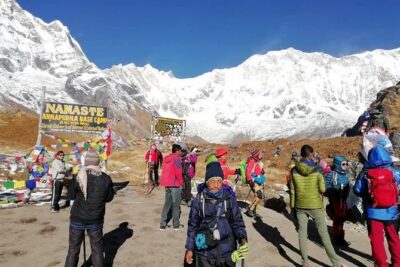
Kathmandu to Annapurna Base Camp (ABC) 5-Day Trek
Read our review →Browse the lists this tour appears in