
REVIEW · KATHMANDU
Annapurna Tilicho Lake Trek
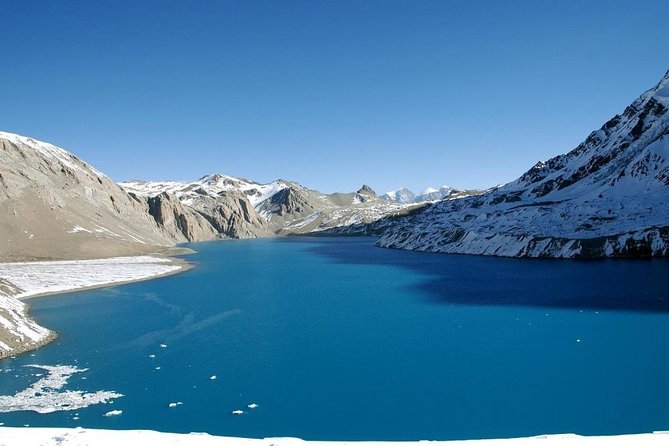
Tilicho Lake is the star here, but it is only one part of a demanding Himalayan trip. You’ll follow the Annapurna Circuit through pine forest, dry high country, Tibetan-style villages, and the 5,416-meter Thorong La pass before ending with Poon Hill’s famous sunrise.
I like the excellent range of scenery, from waterfalls and oak woods to the dry Manang plateau and windy Kali Gandaki Valley. I also like the practical support: permits, porters, a medical kit, sleeping bag, down jacket, and an English-speaking licensed trek leader are covered.
The catch is the altitude and the long days. Thorong La and Tilicho Lake require real stamina, while the price does not include daily meals, most Kathmandu and Pokhara lodging, insurance, hot showers, drinks, or personal gear.
Key points to know before you book
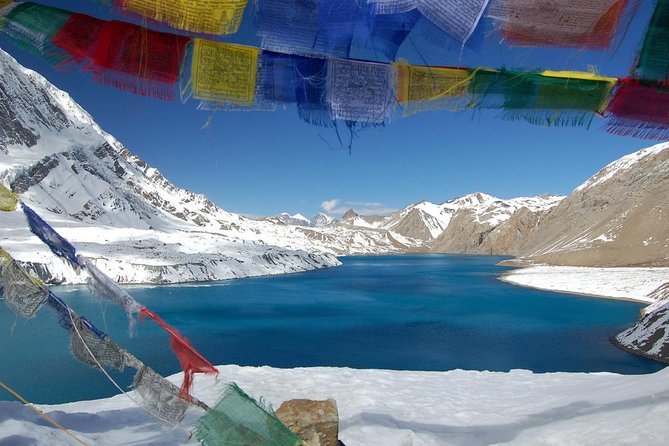
- Tilicho Lake at high altitude: The route leaves the main Annapurna Circuit near Manang and reaches one of the world’s highest lakes.
- Thorong La at 5,416 meters: The pass is the hardest day, with an early start from Thorong Phedi and a long descent to Muktinath.
- Poon Hill sunrise: The trip finishes with an early climb from Ghorepani for views of Annapurna and Dhaulagiri.
- A small group of up to 12: The size should make trail logistics and group communication easier.
- Support equipment included: You receive a down jacket, sleeping bag, duffel bag, map, medical kit, and trekking permits.
- A useful acclimatization day: You spend a full day in Manang before the route rises toward Tilicho Lake and Thorong La.
Why this trek is more than a standard Annapurna Circuit
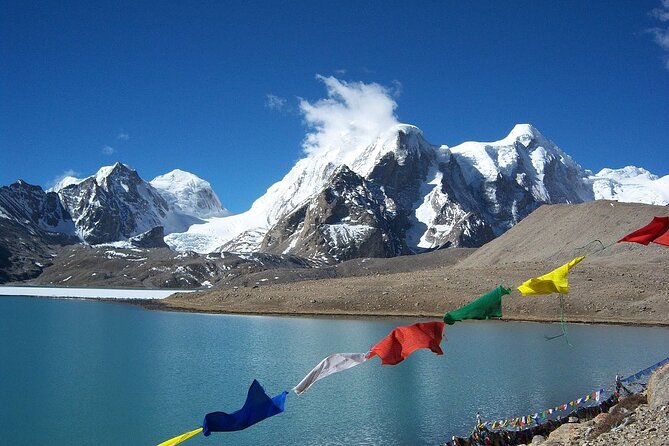
Many Himalayan walks offer one major prize. This one links several: the changing villages of the Annapurna Circuit, Tilicho Lake, Thorong La, the apple country around Marpha, Tatopani’s hot spring, and Poon Hill.
That variety is the main reason I find the route appealing. You are not simply walking toward one viewpoint and turning back. The scenery changes almost every day, and the culture changes with it. Lower sections bring forests, waterfalls, farms, and suspension bridges. Higher sections feel drier and more Tibetan, with mani walls, gompas, yak pasture, and bare slopes.
The cost is listed at $1,430 per person. That is a fair package price for a 20-day supported trek if you make use of the included staff, permits, transfers, equipment, and selected hotel nights. Still, you need to budget carefully because the daily trekking meals are not included, despite a few breakfasts being covered in the package details.
The supplied plan also describes the journey as a 17-day trek within a 20-day Nepal trip. In practice, you should treat it as a 20-day program including arrival, departure, transfers, and overnight stays. Ask for a current cost sheet before paying, especially for accommodation and meals.
More Annapurna Treks in Kathmandu
- Annapurna Circuit Trek with Tilicho Lake
★ 5.0 · 368 reviews - Annapurna base camp trek 5 Days
★ 5.0 · 252 reviews - 14-Day Private Annapurna Base Camp Trek
★ 5.0 · 180 reviews
Kathmandu to Syange: a long road into the mountains
Your first day is simple. An airport representative meets you at Tribhuvan International Airport, holding an Accessible Adventure sign and your name. You then take a private vehicle to your hotel, a transfer of about 30 minutes.
Day two is less glamorous but important. You drive from Kathmandu toward Besisahar along the Prithvi Highway beside the Trishuli River, then continue through hills, streams, settlements, and green valleys. A local jeep takes you onward to Syange on a bumpy, winding road.
The drive can take about eight hours. I would not think of it as wasted time. It is your gradual transition from Kathmandu’s busy streets to the narrow valleys of the Annapurna region. Still, the road section is tiring, and the jeep ride may feel rough after the long public-vehicle journey.
Syange to Chame: waterfalls, bridges, and pine forest
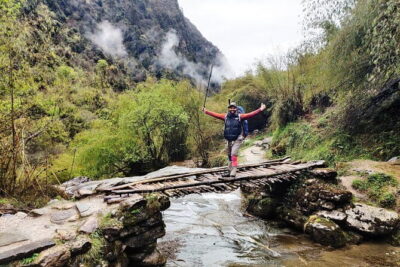
The walking begins with a 6 to 7-hour day toward Dharapani. You cross a suspension bridge after Chamje, pass through oak forest, and enter a narrow gorge where waterfalls pour down the cliffs.
Tal is one of the memorable stops. The village sits at the foot of a large waterfall at about 1,700 meters. You also pass mani stones and walls, where local custom asks you to walk on the left side. These details matter because this trek is not only about mountain views. The trail moves through living villages with customs you should notice and respect.
The next day to Chame brings a gentler climb through Bagarchap, Danakyu, and Temang. Annapurna II comes into view, while the Manaslu Range appears behind you when you look back. Pine and fir replace much of the lower forest, and apple orchards begin to appear near Thanchok and Koto.
This is a good early section for settling into the rhythm of the trek. The walking days are substantial, but the altitude gain is still manageable compared with what lies ahead.
Chame to Manang: the trail turns dry and high
From Chame to Pisang, the route runs through blue pine and fir forest beside the river. Brathang offers an unusual historical note, having once served as a base for Tibetan resistance fighters opposing Chinese control of Tibet. Today, the scene is quieter, with apple orchards and tea houses.
The trail then clings to a cliff before crossing a bridge beneath the huge rock face of Mui Tscho, also known as Paunde Danda. The rock rises about 1,500 meters from the valley floor. After a steep forest climb, the setting changes quickly as you reach Upper Manang.
The following day to Manang is one of the finest walking days. The upper Manang area lies in the rain shadow of the Annapurna Range, so the air and ground become noticeably drier. You pass fields, yak country, and villages with a Tibetan influence.
The northern route through Upper Pisang, Ghyaru, and Ngawal takes more effort than the lower route near Hongde. The reward is better mountain scenery. I like that the plan chooses the higher route, but you should know that extra climbing matters after several walking days.
Another trail to compare in Kathmandu:
- Everest Base Camp Trek – 14 Days
★ 5.0 · 1,499 reviews - Everest Base Camp Trek
★ 5.0 · 842 reviews - Everest Base Camp Trekking
★ 5.0 · 485 reviews - Everest Base Camp Trekking – 13 Day
★ 5.0 · 365 reviews
Manang acclimatization: do not treat it as a rest day
You spend day seven in Manang, and this is one of the most important parts of the trip. The plan suggests short walks to higher ground, with Bodzo Gompa and Gangapurna Lake as possible outings.
I would keep the day active but easy. You are preparing for a rapid rise in altitude over the next two days. The Himalayan Rescue Association has a presence in Manang during trekking seasons, with volunteer Western doctors working there, but that should not encourage careless pacing.
Altitude illness can affect strong, fit people. Eat, drink, walk slowly, and tell your guide if you develop symptoms. Do not assume that a good level of fitness protects you from altitude problems.
Khangsar and Tilicho Base Camp: the demanding side route
After Manang, the trek leaves the main valley and heads west toward Khangsar. You cross the river and walk through conifer forest. One section follows a steep, exposed scree slope, so this is not a casual village stroll.
The route then continues toward Tilicho Base Camp. A monastery appears along the way, and a newer trail avoids the steepest section of the old scree route. The newer path climbs to a high crest before dropping by switchbacks into a side valley.
This day can take about seven hours. The terrain is rough, and the scenery becomes more severe. The building at the bottom of the valley is Tilicho Base Camp, your staging point for the lake.
The new route is a practical advantage, but it does not make this section easy. You still need steady footing, warm layers, and patience on loose ground.
Tilicho Lake: the trip’s high point
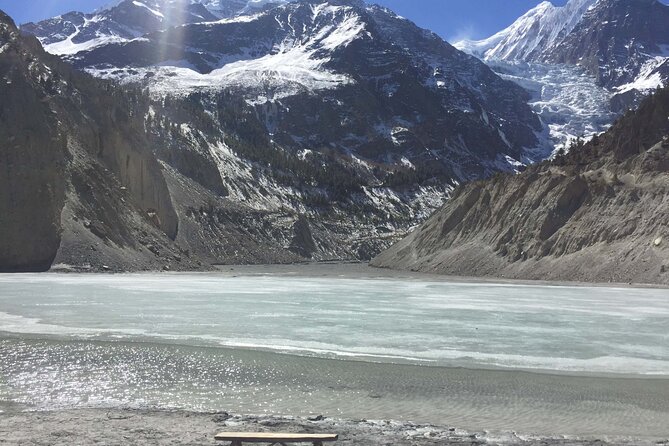
The walk from base camp to Tilicho Lake takes about seven hours. The path climbs through loose scree and boulders toward the lake, with steep sections that demand concentration.
The route description includes a glacier without crevasses, followed by saddles and a faint path above the lake. This wording signals a serious mountain environment rather than a polished path. Conditions can change, and your guide’s judgment matters here.
The lake itself is the emotional high point of the trek. It sits in a stark, high setting beneath Himalayan peaks, far removed from the green lower valleys. You then return toward Kangsar and rejoin the main route.
This side trip is the main reason to choose this itinerary over a standard Annapurna Circuit. It adds effort and a difficult day, but it also gives the journey a clear sense of purpose.
Yak Kharka to Thorong Phedi: saving energy for the pass
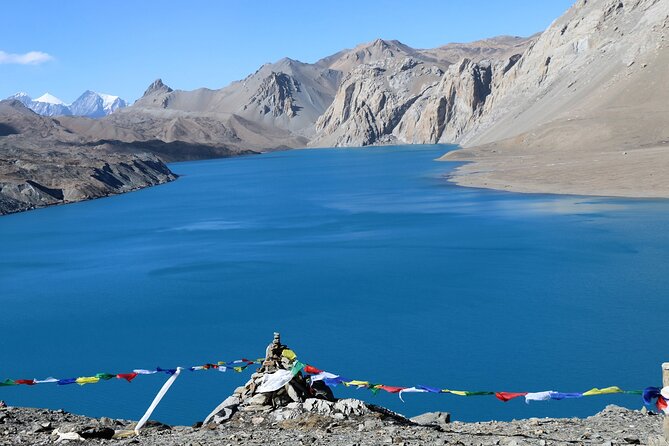
From the Tilicho area, you descend to Kangsar and continue toward Yak Kharka. Mani walls, a meadow, a small river, and a wooden bridge mark this section. The advice here is sound: climb gradually.
The following day leads to Thorong Phedi in about three to four hours of walking. Thorong Phedi is a small, busy settlement serving people preparing for the pass. Some walkers push higher to Thorong High Camp, but this program chooses to sleep at Phedi instead.
That choice makes sense. High Camp might shorten the next day, but sleeping higher can make acclimatization harder. A shorter night at lower elevation is often more useful than chasing a few hours of saved walking.
Thorong La to Muktinath: the hardest day
You start early for Thorong La. The climb includes false summits, increasingly thin air, and a long pull toward the 5,416-meter pass. The walking time is listed at about six hours, though your pace and conditions will shape the day.
This is the day to forget about speed. Take short steps, keep your layers ready, and follow the trek leader’s pace. The views at the top reach across the high Himalayan terrain, but the pass is not a place to linger if you feel unwell.
The descent to Muktinath brings relief and a strong cultural shift. The temple is sacred to both Hindus and Buddhists, and the program allows a morning visit. You then continue down toward Ekley Bhatti and Jomsom.
The descent can be hard on knees, especially after the pass. Trekking poles are useful, and the advice to take one step at a time is worth following.
Marpha, Kalopani, and Tatopani: apples, wind, and hot springs
Marpha is known for apples and apple brandy. The route through the Kali Gandaki Valley also brings strong afternoon winds, so carry a face covering and a windproof jacket.
From Marpha, you pass Tukuche and get views toward Dhaulagiri icefall before continuing through Largung and Kobang to Kalopani. The walking is flatter here, but the day still offers plenty of mountain scenery.
Kalopani gives you views of Annapurna I. The next day drops more than 1,000 meters to Tatopani, passing Dana and the deep Kali Gandaki gorge. The lower elevation feels warmer, and the natural hot spring at Tatopani is a welcome way to ease tired legs.
This section gives the trek a welcome change of pace. You have high passes behind you, but you are not finished. The next day climbs hard toward Ghorepani.
Ghorepani and Poon Hill: a final climb with a big reward
The route rises from about 1,190 meters to Ghorepani at 2,780 meters. You pass villages including Ghare, Shika, Phalate, and Chhitre, with Magar and Gurung communities along the way.
The climb is long, around seven hours, and it arrives after the demands of Tilicho Lake and Thorong La. Plan for a slower afternoon and an early bedtime. You will need to rise before sunrise for Poon Hill.
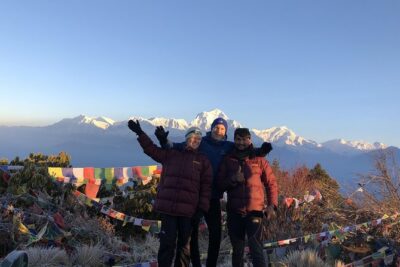
The climb to Poon Hill takes roughly 45 minutes to an hour. From the viewpoint, the sun comes up over the Annapurna range, with Dhaulagiri also in view. I like this ending because the panorama gives you a new angle on mountains you have been approaching for weeks.
After breakfast in Ghorepani, you continue toward Nayapul through Ulleri, Tikhedhunga, and Birethanti. A private vehicle then takes you to Pokhara.
What the $1,430 package covers
The package includes more than guiding. You receive an English-speaking government-licensed trek leader, an assistant trek leader based on group size, and one porter for every two trekkers. Staff wages, insurance, equipment, food, and accommodation are included for the support team.
Your permits include ACAP and TIMS paperwork. You also receive a medical kit carried by the trek leader, a down jacket, sleeping bag, duffel bag, T-shirt, and trekking map. The duffel bag, shirt, and map are yours to keep, while the sleeping bag and down jacket are returned after the trip.
Two Kathmandu hotel nights with breakfast, one Pokhara hotel night with breakfast, airport transfers, the Kathmandu to Syange transfer, the Nayapul to Pokhara vehicle, and the Pokhara to Kathmandu tourist bus are included. Welcome and farewell dinners are also part of the package.
You still pay for international flights, the Nepal visa, insurance, personal equipment, hot showers, WiFi, cold drinks, tips, and most meals during the trek. The listed visa fees are $40 for a 30-day multiple-entry visa and $100 for 90 days, with passport photos required.
The biggest budgeting point is food. Breakfast, lunch, and dinner during the trek are listed as excluded, so ask for the exact meal arrangement. That detail can change the real cost more than you might expect.
Who should book this trek?
I would recommend it to a fit walker who wants a full Himalayan route rather than a short viewpoint trip. You need to be comfortable with several 5 to 8-hour walking days, rough paths, suspension bridges, steep climbs, and high altitude.
It suits someone who values variety. You get villages, monasteries, forests, apple orchards, dry valleys, a high lake, a major pass, a hot spring, and sunrise from Poon Hill.
It is less suitable if you want a relaxed holiday with predictable roads and comfortable hotels every night. Most nights are in local lodges, hot showers and WiFi cost extra, and the route includes exposed scree and a very high pass.
The group limit of 12 is sensible. It is large enough to share the experience but small enough for guides to keep track of pace and condition. One past trip was managed by Himal, who was praised for keeping the itinerary organized and handling a weather delay with support. Staff names can change, so confirm your trek leader before departure.
Should you book the Annapurna Tilicho Lake Trek?
Book it if Tilicho Lake and Thorong La are your priorities and you want Poon Hill added at the end. The strongest features are the route variety, organized support, useful Manang acclimatization day, and included permits and gear.
Pause if you are not ready for altitude or if you have not budgeted for meals, insurance, equipment, and extra lodging. Before booking, ask for a current itinerary, confirm which breakfasts and hotel nights are included, and get the daily meal costs in writing.
Cancellation is free up to 24 hours before the local start time. The group can include up to 12 people, pickup is offered, and confirmation is provided at booking.
FAQ
How long does the Annapurna Tilicho Lake Trek take?
The complete Nepal program takes approximately 20 days, including arrival in Kathmandu, trekking, transport to Pokhara and Kathmandu, and departure. The walking portion is also described as a 17-day journey in the itinerary details.
What is the highest point on the trek?
The highest point is Thorong La Pass at 5,416 meters. Tilicho Lake is also reached at high altitude, and the itinerary includes a full acclimatization day in Manang before the high sections.
Is airport pickup included?
Yes. A representative meets you at Tribhuvan International Airport in Kathmandu and transfers you to your hotel in a private vehicle.
What equipment is provided?
A down jacket, sleeping bag, trekking duffel bag, T-shirt, and trekking map are provided. The sleeping bag and down jacket must be returned after the trek, while the duffel bag, T-shirt, and map are yours to keep.
Are trekking permits included?
Yes. The package includes the Annapurna Conservation Area Permit, known as ACAP, and TIMS paperwork. Government and local taxes are also included.
Are meals included during the trek?
Most breakfast, lunch, and dinner costs during the trek are listed as excluded. Some breakfasts are included in the package, so confirm the exact meal plan and any included hotel breakfasts before booking.
How large is the group?
The maximum group size is 12 people. The support plan includes an experienced English-speaking licensed trek leader, assistant trek leader arrangements, and one porter for every two trekkers.
Can I cancel for a full refund?
You can receive a full refund if you cancel at least 24 hours before the experience start time. Cancellations or changes made less than 24 hours before the local start time are not accepted for a refund.
Latest treks added in Kathmandu
- Private Manaslu Circuit Trek at Himalayas★ 5.0 · 3 reviews
- Ghorepani Poonhill Trek★ 5.0 · 5 reviews
- Ghorepani Poon Hill Trek★ 5.0 · 16 reviews
- Upper Mustang Trekking★ 3.0 · 2 reviews
- Amazing 1 Day Trekking Experience in Kathmandu Nepal★ 5.0 · 24 reviews
- Upper Mustang Trekking★ 5.0 · 2 reviews
- Upper Mustang Trek★ 5.0 · 5 reviews
- Upper Mustang Trekking★ 5.0 · 4 reviews
Annapurna Base Camp Treks, compared.

Trekking in Annapurna/Langtang/Everest/Upper Mustang regions
Read our review →
Kathmandu to Annapurna Base Camp (ABC) 5-Day Trek
Read our review →Browse the lists this tour appears in