
REVIEW · KATHMANDU
Annapurna Circuit Trekking: 15 days
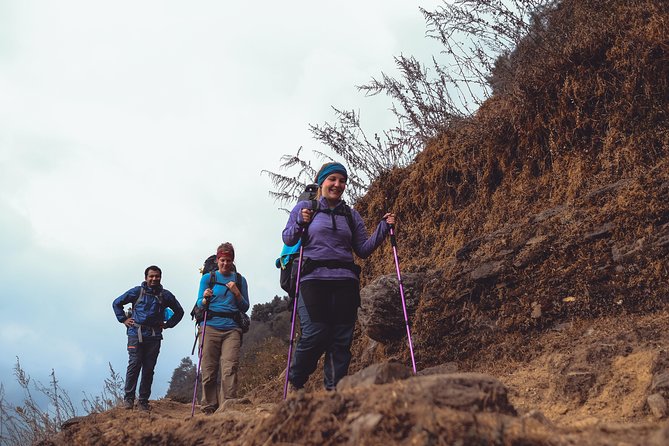
The big draw is the Thorong La crossing at 5,416 meters, reached after a steady climb through villages, pine country, dry high valleys, and the Manang region. You also get a sharp change of scenery on the way down to Muktinath and Tatopani, rather than simply retracing your steps.
I like two things right away: the route gives you both mountain views and local culture, and the private format allows your group to receive direct attention from the guide. The package also covers three daily meals, private transport, permits and taxes, plus hotel stays in Kathmandu and Pokhara. The catch is the altitude. This is a serious trek, not a scenic stroll, and the schedule leaves little room for delay.
Key points before you book
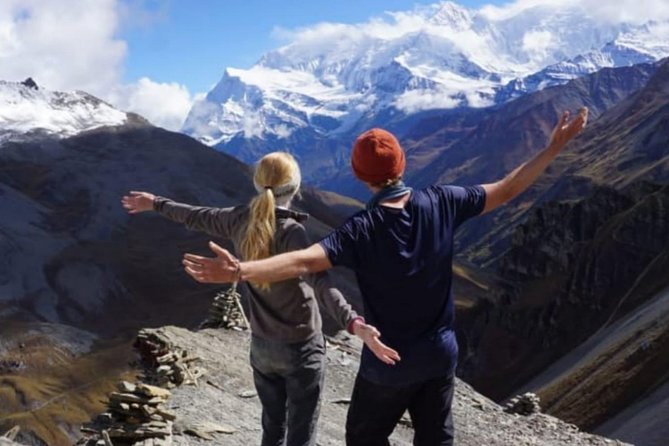
- Thorong La is the main test: You reach 5,416 meters on Day 13, after sleeping at high altitude near Thorong Phedi.
- The route begins low: Khudi sits at about 800 meters, giving you time to gain height over several trekking days.
- Manang provides the key rest day: Day 10 is set aside for acclimatization before the final climb.
- The private format matters: Only your own group takes part, with a professional guide and private transport.
- Meals are built in: Breakfast, lunch, and dinner are included during the organized trek, while drinks and city meals are extra.
- The finish changes pace: After Muktinath, you ride to Tatopani, then continue to Pokhara rather than walking the full return route.
Why the Annapurna Circuit still earns its reputation
The Annapurna Circuit works because the scenery keeps changing. You begin around Kathmandu at 1,330 meters, drive toward the lower hills, and then walk gradually upward through settlements and mountain valleys. By the time you reach Manang, the air, architecture, vegetation, and views feel very different from the start.
The route circles the Annapurna region rather than taking you to one single viewpoint. You get views toward the Annapurna Massif and Dhaulagiri Range, along with high passes, deep river valleys, and the Kali Gandaki area, known for its great depth between mountain ranges.
The cultural side is just as important. The itinerary passes through villages where you can observe local homes, farming patterns, religious traditions, and daily routines. This is not a resort-style mountain holiday. Much of the appeal comes from walking from place to place and seeing how life changes with altitude.
I also like the contrast between the formal sightseeing day in Kathmandu and the slower rhythm of the trek. You see four major cultural sites before leaving the city, then trade traffic and temples for footpaths and mountain settlements.
More Annapurna Treks in Kathmandu
- Annapurna Circuit Trek with Tilicho Lake
★ 5.0 · 368 reviews - Annapurna base camp trek 5 Days
★ 5.0 · 252 reviews - 14-Day Private Annapurna Base Camp Trek
★ 5.0 · 180 reviews
Kathmandu begins with temples, stupas, and practical preparation
Day 1 is simple. You are collected at the airport by private car and taken to Hotel Dream City. That private transfer is useful after an international flight, especially if this is your first visit to Kathmandu and you are not yet familiar with Thamel or the city roads.
Day 2 gives you about seven hours of sightseeing by private car with a professional guide. The planned stops are Pashupatinath, Boudhanath, Swayambhunath, and Kathmandu Durbar Square.
Pashupatinath is one of the most important Hindu religious sites in Nepal. Boudhanath gives you a different atmosphere, centered on a large Buddhist stupa. Swayambhunath sits above the city, while Kathmandu Durbar Square brings you into the historic core of the capital.
The value of this day is not only sightseeing. It gives you context before you head into the mountains, and the private car keeps the schedule manageable. At the same time, seven hours is a full city day. If you arrive tired or want more time to organize equipment, this may feel busy.
Your two Kathmandu hotel nights are included. Extra nights, additional activities, city meals, and drinks are not.
Days 3 to 6: From Khudi into the lower circuit
Day 3 is mostly a driving day. The journey to Khudi takes about eight hours and drops you into the starting area at around 800 meters. Expect road time rather than walking time here, so anyone who dislikes long drives should pay attention to this part of the plan.
The trek begins on Day 4 with the walk to Sirung at about 2,200 meters. The listed walking time is seven hours. This is your first real test, but the gradual increase in elevation is useful. You are not being taken straight from Kathmandu to a high camp.
Day 5 leads to Jagat at approximately 1,300 meters and takes six to seven hours. The elevation figure is lower than Sirung, which shows that the route does not climb in a perfectly straight line. Mountain trails often rise and fall, and a lower overnight stop does not mean the day is unimportant.
Day 6 continues to Dharapani at 1,960 meters, with seven to eight hours on foot. This is another long day. You should think of the first trekking section as a conditioning period. The hours are substantial even before the high-altitude days begin.
The lower section is valuable because it introduces you to the pace of the circuit. You walk for several hours, eat at the end of the day, and repeat the routine. The itinerary includes breakfast, lunch, and dinner, which reduces the need to arrange meals independently.
Days 7 to 9: Chame, Pisang, and Manang
From Dharapani, Day 7 takes you to Chame at 2,710 meters. The walk lasts five to six hours. Chame is an important stop because the route is now clearly moving into higher mountain country.
Day 8 continues to Pisang at 3,300 meters, again taking five to six hours. The elevation begins to matter more here. You may find the same walking distance feels harder than it did near Khudi, simply because there is less oxygen at altitude.
Day 9 brings you to Manang at 3,519 meters after six to seven hours. This is one of the important settlements on the route and the last major planned base before the higher camps. Manang is not just another overnight stop. It is where the itinerary pauses to let your body adjust.
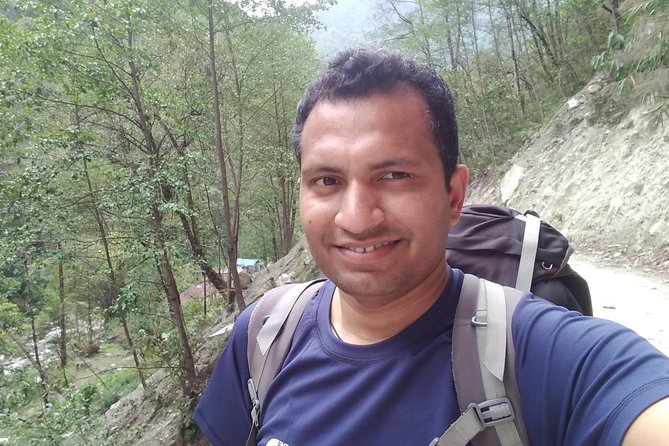
The guide becomes especially important in this section. The company has been associated with guides named Ram, Dendi, and Shiva, and the strongest praise connected to the service focuses on care, safety, reliability, and support. You should still ask at booking who will lead your particular departure. The supplied information does not guarantee a specific guide for every date.
Another trail to compare in Kathmandu:
- Everest Base Camp Trek – 14 Days
★ 5.0 · 1,499 reviews - Everest Base Camp Trek
★ 5.0 · 842 reviews - Everest Base Camp Trekking
★ 5.0 · 485 reviews - Everest Base Camp Trekking – 13 Day
★ 5.0 · 365 reviews
Day 10 in Manang is not wasted time
The rest day in Manang is one of the smartest parts of the schedule. It gives you a break after the climb from Khudi and time to adjust before walking above 4,000 meters.
Do not treat this as a throwaway day. The circuit’s hardest section is still ahead, and rushing through Manang can make the final approach more difficult. The itinerary does not specify a particular rest-day activity, so you should confirm how your guide handles the day and what options are available.
This is also where the private format has practical value. A guide can pay attention to how you are coping and discuss the next section with you. That does not remove the risks of altitude, but it can make the decision-making more personal than it would be in a large group.
Days 11 and 12: The high camps near Thorong La
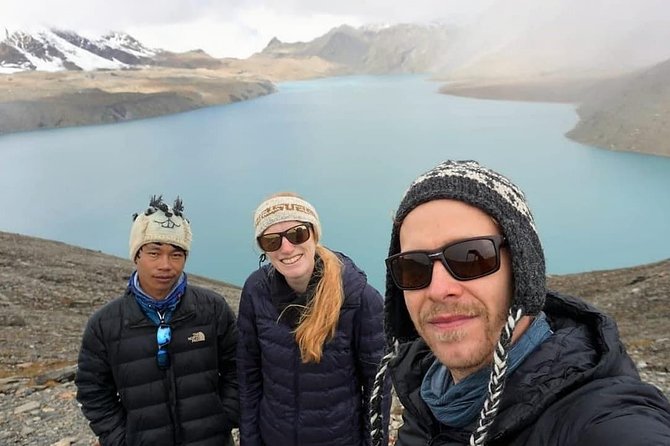
Day 11 is a shorter walking day by distance and time, with about four hours to Yak Kharka at 4,110 meters. Do not let the shorter schedule fool you. At this height, even a modest walk can feel demanding.
Day 12 takes about four hours to Thorong Phedi at 4,600 meters. This is the staging point for the pass crossing. The high overnight stop means you are close to the main challenge, but it also places you in thin air.
The itinerary lists the next day as a six to seven-hour walk from Thorong Phedi, over Thorong La, and down to Muktinath. That is a big day. Your moderate physical fitness should include comfort with long uphill and downhill walking, not just general gym fitness.
The package does not include personal extras such as hot water, showers, laundry, batteries, charging, extra porters, or personal drinks. Those costs can become more noticeable at high camps, so carry some Nepalese rupees and ask what is available at each stop.
Day 13: Thorong La and the descent to Muktinath
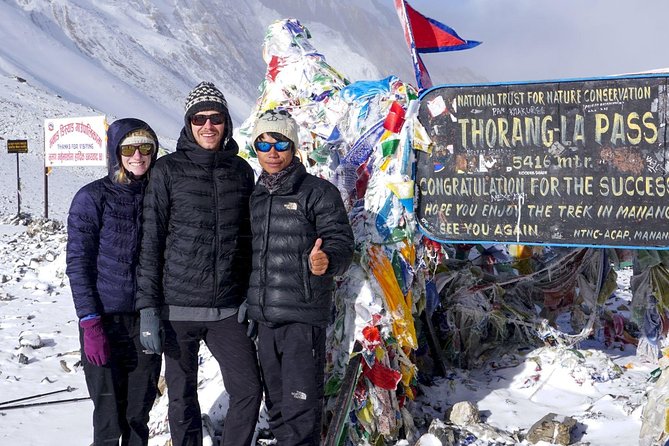
Thorong La, at 5,416 meters, is the defining point of this itinerary. You leave the high camp, climb to the pass, and then descend toward Muktinath. The scenery here is the reason many people accept the physical effort of the circuit.
The pass is also where you need to be realistic. Weather and altitude can affect the schedule, and the experience requires good weather. If poor conditions force a cancellation, the stated policy offers a different date or a full refund. Any decision to change the route should be made with your guide and the operator, not by treating the pass as a box to tick.
Muktinath changes the mood again. After the stark high pass, the descent brings you toward a famous pilgrimage area and the drier side of the Annapurna region. The itinerary does not specify sightseeing time in Muktinath, so your main focus is reaching the town safely after a long day.
Several people connected with this operator have completed the high pass with help from guides and porters, including a porter named Susan in one account. The useful lesson for you is simple: speak up early if you feel unwell, tired, or unsure. Support is most useful before a problem becomes urgent.
Days 14 and 15: A road transfer to Tatopani and Pokhara
Day 14 replaces more walking with a drive to Tatopani at about 1,200 meters. The rapid drop in elevation can feel welcome after Thorong La, and Tatopani marks another major change in climate and scenery.
This transfer also reveals the tradeoff built into a 15-day circuit. The route is shorter than a fully traditional walking circuit because road transport covers part of the return. You see the major high section, but you do not walk every mile around the region.
On Day 15, you continue from Tatopani to Pokhara. The package includes two hotel nights in Pokhara at Crystal Palace Hotel, although the day-by-day outline says Tatopani to Pokhara on Day 15. You should confirm the exact transfer timing and number of nights when booking, since the summary and itinerary do not spell out every overnight detail.
Pokhara is a sensible finish. It gives you a softer landing after the mountains, though meals, drinks, and activities in the city are excluded.
What the $1,300 price really covers
At $1,300 per person, the value depends on how much support you want. The price includes private transportation, a professional guide, all stated fees and taxes, three meals a day during the organized trek, two nights at Hotel Dream City in Kathmandu, and two hotel nights at Crystal Palace Hotel in Pokhara.
That is a solid package for someone who wants a guided route rather than arranging every transfer and meal alone. The private format is another advantage. Only your group participates, so the pace and conversations are not shaped by a large mixed party.
You still need to budget for Nepal visa fees, international and domestic flights, travel insurance, drinks, meals in the cities, tips, extra accommodation, and personal expenses. Recharge cards, batteries, chargers, hot water, showers, laundry, and extra porters are also outside the listed inclusions.
The most important missing item is travel insurance. You should have cover suitable for a high-altitude trek, though the supplied details do not state any specific insurer or coverage level. You should also ask whether the quoted price includes every permit and trekking-related fee for your departure, even though the package says all fees and taxes are included.
Who should choose this trek
I would point this trip toward someone who wants the classic Annapurna route but prefers a private setup and a fixed plan. It suits you if you are comfortable walking six to eight hours on several days, handling long vehicle transfers, and accepting basic mountain accommodation and paid extras.
It is not the right pick if you want a relaxed holiday with short walks. The itinerary reaches 5,416 meters, and the approach includes several demanding days. Moderate fitness is the stated minimum, but you should prepare for sustained uphill and downhill walking.
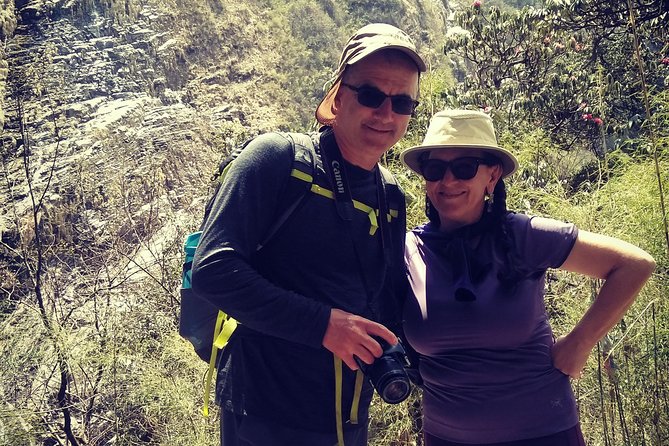
The route may also suit couples or small family groups who want personal guidance. One account involved a previous Annapurna Base Camp trip with a son and a later circuit trip with a wife, showing that the operator has handled different kinds of private groups. Still, age and fitness alone do not predict how you will respond to altitude.
The company has also helped arrange alternative plans when a participant could not complete the circuit, including routes involving Chitwan, Pokhara, and Gorkha. That flexibility is reassuring, but you should not assume an alternative program is included automatically. Ask what happens if you must stop walking and what extra costs could apply.
Small practical details that matter
The start time shown is 6:15 a.m. That may apply to the first transfer or a particular departure activity, so confirm the exact pickup time for your date.
Confirmation is provided at booking, and service animals are allowed. The activity is private rather than a public group departure, which is useful if you want your own pace and direct contact with the guide.
Free cancellation is available up to 24 hours before the start time for a full refund. Cancellations or changes inside that window are not accepted, and poor weather may lead to a different date or full refund. Cutoff times follow local Nepal time.
Should you book the Annapurna Circuit Trek?
Book it if you want a high-altitude Himalayan route with strong logistical support, private transportation, included meals, and a guide-led crossing of Thorong La. The mix of villages, mountain views, Kathmandu sites, Manang acclimatization, and Muktinath gives you much more than a single mountain viewpoint.
Think twice if you dislike long drives, basic conditions, or strict walking days. Before paying, confirm the assigned guide, hotel-night count, meals on transfer days, accommodation in the trekking villages, and the plan if altitude or weather stops you at Thorong Phedi.
For the right walker, $1,300 is a reasonable price for the amount of transport and support included. Just remember what you are buying: not comfort at every step, but a carefully organized chance to cross one of Nepal’s great high passes.
FAQ
How long is the Annapurna Circuit Trek?
The experience lasts approximately 15 days, beginning with arrival in Kathmandu and ending with travel from Tatopani to Pokhara.
What is the highest point of the trek?
The route reaches Thorong La Pass at 5,416 meters.
Is a rest day included?
Yes. Day 10 is a rest day in Manang at about 3,519 meters.
Are meals included?
Breakfast, lunch, and dinner are included. Drinks such as water, tea, coffee, beer, and soft drinks are not included.
Is transportation included?
Yes. Private transportation is included, including the airport transfer, Kathmandu sightseeing vehicle, the drive to Khudi, and the later transfers toward Tatopani and Pokhara.
What is the cancellation policy?
You can cancel at least 24 hours before the experience begins for a full refund. Changes or cancellations made less than 24 hours before the start time are not accepted, and poor weather may lead to another date or a full refund.
Latest treks added in Kathmandu
- Private Manaslu Circuit Trek at Himalayas★ 5.0 · 3 reviews
- Ghorepani Poonhill Trek★ 5.0 · 5 reviews
- Ghorepani Poon Hill Trek★ 5.0 · 16 reviews
- Upper Mustang Trekking★ 3.0 · 2 reviews
- Amazing 1 Day Trekking Experience in Kathmandu Nepal★ 5.0 · 24 reviews
- Upper Mustang Trekking★ 5.0 · 2 reviews
- Upper Mustang Trek★ 5.0 · 5 reviews
- Upper Mustang Trekking★ 5.0 · 4 reviews
Annapurna Base Camp Treks, compared.
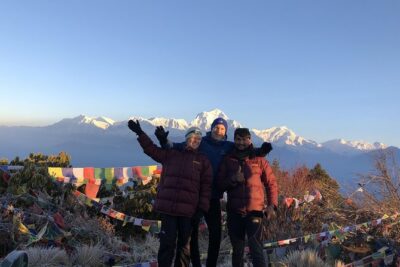
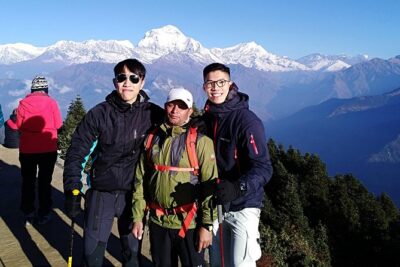
Trekking in Annapurna/Langtang/Everest/Upper Mustang regions
Read our review →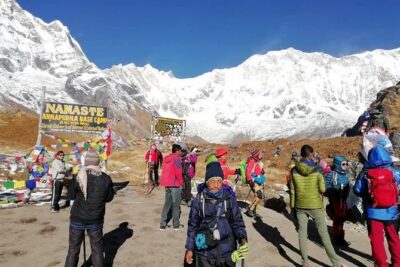
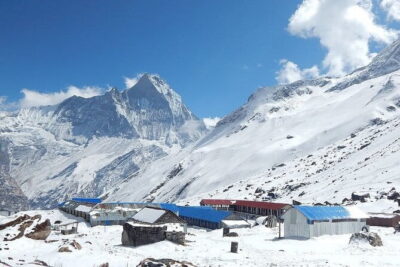
Kathmandu to Annapurna Base Camp (ABC) 5-Day Trek
Read our review →Browse the lists this tour appears in