
REVIEW · KATHMANDU
Annapurna Circuit Trek
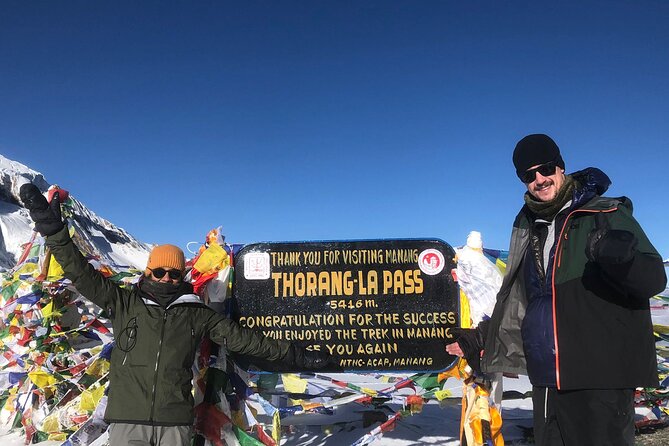
Thorong La is the big prize here: at 5,416 meters, it gives the Annapurna Circuit a serious high-mountain challenge, while the route below moves through villages, dry valleys, pilgrimage sites, and the Kali Gandaki gorge. I like the way this trip pairs demanding walking with cultural stops such as Muktinath and Marpha, rather than treating Nepal as a parade of mountain views.
I also like the practical support. Airport pickup, Kathmandu hotel nights, sightseeing, permits, and airport drop-off are included, and the group is limited to 10 people. Guides including Sudam, Binod, Pasang, and Raju have been praised for care, flexibility, and clear help on the trail. The main caution is simple: this is a high-altitude trek, not a soft sightseeing holiday, and the 18-day schedule requires solid fitness and patience with mountain transport.
Key points to know before you book
- Thorong La reaches 5,416 meters: altitude, cold, steep paths, and changing weather make this the trek’s hardest test.
- Muktinath adds spiritual meaning: the holy temple sits at 3,410 meters below the pass and gives the route a strong cultural focus.
- The scenery keeps changing: Manang, Marpha, Ghorepani, Poon Hill, and the Kali Gandaki gorge each offer a different view of the Annapurna region.
- The route includes a bus ride: you travel from Kathmandu to Besisahar before beginning the main trek.
- Support is built into the price: ACAP and TIMS permits, Kathmandu lodging, transfers, and the planned program are included.
- The group stays small: no more than 10 people, which matters when the trail gets tiring and plans need adjusting.
Why this 18-day Annapurna route feels like a real journey
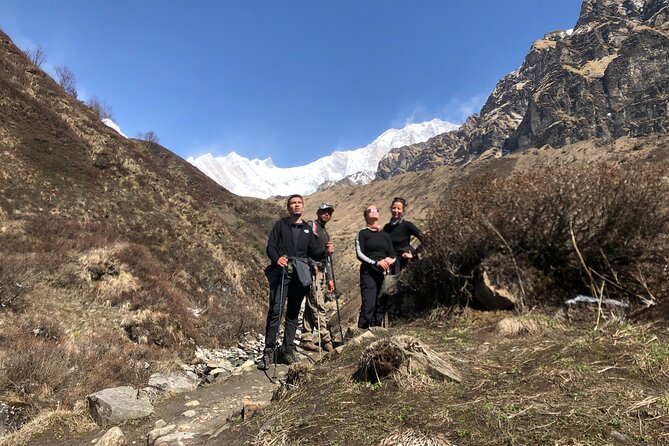
I like the Annapurna Circuit because it is not just a walk toward one viewpoint. You move from the Kathmandu Valley to Besisahar, then through changing climates and communities before reaching the high pass. After that, the route turns toward pilgrimage sites, apple-growing villages, hot-spring country, and the hills around Pokhara.
That variety gives you something to look at even on days when the mountains are hidden. You may be walking through a dry, broad valley near Manang one day, then among greener hills and stone stairways near Ghorepani later in the trip. The route also brings you into contact with several ethnic communities and with people from many countries, so the social side of the trek is part of the experience.
The listed duration is about 18 days. One published account also describes a 15-day version that added Tilicho Lake and Poon Hill, so exact timing can vary by arrangement. I would confirm the final day-by-day plan before paying, especially if you want extra side trips or a shorter schedule.
More Annapurna Treks in Kathmandu
- Annapurna Circuit Trek with Tilicho Lake
★ 5.0 · 368 reviews - Annapurna base camp trek 5 Days
★ 5.0 · 252 reviews - 14-Day Private Annapurna Base Camp Trek
★ 5.0 · 180 reviews
Kathmandu preparation and the road to Besisahar
The trip begins with airport pickup and a transfer to a 3-star level hotel in Kathmandu. That is useful after a long flight. You do not have to work out your first taxi, find the office, or arrange your first night alone.
Kathmandu sightseeing by car is included before the mountain section. The supplied details do not name each sight, so ask for the exact sightseeing plan when you book. This part is less about physical challenge and more about getting organized, meeting your guide, and checking that you have what you need for the trek.
Then comes the scenic bus ride from Kathmandu to Besisahar. Calling it scenic does not mean it will be quick or polished. Mountain roads can take time, and a bus transfer is less comfortable than a private vehicle. Still, this overland start gives you a sense of the distance between the capital and the walking route.
Besisahar is the practical gateway to the circuit. From here, the trip shifts from road travel to trekking. Because all the major program arrangements are handled in advance, you can focus on your pace rather than sorting permits and transport at each turn.
Manang and Yak Kharka: gaining height carefully
Manang is one of the route’s key villages. It gives you a strong sense of the high Himalayan setting, with mountain views and a more austere environment than Kathmandu or the lower valleys. The trip description specifically places Manang among the important stops, so expect it to be more than a quick pass-through.
Yak Kharka is another important point because it brings you farther into the high country. The views toward Annapurna and Dhaulagiri are part of the appeal, but the altitude is the issue you must respect. Even if you are fit, the thin air can make an ordinary walking day feel much harder.
I would treat the approach to Thorong La as a test of judgment, not just stamina. Walk steadily, listen to your guide, and do not turn every uphill stretch into a race. The company’s guides are repeatedly described as supportive and flexible, with names such as Sudam, Binod, Jayaram, and Pasang appearing in past departures. Your own guide may differ, but the important point is to use that support early if you feel unwell.
The inclusion of porters is also meaningful. The people who praised guides and porters often singled out their care and hard work. You should still pack responsibly and keep your daypack manageable, but porter support can make the difference between enjoying the walk and merely surviving it.
Thorong La at 5,416 meters
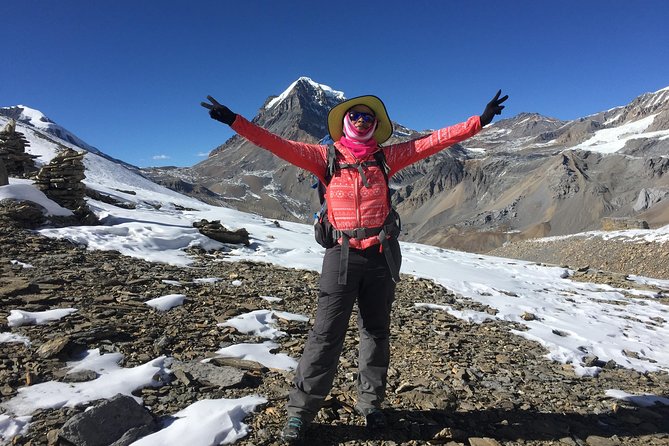
Thorong La is the clearest reason to choose this version of the Annapurna Circuit. At 5,416 meters, it is the highest point of the trek and the day that demands the most from your body.
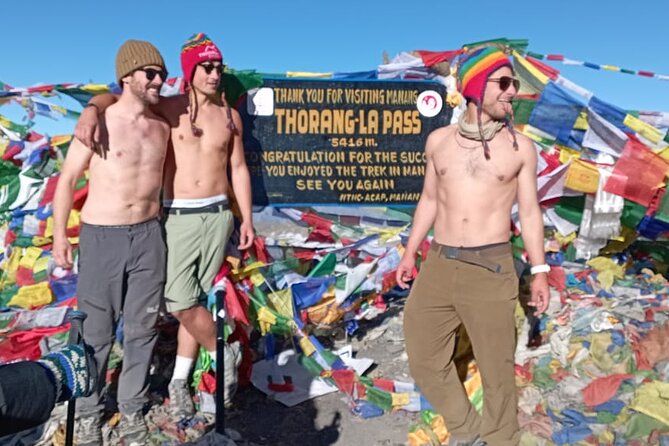
The pass is not a casual photo stop. Expect steep and rocky walking, cold conditions, and the need to move at a measured pace. The tour information says you need moderate physical fitness, but I would interpret that conservatively. You should be comfortable walking for several hours on uneven mountain paths and managing several demanding days in a row.
The reward is the sense of crossing from one side of the Annapurna region to another. From the high route, you may see Annapurna and Dhaulagiri, with the stark scenery changing as you descend. The mountain views from Thorong La, Yak Kharka, and Muktinath are specifically highlighted, so keep your camera ready, but do not let photographs distract you from footing or weather.
Poor weather can affect the schedule. If the experience is canceled because of bad weather, you are offered another date or a full refund. That policy is useful, but it does not remove the need for flexibility during the trek itself. Mountain conditions can shape walking plans even when the entire tour is not canceled.
Another trail to compare in Kathmandu:
- Everest Base Camp Trek – 14 Days
★ 5.0 · 1,499 reviews - Everest Base Camp Trek
★ 5.0 · 842 reviews - Everest Base Camp Trekking
★ 5.0 · 485 reviews - Everest Base Camp Trekking – 13 Day
★ 5.0 · 365 reviews
Muktinath, a pilgrimage stop below the pass
Muktinath brings a different tone to the route. The temple is one of Nepal’s holiest sites and sits at 3,410 meters, at the base of the Thorong La area. It is described as a Shakti Peeth, a source of primordial energy, which explains why the site matters far beyond its mountain setting.
You do not visit Muktinath simply to tick off another village. It is a living religious place, and you should approach it with respect. The contrast is part of its power: after a demanding high pass, you reach a site where pilgrimage, local belief, and the trek itself come together.
The altitude remains significant here. Reaching Muktinath does not mean the physical work is finished, so conserve energy and keep your expectations realistic. The reward is a meaningful cultural pause and a change in scenery as the route moves toward the Kali Gandaki valley.
Marpha and the Kali Gandaki gorge
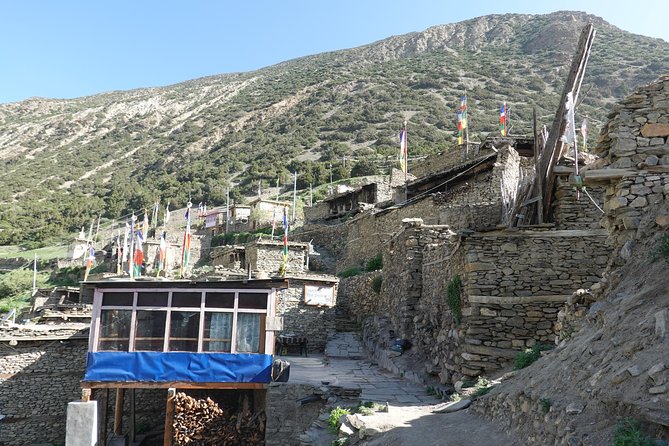
Marpha is among the most appealing village stops named in the program. It gives the route a more settled, village-based character after the high pass. The area is associated in the itinerary with the Kali Gandaki route, and the valley is one of the places where the circuit feels especially varied.
The Kali Gandaki gorge is promoted as the world’s deepest gorge. The supplied information does not provide measurements or a precise viewpoint, so I would not book this trip solely for one formal gorge overlook. Instead, think of it as a long stretch of dramatic valley travel, with large mountains and steep sides shaping the journey.
This section may feel easier than Thorong La, but it is not a throwaway portion. The appeal is in the transition. You see how quickly the setting changes after the high pass, and you get more time to notice villages, local life, and the route itself rather than focusing only on altitude.
Ghorepani and Poon Hill sunrise
The later part of the trek includes Ghorepani and Poon Hill, along with Tikhedhunga, Ulleri, and Nayapul. These are also associated with the Annapurna Base Camp approach, so this circuit gives you a taste of the famous lower Annapurna trekking country without being limited to that one valley.
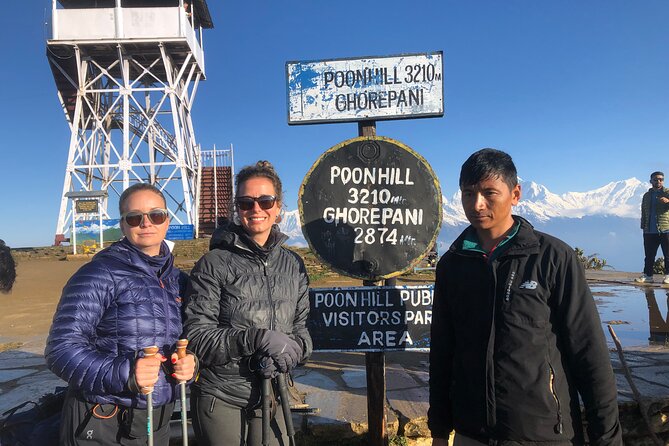
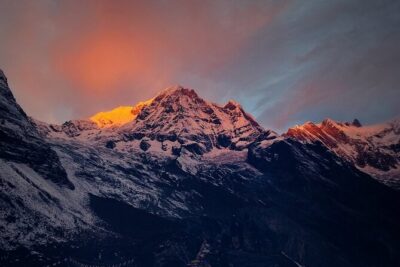
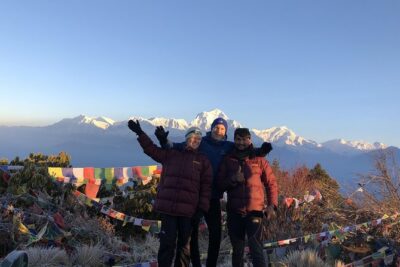
Poon Hill is the morning highlight. The sunrise over the mountains can be memorable, especially when visibility is clear. The tour information calls it a mesmerizing sunrise, and that is the right expectation: the reward depends heavily on weather, but a clear morning can bring a fine sweep of Annapurna and Dhaulagiri.
You should not assume Poon Hill is effortless because it comes after the high pass. The return section still includes walking and, in places, stairways. Ulleri and Tikhedhunga are named as part of the route, so expect a physical finish rather than a gentle stroll into the final stop.
I like having Poon Hill near the end. It gives the trek another scenic goal after Thorong La and keeps the final days from feeling like a long exit. It also lets you compare two different mountain experiences: the stark drama of a high pass and the softer morning views from a lower ridge.
Arriving in Pokhara
The route finishes in the beautiful valley of Pokhara. The supplied details do not specify the exact transport or final walking arrangements, so confirm how you will move from Nayapul or the last trail point into the city.
Pokhara is a welcome change after nearly three weeks of mountain travel. You can shift from trekking rhythm to a more relaxed city stay, but lunch and dinner in Pokhara are not included. Budget for those meals and for drinks, since all soft and alcoholic drinks are excluded from the package.
The airport drop-off is included, which gives the trip a clear ending. That is a small but useful benefit after a long trek, especially if your departure plans are tight.
What the $1,074.88 price really covers
At $1,074.88 per person, the value depends on what you want included. This is not simply a walking guide fee. The package covers airport pickup, transfer to a Kathmandu hotel, 3-star-level Kathmandu accommodation, car sightseeing in the capital, ACAP and TIMS permits, the planned itinerary, and airport drop-off.
That list removes several tasks that can be annoying to arrange independently. Permit handling matters because you do not have to sort out the Annapurna Conservation Area Project permit and TIMS card yourself. Airport transfers also add practical value, particularly if you are new to Nepal.
You still need to pay for lunch and dinner in Kathmandu and Pokhara, plus all drinks. The details do not clearly state how every trekking meal, mountain lodging night, transport segment, or porter arrangement is handled, so ask for a written inclusions list before booking. That is the best way to compare this price with another company.
A maximum of 10 people is another useful part of the value. A small group can make it easier to communicate with the guide, adjust the pace, and handle a tired hiker without holding up a large crowd. It does not guarantee a private trek, but it is a reasonable middle ground between a solo arrangement and a big group.
Guides, porters, and the human side of the trek
The strongest pattern in the available feedback is praise for the field staff. Sudam is described as professional, patient, and caring. Binod is praised for taking responsibility throughout the trip and for giving practical advice before arrival. Pasang is described as professional, helpful, and able to speak English and Chinese, while guides such as Jayaram, Rajesh, Raju, and others are also named in connection with positive departures.
You should not assume one particular guide will be assigned to you. The useful takeaway is to ask for your guide’s name, language ability, and role before departure. It is also worth confirming how many porters are included and what weight limit applies to each porter.
The management team, including Mr. Mani, is described as flexible with schedules and helpful with practical matters such as exchange and NCell arrangements. That can be valuable in Kathmandu, where a little local help saves time.
Still, a friendly operator does not change the demands of the route. You remain responsible for telling the guide when you are struggling, keeping track of your personal gear, and respecting local customs. Good support works best when you communicate clearly.
Who should book this Annapurna Circuit trek?
I would recommend it to you if you want one long Nepal trip that combines mountain walking, village life, religious sites, and a serious high pass. It suits people who prefer a planned program with transfers, permits, guides, and porters already arranged.
It is also a good fit if you value variety. Manang, Muktinath, Marpha, Ghorepani, Poon Hill, and Pokhara do not offer the same kind of experience, and that is the point. You get more than one classic viewpoint.
I would hesitate if you want a relaxed holiday, dislike rough roads, or have little experience with sustained walking. The official fitness advice says moderate ability, but Thorong La at 5,416 meters deserves respect. You should also be comfortable with changing weather and a schedule that may need adjustment.
Before booking, ask for the current itinerary, daily walking hours, accommodation details, porter terms, and the exact transport plan from Kathmandu to Besisahar and the final trail points. You can cancel for a full refund up to 24 hours before the start time. Changes or cancellations within 24 hours are not accepted for a refund.
Should you book it?
Book this trek if you want the full Annapurna story: a long approach, a high pass, a holy temple, changing mountain country, Poon Hill sunrise, and a finish in Pokhara. The included permits, transfers, Kathmandu stay, and small group size make the $1,074.88 price worth serious consideration.
Skip it if you want a short, low-effort mountain holiday. The real question is not whether the views are attractive. It is whether you are ready for the altitude, the long schedule, and the physical work needed to reach them.
FAQ
How long is the Annapurna Circuit Trek?
The listed duration is approximately 18 days. Exact timing can vary, so confirm the final itinerary before booking.
What is the highest point of the trek?
Thorong La is the highest point, at an altitude of 5,416 meters.
Is Muktinath included?
Yes. The program includes a visit to Muktinath Temple, which is located at approximately 3,410 meters.
Is airport pickup included?
Yes. Airport pickup and transfer to the Kathmandu hotel are included. Airport drop-off is also included at the end of the program.
Are permits included in the price?
Yes. The Annapurna Conservation Area Project permit and TIMS card are included.
Are meals and drinks included?
Lunch and dinner in Kathmandu and Pokhara are not included. Soft drinks and alcoholic drinks are also excluded.
How large is the group?
The activity has a maximum of 10 people. You should confirm the exact group size for your departure when booking.
Latest treks added in Kathmandu
- Private Manaslu Circuit Trek at Himalayas★ 5.0 · 3 reviews
- Ghorepani Poonhill Trek★ 5.0 · 5 reviews
- Ghorepani Poon Hill Trek★ 5.0 · 16 reviews
- Upper Mustang Trekking★ 3.0 · 2 reviews
- Amazing 1 Day Trekking Experience in Kathmandu Nepal★ 5.0 · 24 reviews
- Upper Mustang Trekking★ 5.0 · 2 reviews
- Upper Mustang Trek★ 5.0 · 5 reviews
- Upper Mustang Trekking★ 5.0 · 4 reviews
Annapurna Base Camp Treks, compared.

Trekking in Annapurna/Langtang/Everest/Upper Mustang regions
Read our review →
Kathmandu to Annapurna Base Camp (ABC) 5-Day Trek
Read our review →Browse the lists this tour appears in