
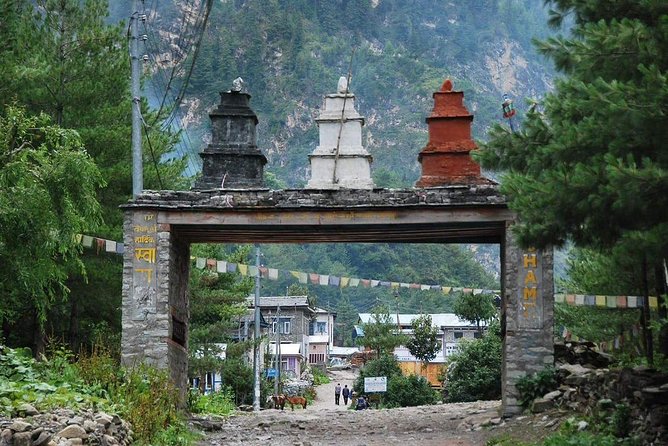
REVIEW · KATHMANDU
Annapurna Circuit Trekking -17 Days
The high point here is Thorung La Pass, reached after days of walking from the warm Marsyangdi Valley into thin, cold mountain air. You move through terraced farms, Buddhist villages, pine country, and the stark northern side of the Annapurna range, then descend toward Muktinath and the hot springs at Tatopani.
I like the steady change in culture and scenery, and I like that the $1,400 price covers permits, lodge meals, a licensed guide, staff costs, and most ground transport. The main caution is the physical demand: long days, high altitude, and a pass crossing at about 5,416 meters require real preparation.
Key points before you book
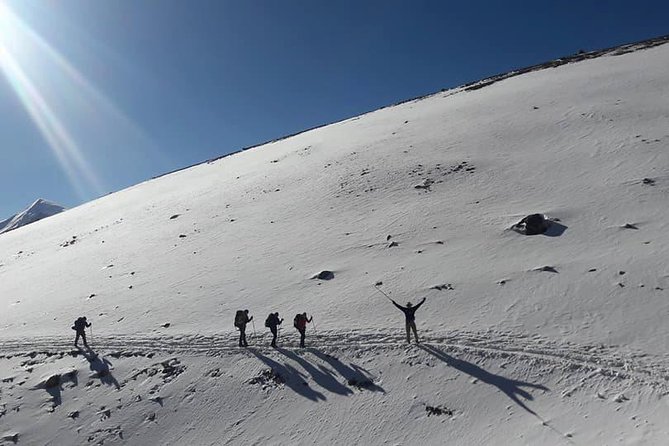
- Thorung La is the physical centerpiece: The pass day takes 9 to 10 hours and reaches the trek’s highest point.
- The route changes character every few days: Expect subtropical valley scenery near the start, high mountain villages near Manang, and the dry northern side beyond the pass.
- Manang provides one acclimatization day: This is essential before the route climbs above 4,000 meters.
- Your guide and porter support are built into the price: The guide is an English-speaking, government-trained license holder, and one porter is arranged for every two clients on request.
- The trip is private: Only your own group participates, which gives you more control over pace and daily decisions than a large group departure.
- The itinerary is demanding and not fully gentle: Several days cover 15 to 27 kilometers, with the longest mountain days arriving before and after the pass.
Why the Annapurna Circuit still earns its reputation
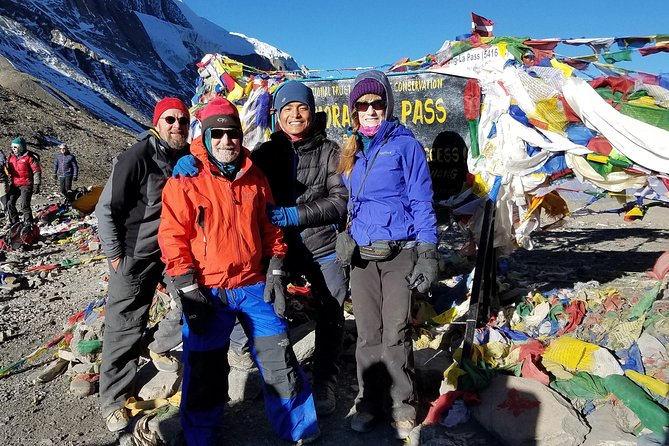
The Annapurna Circuit works because it is not one unchanging mountain walk. You begin among farms and river valleys, pass through villages with strong Tibetan and Buddhist influence, and finish in a lower, warmer part of Nepal. The route gives you a clear sense of altitude and culture changing under your feet.
The first half follows the Marsyangdi Valley toward the north side of the Annapurna Massif. You get regular contact with local villages rather than walking through empty wilderness for days at a time. After Manang, the trail becomes tougher and more exposed as you climb toward Thorung La, the point that gives this route its bragging rights.
The trip has also included alternative routes for some groups, including the Nar Phu Valley and Tilicho Lake. Those are not part of this 17-day program, so do not assume they are included. If those places matter to you, ask before booking.
More Annapurna Treks in Kathmandu
- Annapurna Circuit Trek with Tilicho Lake
★ 5.0 · 368 reviews - Annapurna base camp trek 5 Days
★ 5.0 · 252 reviews - 14-Day Private Annapurna Base Camp Trek
★ 5.0 · 180 reviews
Kathmandu to Bhulbule: getting to the trail
Your first day is arrival in Kathmandu at 1,300 meters. You stay in Kathmandu for two nights in total, with breakfast and taxes included, giving you some time to settle in before and after the mountain section.
Day two starts with a long drive to Besisahar, about 184 kilometers, followed by a two-hour, 7-kilometer walk to Bhulbule at 820 meters. The listed transfer uses a public bus, so expect a practical rather than luxurious start. The road journey takes you from the city toward the Marsyangdi Valley, and the short walk lets you begin gently.
That first walking day is useful because you are not thrown straight into a high-altitude climb. Still, the total road and trail day can feel long after arriving in Nepal. Keep your most useful items in a small day bag, since your larger luggage will be handled by the porter arrangement.
Marsyangdi Valley villages from Ghermu Phant to Timang
Day three brings a 15-kilometer walk to Ghermu Phant, taking roughly five to six hours. The trail passes terraced farms and villages, giving you a close look at the working countryside that makes the lower circuit so appealing.
On day four, you walk about 18 kilometers to Tal, at 1,700 meters. The itinerary gives a walking time of about five to seven hours. Tal is an important change in feel, with the valley becoming more mountainous and the route gradually leaving the lower farming zone behind.
Day five finishes at Timang, around 2,780 meters, after approximately 21 kilometers and five to six hours. This is one of the first days when altitude may affect your comfort, even though the distance is manageable for a fit trekker. Drink regularly, walk at a measured pace, and do not treat the early valley section as a race.
This part of the route is also where a good guide matters. The strongest praise associated with this operator focuses on organization and guide care. Guides named in earlier trips include Dendi and Ngima, with Ngima noted for explaining Buddhist spirituality. Your assigned guide may be different, so confirm the name before departure.
Pisang and Manang, where altitude becomes serious
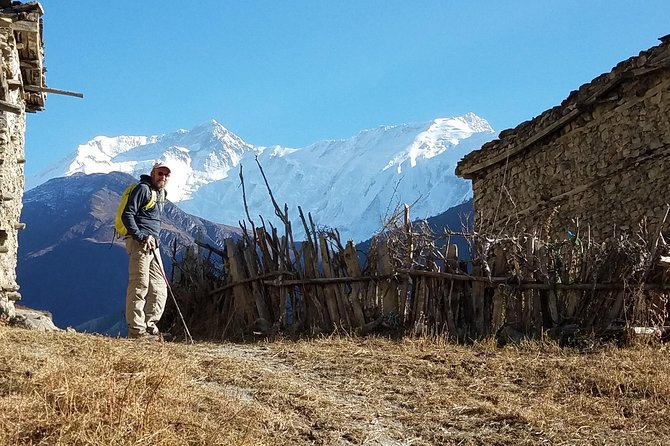
Day six is a long push to Pisang at 3,200 meters. The listed distance is 27 kilometers, with seven to eight hours on foot. That is a substantial day, particularly because the altitude is climbing fast. Ask your guide how the day will be paced and how luggage will be handled.
From Pisang, day seven continues 22 kilometers to Manang at 3,540 meters, taking six to seven hours. Manang is one of the route’s key settlements. It is the natural place to pause, check how your body is responding, and prepare for the higher trail.
Day eight is an acclimatization day in Manang. This is not wasted time. It breaks the climb before the trail rises above 4,000 meters and gives you a better chance of handling the pass safely. The supplied plan does not specify a particular acclimatization walk, so your guide should explain the day’s schedule locally.
I particularly like this pause because the itinerary otherwise moves quickly. The route reaches Manang after several long days, and a rest day here gives the program a sensible rhythm. Still, one day cannot remove all altitude risk. Your fitness helps, but it does not guarantee how you will feel above 4,000 meters.
Another trail to compare in Kathmandu:
- Everest Base Camp Trek – 14 Days
★ 5.0 · 1,499 reviews - Everest Base Camp Trek
★ 5.0 · 842 reviews - Everest Base Camp Trekking
★ 5.0 · 485 reviews - Everest Base Camp Trekking – 13 Day
★ 5.0 · 365 reviews
Yak Kharka and Phedi, the hard approach to Thorung La
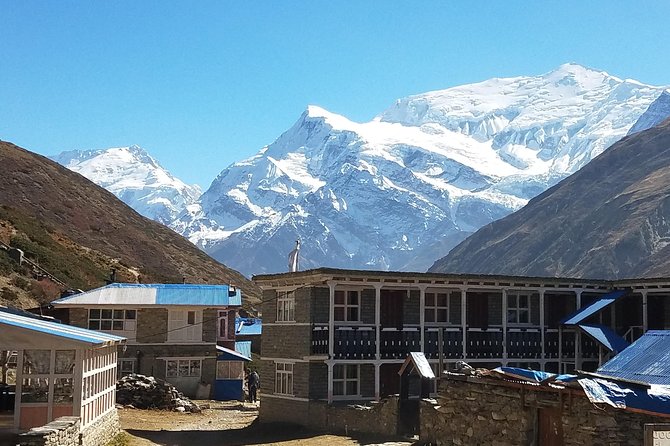
Day nine climbs to Yak Kharka at 4,000 meters. The distance is only 10 kilometers and the walking time is four to five hours, but the altitude makes this more demanding than the numbers suggest. A short day at this height is exactly what you want before the final approach.
Day ten reaches Phedi at about 4,545 meters after 8.5 kilometers and three to four hours. Phedi is the launch point for the pass crossing. The day is not especially long, but you are sleeping high and may notice cold, fatigue, or a reduced appetite.
You should take the listed altitudes seriously. The itinerary gives the Thorung La height as 5,416 meters, which is the figure used for planning here. Your guide carries a first aid medicine kit, but personal travel insurance is not included, and you remain responsible for arranging suitable cover.
Crossing Thorung La and descending to Muktinath
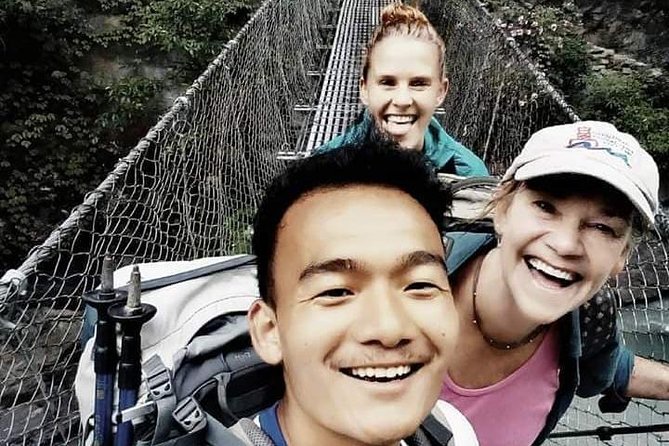
Day eleven is the trip’s biggest test: 16 kilometers from Phedi over Thorung La to Muktinath, with nine to ten hours of walking. The route rises to the pass, then drops sharply to Muktinath at 3,694 meters. The descent is welcome after reaching the high point, but tired legs can make downhill walking surprisingly hard.
The pass is where the Marsyangdi side meets the drier country toward the Tibetan plateau. You should expect a major visual and cultural shift, not just a high viewpoint. The crossing also creates a long day with little room for a casual pace, so prepare to start early according to your guide’s instructions.
Muktinath is a powerful place to finish the high section. The itinerary does not promise a specific religious visit or guided ceremony, but the area is known in the program for its cultural transition and Buddhist influence. Your guide may help explain what you are seeing, though you should avoid assuming every cultural activity is included.
Tatopani, Ghorepani, and the return to Pokhara
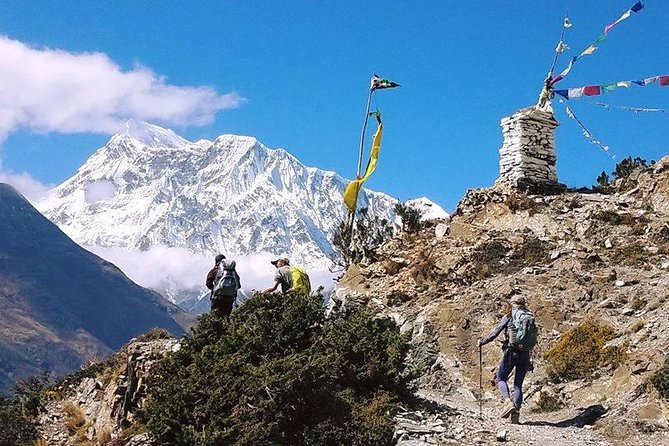
After the pass, day twelve uses a vehicle to reach Tatopani, at 1,160 meters. The listed drive covers 60 kilometers and takes five to six hours. This is a major descent in one day, and the road may feel as tiring as a walking day after the strain of Thorung La.
Tatopani is the lower, warmer counterpoint to the high pass section. The name is associated with hot springs, but the supplied program does not explicitly include an entrance or bathing stop, so treat that as a possibility to confirm rather than a guaranteed feature.
Day thirteen returns to the trail with a 17.5-kilometer walk to Ghorepani at 2,850 meters, taking six to seven hours. After the lower drive, this climb can feel like a fresh challenge. You will need to manage your energy carefully, since the trip is not finished just because the pass is behind you.
Day fourteen drops to Hile at 1,400 meters over 12 kilometers and five to six hours. This is a more forgiving altitude, though the downhill sections can still test your knees. Day fifteen finishes with a three-hour, 7-kilometer walk to Nayapul, followed by a private vehicle to Pokhara.
You receive one night in Pokhara with breakfast and taxes included. That overnight stop matters because it gives you a proper transition from the trail before the drive back to Kathmandu on day sixteen. Day seventeen is departure.
What the $1,400 price covers
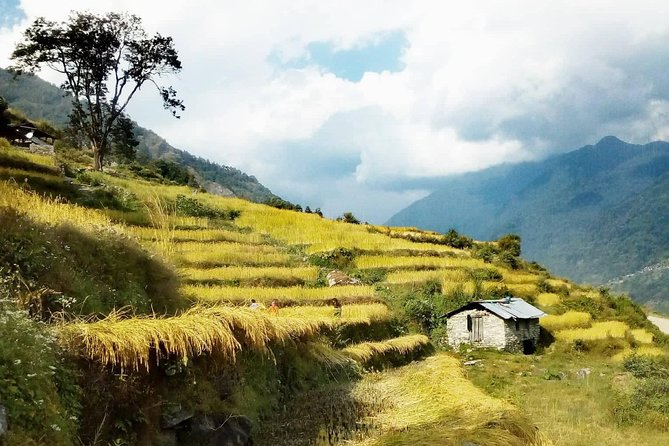
At $1,400 per person, this is not simply a guide fee. The cost includes 13 nights in local lodges with breakfast, lunch, and dinner during the trek, plus two Kathmandu nights and one Pokhara night with breakfast.
It also includes an English-speaking Sherpa guide who is described as government trained and licensed, porter support on request at a ratio of one porter for two clients, staff wages, staff insurance, staff food and lodging, and a first aid kit. Permits and conservation charges are included as well, including the Annapurna Conservation Fee and TIMS permits.
The price also covers energy supplies such as Snickers, Mars, and Bounty bars, along with fresh fruit during the trek. That may sound minor, but practical food support is welcome on long days when appetite and energy can fluctuate.
Ground transport is mixed. The Kathmandu to Besisahar transfer uses a public bus, while Nayapul to Pokhara uses a private vehicle. Lunch and dinner in the cities are not included, and the suggested allowance is $10 to $14 per meal in tourist restaurants. Drinks, bottled or boiled water, soft drinks, beer, visa fees, personal insurance, and tips are extra.
For a private 17-day Himalayan trip with permits, food, lodging, licensed staff, and transfers included, the price looks strong. The value depends on confirming exactly how porter service is arranged and what happens if you choose not to share a porter.
The practical demands you should not ignore
The program requires a strong level of physical fitness. That is justified by the distances, with days of 18, 21, 27, and 22 kilometers before the pass, followed by a nine to ten-hour crossing day.
You should prepare for sustained walking, uphill work, and long descents. Break in your footwear before arrival, practice carrying a day pack, and understand that the listed walking times do not include every rest stop or delay.
Accommodation is in local lodges rather than city hotels during the trek. That is part of the experience and keeps the cost reasonable, but comfort will be simpler than in Kathmandu or Pokhara. Your meals are included on trekking days, while drinks are not, so budget for hydration.
The trip is private, which is a real advantage if your group wants to adjust its pace. It also means the group must be honest about fitness and altitude symptoms. A private format does not turn a difficult route into an easy one.
Booking confirmation is received at the time of purchase. The experience is non-refundable and cannot be changed after booking, so arrange insurance before paying. If bad weather or insufficient numbers force cancellation, the stated options are a different date or a full refund.
Who should book this circuit?
I would recommend it to fit trekkers who want the classic Annapurna route with substantial logistical support and who are comfortable with local lodges, public transport at the start, and long walking days.
It is a good fit if you want a private group, a licensed English-speaking guide, and meals and permits bundled into one price. It is also suitable if cultural contact matters to you, since the route passes through villages and the guide can help explain the shift toward Buddhist mountain communities.
I would be cautious if you have limited mountain experience, dislike long vehicle transfers, or want a relaxed holiday with short walks. The acclimatization day in Manang is helpful, but the schedule remains ambitious, especially from Pisang through Thorung La.
FAQ
How long is the Annapurna Circuit trek?
The program lasts approximately 17 days, including arrival and departure days, Kathmandu and Pokhara stays, driving sections, and the trek itself.
Where does the trek begin?
The activity begins in Thamel, Kathmandu. The route then travels by public bus to Besisahar before walking to Bhulbule in the Marsyangdi Valley.
What is the highest point?
The highest point is Thorung La Pass, listed at approximately 5,416 meters. The pass is crossed on day eleven between Phedi and Muktinath.
Is an acclimatization day included?
Yes. Day eight is an acclimatization day in Manang at about 3,540 meters.
Are meals included?
Breakfast, lunch, and dinner are included during the 13 lodge nights of the trek. Lunch and dinner in Kathmandu and Pokhara are not included. Beverages are also extra.
Is accommodation included?
Yes. The package includes 13 nights in local trekking lodges, two nights in Kathmandu, and one night in Pokhara. Kathmandu and Pokhara accommodation includes breakfast and taxes.
Is porter support included?
Porter support is included on request, with one porter arranged between two clients. Staff salary, insurance, equipment, food, and accommodation are included in the listed package.
Is travel insurance included?
No. You must arrange your own personal travel insurance. Nepal’s entry visa fee, drinks, city meals, and customary tips are also excluded.
Should you book it?
Book this trip if you want the full Annapurna Circuit in a private format and value having permits, meals, lodge stays, a licensed guide, and staff support handled together. The price is attractive for what it includes.
Do not book it casually. Thorung La is a serious high-altitude crossing, and the itinerary contains several long days before the pass. If your fitness is strong, you accept simple lodging, and you prepare properly, this program offers a direct and well-supported route through one of Nepal’s most varied mountain regions.
Latest treks added in Kathmandu
- Private Manaslu Circuit Trek at Himalayas★ 5.0 · 3 reviews
- Ghorepani Poonhill Trek★ 5.0 · 5 reviews
- Ghorepani Poon Hill Trek★ 5.0 · 16 reviews
- Upper Mustang Trekking★ 3.0 · 2 reviews
- Amazing 1 Day Trekking Experience in Kathmandu Nepal★ 5.0 · 24 reviews
- Upper Mustang Trekking★ 5.0 · 2 reviews
- Upper Mustang Trek★ 5.0 · 5 reviews
- Upper Mustang Trekking★ 5.0 · 4 reviews
Annapurna Base Camp Treks, compared.
Trekking in Annapurna/Langtang/Everest/Upper Mustang regions
Read our review →
Kathmandu to Annapurna Base Camp (ABC) 5-Day Trek
Read our review →Browse the lists this tour appears in