
REVIEW · KATHMANDU
Annapurna Circuit Trek
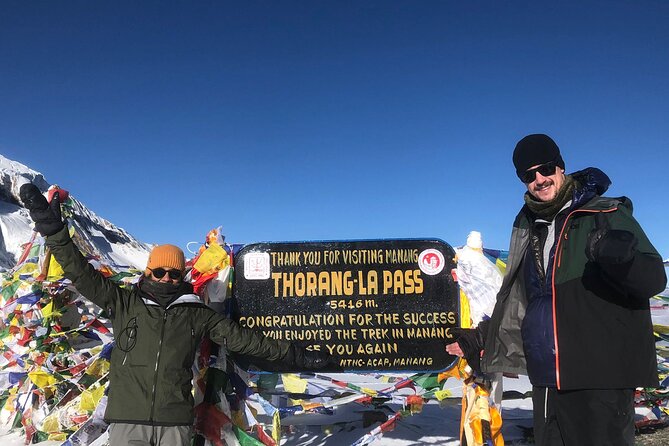
The great draw here is the crossing of Thorong La Pass at 5,416 meters, where prayer flags, high mountain views, and a hard-earned sense of achievement reward several days of walking. I like the route’s changing scenery, from pine forest and river valleys to dry, high-altitude country, and I like that a rest day in Manang gives you a proper pause before the pass.
The package also takes care of practical matters that can make a Nepal trek tiring to arrange, including transport, a licensed guide, tea-house rooms, meals, permits, a sleeping bag, a down jacket, and a duffle bag. The main caution is the pace: this is a compressed version of a classic trek, with long driving days and strenuous walking at altitude.
Key points to know before booking
- Thorong La Pass reaches 5,416 meters, making this the physical high point of the trip.
- The route includes an acclimatization day in Manang, with a suggested hike to Gangapurna Lake.
- Road access shortens the trek, but the trip still includes demanding high-altitude walks.
- Private guiding is included, with guides such as Shanta, Buddhi Tamang, Anjan, Pawan, and others named in guest feedback.
- Transport, meals, tea-house rooms, permits, and selected gear are included in the $975 price.
- The itinerary lasts about 12 days, though the description also refers to a 10-day trekking version, so confirm the exact schedule before paying.
What this Annapurna Circuit trip really offers
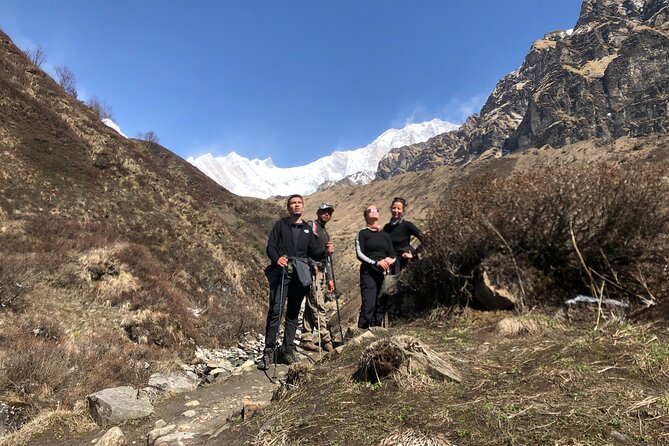
The Annapurna Circuit is not a single mountain viewpoint with a short walk attached. It is a gradual journey through several climate zones and communities, ending with one of Nepal’s best-known high passes.
This version begins and ends in Kathmandu, with the main walking section running through the Manang region and over Thorong La to Muktinath. It uses road transport on sections where roads now reach the old trekking corridor. That saves time, but it also means you spend a fair amount of the trip in buses and jeeps.
At $975 per person, the value comes from having many major costs bundled together. Airport transfers, Kathmandu and Pokhara hotels, road transport, a guide, trekking permits, tea-house accommodation, three daily meals during the trek, seasonal fruit, tea, and basic gear are all covered.
You still need to budget for insurance, bottled water, soft drinks, beer, laundry, desserts, and tips. Those extras are not unusual, but they matter on a 12-day trip. The package is best understood as a guided, practical mountain journey rather than a luxury holiday.
More Annapurna Treks in Kathmandu
- Annapurna Circuit Trek with Tilicho Lake
★ 5.0 · 368 reviews - Annapurna base camp trek 5 Days
★ 5.0 · 252 reviews - 14-Day Private Annapurna Base Camp Trek
★ 5.0 · 180 reviews
Kathmandu arrival and the first briefing
Your trip begins at Tribhuvan International Airport, where staff meet you and transfer you to your hotel. The first day is deliberately light, with a hotel check-in and group briefing about the trek.
That briefing is useful because this route combines long road transfers, changing altitudes, and a major pass crossing. You should use the time to ask exactly how the 10-day and 12-day descriptions differ, how much luggage is carried, and what the daily walking times will be for your departure.
Two nights in Kathmandu are included, with breakfast. The extra time at the end of the trip gives you room for individual activities, though the provided schedule only promises free time rather than a planned sightseeing program.
Day 2: The long road to Besisahar
The drive from Kathmandu to Besisahar takes about 12 hours. You leave the Kathmandu Valley and head toward warmer, lower country before reaching Lamjung and the town of Besisahar.
This is not a quick transfer. It is a full day on the road, so anyone who dislikes long bus journeys should take this seriously. The reward is a gradual change in scenery, with farm villages, towns, hills, and views toward snow-covered peaks along the way.
Besisahar is an important starting point for the circuit, but this schedule treats it mainly as an overnight stop. You are not arriving here for a long sightseeing session. You are positioning yourself for the mountain road and walking section ahead.
Day 3: Jeep roads and pine country toward Chame
The next drive continues to Chame, headquarters of Manang district. The road is unpaved, and the ride can be rough, but it brings you into more dramatic country.
You can expect views of villages, pine forest, changing terrain, and mountain scenery. The road itself is part of the modern Annapurna experience. It has made a shorter itinerary possible, but it also changes the old rhythm of the circuit, where more of this section was covered on foot.
One important safety point is built into the trip’s own advice: driving all the way to Manang may save walking time, but it can raise the risk of altitude sickness. Chame is the more sensible point for beginning the main walking ascent on this schedule.
Another trail to compare in Kathmandu:
- Everest Base Camp Trek – 14 Days
★ 5.0 · 1,499 reviews - Everest Base Camp Trek
★ 5.0 · 842 reviews - Everest Base Camp Trekking
★ 5.0 · 485 reviews - Everest Base Camp Trekking – 13 Day
★ 5.0 · 365 reviews
Day 4: Chame to Manang beside the Marsyangdi River
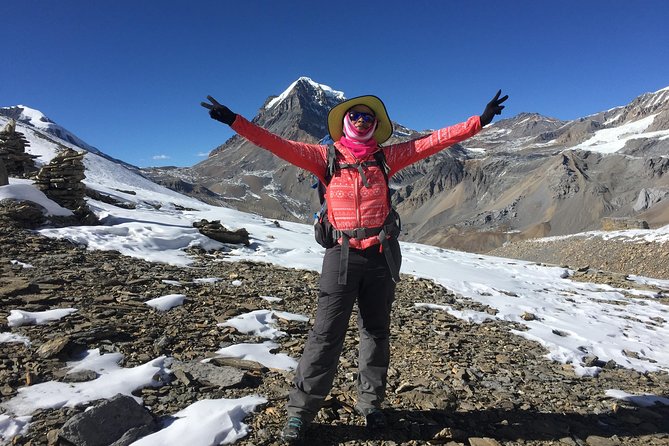
This is the first major walking day. From Chame, the route follows the Marsyangdi River upstream through alpine forest toward Bhratang, then continues through pine trees and uphill terrain toward Manang.
The day is described as lasting about 13 hours, which signals a demanding schedule. The exact walking time may vary, but you should be ready for a long day rather than a gentle introduction.
The appeal is the steady change in surroundings. You move closer to the high peaks, leave much of the lower, warmer country behind, and begin to feel the effects of altitude. Manang is not just another overnight village. It is the key stopping point before the route turns properly high and dry.
Day 5: Pisang to Manang and bigger mountain views
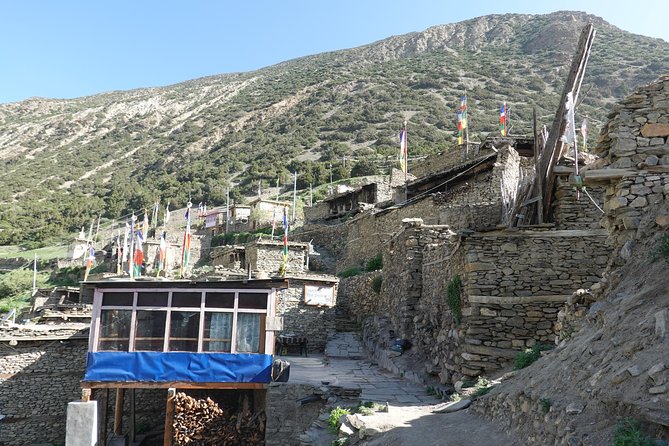
The next day takes you through Pisang and onward to Manang. The route climbs gradually, with views of Annapurna II, Annapurna III, and Gangapurna.
The itinerary again gives a very long day, about 13 hours. That makes the trip efficient, but it leaves less room for slow walking, long meal stops, or side trips. If you like taking photographs or stopping often, ask your guide how the pace will be handled.
This is one of the strongest parts of the route for mountain scenery. You are now looking directly into the Annapurna range, while the altitude rises in measured steps. The gradual gain is important because it gives your body more time to adjust than a sudden jeep ride to Manang would.
Day 6: A needed acclimatization day in Manang
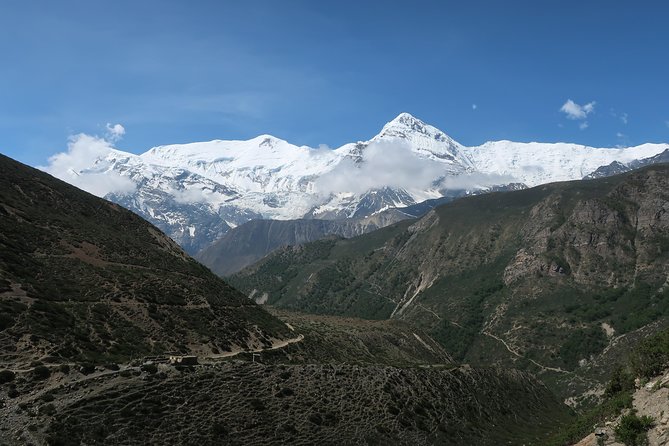
The rest day in Manang is one of the itinerary’s best decisions. You are not simply sitting in a tea house waiting for the next departure. The suggested outing is a hike to Gangapurna Lake, described as a particularly beautiful place in the valley.
A rest day at this point helps break up the climb before Yak Kharka and Thorong La. You should still treat it as an active recovery day, not a chance to race up and down every nearby trail.
Altitude sickness is a real concern on this route. The schedule specifically warns against using a jeep to reach Manang too quickly, and that warning deserves attention. Tell your guide promptly if you feel unwell, and do not treat the pass as a contest.
Day 7: Manang to Yak Kharka
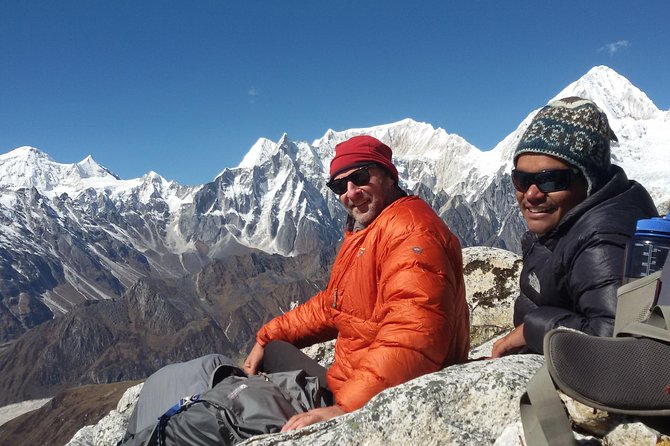
After acclimatizing in Manang, you walk to Yak Kharka. This is a high-altitude section with views toward Gangapurna and Annapurna, small streams, and a small settlement at the end of the day.
The itinerary gives this day about 14 hours, though that may include the overall activity window rather than continuous walking. Either way, you should expect a serious day at altitude.
Yak Kharka is valuable because it positions you close to the pass. The setting is more exposed and more austere than the lower valley, and the route now feels focused on one goal: reaching Thorong La safely.
Day 8: Thorong Phedi and the approach to the pass
The route continues toward Thorong Phedi, crossing a bridge and climbing along the Jarjung River. From Thorong Phedi, the final approach includes a steep climb of roughly an hour.
This section is hard work. The air is thinner, the ground is high, and the route offers fewer easy options if you discover that the pace is too much. A guide is particularly useful here for checking how you are coping and adjusting the plan when needed.
The schedule appears to split the pass approach and the pass crossing across two days. That is a sensible structure for a compact itinerary, but confirm the overnight arrangement and exact walking plan before departure, since the day descriptions are not perfectly clear.
Day 9: Thorong La at 5,416 meters and Muktinath
The major day starts early. After breakfast, you climb toward Thorong La, the highest point of the trip at 5,416 meters.
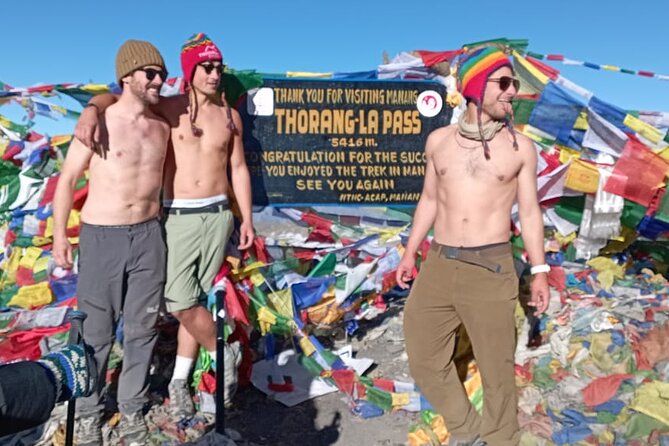
At the top, Buddhist prayer flags mark the pass, with wide mountain views in every direction. This is the moment many people picture when they think of the Annapurna Circuit: a tough ascent, cold high-altitude air, and a clear sense that you have crossed from one side of the mountains to another.
The route then continues down toward Muktinath Temple. The descent is not automatically easy. Your legs have already worked hard, and downhill walking can be rough on knees and ankles.
Muktinath is an important religious site and a fitting end to the high mountain section. It also marks a sharp change in the character of the journey, as roads and drier country become more prominent.
Day 10: Muktinath to Pokhara
The drive from Muktinath to Pokhara is described as challenging but scenic. After the pass and the descent, this is a long road day, listed at about 14 hours.
This transfer is a trade-off. It lets you complete the circuit in far fewer days than the traditional 10 to 17 day version, but you will not be walking every section between Muktinath and Pokhara. Road conditions can also make the journey tiring.
One night in Pokhara with breakfast is included. That gives you a welcome change of pace after the mountains, though the schedule does not provide a full sightseeing program in Pokhara.
Day 11: Pokhara to Kathmandu
The return drive to Kathmandu takes about 14 hours and passes farm villages and towns. It is another long overland day, so your last full day is more about getting back than relaxing.
The benefit is simplicity. You finish the mountain route, spend a night in Pokhara, and return to Kathmandu without arranging separate transport. The drawback is that the trip contains several very long drives, especially for a 12-day schedule.
Day 12: Airport departure
On the final day, staff take you from the hotel to Tribhuvan International Airport according to your international flight time. Airport pickup and drop-off are included.
The schedule lists the final day as 14 hours, but that should not be read as a fixed activity period. Your transfer depends on your flight time, and you should confirm the pickup hour with the local office.
Accommodation, meals, and equipment
The trek uses private local tea houses on a twin-sharing basis. This is a simple mountain arrangement, not a hotel-style stay. Tea houses are valuable because they keep you close to the route and local communities, but you should expect basic facilities rather than polished comfort.
Three meals are included during the trek: breakfast, lunch, and dinner. The package also includes three cups of tea per day and seasonal fruit. Breakfast is listed as included 11 times, along with two nights in Kathmandu and one night in Pokhara.
A sleeping bag, down jacket, and duffle bag are supplied as trekking gear. You should still bring suitable personal clothing, footwear, sun protection, and any medication you need. One person specifically advised bringing sunscreen, and that is practical advice for high-altitude walking.
The guides and the private format
This is a private activity, so only your group participates. That gives you more control than a large group departure, especially when the pace needs adjusting.
The guide team named in the supplied guest feedback includes Shanta, Buddhi Tamang, Anjan, Suman, Pawan, Indaco, Veer, and Anos Tamang. The strongest pattern is attentive support, regular briefings, organization, and care for safety. Buddhi Tamang is singled out for being organized and attentive, while Shanta is praised for making a solo trekker feel well looked after.
You should still ask who will lead your particular departure. Names can change by date, and the booking information does not guarantee a specific guide.
Is $975 good value?
For a 12-day private trek, $975 is a fair package price when you count the included transport, hotels, meals, guide, permit, tea-house lodging, and gear. It removes much of the planning work that can otherwise take time in Kathmandu.
The value is strongest if you need airport transfers, road transport, equipment, and a guide arranged together. It is less attractive if you already have your own gear, prefer to walk more of the route, or want to choose higher-grade accommodation.
Remember that insurance is not included, and extra drinks, water, laundry, desserts, and tips come out of your pocket. The price also does not remove the physical demands of the trek.
Who should book this trek?
I would recommend it to a reasonably fit person who wants the classic Annapurna experience but cannot spare the traditional 10 to 17 days. It also suits solo trekkers who prefer the reassurance of a private guide and organized transport.
I would be cautious about booking it if you dislike long road journeys, have little experience with strenuous walking, or are hoping for a relaxed sightseeing holiday. The schedule includes several days listed at 12 to 14 hours, plus a high pass at 5,416 meters.
Free cancellation is available up to 24 hours before the start time. Poor weather or failure to meet the minimum number of participants can lead to a new date, an alternative experience, or a full refund.
Should you book the Annapurna Circuit Trek?
Book it if you want the Annapurna Circuit’s biggest rewards in a shortened format: Manang, Gangapurna Lake, high mountain views, Thorong La, Muktinath, and a guided plan that includes the major practical costs.
Before paying, confirm the exact day count, the walking and driving split, the name of your guide, and how the pass crossing is arranged. If you accept the long drives and serious altitude, this is a strong-value way to reach one of Nepal’s classic high passes without planning the entire trip yourself.
FAQ
How long does the Annapurna Circuit Trek take?
The tour is described as approximately 12 days, while the itinerary also refers to a 10-day version of the trek. Confirm the exact schedule with the provider before booking.
What is the highest point of the trek?
The route crosses Thorong La Pass at 5,416 meters.
Is transportation included?
Yes. Airport transfers, bus journeys, and jeep drives are included, along with the drive between Kathmandu, Besisahar, Chame, Pokhara, and other scheduled points.
Is accommodation included?
Yes. The package includes two hotel nights in Kathmandu, one hotel night in Pokhara, and twin-sharing tea-house accommodation during the trek.
Are meals included?
Three meals per day, breakfast, lunch, and dinner, are included during the trek. The package also includes three cups of tea per day and seasonal fruit.
What equipment is provided?
A sleeping bag, down jacket, and duffle bag are included. Travel insurance, drinks, bottled water, laundry, desserts, and tips are not included.
Latest treks added in Kathmandu
- Ghorepani Poon Hill Trek★ 5.0 · 16 reviews
- Private Manaslu Circuit Trek at Himalayas★ 5.0 · 3 reviews
- Ghorepani Poonhill Trek★ 5.0 · 5 reviews
- Upper Mustang Trekking★ 3.0 · 2 reviews
- Amazing 1 Day Trekking Experience in Kathmandu Nepal★ 5.0 · 24 reviews
- Upper Mustang Trekking★ 5.0 · 2 reviews
- Upper Mustang Trek★ 5.0 · 5 reviews
- Upper Mustang Trekking★ 5.0 · 4 reviews
Annapurna Base Camp Treks, compared.




Trekking in Annapurna/Langtang/Everest/Upper Mustang regions
Read our review →


Kathmandu to Annapurna Base Camp (ABC) 5-Day Trek
Read our review →Browse the lists this tour appears in