
REVIEW · KATHMANDU
Annapurna Circuit Trek
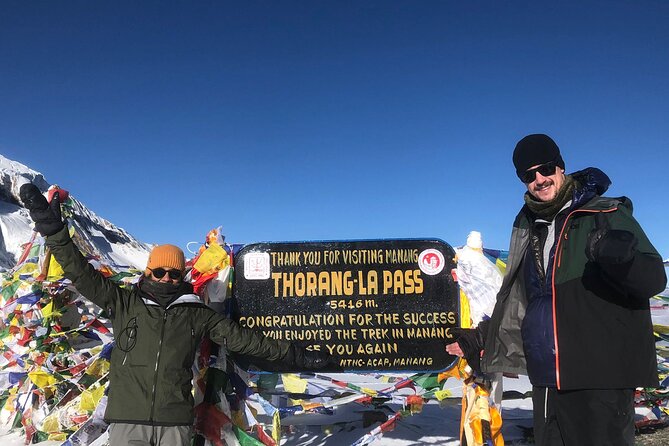
The big draw here is the dramatic change in scenery. In 15 days, you move from warm rice fields and river valleys to high alpine country, cross the 5,416-meter Thorong La Pass, then descend toward apple-growing villages, hot springs, and Poon Hill. Few treks pack so many climates and mountain moods into one route.
I like two things right away: the price includes your guide, permits, meals, transport, and tea-house rooms, and the private format gives your own group the trip rather than placing you with strangers. I also like the built-in rest day at Manang, which gives your body a chance to adjust before the highest walking days.
The main caution is altitude and pace. You reach 4,600 meters at Thorong High Camp and cross above 5,400 meters the next morning, so this is not a casual walking holiday. The schedule is also fixed, and porter service, drinks, showers, charging, Wi-Fi, equipment, and travel insurance cost extra.
Key things to know before booking
- Thorong La is the major test: The pass reaches 5,416 meters, with a long seven-hour day from high camp to Muktinath.
- The route changes character constantly: You pass from low, warm farmland to Manang’s dry high country, then descend through Mustang and the Kali Gandaki area.
- Manang provides the key rest day: Day seven is set aside for recovery before the trek climbs higher.
- Tea-house lodging keeps the price reasonable: Rooms are included, but the simple mountain standard means you should not expect hotel comforts.
- A porter is not included: You can hire one separately, and porter Rishi has been praised for being especially helpful, friendly, and safety-minded.
- The tour ends in Pokhara: After Poon Hill and Nayapul, transport takes you to Pokhara rather than back to Kathmandu.
Why the Annapurna Circuit remains such a strong trek
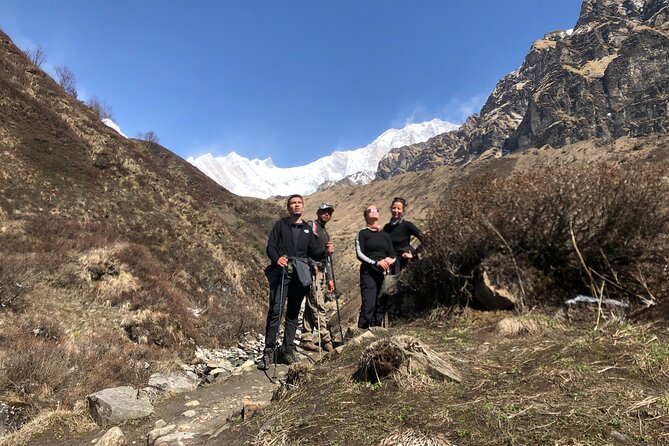
The Annapurna Circuit works because it is not just a high mountain walk. It is a long visual progression. You begin in lower country where fields, rivers, and warmer air shape the day. By the middle, you are walking through high valleys with stark peaks and thin air. After the pass, the route changes again as you descend toward Muktinath, Jomsom, Marpha, Tatopani, and Ghorepani.
That variety matters. A shorter out-and-back trek can give you excellent mountain views, but the circuit gives you a sense of moving through an entire region. The daily scenery does not simply repeat itself.
At $1,290 per person, the value is strongest if you want the basic trekking structure handled for you. The fee covers transportation by bus, taxi pickup and drop-off, all breakfast, lunch, and dinner during the trek, mountain accommodation, a guide’s food, salary, insurance, and equipment, plus trekking permits.
You still need to budget for drinks, bottled or mineral water, hot water, tea, coffee, beer, soft drinks, Wi-Fi, battery charging, hot showers, personal equipment, travel insurance, and a porter. Those extras can matter in the mountains, so do not treat the advertised price as the full cost of the trip.
The private format is another useful part of the package. Only your group participates, which can make the walking rhythm easier to manage. The information does not state the maximum group size, so ask before booking if you need a precise number.
More Annapurna Treks in Kathmandu
- Annapurna Circuit Trek with Tilicho Lake
★ 5.0 · 368 reviews - Annapurna base camp trek 5 Days
★ 5.0 · 252 reviews - 14-Day Private Annapurna Base Camp Trek
★ 5.0 · 180 reviews
Days 1 to 3: From Kathmandu to Jagat
The first day is mostly a transport day. You are picked up by taxi, then ride a bus toward Bulbule at about 840 meters. The drive takes five to six hours, followed by roughly one hour of walking to Nagdi at 930 meters.
That combination gives you a gentle start, but it is still a long day. Road travel in the opening section means you will not spend the whole day walking, yet you should be ready for an early start at 6:15 a.m. Keep your day bag close, with water, a snack, sun protection, and anything you need during the ride.
Day two takes you from Nagdi to Jagat, at 1,300 meters, in about four to five hours. The altitude gain is modest, and the shorter walking time helps ease you into the rhythm. You are still in the lower part of the route, so this is a good time to notice the shift from road access to foot travel.
On day three, you walk from Jagat to Dharapani at 1,860 meters. The walking time remains around four to five hours, but the rising altitude begins to matter. Dharapani is an important transition point because the route starts to feel more like a mountain trek than a valley walk.
The early section may be less visually spectacular than the high days, but it earns its place. You gain altitude gradually rather than starting at a high trailhead. That gradual rise is helpful for a 15-day trip with a demanding pass ahead.
Days 4 to 6: Chame, Pisang, and Manang
Day four brings you to Chame at 2,670 meters after about five hours of walking. The route is now firmly in the cooler mountain zone. You are gaining height at a steady rate, and the shorter daily distances leave some room to stop, eat, and settle into tea-house life.
Day five leads to Pisang at approximately 3,230 meters. The trek again takes about five hours. At this point, the air is thinner and the walking pace should slow naturally. You will want to keep your effort even rather than trying to preserve a low-altitude pace.
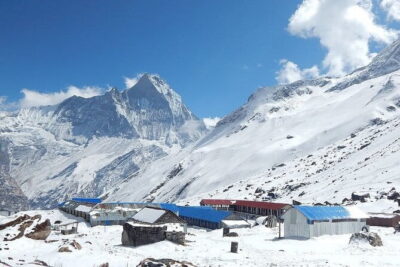
Pisang is one of the route’s important high-valley stops. The large peaks become the central feature of the day, and the setting feels more exposed and alpine than the lower villages. The supplied description promises views of peaks throughout the trip, and this is where that promise begins to feel especially clear.
Day six takes you to Manang Village at 3,450 meters, again in about five hours. Manang is a key overnight stop because the next day is reserved for rest. Reaching it is a satisfying midpoint, but do not mistake the rest day for wasted time. It is part of the altitude plan.
Accommodation is in tea houses, not full-service hotels. That means you get a practical place to sleep and meals through the package, but extras such as hot showers, hot water, Wi-Fi, and battery charging are not included. Carry the right expectations and you will appreciate the simplicity rather than resent it.
Day 7: Why the Manang rest day matters
The rest day in Manang is one of the smartest features of the schedule. By now, you have moved from 840 meters to 3,450 meters over several days. Your body needs time to adjust before the trek rises above 4,000 meters.
A rest day does not necessarily mean sitting indoors all day. The supplied plan simply identifies it as a rest day, so the exact activities are not stated. You can use it to recover, organize your bag, check your clothing, and prepare for the harder section ahead.
This is also the point to speak openly with your guide about how you feel. The guide’s food, salary, insurance, and equipment are included in the cost, and having a guide is especially useful when the route becomes more demanding. The information does not name the guide assigned to each departure, so ask for that detail before you pay.
Another trail to compare in Kathmandu:
- Everest Base Camp Trek – 14 Days
★ 5.0 · 1,499 reviews - Everest Base Camp Trek
★ 5.0 · 842 reviews - Everest Base Camp Trekking
★ 5.0 · 485 reviews - Everest Base Camp Trekking – 13 Day
★ 5.0 · 365 reviews
Days 8 and 9: Yak Kharka to Thorong High Camp
Day eight is a four-hour trek to Yak Kharka at 4,110 meters. The distance is not huge, but altitude changes the meaning of every uphill section. You should expect a slower pace, more frequent pauses, and a greater need to drink regularly.
Day nine goes to Thorong High Camp at 4,600 meters in about four hours. This is a short walking day on paper, but it is one of the most serious parts of the route. Sleeping at that height can be difficult for some people, and the cold and thin air can make simple tasks feel tiring.
The guide is valuable here because you are no longer judging the day only by distance. Your condition matters as much as the clock. The package includes guide support, but it does not include travel insurance, so arrange insurance that covers trekking at the relevant altitude before departure.
You should also keep your overnight items compact. A porter is not included, and carrying a heavy bag at 4,600 meters can make an already demanding day harder. If you want porter support, arrange it separately and confirm the extra charge.
Day 10: Crossing Thorong La at 5,416 meters
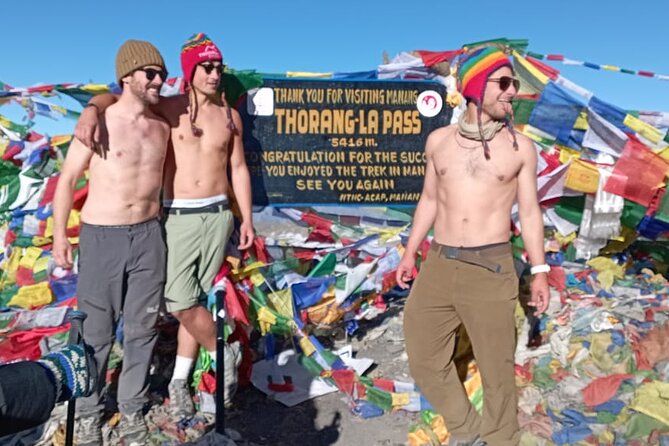
The pass crossing is the centerpiece of the trek. You leave Thorong High Camp and cross Thorong La at 5,416 meters before descending to Muktinath at 3,800 meters. The full day is listed at about seven hours.
This is a major altitude day, not a box to tick. You will gain the pass in cold, thin air, then lose a large amount of height on the descent. The descent to Muktinath is a relief for many people, but it can be tough on knees and feet.
The reward is the sense of crossing from one side of the Annapurna region to another. The route stops being a steady climb and becomes a long descent through a different type of mountain country. That change gives the circuit its name and much of its appeal.
Your guide can help with pacing and route decisions, but no trek operator can remove the physical demands. You need moderate physical fitness at minimum, and a serious approach to altitude. If you become unwell, tell the guide promptly rather than trying to protect the schedule.
Days 11 to 13: Muktinath, Jomsom, Marpha, and Tatopani
Day eleven takes you to Marpha at 2,670 meters through Jomsom at 2,715 meters. The walk is about six hours. After the pass, the lower altitude should feel welcome, and the route begins to show a different side of the region.
Jomsom and Marpha mark the start of a more settled section of the trek, with a strong connection to the Mustang area. The itinerary does not promise particular sightseeing stops, so you should focus on the pleasure of moving through villages and valleys after the hardest climb.
Day twelve continues to Lete at 2,480 meters, also in about six hours. The steady descent gives your lungs a break, though long downhill walking can still be tiring. If your boots or socks caused trouble earlier, this is the time to fix it before the final days.
Day thirteen takes you to Tatopani at 1,190 meters after about six hours. Tatopani is specifically identified for its natural hot spring, one of the route’s most welcome comforts. After the high pass and long descents, warm water can feel like a small luxury.
The hot spring is included as part of the route’s stop, but the details of entry or any local fee are not provided. Also remember that hot showers are listed among the items not included, so do not confuse a natural hot spring stop with a paid hotel-style shower service.
Days 14 and 15: Ghorepani and Poon Hill
Day fourteen climbs from Tatopani to Ghorepani at 2,880 meters. It is about six hours, and this day deserves respect because it reverses the direction of travel. After enjoying lower, warmer country, you climb again toward the high viewpoint section.
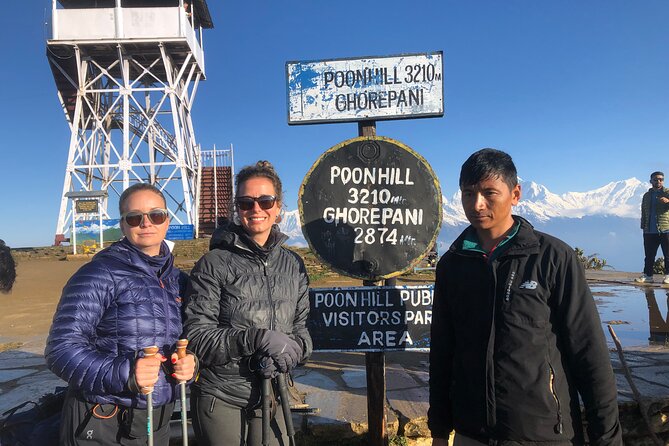
Ghorepani is the base for the final highlight, Poon Hill. Day fifteen starts with the trek to Poon Hill at 3,210 meters, then continues to Nayapul at 1,100 meters. The walking time is six to seven hours, followed by a drive to Pokhara at 860 meters.
Poon Hill gives the trip a strong finish. The route does not simply end after the pass. You get one more high viewpoint before descending to the road and continuing to Pokhara.
The final day is long, especially after two weeks on foot. Pack your day bag the night before and keep your essential items easy to reach. Once you arrive in Pokhara, the trip’s transport plan is complete, but the information does not include accommodation or onward arrangements there.
What the guide and porter arrangement really means
A guide is included, along with the guide’s food, salary, insurance, and equipment. That is a meaningful part of the $1,290 price because it removes several costs that can otherwise appear later.
Porter service is separate. One especially positive account names Rishi and praises his helpfulness, friendliness, care, and serious approach to safety. You cannot assume he will be assigned to your group, but you can ask whether he is available and what porter service costs.
The distinction matters. A guide leads and manages the trek, while a porter carries luggage. If you are not used to walking several hours at altitude, reducing your load may make a real difference. Your own trekking equipment remains your responsibility, so budget for proper clothing, footwear, and a sleeping setup if required by the operator.
Who should book this 15-day circuit
I would recommend this trek to you if you want a demanding mountain trip with a clear plan and a wide range of scenery. It suits people who can handle four to seven hours of walking on many days and who are prepared for high-altitude conditions.
The private format is useful for couples, families, and friends who want to stay together. The early start, long bus ride, simple tea houses, and limited included comforts may not suit someone seeking a relaxed sightseeing tour.
You should also be comfortable with a non-refundable booking. The stated policy does not allow cancellation or amendments for any reason, so only reserve once your dates, fitness, insurance, and equipment plans are firm.
Should you book the Annapurna Circuit Trek?
Book it if the thought of walking from warm farmland to a 5,416-meter pass sounds exciting rather than intimidating. The package gives you the main practical pieces: transport, permits, meals, tea-house lodging, and guide support, while the private format adds flexibility within your own group.
Think twice if you want hotel comforts, a porter included in the price, or an easy altitude profile. At $1,290, the trek offers good value for a supported 15-day route, but the extras and personal equipment will raise the final cost.
For the right person, this is a serious but rewarding circuit with a memorable structure: gradual ascent, a rest day in Manang, Thorong La, a long descent, Tatopani’s hot spring, and a final sunrise viewpoint at Poon Hill.
FAQ
Where does the Annapurna Circuit Trek start?
The tour is based in Kathmandu. Hotel pickup and drop-off by taxi are included, and the scheduled start time is 6:15 a.m.
How long does the trek last?
The experience lasts approximately 15 days.
What is the highest point on the itinerary?
The highest point is Thorong La Pass at 5,416 meters. The itinerary places you at Thorong High Camp at 4,600 meters the previous day.
Is food included during the trek?
Yes. Breakfast, lunch, and dinner are included during the trek.
Is accommodation included?
Yes. Mountain accommodation in tea houses is included.
Is a porter included?
No. Porter service is not included and must be arranged separately.
Is travel insurance included?
No. You must arrange and pay for your own travel insurance.
What happens after the trek reaches Poon Hill?
After walking to Poon Hill, you continue to Nayapul, then take a drive to Pokhara at about 860 meters.
Latest treks added in Kathmandu
- Private Manaslu Circuit Trek at Himalayas★ 5.0 · 3 reviews
- Ghorepani Poonhill Trek★ 5.0 · 5 reviews
- Ghorepani Poon Hill Trek★ 5.0 · 16 reviews
- Upper Mustang Trekking★ 3.0 · 2 reviews
- Amazing 1 Day Trekking Experience in Kathmandu Nepal★ 5.0 · 24 reviews
- Upper Mustang Trekking★ 5.0 · 2 reviews
- Upper Mustang Trek★ 5.0 · 5 reviews
- Upper Mustang Trekking★ 5.0 · 4 reviews
Annapurna Base Camp Treks, compared.
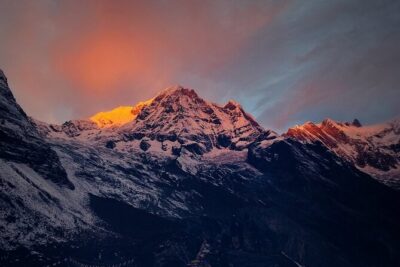
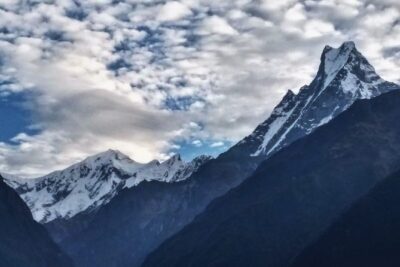
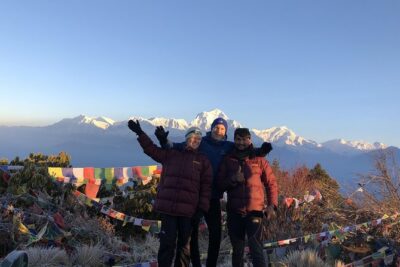

Trekking in Annapurna/Langtang/Everest/Upper Mustang regions
Read our review →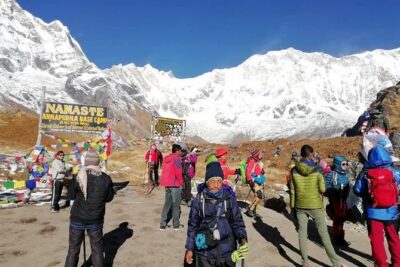
Kathmandu to Annapurna Base Camp (ABC) 5-Day Trek
Read our review →Browse the lists this tour appears in