
REVIEW · KATHMANDU
18-Day Annapurna Circuit Private Trekking Tour from Kathmandu
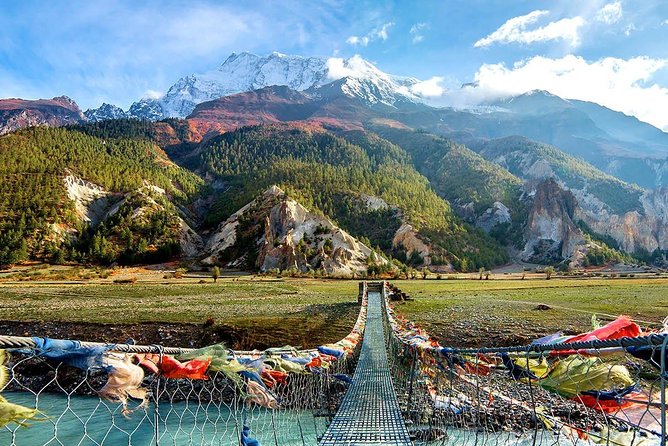
The big draw here is the full Annapurna Circuit, from green, Hindu-majority valleys to high mountain country and the stark crossing of Thorong La at 5,416 meters. You move through Bulbule, Manang, Muktinath, Jomsom, Kalopani, and Tatopani, with the route ending in Pokhara before returning to Kathmandu.
I like the private format, since your group can set its walking rhythm with an English-speaking guide. I also like the practical bundle: tea-house lodging, most meals, permits, a TIMS card, a porter shared between two people, a duffel bag, snacks, and staff medical cover. The main caution is that the published plan contains a repeated Jagat to Dharapani day and conflicting transport details, so confirm the final schedule before paying.
Key points to know before you book
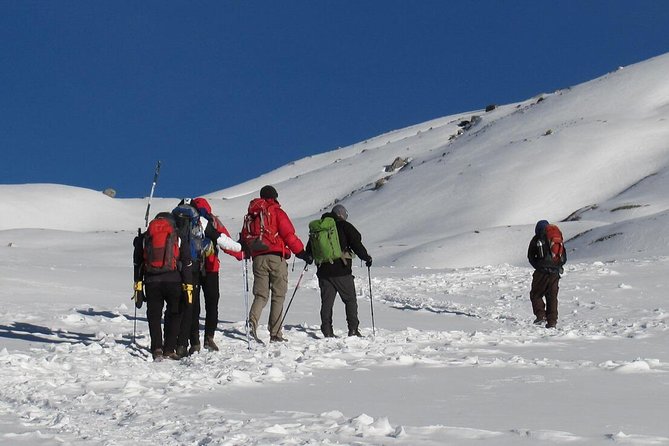
- Thorong La is the physical centerpiece: You cross the 5,416-meter pass on Day 11, after spending nights at Manang, Ledar, and Thorong Phedi.
- The route covers four Nepal regions: Lamjung and Myagdi bring greener lower valleys, while Manang and Mustang offer higher, drier mountain scenery.
- A private guide and porter are included: One porter is provided for every two people, with an English-speaking guide leading the group.
- Food and small comforts are part of the price: Breakfast, lunch, and dinner are included on most trekking days, along with biscuits or Oreo cookies, peanuts, fruit, and one Snickers bar per person.
- The $2,000 price includes a lot: Permits, tea-house stays, transport, two Kathmandu nights, two Pokhara nights, guide and porter costs, and local taxes are included.
- Check the transport plan carefully: The details mention both a Jomsom to Pokhara flight and road travel through Beni and Pokhara. Ask which version applies to your departure.
From Kathmandu to the lower Marsyangdi Valley
Your first day is set aside for arrival in Kathmandu, hotel transfer, and trek preparation. Pickup is offered, and the stated meeting point is in Thamel at 6:45 a.m. on the transport day. Two nights in Kathmandu with breakfast are included, giving you a useful buffer for arrival and preparation.
On Day 2, you take a bus from Kathmandu to Bulbule, at about 840 meters. This is a long road transfer rather than a walking day, so you should expect the journey itself to take much of your energy. Bulbule is the practical starting point for the trek into the Marsyangdi Valley.
The first walking stage goes from Bulbule to Jagat, at roughly 1,300 meters. This gradual rise helps you begin at a sensible altitude instead of being dropped straight into high mountain conditions. The route then continues toward Dharapani, at 1,860 meters.
There is an important schedule issue here. Day 4 says Jagat to Dharapani, and Day 5 repeats the same route. Day 6 begins with Chame to Pisang, which suggests Day 5 may be intended as Dharapani to Chame. I would ask for a corrected day-by-day plan, including walking hours and overnight villages, before you go.
More Annapurna Treks in Kathmandu
- Annapurna Circuit Trek with Tilicho Lake
★ 5.0 · 368 reviews - Annapurna base camp trek 5 Days
★ 5.0 · 252 reviews - 14-Day Private Annapurna Base Camp Trek
★ 5.0 · 180 reviews
Chame, Pisang, and the first big mountain views
Once the route reaches Chame, the trek moves into a higher and more alpine section. The stated Day 6 walk from Chame to Pisang reaches about 3,300 meters. The air is thinner here, and the walking day matters more than the distance alone.
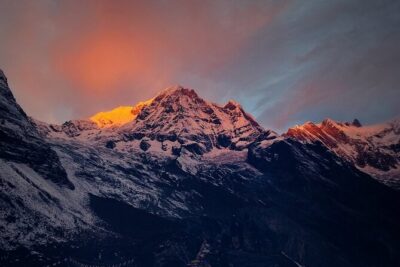
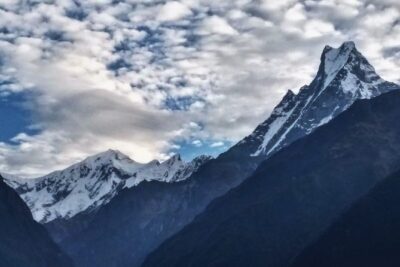
Day 7 continues from Pisang to Manang, at 3,540 meters, by way of Upper Pisang. The upper route is the more scenic choice in the stated plan, with the high peaks becoming a stronger part of your daily view. Annapurna II, III, and IV, Annapurna South, Tilicho Peak, and other summits are named among the mountain sights associated with the circuit.
Manang is one of the most useful stops on the trip because Day 8 is reserved for acclimatization. You can explore around the village rather than pushing to a higher sleeping point. That pause is not wasted time. It gives your body a chance to adjust before the route rises above 4,000 meters.
The tour asks for a moderate fitness level, but that phrase should not be taken lightly. You need to be ready for repeated walking days, changing altitude, basic tea-house accommodation, and a major pass crossing. Your guide and staff carry much of the logistical load, but they cannot do the uphill work for you.
Manang to Thorong Phedi, where altitude becomes serious
After acclimatization, the itinerary moves from Manang to a place written as Leader, at about 4,200 meters. This likely refers to Ledar, a common overnight point on the Thorong La approach, but you should confirm the spelling and exact stop.
The next day continues to Thorong Phedi, at about 4,450 meters. This is a short section on the map but a demanding one for your body. At this height, cold, thin air, and slower walking can make a modest distance feel much longer.
Your guide is particularly valuable during this part of the trek. The package includes an English-speaking guide, staff insurance, a medical kit, and medicine for staff. It does not replace your own travel medical insurance or emergency evacuation coverage, both of which you must arrange separately.
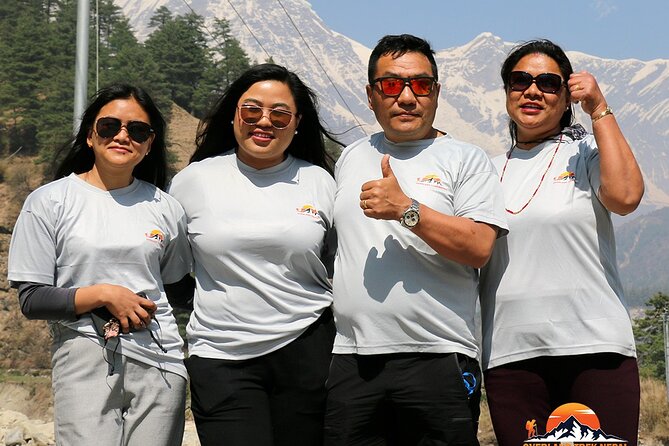
One named guide connected with this experience is Umesh. A past participant described him as careful about safety and personal support. That is useful information, but you should ask the company if Umesh will actually lead your departure, since guide assignments can change.
Thorong La at 5,416 meters and the descent to Muktinath
Day 11 is the hardest and most memorable section: Thorong Phedi to Muktinath over Thorong La, at 5,416 meters. This is the point around which the entire circuit is built. You gain the pass, then descend to Muktinath at approximately 3,800 meters.
The altitude makes this more than a scenic walk. You should move slowly, follow your guide’s advice, and treat headaches, nausea, unusual weakness, or breathing trouble seriously. The itinerary includes an acclimatization day in Manang, but no schedule can guarantee that every person will adjust well.
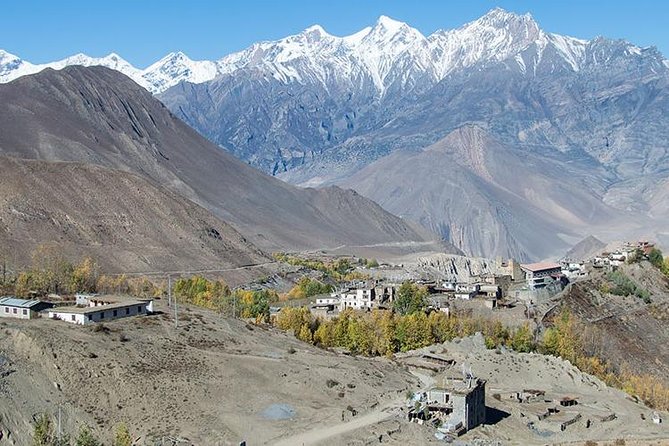
The reward is the change in scenery and culture after the pass. Muktinath is an important pilgrimage destination, and the route now enters Mustang. The lower sections of Lamjung and Myagdi are described as mainly Hindu, with subtropical valleys, villages, and terraced farming. Manang and Mustang feel like a different mountain world, with more exposed ground and stronger high-altitude character.
The pass day is also where weather matters most. The provider says the experience can be canceled in poor weather, with a different date or full refund offered. A flexible schedule is wise, since mountain conditions can affect roads and walking plans.
Another trail to compare in Kathmandu:
- Everest Base Camp Trek – 14 Days
★ 5.0 · 1,499 reviews - Everest Base Camp Trek
★ 5.0 · 842 reviews - Everest Base Camp Trekking
★ 5.0 · 485 reviews - Everest Base Camp Trekking – 13 Day
★ 5.0 · 365 reviews
Muktinath, Jomsom, and the Kali Gandaki side
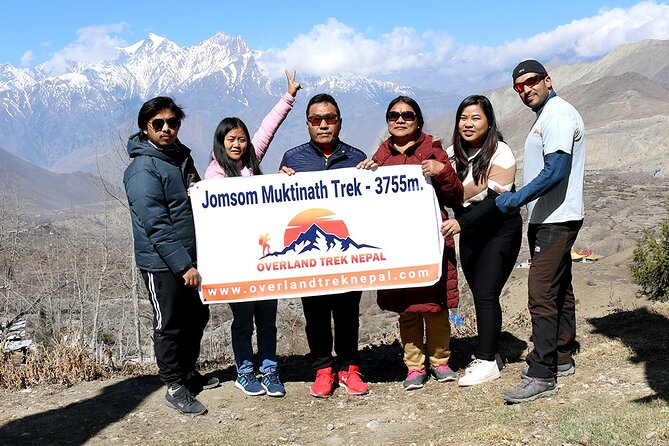
After Muktinath, you walk to Jomsom, at about 2,720 meters. This descent gives your lungs a welcome break, though the day can still be tiring after the pass. Jomsom is a major stop in the Mustang section and a useful transition between the high route and lower valley.
The next stage goes from Jomsom to Kalopani, at about 2,530 meters, followed by Kalopani to Tatopani, at about 1,200 meters. This is a large change in elevation over a short part of the itinerary. By Tatopani, you are back in a lower, warmer part of Nepal, with the promise of a more comfortable end to the trek.
The route’s appeal is this constant shift. You do not spend 18 days seeing one type of mountain scenery. You begin with green valleys and farmland, rise into dry high country, cross a serious pass, then descend through villages and lower valleys toward Pokhara.
Tatopani, Beni, Pokhara, and Kathmandu
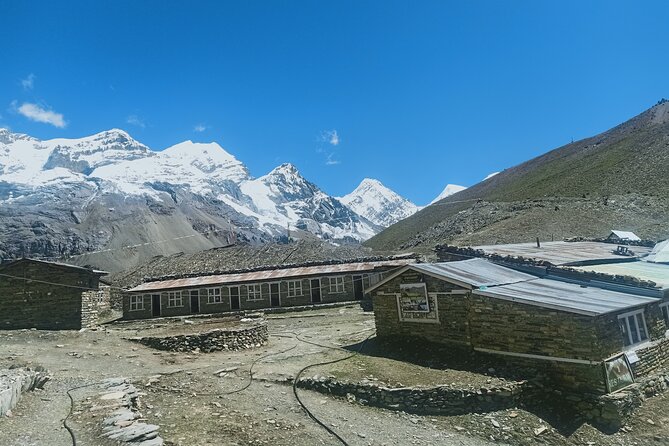
From Tatopani, the plan uses a bus to Beni, at about 830 meters, on Day 15. Day 16 continues by bus from Beni to Pokhara, at about 825 meters. Two nights in Pokhara with breakfast are included, so you get time to wash, rest, and recover after the mountain section.
Day 17 lists a tourist bus from Pokhara to Kathmandu. The tour ends in Kathmandu, and Day 18 is set aside for your international airport departure. If your flight is later, you can use the extra time for shopping, sightseeing, or simply taking a slower day in the capital.
The transport information needs clarification. The inclusions also mention a domestic Jomsom to Pokhara flight, while the itinerary sends you by road through Beni and then from Pokhara to Kathmandu. These cannot all describe the same transport sequence. Ask for confirmation of the exact Jomsom, Beni, Pokhara, and Kathmandu arrangements, and ask if a flight supplement or change applies.
What the $2,000 price really covers
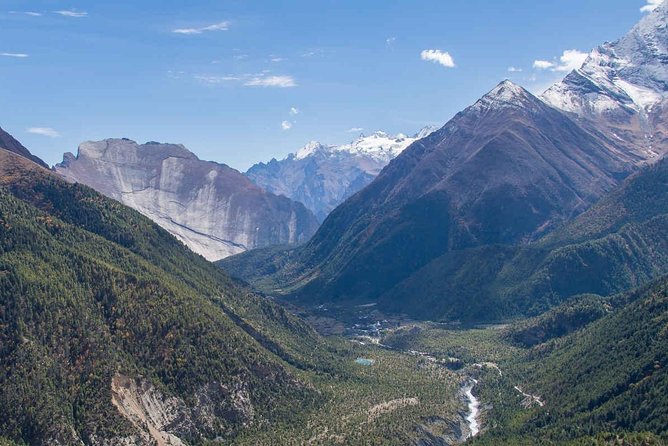
At $2,000 per person, this is not just a guiding fee. The cost includes airport pickup and drop-off, the TIMS card, Annapurna Conservation Area permits, tea-house lodging during the trek, an English-speaking guide, food, guide salary, porter service, staff medical cover, a medical kit, local and government taxes, and a trip certificate.
You also receive a company duffel bag and T-shirt. A porter is provided for two people, which reduces the weight you need to carry but does not mean you can bring unlimited luggage. Ask about the duffel’s size and weight limit before packing.
Food coverage is strong for a trekking package. The stated inclusions provide 16 breakfasts, 15 lunches, and 14 dinners. Snacks include biscuits, Oreo cookies, or peanuts, plus fruit such as apples or pomegranates and one Snickers bar per person during the trek. These small items matter on long walking days.
You still pay for drinks, bottled water, cold drinks, hot water, battery charging, alcohol, personal expenses, donations, and anything not listed. Nepal entry fees, international flights, tips, personal gear, travel insurance, and emergency evacuation are also outside the price.
The value is best for you if you want one company to arrange most of the moving parts. It is less attractive if you already own permits, prefer to arrange your own transport, or want a luxury lodge experience. Tea houses are practical mountain accommodation, not high-end hotels.
Private travel, staff support, and the daily reality
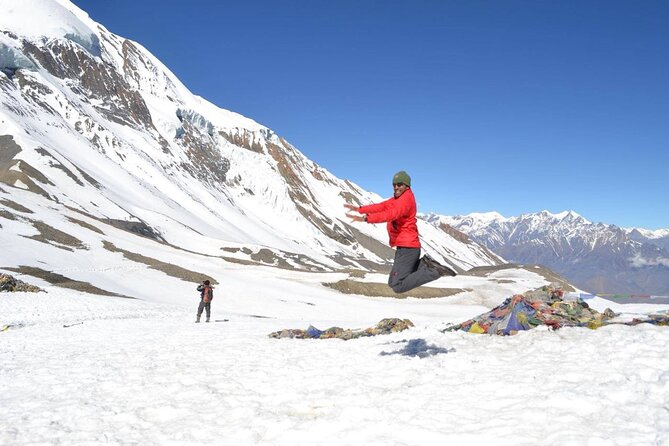
A private departure means only your group participates. That gives you more control than a large fixed group, though your guide still needs to protect the schedule and manage altitude safely.
The guide, porter, food, lodging, permits, and transport create a fairly complete package. Tipping is expected, so include it in your budget from the start. The package covers staff insurance and medicine for staff, but your own insurance remains essential.
You should bring personal trekking clothing and equipment, as these are not included. The supplied information does not specify a gear list, so ask about sleeping bags, walking poles, warm layers, and the duffel arrangement rather than assuming they are provided.
Free cancellation is available up to 24 hours before the start time for a full refund. Changes made inside that 24-hour window are not accepted, and poor weather may lead to a new date or refund. Those terms are useful, but they do not remove the need for insurance against medical problems or evacuation.
Who should choose this Annapurna Circuit trek?
I would choose this trip if you want the classic circuit with a private guide, a high pass, a mix of Hindu and mountain communities, and a package that handles much of the paperwork. The four-region route also gives you more variety than a short out-and-back trek.
It suits a reasonably fit person who can accept long walking days and simple lodging. It is not a good match if you want a relaxed holiday, dislike early starts and road transfers, or are uncomfortable with a 5,416-meter crossing.
Before booking, get three points in writing: the corrected Day 4 to Day 6 schedule, the exact transport after Jomsom, and the name of your assigned guide. If Umesh is available, you may request him, but do not assume that he leads every departure.
Should you book it?
Book this trek if the private structure, included permits and meals, and full Thorong La route fit what you want. At $2,000, the package offers solid practical value because it includes staff, permits, tea houses, transport, Kathmandu and Pokhara stays, snacks, and most meals.
Hold off until the itinerary is corrected and the Jomsom transport is explained. Once those points are clear, this is a strong choice for a prepared trekker who wants a supported Annapurna Circuit without arranging every detail alone.
FAQ
How long is the Annapurna Circuit tour?
The tour lasts approximately 18 days, beginning and ending in Kathmandu.
Where does the trek start?
The stated meeting point is in Thamel, Kathmandu, Nepal. Pickup is offered, and the listed start time is 6:45 a.m.
Is this a private tour?
Yes. Only your group participates in the activity.
Is a guide included?
Yes. An English-speaking guide is included. Umesh is one guide name associated with the experience, but you should confirm who will lead your departure.
Are meals included?
Yes. The package includes 16 breakfasts, 15 lunches, and 14 dinners. Snacks and some fruit are also provided during the trek.
Is Thorong La Pass included?
Yes. The itinerary crosses Thorong La at 5,416 meters on the route from Thorong Phedi to Muktinath.
What is not included in the price?
Travel medical insurance, emergency evacuation, Nepal entry visa fees, international airfare, tips, personal equipment, alcoholic drinks, bottled water, hot water, battery charging, and other unlisted expenses are not included.
Latest treks added in Kathmandu
- Private Manaslu Circuit Trek at Himalayas★ 5.0 · 3 reviews
- Ghorepani Poonhill Trek★ 5.0 · 5 reviews
- Ghorepani Poon Hill Trek★ 5.0 · 16 reviews
- Upper Mustang Trekking★ 5.0 · 2 reviews
- Upper Mustang Trekking★ 3.0 · 2 reviews
- Amazing 1 Day Trekking Experience in Kathmandu Nepal★ 5.0 · 24 reviews
- Upper Mustang Trek★ 5.0 · 5 reviews
- Upper Mustang Trekking★ 5.0 · 4 reviews
Annapurna Base Camp Treks, compared.
Trekking in Annapurna/Langtang/Everest/Upper Mustang regions
Read our review →
Kathmandu to Annapurna Base Camp (ABC) 5-Day Trek
Read our review →Browse the lists this tour appears in