
REVIEW · KATHMANDU
Annapurna Base Camp Trekking
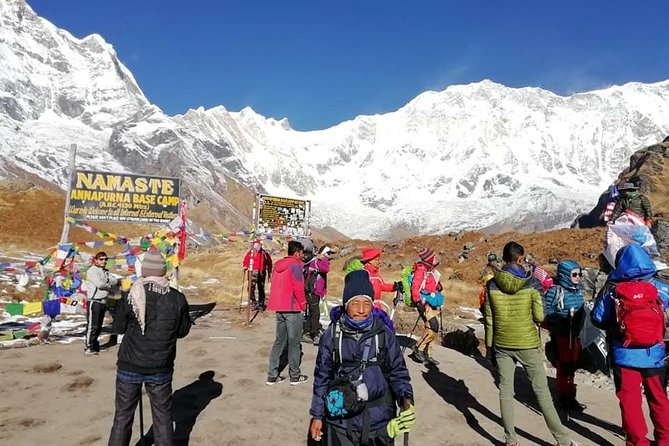
Annapurna Base Camp is the prize here, but the route earns it honestly. You start with a flight to Pokhara, walk through villages and rhododendron forest, pass Poon Hill, and spend a night at 13,550 feet beneath some of Nepal’s most famous peaks. It is a compact Himalayan trek, not a gentle sightseeing tour.
I like the private format, since your group can move at its own pace with a guide rather than being folded into a large crowd. I also like the practical setup: teahouse lodging, breakfast each day, lunch each day, and nine dinners are included. The catch is the schedule. Several days call for five to seven hours of walking, and the height at base camp makes this a serious physical undertaking.
Key points to know before booking
- A high-altitude finish: Annapurna Base Camp sits at 13,550 feet, where cold, fatigue, and thin air become real factors.
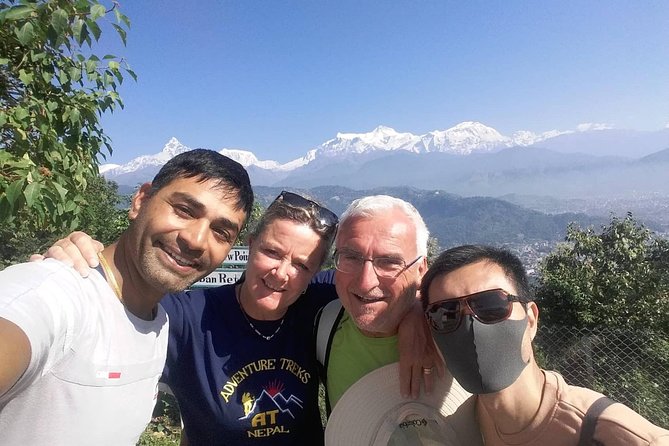
- Poon Hill adds a second viewpoint: You get more than a straight march to base camp, with an early section through the Ghorepani area.
- A private trip with named local staff: Guides connected with this operator include Hari, Homprakash, Prakash, Badal, Rai Badal, Dev, and Sunil, though your assigned team should be confirmed before departure.
- Teahouse travel, not camping: You sleep in guesthouses along the route. Tents are not included.
- Spring has a special reward: Rhododendron forest can be in bloom, adding color to the mountain walk.
- The price covers the core trek: At $1,180 per person, the package includes meals and trekking arrangements, but you should confirm exactly what transport, lodging, permits, and porter support are covered.
Why this 10-day route works
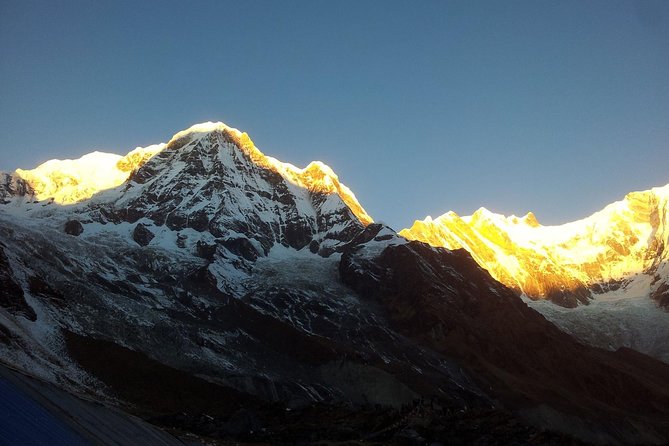
The Annapurna Base Camp trek is a good choice when you want a major Himalayan goal but do not have time for a long circuit. In ten days, the route links Pokhara, Poon Hill, Ghorepani, Tadapani, Chhomrong, Machhapuchhare Base Camp, and Annapurna Base Camp before descending to Jhinu and returning to Pokhara.
That compact schedule is its main strength and its main warning. You see a lot, but you do not get much spare time. A private guide can help with pacing, yet no guide can remove the uphill walking or the effects of altitude. You need a moderate level of fitness, and you should approach the trek as a demanding walking holiday rather than a sightseeing program with a few short hikes.
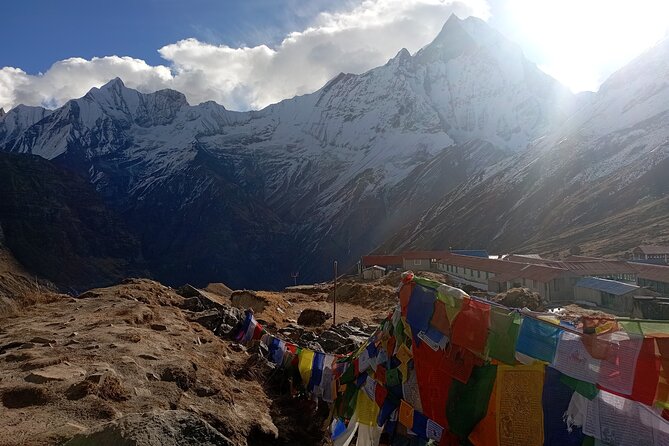
The route also offers variety. One day brings forest and villages. Another follows the Annapurna Mountain Range through high mountain terrain. At base camp, the reward is not one isolated viewpoint but the feeling of being surrounded by enormous Himalayan walls.
More Annapurna Treks in Kathmandu
- Annapurna Circuit Trek with Tilicho Lake
★ 5.0 · 368 reviews - Annapurna base camp trek 5 Days
★ 5.0 · 252 reviews - 14-Day Private Annapurna Base Camp Trek
★ 5.0 · 180 reviews
Day 1: Kathmandu to Pokhara and Nayapul
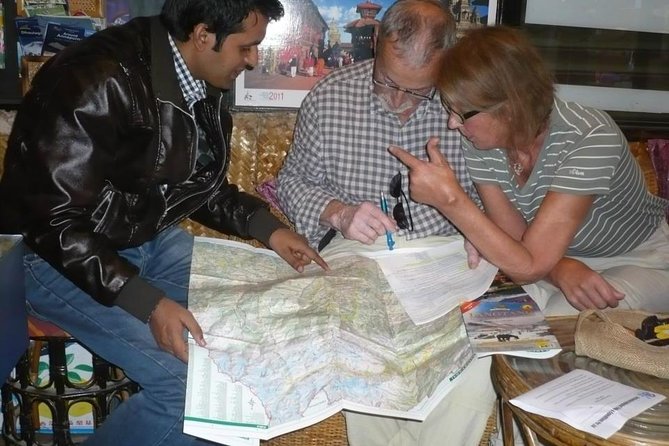
The trip begins early, with a 6:15 am meeting at Destination Unlimited Treks on Thamel Road in Kathmandu. From there, you take a morning flight to Pokhara and continue by road from the airport to Nayapul.
This opening day is mostly about getting into position. The transfer by air saves time compared with a long road journey, which matters on a ten-day schedule. Once you leave the airport, the road transfer brings you to the trail area and the walking portion begins.
The listed timing is about six hours, but the schedule does not clearly separate flight, driving, and trekking time. Ask for a day-by-day transport plan before you leave Kathmandu. That small detail can make the first day feel orderly instead of rushed.
Day 2: Ghorepani and the Poon Hill approach
The second day takes you toward Ghorepani, with about six hours of trekking. Poon Hill is listed as the day’s main stop, so this part of the route introduces one of the trek’s classic mountain viewpoints.
Ghorepani is important because it combines high mountain scenery with a well-used trekking route. You begin to see why the Annapurna region appeals to walkers who want dramatic peaks without committing to a much longer expedition.
The schedule deserves clarification. The day description says trek to Ghorepani, while Poon Hill appears as the stop. Confirm whether the Poon Hill viewpoint is visited on this day or at another point around Ghorepani. You want to know if the outing includes an early uphill walk, especially since the following days are also long.
Day 3: Tadapani through the Machhapuchhare area
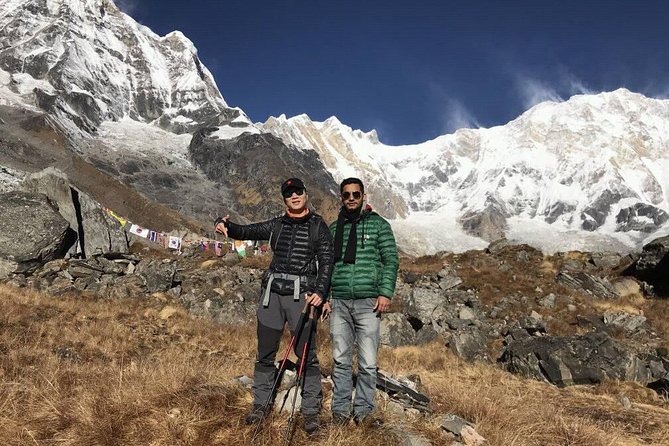
Day three is listed as a seven-hour trek to Tadapani, with Machhapuchhare Base Camp named as the stop. The naming is not perfectly clear, since the route description and stop title do not line up neatly. Treat this as another point to confirm with the operator before booking.
Tadapani is a useful stage on the route because it keeps you moving through the Annapurna region rather than sending you directly to base camp. The trail experience matters here: changing forest, mountain views, and a growing sense that you are leaving ordinary roads behind.
Seven hours on foot is a serious day. If you are new to multi-day trekking, this is where a private guide becomes especially useful. Guides connected with this company have included Hari, Homprakash, Prakash, Badal, and Rai Badal. Your assigned guide may differ, so request the name and experience of your actual guide before departure.
Another trail to compare in Kathmandu:
- Everest Base Camp Trek – 14 Days
★ 5.0 · 1,499 reviews - Everest Base Camp Trek
★ 5.0 · 842 reviews - Everest Base Camp Trekking
★ 5.0 · 485 reviews - Everest Base Camp Trekking – 13 Day
★ 5.0 · 365 reviews
Day 4: Chhomrong and the route deeper into the mountains
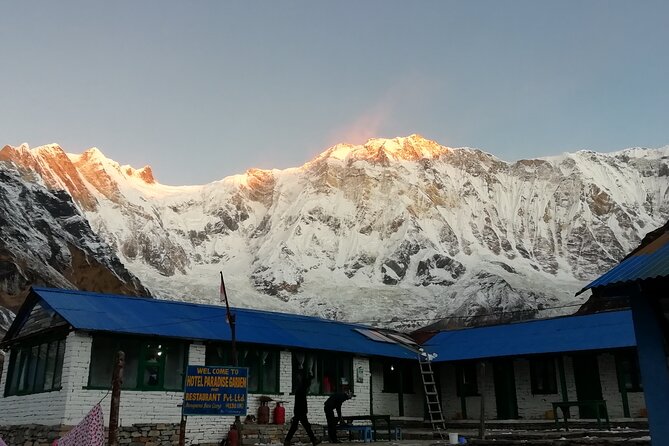
The fourth day calls for about six hours of walking to Chhomrong. The itinerary labels this section Annapurna Base Camp Trek, but the important point is that Chhomrong is a major stage before the route turns deeper toward the sanctuary and base camp.
Chhomrong helps break the journey into manageable sections. You are no longer simply approaching a viewpoint. You are moving through a chain of mountain settlements toward a high destination, with each overnight stop helping your body adjust to longer days and greater elevation.
The private setup is valuable here. You can ask your guide to explain the route, local customs, food, and the names of the peaks around you. Several accounts connected with the company specifically praise the guides for explaining Nepal’s people and culture while walking, not only for leading from one guesthouse to the next.
Day 5: Doban and the Annapurna Mountain Range
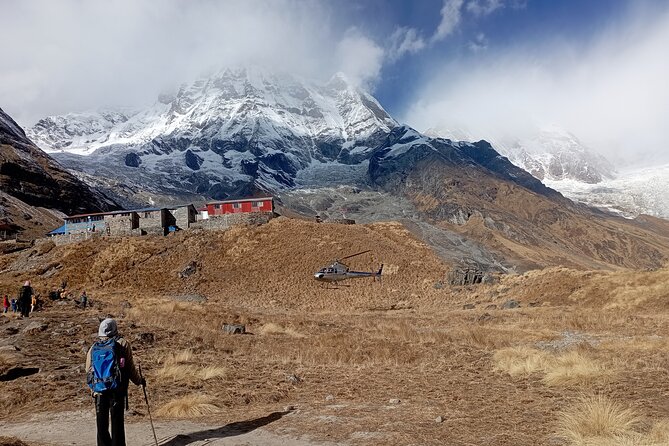
From Chhomrong, the fifth day leads to Doban in about six hours. The Annapurna Mountain Range is the focus of this section, and the route now feels more remote and more mountainous.
Doban is not presented as a sightseeing stop with a long list of attractions. Its value is practical. It is a place to rest before the higher stages, and it divides the climb into sensible overnight sections.
Expect basic teahouse accommodation rather than hotel comfort. That is part of the appeal, but it also means you should be prepared for simple rooms and a basic menu. One point raised in the supplied trip comments is that food can be plain, with some people paying extra when they wanted more choice. Meals are included, but extra food or drinks may cost more.
Day 6: Deurali and the final approach
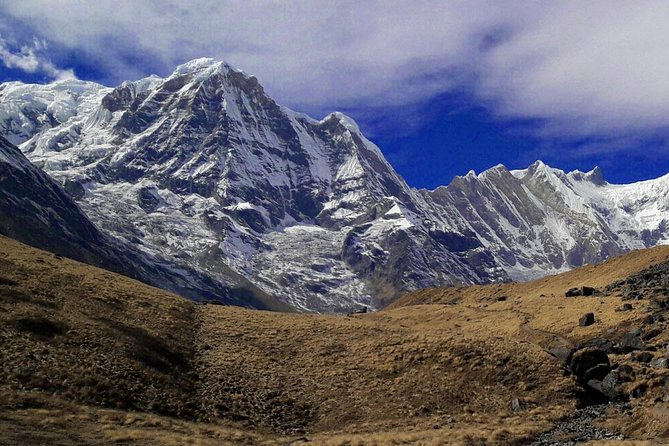
Day six takes about five hours and ends at Deurali. This is a shorter walking day than the previous two, though the increasing height can make a shorter distance feel harder.
Deurali is the kind of stop where pacing matters more than speed. You are preparing for the push to Annapurna Base Camp, and rushing now is a poor bargain. Use the private format to discuss how you feel, how much water you are drinking, and whether the next day’s plan should be adjusted.
The package is designed for people with moderate physical fitness, but that phrase should not be read as easy. You need to be comfortable walking several hours for multiple days, climbing and descending uneven trails, and continuing when the weather or energy level is not perfect.
Day 7: Annapurna Base Camp at 13,550 feet
Day seven is the centerpiece: about five hours to Annapurna Base Camp. The trek reaches 13,550 feet, or 4,130 meters, and includes an overnight guesthouse stay at ABC.
This is the moment to slow down and look around. The base camp experience is about the scale of the mountains, the open high-altitude setting, and the satisfaction of reaching a destination that required a week of walking. You are not simply checking off a viewpoint. You are spending the night in the place that gives the trek its name.
Altitude is the serious issue. Even a fit person may feel tired at 4,130 meters. The itinerary does not describe a separate acclimatization day, so you should not expect a leisurely high-altitude adjustment period. Follow your guide’s advice, keep your pace steady, and discuss any symptoms promptly.
The overnight stay is a strong feature for some people and a drawback for others. It gives you more time at base camp, but high mountain lodging is basic. If you want private hotel rooms and easy access to comforts, this is not the right style of trip.
Day 8: Descending to Bamboo
After the base camp night, day eight returns toward Bamboo in about six hours. The descent changes the character of the walk. You leave the high point behind and begin moving back through lower terrain.
Downhill does not always mean easy. Tired legs, uneven steps, and a full day of walking can make the return demanding. Trekking poles may be useful, though the provided details do not state whether equipment is supplied, so ask before you go.
Bamboo also reminds you why a ten-day itinerary must be paced carefully. You are not finished when you reach base camp. The trek still has two walking days and a final transfer, so save some energy for the return.
Day 9: Jhinu and the end of the trail
Day nine takes about five hours to Jhinu. This is the final major walking stage and a welcome change after the high-altitude section.
Jhinu is a satisfying place to finish because the route is moving back toward lower elevations and road access. The walk still requires effort, but the psychological pressure of reaching base camp is gone. You can enjoy the villages, forest, and changing scenery with less concern about the next major climb.
The itinerary does not provide detailed information about activities at Jhinu, so do not assume that a particular bathing or sightseeing stop is included. Ask your operator what the overnight plan involves and what time the following transfer begins.
Day 10: Pokhara and the final transfer
The last day is listed as five hours and ends in Pokhara. The meeting information says that after trekking, you will be driven to a hotel in Pokhara. A Pokhara Museum stop is also named, but the day description simply says Pokhara, so clarify whether the museum is an included visit or just an itinerary label.
This ending is useful if you plan to spend more time in Pokhara after the trek. It also gives you a clear finish point rather than sending you straight back to Kathmandu on the same day.
The tour starts in Kathmandu but ends in Pokhara. That one-way arrangement is convenient if Pokhara is part of your Nepal plans, but it matters for onward travel. Build your next booking around the stated finish, not the starting city.
What the $1,180 price means
At $1,180 per person, this is not a bargain-basement walk, but the price can make sense if you value a private arrangement and a full package of trekking support. Breakfast is included for all ten days, lunch is included for all ten days, and dinner is included for nine nights. Teahouse accommodation is part of the tour description.
The value depends on what else is included. The supplied details do not spell out every permit, porter arrangement, transfer, or accommodation category. Before paying, ask for a written list covering:
- Kathmandu to Pokhara flight
- Road transfers to Nayapul and back toward Pokhara
- Teahouse nights and the ABC guesthouse
- Guide and porter support
- Trekking permits and fees
- Drinks, snacks, and extra meals
- Travel insurance requirements
Tents are specifically not included, though that may not matter if the route uses guesthouses throughout. You should also budget for personal expenses, since the included meals do not necessarily cover drinks or menu upgrades.
The guide team and the human side of the trek
The strongest practical feature is the local support. The company has arranged trips with guides including Hari, Homprakash, Prakash, Badal, Rai Badal, Dev, and Sunil. Names such as Ashok, who handles company communication, also appear often in the supplied material.
The useful pattern is clear: communication before departure and attentive support on the trail are central to the experience. Guides have helped solo walkers, couples, mixed-age groups, and larger groups, including people ranging from their 30s to their 70s.
That does not mean every guide will suit every walking style. Ask who will lead your group, how many people will be involved, and whether porter support is included in your quoted price. A good guide should help you understand the route and culture while also taking your condition seriously.
When to go and what to expect
Spring is singled out for rhododendron blooms. If you want the forest to add a splash of color to the mountain scenery, spring is the obvious season to consider.
The supplied details do not give a full seasonal weather chart, so I would not promise clear skies or specific temperatures. Mountain conditions can change, and the high overnight at ABC can be cold. Pack for shifting conditions and confirm the recommended gear list with the operator.
The tour is mobile-ticket enabled and confirmation is received at booking. Those are useful conveniences, but they do not replace preparation. You still need to arrive ready for long walking days, high elevation, basic accommodation, and a fixed non-refundable booking.
Who should book this trek?
You should consider it if you want a private Himalayan trek with a clear goal, limited time, and a mix of mountain villages, forest, high terrain, and teahouse nights. It suits people who prefer an organized trip but still want to walk rather than be driven from viewpoint to viewpoint.
It is also a good fit if you want to finish in Pokhara, or if you like having a guide who can explain local life along the trail. The company’s strongest points are its personal support, the inclusion of meals, and the chance to combine Poon Hill with Annapurna Base Camp.
Think twice if you need a flexible cancellation policy, hotel-level comfort, or a slow acclimatization schedule. The booking is non-refundable, the route is demanding, and the itinerary contains a few unclear labels that should be resolved before you pay.
Should you book it?
I would book this trek if the ten-day schedule fits your plans and you are comfortable with several six-hour walking days, an overnight at 13,550 feet, and simple teahouse lodging. The private format and experienced local team can make a demanding route more manageable, while the Poon Hill section and spring rhododendrons add variety beyond the base camp goal.
Before booking, get the exact day plan, assigned guide’s name, transport details, and full list of inclusions in writing. If those answers are clear and you want a focused Annapurna adventure rather than a leisurely holiday, this is a strong option.
FAQ
How long is the Annapurna Base Camp trek?
The experience lasts approximately 10 days, beginning in Kathmandu and ending in Pokhara.
Where does the trek start?
You meet at Destination Unlimited Treks on Thamel Road in Kathmandu at 6:15 am.
Where does the trek finish?
The trek finishes in Pokhara, where you will be driven to a hotel after trekking.
How high does the route go?
The route reaches Annapurna Base Camp at 13,550 feet, or 4,130 meters, above sea level.
Are meals included?
Yes. Breakfast is included for all 10 days, lunch is included for all 10 days, and dinner is included for 9 days.
Are tents included?
No. Tents are not included. The experience is described as using teahouse and guesthouse accommodation, including an overnight stay at Annapurna Base Camp.
Latest treks added in Kathmandu
- Private Manaslu Circuit Trek at Himalayas★ 5.0 · 3 reviews
- Ghorepani Poonhill Trek★ 5.0 · 5 reviews
- Ghorepani Poon Hill Trek★ 5.0 · 16 reviews
- Upper Mustang Trekking★ 5.0 · 2 reviews
- Upper Mustang Trekking★ 3.0 · 2 reviews
- Amazing 1 Day Trekking Experience in Kathmandu Nepal★ 5.0 · 24 reviews
- Upper Mustang Trek★ 5.0 · 5 reviews
- Upper Mustang Trekking★ 5.0 · 4 reviews
Annapurna Base Camp Treks, compared.




Trekking in Annapurna/Langtang/Everest/Upper Mustang regions
Read our review →


Kathmandu to Annapurna Base Camp (ABC) 5-Day Trek
Read our review →Browse the lists this tour appears in