
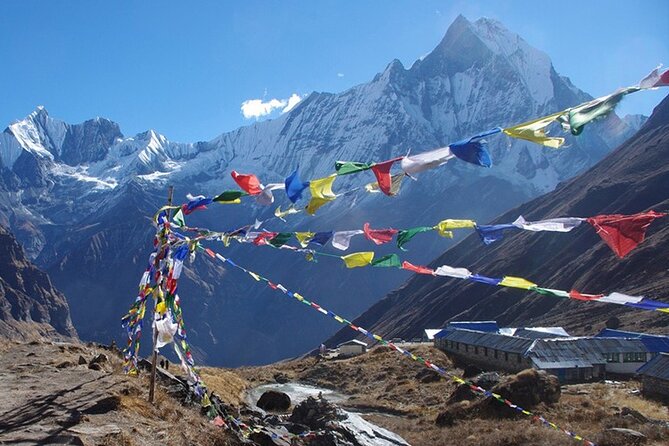
REVIEW · KATHMANDU
Annapurna Base Camp Trek -13 Days
Annapurna Base Camp is one of Nepal’s best short Himalayan treks, and this 13-day private itinerary gives you time for both the trail and the country around it. You’ll watch sunrise from Poon Hill, walk into a ring of snowy peaks, sleep in simple tea houses, and finish with a soak at Jhinu’s hot springs.
I like the way the price covers the pieces that can make Nepal tiring to arrange yourself: permits, transfers, hotels, meals, guide, and porter. I also like the private format, since your group can set a sensible pace instead of being tied to a large tour. The main caution is that the itinerary is physically demanding, and a few daily descriptions are brief or slightly unclear, so confirm the exact overnight stops before you pay.
Key points to know before booking
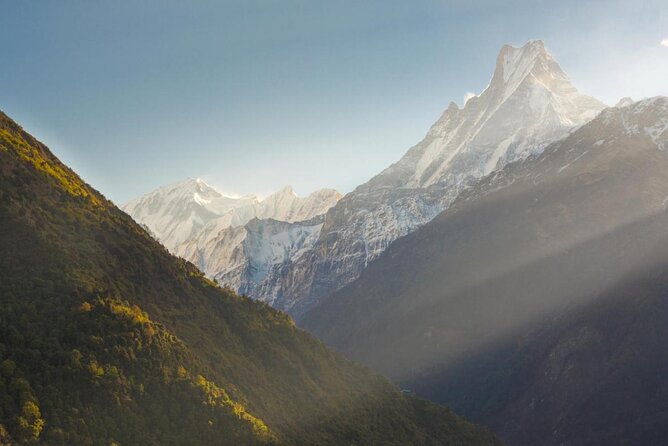
- Poon Hill adds a spectacular sunrise: The early climb reaches 3,210 meters and gives wide views toward Dhaulagiri, Annapurna, Nilgiri, and Machhapuchhare.
- Annapurna Base Camp reaches 4,170 meters: The highest night comes with cold, basic lodging, and a real need to pace yourself.
- Your price covers most major trek costs: Hotels, tea houses, meals during the trek, permits, transfers, a guide, and shared porter support are included.
- The route mixes mountain culture with big scenery: You pass Magar villages, bamboo and rhododendron forests, stone stairways, waterfalls, and riverside settlements.
- Private means personal service: One porter is provided for every two clients, and guides used by the company have included Prakash Adhikari, Badri Kakri, and Bharat Simkada.
- The schedule is active but not rushed on paper: You get two nights in Kathmandu and two in Pokhara, but the trail days still require moderate fitness.
What the $1,200 price really buys you
At $1,200 per person, this trek offers solid value if you want a package rather than a collection of separate bookings. You are paying for airport pickup, hotel nights in Kathmandu and Pokhara, the road journey between them, tea house lodging, meals while trekking, permits, a guide, and porter support.
That matters in Nepal. A trek is not only a walk. It involves transport, permits, accommodation, food, luggage movement, and choices about where to sleep each night. Having those parts handled lets you focus on the trail.
The package includes two nights in three-star hotels in Kathmandu with breakfast and two nights in Pokhara with breakfast. During the trek, you get lodge or tea house accommodation, plus breakfast, lunch, and dinner. A duffle bag is supplied for the trek and returned afterward, which is useful if you do not want to carry your main suitcase into the mountains.
You still need to budget for a Nepal visa, international flights, insurance with mountain rescue cover, personal drinks, showers, laundry, phone use, charging, bottled or boiled water, and tips. Extra hotel nights are also your responsibility if flights, weather, or an early return disrupts the plan.
The price looks strongest for people who value door-to-door handling and personal support. Independent trekkers may spend less by arranging each part themselves, but they take on more work and more risk if transport or lodging changes.
More Annapurna Treks in Kathmandu
- Annapurna Circuit Trek with Tilicho Lake
★ 5.0 · 368 reviews - Annapurna base camp trek 5 Days
★ 5.0 · 252 reviews - 14-Day Private Annapurna Base Camp Trek
★ 5.0 · 180 reviews
Kathmandu arrival and the practical start
Day one is simple by design. A company representative meets you at Tribhuvan International Airport and takes you to your hotel. You have time to meet the trek team and settle in.
That airport pickup is a small service with real value after a long international flight. Kathmandu traffic can be confusing, and a reliable arrival transfer gives you one less task to solve while tired.
The company manager, Bhagwat Simkhada, is described as responsive and quick to answer questions. That is useful before departure, especially if you need to discuss dietary needs, your arrival time, or what to pack. Vegetarian meals can be requested.
The itinerary lists a 7:00 am start time. Ask how that applies to your arrival day and the road departure, since your actual start may depend on flight timing and the agreed schedule.
Pokhara, lakeside calm before the trail
The drive from Kathmandu to Pokhara takes most of the morning. Afterward, the plan leaves part of the afternoon for looking around Pokhara Valley and walking beside Fewa Lake.
Pokhara is a good transition point. Kathmandu is busy and intense, while Pokhara gives you open views, lakes, temples, caves, and a clearer sense of the mountains ahead. On a good day, the Annapurna and Dhaulagiri ranges appear above the valley.
You get two nights in a three-star Pokhara hotel with breakfast. That creates a useful cushion before the trek, though the exact schedule should be confirmed because the itinerary does not spell out every hotel night in detail.
The road transfer is practical, not glamorous. Much of the value is getting you from the capital to the trail region without arranging buses or private vehicles yourself.
Nayapul to Ulleri, the first taste of trail life
On day three, a roughly 90-minute drive takes you to Nayapul, at about 1,050 meters. From there, you walk through Birethanti and toward Tikhedhunga, at about 1,570 meters. The walking time is listed at three to four hours, with another hour and a half possible if you continue uphill to Ulleri.
This first day gives you a gentle introduction to rural Nepal, but do not mistake it for an easy stroll. The route soon includes stone steps and steady climbing. If your group has energy, reaching Ulleri reduces some of the next day’s work. If not, stopping lower makes sense.
Your guide should help decide based on daylight, weather, and how the group is feeling. That is one of the useful differences between a private trek and a fixed large-group departure.
Another trail to compare in Kathmandu:
- Everest Base Camp Trek – 14 Days
★ 5.0 · 1,499 reviews - Everest Base Camp Trek
★ 5.0 · 842 reviews - Everest Base Camp Trekking
★ 5.0 · 485 reviews - Everest Base Camp Trekking – 13 Day
★ 5.0 · 365 reviews
Ulleri, Banthanti, and the road to Ghorepani
Day four begins with about two hours of steep climbing, then passes through the Magar villages of Ulleri and Banthanti. Forest and village sections alternate, with views toward Machhapuchhare, Hiunchuli, and Annapurna South.
The published plan is brief about the overnight stop here, but the following morning’s Poon Hill sunrise normally requires staying in the Ghorepani area. Confirm whether this day ends at Ghorepani or another nearby lodge.
This is a good point to settle into the rhythm of the trek. Tea house rooms are basic, and dining rooms become the social center of the evening. Meals are included, but personal extras such as hot showers, drinks, snacks, and charging may cost more.
Poon Hill sunrise and the long ridge walk
Day five starts early with a climb to Poon Hill at 3,210 meters. The reward is a broad mountain panorama, especially around sunrise. The view includes Dhaulagiri, Tukuche Peak, Nilgiri, Varaha Shikhar, Annapurna I, Annapurna South, Annapurna III, Machhapuchhare, Annapurna IV, Annapurna II, and Lamjung Himal.
Poon Hill is not the final purpose of this trek, but it may be one of its best visual moments. You get a wide view before the trail turns deeper toward the sanctuary. Bring warm layers for the morning, since the climb begins before the day has warmed.
After Poon Hill, the route continues toward Tadapani. The day can feel long because you are walking before breakfast, then continuing through changing forest and mountain terrain. Pace matters here. The guide should keep the group moving without turning the morning into a race.
Tadapani to Chhomrong, with food and mountain views
The walk from Tadapani to Chhomrong takes about five to six hours and covers roughly seven to eight kilometers. You pass through forest and villages before reaching Chhomrong, a major stop beneath the Annapurna range.
Chhomrong is known for its Gorkha community and for a surprising comfort on the trail: pizza. It is a good place to order something familiar if you are tired of rice, noodles, and dal. You can also enjoy views of the Annapurna peaks from the village.
The next sections include many stairs, so use Chhomrong as a recovery point rather than only a place to eat. Keep your daypack light, refill water when possible, and protect your knees on descents.
Bamboo forests, Sinuwa, and the upper valley
Leaving Chhomrong, the trail drops down a stone staircase and crosses the Chhomrong Khola before climbing again. The route passes Sinuwa, a checkpoint at about 2,350 meters, then descends through bamboo and rhododendron forest toward Himalaya, at about 2,920 meters.
This section has a pleasing change of mood. The trail becomes more enclosed, with trees, streams, mud, and steep steps replacing broad village views. Stinging nettles are noted along the route, so long trousers are sensible.
The walking is not technically mountaineering, but the footing can be uneven and wet. Trekking poles would be useful, though they are not listed as part of the package. Ask your operator what equipment is supplied before departure.
Reaching Annapurna Base Camp at 4,170 meters
The upper route passes alpine forest and opens toward Hiunchuli, Annapurna South, Annapurna I, Annapurna III, Gangapurna, and Machhapuchhare. From there, the trail approaches Annapurna Base Camp at about 4,170 meters.
This is the emotional center of the trek. You are walking into a natural amphitheater of high peaks rather than simply arriving at a sign or viewpoint. The scale changes as the valley closes in around you.
The altitude is serious enough to deserve attention. The itinerary says travelers should have moderate physical fitness, but fitness alone does not prevent altitude problems. Walk steadily, drink enough, tell your guide if you feel unwell, and do not hide symptoms to protect the schedule. The package includes travel rescue arrangements and a first aid kit, but you still need personal travel and rescue insurance.
The overnight stay at base camp is likely to be basic and cold. That is part of the experience, but it is also the point where comfort drops and careful pacing matters most.
Sunrise at base camp and the return through Bamboo
Day nine gives you a morning view of the Annapurna range, glacier, valley, and surrounding peaks before breakfast. Then you descend toward Bamboo, a five to six-hour walk.
The return is not simply a repeat in reverse. Downhill walking stresses different muscles, and stone steps can be hard on knees. Trekking poles, slow descents, and good footwear will help.
The route passes through rhododendron, oak, and bamboo forest. At times it climbs again toward Kuldi Ghar before leveling out to Sinuwa, so do not expect every part of the day to be downhill.
Jhinu hot springs, a welcome final reward
Day ten continues through Sinuwa and Chhomrong before dropping toward Jhinudanda. From the settlement, a 20-minute walk leads to the hot spring beside the Modi Khola.
This is a smart inclusion. After several days of stairs and steep trail, a warm soak gives you a chance to loosen up and enjoy the river valley. Bring a swimsuit in an easy-to-reach part of your bag.
The route still has climbs and descents before you reach the hot spring, so save some energy. You are not finished trekking when you leave Bamboo.
Birethanti, Nayapul, and the road back
On day eleven, you descend past waterfalls, then climb gently across streams and terraces before reaching Birethanti at around 1,025 meters. From there, the trail follows the Modi River through forest to Nayapul.
This final walk gives you one more look at the lower valley before the road takes over. It is a satisfying finish because the terrain feels warmer, lower, and more settled than the upper sanctuary.
From Nayapul, transport returns you toward Kathmandu on day twelve. The route passes Damauli, Dumre, Muglin, and Kurintar. Near Kurintar, you can see the area served by Nepal’s first cable car to Manakamana Temple, though the itinerary does not state that a cable car ride is included.
The drive continues through Naubise and Thankot, the gateway to Kathmandu. Road conditions and traffic can affect timing, so keep your evening flexible. A farewell dinner at a Nepalese restaurant with cultural performance closes the trip.
Guides, porters, and the private format
The package provides an experienced guide and one porter for every two clients. That is a useful ratio for a private trek, but it does not mean your porter carries an unlimited load. Pack carefully and keep your daily essentials in your own daypack.
Past trips with this company have been led by guides including Prakash Adhikari, Badri Kakri, and Bharat Simkada. Assignments can change, so ask for your guide’s name before departure if that matters to you.
The strongest pattern in the company’s service is personal attention. Airport reception, quick answers from Bhagwat Simkhada, guide support, and help with last-minute changes have all been important parts of the experience. That flexibility matters in Nepal, where road and mountain conditions can force a change of plan.
Private travel also lets you discuss rest stops, food, and walking speed directly with your guide. It is best for couples, friends, and small groups who want help without joining strangers.
Who should book this trek
This trip suits you if you want a classic Himalayan route with a guide, porter, meals, and permits already arranged. It is also a good fit if you want more than the base camp itself, since Poon Hill, Pokhara, village stops, and the Jhinu hot spring add variety.
You should be comfortable walking for several hours on uneven trails and climbing many stone steps. The route reaches 4,170 meters, so you need patience, reasonable fitness, and a willingness to slow down.
It may not suit you if you want private bathrooms, predictable road travel, or a relaxed sightseeing holiday. Tea houses are functional rather than luxurious, and personal costs continue along the way for showers, charging, drinks, and other comforts.
Before booking, ask for the exact lodge stops on days three through five, the name of your guide, the vehicle arrangements, and the plan if weather or road conditions interrupt the schedule.
Should you book the Annapurna Base Camp trek?
I would recommend this package if you want a well-supported route at a reasonable all-in price. The combination of Poon Hill, Annapurna Base Camp, village trails, and Jhinu hot springs gives you more variety than a simple out-and-back walk.
The main reason to hesitate is not the company’s service. It is the nature of the trek. You will face long walking days, steep steps, basic mountain lodging, and high altitude. If you accept that, the included guide, porter, permits, meals, rescue arrangements, and transport make this a practical way to reach Annapurna Base Camp.
FAQ
How long is the Annapurna Base Camp trek?
The full package lasts approximately 13 days, including arrival and departure in Kathmandu, time in Pokhara, the trek, transport, and the farewell dinner.
What is the price per person?
The listed price is $1,200 per person.
Is this a private tour?
Yes. Only your group participates, and the trek is arranged with personal guide service.
Is airport pickup included?
Yes. A company representative meets you at Tribhuvan International Airport and transfers you to your Kathmandu hotel by private vehicle.
Are Kathmandu and Pokhara hotels included?
Yes. The package includes two nights in a three-star Kathmandu hotel with breakfast and two nights in a three-star Pokhara hotel with breakfast.
Are meals included during the trek?
Yes. Breakfast, lunch, and dinner are included during the trekking portion. The package lists 12 breakfasts, nine lunches, and nine dinners.
Are permits included?
Yes. The package includes the Trekkers’ Information Management System permit, the Annapurna Conservation Area Permit, government fees, and necessary paperwork.
Is a porter included?
Yes. The package provides one porter for every two clients. A duffle bag is supplied and returned after the trek.
What fitness level is required?
The tour requires a moderate level of physical fitness. The route includes steep stairs, long walking days, forest trails, and an ascent to Annapurna Base Camp at approximately 4,170 meters.
Is cancellation free?
You can cancel at least 24 hours before the local start time for a full refund. Cancellations or changes made less than 24 hours before the start time are not accepted for a refund.
Latest treks added in Kathmandu
- Private Manaslu Circuit Trek at Himalayas★ 5.0 · 3 reviews
- Ghorepani Poonhill Trek★ 5.0 · 5 reviews
- Ghorepani Poon Hill Trek★ 5.0 · 16 reviews
- Amazing 1 Day Trekking Experience in Kathmandu Nepal★ 5.0 · 24 reviews
- Upper Mustang Trekking★ 5.0 · 2 reviews
- Upper Mustang Trekking★ 3.0 · 2 reviews
- Upper Mustang Trek★ 5.0 · 5 reviews
- Upper Mustang Trekking★ 5.0 · 4 reviews
Annapurna Base Camp Treks, compared.




Trekking in Annapurna/Langtang/Everest/Upper Mustang regions
Read our review →


Kathmandu to Annapurna Base Camp (ABC) 5-Day Trek
Read our review →Browse the lists this tour appears in