
REVIEW · KATHMANDU
Annapurna Base Camp Trek
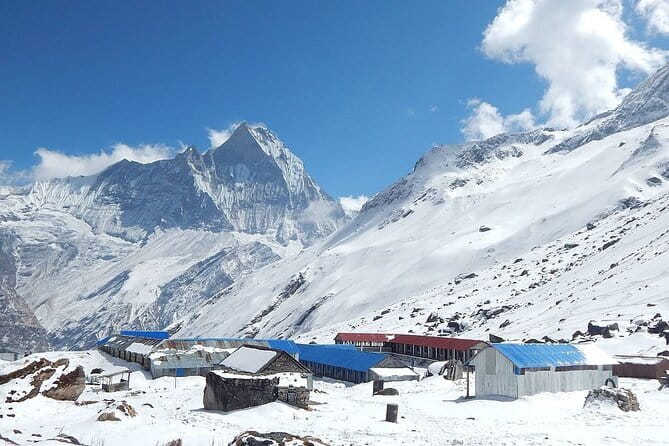
Annapurna Base Camp gives you the rare thrill of walking right into a mountain amphitheater, with peaks above 21,000 feet rising around the route. The trail mixes forest, stone stairways, hill villages, suspension-bridge country, and high mountain air rather than saving everything for one grand viewpoint.
I especially like the Poon Hill sunrise hike and the natural rhythm of the route: climb high, pass through villages, then descend toward Jhinu Hot Spring. I also like that the package includes licensed guides, porters, and local support, which matters on a trek with long uphill days. The catch is simple: this is not a casual walk. The climb to 13,550 feet will test your legs, and weather or road delays can force changes.
Key points to know before booking
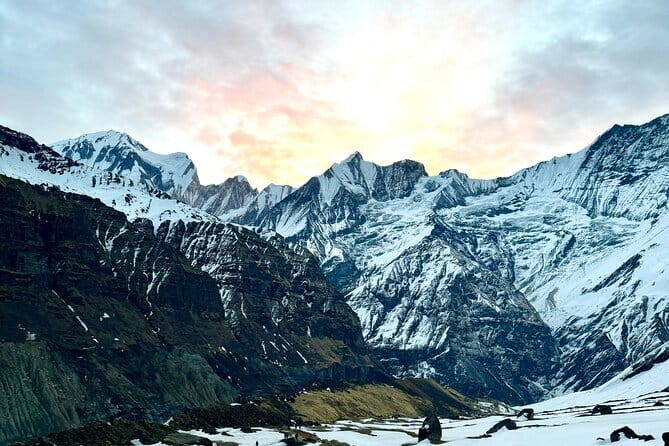
- Poon Hill adds a second mountain goal: You reach 10,535 feet before continuing toward Base Camp.
- Annapurna Base Camp reaches 13,550 feet: The altitude and long climbs require moderate fitness.
- The route includes both hotels and guesthouses: Kathmandu and Pokhara use three-star hotels, while trekking nights are in twin-share guesthouses.
- One porter serves each pair: Pack carefully and confirm what weight the porter will carry.
- Kathmandu and Pokhara are built into the trip: You get city sightseeing before and after the mountain walk.
- Travel insurance is compulsory: It must cover emergency rescue and evacuation and should be arranged before arriving in Nepal.
Why this route feels bigger than a simple mountain hike
The Annapurna Base Camp trek is a gradual change of worlds. You begin in Kathmandu at about 4,600 feet, move to Pokhara at roughly 3,000 feet, and then start walking from Nayapool at 3,477 feet. The early stages pass through settled hills and forest before the trail becomes more rugged and alpine.
The destination is not just a viewpoint. Annapurna Base Camp sits beneath the Annapurna massif, and local tradition regards the area as a home of the gods. You do not need to share that belief to understand the feeling of the place. The mountains close in around the basin, and the scale changes quickly from village paths to immense Himalayan walls.
This is a private activity, so only your own group takes part. That gives you more say over pace and small itinerary changes, provided there is enough time and everyone agrees. It also makes the guide relationship more important. Guides named in the company’s trip material include Kumar Thapa and Jeevan. If a particular guide matters to you, ask about availability before paying.
More Annapurna Treks in Kathmandu
- Annapurna Circuit Trek with Tilicho Lake
★ 5.0 · 368 reviews - Annapurna base camp trek 5 Days
★ 5.0 · 252 reviews - 14-Day Private Annapurna Base Camp Trek
★ 5.0 · 180 reviews
Days 1 to 3: Kathmandu orientation and the road to Pokhara
Your first day is for arrival and a hotel night in Kathmandu. Day two includes sightseeing around the Kathmandu Valley, followed by a pre-trip meeting. This is useful time, not filler. You can settle in, check your equipment, discuss the walking plan, and raise any medical concerns before leaving the city.
On day three, you take a tourist bus to Pokhara. The trip is listed as taking around a full day, though road conditions can affect timing. Pokhara is at about 3,000 feet and serves as the gateway to the trek. You spend the night at a hotel, with sightseeing included on the return leg of the trip as well.
The road journey is one reason to keep spare days around this experience. The operator warns that flight delays, accidents, and natural hazards can change the schedule. That is practical advice, not fine print to ignore. Avoid booking an important international connection immediately after the scheduled return to Kathmandu.
Days 4 and 5: Nayapool, Tikhedhunga, and Ghorepani
Day four starts with a drive to Nayapool at 3,477 feet. From there, you walk to Tikhedhunga at 5,060 feet and sleep in a guesthouse. This is your first real trail day, and it gives you a chance to settle into the pace before the route climbs higher.
Day five takes you to Ghorepani at 9,416 feet. This is a major gain in altitude over a short period, so do not treat it as an easy warm-up. The trek spends much of its time in the lower Himalayas, but the constant stair climbing can still make your legs work hard.
Ghorepani is an important stop because it prepares you for the next morning’s early hike to Poon Hill. Guesthouse accommodation keeps you close to the trail, but you should expect simple mountain lodging rather than city-hotel comfort. Twin sharing is the standard arrangement throughout the trek.
Days 6 and 7: Poon Hill, Tadapani, and Chomrong
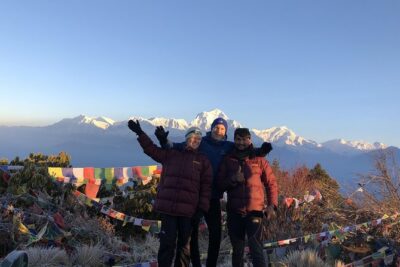
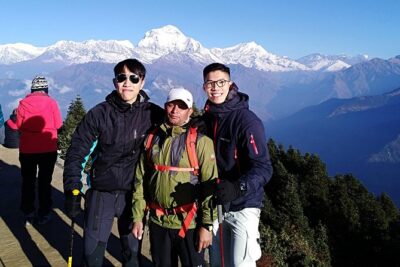
Day six begins with a hike to Poon Hill at 10,535 feet. The point of this early climb is the mountain view, but the effort matters too. You are already above 10,000 feet before the main Base Camp section, giving you a useful taste of thinner air.
After Poon Hill, the trail continues to Tadapani at 8,628 feet. This combination makes for a full day: climb early, descend, then keep walking. Tadapani is followed on day seven by the trek to Chomrong at 7,120 feet.
Chomrong is one of the route’s key village stops and a useful transition point. You are still among settled mountain communities, but the direction of travel now points clearly toward the high sanctuary. The drop from Tadapani to Chomrong does not mean the route has become easy. Himalayan trails often trade a descent for another climb, and your knees may notice that more than your altitude chart does.
Another trail to compare in Kathmandu:
- Everest Base Camp Trek – 14 Days
★ 5.0 · 1,499 reviews - Everest Base Camp Trek
★ 5.0 · 842 reviews - Everest Base Camp Trekking
★ 5.0 · 485 reviews - Everest Base Camp Trekking – 13 Day
★ 5.0 · 365 reviews
Days 8 and 9: Into the high valley and Annapurna Base Camp
Day eight leads to Himalaya Hotel at 9,678 feet. The route now moves through forests and above gorges, with a stronger sense of remoteness. You should expect long walking hours and repeated climbs. This is where moderate fitness becomes more than a box on a booking form.
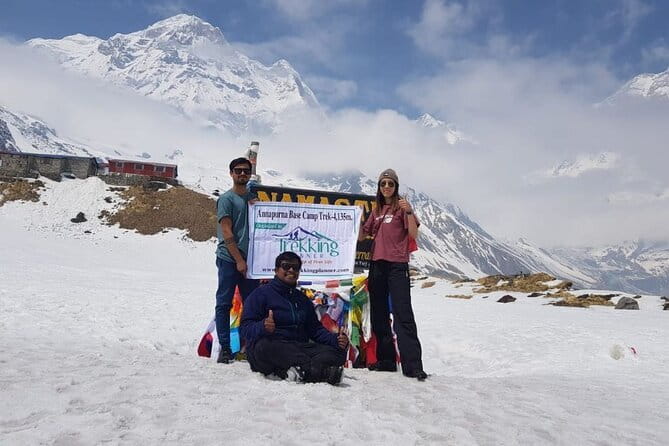
Day nine is the central achievement: trekking to Annapurna Base Camp at 13,550 feet. The summit of the trek is not a technical climb, but the altitude makes the day serious. You will be walking for hours, and the final approach can feel demanding even for someone comfortable with regular exercise.
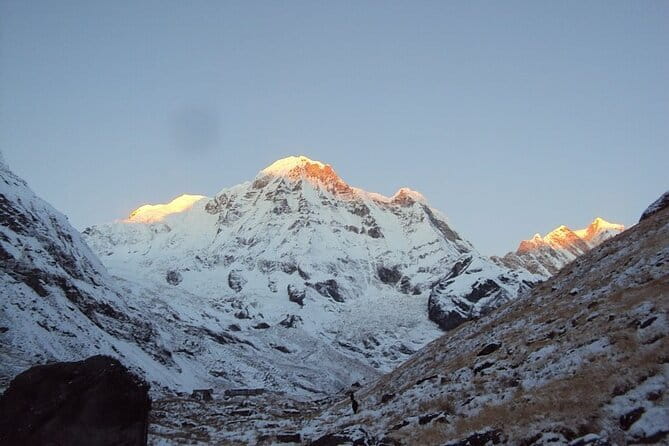
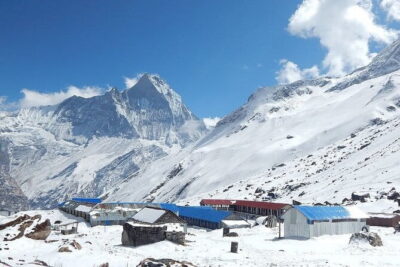
The reward is the setting. You are on foot beneath the Annapurna massif, surrounded by peaks that rise far beyond ordinary scale. The sense of arrival comes from the entire route, not just the final photograph: the villages, forests, gorge crossings, changing altitude, and the steady work of putting one foot in front of the other.
You sleep at a guesthouse near Base Camp. Keep your expectations sensible. At this height, the value of the night is your location and the chance to experience the mountain basin, not hotel-style service.
Days 10 to 12: Descending through Bamboo to Jhinu Hot Spring
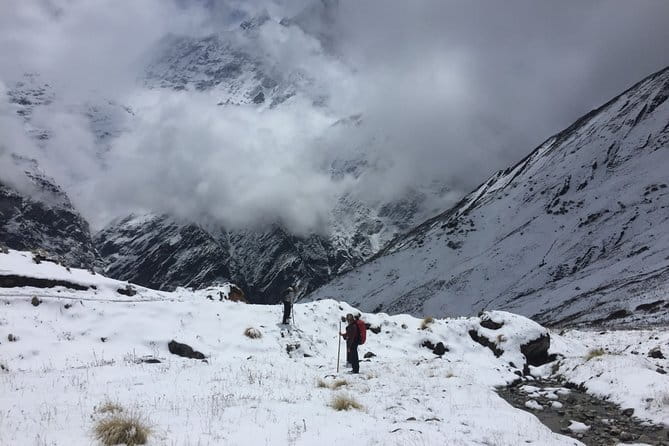
Day ten drops sharply to Bamboo at 7,695 feet. The descent is welcome for your breathing, but it can be tough on your knees after the high point. Trekking poles, if part of your personal equipment, can be useful here, though the tour requires you to bring your own gear.
Day eleven continues to Jhinu Hot Spring at 5,840 feet. This is a smart choice in the route because it gives you a different kind of reward after the high-altitude section. The hot spring offers a chance to rest and soak after several demanding days. The experience is still part of an active trek, so do not picture a full spa stop.
On day twelve, you trek back to Nayapool at 3,477 feet, then drive to Pokhara. Sightseeing in Pokhara follows, with a hotel night. This second stay in Pokhara helps break up the return journey and gives you a little time to shift from trail life back to city life.
Days 13 and 14: Returning to Kathmandu
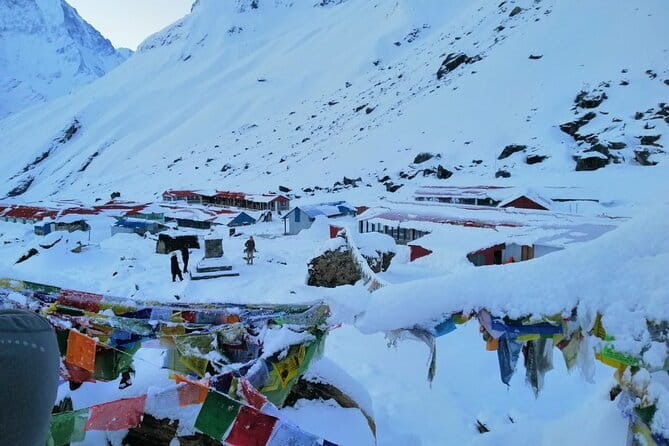
Day thirteen is the drive back to Kathmandu, followed by a farewell dinner and hotel night. As with the earlier bus journey, road timing can vary, so retain some patience and avoid tight onward plans.
Day fourteen is your final departure. The package includes the hotel night in Kathmandu and breakfast at the three-star hotel, but international airfare is not included. Visa fees and travel insurance are also your responsibility.
What the $1,300 price covers
At $1,300 per person, the price is best judged as a support package rather than a simple walking fee. It includes Kathmandu hotel accommodation on a twin-sharing basis, breakfast there, trekking guesthouses, licensed local guides, porters, and support staff. It also includes the city transfers and planned transport between the main stages, according to the schedule provided.
The porter arrangement is one porter for every pair of trekkers. That is useful, but it does not mean you can bring unlimited luggage. Ask how the operator handles porter weight limits and what you should carry in your day pack. You will still need access to water, personal medicine, documents, warm layers, and other essentials while walking.
The value is strongest for someone who wants the main logistics arranged without paying for luxury. You are not buying private hotel rooms or high-end mountain lodges. You are paying for local organization, route support, and help with a trek that would be harder to arrange on your own.
Bring or rent your trekking equipment. The operator says forgotten items can be purchased in Kathmandu or rented for a small fee, but your safest plan is to arrive with the essentials already sorted. A standard equipment list is available from the company.
Fitness, altitude, and insurance
You should have a moderate level of physical fitness. The route includes long climbs, high steps, and several days that combine ascent and descent. You do not need to be a technical mountaineer, but you should be comfortable walking for hours and handling repeated uphill sections.
The altitude rises from about 4,600 feet in Kathmandu to 13,550 feet at Base Camp. That is a substantial change. Tell the guide about any medical condition that could affect your trek, consult your doctor before departure, and bring any medicine you need.
Travel insurance is mandatory. It must cover emergency rescue and evacuation, and the operator says you need to arrange it at home before arriving in Nepal. This is especially important for a high-altitude trek where a medical problem or natural hazard could change the plan quickly.
Guide support and group flexibility
The strongest part of this experience is the human support built into it. The company uses local government-licensed guides, porters, and support staff. The trip notes connect Kumar Thapa and Jeevan with guiding on these Nepal routes, and the feedback describes guides who handled changes, personal preferences, and problems calmly.
That matters because mountain trips rarely run like a clock. One group of eight, including people from ages 15 to 55, was reported as being handled well by two guides. That does not guarantee the same pace or guide arrangement for your group, but it suggests the operator has experience adjusting support to mixed abilities.
The tour is private, which gives you more control than a large fixed group. You may alter the plan to some degree if there are no time limits and everyone agrees. Speak with the company before departure, then discuss realistic changes with the guide on the trail.
Who should book this trek?
I would choose this trip if you want a classic Annapurna experience with Poon Hill, Base Camp, Pokhara, and Kathmandu included in one 14-day plan. It suits you if you value local guides and porters, prefer a planned route, and are comfortable with basic guesthouse accommodation.
It is also a good fit for a first multi-day trek if you prepare properly and accept that the high point will be demanding. The support structure can make a first Himalayan trek less confusing, especially when transport, lodging, and porters are arranged together.
I would hesitate if you want a relaxed holiday, private rooms, short walking days, or complete control over departure times. The trip includes long climbs, high altitude, shared accommodation, and road travel. It is an adventure with practical comforts, not a soft version of Nepal.
Should you book the Annapurna Base Camp Trek?
Book it if you want a well-supported route with real mountain walking, a strong sequence of stops, and the extra rewards of Poon Hill and Jhinu Hot Spring. The $1,300 cost makes sense for the included guides, porters, hotels, guesthouses, and transport, though you must add insurance, visa fees, international airfare, and equipment.
Before booking, confirm guide assignment, porter arrangements, equipment needs, and the exact pickup details for the 7:45 am start. Leave spare time around the trip, prepare for 13,550 feet, and do not underestimate the uphill days. If you arrive ready for effort and a few surprises, this trek gives you a direct and memorable way into the Annapurna mountains.
FAQ
How long does the Annapurna Base Camp Trek take?
The experience lasts approximately 14 days, including arrival and departure days, Kathmandu sightseeing, transport to and from Pokhara, and the trek itself.
What is the highest point of the trek?
Annapurna Base Camp is listed at 13,550 feet. Poon Hill, another major viewpoint on the route, reaches 10,535 feet.
Is transportation included?
The planned route includes drives between Kathmandu, Pokhara, Nayapool, and the trekking trail. The schedule includes a tourist bus to Pokhara and transport back to Kathmandu.
Are guides and porters included?
Yes. The package includes local government-licensed guides, one porter for each pair of trekkers, and local support staff.
What accommodation is provided?
You receive twin-sharing accommodation at a three-star hotel in Kathmandu, with breakfast provided. During the trek, you stay in twin-share guesthouses. Pokhara hotel stays are also included in the schedule.
Do I need travel insurance?
Yes. Travel insurance is compulsory and must cover emergency rescue and evacuation. The operator says you should arrange it before arriving in Nepal.
Can I cancel for a full refund?
You can receive a full refund if you cancel at least 24 hours before the experience start time. Cancellations or changes made less than 24 hours before the start are not accepted for a refund.
Latest treks added in Kathmandu
- Private Manaslu Circuit Trek at Himalayas★ 5.0 · 3 reviews
- Ghorepani Poonhill Trek★ 5.0 · 5 reviews
- Ghorepani Poon Hill Trek★ 5.0 · 16 reviews
- Upper Mustang Trekking★ 3.0 · 2 reviews
- Amazing 1 Day Trekking Experience in Kathmandu Nepal★ 5.0 · 24 reviews
- Upper Mustang Trekking★ 5.0 · 2 reviews
- Upper Mustang Trek★ 5.0 · 5 reviews
- Upper Mustang Trekking★ 5.0 · 4 reviews
Annapurna Base Camp Treks, compared.
Trekking in Annapurna/Langtang/Everest/Upper Mustang regions
Read our review →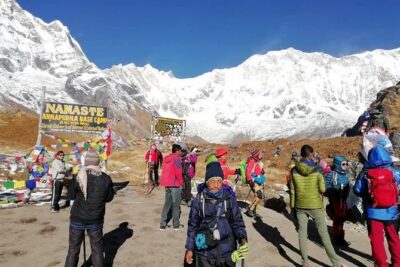
Kathmandu to Annapurna Base Camp (ABC) 5-Day Trek
Read our review →Browse the lists this tour appears in